
Category: Play

I love this idea and want to try it at the ‘Curiosity Corner’ garden at the Museum where I volunteer.


You can always tell I work with children from the crazy ideas I come up with. A couple of months ago I saw this idea online and just had to create one at our community garden. Our children’s garden has a seating area made with old stumps. Surely I could spare one for a game board. I knew the children that visit the garden would enjoy a game of checkers if I made one for them to use. For all the instructions on how I created the board and the mistakes I learned along the way, click here to read my post.

Once I had completed the checker board it was ready to use, but was it? I came by one day to see that someone had played using shells and sticks. Unfortunately the sticks kept blowing away. This girl had to get an idea going for game pieces…
View original post 274 more words
 iLandscape.com.au

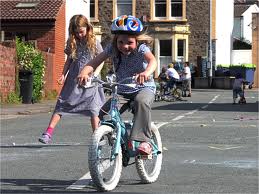
 I have written before about street play, and plugged the Playing Out project, whose community-based approach to opening up streets for play is spreading fast. A couple of weekends ago I witnessed a whole Playing Out session from beginning to end (and you will have the chance to see the edited highlights on primetime TV [Update Weds 3 July 2013: watch a clip from this blog post of mine]). It was a thrilling event, welcomed and enjoyed by people of all ages. But while I shared their enthusiasm, I was left wondering if the sheer energy of the occasion could paradoxically weaken the initiative’s prospects. I’ll come back to that thought later – but first, let’s set the scene.
View original post 1,317 more words
My previous articles and pictures on projects in the garden using wooden pallets or other recycled wood have featured some wonderful ideas. I’ve been amazed by the response and the articles seem to have also stimulated projects, not only in my own gardening activities, but for other gardeners, some of whom have sent me pictures of their creations. So here is the latest batch of Pallet Projects for you to look at, think about and maybe emulate!
Keep your ideas and pictures coming in!

Cut down pallets being used in construction of a raised bed inside one of ‘Growing Spaces’ greenhouses

The result after lining the wall with metal (inside) and chicken wire and black paper with render to the outside.

A play teepee made out of natural wood and recycled pallets

A compost bin made out of pallets by Katherine Jacobs. The front fits snuggly into the sides and is removable. Katherine isn’t sure about the bag- it was suggested as a way of keeping the compost warm and preventing ‘too much’ air getting in- I’m not convinced its a benefit.
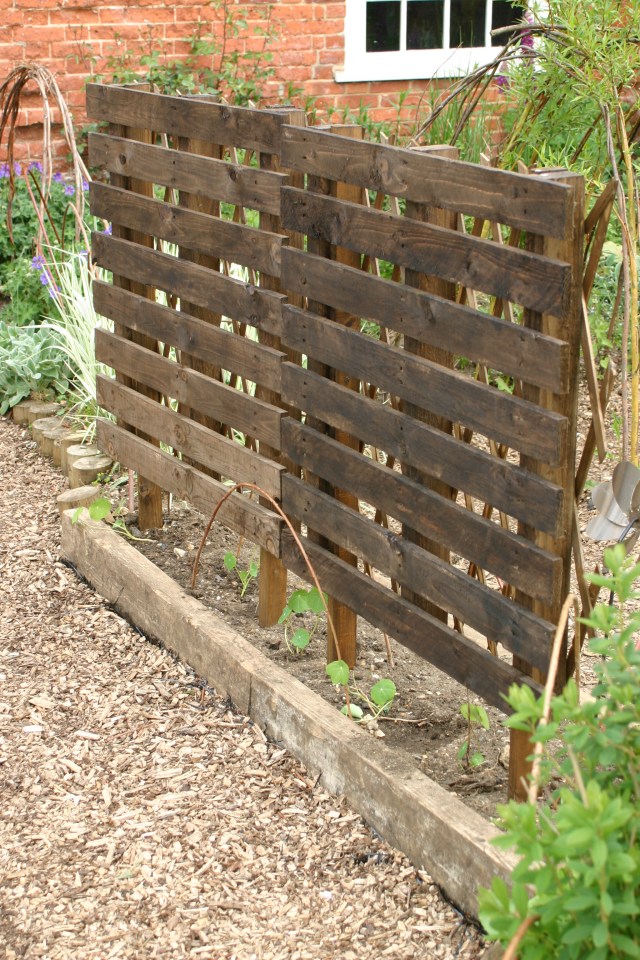
My own attempt at a Trellis screen made from two pallets fixed to posts in a public garden for under fives. The screen has diamond trellis fitted to the back, has been stained and will have climbing Nasturtums growing up it.
Other articles about using pallets in the garden:
Polished Primary Pallet Planters
Pallets Plus – more examples of recycled wood in the garden
Pallet Power- the sequel
Pallet Power
Raised beds on the cheap
Old School Gardener
If you’ve enjoyed reading this post and others on this blog, why not comment and join others by signing up for automatic updates via email (see side bar, above right ) or through an RSS feed (see top of page)?

Lovely and simple – a fairy garden table. From Inner Child Fun: http://innerchildfun.com/2013/06/lets-build-a-fairy-garden-table.html

‘PROPER see-saws made with a long plank so that you can go very high and have to hold on tight…..you don’t often see such exciting ones now. A missed learning opportunity?’ (Let the Children Play)
‘Seesaws go by several different names around the world. Seesaw, or its variant see-saw, is a direct Anglicisation of the French ci-ça, meaning literally, this-that, seemingly attributable to the back-and-forth motion for which a seesaw is known.
In most of the United States, a seesaw is also called a “teeter-totter”…. the term originates from the Norfolk language word tittermatorter. A “teeter-totter” may also refer to a two-person swing on a swing seat, on which two children sit facing each other and the teeter-totter swings back and forth in a pendulum motion….
In the southeastern New England region of the United States, it is sometimes referred to as a tilt or a tilting board. Makeshift seesaws are used for acrobatics. Speakers in northeastern Massachusetts, United States, sometimes call them teedle boards. In the Narragansett Bay area the term changes to dandle or dandle board…. “There are almost no “Teeter-” forms in Pennsylvania, and if you go to western West Virginia and down into western North Carolina there is a band of “Ridey-Horse” that heads almost straight south.
This pattern suggests a New England origin or importation of the term that spread down the coast and a separate development in Appalachia, where Scotts-Irish settlers did not come from New England. “Hickey-horse” in the coastal regions of North Carolina is consistent with other linguistic and ethnic variations….
In Korea, one form of the seesaw is known as a Neol (널) and is used for Neolttwigi (널뛰기) by women and girls, though in South Korea the playground variety, the same as is known elsewhere in the world, is also commonly called a see-so (시소).’
photo via Precious Childhood
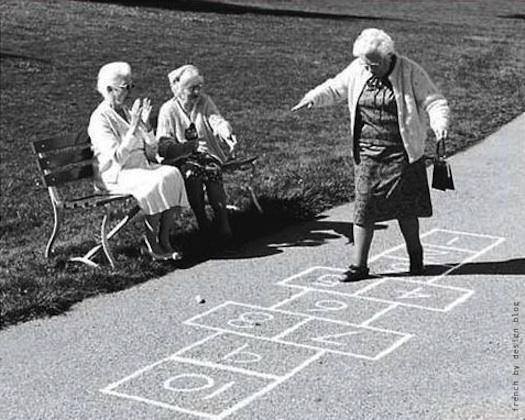
‘We don’t stop playing because we grow old; we grow old because we stop playing.’
photo via Play England
Have you ever created a miniature garden? If not, here is a fun activity you can do with your children over the summer holidays. When I did this project with the grade three class, the teachers said that this was the most fun the children had all year. Creating miniature gardens lets the children use their imaginations. So what is a miniature garden? It is generally one that uses dwarf or miniature plants and replicates a scale model of our own gardens. Miniature gardens can be created in the ground or in containers and can be kept both inside and outside. It just depends on personal taste. This is a good project to teach children about scale.

The photo above is one of my first miniature gardens. I try to create my gardens using found items and thrift shop treasures. You can buy miniature garden kits as well.

This year…
View original post 878 more words


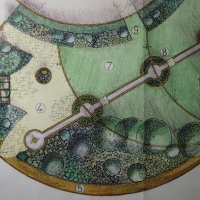


 Old School Garden