
Open Ended Spaces

There’s something counter-intuitive about exposing ‘delicate’ children to the elements, come rain, come shine: (1)
Sometimes, when we got there in the morning the snow would have blown in on to the tables and chairs and we would have to clear it off before we could start.
But by all accounts, it did Norman Collier, a pupil at the Aspen House Open Air School in Streatham in the 1930s, ‘the world of good’.
The school was opened by the London County Council in 1925 for pupils described at the time as ‘pre-tuberculous’ – children who were anaemic, asthmatic or malnourished. It was the fifth of the LCC’s open-air schools. The first had been opened in Bostall Wood in Woolwich on land donated by the Royal Arsenal Cooperative Society in 1907. But it was the first built to the council’s ‘improved design’ which would go on to be used in fourteen…
View original post 975 more words

 After a stroll through Estrela Gardens in Lisbon we found our way to somewhere new to us – the English Cemetery just over the road. What a discovery- a quiet, green and fascinating space where a wide range of graves and monuments records the long association of the English with Portugal. The website of the Anglican Church in Lisbon describes it’s past:
‘Part of the Treaty of 1654 negotiated between Cromwell and King João IV of Portugal stipulated that English subjects living in Portugal should have a plot allotted to them “fit for the burial of their dead” in the Lisbon area. Due to opposition from the Inquisition, nothing was done about this until the early eighteenth century and it was only in 1717 that Consul Poyntz was able to report back to London that he had leased a suitable plot near the City “for the burial of our dead”. It became known as St. George’s Cemetery. From those early beginnings until the present day non- Roman Catholic British Nationals have had a traditional privilege of burial at St. George’s; practising Roman Catholics are now also admitted.
It is an historic site for many reasons and an interesting one too. Probably the most famous British person buried there is the novelist Henry Fielding; he came to Lisbon to try and recover from health problems but actually died on 8th October 1754. No-one knows exactly where he was buried, but a monument to him in the form of a raised tomb was erected by public subscription in 1830. Later on in the Peninsular War Portuguese soldiers acting under orders from Marshal Beresford forced open the door in order to inter the remains of Brigadier General Coleman; legend has it that many other British soldiers were buried there during this period but have no marked graves. From the twentieth century there are rows of Commonwealth War Graves, commemorating servicemen who happened to die in the Lisbon area during World War II. These are but three examples, a wander round confirms that the remains of many interesting people from all walks of life and different nationalities have been interred at St. George’s for almost three hundred years.
In the second half of the nineteenth century many trees and shrubs were planted in the cemetery, some of which survive to this day. It makes it a peaceful, verdant spot, a walled oasis covering several acres in the middle of Portugal’s busy capital.’


 ‘This earth sculpture has been created by artist Richard Harris to draw attention to different species of trees that have traditionally been coppiced and their many characteristics and uses by people now and through history.’
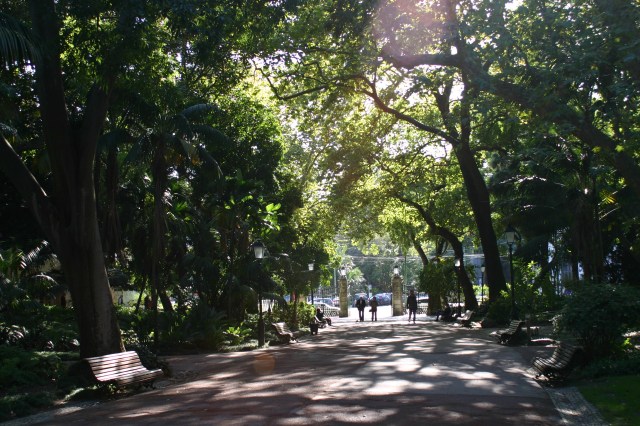
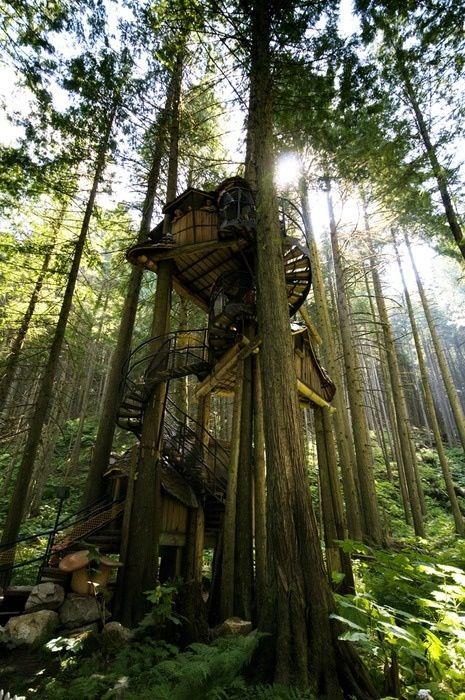
This seems to be a wonderful amenity and an idea that’s worth a try in UK parks and gardens! (or are there some examples already out there that I’m not aware of?)


iLandscape.com
Nigel Boldero aka 'Old School Gardener'
 | Nigel Boldero on Fighting to Reduce Climate Cha… |
 | Anonymous on Fighting to Reduce Climate Cha… |
| Anonymous on PicPost: Carrot, my foot! |
| 18 Surprising Hydran… on Plantax 16: Hydrangea the wate… | |
| Nigel Boldero on Poppyland: A Victorian romance… |
| Anonymous on Poppyland: A Victorian romance… |
| Anonymous on Plants to die for… |
 | Isabella Childress on PicPost: Forest, but not as we… |
 | Happiness Factor on Is child-friendly planning a l… |
 | zidane on Top Tip: On a Pedestal- make m… |




Nature Connectedness Research Blog by Prof. Miles Richardson
Connecting People with Nature
A daily selection of the best content published on WordPress, collected for you by humans who love to read.
Celebrating gardens, photography and a creative life
Writing, photography and more by Daniel Greenwood
Lydia Rae Bush Poetry
Australian Pub Project, Established 2013
The Journey from Finnish Rintamamiestalo to Arboretum & Gardens
Because even in chaos, there’s always gin and a good story …
RANDOM BITS & MORE TIDBITS
.....and nurturing my soul
Cultural Heritage and the Digital Economy
Sense of place, purpose, rejuvenation and joy
Notes from the Gardeners...
Connecting People to Nature, Empowering People to Live Sustainably
A girl and her garden :)


 Old School Garden