Category: Open Spaces


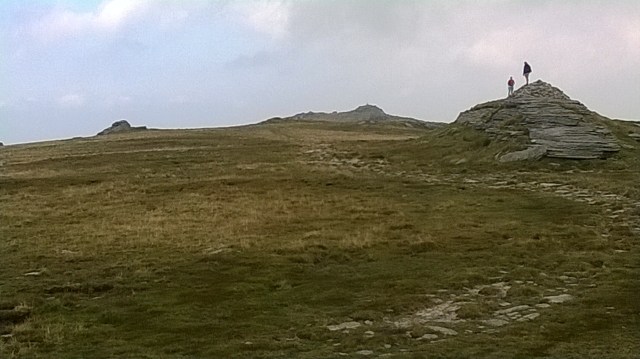
What a pile- some amazing granite on Great Mis tor

What a pile- some amazing granite on Great Mis tor

So, the first day of our recent ‘Tor Challenge’  began. It wasn’t promising- showers and low cloud hung over Tavistock for most of the morning and into early afternoon. But, as forecast, it lifted and was dry enough to venture out by about 4pm.

My wife had spent a lot of time researching our various walks and calculating distances, heights, grid references and bearings. we were well equipped with some new waterproofs, boots, walking pole and downloaded app for my phone (which gives a grid reference for your position and, if needed, a marker on a base map). We had looked into buying a GPS device for walking, but on balance, we felt this wouldn’t be necessary for the lengths and routes we’d gone for and with my new phone app (alongside other useful apps).

We’re not the sort of people to accept new things without question, and when it comes to clothing we’re definitely favour ‘natural’ materials over man made. However, I couldn’t resist buying a synthetic ‘base layer’ shirt in a sale we’d seen a week or two before and today was it’s first outing , under my new ‘waterproof and breathable’ jacket. I was im pressed with both, as you’ll see.

Any way, we set out for what promised to be a short walk to twowell-known tors – Great and Little Mis tors, lying just to the north-east of Princetown (of Dartmoor Prison fame) and within the Merrivale firing range (we’d checked and no firing was planned). According to Philip Henry Gosse (in his book ‘Land and Sea’, 1865), the name ‘Mis’ may derive from the tors’ druidical connections, being named after Misor the British moon goddess!

The way up- and the cloud/mist descends....

The way up- and the cloud/mist descends….

The ascent was long and reasonably steep from the car park (170 metres in fact to the summit of Great Mis tor, which is 538 metres above sea level). As we ascended we saw the low cloud covering the top of the climb and were prepared for our first taste of ‘blind walking’. We needn’t have worried. a well- worn path took us most of the way to Little Mis tor, and after a quick check on my new phone app, we knew we must have been just a few steps away from  Little Mis Tor- which we couldn’t see for all the cloud/mist. sure enough stepping out in what we thought to be the right direction, it suddenly loomed up before us- I thought it was a tree at first but it’s rocky outline was soon clear.

From here, once climbing the short route to its summit, it was short walk across open ground (following the pre-plotted bearing) to the tor’s bigger brother (or sister), Great Mis tor. this has been called ‘one of the grandest hills in Devon’ and is one of the largest tors in the southern moor, but today our view to it and form it was a complete fog, so we’ll have to return another day to appreciate the glorious view.

Great Mis Tor- the fortress looms up...

Great Mis Tor- the fortress looms up…

As we approached the tor (or so we thought) two walkers emerged from the mist walking towards us and we confirmed that we were on the right track. And a few steps further on there it was, certainly a more impressive ‘pile’ than its little sibling, and standing rather like some medieval fortress awaiting an attack- especially with its flagpole which is used to indicate if the firing raneg is beign used. We scaled it without a problem and peered around the immediate area as far as the mist would allow- not very far at all. Having climbed our first two tors, there wasn’t much else to do, so we returned.

Following my fortress analogy, coming down a different route still, at first, covered in mist and so focused on our immediate terrain (a large area of fallen granite boulders), felt rather like stepping on and over the bodies of fallen warriors, whose attack on the citadel above had obviously failed. It was eerily quiet and still with no hint of a breeze, and the clammy wetness stuck to our faces and clothes.

Reaching the bottom – and a clear sky once more- was a minor relief and boosted our confidence about our preparedness for the more challenging tors to come. A good start then. and I must say a comfortable experience too, as my new ‘base layer’ and waterproof had kept me warm and dry (inside as well as out) and my new boots were proving to be the dream footwear I had expected. We may not have given this new stuff much of a test, but it was the perfect primer for the days to come, which the weather forecast predicted would be dry, and mostly clear and warm.

The forecast turned out to be correct and the rest of our week enabled us to not only experience the climbing and walking to our tor targets for the day, but to soak up the scale and beauty of the Dartmoor landscape…as you’ll see if you join me for my next instalment of our tor challenge!

Day 2 beckons….

Old School Gardener


HACO

Help pick the UK’s favourite park in an online vote. A record breaking 1482 parks and green spaces this year received a Green Flag Award and people are now urged to vote for their favourite. The annual People’s Choice Award is now open – giving the public the power to decide which one of the 1482 Green Flag Award sites should be named Park of the Year in an online vote.

To vote:
• Visit www.greenflagaward.org
• Select your country/region on the interactive map
• Find your favourite park or green space
• Click the ‘vote for this site’ button

Paul Todd, Green Flag Award Scheme manager, said:

“Following a record breaking year for the Green Flag Award we are now asking the public to decide which of the 1482 parks and green spaces deserves the coveted People’s Choice Award 2014.”

The vote will close at noon on 30 September and the winner of the 2014 People’s Choice will be announced on 16 October.

Green Flag Award home page

The Green Flag Award was first launched in 1996 to recognise and reward the UK’s best green spaces. It is the standard for parks and recognises well-managed, high-quality sites that meet the needs of the community.

All Green Flag Award winning parks and green spaces are entered into the annual People’s Choice Award vote, which last year saw thousands of votes recorded and resulted in the crowning of Margam Park in Neath Port Talbot as the People’s Choice.

Old School Gardener

WP_20140903_020We’re just back from a week in Dartmoor, Devon, walking between some of the well-known, usually prominent rocky features of this beautiful landscape, known as tors

The Challenge

The tors (there are over 160 of them) are the focus of an annual event known as the Ten Tors Challenge, when around 2400 people aged between 14 and 19 (in over four hundred teams of six), face hikes of 35, 45 or 55 miles (56, 72 or 88km) visiting ten nominated tors over two days.  The teams must be self-sufficient, carrying all that they need to complete their route safely despite the terrain and the weather.  The latter can be very changeable and at times quite extreme, and success or failure can depend very much on the extent to which a team has been trained for all eventualities.

Not having completed this in her youth, my partner ( a local lass), was keen to do her own ‘Ten Tors Challenge’, but at a more leisurely pace. In the event, extremely good weather meant that we were able to visit double the target number of tors spread over six days, and including excellent overnight accommodation at my mother – in – law’s house in Tavistock! Over a series of posts in the next few days, I hope to give an interesting account of our adventures along with a few pictures. For starters here’s a ‘primer’ on Dartmoor and the tors in question….

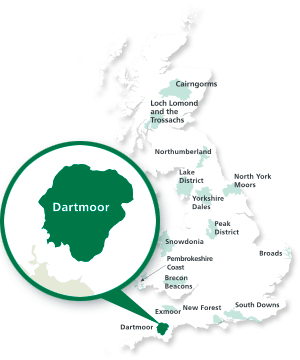
dartmoor locationThe Moor

Covering an area of 954 sq km (368 sq miles), Dartmoor contains the largest and wildest area of open country in the south of England. By virtue of its outstanding natural beauty it is one of the National Parks of England and Wales. Unlike many National Parks in other countries, for example the USA, the National Parks in England, Wales and Scotland are not owned by the state.  The term ‘National’ means that they have been identified as being of importance to our national heritage and as such are worthy of special protection and attention.  Within each National Park there are many landowners, including public bodies and private individuals. National Parks are places where people live and work.

Geology

A large part of Dartmoor (65%) is made up of granite, an igneous rock which was intruded some 295 million years ago.  This great granite core is surrounded by sedimentary rocks including limestones, shales and sandstones belonging to the Carboniferous and Devonian periods.  Those nearest the granite intrusion were altered (metamorphosed) by intense heat and pressure and chemical reactions.

Tors

Dartmoor is known for its tors – hills topped with outcrops of bedrock, which in granite country such as this are usually rounded boulder-like formations. More than 160 of the hills of Dartmoor have the word tor in their name but quite a number do not.   However this does not appear to relate to whether or not there is an outcrop of rock on their summit.

The processes resulting in the formation of the Dartmoor tors started about 280 million years ago as the granite forming Dartmoor cooled and solidified from molten rock at a temperature of 900 – 1000˚C. The minerals which make up granite crystallised as closely interlocking grains forming the hard rock. Granite is formed of three main minerals: Quartz – appearing in the granite as translucent slightly greyish looking grains; Feldspar – white grains, sometimes stained yellowish or pink (in parts of the granite feldspar forms large white crystals); and Biotite – dark brown glistening flakes.

dartmoorVarying climatic conditions occurring over millions of years, along with the cooling of the molten and other materials were the first, mainly chemical factors in the formation of the tors. Most recently, cold conditions in the Ice Age (between 2 million to 10,000 years ago), have caused major mechanical forces to shape the landscape we see today. Of these the most important is the expansion of freezing water. The deeply weathered granite was forced apart and broken up into blocks by being subjected to frequent freezing and thawing during the cold periods of the Ice Age, and gravity was also important, moving the loose material downhill.

 The principal tors are:

Tor Height above sea level
High Willhays 621m (2,039ft)
Yes Tor 619m (2,030ft)
Great Links Tor 586m (1,924ft)
Fur Tor 572m (1,876ft)
Great Mis Tor 539m (1,768ft)
Great Staple Tor 455m (1,493ft)
Haytor 454m (1,490ft)
Hound Tor 448m (1,469ft)
Sharpitor 402m (1,320ft)
Sheeps Tor 320m (1,050ft)
Vixen Tor 320m (1,050ft)

Well that’s the basics….except you might be interested in a TV programme that is showing this evening (Tuesday 9th September) on ITV 1 (7.30pm). The first in a new series of ‘Wilderness Walks’ by bushcraft expert Ray Mears focuses on Dartmoor. I’ll certainly be watching….

…so now for an article on the first stage of our trip – and it’s a mysterious beginning to our adventure that awaits…..(I’ll explain more about the nudist along the way too).

Further Information:  Dartmoor National Park

Old School Gardener

green flag stratfordI’m one of 700 volunteer judges for the ‘Green Flag’ Award scheme in the U.K. This involves inspecting parks and open spaces, meeting staff and volunteers and looking at Management Plans and other documents, with the aim of assessing each space against eight strict criteria, including horticultural standards, cleanliness, sustainability and community involvement.

The winners for this year have recently been announced and more parks and green spaces than ever will be flying the Green Flag Award in 2014/15. In total, 1482 parks, cemeteries, universities, shopping centres and community gardens have met the high standard needed to receive the Award.

Among this year’s recipients of the Award are, for the first time, Queen Elizabeth Olympic Park in east London (picture above) and Eaton Park in Norwich. I was a judge for Elmhurst Park in Woodbridge, Suffolk, which has won an award for several years.

Green Flag Award scheme manager Paul Todd said:

‘It’s another record-breaking year for the scheme. This is something well worth celebrating and testament to the efforts of the thousands of men and women, supported by some amazing volunteers, who work tirelessly to maintain the high standards demanded by the Green Flag Award. ‘The parks sector is facing some tough challenges so it is heartening to see that they are committed to maintaining and improving standards. We know how passionate people are about our parks and green spaces and the recent Heritage Lottery Fund report, State of UK Public Parks, highlighted the need for everyone to work together to ensure they are maintained for future generations.’

A full list of the award winning spaces can  be found here.

flag

Old School Gardener

swales long fellow creek la network

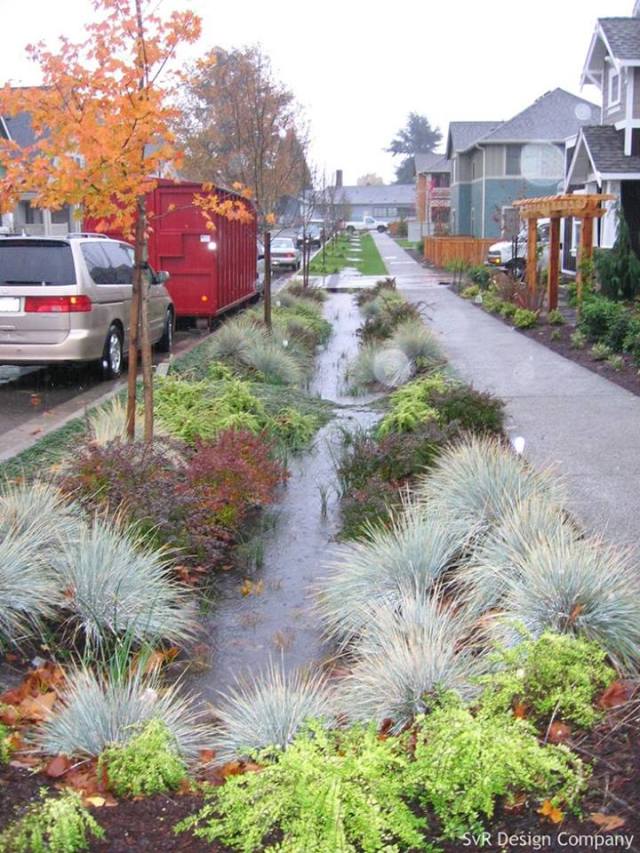
Swales used to alleviate surface water flooding at Long Fellow Creek, via LA Network

hackneyplay's avatarLove Outdoor Play

CONVERSATIONS WITH NEIGHBOURS

Originally posted by Naomi on the Playing Out website

I have lived in my street for nine years – a terraced Bristol street of 30 houses – and now know nearly everyone who lives there. There are some people I just say hello to but lots I stop and have a chat with, and I join a group of women of all ages who go for a drink or a meal together once in a while.

The old days … blank stares and broken glass

But it wasn’t always like that. There was a time not so long ago when the only conversation I had with other residents was over the sound of glass being swept as we wielded our brooms the morning after a night of car vandalism. People chatted and tut-tutted together. Men swapped tips on cheap wing mirrors. Neighbours of all ages gathered in…

View original post 661 more words

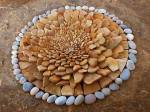
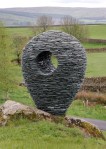
I love land art. You can often see it in protected landscapes or the grounds of important buildings. Sometimes, more riskily, it can be found in the open landscape, where it can make a wonderful contribution to an overall scene, aid interpretation of a place or maybe even just define a space that would otherwise be unremarkable.

I feel this way about wind turbines- I know that having them placed up against your plot might be a pain. Their numbers, groupings and locations do need careful thought, but I think we should embrace them more as potentially positive additions to our landscape (as well as out at sea). Rather than try to ‘hide’ them by leaving them creamy white, why not make more of them as land art – a clever paint job or perhaps adding some whimsical ornamentation could actually make them something we look forward to seeing.

Coming back to earth, or rather back to the garden, what about land art in a more domestic setting?

In my opinion, a lot of ‘off the shelf’ garden sculptures and other ‘features’ are just plain dull and many others too sickly sweet or twee to be given house room- or should I say garden room. We also sometimes place small, insignificant items in our gardens which are out of proportion and are soon ‘lost’. We really ought to be thinking big(ger).

Well, enough of my Monday rant, here are a few examples of some superb pieces of land/garden art in stone. What do you think of them and what about more land art in gardens?

Old School Gardener

Emily Plank, Abundant Life Children's avatarAbundant Life Children

In the last two months our family has spent time in six different countries, visiting parks in every location.  I have a growing theory that the casual observer can learn something about the culture from paying attention to the types of equipment in a playground and watching the ways that equipment is used by the children and the adults they are with.

My sampling of playgrounds from the countries in the title of this post (plus, the post I wrote a few weeks ago about parks in Japan) is very small, and I’m sure does not provide a clear overview of playgrounds across that country.  Still, I enjoy reflecting on our experiences in these parks and wondering what conclusions I can draw given my very limited experience.

View original post 414 more words

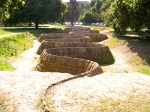
Two pictures to illustrate how I try to take inspiration from the natural world in creating ‘playful landscape’ features. The playful landscape was created in Fakenham, Norfolk. The ‘Giant’s Causeway’ here uses different lengths and thicknesses of smooth-planed, pressure-treated timber, inserted into a concrete foundation within a formed, grass covered mound, and with gravel to fill in around each ‘step’.

The Giant's Causeway in Northern Ireland, by Joe Cornish
The Giant’s Causeway in Northern Ireland, by Joe Cornish

A 'Giant's Causeway' at Fakenham

A ‘Giant’s Causeway’ at Fakenham, Norfolk

Old School Gardener

Vertical gardens or ‘green walls’ seem to be increasingly popular, from the humble vertical planters made out of recycled materials like pallets, to the enormous ‘frescoes’ seen on new buildings around the world.

This is a testament to their value in both a domestic setting- where they are one way of adding height and so ‘structure’ to a garden as well as providing either a splash of colour or a source of food – and to their role in helping to ‘green’ our cities and other built up areas, managing air temperatures and providing an attractive texture to what might otherwise be a boring facade.

I’ve gathered together a few pictures here of some examples that might inspire you!

This slideshow requires JavaScript.

Old School Gardener

Finding Nature

Nature Connectedness Research Blog by Prof. Miles Richardson

Norfolk Green Care Network

Connecting People with Nature

Discover WordPress

A daily selection of the best content published on WordPress, collected for you by humans who love to read.

Susan Rushton

Celebrating gardens, photography and a creative life

Unlocking Landscapes

Writing, photography and more by Daniel Greenwood

Alphabet Ravine

Lydia Rae Bush Poetry

TIME GENTS

Australian Pub Project, Established 2013

Vanha Talo Suomi

The Journey from Finnish Rintamamiestalo to Arboretum & Gardens

Marigolds and Gin

Because even in chaos, there’s always gin and a good story …

Bits & Tidbits

RANDOM BITS & MORE TIDBITS

Rambling in the Garden

.....and nurturing my soul

The Interpretation Game

Cultural Heritage and the Digital Economy

pbmGarden

Sense of place, purpose, rejuvenation and joy

SISSINGHURST GARDEN

Notes from the Gardeners...

Deep Green Permaculture

Connecting People to Nature, Empowering People to Live Sustainably

BloominBootiful

A girl and her garden :)