Category: Heritage Gardens & gardening


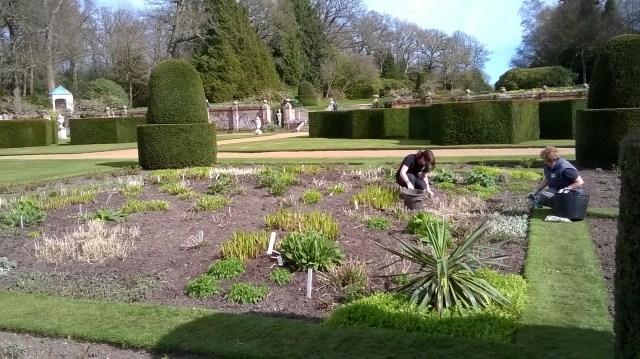
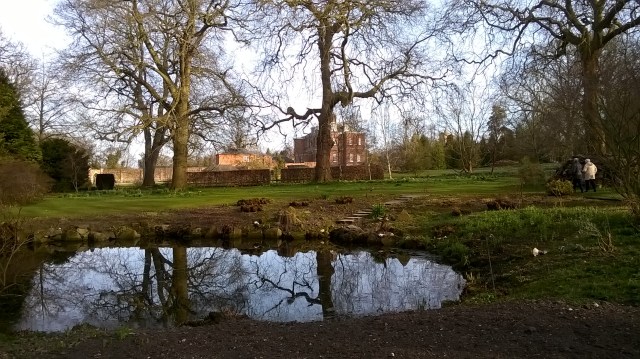
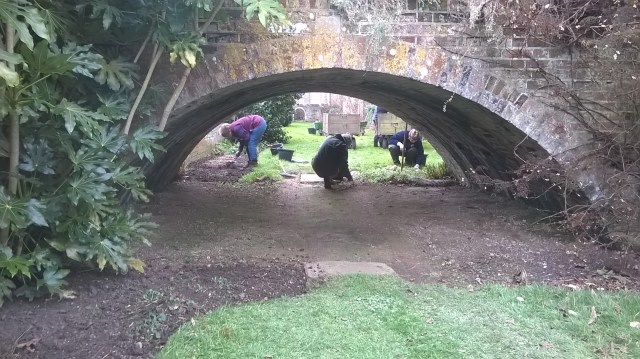
WP_20150505_15_12_46_ProOur second visit whilst travelling to the Lake District last week, was to Biddulph Grange, in Staffordshire.

Restored over the last 30 years by the National Trust, this is a delightful series of gardens designed to house James Bateman’s (the original owner) extensive plant collection from around the world. This is achieved in a series of gardens within a strong overall design structure, featuring some amusing and beautiful touches typical of the Victorian age.

This slideshow requires JavaScript.

The gardens are a delight and I was fortunate to see the highlight (‘China’) last; a fitting climax as you wander round this fascinating window on one man’s passion for plants, superbly restored by the Trust. Wikipedia describes the devopment of the gardens:

Biddulph Grange was developed by James Bateman (1811–1897), the accomplished horticulturist and landowner; he inherited money from his father, who had become rich from coal and steel businesses. He moved to Biddulph Grange around 1840, from nearby Knypersley Hall. He created the gardens with the aid of his friend and painter of seascapes Edward William Cooke. The gardens were meant to display specimens from Bateman’s extensive and wide-ranging collection of plants….

Bateman was president of the North Staffordshire Field Society, and served on the Royal Horticultural Society‘s Plant Exploration Committee…. He especially loved Rhododendrons and Azaleas. Bateman was “a collector and scholar on orchids,” …

His gardens are a rare survival of the interim period between the Capability Brown landscape garden and the High Victorian style. The gardens are compartmentalised and divided into themes: Egypt, China, etc.

In 1861 Bateman and his sons, who had used up their savings, gave up the house and gardens, and Bateman moved to Kensington in London. Robert Heath bought Biddulph Grange in 1871. After the house burnt down in 1896, architect Thomas Bower rebuilt it.

The post-1896 house served as a children’s hospital from 1923 until the 1960s; known first as the “North Staffordshire Cripples’ Hospital” and later as the “Biddulph Grange Orthopaedic Hospital” (though it took patients with non-orthopaedic conditions as well…. The 15 acre (61,000 m²) garden became badly run-down and neglected during this period, and the deeply dug-out terraced area near the house around Dahlia Walk was filled in level to make a big lawn for patients to be wheeled out on in summertime. The Bateman property was (and still is) divided: the hospital got the house and its gardens, and the uncultivated remainder of Biddulph Grange’s land became the Biddulph Grange Country Park…’

WP_20150505_15_04_33_Pro


Further information: National Trust website

Old School Gardener

WP_20150505_13_09_00_Pro

On a trip north last week, we managed to pack in three very interesting National Trust properties to and from our destination in the Lake District. The first was Kedleston Hall, the 18th century pile of the Curzons, an old Norman family who became prominent Tories in later times and built this magnificent home as a power statement to rival that developed by their Derbyshire Whig rivals, the Cavendish family, at Chatsworth.

WP_20150505_11_56_22_ProWe thought the front of the house reminiscent of Norfolk’s Holkham Hall, and indeed in the very helpful introductory talk we learned it had been designed by the same architects in Palladian style. However, the similarities started to dilute once we were inside, as the then Lord Curzon decided to follow the emerging design fashion of Neo Classical, so the house is an interesting- and successful – blend of the two styles.

The gardens- really more of a bold, sweeping landscape plus some slightly more human scale ‘pleasure grounds’- fit the classical style of the house and it was a lovely experience strolling around these before we had our lunch. Wikipedia describes the gardens and grounds:

‘The gardens and grounds, as they appear today, are largely the concept of Robert Adam. Adam was asked by Nathaniel Curzon in 1758 to “take in hand the deer park and pleasure grounds”. The landscape gardener William Emes had begun work at Kedleston in 1756, and he continued in Curzon’s employ until 1760; however, it was Adam who was the guiding influence. It was during this period that the former gardens designed by Charles Bridgeman were swept away in favour of a more natural-looking landscape. Bridgeman’s canals and geometric ponds were metamorphosed into serpentine lakes.

 Adam designed numerous temples and follies, many of which were never built. Those that were include the North lodge (which takes the form of a triumphal arch), the entrance lodges in the village, a bridge, cascade and the Fishing Room. The Fishing Room is one of the most noticeable of the park’s buildings. In the neoclassical style it is sited on the edge of the upper lake and contains a cold bath and boat house below. Some of Adam’s unexecuted design for follies in the park rivalled in grandeur the house itself. A “View Tower” designed in 1760 – 84 feet high and 50 feet wide on five floors, surmounted by a saucer dome flanked by the smaller domes of flanking towers — would have been a small neoclassical palace itself. Adam planned to transform even mundane utilitarian buildings into architectural wonders. A design for a pheasant house (a platform to provide a vantage point for the game shooting) became a domed temple, the roofs of its classical porticos providing the necessary platforms; this plan too was never completed. Amongst the statuary in the grounds is a Medici lion sculpture carved by Joseph Wilton on a pedestal designed by Samuel Wyatt, from around 1760-1770.

In the 1770s George Richardson designed the hexagonal summerhouse, and in 1800 the orangery. The Long Walk was laid out in 1760 and planted with flowering shrubs and ornamental trees. In 1763 it was reported that Lord Scarsdale had given his gardener a seed from rare and scarce Italian shrub, the “Rodo Dendrone” (sic).

The gardens and grounds today, over two hundred years later, remain mostly unaltered. Parts of the estate are designated as a Site of Special Scientific Interest, primarily because of the “rich and diverse deadwood invertebrate fauna” inhabiting its ancient trees.’


WP_20150505_11_57_53_Pro

Further information: National Trust website

Old School Gardener

What a difference a week makes- double borders in full colour

What a difference a week makes- double borders in full colour

A brief couple of hours at Blickling this week, as I needed to get home to prepare for our journey to Devon. Still, the place looked superb and I managed to sort out a few lines of plants in the walled garden.

My fellow volunteer Jonny and I began the day (which was sunny again!) with Mike in the Walled Garden. Mike wanted to level some soil between a couple of rows of well established Foxgloves and Rudbeckia and to straighten a line of Nepeta. We set to and after this put in a few more lines of flowers- Agapanthus and Phlox.

The session was punctuated with a visit from a senior manager at Broadland Council, coming to see how a grant they’d made to help restore the greenhouse had been spent and to discuss volunteering. After that I hoed along some of the other lines of veg in the Garden and generally tidied up. Meanwhile Rebecca and Pam had been pricking out seedlings ready to put into the restored greenhouse, which is only about a third full at present (with Penstemons).

This slideshow requires JavaScript.

Last week I got my new badge, this week I’ve been offered some National Trust clothing to wear in the gardens- nice to be looked after so well!

Further Information:

Blickling Hall website

Blickling Hall Facebook page

A 360 degree tour of Blickling Hall

Old School Gardener


Blickling looking glorious in the spring sunshine

Blickling looking glorious in the spring sunshine

This latest session at Blickling I was mainly running a hoe along the gravel paths of the double borders and one or two other places, with fellow volunteer Jonny.

Enjoyable to begin with and then as the hands got sore, a little tiresome. But, hey ho, it was a lovely day, the Tulips and Hyacinths were blooming and there were plenty of visitors to chat to.

So, there’s not much more to tell this week. After lunch I joined the bulk of the other volunteers in weeding the four major beds in the parterre, laid out in the 1930’s, I believe, by garden designer Norah Lindsay. The banter was lively as usual!

Weeding away in the main parterre borders

Weeding away in the main parterre borders

Oh, and Ed, one of the gardeners, brought in his ‘mother and daughter’ pooches- they went down a treat, as you can imagine from the picture below.

Definitely an 'Ahh...' moment!

Definitely an ‘Ahh…’ moment!

And this was the day I became official- I got my ‘Garden Volunteer’ Badge!

Further Information:

Blickling Hall website

Blickling Hall Facebook page

A 360 degree tour of Blickling Hall

Old School Gardener


Hyacinths looking good at Blickling

Hyacinths looking good at Blickling

A couple of weeks on from my last stint at Blickling, I joined the other volunteers last week, on a bright sunny day. So warm, in fact, it was the first day in a garden without the need of a fleece, and also my first bit of hoeing too.

We began by tidying up the Peony borders. I hadn’t noticed these before, but they are long and devoted entirely to Peonies, which today had just started their journey upwards, making short red stems with the beginnings of the beautiful leaves that complement the flowers so well. ‘They’re just like Asparagus’ one volunteer remarked, and they do have a resemblance to the spear-like stems that thrust upwards, albeit a bit later on, here in Norfolk.

Anyway, an hour passed and then I was called over to the Walled Garden with fellow volunteer Peter, to do a bit of construction work. Project Manager Mike had gathered some Hazel sticks and asked if we would put together a supporting wall for some runner beans and a couple of ‘Wigwams’ (or should it be ‘Teepees’?) for Sweet Peas. It was really pleasant in the sunshine doing something a little more fiddly for once – it reminded me of how much I enjoy pruning and tying in! Well, that little task, together with a bit more hoeing and earth turning in the walled garden took us to the middle of the afternoon, at which point I needed to leave to pay a visit to the local Nursery- where I bumped into Peter and his wife once more!

I’ve been holding £55 worth of Garden Centre vouchers for a while now (most given to me by my children as a Father’s Day gift last year, the balance as  a prize I won recently for giving feedback on the Norfolk Master Composter Scheme). I’ve thought about getting an Acer to put in the new Wildlife Pond area at Old School Garden and the Nursery in Aylsham has a good selection; I managed to wrestle a 2 metre example into the back of the (open top) car. I’m not sure which variety it is, but it’s young leaf buds are just bursting into a bright cerise followed by paler pink and lemony green leaves. I’ve also wanted to get hold of a Ceanothus ‘Puget’s Blue’ for some time (in the shopping trolley it goes), and they also had some lovely Magnolias in bloom, so I didn’t resist the temptation to take home a lovely example of M. x loebneri ‘Merrill’.

These three specimens plus another, smaller Acer (palmatum), a black Elder and Camellia, already in pots at home, will form the back bone of the planting scheme around the pond. I’ll tell and show you more in due course…..

 Further Information:

Blickling Hall website

Blickling Hall Facebook page

A 360 degree tour of Blickling Hall

Old School Gardener


WP_20150322_15_40_14_Pro

 I recently visited my first open garden of the season, the Georgian West Lodge in the nearby town of Aylsham. Recent cold weather had resulted in many bulbs not yet being open, but the overall layout and different features of this 9 acre garden were a delight to walk around.

Lawns, splendid mature trees, a rose garden, well-stocked herbaceous borders, an ornamental pond, magnificent 2.5 acre C19 walled kitchen garden (maintained as such) meant that there was plenty to look at. I hope to return in high summer to see more of these features at their best.


This slideshow requires JavaScript.

Old School Gardener

Tidying up in the Moat

Tidying up in the Moat

Trusted, that’s how I felt. Assistant Head Gardener, Steve told me that the Head Gardener wanted me to prune some shrubs in the double borders at Blickling.

Buddleja, Fuchsia, Black Elder and also Pawlonia were the target, following on from the start I made a couple of weeks ago. Pruning Pawlonia always worries me; as you may know they can be left unpruned and will produce purple flowers. But they are mainly grown to create wonderful foliage and so quite hard pruning- involving some saw work- is needed. I came across some quite thick stems that on the face of it look substantial, but as you cut in their hollow insides give way easily and you feel slightly less of a vandal.

I didn’t spend any time in the walled garden, but you might be interested to listen to a 15 minute interview that BBC Radio Norfolk did with the Project Manager, Mike. Here’s a link to it.

This wasn’t my first visit to Blickling this week. I also attended a lively and stimulating induction day for new staff and volunteers. We had a tour of the house and park. Our guides were really enthusiastic and knowledgeable. Some interesting facts about Blickling that we uncovered:

  • The Manor has been owned by two kings- first Harold (he with the arrow in the eye problem) and subsequently by his successor William the Conqueror
  • There have been three houses on the site, the current one (which began building in 1619), built within the moat of the older houses
  • Anne Boleyn (Henry VIII’s second wife and with the ‘neck ache’) was probably born at Blickling in around 1501
  • The designer of the current house was Robert Lyminge, a well know Dutch architect who had previously designed Hatfield House- he was paid the princely sum of 2 shillings and sixpence (‘Half a Crown’) a day
  • King Charles II visited the house in 1671 and knighted the owner, Henry Hobart
  • Blickling Estate today employs around 40 staff and has some 450 volunteers!

After the pruning – where I was engaged in conversation with several visitors- I joined the other volunteers in the moat for some general tidying up. We managed to complete the two remaining sides (of three) within a couple of hours and it did look satisfyingly neat. Paul, the Head Gardener came round to thank us for our efforts and was very complementary about my pruning; it’s nice to feel valued!

Apart from various pieces of masonry that had fallen off of the moat walls, I also discovered a metal object (see picture)- any guesses as to what it might be?

This week's mystery object.. any ideas?

This week’s mystery object.. any ideas?

Further Information:

Blickling Hall website

Blickling Hall Facebook page

A 360 degree tour of Blickling Hall

Old School Gardener


Azaleas at NT Bodnant- not long now...picture via National Trust

Azaleas at NT Bodnant- not long now…

'Tickling' the soil in the 'Black Garden'

‘Tickling’ the soil in the ‘Black Garden’

After two weeks away from Blickling, I was eager to see what progress had been made in the gardens. I wasn’t disappointed. Though some of the volunteer sessions had been rained off, they still seemed to have made a visual impact on the borders. And I gathered from Project Manager Mike, that there had also been major progress in the Walled Garden.

My first job was to prune some Buddleja in the borders established a few years ago which echo designs by the 1930’s Garden Designer Norah Lindsay, who made such an impact at Blickling. Then it was on to join my fellow volunteers in the ‘Black Garden’ where a lovely mix of dark flowering plants and dark foliage (including Black Mongo grass) combine to create a sombre mood.

Here the ladies were ‘tickling’ over the soil around the plants and especially in a border of tulips (‘Queen of Night’) and Iris, both just beginning their spring wake up. I pruned some Black Elders here to encourage a good show of foliage at head height. It was good to catch up on the news of the last couple of weeks and over lunch I was treated to a delicious piece of birthday cake (Almond and Apricot) brought in by one of the team. I must say I like this little ritual of bringing in cakes on your birthday, especially as I will hopefully be the beneficiary rather than the donor until next January!

Further afield in the gardens there are clear signs of the arrival of spring; beautiful patches of Crocus and Narcissus are just into their show times. And the major news in the walled garden is the arrival of the newly refurbished glasshouse. However, the former heating system- the massive hot water pipes are still in evidence- is not going to be restored. In future, I understand from Head Gardener Paul, the necessary heat will be supplied by a couple of fan heaters. He also tells me there’s hope of replacing the other glasshouse at some point too, funding permitting. I can’t wait to get into the newly restored structure and use its full potential.

Work was also underway to widen a major entrance path to the front lawns of the House and this was being used as a trial session using a new supply of metal path edging, a large quantity of which had been delivered for use in laying out the paths in the walled garden. Perhaps this is something I’ll be helping with in coming weeks.

For most of the day our gardening proceeded to a back drop of a buzzing in the air. No, not an early swarm of bees, but a ‘drone’ hanging in the sky like a bird of prey; filming the gardens for a new video that’s to go on the Blickling website.

'Under attack'- can you spot the drone?

‘Under attack’- can you spot the drone?

I also bumped into a paving contractor who was finishing off some repairs to a York Stone path at the entrance to the Gardens. He’d done a beautiful job, the new stone blending in perfectly with the older material. The contractor told me that the stone costs £120 per m2 plus VAT!

Further Information:

Blickling Hall website

Blickling Hall Facebook page

A 360 degree tour of Blickling Hall

Old School Gardener


WP_20150212_15_36_39_ProMy latest session of voluntary gardening at Blickling Hall focused on the Winter Garden and Dell once more- my there are a lot of leaves out there!

We volunteers continued to clear and tidy the Dell and Winter Garden. I had the pleasure of planting some wonderful pale yellow Hellebores to bulk up the flower show in the Winter Garden with Joan, my ‘planting partner’  for the day. I also got a few blisters from forking over the borders around the trees and shrubs, but it was well worth it- several visitors commented very positively.

I’m now away from Blickling for a couple of weeks, but I’m continuing my voluntary gardening at Gressenhall from next week, beginning the ‘pre opening’ tidy up.

 Further information:

Blickling Hall website

Blickling Hall Facebook page

A 360 degree tour of Blickling Hall

Old School Gardener


Finding Nature

Nature Connectedness Research Blog by Prof. Miles Richardson

Norfolk Green Care Network

Connecting People with Nature

Discover WordPress

A daily selection of the best content published on WordPress, collected for you by humans who love to read.

Susan Rushton

Celebrating gardens, photography and a creative life

Unlocking Landscapes

Writing, photography and more by Daniel Greenwood

Alphabet Ravine

Lydia Rae Bush Poetry

TIME GENTS

Australian Pub Project, Established 2013

Vanha Talo Suomi

The Journey from Finnish Rintamamiestalo to Arboretum & Gardens

Marigolds and Gin

Because even in chaos, there’s always gin and a good story …

Bits & Tidbits

RANDOM BITS & MORE TIDBITS

Rambling in the Garden

.....and nurturing my soul

The Interpretation Game

Cultural Heritage and the Digital Economy

pbmGarden

Sense of place, purpose, rejuvenation and joy

SISSINGHURST GARDEN

Notes from the Gardeners...

Deep Green Permaculture

Connecting People to Nature, Empowering People to Live Sustainably

BloominBootiful

A girl and her garden :)