Category: Grow your own food


PicPost: Maxing out

PicPost: Pumped Up

image via RHS

greenbenchramblings's avatargreenbenchramblings

When we were visiting my mother recently I was amazed to see just how much food for wildlife the old hedge alongside her back garden was presenting to the mammals and birds and of course the odd late flying butterfly and wasp. This stretch of hedge was originally an old field boundary and it illustrates just how much damage to Mother Nature’s larder the destruction of our hedges by intensive style agriculture actually causes. Here we have a 20 yard stretch of mixed natives with an odd cultivated plant creeping in from the garden that is a veritable larder for all sorts of wildlife.

2013 10 18_4344 2013 10 18_4354

2013 10 18_4349

Think of hedgerow food for wildlife and the first fruit to come to mind will be the Bramble or Blackberry. This may be simply because we enjoy a tasty nibble of these glossy black gems ourselves. We might also think of Roses with their red fruit…

View original post 490 more words

PicPost: Eat Your Own
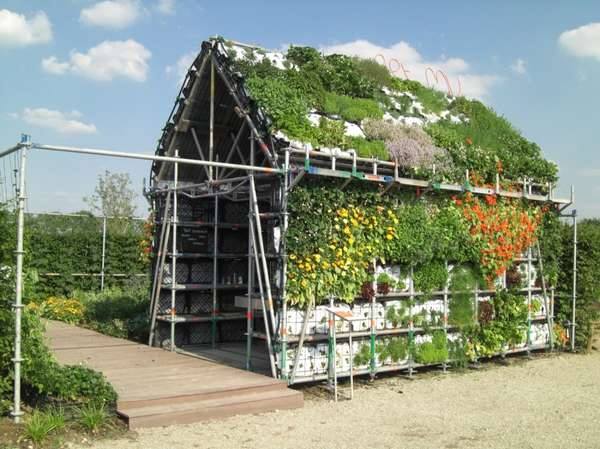
Via Grow Veg – This ‘Eathouse’ is constructed of metal scaffolding pipes and soil-stuffed crates which are planted up with vegetables, herbs and edible flowers:
http://www.archdaily.com/98895/eathouse-de-stuurlui-stedenbouw-atelier-gras/

Old School Gardener

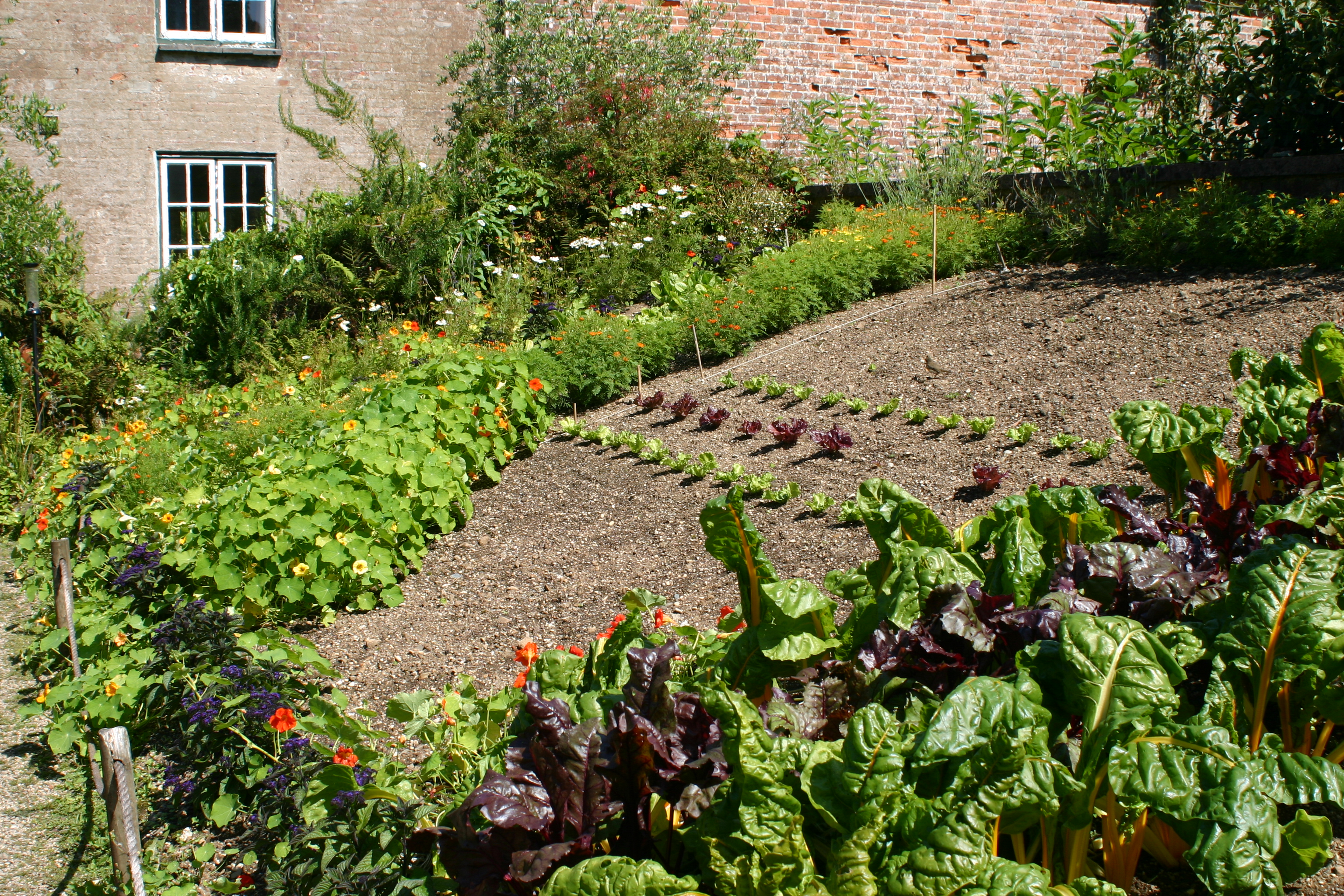
One of the sloping beds

One of the sloping beds

My previous article on Trengwainton covered the wider gardens and grounds as well as some historical background. Today I want to focus on the extensive walled gardens, built by previous owner, Rose Price. This is said to follow the dimensions of Noah’s Ark- though why, I’m not sure.

It also seems to have been created as a response to the period of persistently cooler weather known as the ‘Maunder Minimum’ (or otherwise known as the ‘prolonged sunspot minimum’). This period- starting in about 1645 and continuing to about 1715 – was when  sunspots became exceedingly rare. The term was named after the 19th Century solar astronomer Edward D. Maunder who studied how sunspot latitudes changed with time. The Maunder Minimum coincided with the middle—and coldest part—of the ‘Little Ice Age’, during which Europe and North America were subjected to bitterly cold winters. recent research has established a causal link between low sunspot activity and cold winters.

The surrounding garden wall prevented warm air from escaping from the garden on cool nights, thereby allowing frost-sensitive fruit trees to survive, despite the cooling climate. The walled garden is also interesting for its use of sloping beds – orientated to take advantage of the sunny aspect and so aiding the warming of the soil and creating beneficial growing conditions. 

The gardens – there are separate walled enclosures rather than one large expanse – are both a fascinating horticultural legacy and also a modern-day guide to good food and flower growing. There are demonstration plots and little corners showing different sorts of container growing, raised beds, nectar – rich flowers, a DIY device for creating liquid plant food etc. A wide range of food is still grown here as well as beautiful ‘cottage garden’ style flower borders, orchards and a demonstration plot conjuring up the ‘Dig for Victory’ campaign of the second World War. And while we were there the Gardens sported a delightful display of home-made ‘fairytale’ characters which amused and enchanted the young children who were eager to discover the next character on their way round!

This slideshow requires JavaScript.

Related article: West Country Gardens: Hydrangea Heaven at Trengwainton

Another one of the ‘Tre’s’  or ‘place’ in Cornish. Trengwainton was one of those west country gardens I visited during my summer holiday in West Cornwall and Devon. The estate and gardens are huge and richly varied, so I’ll devote this article and pictures to the wider estate and gardens along with some general background. A following post will focus on the fascinating walled garden.

Trengwainton, located  in Madron, near Penzance, has been in the ownership of the National Trust since 1961. The garden is noted for its collection of exotic trees and shrubs as well as great views over Mount’s Bay and The Lizard peninsular. A house has stood here since at least the 16th century and was altered and extended in the 18th and 19th centuries (it’s now a listed building).

In 1814 the estate was bought by Rose Price, the son of a Jamaican sugar plantation owner. Trengwainton was sold following the loss of income resulting from the 1833 Emancipation Act (which freed slaves on the family’s Worthy Estate in Jamaica). In 1867 the property was bought by T S Bolitho whose family still live in Trengwainton House. Rose Price planted trees and built the walled gardens and in 1925 Sir Edward Bolitho and his head gardener Alfred Creek continued the development of the gardens. They were opened to the public, for the first time, in 1931. The Victoria Medal of Honour for Horticulture was awarded by the Royal Horticultural Society to Sir Edward in 1961 and in the same year he donated 98 acres to the National Trust.

The day of our visit was sunny and warm. The walk around the gardens was a delight. Exotic plantations (many created during the 1920’s craze for exotic, new plants), give way to a long, winding, uphill approach to the House, which is lined with meandering footpaths and dells with running water, masses of different hydrangeas in bloom, all under the dappled shade cast by many and varied trees. This opens out to a large lawn in front of the House and beyond this to a pretty elevated walk lined with Agapanthus and twin focal – point pavilions. This area affords spectacular views of the coastline – and is obviously also a good spot to learn kite flying!

The estate is famous for its spring show of Camellias and Azaleas. The late summer show from the Hydrangeas, Agapanthus, Fuchsias, ferns and exotics, was very impressive – I must return in the spring to compare! As part of its campaign to get children to do ’50 things before you’re 11 3/4′ there was an invitation to create some ‘Wild Art’ (I couldn’t resist) as well as the kite flying and other adventures – a great idea.

This slideshow requires JavaScript.

Sources and further information:

National Trust website

Wikipedia

Old School Gardener

If you’ve enjoyed reading this post and others on this blog, why not comment and join others by signing up for automatic updates via email (see side bar, above right ) or through an RSS feed (see top of page)?

IMG_7367

Whilst visiting our son (who’s studying at Loughborough University) we took advantage of the ‘Heritage Open Days’ event at nearby Calke Abbey, Derbyshire. Billed by owners, the National Trust as ‘The un-stately home and country estate’ because of its peeling paintwork and overgrown courtyards, Calke Abbey is witness to the wider decline of country house estates all over Britain, especially after the First World War (avid viewers of the latest TV series of ‘Downton Abbey’ can get a taste of some of the issues – death duties, lack of staff, economic downturn).

Whilst some of the House and stables have been restored, there are still many other areas where old furniture, toys and a myriad other ‘heirlooms’ have been left to speak volumes of how the British landed gentry went through a major ‘downsizing’. Admittedly the family who owned Calke did amass a vast collection of curiosities and ‘hidden treasures’- there are fascinating collections of sea shells, rocks and pebbles for example.

The house was delightful and had some very friendly ‘in character’ guides to help tell the story. But the garden was the gem in my eyes. Extensive parkland with a number of beautiful mature trees, deer roaming and typical Victorian curiosities like the fernery give way to a massive walled garden, much of which is now just turned over to grass, but a significant portion of which houses a wonderful kitchen garden (with an access tunnel to ensure the gardeners weren’t seen from the house!). There is also an impressive array of original glasshouses and an orangery in which peaches and other tender fruit and veg are still grown. I particularly liked the Squash Tunnel made of rustic poles and featuring a range of different squashes. Approached by a colourful Dahlia border, there’s also a fascinating ‘Gardeners’ Bothy’, complete with old tools and equipment, seed trays and prize certificates from yesteryear! I was puzzled by one seed drawer, labelled ‘Borecole’. I hadn’t come across this name before and guessed it migth be some local corruption of ‘broccoli’. I now know it’s another term for Kale or a particular variety of Kale!

Walking through the pretty featureless,  grassed over walled garden you suddenly turn a corner and enter a more intimate, warm, walled garden with blocks of bright colours and interesting foliage. An amazing contrast, this formally laid out garden with a range of exotic plants as well as classic bedding, made me draw breath and smile like a Cheshire Cat!

This area has been superbly laid out and the colour, foliage and flower combinations are very impressive. There’s an ‘Auricula Theatre’ currently housing Pelargoniums (see the picture I posted of this earlier in the year) and a pool, all contributing to a peaceful spot where you can (and we did) sit and gaze at the wonder of nature – as coaxed and displayed by man of course! This was a truly inspiring afternoon, so if you get the chance, get along to Calke Abbey (by the way there was never an abbey here).

Further information:

National Trust Website

History- Wikipedia

Old School Gardener

If you’ve enjoyed reading this post and others on this blog, why not comment and join others by signing up for automatic updates via email (see side bar, above right ) or through an RSS feed (see top of page)?

PicPost: Roots Store

greenbenchramblings's avatargreenbenchramblings

Trench composting is an underused way to improve your soil texture and add fertility to your soil. And it has the added bonus of getting rid of those tough old stems of spent sunflowers, sweetcorn and brassicas. We spent a day trench composting the quarter of our allotment in which we shall be growing our roots next year. Many books tell us not to add manure or humus to the patch where you are planning to grow your root crops but we have found by experience that if the trenching is carried out in early autumn it works just fine. As the depth of soil on our plot is less than a border fork deep we need to keep adding to it in an attempt to build up some depth.

The job gets started as Jude, aka Mrs Greenbench or The Undergardener, takes out a 2 foot wide trench down…

View original post 356 more words

Where's Wally? 250 Master Gardeners and Composters (including me) line up for the annual group photo

Where’s Wally? 250 Master Gardeners and Composters (including me) line up for the annual group photo

It was an early start- 5.45.a.m to be precise. Having travelled into Norwich and boarded a coach, we set off for Ryton Gardens, near Coventry. Garden Organic’s HQ, formerly known as the ‘Henry Doubleday Research Association’ in honour of the pioneer organic grower, presents a rich mix of gardens aimed at informing, educating and inspiring gardeners in the ‘organic way’.

I attended the annual ‘Masters Conference’ last year and got to see the gardens for the first time too. This year’s visit was equally interesting and energising, not least due to the concentration of 250 plus growing and composting enthusiasts in one place for the full day conference.

No, not a set from 'Dr. Who', just a display of 'dalek' and other types of compost bin!

No, not a set from ‘Dr. Who’, just a display of ‘dalek’ and other types of compost bin!

Garden Organic do things right – a highly professional outfit, with some world class credentials when it comes to research and education in organic growing, they value their volunteers, and this shows. Little, but important touches like personalised ‘goody bags’, name badges and schedules as well as the cheery welcome from the large number of staff and volunteers around helped to make the day a big success. And of course there are the annual awards, lots of cake and coffee and the group photo that all bind this volunteer community together in their ‘crusade’ for food growing and composting.

One of two Cakes specially made to celebrate the conference-a masterly effort from a Norfiolk Cake maker!

One of two Cakes specially made to celebrate the conference-a masterly effort from a Norfolk Cake maker!

It was interesting finding more out about community composting, some of the ‘goodies’ in the garden (as far as bugs are concerned) and of how projects are using food growing to reach communities that find it difficult to fully engage with society for various reasons.There were also some wonderful tales of Master Gardeners and Composters from around the country who are helping people not only to grow food, but to ‘grow’ themselves! And several of these were from Norfolk.

Apart from the chance to look round the gardens once more, the highlight was veteran naturalist Chris Baines, who gave an inspiring talk about how important it is to create parks, gardens and other green spaces in an increasingly urbanised world to help keep cities cool, air clean, provide habitats for wildlife and psychological respite from living and working places that will in all probability become ever more hectic, hassled and hot! He shared some encouraging signs that developers are starting to integrate such features as ‘rain gardens’ and other nature havens in their plans.

Further information:

Ryton Gardens

Garden Organic

Master Gardener

Master Composter/ Home Composting

Old School Gardener

If you’ve enjoyed reading this post and others on this blog, why not comment and join others by signing up for automatic updates via email (see side bar, above right ) or through an RSS feed (see top of page)?

Finding Nature

Nature Connectedness Research Blog by Prof. Miles Richardson

Norfolk Green Care Network

Connecting People with Nature

Discover WordPress

A daily selection of the best content published on WordPress, collected for you by humans who love to read.

Susan Rushton

Celebrating gardens, photography and a creative life

Unlocking Landscapes

Writing, photography and more by Daniel Greenwood

Alphabet Ravine

Lydia Rae Bush Poetry

TIME GENTS

Australian Pub Project, Established 2013

Vanha Talo Suomi

The Journey from Finnish Rintamamiestalo to Arboretum & Gardens

Marigolds and Gin

Because even in chaos, there’s always gin and a good story …

Bits & Tidbits

RANDOM BITS & MORE TIDBITS

Rambling in the Garden

.....and nurturing my soul

The Interpretation Game

Cultural Heritage and the Digital Economy

pbmGarden

Sense of place, purpose, rejuvenation and joy

SISSINGHURST GARDEN

Notes from the Gardeners...

Deep Green Permaculture

Connecting People to Nature, Empowering People to Live Sustainably

BloominBootiful

A girl and her garden :)