Category: Grow your own food


grapevineHere’s another profile of a food plant produced by one of the participants in the ‘Grow your Own’ course I ran at Foulsham, Norfolk.

Grape (Vitis vinifera)

Guest article by Kay Elvin

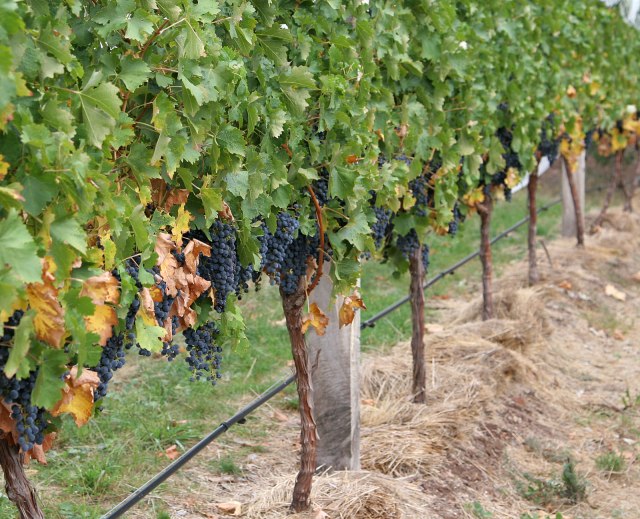
Black Hamburg  is a popular, outside, late grape that can be used for desserts or wine making.

Planting- Dig a large hole, adding plenty of farmyard manure and water well. Plant bareroot vines in winter, but containerised specimens can be planted at any season.

Location- Vines like to grow on a sunny, south or west wall. Support the vines with horizontal wires held in place by vine eyes, about 12”- 16” apart.

Grape_vinesGrowing – Allow about three stems to grow vertically during the first year. Pinch out shoots that grow from the side to one leaf. The next year in spring aim to have a shoot every 6”. When fruits appear thin out to one bunch every 12”. Remove some of the foliage to improve air flow.

 Feed with high potash. Vines can be affected by scale insects, vine weevil, downy mildew and mould. When harvesting avoid touching the fruits, cut each bunch with a ‘handle’ (2” of stem).

Beware – Do not park your car under a grape arbour- they damage the paintwork! Grapes are also poisonous to dogs.

Grapevine_leaf_-_SyrahRecipe- Grape Jam

Ingredients:

4lb ripe grapes

1 box powdered fruit pectin

3.25 lbs sugar

 Method:

Slip skins from grapes and set aside

Add 1 cup of water to pulp, bring to boil cover and simmer for 5 mins.

Press through a sieve to remove seeds.

Chop or grind skins, add to pulp.

Measure 6 cups into a very large saucepan.

Then make jam, add powdered pectin to the fruit in pan and mix well.

Bring to hard boil over high heat, stirring constantly. At once stir in the sugar.

Bring to a full rolling boil and boil for 1 minute, stirring all the time.

Remove from heat and skim off foam with a metal spoon, then alternately stir and skim for 5 mins..

Cool slightly, ladle into jars, cover jam at once.

 Makes 6 half pound jars.

 For spicier jam add 1 teaspoon each of cinnamon, ginger and allspice to the grapes before simmering.

Old School Gardener

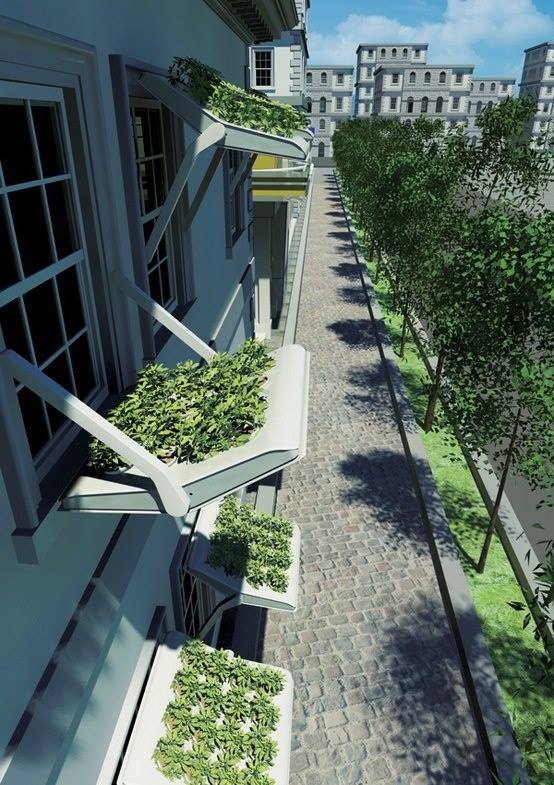
Neat idea for growing food and other plants outside your window- especially useful for urban areas where apartments have no outside space.food growing shelves via grow veg

Old School Gardener

raspberriesAnother guest article by one of the participants in the ‘Grow Your Own Food’ course I ran recently in Foulsham, Norfolk.

Raspberries – A superfood that tastes better than spinach-what’s not to like?!

by Chris Richmond

Health

Antioxidant and anti-inflammatory phytonutrients in Raspberries may have anti-cancer benefits and assist in the management of obesity, though possibly not if eaten with oodles of cream.

However, raspberries are among a small number of foods that contain measurable amounts of oxalates. When oxalates become too concentrated in body fluids, they can crystallize and cause health problems. For this reason, individuals with already existing and untreated kidney or gallbladder problems may want to avoid eating raspberries.

So…everything in moderation, even raspberries- unfortunately.

Varieties

There are two types of raspberry available to the kitchen gardener. Summer-fruiting varieties will crop at any time from the beginning of July to early August on stems of last season’s growth; autumn-fruiters bear their berries over a longer period – from mid-August to the first frosts – on the current season’s growth. Both are similarly easy to care for but require slightly different pruning techniques. As long as you know how to wield your secateurs around them there is little mystery to growing these accommodating fruits and their length of service – up to 12 years – means they give a lot back in return.

‘Glen Ample’ AGM – Delicious, large fruit produced in mid-summer on this extremely heavy-yielding summer cultivar with vigorous, upright, spine-free canes. The berries are produced on long, upright stems, making picking easy.

‘Glen Moy’ AGM – This early summer raspberry bears heavy crops of medium to large berries, which have a good flavour. It may also produce a small crop on the new canes, in autumn. The spine-free canes are compact.

‘Leo’ AGM – This cultivar is one of the latest summer raspberries to ripen, producing large, firm fruits with an excellent flavour. The stems are very long, so harvesting is easy. Site in a sheltered position.

‘Malling Admiral’ – A summer raspberry bearing good yields in mid- to late summer on strong-growing, tall canes, which are best sited in a sheltered spot. The flavour is excellent, and the large berries ripen to deep red.

‘Autumn Bliss’ AGM – The short, sturdy canes of this popular autumn cultivar produce high yields from late summer to mid-autumn. The fruit is large and deep red with a firm texture and excellent flavour.

‘Polka’ – This new autumn cultivar ripens two weeks earlier than ‘Autumn Bliss’, bridging the gap between summer and autumn. It produces very high yields of large, well-flavoured fruit.

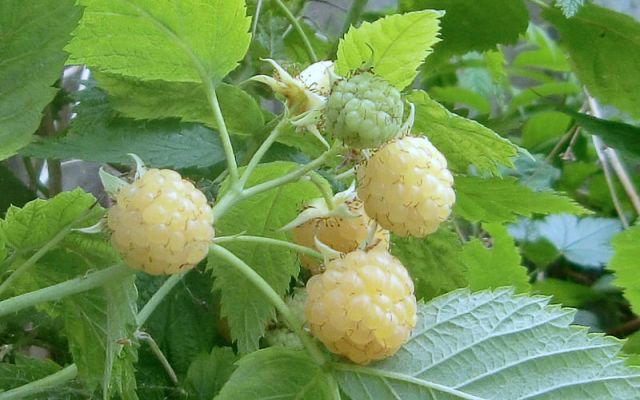
A Golden Raspberry Variety

Preparation

Like most edible crops, raspberries produce a better yield when grown in full sun. However, thanks to their woodland origins, they can be grown in a degree of shade too, as long as they receive at least a few hours of direct sunshine each day. They prefer slightly acidic soils, which is great news for gardeners who struggle to grow plants in these conditions. They like it to be moist as well, so be prepared to water the plants as they establish – but beware of waterlogged winter ground.

Be prepared to put in a bit of effort to get soil conditions just right before planting: thoroughly dig down to a spade’s depth along a row 90cm wide. Turn it over and remove any weeds, especially perennial types (such as bindweed and horsetail) and their roots.

Raspberries are shallow rooted, which means there won’t be much of an opportunity to weed as meticulously once the plants are in place, for fear of damaging their root system. They are also heavy feeders, so for every plant you intend to grow incorporate a bucketful of well-rotted manure or compost while digging, turning it all into the soil. Ideally soil preparation should be complete a month before planting; at the very least you should allow two weeks to give the earth time to settle.

They might play second fiddle to their Wimbledon-associated cousins on shop shelves but on the plot there should be no such bias – raspberry plants crop reliably year-after-year and ask for little in return. They even thrive in partially-shaded areas where few fruit or vegetables would grow. And such is their hardiness that they will produce a bumper crop of their sweet, mildly acidic fruits even in disappointing summers – a valuable trait given the last few we’ve experienced. They’re a great choice for those gardening in cooler, northern climates – as they flower late in the spring there is little danger of them being damaged by unexpected late frosts.

Planting

With a well-prepared growing area in place, planting shouldn’t present any difficulties. Buy in certified disease-free, one-year-old plants (usually called canes) from a reputable nursery or mail-order catalogue. They are usually acquired bare rooted, packaged up into bundles ready for planting. The best to time to plant them is in the autumn, from October through to early December, as the soil still retains a degree of warmth which will help the roots to grow and quickly settle the new introductions into place. If this isn’t possible they can, however, be planted any time up to March.

Position each cane into a shallow hole about 22cm wide and 7cm deep, spreading the roots evenly across the bottom. Backfill and firm in around them as you go, making sure that the soil mark on the canes is at least level with the surface and up to an inch beneath it – this will encourage extra root growth and quickly anchor the plants into place. Space them 45cm apart within the row, leaving 1.8m between further rows to allow room for the roots to spread sufficiently and enough space for picking.

The tall, gangly canes will need to be supported, so set up a suitable support system at planting time. The best system is a simple post-and-wire set-up – hammer in two sturdy, 2.4m-high posts at either end of the row, 60cm into the ground and 3m apart. Stretch three galvanised wires horizontally in-between them at heights of 75cm, 1m and 1.5m.

The top wire can be omitted if you’re growing an autumn-fruiting variety as they are much sturdier and require less support.

Grow your own tip- If you only intend to grow a few plants you can do away with a complete post and wire system and simply position up to two plants at the base of a single post for support. As the stems grow upwards, tie them loosely to the post using garden string.

Growing

Immediately after planting your canes, cut each one just above a bud so that they’re 30cm in height. By spring, new shoots will appear from the base of the old cane and these will need to be tied into the wires as they reach them. The original cane can be cut right down to about 3cm above ground level at this point, again just above a bud. Remove any weak shoots in this first summer and any appearing more than 20cm from the row. Be disciplined and remove any flowers that develop in the initial season too – the object of the first year is to establish a good base and allowing plants to channel energy into setting fruit will compromise this effort. In the following years pruning is simple, although it’s important to use the correct method depending on whether you’ve opted for summer- or autumn-fruiting varieties. The former should be cut right back to ground level as soon as they have finished cropping.

At this stage there will already be plenty of new growth at the base of the plant and these will be the fruiting stems for next year. Tie them into your support system using garden string, so that each stem is spaced around 10cm from the last. Cut down any spindly stems or those growing away from the row. Towards the end of the growing season, loop over and tie in place any really tall stems to prevent them falling over in the wind over winter. In early spring, before growth commences, cut them back to a bud about 15cm above the top wire so that they are uncluttered and in a good position when they start fruiting.

Pruning autumn-fruiters is much more straightforward – just cut back all of last year’s canes to ground level before growth starts in February. New shoots will appear from the base by spring and these should all produce fruit on the upper stem sections.

Crop care

Feeding and watering are pivotal to the success of a raspberry crop. Keep your canes moist and well-fed and, coupled with the correct pruning regime, you should be carrying away punnets full of berries. Watering is particularly important at flowering time, as the fruits swell, and during any dry spells.

Applying a thick layer of organic matter as a mulch in early spring will help to lock-in moisture (make sure the soil is moist beforehand) as well as feed the canes. Be generous – make it at least 5cm deep and more if you can spare it. Any well-rotted organic matter such as compost or manure will do but avoid mushroom compost – it is alkaline and therefore unsuited to the acid-loving plants. Mulches will also help to naturally nourish the soil and stifle weed growth. As raspberry roots are very shallow and can easily be damaged by hoeing, any weeds that make it through the mulch will need to be removed by hand.

New shoots that appear away from the main row or post are called suckers. It will be difficult to tie them in to the support system – instead, you should remove them by lifting them out of the soil, then use secateurs to sever them from the parent plant below ground level.

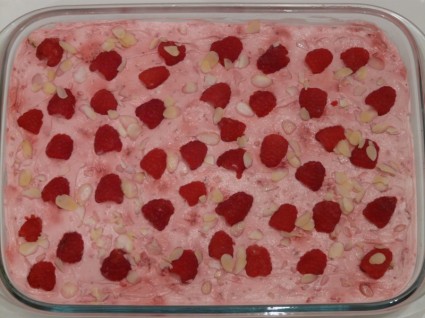
Raspberry curd quark dessert- one of many delicious sweets using raspberries

Raspberry curd quark dessert- one of many delicious sweets using raspberries

Stolen without permission from various websites including:

www.rhs.org.uk

www.growfruitandveg.co.uk

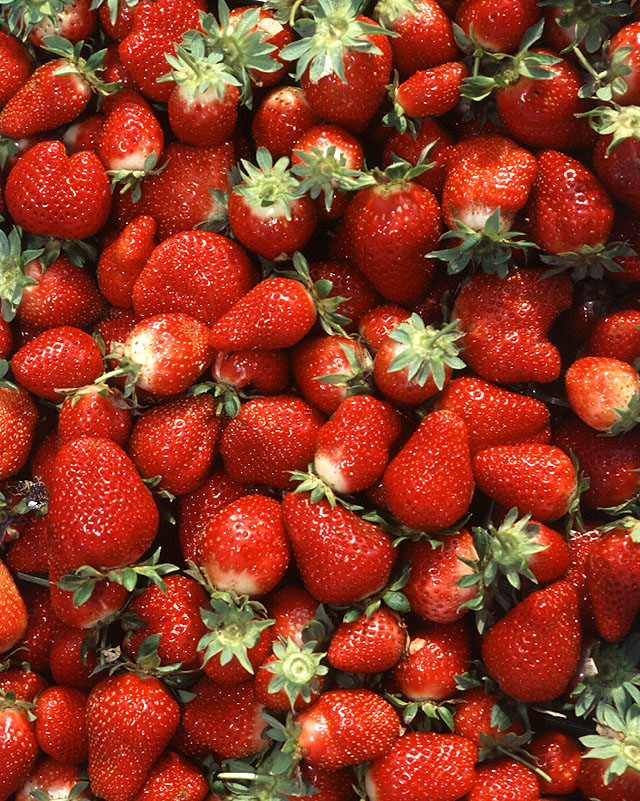
Chandler_strawberriesHere’s the second article in the new series ‘Eat Me’. This one has been written by another of the participants in the ‘Grow Your Own’ course that I ran recently in Foulsham, Norfolk.

Strawberries- a guest article by Colin Ferris

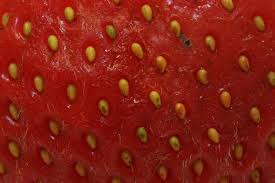
The fruit of the strawberry is not a berry but rather is a pseudo fruit or accessory fruit; some would not even accept the definition as a fruit. Indeed what appear to be the seeds on the outside are achenes, each of which is really a single seeded fruit.

Close up of strawberry

HISTORY

The  wild strawberry Fragaria vesca was the first to be grown and cultivated for its fruit until the hybrid ‘garden strawberry’ Fragaria x ananassa was bred in France in 1750. It is a cross between the North American  F. virginiana and  F. chiloensis  from Chile.

CLASSIFICATION

Fragaria is a flowering plant (Angiosperm) in the family Rosaceae. The Genus Fragaria contains about 20 species plus many hybrids and cultivars. The structure of the strawberry plant is quite typical of a member of the rose family, most noticeably when looking at the flower with its five petals.

Botanical-Fruit-Strawberry-2

CULTIVATION

Whilst generally considered in this country as a very typical British fruit, it is surprising to find that the UK does not even make it in the top ten of the world strawberry producers. By far the biggest producer is the USA, growing about 1.5 million tons of fruit per year. Strawberries grow well in any fertile soil and respond well to the addition of manure or fertiliser. It is not advisable however to grow them in soil that has previously been used to grow potatoes, chrysanthemums or tomatoes, due to the build up of soil pests and diseases. Plants will grow well for four or five years after which they decline and do not fruit well. It is thus best to replace them when four years old but not to grow the new plants in the same soil previously used for strawberries, i.e. employ suitable crop rotation.

Strawberries being grown hydroponically

PLANTING

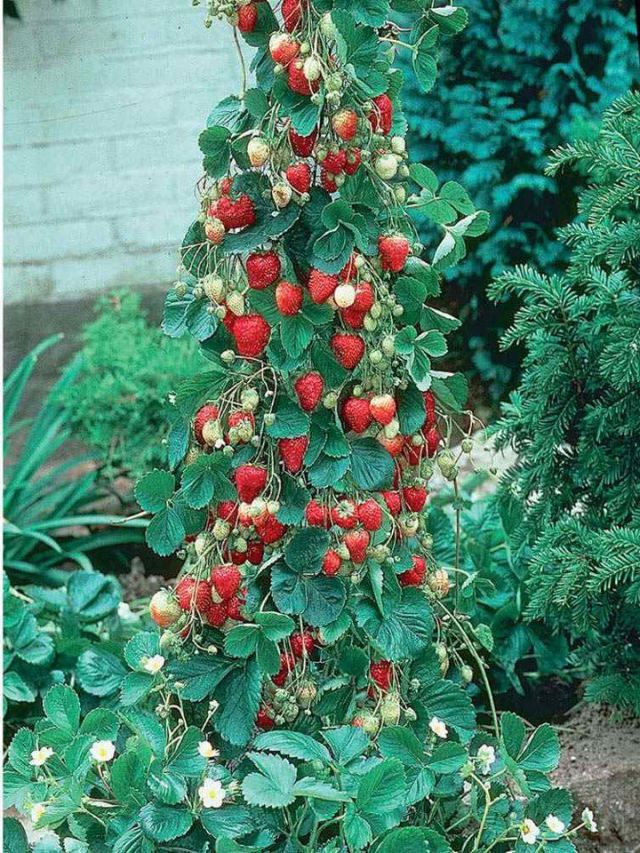
Plant rooted runners or bought plants in fertile but well drained soil either in the ground, or in any form of container that can be suitably positioned in a sunny place and watered frequently. Plant in autumn or early spring but avoid cold wet weather and avoid areas prone to frost. Space plants about 14 inches apart with 30 inches between rows.  Keep plants well watered especially in dry spells but take care not to rot the crown with too much water given from above.  When fruits begin to form a mulch, typically straw, should be tucked underneath them to prevent rotting from the soil. Keep weed free. After cropping has finished remove old leaves and straw. If you will not be using them runners should be removed to prevent energy being wasted on them.

Strawberry flower
Strawberry flower

PROPAGATION

In order to produce new plants with the same characteristics as the parent plant, it is best to use strawberry runners. The stolons or runners produced by the plant are a form of vegetative reproduction and so produces plants that are genetically identical to the parent. It is important to let the new plants remain on the runner until a good healthy set of roots has formed.

CULTIVARS

Summer fruiting varieties These are the most popular with large fruits over a short but heavy cropping period of a few weeks. There are early, mid-, and late types.

Perpetual varietiesThese have a much longer fruiting season but fruits are smaller and crops not so heavy.

Strawberry display at Chelsea Flower Show 2009

PROBLEMS

Fungus – Botrytis grey mould, powdery mildew, leaf spot, Verticillium wilt, and red core: remove dead material immediately, lower humidity around plants, remove weeds and prevent overcrowding.

PestsRed spider mite, seed beetle and vine weevil: use appropriate sprays or preferably biological control. Birds: use netting or preferably a fruit cage, bird scarers may help but generally are of little benefit.

USES

Strawberries have such a wonderful flavour that they are used in so many recipes that it is impossible to list them. They are best when picked fully ripe (bright red in colour) when the sun has warmed them, and they taste extremely good with a little sprinkling of sugar and some fresh cream. Given that they crop heavily over a short period, strawberries are often used to make jam.

Strawberries and Cream- the tatse of an English summer...
Strawberries and Cream- the tatse of an English summer…

Old School Gardener

morello cherry treeOld School Garden raised some funding to help support Norfolk local food growing projects under the ‘Master Gardener’ programme. Here’s a story about how some of the money, raised from a garden open day, has been used.

Based at Great Hockham Primary School, Norfolk, Hockham Herbs is a young gardening group established by Master Gardener, Bev Page back in 2011. When Bev stepped back from leading this group, one of the children’s Dads, Rob Muggridge, took over. In July 2013, Mr Muggridge was tragically killed in a road traffic accident.

Bev applied for funds to purchase a tree that the Herbs group could plant in memory of Mr Muggridge. The children adored their growing mentor and coming back this autumn was difficult for them.

To have the opportunity to plant “Rob’s tree”, care for it and watch it flourish will help them come to terms with their grief and loss.

Bev was awarded funds and she purchased a Morello Cherry Tree from Thetford Garden centre and she had enough money left over to add a bird box.  The tree was planted on Wednesday, 13 November in the school orchard, with the help of the Hockham Herbs and Mrs Muggridge.  The bird box is destined for a mature tree trunk in the school woodland.

Old School Gardener with thanks to Bev Page and Gabbie Joyce

PicPost: Strawberry Fall

Old School Gardener

A greenhouse to extend the growing season for King’s Lynn’s Lianne. The second project to be funded from the Old School Garden opening last July.

Lianne sowed her first seeds early this summer when she registered with one of Norfolk’s Master Gardeners, Lally Lee. She started with a garden overgrown with brambles and weeds and now is enjoying harvests of onions, salads, beans and various herbs. She’s simply hooked on growing.

Lianne is on a very low income and being able to grow her own is helping to supplement her diet with fresh, organic vegetables and herbs. Her mentor, Lally wanted to provide Lianne with the tools to continue to grow something throughout the winter and get an early start next year with protected seed sowing.

Lally was awarded funds to purchase a mini-greenhouse and some seeds to get Lianne off to a flying start when the growing season takes off again in early Spring. Lianne was delighted:

A greenhouse is something that I have always wanted to use. To be presented with one makes me happy and proud. I am very grateful for the support, help and kindness of the Garden Organic charity. My sister, Linzi, and I are really looking forward to getting a head start on our vegetables and flowers next spring. I would like to express my gratitude to Master Gardener, Nigel Boldero, for sharing the proceeds of his open garden day this summer, which has enabled this donation“.

Old School Gardener-  with thanks to Lally

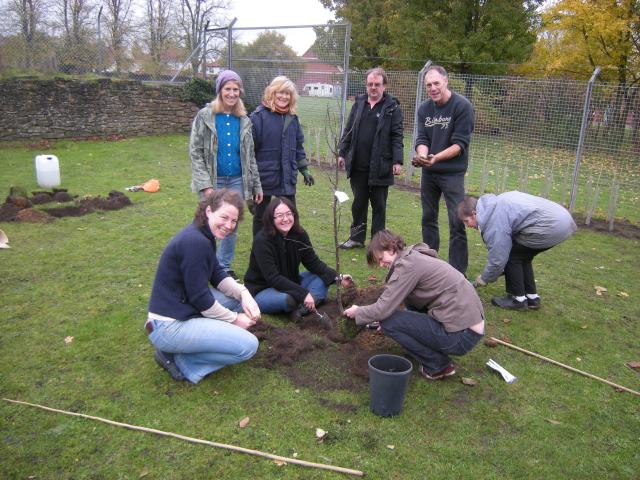
Getting to grips with fruit tree planting- the group at Wensum View Park

Getting to grips with fruit tree planting- the group at Wensum View Park

You may remember that we opened Old School Garden to the public for the first time back in July. Apart from the fun (and worry!) of sharing the garden and getting people’s feedback, it was a chance to raise some money for some local ‘good causes’. The £300 raised was divided equally between gardening projects at Cawston V.C. Primary School (where I help out as a volunteer), towards the upkeep of the fabric of St. Peter’s Church, Haveringland- the ‘Church in the Fields’ you can see from our garden-  and to support small – scale projects in the Norfolk Master Gardener programme.

One of the latter involved funding some new fruit trees for a Community Garden in Norwich and the Master Gardener supporting that project, Jeremy Bartlett, has written a piece about the planting event yesterday. I’m so pleased that our little fundraising effort has achieved something worthwhile- I’ll report on other projects funded in due course, but for now here’s Jeremy’s article.

‘Volunteers spent the morning of Sunday 17th November 2013 planting fruit trees and an edible hedge at Wensum View Park in Norwich, thanks in part to a Norfolk Master Gardener Grant .

The park, at the back of Turner Road in Norwich, is owned by Norwich City Council and contains a small children’s playground and a large area of grass used for games and by dog walkers. Local residents wanted to do more with the park and set up Wensum View Park Community Garden Group in early 2012. Following a public consultation by Norwich City Council earlier this year (http://www.norwich.gov.uk/Environment/ParksAndOpenSpaces/Parks/ParksImprovements/Pages/WensumViewPlayArea.aspx) work to transform the space began this autumn.

So far there have been two gardening tasks, led by Master Gardener Jeremy Bartlett, who has had previous experience setting up and maintaining Norwich’s Grapes Hill Community Garden (http://www.grapeshillcommunitygarden.org/).

In early October we created a herb bed and planted crocus bulbs. This was followed by a task on the morning of Sunday 17th November 2013 when about twenty-five volunteers planted fruit trees and an edible hedge. A Norfolk Master Gardener Grant for £45 went towards the cost of the fruit trees and the 105 small saplings for the edible hedge were supplied by the Woodland Trust.

We planted nine fruit trees: single trees of Apples “Golden Noble” and “Discovery”, Figs “Brunswick” and “Brown Turkey”, Medlar “Nottingham” and Quince “Champion”, two Plums “River’s Early Prolific” and an unnamed variety of Plum, which was donated by a local resident. The hedge consists of Elder, Dog Rose, Blackthorn, Hazel and Crab Apple and will add to the edible harvest once it is established.

Our next task, planned for January or February 2014, will be to build a raised bed for planting herbs and vegetables.

Wensum View Park Community Garden Group have now signed up as a Master Gardener household and Jeremy will continue to provide free growing advice during the next twelve months.

Wensum View Park (also known as “Wensum View play area”) is located on Dereham Road in Norwich. Its entrance is between numbers 319 and 321 Dereham Road and it is open to all, free of charge, every day during daylight hours.’

Old School Gardener

coriander leavesNote: This is the first of a series of articles on how to grow and use different food plants. It’s one of a number produced recently by particpants in a ‘Grow Your Own’ course I’ve been running in the village of Foulsham, Norfolk. I thought the work deserved a wider audience and hope that you find it useful. I’ll post other articles in coming weeks.

Guest blog by Jacqui Carr

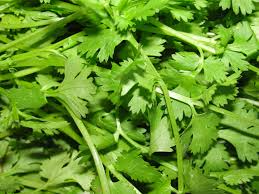
Coriander (Coriandrum sativum), is an annual herb in the family Apiaceae. It is native to regions spanning from southern Europe and North Africa to southwestern Asia. It is a soft plant growing to 50 cm (20 in) tall. The leaves are variable in shape, broadly lobed at the base of the plant, and slender and feathery higher on the flowering stems. The flowers are borne in small umbels, white or very pale pink, asymmetrical, with the petals pointing away from the centre of the umbel longer (5–6 mm) than those pointing toward it (only 1–3 mm long). The seeds are often used as a spice or an added ingredient in other foods.

How to Grow Coriander

Coriander enjoys a sunny position but appreciates a little shade during the hottest part of the day. Coriander has a tendency to run to seed if stressed. This is fine if the plant is grown for its seeds, but not if it is grown for its leaves.

Coriander is best grown from seed directly into the soil. This is because it is quite a sensitive plant; transplanting young plants can shock them and cause them to bolt (run to seed). Prepare the soil thoroughly by digging it over, removing any weeds and incorporating organic matter, such as well-rotted manure or compost. Rake the soil so it’s level and sow seeds 4cm apart in drills 1cm deep.

Germination of coriander takes up to 3 weeks. Young plants should be thinned to 20cm apart to allow them to grow to their full size. The soil should never dry out. If flowers develop they should be removed immediately to ensure the plants focus their energy on growing new leaves. Coriander should be re-sown every three weeks to ensure a continual supply during the summer. It is not normally necessary to feed coriander if the soil is well nourished. However, if the plants appear to be suffering they can be given a liquid organic feed to perk them up.

Coriander does well in containers and can be grown on a sunny windowsill or balcony. The container must be quite deep as coriander has a long taproot. Scatter seeds on the surface of the compost and cover with soil, watering well. They may need more frequent watering as pots dry quickly.

Coriandrum sativum from the Medizinal Pflanzen

Coriandrum sativum from the Medizinal Pflanzen

Harvesting Coriander

Harvest the leaves when the plant is big and robust enough to cope. Pluck or cut each leaf off the stem or snip whole stems if necessary. Both the leaves and the stalks can be used.

If grown for its seeds, wait until the flowers have died off before harvesting. Cut the stems and place the heads of the coriander in a paper bag, with the stems slicking out. Tie the stems and the bag together in a bunch and hang upside down in a cool, dry place. Wait for three weeks and then shake the bag. The dry seeds will fall out from the flowers and be ready in the bottom of the bag. Keep them in a dry place and re-sow the following spring.

Coriander pests and diseases

Coriander can suffer from root rot.  Coriander doesn’t like its roots to be too wet so make sure the soil is well draining and don’t over water the plants.  Water during the day and avoid watering in the evening. Coriander is a very aromatic plant, and as such it is usually free from pests, although slugs may have a chomp at the seedlings. In the UK, there are no serious diseases affecting coriander.

Storing

The best way of storing coriander leaves is to freeze them.  Freeze the tender stalks as well as the leaves.  Try not to wash the coriander before freezing. .  If you do wash it, then dry it as much as possible before freezing.  Freeze only healthy green leaves – remove any that are yellow.  Put the leaves and stalks in a plastic bag, seal it and put it in the freezer.  When you want to use it, just take out as much as you need, and chop whilst still frozen.  Then add it to your cooking. A slightly more labour-intensive method is to freeze the coriander in ice cube trays.  Chop the coriander, and pack it into ice cube trays.  Add a little water to just cover the coriander, and then freeze.  Once it’s frozen, remove from the trays and seal in a plastic bag.  Use the cubes straight from frozen.

Cooking with Coriander

Coriander is a delicious and versatile herb, used in a variety of dishes including Indian and Thai dishes and salsas and salads. Both the leaves and the seeds are commonly used and have distinct flavours and uses. The leaves are best eaten fresh and the seeds are best eaten dried, toasted and ground into a fine powder to use as a spice.

Recipe: Tomato, Cucumber and Coriander Salad

Ingredients:

·         6 ripe vine tomatoes, deseeded and chopped

·         1 small cucumber, diced

·         1 red onion, very finely chopped

·         6 tbsp fresh coriander, chopped

Method: mix together the tomatoes, cucumber, red onion, and chopped coriander, but don’t season until just before serving.

Coriander Seeds

Coriander Seeds

Summary

  • Sow seed every 2-3 weeks to have a constant supply of leaves

  • Do not transplant the seedlings – coriander doesn’t like to be moved

  • Keep the soil moist, but do not over water

  • Don’t water in the evening – coriander doesn’t like to “go to bed with wet feet”

  • Pick leaves regularly once they are 10cm (4in) high

  • Use the stems as well as the leaves, and allow some plants to flower so you can collect the seed

  • Freeze any excess coriander in a plastic bag, and use from frozen

  • Don’t grow in a confined space indoors as the plant has an unpleasant smell

  • Avoid planting near fennel, as they just don’t like one another!

PicPost: Hay Bale Garden

Flower and Hay Bale Garden by Carol Leigh Thomas

Finding Nature

Nature Connectedness Research Blog by Prof. Miles Richardson

Norfolk Green Care Network

Connecting People with Nature

Discover WordPress

A daily selection of the best content published on WordPress, collected for you by humans who love to read.

Susan Rushton

Celebrating gardens, photography and a creative life

Unlocking Landscapes

Writing, photography and more by Daniel Greenwood

Alphabet Ravine

Lydia Rae Bush Poetry

TIME GENTS

Australian Pub Project, Established 2013

Vanha Talo Suomi

The Journey from Finnish Rintamamiestalo to Arboretum & Gardens

Marigolds and Gin

Because even in chaos, there’s always gin and a good story …

Bits & Tidbits

RANDOM BITS & MORE TIDBITS

Rambling in the Garden

.....and nurturing my soul

The Interpretation Game

Cultural Heritage and the Digital Economy

pbmGarden

Sense of place, purpose, rejuvenation and joy

SISSINGHURST GARDEN

Notes from the Gardeners...

Deep Green Permaculture

Connecting People to Nature, Empowering People to Live Sustainably

BloominBootiful

A girl and her garden :)