Category: Great Gardens


Jardin en al Casar, Madrid by Fernando Martos Perez de Ayala

Jardin en al Casar, Madrid by Fernando Martos Perez de Ayala

IMG_9860I mentioned my trip to Bury St. Edmunds a couple of days ago. On the afternoon of that trip we visited a new garden to us, Wyken Hall, just a few miles north east of the town. This is my sort of garden.

After a very good lunch in the on site restaurant, we had a stroll in the sun. An Elisabethan Farmhouse forms the centre point of the range of gardens which include a number of small, but beautifully designed ‘outdoor rooms’ (the veranda,  pictured above, is furnished with 5 original mississippi rocking chairs), as well as a large, well stocked kitchen garden and several herbaceous borders, some cleverly colour-  themed. I particualrly enjoyed the pond with its elevated deck, a beech maze and the Silver Birch glade. The site is also home  to a working vineyard and  is well worth a visit (RHS members free, others £4, open from 2pm most days).

This slideshow requires JavaScript.

Old School Gardener

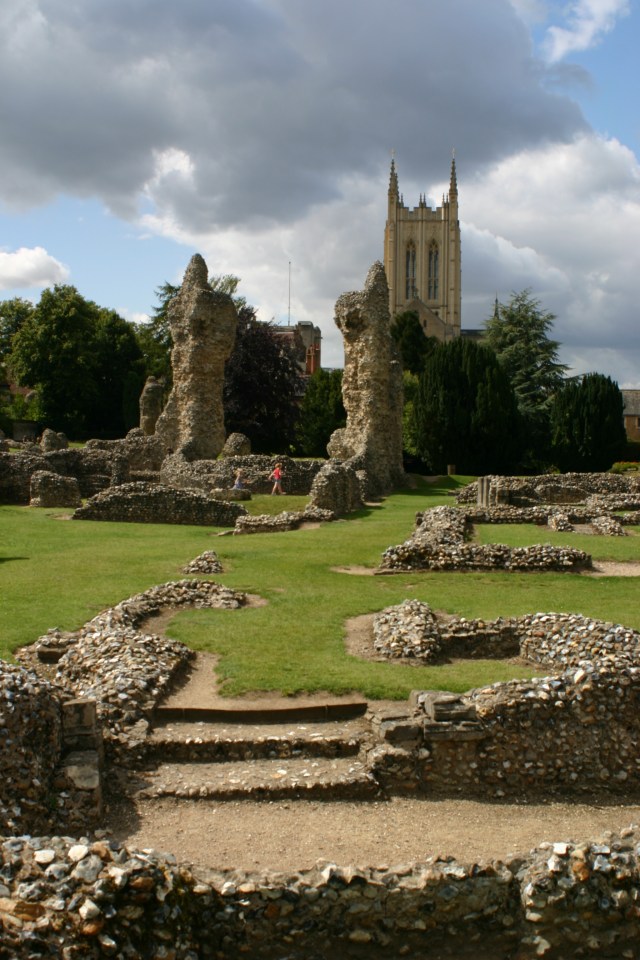
IMG_9810I’ve mentioned Abbey Gardens before, in the context of my role as a Green Flag Award judge. That time- spring last year- the place was looking great in its colourful bedding of bulbs and other spring flowers. I visited it again recently and the formal beds were once again looking superb; bright, clever combinations of flowers provided the sort of formal scheme once extensively used in public gardens and parks around the U.K. However, it’s very labour and resource intensive and has therefore been replaced by lower cost alternatives in many places, but it’s still good to see it done well. And here it IS done very well.

This slideshow requires JavaScript.

Apart from the borders there are other interesting attractions in the gardens, which also house the ruins of the abbey, and it has great views to the Cathedral with its ‘millenium tower’. And while we were there we had a wider walk around this lovely town with its extensive floral displays.

Old School Gardener

BeyondTheWildGarden's avatarBeyond the Wild Garden

I think by now you will know I am a big fan of the gardens at Powerscourt Estate. I have talked so much about their great trees and roses here before. It will come as now surprise to you all then that after a recent visit to the gardens I decided to dedicate my latest Kildare Post gardening column to the gardens. It was a great time to highlight the estate as recently it was named the third best garden in the world. An edited version of this article appeared in the print edition of the Kildare Post on 26th August 2014.

The world’s third best garden – By David Corscadden 

When it comes to Irish gardens that have had an impact on garden design a hand full of gardens come to mind. None standout more strongly to me though than Powerscourt Estate in Enniskerry, Co. Wicklow.

For me these…

View original post 422 more words

WP_20140827_006

Having been over to Gressenhall Farm and Workhouse Museum today to do some gardening, I couldn’t resist snapping the front border, which was my first design and create project there a few years ago. The combination of grasses, shrubs and annuals was looking great in the sun, so here’s a sample. Sorry to show off!

Old School Gardener

IMG_9760I finally fulfilled a long-held ambition last week – to visit Hatfield House, Hertfordshire, especially to see the gardens. Visiting with old friends Dave and Jen, we were first blown away by the sumptuous house with its amazing range of paintings, furnishings, panelled walls and most of all the ceilings- a testament to old-fashioned craftmanship – and lots of dosh! The Hatfield House website says of the house:

‘Hatfield House is the home of the 7th Marquess and Marchioness of Salisbury and their family. The Estate has been in the Cecil family for 400 years. Superb examples of Jacobean craftsmanship can be seen throughout the House.

In 1611, Robert Cecil, 1st Earl of Salisbury built his fine Jacobean House adjoining the site of the Old Palace of Hatfield. The House was splendidly decorated for entertaining the Royal Court, with State Rooms rich in paintings, fine furniture and tapestries.

Superb examples of Jacobean craftsmanship can be seen throughout Hatfield House such as the Grand Staircase with its fine carving and the rare stained glass window in the private chapel. Displayed throughout the House are many historic mementos collected over the centuries by the Cecils, one of England’s foremost political families.’

This slideshow requires JavaScript.

The outside areas were equally enjoyable, with a range of gardens and parkland, currently home to a display of provocative, beautiful and fun sculptures.

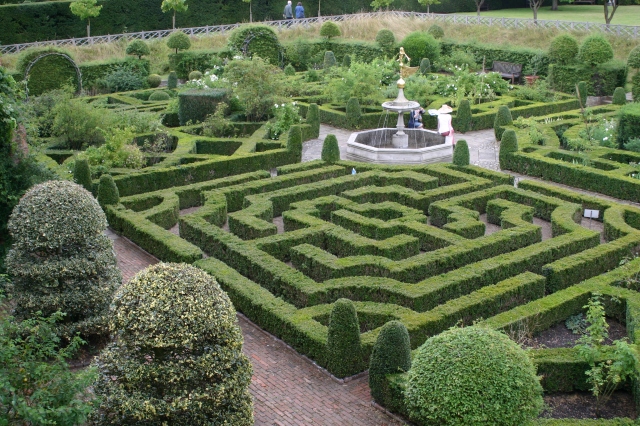
The West Garden was a little past its best when we visited, but was probably a wonderful display of colour just a few weeks earlier from the many herbaceous plants, roses and shrubs set out there. The climax, for me, was the wonderful Tudor Garden with its intricate box knots and clipped hollies. Here’s what the Hatfield House website says about the gardens:

‘The garden at Hatfield House dates from the early 17th century when Robert Cecil employed John Tradescant the Elder to collect plants for his new home. Tradescant was sent to Europe where he found and brought back trees, bulbs, plants and fruit trees, which had never previously been grown in England.

Visitors can enjoy the sundial garden and fountains, and view the famous knot garden adjoining the Tudor Old Palace where Elizabeth I spent much of her childhood. Following the fashion for landscape gardening and some neglect in the 18th century, restoration of the garden started in earnest in Victorian times. Lady Gwendolen Cecil, younger daughter of Prime Minister Salisbury, designed the West Garden as it is today.

The adjoining woodland garden is at its best in spring with masses of naturalised daffodils and bluebells.

The East Garden was laid out by the 5th Marquess of Salisbury. This part of the Garden has elegant parterres, topiary and rare plants are a delight for the gardening enthusiast and for those wishing to spend a quiet time in idyllic surroundings. Designed to be viewed from the first floor of the House, the East Garden is only open to the public on one day each week during the visitor season.

The Garden is maintained by Lady Salisbury and her small team of gardeners’

This slideshow requires JavaScript.

Further Information: Hatfield House Website

Old School Gardener

anne's avatarnot at home

The Villa Ephrussi Rothschild is surrounded by nine magnificent gardens decorated with patios, waterfalls, ornamental ponds, flowerbeds, shady paths and rare species of trees.

The gardens took seven years to complete, from 1905 to 1912. The site chosen for the Villa, with all the grandeur of its dual aspects, was not however particularly conducive to the establishment of a garden. In fact, the creation of a landscaped park on this rocky promontory covered in trees and battered by gusts of wind would be an amazing feat. But that was no obstacle!

All they had to do was to dynamite the ground and bring in enormous quantities of earth to make it flat. Hundreds of Italian workers were hired for these colossal excavation works. In 1912, on the day the Villa was inaugurated, the four hectares of garden were still not completely landscaped:  Béatrice Ephrussi gave priority to the areas that were…

View original post 191 more words

Francesca's avatarThe Girl Who Had Wanderlust

On the 24th we took a trip up to Hughenden Manor for the day to take a look around the estate.

We were aiming for the Manor first but we grabbed a tea first at the Stable’s restaurant, and they had awesome fruit teas. I had the Raspberry and Vanilla, which was amazing.

Then we went to the Manor, which was the old Prime Minister of England Benjamin Disraeli’s house in the times of Queen Victoria. To be brutally honest, I didn’t know that he existed until that day but now I know quite a bit. The house was beautiful, decorated in full Victorian style but downstairs in the cellars it was set up as it was in World War Two, because the house was used as a place to produce maps in the war.

We picniced in the apple orchards and looked at the gardens and the walled garden where…

View original post 77 more words

gravetye manor

Elliptical food growing in the walled garden at Gravetye Manor, former home of ‘natural’ gardener William Robinson

Finding Nature

Nature Connectedness Research Blog by Prof. Miles Richardson

Norfolk Green Care Network

Connecting People with Nature

Discover WordPress

A daily selection of the best content published on WordPress, collected for you by humans who love to read.

Susan Rushton

Celebrating gardens, photography and a creative life

Unlocking Landscapes

Writing, photography and more by Daniel Greenwood

Alphabet Ravine

Lydia Rae Bush Poetry

TIME GENTS

Australian Pub Project, Established 2013

Vanha Talo Suomi

The Journey from Finnish Rintamamiestalo to Arboretum & Gardens

Marigolds and Gin

Because even in chaos, there’s always gin and a good story …

Bits & Tidbits

RANDOM BITS & MORE TIDBITS

Rambling in the Garden

.....and nurturing my soul

The Interpretation Game

Cultural Heritage and the Digital Economy

pbmGarden

Sense of place, purpose, rejuvenation and joy

SISSINGHURST GARDEN

Notes from the Gardeners...

Deep Green Permaculture

Connecting People to Nature, Empowering People to Live Sustainably

BloominBootiful

A girl and her garden :)