Category: Gardening techniques


PicPost: Bale Out

A great idea for a temporary cold frame, using simple materials. From Growveg

Are your Water Lilies taking over?

Are your Water Lilies taking over?

This week’s gardener’s question is about dividing the tubers of water lilies and comes from Paul Theother of South Mimms. He asks:

“I have a garden pond which is so full of water lilies that the other plants are being swamped. Can I divide and repot them or is it necessary to start afresh?”

Yes Paul, now’s the time to remove the plants from the pond and divide them. You can do this at any time between April and June. Cut the tubers into smaller pieces so that each contains a number of ‘eyes’ from which the new leaves are produced. Tie back the long, straggly roots and plant them individually in large baskets to help contain their growth, using aquatic compost and gravel to help to weigh them down. They should be put into the pond at a depth where they can send their flowers to the surface – this will depend on the variety and maturity of the plant.

Another plant that benefits from dividing, and which can yield many more plants as a result, is the Flag Iris.

If you want to do this then wait until after they have flowered. Lift the rhizomes (the tuberous roots), with a fork and discard the older pieces. The outer, younger growth will provide you with your new plants – this is where most of the new horizontal growth will occur. Having cut away the the old part of the rhizome to leave only a small part of this season’s growth and with some roots and leaves attached, trim the leaves back just above the point where they begin to spread out, leaving a small fan.

Replant or pot these up in soil which has had organic matter added – but don’t overdo it. Leave the top of the rhizome visible, so that they look rather like a crocodile in a lake! If you have a windy garden you can plant them slightly deeper – or try to place them somewhere where they won’t be toppled or suffer windrock. The shortest varieties of tuberous Iris can be left undivided for several years, whereas taller varieties should be divided regularly after flowering – usually every third year.

Here’s a picture gallery from Wikihow.

Iris 'Samurai Warrior'- the closest breeders have come to a red Iris

Iris ‘Samurai Warrior’- the closest breeders have come to a red Iris

Further information:

Lifting and dividing irises

A-Z of Perennials: I is for Iris

Do you have a gardening question I can help with? If so please email me at: nbold@btinternet.com

Old School Gardener

If you’ve enjoyed reading this post and others on this blog, why not comment and join others by signing up for automatic updates via email (see side bar, above right ) or through an RSS feed (see top of page)?

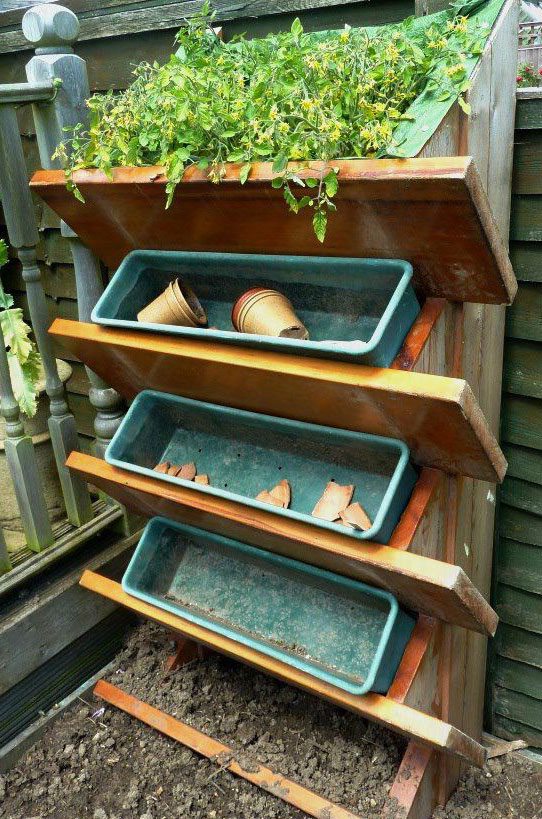
PicPost: Doing Cartwheels

Photo from Grow Veg

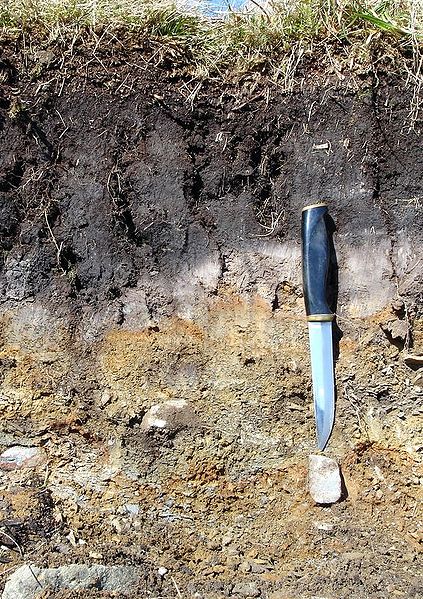
A profile of a typical 'podzol' showing the grey layer of leached out minerals below the dark top level of soil
A profile of a typical ‘podzol’ showing the grey layer of leached out minerals below the dark top level of soil

This week, ‘Gardener’s Question Time’ features soil. A Mr. T. Breck asks:

‘What is a soil pan? I think I may have one in my sandy soil here in south west Norfolk, as my plants don’t seem to be growing very well. Can I do anything to get rid of this?’

Well Mr. Breck, it does sound as though you may have a soil pan. This occurs when certain soil minerals are washed down through the soil by rain lodging some way below the surface. It does often happen in sandy soil containing a high proportion of iron. Over a period of time the minerals weld together to form a hard layer impervious to water. This layer restricts the downward spread of plant roots, so that poor growth results. In former heathland or coniferous forest areas (which is broadly speaking what much of south west Norfolk used to be) these soils may be termed ‘podzols’.

A similar situation can happen if a rotary cultivator is used regularly and its tines  are set at the same depth on each occasion – the action of the tiller blades causes soil compaction at that depth. You can avoid creating this pan by varying the depth of the rotivation.

To remove a pan it’s a case of digging deep and using a pick or fork to break up the welded layer of minerals and incorporating as much organic material (leaf mould, compost, manure) with the replaced topsoil.

More difficult hardpans may be further improved through the action of both adjusting the soil pH with lime if the soil is acidic, and with the addition of gypsum. This combination can help loosen clay particles bound into a hardpan by the actions of hard salts such as iron, calcium carbonate and sodium, by promoting their mobility. It is likely that mechanical removal of the soil pan and some changes to the soil structure as suggested above will be the most successful strategy, rather than relying on just one approach.

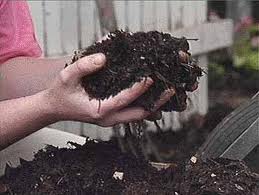
Adding home made compost or other organic matter to your soil will improve its structure and nutrient levels

Adding home made compost or other organic matter to your soil will improve its structure and nutrient levels

Whilst we are talking about soil it is perhaps worth just noting what soil actually is. It is made up of many different ingredients including varying proportions of clay, silt and sand. A soil containing a high proportion of clay is considered to be heavy and, whilst rich in nutrients, is often difficult to cultivate, especially when wet. Sandy soils, on the other hand, are light and easy to work, even after rain.

The soil here in the Old School Garden is a sandy loam and is a joy to cultivate, though I do have to add organic material to improve its moisture retention and nutrient levels. So, decomposing plant remains (or other organic material) is another important ingredient of soil as are air and water. Microbes by the million are also present and these and other organisms like earth worms are doing the job of breaking organic material down and  processing this into soil.

Links:

Improving soil by adding organic matter

The importance of organic matter

Compost – 10 things you wanted to know, but were afraid to ask…

Old School Gardener

If you’ve enjoyed reading this post and others on this blog, why not comment and also join some other people and sign up for automatic updates via email (see side bar, above right ) or through an RSS feed (see top of page)?

PicPost: Caged Veg

IMG_5641

Looking towards the Terrace and Orchard at Old School Garden

To Walter Degrasse

Dear Walter,

Well, old friend, the morning has started under a veil of mist in Old School Garden, but it hopefully will lift later and we can have more of that elusive sunshine!

It’s been a very busy time in the garden and in my other gardening activities. They say that May is the busiest month in the garden, and so far I’d have to agree. In the last few weeks plants have started to catch up with the ‘slow seasons’ and there is a wonderful fresh greenness around and in the countryside beyond. I tend to wait until the end of May before putting out any tender plants and as a result, my greenhouse and cold frame are bursting with plants at various stages of growth. Hopefully I can move things on over the next couple of weeks so that I can make way for tomatoes and cucumbers (new seedlings kindly supplied by my friend Steve) in the greenhouse.


The Kitchen Garden is starting to fill out and every bed is now full with something (though the new Asparagus I planted last autumn is a ‘no show’ – maybe it drowned in all the winter wet or perhaps it’s just not strong enough to break the surface yet – there’s certainly Asparagus on sale locally). You remember I tried sowing carrots in modular pots last year and they were more or less a failure? I’d hoped that was due to the weather. Touch wood – those I sowed earlier this year and which I’ve now planted out, seem to have established well and are growing away. I invested in some outdoor polypipe as an experiment in building a structure to cover these with mesh (as a protection against Carrot Root Fly) and the result is looking like its doing a good job. I did a very simple job of slotting the pipe into some pipe brackets I’d fixed to wooden spacers screwed to the insides of my wooden raised bed and the new roof seems to be holding its curved shape quite well, though some roof – line reinforcement (perhaps with another length of pipe) may be required to ensure the structure survives the windiest weather. The Parsnip I sowed a couple of weeks ago in this bed also seems to have germinated, so I shall thin those shortly.

I’ve also tried a new design for the support of my Mangetout, creating a sort of angled arc which has 12 healthy plants at its foot ready to clamber their way up the netted structure (they grow to about 4 feet so I didn’t need anything very tall).


You remember that I planted my potatoes (well almost all of them) on 5th April, because that was deemed to be a beneficial date on the lunar calendar? Well, I haven’t got any way of making a scientific comparison, but these are now looking healthy, are well above ground and ready for ‘earthing up’. The reserve tubers which I put into a shadier spot a few weeks later have not yet broken through.

Early potatoes up and looking good

Early potatoes up and looking good

We’ve seen the return of ground elder – an annual event despite what seems like constant weeding. So I’ve been out doing a regular hour or two of hand weeding to try to systematically work my way around the borders, and with the recent rain and the addition of rotted wood chips to the soil, this is a very enjoyable and rewarding activity. It’s just lovely working your way through the soil, carefully ‘mining’ for the roots of the elder and gently easing it out of the ground – ‘just like archaeology’, as Deborah says! Though the flower borders are looking a bit like a wireless station at present (because of all the canes and string I’ve put out to support some of the bigger perennials), the new growth is gradually covering these and the garden is taking on a fuller look. I must keep on with the weeding!

With the lateness of spring the Tulips are still with us and they are making some very pleasant combinations with other plants in the garden. I’ve shown a few examples here.


Have you noticed any snail and slug activity yet? I’ve been very surprised that there seems to be very little obvious damage to Old School Garden as yet (compared to last year when it was disastrous). I did put down some pellets a few weeks ago, especially on the containers with Hostas in them and I’m very pleased that the new leaf growth appears to have virtually no signs of damage at all  – maybe these pellets did the job of killing off the young snails and slugs, though even so I haven’t seen many corpses around, so I’m thinking that maybe the very harsh winter weather did a good job in killing off those slugs and snails that would have normally over wintered. The Courtyard  looks good as a result, with the vine coming into to leaf and garlanding the walls and some new colour coming soon from some Sweet Williams I put into the containers alongside the Hostas.


On the wider front, I’ve continued to work with the children at my local Primary School, and as you may have seen in a recent article, I’m enjoying working on various projects with a group of 7 children on Friday afternoons. Yesterday at the School’s annual Fete, we managed to sell all of the hanging baskets that the children had planted up, so making around £40 profit that can go back into gardening activities. This event was also an opportunity to promote the Master Gardener and Master Composter schemes I’m involved with. A colleague, Jane and I manned the stalls for the afternoon, making  paper pots and sowing Nasturtium seeds with the youngsters, showing them the wormery and the worms doing their job as well as offering quizzes and advice and information on food growing and composting to the many adults who came over to see us. Over the next couple of weeks, the Friday gardening group will be finishing off some vertical planters they’re making out of wooden pallets and thanks to a kind donation of plants from a local nursery – woman these will make a lovely, colourful feature in the play ground. I’ll do a separate article on this project once they’re finished.

Today I’m off the Suffolk to inspect a community – run woodland which has applied  to be awarded a ‘Green Flag’ as a mark of excellence. You may recall that this scheme has been operating for a good number of years and is fast becoming the national benchmark for parks and open spaces in England. I’ve been a judge for about 5 years now and every year I get to visit a couple of really interesting and usually very well presented and run open spaces. I’ve been out to judge one woodland in North Norfolk last week and today’s trip will complete my quota for this year. I’ll write an article about Green Flag and the two sites tomorrow, so keep a look out!

Well, that’s just about brought you up to date with Old School Garden for another month.


Thanks for sending me the pictures of your lovely garden, where I see your herbaceous borders are starting to fill out like mine. And I was particularly impressed with your creations using pallets! The new ‘pallet shed’ looks wonderful and the fact that you managed to make it for almost nothing (given the price of sheds these days) is great. My post on pallets seems to have gone down a storm and is still receiving many visitors every day including from the USA and around the world! I’ve come across a couple of other, novel uses of these and will post the pictures shortly. I managed to obtain a few additional pallets for free from the local Garden Centre and I’m currently thinking about what else I can use them for. I’m certainly going to use some as a sort of raised bed edging where I need to consolidate some soil and support the wooden frame up which I’m training a fan cherry and plum. I’ve cut some pallets in half and will sink these, like fences, into the ground as barriers to keep the soil in (maybe using landscaping fabric inside to contain the soil). I’ll let you know how I get on and post some pictures.

Oh, and some great news, The Radio 4 programme ‘Gardener’s Question Time’ is coming to Gressenhall Farm and Workhouse Museum at the end of June, so this will be a great opportunity to introduce those attending to the gardens and promote the place a bit too, especially as there is a gardening event at the Museum the week after! Stay in touch.

All the best for now,

Old School Gardener

Other posts in this series:

Dear Walter….letter from Old School Garden, 18th April May 2013

Dear Walter….letter from Old School Garden, 11th March 2013

Dear Walter… letter from Old School Garden: 15th February 2013

If you’ve enjoyed reading this post and others on this blog, why not comment and join others by signing up for automatic updates via email (see side bar, above right ) or through an RSS feed (see top of page)?

PicPost: Bin Laden

Decorated Compost Bin Competition
Winners Announced!!

PicPost: Stair in disbelief

I’ve just returned from a session of the ‘Gardening Club’ at my local primary school – 7 children of varying ages. What a little preparation and enthusiastic kids can achieve! We:

  • Painted up the pallet planters we’re making for a floral display at the school (we’re planting up hanging baskets next week for sale at the Summer Fair on 19th May) – more on this project in due course…
  • Set up a wormery outside the school kitchen – I bought some worms from a local angling shop and with the day’s fruit peel and other kitchen waste on a bed of leaf mould we set the little critters to work and talked with the School cook about how to keep the process going…
  • Sowed some Squash and Lavender seeds one of the children had brought in – they’re already excited at how tall their sowings of trailing Nasturtiums have grown in two weeks…
  • Had a brief run down on the composting process in the wormery and set them a challenge of finding out some ‘compost facts’ for next week, as well as discussing who’ll be available to help me sell the hanging baskets, make paper pots with children visitors and advise people on food growing and composting at the Summer Fair…

Phew – need  a little sleep….

Old School Gardener

Public domain image, royalty free stock photo from www.public-domain-image.comFollowing my first ‘Gardeners’ Question Time’ post last week, I’m pleased to say that I’ve had a question from a Mrs.Trellis of North Wales, who asks,

‘Is it possible to grow peppers and aubergines outdoors in the UK?’

Well, Mrs. Trellis, even though global warming is raising the overall average temperature in the UK, this is very gradual and is unlikely to make it possible for you to grow these exotics outside where you live – unless of course you have a very sheltered, sunny and warm spot (in a courtyard perhaps). However, even there in North Wales its unlikely to  be warm enough, long enough during the summer. Having said that, you could of course have a scorching summer and I’ll be proved wrong!

If you do want to have a go and have a greenhouse and/or cold frame you could try to start the plants off inside with seed sowing in late February or early March with some added heat from a propagator (minimum 21 degrees C). Then pot them up into small pots and gradually harden them off, first in an unheated greenhouse, then perhaps a cold frame. Then, ‘if the weather is with you’ plant them out/pot them on into larger pots once all risk of frost has passed – I guess that might be well into June for you? If you are planting into open ground then it’s advisable to give some temporary protection in the form of a cloche or fleece covering for a couple of weeks into June.

Once they are growing well, pinch out the growing tips of both peppers and aubergines when they reach about 37 cms high, to make them grow bushy. And you might also need to stake and support them if they get top-heavy with foliage and fruit.

Aubergines have great health benefits

Aubergines have great health benefits

To give you some ability to respond to the weather, if you grow the plants in containers you can bring them into the greenhouse/inside if the temperatures don’t reach the sorts of levels they need (they will grow only slowly at about 12 degrees C for peppers and 16-18 degrees C for Aubergines – but ideally they both need it hotter). However, if there is a lack of sunshine you can’t do much about that – unless you invest in some expensive lighting perhaps! Also, Aubergines don’t do well in humid conditions – they need heat and well-drained soil to thrive. So, that moist North Wales climate might also be a problem!

For those living further south/east in the UK, where the climate is perhaps more likely to be both warmer and drier, outdoor peppers and aubergines are a real possibility, especially in a greenhouse – but again they need consistent heat, sun and shelter to do really well outside.

Chilli peppers have their own hotness rating scale

Chilli peppers have their own hotness rating scale

Oh, and by the way, yes, both peppers and aubergines are fruit (botanically speaking) though we tend to refer to them as vegetables in the kitchen! If you have any experiences or tips on growing peppers or aubergines outside I’d love to hear from you!

Further information:

Growing aubergines

Aubergine recipes and the health benefits

Growing sweet peppers

Growing Chilli peppers

Pepper recipes

Old School Gardener

If you’ve enjoyed reading this post and others on this blog, why not comment and also join some other people and sign up for automatic updates via email (see side bar, above right ) or through an RSS feed (see top of page)?

Finding Nature

Nature Connectedness Research Blog by Prof. Miles Richardson

Norfolk Green Care Network

Connecting People with Nature

Discover WordPress

A daily selection of the best content published on WordPress, collected for you by humans who love to read.

Susan Rushton

Celebrating gardens, photography and a creative life

Unlocking Landscapes

Writing, photography and more by Daniel Greenwood

Alphabet Ravine

Lydia Rae Bush Poetry

TIME GENTS

Australian Pub Project, Established 2013

Vanha Talo Suomi

The Journey from Finnish Rintamamiestalo to Arboretum & Gardens

Marigolds and Gin

Because even in chaos, there’s always gin and a good story …

Bits & Tidbits

RANDOM BITS & MORE TIDBITS

Rambling in the Garden

.....and nurturing my soul

The Interpretation Game

Cultural Heritage and the Digital Economy

pbmGarden

Sense of place, purpose, rejuvenation and joy

SISSINGHURST GARDEN

Notes from the Gardeners...

Deep Green Permaculture

Connecting People to Nature, Empowering People to Live Sustainably

BloominBootiful

A girl and her garden :)