Category: Gardening techniques


Domestic Scale Rain Garden

Rain Gardens

‘A rain garden is a planted depression or a hole that allows rainwater runoff from impervious urban areas, like roofs, driveways, walkways, parking lots, and compacted lawn areas, the opportunity to be absorbed. This reduces rain runoff by allowing stormwater to soak into the ground (as opposed to flowing into storm drains and surface waters which causes erosion, water pollution, flooding, and diminished groundwater). They can be designed for specific soils and climates. The purpose of a rain garden is to improve water quality in nearby bodies of water. Rain gardens can cut down on the amount of pollution reaching creeks and streams by up to 30%.’

Source: http://en.wikipedia.org/wiki/Rain_garden
Tutorial: seagrant

via Avantgardens

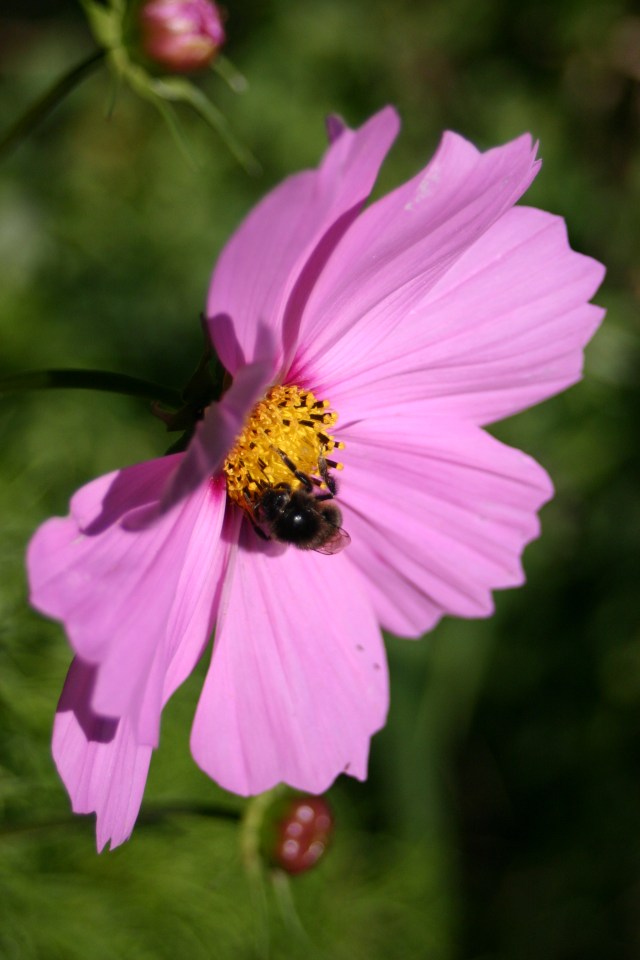
Cosmos looking good at Old School Garden

Cosmos looking good at Old School Garden


To Walter Degrasse

Dear Walter,

Sorry for the delay in this month’s letter. Having been away for a couple of weeks, I find myself playing ‘catch up’ in the garden and in many other respects too! The past month in the garden has been a relatively quiet one. The continued dry, hot weather has had a marked impact on the state of the plants, and not having been here for a fortnight has also left its mark, though I’m blessed with some very kind, helpful neighbours who have at least kept most of the vulnerable things watered – more on that later.

It was a joy seeing you and Lise at the beginning of the month, and I’m glad you enjoyed your visit and what you saw in the garden. That new crop protection netting I was telling you about arrived just before I went on holiday and this meant I was able to get it set up over a wooden and twine  frame to cover my recently – planted Purple Sprouting Broccoli and Calabrese. You remember this has a smaller mesh than the previous one I’d been using and is supposed to prevent Cabbage White butterflies getting at the brassicas? Well, it came just in time (or so I thought), as the beginning of August saw an explosion in these pretty but annoying pests that lay their eggs on the undersides of Brassica leaves leaving a legacy of a host of hungry caterpillars that destroy your best Brassica efforts!

As we departed on holiday (I’ll be doing a few posts about the various gardens we visited whilst in Devon and Cornwall), the Agapanthus was coming into flower and I had hopes that my Tithonia (‘Mexican Hat flower’) and Cleome (‘Violet Queen’) were finally putting on flower buds. The late Spring seems to have delayed their development somewhat.

What it is to have good neighbours!  Our next door neighbours Rob and Wendy were happy to water the containers and greenhouse etc. whilst we were away, though they were themselves due to go on holiday a couple of days before our return, so I was a little concerned that things might just wilt before I could get to them. I had no need to worry, for on my return – in fact the very evening I went round and started watering things – I stumbled across our next to next door neighbour, Norman, who had just finished watering the containers in the Courtyard! He had apparently been tasked by Wendy to carry on with the watering in their absence! I thanked him for this kindness and remarked on my pleasant surprise at the healthy look of most of the plants.

On closer inspection, and looking beyond the containers, greenhouse, cold frame etc., I discovered that the pests had been at play while we had been away! Moles had decided the time was right to dig up various spots in the lawn (their activity might have been prompted by one day of heavy rain) and when I inspected the brassicas I found not very much left of the Cauliflowers, Calabrese and Broccoll previously mentioned! In fact the caterpillars had been busy and stripped every last leaf! The Red Cabbages looked reasonably OK, though even here there was clear evidence of caterpillars starting to munch their way through the tightly drawn heads. So a quick harvest of those was in order (and the 4 heads i salvaged are being cut up and cooked for storage as I write). So, i can only guess that the little varmints (in egg form) had somehow been deposited on the plants before my new ‘butterfly proof’ netting was in place! Oh well, it’ll be different next year… I might just try one last sowing of Sprouting Broccoli and Calabrese, to get us some home-grown greenery in the winter months. We’ve also been harvesting courgettes (some interesting ‘patty pan’ ones  included), and the tomatoes and cucumbers as well as autumn raspberries and blackberries are looking great. The apple and plum harvest to come is also looking very promising and I’ve even found a first pear on one of the ‘super column’ fruit trees I planted a year or two ago. This year looks like a good one for fruit, as everyone is saying.

The flower garden is hanging in there. The Tithonia and Cleome have fulfilled their promise and are adding some bright colour (along with cosmos, Achillea, Phlox, Helianthus, etc.) to the late summer borders, once again complemented by the burnished stems and seed heads of the various grasses that intermingle in the main borders. I’m especially pleased with the mix of Verbena bonariensis and Nicotiana that underscores the view to St. Peter’s church. The Nicotiana’s perfume of vanilla is wonderful too.

This slideshow requires JavaScript.

Having had the late ‘bank holiday’ my mind definitely turns to autumn and so the coming month will be very much about managing a mix of harvesting (especially fruit), dead – heading and coaxing the last flowers as well as gradually clearing up those plants that have finsihed flowering and whose foliage won’t add anything to the winter garden in terms of structure or wildlife value.

Further afield I popped into Gressenhall Farm and Workhouse Museum (where you know I’m a garden volunteer). The gardens here seem to be surviving the hot dry weather pretty well. However, the sweet peas and container plants are obviously struggling with lack of water (though I was told that the Museum had had some pretty heavy showers at the weekend). I spent a couple of hours watering, dead heading and weeding and also helped contribute to a new film being produced for the museum website . This is going to ‘cameo’ some of the many volunteers here in order to provide some information for anyone thinking of joining the volunteer team. I had to say a few words about my time as a volunteer, how I’d helped to redesign and renovate some of the gardens and my time as a Heritage Gardening trainee last year. This all seemed to go well, but a few hours afterwards I received an email from one of the film crew saying that because the sun had glinted on my glasses, that this had somehow affected the focus of the whole sequence – hence the need for a rerun next week- at least I’ll have had practice at my lines!

Its back to school here next week, and so Deborah is gearing herself for the return to our local primary school. I will no doubt also be having some discussions with the Outdoor Learning Coordinator about the year ahead in the School Garden, Hopefully we can build on the progress we’ve made this year and ensure the children all get a chance to work, learn and enjoy the garden through the different seasons.

That’s about all the news from here at present. Hopefully you and Lise are enjoying  the late summer sun, as we are. It somehow seems easier to sit and view (and snooze) in the garden at this time of year, occasionally harvesting some produce, pulling up the odd weed or cutting the lawn, rather than the more frantic, continuous activity needed to cope with the surge in growth that is spring and early summer – an altogether more relaxing time!

Old School Gardener

Other posts in this series:

Dear Walter…. letter from Old School Garden 22nd July 2013

Dear Walter…. letter from Old School Garden 21st June 2013

Dear Walter….letter from Old School Garden, 20th May 2013

Dear Walter….letter from Old School Garden, 18th April May 2013

Dear Walter….letter from Old School Garden, 11th March 2013

Dear Walter… letter from Old School Garden: 15th February 2013

If you’ve enjoyed reading this post and others on this blog, why not comment and join others by signing up for automatic updates via email (see side bar, above right ) or through an RSS feed (see top of page)?

Image

Water Lily Beetle- image from Donsgarden.com

Today’s GQT comes from Adele Inwood from the lsle of Wight:

‘I have a new pool in my garden and I want to know how to deal with the main pests and diseases of pool plants please.’

Adele, the worst pest of pool plants is the Water Lily beetle- it’s larvae are like small slugs, dark on top and pale underneath. They feed on the leaves of water lilies.

The small brown beetles hibernate in the hollow stems of other aquatic plants, which should therefore be cut down in the autumn and burnt. You can control the larvae by laying a double thickness of newspaper over all the foliage from the first appearance of the pest (indicated by holes chewed through the foliage). If this is done in the evening and the papers removed in the morning, and the process is repeated at weekly intervals for at least four weeks, you should find that the beetle larvae will have been eaten by other water life.

Remove the worst damaged leaves. This method of control is also good for the reddish-black aphids which can seriously damage the leaves. Hosing off the aphids and beetles is also effective – but be careful not to add too much new water to the pool.

You might also see a thick green scum appearing on the surface of the pool. If the pool hasn’t been filled for a matter of only a few days or weeks, remove the worst of the scum with a fine mesh net. The scum – really an algae – appears after you change the water, before it settles down again. The presence of foliage on the surface will help to speed up the process by preventing light from getting to all of the water, stopping the formation of the algal ‘bloom’. So perhaps look at trying to cover more of your water surface with plants – about a third coverage is a good target.

Pond algae can be reduced by increasing leaf cover on the water surface

Pond algae can be reduced by increasing leaf cover on the water surface

Further information:

Water Lily Pests

Old School Gardener

If you’ve enjoyed reading this post and others on this blog, why not comment and join others by signing up for automatic updates via email (see side bar, above right ) or through an RSS feed (see top of page)?

holiday garden

Just click on the picture for a link to this useful article from Grow Veg.

Talking of holidays, I’ll be on holiday myself for a couple of weeks so will reduce my postings a bit during that time. I hope you still enjoy them and I’ll see you again at the end of August (hopefully with some tales of great gardens visited!)

Old School Gardener

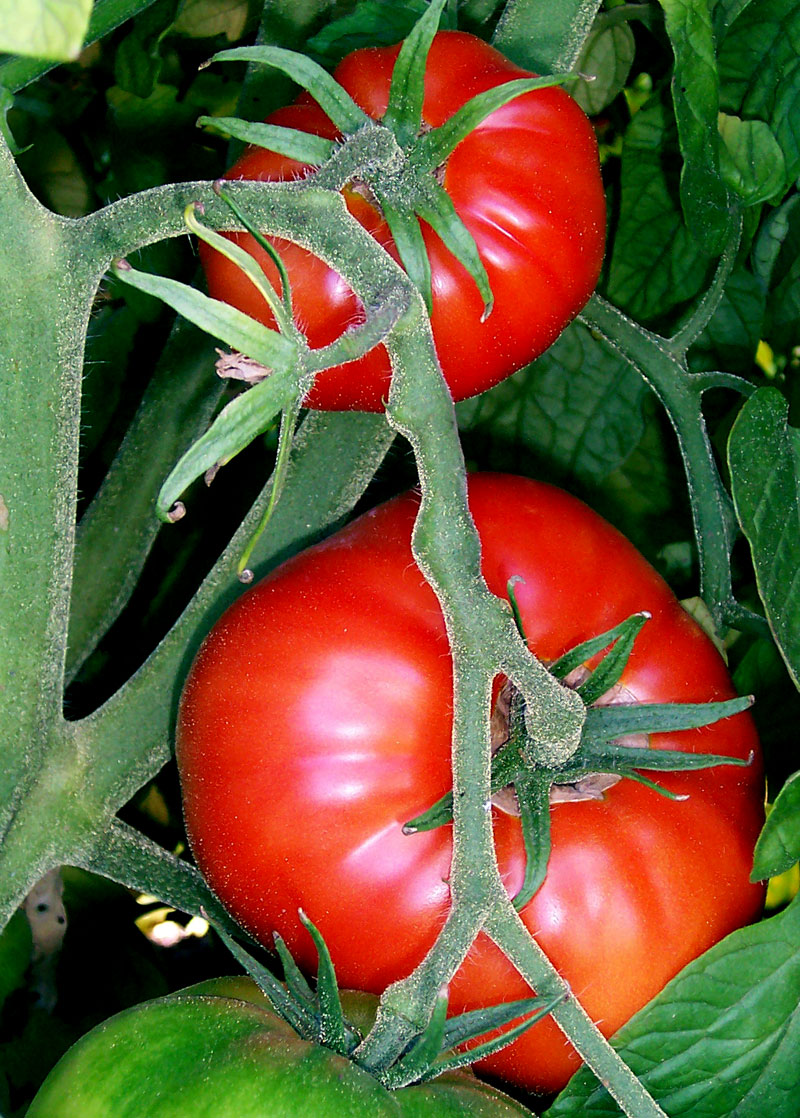
Tomatoes-on-the-bushA timely question from gardener, D. Light of Little Blight about tomatoes this week:

‘When should I ‘stop’ my tomatoes?’

‘Stopping’ tomatoes refers to the nipping out of the growing point about two leaves above the top flower truss. This concentrates the plants energies into maturing the remaining trusses of fruit before the cold weather comes.

  • Outdoor tomatoes are usually stopped after three trusses in the north of the UK, and about four or five in the south. This probably means about now (early August) or possibly slightly earlier.
  • Indoor tomatoes are stopped after seven or eight trusses– or if they are growing well, you can leave them until there’s no more room in the greenhouse!

It’s also worth remembering to continue to nip out the side shoots that grow between the angle of the leaves and main stem (only on those grown as cordons/climbers and not necessary on bush tomatoes). And as trusses of fruit start to mature from the bottom up, progressively cut off some of the foliage to allow light and air in around the fruit to help ripening and reduce the chances of disease.


Well, that’s ‘stopping’. At this time of year it’s also possible to restart the growth of spring and early summer cabbages.

When you cut the cabbage head, leave the stalk in the ground and cut a shallow cross about 6mm deep on the top of it. Provided the ground is fertile and there’s plenty of moisture, several buds will appear below the cut and develop into cabbage heads by late summer. As many as six new cabbage heads may be produced, crammed tightly together on the old stalk!

Old School Gardener

If you’ve enjoyed reading this post and others on this blog, why not comment and join others by signing up for automatic updates via email (see side bar, above right ) or through an RSS feed (see top of page)?

PicPost: Stepping up


Grey mould on strawberries

Grey mould on strawberries

Do you spray your strawberries against fungal infections?

An innovative development at the East Malling research centre in Kent may make this a thing of the past, At least if you keep bees that is. Scientists have designed a dispenser to fit into bee hives that the bees move through on their way out of the hive to forage for nectar. As they do so, they pick up a tiny amount of biofungicide, Gliocladium catenulatum ( a fungus which suppresses the growth of grey mould). The sunbstance sticks to their legs and bodies and as they move among the strawberry plants a small amount is deposited on each bloom, preventing grey mould being carried onto developing fruit. And tests have shown that the bees’ control was just as good as when the crops were sprayed – and there was the bonus that fungicide residue on the fruit was reduced. Sounds like a brilliant development that will probably benefit commercial strawberry production, but maybe a kit will also be produced for the serious home strawberry grower- bee keeper!

This ‘bioweapon’ isn’t the only one being reported at present. It seems that the invasive Harlequin Ladybird (Harmonia axyridis) is also armed with its own ‘bioweapon’ which is helping them to out compete native ladybirds.

Harmonia axyridis, the Harlequin Ladybird

Harmonia axyridis, the Harlequin Ladybird

German scientists have found  that the Harlequins carry a fungal parasite in their blood that they can tolerate, but which is fatal to other types of ladybird. There’s some uncertainty about how the natives become infected,, but it seems likely that their habit of eating other ladybirds’ offspring may be to blame. Seven native types of ladybird in the UK have declined in numbers by up to 44 per cent since the arrival of the Harlequin in 2004. Originally introduced from China as a way to control aphids, the Harlequins do not so far seem to have affected the numbers of Seven Spot ladybirds.

Another, more positive finding from the research is that the fungal parasite carried by the Harlequins seems to kill the bacterium responsible for tuberculosis and the malaria parasite, so there may be the possibility of developing medicines that can help to cure these important human illnesses.

Source: ‘The Garden’- RHS Journal August 2013

Old School Gardener

If you’ve enjoyed reading this post and others on this blog, why not comment and join others by signing up for automatic updates via email (see side bar, above right ) or through an RSS feed (see top of page)?

PicPost: Varmint Free

http://ww38.tucsongardener.com/Year09/varmintraisedbeds.htm

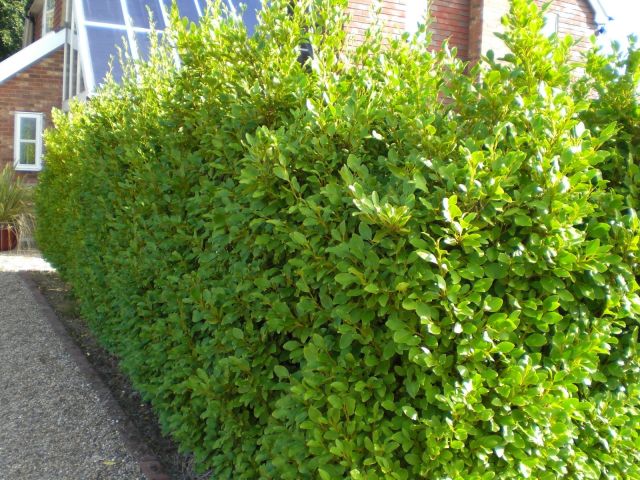
Griselina littoralis- a good seaside hedge

Griselina littoralis- a good seaside hedge

I’ve had a few queries about hedges recently and this one, from Robert Galbraith is my choice for this week’s GQT:

‘We live in a bungalow near the seashore in Sussex, where the soil is rather sandy. Could you suggest some suitable hedging plants to give our garden a bit of privacy, please?’

There is quite a wide choice of suitable plants Robert. You could go for Grisselina littoralis which has thick yellowish – green leaves forming a dense, solid hedge if formally clipped and will grow in most soils. Escallonia ‘Langleyensis’, with red flowers in June – July is often grown in seaside locations and has glossy evergreen foliage. Other varieties are E. macrantha with deep red flowers in June – September and E. ‘Slieve Donard’ with large pink flowers in June- August.

Sea Buckthorn (Hippophae rhamnoides) has silvery grey foliage and orange berries (if both male and female forms are grown). Tamarisk pentandra has feathery flowers in August whilst the form T. tetranda is May – flowering.

Euonymus japonicus, with evergreen shiny leaves is also available in variegated forms which can withstand close clipping as does the shrubby honeysuckle Lonicera nitida with small golden – green leaves.

More generally, and not necessarily suitable for a seaside home, the best ornamental evergeen hedges for formal training and clipping are Yew and Holly. Box is also suitable, but is very slow growing and expensive so is best kept as low hedging (up to about 1 metre tall) or feature, perhaps topiarised, bushes. Hedges of Cypress and Cherry Laurel are also good for an evergreen barrier and Privet, provided it is trained correctly from planting, will supply a satisfactory semi-evergreen barrier.

Cherry Laurel

Cherry Laurel

Old School Gardener

If you’ve enjoyed reading this post and others on this blog, why not comment and join others by signing up for automatic updates via email (see side bar, above right ) or through an RSS feed (see top of page)?

Finding Nature

Nature Connectedness Research Blog by Prof. Miles Richardson

Norfolk Green Care Network

Connecting People with Nature

Discover WordPress

A daily selection of the best content published on WordPress, collected for you by humans who love to read.

Susan Rushton

Celebrating gardens, photography and a creative life

Unlocking Landscapes

Writing, photography and more by Daniel Greenwood

Alphabet Ravine

Lydia Rae Bush Poetry

TIME GENTS

Australian Pub Project, Established 2013

Vanha Talo Suomi

The Journey from Finnish Rintamamiestalo to Arboretum & Gardens

Marigolds and Gin

Because even in chaos, there’s always gin and a good story …

Bits & Tidbits

RANDOM BITS & MORE TIDBITS

Rambling in the Garden

.....and nurturing my soul

The Interpretation Game

Cultural Heritage and the Digital Economy

pbmGarden

Sense of place, purpose, rejuvenation and joy

SISSINGHURST GARDEN

Notes from the Gardeners...

Deep Green Permaculture

Connecting People to Nature, Empowering People to Live Sustainably

BloominBootiful

A girl and her garden :)