Category: Gardening techniques


Specifier Review's avatarArchitecture, Design & Innovation

Staffordshire University, Stoke-on-Trent

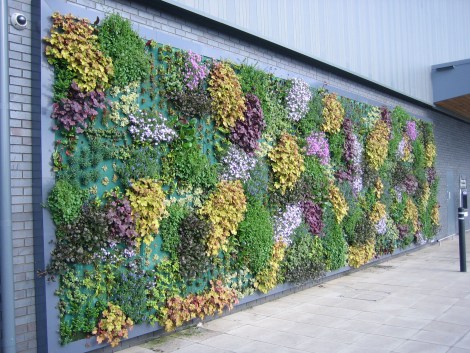
Meeting the Challenge of a Sustainable Urban Future: the contribution of green walls

Anyone concerned with the quality of life in urban areas will find the conference of interest.

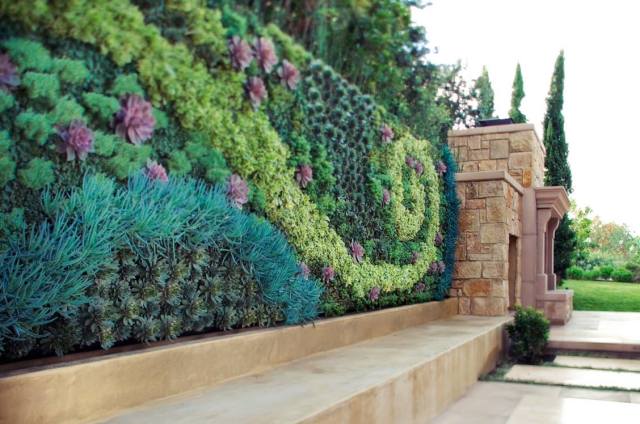
Green walls are an important component of Green Infrastructure – possibly the only cost-effective approach to coping with some of the immense challenges currently facing urban areas:

  • Climate change (coping with extreme events, e.g. heat waves, flooding),
  • Pollution (including health impacts),
  • Lack of wildlife habitat,
  • Social problems (including mental health) resulting from high-density urban living.

Green walls are easier to retrofit than many alternatives, take up less space, and can be rapidly deployed.
12th May 12_1 email

The Green Wall Centre

At Staffordshire University researchers have been studying the environmental and biodiversity values of green facades and different living wall systems in Stoke-on-Trent, Newcastle-under-Lyme, Birmingham, London and the Greater London area.

Taking advantage of this expertise, and experience with different commercial…

View original post 262 more words

roof top garden singapore style

Well, I suppose, strictly speaking, this is horizontal gardening, but way up high! (Somewhere in Singapore).

Old School Gardener

verti gdn by studio 'g'

by ‘Studio G’

Old School Gardener

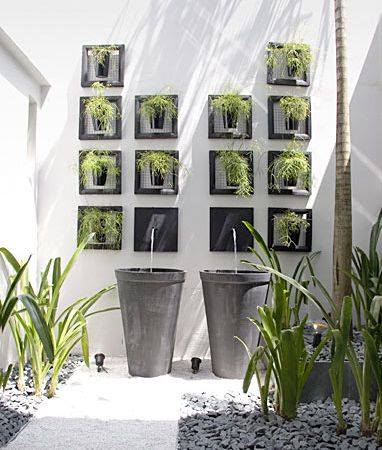
living wall

1280px-Blume_mit_Schmetterling_und_Biene_1ufGuest article by Bill O’Rielly of Knocklyon Florists

Irrespective of your experience, it is possible to bloom beauty in your garden. However, to make sure you are highly successful, there are a couple of things that should be at the back of your mind to know what the flowers will need and how they work. Some of the basics you should be aware of include:

Sun

Any professional flower gardener or even a reputable florist in Dublin will tell you that the sun is the main source of energy for budding flowers. For this reason, it is important to make sure the flowering plants get a full sun site where they will get about 6-8 hours of sunshine all day when they are growing. You can easily get a sunlight calculator online to find out the amount of sun the garden receives.

Good soil

This is considered the backbone of healthy and great looking flowers. You should work with soil that is not too sticky, not too sandy and soil that has enough organic matter that allows it to drain well and is hospitable to the plant roots. Remember to test the fertility and pH of the soil with a soil tester or you can call in an expert to make sure you are working with the right type of soil.

Perennials and annuals

When looking to grow flowers, you can opt to work with perennials. These are plants whose root systems normally stay alive underground for a couple of years or even decades. The parts above the soils may die during certain periods such as winter but come spring they sprout again. The flowers then bloom for a few weeks or even months depending on the species. When it comes to the annuals the plants normally go through the entire life cycle in 1 growing season. Many gardeners usually like this option because when they are well taken care of, they can bloom all season. The ones you choose however depend on preference.

Labour needs

When thinking about planting flowers, it is also important to think about the amount of work that you will be willing to put in. There are some species that need care round the clock while there are others that are usually more flexible. For this reason, it is important to study different types of species before you decide the one that you are most comfortable with. It also helps to do research to find out the species that really do well in your area as this can help you make a wise and informed decision on what types of flowers you are going to work with.

Once you have the above figured out and you start planting, you have to remember that there are certain activities you have to take part in for the flower garden to bloom. In some cases especially when there is no rain, you may have to water them. You should also make sure you weed off any unwanted plants to give the flowers enough space and nutrients to flourish without any competition that could end up harming them.

Flower_Bouquetwith thanks to Bill O’Rielly of Knocklyon Florists in Dublin, Ireland

Old School Gardener


IMG_9469Old School Garden – 30th July 2014

To Walter Degrasse

Dear Walter,

I’ve just read the latest chapter of an interesting book- ‘Noah’s Garden’, by Sara Stein. recommended to me by a fellow tweeter (thanks Jo Ellen). This twenty-one year old book tells of the author’s quest to garden more ecologically- or about ‘unbecoming a gardener’, as she puts it. In language as rich as the ‘natural garden’ she describes, Stein’s offering must have been one of the earliest manifestoes for a less intensive, less expensive, less consuming style of gardening. Despite the North American setting and species, she makes a pretty compelling case that’s as applicable to the UK as the USA. Here’s how the chapter I’ve just read ends:

‘Provided one plants a reasonable facsimile of a natural ecosystem- particularly with regard to a generous diversity of species adapted to the habitat- one can retire from that rank of gardeners and homeowners who, supposing that their services are the only ones that matter, work too hard, pay too much, and in return are cheated of the bounty that natural plantings offer.’

My purchase was prompted by my mention of moles and the trouble their burrowings and excavations are giving me in Old School Garden– I think that I mentioned this last month. Well, they are still here and my daily routine seems to start with using a leaf rake to gently spread the moles’ nightly offerings together with the removal of the biggest stones. In short, large parts of the lawn are looking a right old mess. But I’m starting to take a sanguine view, I suppose, fuelled by the advocacy of an ‘ecological approach’ to my plot in ‘Noah’s Garden’!

Hosta haven- the courtyard garden

Hosta haven- the courtyard garden

It’s been a rather ‘laid back’ month here, old friend. The summer heat has built quite nicely and the long days of sunny weather have finally arrived following a rather wet and dismal Spring. I’ve reduced my gardening time to a couple of hours a day (at most) and spent some periods on the terrace, reading, listening to music and enjoying the surroundings. These times have been the closest to ‘contentment’ I’ve been , I think! Here are some pictures of blooms that are doing their stuff at present.

This slideshow requires JavaScript.

The ornamental garden  has shot up and I’m amazed at the height of some things- the Achillea, Macleaya and Helianthemum to name just three. Some of the annuals have proved disappointing (e.g Nicotiana) and I was interested to hear that another local gardener (the Head Gardener at nearby Salle Park where I did part of my Heritage Gardening traineeship), has also had very mixed results. Deborah and I cycled there last Sunday for their open day and as usual the standards of horticulture on display were exceptional, though Katie (the aforementioned Head Gardener) bemoaned the fact that the roses which I said were looking really healthy and had assumed were just about to give their second flush of flowers, had in fact been ‘nibbled’ by something earlier and the flower buds we saw were in fact the first round! Anyway here are some pictures of the ornamental areas of Old School Garden, just to keep you up to date with how things look at present.

As for food, I’m pleased to say (fingers crossed) that the blight problem with the greenhouse tomatoes seems to have receded; a combination of higher temperatures, removing infected and other foliage, watering less and only on the ground, keeping ventilation up, feeding more frequently and spraying with ‘Bordeaux Mixture’ seems to have paid off. We’ve had our first few tomatoes from here (along with the ones I’m growing in hanging baskets) and there are more to come, though perhaps inevitably the crop is reduced because of the drastic action I’ve taken. Ho hum, you win some you lose some….but the bush fruit contnues to impress!

This slideshow requires JavaScript.

Talking of losing, I harvested the beetrootyesterday- well what is left of it. I must take more time to keep an eye on things! Something (slugs? beetles?) has eaten round the tops of virtually all of the roots so that I guess only about 50% of the harvest is usable. Still, there should be enough to satisfy Deborah’s pickling needs for another year. The onions and garlic have also been disappointing. I planted these out last Autumn and the wet winter and dull spring  (probably along with poor positioning in the garden), seem to have prevented much growth in these, but again there is at least something to show for my efforts.

On a more positive note, the cucumbers, courgettes and squashes seem to be doing well and I can see that courgette will be a major veg ingredient on the table in the next month or two! And we’ve had our second (good) crop of Gooseberries, this time the sweeter, red varieties. These are destined for a ‘fool’ I’m making tomorrow with Elder Flower cordial. Also, the sunflowers in the Kitchen Garden have romped away. Here is a selection of pics of them- they always add a cheery note to any garden, I think.

This slideshow requires JavaScript.

Further afield, I said my goodbyes to the two School Gardening projects I’ve been involved with this year. The one at Fakenham Academy seems likely to be halted due to lack of cash, but maybe some activity will continue on a more limited basis; I do hope so, for several of the youngsters I worked with seemed to have caught the ‘growing bug’.

As Deborah has just retired (38 years of teaching), I thought it best to also draw a line under my involvement at the local Primary School where she worked. It’s been a joy helping the children here over many years and an input I’ve been proud of, including a lot of tree and hedge planting to make the grounds a more diverse and interesting place for outdoor learning. So, as Deborah and I enter a new phase in our lives, I guess I’ll be looking for another challenge…watch this space.

IMG_9435

Hanging baskets at Old School Garden

We’re off to Suffolk for a week with some old college friends next week, so this next day or two I must get the garden ready for a week of less attention – hopefully our good neighbours will do some essential watering and harvesting while we’re away. Then, in September (for the first time ever due to school terms!) we’re off to Spain and Portugal, hopefully to include a further visit to the Alhambra in Granada, the garden I visited about 8 years ago and which really gave me the inspiration to get into gardening and garden design. I’ll do some posts on all my garden visits as and when, and hopefully keep up the momentum on the blog whilst on holiday.

The Walled Garden at Salle Park, Norfolk

The Walled Garden at Salle Park, Norfolk

I do hope you and Ferdy are faring well, Walter, and enjoying the lovely weather (it looks like it’s becoming more unsettled just as we go on holiday). We both wish you a lovely Summer break and look forward to seeing you in the Autumn.

Al the best,

Old School Gardener


Organikos's avatarOrganikos

agrivoltaics Farming food and fuel, side by side

Thanks to Conservation, and particularly Courtney White, for this synopsis:

What is the best way to utilize sunlight—to grow food or to produce fuel?

For millennia, the answer was easy: we used solar energy to grow plants that we could eat. Then, in the 1970s, the answer became more complex as fields of photovoltaic panels (PVPs) began popping up all over the planet, sometimes on former farmland. In the 1990s, farmers began growing food crops for fuels such as corn-based ethanol. The problem is that the food-fuel equation has become a zero-sum game.

View original post 455 more words

Some great DIY ideas here

Old School Gardener

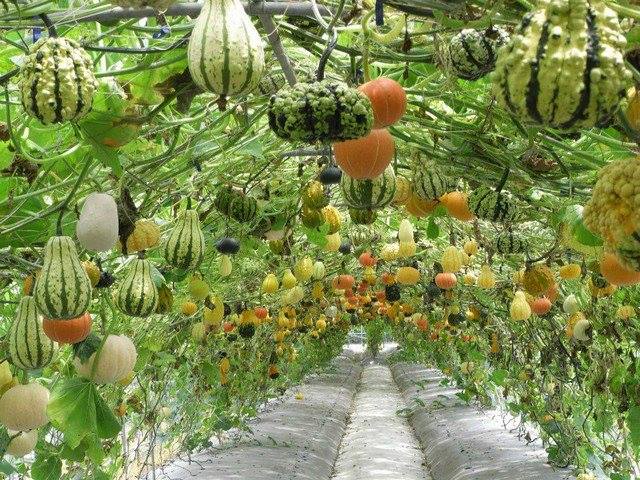
gourd heavens

Old School Gardener

headliners

Old School Gardener

Finding Nature

Nature Connectedness Research Blog by Prof. Miles Richardson

Norfolk Green Care Network

Connecting People with Nature

Discover WordPress

A daily selection of the best content published on WordPress, collected for you by humans who love to read.

Susan Rushton

Celebrating gardens, photography and a creative life

Unlocking Landscapes

Writing, photography and more by Daniel Greenwood

Alphabet Ravine

Lydia Rae Bush Poetry

TIME GENTS

Australian Pub Project, Established 2013

Vanha Talo Suomi

The Journey from Finnish Rintamamiestalo to Arboretum & Gardens

Marigolds and Gin

Because even in chaos, there’s always gin and a good story …

Bits & Tidbits

RANDOM BITS & MORE TIDBITS

Rambling in the Garden

.....and nurturing my soul

The Interpretation Game

Cultural Heritage and the Digital Economy

pbmGarden

Sense of place, purpose, rejuvenation and joy

SISSINGHURST GARDEN

Notes from the Gardeners...

Deep Green Permaculture

Connecting People to Nature, Empowering People to Live Sustainably

BloominBootiful

A girl and her garden :)