
Category: Feature plants
via Gardeners’ World Magazine
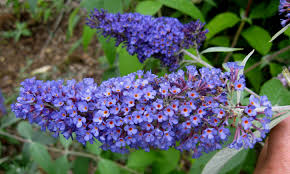
Buddleja ‘Ellen’s Blue’
1. Agapanthus
2. Aubrieta
3. Buddleja
4. Iris
5. Nepeta
6. Rose
7. Wisteria

Aubrieta

Nepeta

Wisteria
Old School Gardener

Sedum spectabile
1. Stachys lanata– flowers May- September, but mainly used for foliage.
2. Ceanothus ‘Autumnal Blue’- flowers August- October.
3. Hibscus syriacus– flowers August- October.
4. Saliva officinalis ‘Tricolor’- colourful foliage, flowers May- June.
5. Caryopteris x clandonensis– flowers June – September.
6. Sedum spectabile– flowers July- August. Flowerheads provide interest in autumn.
7. Ceratostigma willmottianum– flowers August- October. Autumn leaf colour.

Stachys lanata

Salvia officinalis ‘Tricolor’

Ceratostigma willmottianum
Old School Gardener


My wife was given this pot plant way back in July as a retirement gift- it was flowering then and is still going strong, as you can see. We’ve not removed it from its pot or packaging, nor fed it, just added a little water now and again and placed it on a bright window sill.
True to to its name- Hibiscus longiflora- it’s been putting on a show for some 7 months and there are plenty more flower buds on the way.
I’m amazed, but you might not be- do you have any experiences of long flowering plants; is there a world record?
Old School Gardener


It’s the time of year when colourful stems come into their own. I especially love Dogwoods (Cornus). For some ideas about winter interest in your garden take a look at ‘7 Plants for Winter Wonder’
Old School Gardener
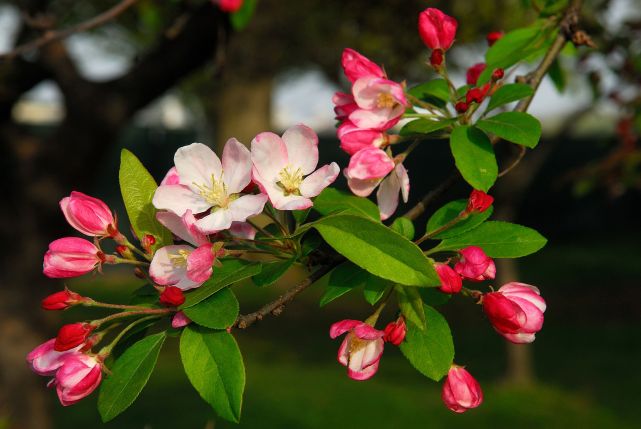
Malus is a genus of about 30–55 species of small deciduous trees, including the domesticated orchard apple (M. domestica) and varieties of crab apple (including the ‘wild apple’, M. sylvestris). This profile focuses in particular on the crab apples.
Common name: Non domestic orchard apples are generally known as crabapples, crab apples, crabs, or wild apples.
Native areas: The genus is native to the temperate zone of the Northern Hemisphere.
Historical notes: In the past, M. sylvestris was thought to be an important ancestor of the cultivated orchard apples (M. domestica), but these have now been shown to have been originally derived from the central Asian species M. sieversii. However, another recent DNA analysis showed that M. sylvestris has contributed to the ancestry of modern M. domestica very significantly.

Malus floribunda

Blackbird and Crab apples

Crab apples in the frost pic by pieway.com

Crab Apples with Tulips
Features: Domestic orchard apple trees are typically 4–12 metres tall at maturity, with a dense, twiggy crown. The leaves are 3–10 cm long, alternate, simple, with a serrated margin. The flowers are borne in corymbs, and have five petals, which may be white, pink or red, usually with red stamens that produce copious pollen. Domestic apple trees are large if grown from seed, but small if grafted onto roots (rootstock). There are more than 7,500 known cultivars of domestic apples, resulting in a range of desired characteristics. Crab apples tend to be smaller than domestic apple trees at around 5 – 7 metres tall, with a rounded profile.

Autumn foliage colour…


Uses: Crab apples make ideal specimen trees for small gardens. They are popular as compact ornamental trees, providing blossom in Spring and colourful fruit in Autumn. The fruits often persist throughout Winter. Numerous hybrid cultivars have been selected, of which ‘John Downie’, Evereste’ and ‘Red Sentinel’ have gained The Royal Horticultural Society’s ‘Award of Garden Merit’ (AGM):
Malus sylvestris – arguably, one of the UK’s prettiest native trees, a small crab apple (or ‘wild apple’) with profuse white flowers, tinged pink in bud, and with good yellow autumn colour. Yellow/ green and occasionally red flushed fruit are a bird’s favourite in the autumn. Ideal for native mixed plantings or shelter belts that provide great low cover for wildlife.
Malus floribunda – the ‘Japanese Crab’ is most elegant, with early white/pale blush flowers from crimson buds. However, it is prone to apple scab after flowering, resulting in a rather threadbare crown. Because of this it has tended to be superceded by more disease resistant clones such as ‘Rudolph’ and ‘Evereste’.
Malus ‘Evereste’ – introduced in the early 1980’s this rounded tree has profuse flowers that are red in bud before turning white. The small fruit look like miniature ‘Gala’ and are held on until they are taken by birds after Christmas. The orange-yellow autumn foliage also holds well.

M. ‘Evereste’

M. floribunda

M. ‘Rudolph’
M. ‘John Downie’ – raised in 1875, this is thought by many to be the best fruiting crab. with an irregular oval crown it makes a splendid tree for a small space. White flowers are followed by relatively large, conical-shaped orange-red fruits, which have a food flavour if required for preserves or jelly.
M. x robusta ‘Red Sentinel’– in cultivation since 1959, this profusely fruiting crab is a favourite for gardeners who are looking for winter colour. In some years the clusters of dark red fruits are so numerous that the branches can weigh too heavily so that the crown loses its shape. I have one growing in Old School Garden; it is great alongside other winter interest such as red and orange- stemmed Cornus, and its fruits are useful in Christmas decorations such as front door wreaths. In spring, the red leaves contrast well with its white flowers.

Malus trunk

M. sylvestris

M. x zumi ‘Golden Hornet’

M. x robusta ‘Red Sentinel’

M. ‘John Downie’
M. x zumi ‘Golden Hornet’ – this well-known crab has been in cultivation for over 60 years and is highly regarded for its profuse display of yellow, marble-sized fruits, which are retained for many weeks. These are preceded by white blossom; a very good ‘all rounder’.
M. ‘Rudolph’ – A Canadian crab developed in the 1950’s, this medium size tree is rather columnar when young, but becomes rounder with maturity. It has leaves which gradually turn from copper-red to bronze-green and rose- pink flowers, which give way to numerous elongated fruits. Autumn leaf colour is clear yellow and it is resistant to scab; a tree which packs a lot of plusses into a small package!
Growing conditions: Grow Crab apples in moderately fertile soil, though many will thrive on most soils and some are better suited to heavier soils, such as M. sylvestris. They will tolerate partial shade.
Further information:
Wikipedia- Malus
RHS- Malus sylvestris
RHS- Malus ‘Evereste’
RHS- Malus x robusta ‘Red Sentinel’
RHS- Malus x zumi ‘Golden Hornet’
Barcham Trees Directory- Malus ‘Rudolph’
Choosing a Crab apple- Daily Telegraph
Old School Gardener
 Liquidambar is a genus of four species of flowering trees; L. alcalycina; L. formosana; L. orientalis; and L. styraciflua.
Common name: Common names of all of the species include ‘Sweet Gum’, with additions according to their native regions. Other names include ‘Chang’s Sweetgum’ (L. alcalycina),’Redgum’, ‘Satin Walnut’ and ‘American Storax’. Both the scientific and common names refer to the sweet resinous sap (liquid amber) exuded by the trunk when cut.
Native areas: L. alcalycina is native to central and southern China; L. formosana to China and other parts of S.E. Asia; L. orientalis to south-west Turkey, Greece and Rhodes; L. styraciflua to the eastern USA, Mexico and Honduras.
Historical notes: The genus was much more widespread in the Tertiary age, but has disappeared from Europe due to extensive glaciation in the north and the east-west orientated Alps and Pyrenees, which have served as a blockade against southward migration. It has also disappeared from western North America due to climate change, and also from the unglaciated (but nowadays too cold) Russian far east. L. styraciflua is the most common species used in the U.K. and was introduced from its native USA in the 17th century. It was awarded the RHS ‘Award of Garden Merit’ in 1975.

Liquidambar styraciflua

‘Lane Roberts’

‘Lane Roberts’

‘Worplesden’

‘Worplesden’

Liquidambar alcalycina

Liquidambar acalycina

Liquidambar orientalis
Features: All Liquidambar are large, deciduous trees, most 25–40 metres (82–131 ft) tall, with palmately 3- to 7-lobed leaves arranged spirally on the stems and length of 12.5 to 20 centimetres (4.9 to 7.9 in), having a pleasant aroma when crushed. Mature bark is grayish and vertically grooved. The flowers are small, produced in a dense globular inflorescence around 1-2 centimetres diameter. The fruit is a woody multiple capsule 2–4 centimetres (0.79–1.57 in) in diameter (popularly called a “gumball”), containing numerous seeds and covered in numerous prickly, woody armatures, possibly to attach to fur of animals. In more northerly climates, sweetgum is among the last of trees to leaf out in the spring, and also among the last of trees to drop its leaves in autumn, turning multiple colors. It is sometimes confused with Maple on account of its similar leaves.

L. styraciflua fruit and leaves

L. styraciflua fruit

L. styraciflua fruit

L. styraciflua bloom

L. styraciflua bark

Uses: All of the species provide incredible autumn colour. In the U.K. they are predominately used as specimens – against a fresh green lawn, their foliage colour really stands out – and as woodland trees. L. styraciflua makes a large tree with a pyramidal crown if its central leader is retained. Its attractive, corky bark is a feature at all times of the year, but it is at its most magnificent in the autumn, when it seems to burn with crimson and gold. Suitable for streets, avenues, parks and largish domestic gardens
There are now several cultivars of L. styraciflua available:
‘Lane Roberts’– reliable in Britain, this is a medium-sized tree (10-15 metres mature height), with a tighter conical habit and larger leaves than the species. Good in groups for mass effect.
‘Manon Variegata’ – a must for those that like variegated trees, the foliage is best in summer, providing excellent contrast against darker leaved, evergreen backgrounds. Medium height (15- 20 metres mature height), it has regular pyramidal form with horizontal lateral branches.
‘Stella’ – with deeply cut, star-like leaves it is of medium height (10-15 metres) and has glorious autumn colour. best in larger gardens.
‘Thea’ – a broad -leaved and late to colour variety, ‘Thea’ grows conically to 15-20 metres tall. Similar to ‘Lane Roberts’ but taller. Distinctive purple foliage in the autumn.
‘Worplesden’ – unlike most other clones, this variety will often bear fruit in the U.K. This is the variety most often favoured for its autumn colour and form, growing to a mature height of 20 metres plus. It has deeply lobed leaves which turn yellow in September and then turn to orange before falling, but the outermost leaves gradually turn to magnificent claret red. The choice for large gardens.

Liquidambar acalycina

L. styraciflua ‘Lane Roberts’

L. styraciflua ‘Worplesden’

Liquidambar formosana
Growing conditions: L. styraciflua does best in fertile, well-drained soils, and is the hardiest species, tolerating down to -15 degrees C. The other species can all be grown in the U.K. but vary in hardiness; down to -5 degs C. There are also hardy forms such as the L. formosana Monticola Group, which could be considered for colder areas. Liquidambar should be planted in full sun in neutral to acid soil that is moist but well-drained- it does not thrive in chalky soils. The genus resents transplanting, but if this is unavoidable, prepare by root-pruning a year in advance.
Further information:
Wikipedia- Liquidambar
RHS- Liquidambar styraciflua
Horticulture Week- Liquidambar
Gardener’s World- Liquidambar
Barcham Trees Directory- Liquidambar styraciflua ‘Worplesden’
Old School Gardener

Skimmias are valuable evergreens with two seasons of interest: spring flowers and winter berries. But, mostly, they come in male and female varieties so that you need two different plants, one of each, to ensure that those bright scarlet berries are produced on just one of them.
‘Temptation’ is different. The plants are self-fertile, only one plant is needed for the fruit to develop, so all plants of ‘Temptation’ produce berries without another plant nearby for pollination.
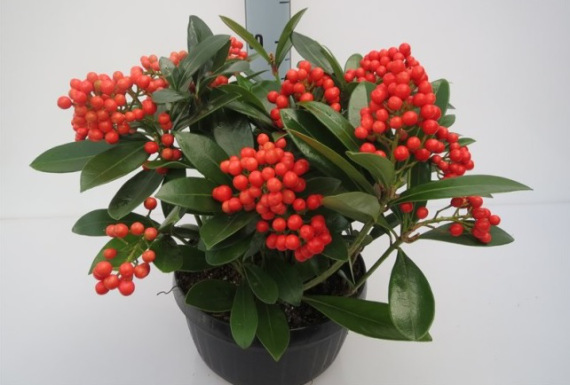
The other problem with some of the older varieties is that although they may stay small, they eventually become uncomfortably tall for many modern gardens. ‘Tempation’ is shorter, and more bushy, so makes a more effective garden plant. Its root growth is strong and its berries are a much brighter red.
‘Temptation’ is sufficiently compact to make a good two season container plant, and also thrives in any fairly well-drained garden soil in…
View original post 19 more words
 Koelreuteria is a genus of three species of flowering trees; K. paniculata, K. bipinnata and K. elegans
Common name: Common names include Golden Rain Tree, Pride of India, China tree, or varnish tree.
Native areas: The tree is Native to China and southern and eastern Asia.
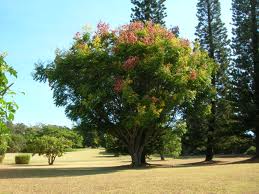
Koelreutia elegans subsp. formosa
Historical notes: It’s discovery is credited to Pierre d’Incarville, a Jesuit missionary; who sent first seed from China to Russia in 1747. It was classified by Russian botanist Erich Laxmann who named it after Joseph Gottlieb Kolreuter, from Karlsruhe, Germany, a contemporary and professor of natural history. It was later grown in Europe (by 1753) and reached America in 1811. The variety K. paniculata ‘Fastigiata’ was raised by Kew Gardens from seeds received in 1888 from Shanghai.
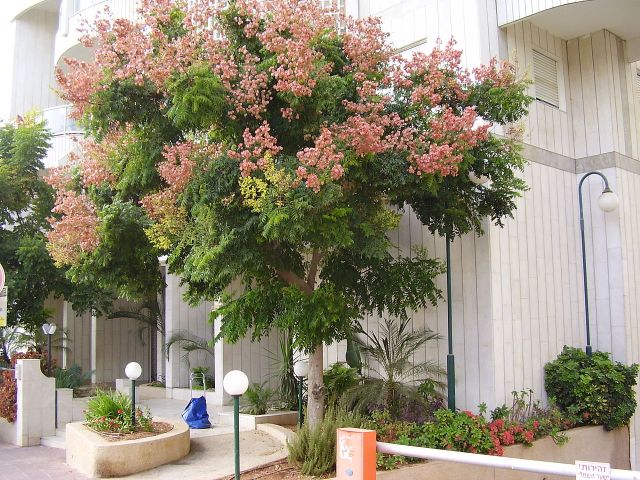
Koelreutia bipinnata
Features: Koelreuteria are medium-sized deciduous trees growing to 10–20 m (33–66 ft) tall, with spirally arranged pinnate or bipinnate leaves. Leaves are pinkish in spring, turning yellow in autumn. The flowers are small and yellow, produced in large branched panicles 20–50 cm (8–20 in) long. The fruit is a three-lobed inflated papery capsule or ‘bladder’ 3–6 cm long, containing several hard nut-like seeds 5–10 mm diameter. In some areas, notably parts of eastern North America, they have become invasive. the variety K. paniculata ‘Fastigiata’ tends to be shorter than the species (5-10 metres tall) and has a narrow columnar shape.
Uses: Koelreuteria are popularly grown as ornamental trees in temperate regions all across the world because of the aesthetic appeal of their flowers, leaves and seed pods. Koelreuteria are commonly used as focal points in landscape design. Several cultivars have been selected for garden planting, including ‘Fastigiata’ with a narrow crown, and ‘September Gold’, flowering in late summer. The seeds are edible when roasted, but are not commonly consumed. The variety K. paniculata ‘Fastigiata’ is a good choice for restricted spaces and excellent as a specimen tree in a park. The clusters of small yellow flowers which it produces in July and August are popular with bees and are followed by lantern-shaped fruits in the autumn.

Koelreutia paniculata ‘Fastigiata’ growing at Barcham Trees
Growing conditions: Koelreuteria grow in nutritionally poor soil including: clay, sand, well drained, alkaline, loam; they require full sun but not a lot of watering, with a moderate aerosol salt tolerance. They tolerate wind, air pollution, salt, heat, and drought and grow at a moderate rate, but are sometimes fast growers. Koelreuteria produce seeds that are blown away and get germinated and this might result in the growing of more trees next to the original one.’Fastigiata’ does best in dry, calcareous soils and in a reasonably sheltered position, such as an urban courtyard garden.

Fruit and flowers of K. paniculata
Further information:
Wikipedia- Koelreuteria
Wikipedia- Koelreuteria paniculata
Wikipedia- Kolreuteria bipinnata
RHS- Koelreuteria paniculata
Barcham Trees Directory- Koelreuteria paniculata
Barcham trees directory- Koelreuteria paniculata ‘Fastigiata’
Old School Gardener
 The Walnut tree genus (juglans) has 21 species, but there are two main species in common garden or landscape use; the Black Walnut (Juglans nigra) and English (or Common or Persian)Walnut (Juglans regia). I’ve recently written about the poison they both contain and what this means for growing other plants underneath or nearby.
Common name: ‘Walnut’ or Black/English/Common/Persian Walnut. The word walnut derives from the Germanic wal– and Old English wealhhnutu, literally “foreign nut”, wealh meaning “foreign”. The genus name “Juglans” comes from Latin jūglans, meaning ‘walnut, walnut tree’; jūglans in turn is a contraction of Jōvis glans, ‘nut of [the god] Jupiter’
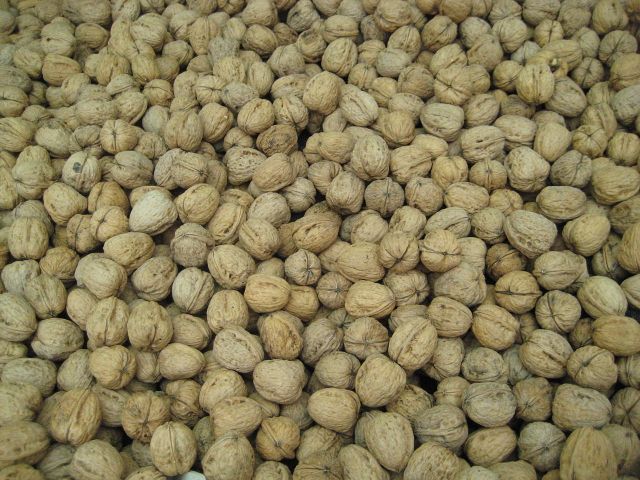 Native areas: The English Walnut (J. regia) originated in Persia, and the Black Walnut (J. nigra) is native to eastern North America.
Historical notes: The Black Walnut was introduced to Europe in 1629 from north America, whereas the English Walnut is thought to have been grown in Britian since Roman times. The worldwide production of walnuts has been increasing rapidly in recent years, with the largest increase coming from Asia. The husks of the black walnut Juglans nigra are used to make an ink for writing and drawing. Walnut ink has good archival properties, and was used by several great artists including Leonardo da Vinci and Rembrandt. Walnut husks are used as a brown dye for fabric. Walnut dyes were used in classical Rome and in medieval Europe for dyeing hair. The U.S. Army used ground walnut shells for the cleaning of aviation parts because it was inexpensive and non-abrasive. However, an investigation of a fatal helicopter crash in 1982 (in Mannheim, Germany) revealed that walnut grit clogged an oil port, leading to the accident and to the discontinuation of walnut shells as a cleaning agent.
Features: The Black Walnut is of high flavour, but due to its hard shell and poor hulling characteristics it is not grown commercially for nut production. The commercially produced walnut varieties are nearly all hybrids of the English Walnut. Walnuts are late to grow leaves, typically not until more than halfway through the spring. The blossoms also normally appear in spring. The male cylindrical catkins are developed from leafless shoots from the past year; they are about 10 cm (3.9 in) in length and have a large number of little flowers. Female flowers appear in a cluster at the peak of the current year’s leafy shoots. Both main species contain a chemical called “juglone” which can be poisonous (or allelopathic) to other plants. This can be a particular issue for growing other plants underneath a Black Walnut.
 Uses: As garden trees, Walnuts have some drawbacks, in particular the falling nuts and the release of Juglone.However, they are grown and both species make a stately subject for parkland and avenue plantings, or as specimen trees where space allows. The English Walnut develops a broad crown at maturity (and a height of 15- 20 metres). It also has delightfully aromatic young foliage, from which a wine can be made, followed by a crop of delicious nuts. It is smooth barked when young. Both species are also grown for their timber. The Black Walnut is fast growing and was awarded the RHS Award of Garden Merit in 2002. It can reach 20 metres or more in height and makes a large tree with a pyramidal crown. It produces an abundance of nuts over a long period, but they are rather difficult to extract from their very hard shells. It is rough barked from a young age.
Growing conditions: Walnuts are light-demanding species that benefit from protection from wind. Walnuts are also very hardy against drought. Walnuts grow on most soils but the English Walnut does not favour water logged conditions. The Black Walnut favours deep loam. Walnut trees are easily propagated from the nuts. Seedlings grow rapidly on good soils.

Walnut through the seasons….





 Old School Garden