Category: Feature plants


Tamara Jare's avatarMy Botanical Garden

Allium ursinum L. in Germany – surprisingly low genetic variability (Herden, T., Neuffer, B. and Friesen, N. (2012), Allium ursinum L. in Germany – surprisingly low genetic variability. Feddes Repert., 123: 81–95. doi: 10.1002/fedr.201200019 ) is an interesting article about biogeography of Allium ursinum ,stating:

“Sequences of the nuclear internal transcribed spacer ITS, and the external transcribed spacer ETS, as well as the plastidic trn L-rpl 32 and the trn L-trn F spacer regions were compared. No variation was detected within the species. Even sequences of populations from Belfast, Ireland did not differ from populations of Germany”

What does it mean?Basically that Allium ursinum plants from the following old illustrations are probably genetically almost identical as the plants being sold on Ljubljana grocery market today!Have a look!

Image


File:Britishentomologyvolume2Plate366.jpg

 An illustration from British Entomology by John Curtis. Coleoptera: Adimonia 4-maculata Phyllobrotica quadrimaculata (Orange-and-black Galeruca).The plant is Allium ursinum (Ramsons) 1840, from:

View original post 43 more words

Chas Spain's avatarChas Spain

Had loads of visits to the blog on Tuesday and thought I’d ‘gone viral’. Then realised it was possibly my dad because I’d just sent him the link.

Thanks so much though to everyone else who has visited recently and for all those who have left kind and happy comments.

Another addition here to the Red Bank – which I last took some pics of in spring. This time there are geraniums, sedums and roses in flower. All the roses came from cuttings from the one bush.

As before, the effort in relation to the garden is all down to my parents – I just took the photo – and pinched my Dad’s nice Nikon to do it. (As you can see I still need quite a bit of practise, but I was happy with the geranium shot.)

View original post

Tamara Jare's avatarMy Botanical Garden

wpid-2013-03-13-17.34.53.jpg

Our dinner today  was an educative event, kids were teaching parents and grandparents about bitcoin, an interesting phenomena of the internet era. Things went pretty bad for us, older ones, it almost looked like we were complete idiots not understanding basic new concepts of virtual world. I said almost, for then I’ve remembered tulip mania.Some concepts were known already far ago, it would be shame to forget them, just in case…….which of course does not mean I do not believe in bitcoin…or tulips!

At the peak of tulip mania, in February 1637, some single tulip bulbs sold for more than 10 times the annual income of a skilled craftsman. It is generally considered the first recorded speculative bubble (or economic bubble),[3] although some researchers have noted that theKipper- und Wipperzeit episode in 1619–22, a Europe-wide chain of debasement of the metal content of coins to fund warfare…

View original post 72 more words

The Yellow Tree Peony (Paeonia lutea)

The Yellow Tree Peony (Paeonia lutea)

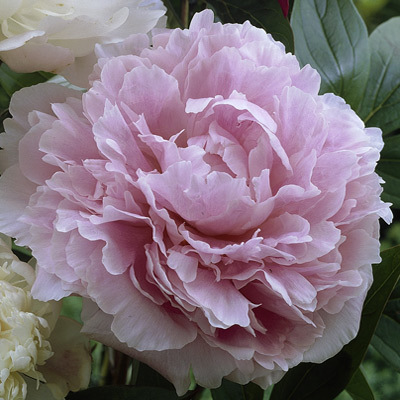
Paeonia or Peony to give this genus it’s common name,  is native to Asia, Southern Europe and Western North America. Boundaries between species are not clear and estimates of the number of species range from 25 to 40. Peonies are the only genus in the family Paeoniaceae.

peony

Paeonia 'Itoh'

Paeonia ‘Itoh’

Peonies can be classified by both plant growth habit and flower type. Plant growth types are Herbaceous (nonwoody), Tree (shrub), and Itoh (or “Intersectional”), which is intermediate between herbaceous and tree forms. In winter herbaceous peonies die back to their underground parts, whereas tree peonies lose their leaves but retain viable woody stems above ground. The Itoh hybrids are intermediate between herbaceous and tree forms. They are named after Toichi Itoh, who first produced a successful intersectional hybrid in 1948. The herb Peony (particularly the root of P. lactiflora) has been used frequently in traditional medicines of Korea, China and Japan.

Paeonia 'Rozella'

Paeonia ‘Rozella’

Paeonia 'Sarah Bernhardt'

Paeonia ‘Sarah Bernhardt’

The name Paeonia derives form the ancient greek physician, Paeon, a student of Asclepius, the Greek god of  medicine and healing. Asclepius became jealous of his pupil so Zeus saved Paeon from the wrath of Asclepius by turning him into the Peony flower. Another explanation is that Paeon was the first to use the plant medicinally.

Other garden Paeony names are:

P. albiflora = white – flowered

P. corallina = the colour of coral

P. lutea = yellow

P. moutan = a japanese name derived from Meu-tang, the King of Flowers in chinese myhthology- the ‘Tree Peony’

P. officinalis = of the shop (i.e. was orignally sold in an apothecary/herbal), still found growing wild in Europe. The European or Common Peony. The variety Rubra is the double red peony of cottage gardens

peonies

Paeonia officinalis

Paeonia officinalis

Sources and further information:

Wikipedia

RHS- cultivating Peonies

Telegraph – how to grow Peonies

Passion for Peonies blogspot

Quizzicals:

answers to the two clues given in Plantax 8…

  • Irish singer is growing worse – vanilla
  • Tease Mr Disney – ragwort

..and 2 more cryptic clues to the names of plants, fruit or veg…

  • Substandard animal limb
  • West Indies batsman + Food superstore

(thanks to Les Palmer, answers in the next Plantax!)

Old School Gardener

If you’ve enjoyed reading this post and others on this blog, why not comment and join others by signing up for automatic updates via email (see side bar, above right ) or through an RSS feed (see top of page)?

Tamara Jare's avatarMy Botanical Garden

ImageImageImage

File:Dieffenbachia daguensis DPR.png

from:http://commons.wikimedia.org/wiki/File:Dieffenbachia_daguensis_DPR.png

Dieffenbachia was the plant growing to in-believable size in the window of a restaurant in the middle of the town .Bus had a stop just in front of that window and I remember my childhood fascination seeing this plant each time again on my bus ride.I believed it had to be very difficult to grow such a big , old plant , filling the whole window with white green leaves each turning toward light from the street. Usually there were no lights turned on in the restaurant, the darkness of unknown inside was shadowing the vivid patterns of the only evident thing to be alive behind that window.Many years later I had a dinner in the same restaurant and could not believe the plant was still there, strong and green as from yesterday, but from this side of the window almost obvious and earthly, far less mysterious as it looked from my bus view.Yet it…

View original post 137 more words

Safari Sunday and March Foliage.

Fuchsia-flowerFuchsia (named after the 16th century German botanist Leonhart Fuchs) are a genus of sub shrubs native to Central and South America and New Zealand. Whilst there are only around 100 species (organised into 12 sections) there are over 8,000 hybrids in cultivation!

Leonhart Fuchs

Leonhart Fuchs

Most are tender and deciduous but some are evergreen, especially in warmer areas. They like any reasonably moist soil and flower from midsummer to autumn.

The flowers are unique in form and handsome. They form in clusters of pendent tubes or are bell-shaped  with widely spread sepals, with a surrounding ‘skirt’ of petals – some varieties with the same colour as the tube, others different. The number of petals varies between 4 (in the single flower varieties) and 8 (in double-flowered). The Fuchsia Tryphylla group have very long, single flower tubes.

Fcuhsia 'Thalia'

Fuchsia ‘Thalia’

Fuchsia 'Black Beauty'

Fuchsia ‘Black Beauty’

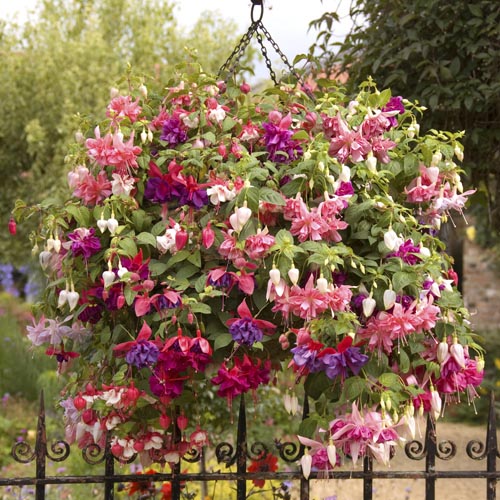
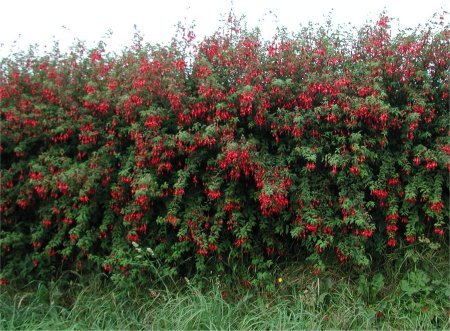
In colder areas fuchsia need to be in the warmest part of the garden and even then frost may kill off a lot of their top growth during winter.  Fuchsias do not grow well under trees.  A few are grown for their attractive foliage and all carry berries after flowering. Fuchsias are popular garden plants and can live for years with minimal care. The British Fuchsia Society maintains a list of “hardy” fuchsias that can survive through British winters. In the United States, the Northwest Fuchsia Society maintains an extensive list of fuchsias that have proven hardy in the Pacific Northwest over at least three winters.  Some more vigorous varieties can be trained as hedges (F magellanica, F. magellanica ‘Riccartonii’) and do particularly well in coastal areas. There are three main types :

  • Half-hardy fuchsia: These need to be overwintered in frost-free conditions. Trailing types are ideal for hanging baskets (they need daily watering). Upright Fuchsias are a good choice for containers. In both cases, plants benefit from a balanced, liquid fertiliser in late summer
  • Hardy fuchsia: Plant the base of the stem 5cm below the soil surface and protect the crown in autumn with a mulch of compost, bark or straw. Cuttings can be taken in early autumn as an insurance against frost damage. Apply a dressing of general fertiliser in spring and again in summer
  • Standard fuchsia: These tend to be of the faster growing varieties and should always be brought under cover for winter as the main stem is prone to frost damage even if the variety is considered hardy. A balanced, liquid fertiliser used in summer encourages better blooms over a long flowering period
Fuchsia Hanging Basket

Fuchsia Hanging Basket

Fuchsia magellanica hedge

Fuchsia magellanica hedge

Fuchsias from these ‘sections’ have been shown to be especially hardy in the UK, Ireland and many other countries, including New Zealand and the Pacific N.W. of the United States:

  • Quelusia (F. magellanica and its variants, F. regia, etc.)

  • Encliandra (some encliandra hybrids flower continuously)

  • Skinnera (F. excorticata, F. perscandens)

  • Procumbentes (F. procumbens is suitable as a groundcover)

Fuchsia boliviana

Fuchsia boliviana

Fuchsia magellanica var. molinae

Fuchsia magellanica var. ‘Molinae’

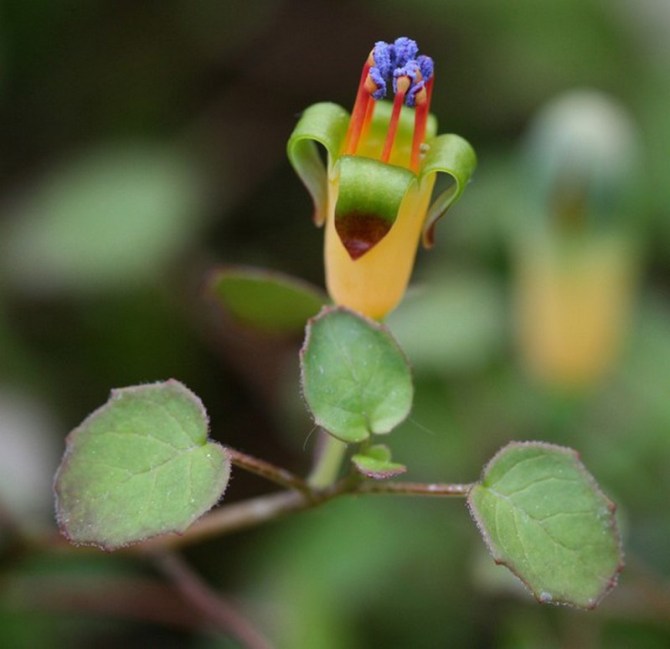
Fuchsia procumbens

Fuchsia procumbens

Fuchsia michoacanensis

Fuchsia michoacanensis

Fuchsia 'Wendy's Beauty'

Fuchsia ‘Wendy’s Beauty’

A number of species survive outdoors in agreeable mild temperate areas, though some may not always flower in the average British summer. Due to the mild, temperate climate created by the North Atlantic Current, Fuchsias grow abundantly in the West Cork region of Ireland. They are associated with the area and a local branding initiative uses the fuchsia flower as its logo. For similar reasons fuchsias grow abundantly in the Isles of Scilly, where they have even colonised wild areas. While F. magellanica is not wide spread in Scotland it has been found growing wild in sheltered areas, and can been seen growing from self set seedlings along the banks of a stream that runs through Cambo gardens in Fife. Even in somewhat colder regions, a number of the hardier species will often survive as herbaceous perennials, dying back and re – shooting from below ground in the spring.

Fuchsias may suffer from infestations of aphids such as Whitefly. Fuchsia Gall Mite is a new pest threatening to cause more problems, and it can also be difficult to gain good control of Fuchsia Rust and Red Spider Mite once they get hold.

Sources and further information:

RHS- growing Fuchsias

Find that Fuchsia

The British Fuchsia Society

Wikipedia

Hmm... not sure about this Fuchsia.....

Hmm… not sure about this Fuchsia…..

Old School Gardener

If you’ve enjoyed reading this post and others on this blog, why not comment and join others by signing up for automatic updates via email (see side bar, above right ) or through an RSS feed (see top of page)?

alnwick poison garden sign There are many plants that can cause you harm, particularly from the sap or if they are eaten. At Alnwick Gardens, Northumberland a Poison Garden contains quite a few of these – and several had to have their own special licence from the Home Office to be on show! Many plants have medicinal qualities of course (and some otherwise poisonous ones are used in medicines- Foxgloves and Yew, for example). But there is a fascination with the dangerous ones. As the creator of the Poison Garden, the Duchess of Northumberland, says:

‘I wondered why so many gardens around the world focused on the healing power of plants rather than their ability to kill… I felt that most children I knew would be more interested in hearing how a plant killed, how long it would take you to die if you ate it and how gruesome and painful the death might be.’

alnwick poison garden

Pretty but poisonous- part of the Poison Garden at Alnwick Gardens

The garden contains over 100 plants with varying degrees of deadliness. It’s difficult to tell if a plant is harmful from it’s look, as some are beautiful while others look pretty harmless. Many of the plants grown in the Poison Garden are easily recognised as common to the back garden; Foxgloves, Belladonna, Poppies, Laburnum and varieties of Aquilegia for example.

And the nasty things they can do to you are many and varied. Eczema is a chronic inflammation of the skin and causes itchiness. Sometimes this is caused because the victim has an allergy to a particular plant substance. However, serious poisoning from plants in the UK is relatively rare and many plants can be grown safely provided they are treated with respect (and usually wearing gloves).

Foxglove

Foxglove

Younger children under the age of six who are able to walk have an increased risk of poisoning, because they often put things in their mouth without realising they are harmful. Also, as their bodies are smaller they are more vulnerable to the harmful effects of certain substances.

Poisonous plants cause far less harm than might be expected. In ‘Accidental poisoning deaths in British children 1958-77’ (British Medical Journal), Neil C Fraser reports a total of 598 poisoning deaths of children under 10 years of age.

In the period covered only three deaths were attributed to plants.

Even this low number is overstated – one death was due to eating fungi and in another of the three cases eating the poisonous plant was doubted as the cause of death. In the one confirmed plant death Hemlock was the plant responsible.

The report makes it clear that medication, household cleaning materials and cosmetics pose a much higher risk than poison plants.

But illness, injury or irritation can of course be more frequent unless care is taken. The following is a list of some common ornamental plants that are either poisonous and/or a skin/ eye irritant, so remember they should not be eaten and cover your skin for protection if handling them:

Acalypha – Aconitum – Actaea – Aglaonema – Alstroemeria – Anthurium – Arum – Asparagus – Calla palustris – Capsicum annum –  Chelidonium majus –  Chrysanthemum – Colocasia esculenta – Datura – Drancunculus – Euphorbia – Fremontodendron – Helleborus – Heracleum mantegazzianum – Iris – Laburnum – Narcissus – Phytolacca – Primula obconcica – Solanum pseudocapsicum – Spathphyllum –  Tulipa –  Zantedeschia

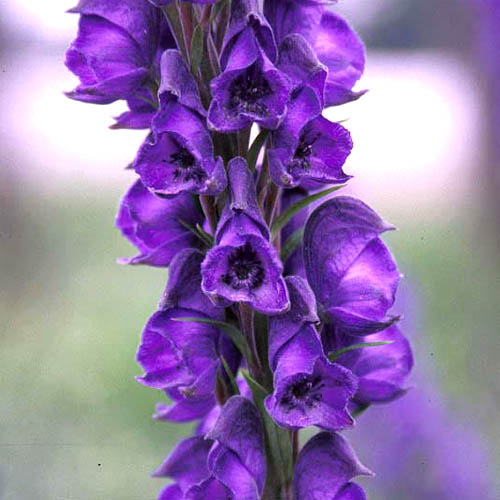
aconitum

Aconitum (‘Monkshood’)

cuckoopint arum

Arum (‘Cuckoopint’)

Bearded Iris Raspberry Blush

Iris

lily of the valley

Lily of the Valley

More examples of poisonous plants can be found on the Royal Horticultural Society’s and other websites listed below. If you think you or someone else has eaten part of a harmful plant, seek medical advice from a hospital Accident and Emergency Department immediately, taking a sample of the plant with you. Do not try to make the person sick. Likewise if a pet has consumed something you suspect is poisonous seek veterinary advice as soon as possible.

Sources and further information:

‘Poisonous plants to be wary of‘- Martyn Davey, Eastern Daily Press, March 16th 2013

Alnwick Poison Garden website

Wikipedia- List of poisonous plants

The Poison Garden website- lots of useful information

Botanical.com- index of poisonous plants

Livescience- 10 most common poisonous plants

Realgardeners- list of poisonous plants with images

NHS- plant dangers in the garden and countryside

RHS- potentially harmful garden plants

Garden Safety- pretty but poisonous plants

RHS Wisley– to seek information about plant poisons (tel. 0845 260 8000- 10am-12.30pm and 1.30pm – 4pm)

Kew gardens – plant poisons information (tel. 020 8332 5792 9am-5pm) General, non urgent inquiries about poisonous pants can be emailed to ceb-enq@kew.org

Old School Gardener

If you’ve enjoyed reading this post and others on this blog, why not comment and join others by signing up for automatic updates via email (see side bar, above right ) or through an RSS feed (see top of page)?

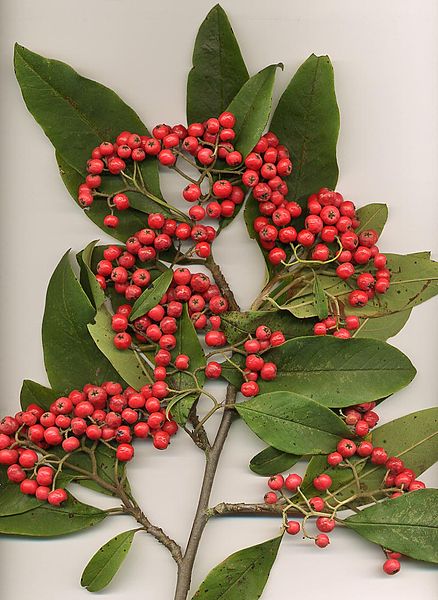
Cotoneaster frigidus leaves and fruit

Cotoneaster frigidus – leaves and fruit

Cotoneaster  is a genus of flowering plants in the rose family, native to temperate Asia, Europe and north Africa. It has  a strong concentration of different species in the mountains of southwestern China and the Himalayas. They are related to Hawthorns, Firethorns, Photinias and Rowans. Depending on the definition used, there are between 70 and 300 different species.

The majority of Cotoneaster species are shrubs from 0.5–5 metres tall, varying from ground-hugging prostrate plants to erect shrubs. A few, notably C. frigidus, are small trees up to 15 metres tall and 75 centimetres trunk diameter. The prostrate species are mostly alpine plants growing at high altitude (e.g. C. integrifolius, which grows at 3,000–4,000 metres in the Himalayas), while the larger species occur in scrub and woodland gaps at lower altitudes. Cotoneasters are very popular garden shrubs, grown for their attractive habit and decorative fruit. Many are cultivars, some of  hybrid origin; of these, some are of known parentage.

Cotoneaster franchetii

Cotoneaster franchetii

Cotoneaster horizontalis

Cotoneaster horizontalis

The name Cotoneaster derives from the old Latin cotoneus meaning Quince and aster probably a corruption of ad instar meaning ‘a likeness’ – so ‘Quince like’.

Other species names are:

C. adpressa = close, pressed-down growth or fruits closely pressed against the branch

C. applanata = the branches lie flat or in a plane

C. bullata = wrinkled, referring to the leaves

C. buxifolia = box (buxus) -leaved

C. congesta = crowded, the plant’s habit

C. divaricata =spread-out, forking , referring to the branches

C. franchettii = after Franchet, a French botanist

C.  frigida = cold,frosty, probably referring to its native habitat

C. harroviana = after G. Harrow, a nurseryman once of Coombe Wood Nursery

C. henryana = after Dr. Augustine Henry, a 19th century Chinese customs official and ‘plant hunter’

C. horiziontalis = horizontal, its growth habit

C. humifusa = spread on the ground

C. lacteus =  milky, probably referring to the milky white flowers (the ‘Late Cotoneaster’)

C. lucida = shining, referring to the leaves

C. microphylla = small – leaved

C. multiflora = many flowered

C. pannosa = woolly, the foliage

C. rotundifoilia = round leaved

C. salicifolia = willow (salix) leaved

C. simonsii = after Simons, (The ‘Himalayan Cotoneaster’ or ‘Simon’s Cotoneaster’)

Cotoneaster adpressus
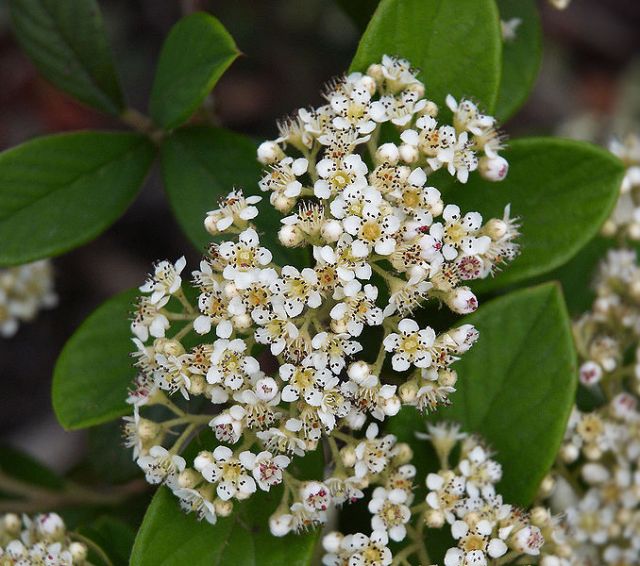
Cotoneaster adpressus

Cotoneaster lacteus - flowers

Cotoneaster lacteus – flowers

Cotoneaster simonsii

Cotoneaster simonsii

Sources and further information:

Wikipedia

Encyclopedia Britannica

Growing Cotoneasters

Cotoneaster horizontalis

Cotoneaster lacteus

Cotoneaster simonsii

Quizzicals: answers to the two in Plantax 7…

  • Bird swearing – Crocus
  • Vasectomy for Dad – Parsnip

..and 2 more cryptic clues to the names of plants, fruit or veg…

  • Irish singer is growing worse
  • Tease Mr Disney

(thanks to Les Palmer, answers in the next Plantax!)

Old School Gardener

If you’ve enjoyed reading this post and others on this blog, why not comment and join others by signing up for automatic updates via email (see side bar, above right ) or through an RSS feed (see top of page)?

Finding Nature

Nature Connectedness Research Blog by Prof. Miles Richardson

Norfolk Green Care Network

Connecting People with Nature

Discover WordPress

A daily selection of the best content published on WordPress, collected for you by humans who love to read.

Susan Rushton

Celebrating gardens, photography and a creative life

Unlocking Landscapes

Writing, photography and more by Daniel Greenwood

Alphabet Ravine

Lydia Rae Bush Poetry

TIME GENTS

Australian Pub Project, Established 2013

Vanha Talo Suomi

The Journey from Finnish Rintamamiestalo to Arboretum & Gardens

Marigolds and Gin

Because even in chaos, there’s always gin and a good story …

Bits & Tidbits

RANDOM BITS & MORE TIDBITS

Rambling in the Garden

.....and nurturing my soul

The Interpretation Game

Cultural Heritage and the Digital Economy

pbmGarden

Sense of place, purpose, rejuvenation and joy

SISSINGHURST GARDEN

Notes from the Gardeners...

Deep Green Permaculture

Connecting People to Nature, Empowering People to Live Sustainably

BloominBootiful

A girl and her garden :)