Category: Feature plants


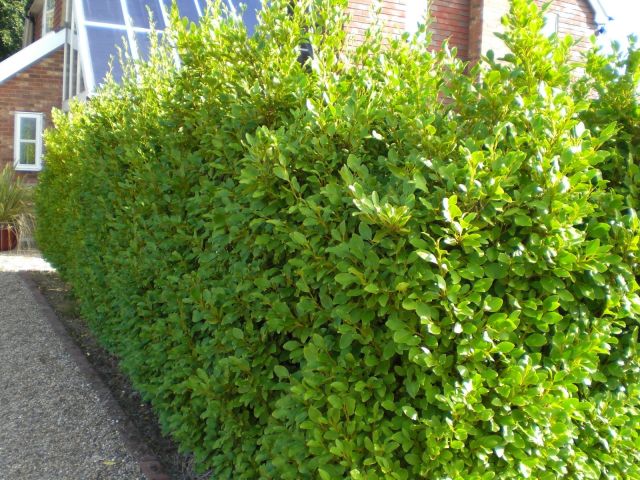
Griselina littoralis- a good seaside hedge

Griselina littoralis- a good seaside hedge

I’ve had a few queries about hedges recently and this one, from Robert Galbraith is my choice for this week’s GQT:

‘We live in a bungalow near the seashore in Sussex, where the soil is rather sandy. Could you suggest some suitable hedging plants to give our garden a bit of privacy, please?’

There is quite a wide choice of suitable plants Robert. You could go for Grisselina littoralis which has thick yellowish – green leaves forming a dense, solid hedge if formally clipped and will grow in most soils. Escallonia ‘Langleyensis’, with red flowers in June – July is often grown in seaside locations and has glossy evergreen foliage. Other varieties are E. macrantha with deep red flowers in June – September and E. ‘Slieve Donard’ with large pink flowers in June- August.

Sea Buckthorn (Hippophae rhamnoides) has silvery grey foliage and orange berries (if both male and female forms are grown). Tamarisk pentandra has feathery flowers in August whilst the form T. tetranda is May – flowering.

Euonymus japonicus, with evergreen shiny leaves is also available in variegated forms which can withstand close clipping as does the shrubby honeysuckle Lonicera nitida with small golden – green leaves.

More generally, and not necessarily suitable for a seaside home, the best ornamental evergeen hedges for formal training and clipping are Yew and Holly. Box is also suitable, but is very slow growing and expensive so is best kept as low hedging (up to about 1 metre tall) or feature, perhaps topiarised, bushes. Hedges of Cypress and Cherry Laurel are also good for an evergreen barrier and Privet, provided it is trained correctly from planting, will supply a satisfactory semi-evergreen barrier.

Cherry Laurel

Cherry Laurel

Old School Gardener

If you’ve enjoyed reading this post and others on this blog, why not comment and join others by signing up for automatic updates via email (see side bar, above right ) or through an RSS feed (see top of page)?

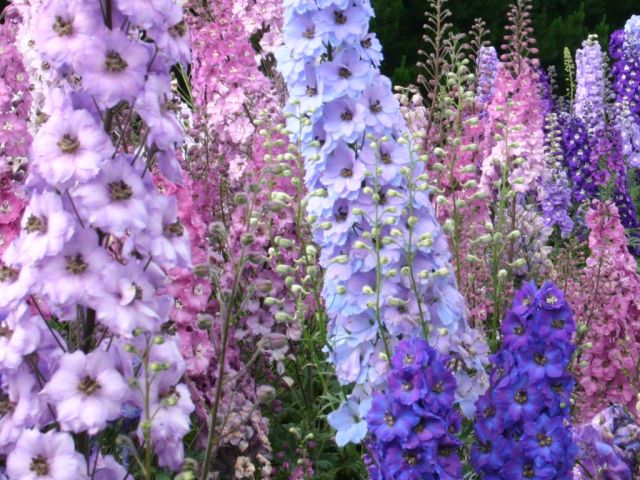
delphiniumsDelphinium is a genus of around 300 species of flowering perennial, biennial and annual plants that are native throughout the Northern Hemisphere and also on the high mountains of tropical Africa.

The name “delphinium” derives from the Latin for “dolphin”, referring to the shape of the nectary, though there is also a story that in ancient Rome men were pursuing a dolphin for commercial exploitation so Neptune turned it into the Delphinium!

The common name “larkspur” (referring to the bird’s claw shape of the flower), is shared between perennial Delphinium species and annual species of the genus Consolida. The famous 16th century herbalist, John Gerard gives ‘delphinium’ as an alternative name for Consolida, says that there is little written about any medicinal uses other than as an antidote to scorpion stings. He mentions the idea of laying delphiniums in the path of a scorpion tol render it totally incapable of movement until the plant is removed but says this is just one of many ‘trifling toyes’ that are not worth reading! The town of Larkspur in Colorado was given its name by Elizabeth Hunt, wife of the governor, in 1871 because of the abundance of delphiniums growing in the area

Delphinium nuttallianum

Delphinium nuttallianum

Species names of Delphinium include:

D. ajacis = possibly based on the marks at the base of the united petals which were compared to the letters AIAI

D. cardinale = scarlet

D. consolida = joined in one

D. elatum = tall

D.formosum = beautiful

D. grandiflorum = large flowered

D. nudicaule = naked stemmed

D. sulphureum = sulphur – yellow

D. tatsiense = of Tatsien, China

D. triste = sad, the dull blue of the flowers

D. zalil = native Afghanistan name.

D. 'Blue Nile'

D. ‘Blue Nile’

Delphinium_cv2

The delphinium is much admired, particularly in the cottage garden setting. Delphiniums are tall, majestic plants with showy open flowers on branching spikes. Each flower has 5 petal-like sepals with 2 or 4 true petals in the centre called a bee. Delphinium species include all three primary colours, blue, red, and yellow. Hybridisation of delphiniums has resulted in many new colours and attractive flower forms and growing heights. Most garden Delphiniums are of the hybirds raised from species such as elatum, formosum, grandiflorum and sulphureum. Flower colours range in shades of blue from palest sky, through to gentian and indigo; rich purple, lavender, pink to purest white.  In England Blackmore and Langdon, nurserymen and leading breeders of Delphiniums, were producing hybrids from early in the 20th century, producing named varieties of large well-formed delphiniums. Others have also added their skills and developed the most dramatic and eye-catching plants to grace our gardens.

This slideshow requires JavaScript.


Sources and further information:

The Delphinium Society

RHS- Delphiniums

How to grow Delphiniums- Sarah Raven

Gallery of Delphiniums

The Poison Garden – Delphiniums

Quizzicals: answers to the two clues given in Plantax 13…

  • Bovine stumble – cowslip
  • Simpler tombola – rafflesia

..and 2 more cryptic clues to the names of plants, fruit or veg…

  • Cold yearning
  • How Jack Charlton refers to brother Bobby

Special thanks to Les Palmer, whose new book ‘How to Win your Pub Quiz’ was published recently. A great celebration of the British Pub Quiz!

Old School Gardener

If you’ve enjoyed reading this post and others on this blog, why not comment and join others by signing up for automatic updates via email (see side bar, above right ) or through an RSS feed (see top of page)?

joepyeweed1's avatarPardon My Garden

I wonder how they ended up being named Joe and Susan.  Since my WordPress name is JoePyeWeed1 I thought I would show some pictures of Joe Pye Weed that is blooming now. I pinched it back a little oddly in the early summer, which affected the height of “Gateway.”
Garden 07 30 13 082

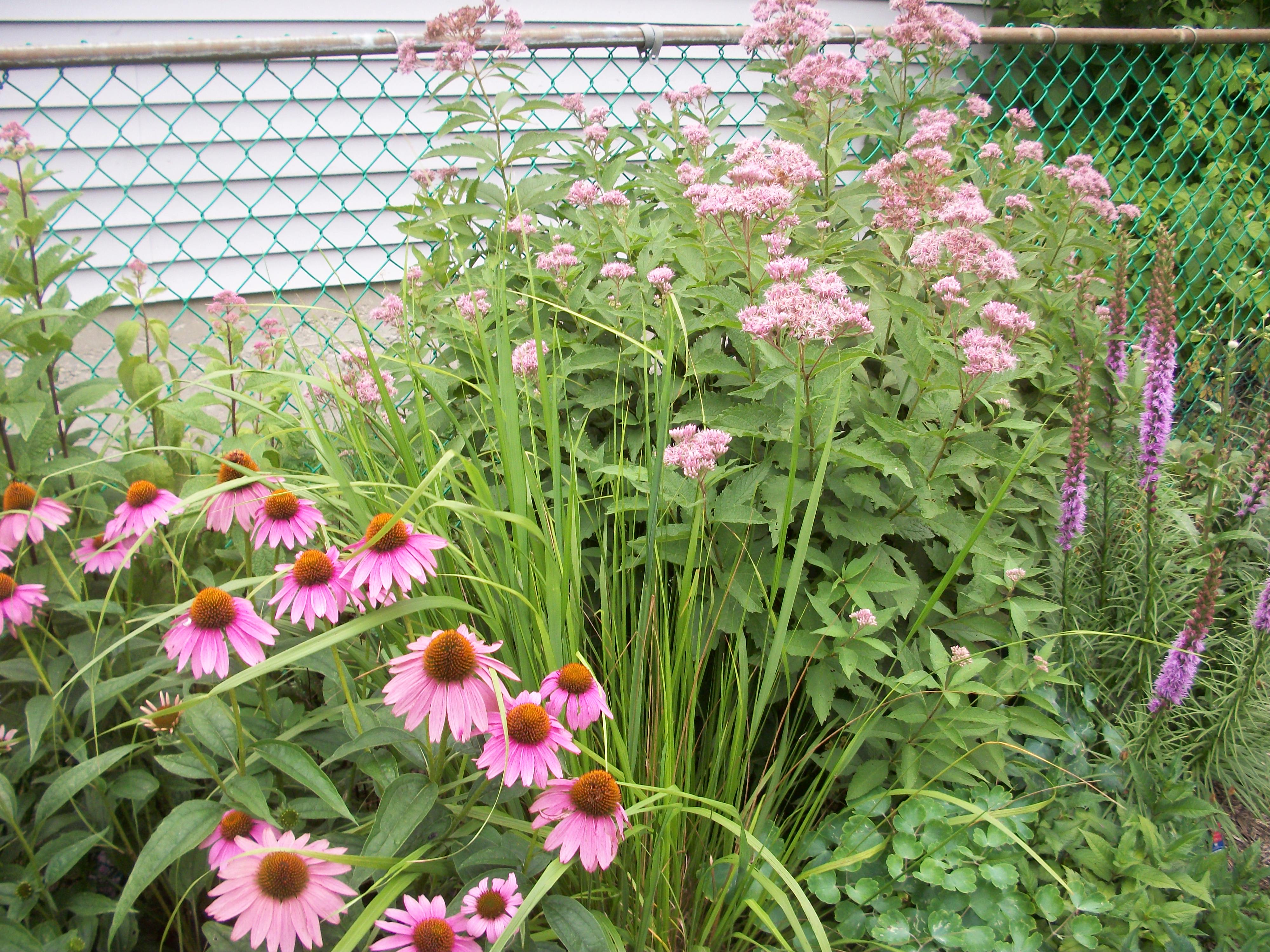
Joe Pye Weed – “Little Joe.”  In the background is echinacea, purple coneflowers.

Garden 07 30 13 063

“Gateway” Joe Pye Weed with pollinating bee.  The flower looks messy after the bees have worked over them.  The bees love it!  These days the bees are also visiting russian sage and agastache blue fortune.

Garden 07 30 13 059

Backing away you can see that “Little Joe” is behind the coneflowers and the “Gateway” is taller in the center.  Liatris spicata on the right. The ornamental grass is calamagrostis brachytricha, which does not have seed heads yet.

Garden 07 30 13 050

I bought three black-eyed susan plants from Donna about five years ago.  They have distributed themselves around the…

View original post 229 more words

SONY DSCNettles are one of the most widespread and well-known plants in Britain. You might think of them as weeds or nasty things to avoid with bare legs, but they do have some uses in the garden (as well as for making paper, dyeing cloth and eating)!

The two types – the perennial or stinging nettle and the smaller annual nettle- grow everywhere and their main benefits in the garden are:

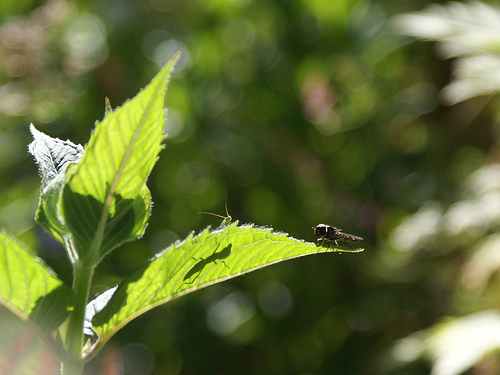
  • For attracting beneficial insects the perennial nettle supports some 107 different species, including hoverflies, lacewings, parasitic wasps and ladybirds- all great for natural pest control.

  • In the compost heap freshly cut nettles, especially young, soft growth, make an excellent compost activator, as they provide a good source of nitrogen for the bacteria that start the decomposition process.

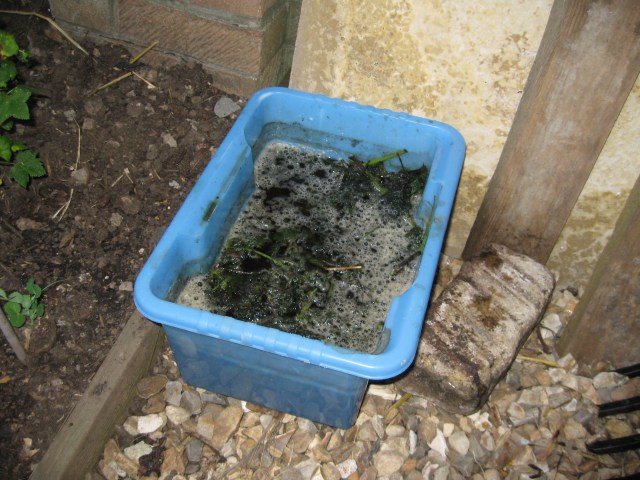
  • Liquid plant food research in Sweden has shown that liquid made from nettles gathered in the spring has high mineral content and so if you have access to plenty of nettles at that time of year, you can harvest them and dry for use later in the season to make nettle plant feed. To do this soak 1 kilo of nettles in 10 litres of water for about 2 weeks stirring occasionally. It won’t smell too good, but it’s worth the pong! You then strain the liquid off and use it diluted 1 part nettle juice to 10 parts water. The Nettle remains can be added to the compost heap but won’t act as an activator.

Making Nettle Plant Food- image from Tracey the transitoner

Making Nettle Plant Food- image from Tracey the transitioner

The roots of the perennial nettle form a dense mat from which they regrow each year- I have lots on the edges of the wood next to Old School Garden and they are constantly trying to invade! If you want to use the foliage and still keep them growing, cut them back only twice a year- if you want to be rid of them cut them back 3 or 4 times a year, even so it will probably take a couple of years to clear them entirely!

Source: Garden Organic Master Composter Factsheet 6

Further information:

Nettles- Royal Horticultural Society

Perennial Nettle- Garden Organic

Annual Nettle Garden Organic

Top ten uses for Nettles- Daily Telegraph

Heal the burn

Old School Gardener

If you’ve enjoyed reading this post and others on this blog, why not comment and join others by signing up for automatic updates via email (see side bar, above right ) or through an RSS feed (see top of page)?

gwenniesworld's avatargwenniesgarden

WORDLESS WEDSNESDAY


2009_0121avikosterre0056

View original post

monarda 'Cambridge Scarlet' in one of the borders at Old School Garden,sittign well alongside a young Gleditsia triacanthos

Monarda ‘Cambridge Scarlet’ in one of the borders at Old School Garden, sitting well alongside a young Gleditsia triacanthos and Lysimachia ciliata ‘Firecracker’

With around 20 species of annuals and rhizomatous,clump-forming, herbaceous perennials, Monarda – or ‘Bee Balm’ because of it’s value in treating bee stings- would be a relatively small genus, though it also has many garden-worthy, hardy hybrids.

Hailing from North America, and otherwise known as ‘Bergamot’, Monarda like sun, but will grow in dappled shade too, but plants established in partial shade or filtered sun have higher incidences of rapid horizontal spread and flower less. Their natural habitats are the dry prairie and also woodlands, so they vary in their soil requirements from those that like a dry soil to those liking moisture – all need moisture retentive soil though and if the soil is too dry they are prone to mildew, as they are here in Old School Garden. It can also tolerate clay soil. The incidence of powdery mildew can be reduced by allowing good air movement between plants, ensuring the soil does not dry out, removing diseased leaves and stems to destroy the overwintering stage of the fungus and choosing mildew-resistant cultivars. Fungicides or horticultural oils can also be used to control powdery mildew.

Generally, propagation occurs by hardwood and softwood cuttings, root cuttings, layering, and division. The latter, quite frequently, is the most popular method out of necessity:  on soil that stays moist, plants can spread fairly quickly so the plant should be divided every 3 to 5 years to reduce spread, keep the central core of the plant healthy, preclude root rot, and improve air circulation about the foliage.

The flowers are a delight, arranged in whorls, rather like sage. They are tubular, with 2 lips, an upper one that is hooded and a lower one that spreads and they often come with coloured bracts. The plant is long flowering, from mid to late summer, and blooms almost continuously if deadheaded periodically. The blooms make excellent cut flowers, both fresh and dried.

Wasp on a Monarda punctata

Wasp on a Monarda punctata

Being attractive to bees and butterflies it is a good plant for wildlife gardens, though only Bumble Bees can gain direct access, honey bees and other insects getting in only after something larger has made holes!  Because of oils present in its roots it is sometimes used as a companion plant around small vegetable crops susceptible to subterranean pests. Bee balm is considered a good plant to grow with tomatoes, ostensibly improving both plant health and tomato flavour.

Ranging in height from 20–90 cm (8–35 in), Monarda have an equal spread. The stems are distinctive, in that they are square in profile, and taller varieties often require staking. The slender and long-tapering (lanceolate) leaves are not particularly striking to look at but are aromatic and are a definite reminder of ‘Earl Grey’ Tea, which is flavoured with Bergamot and the leaves are sometimes picked for pot pourri. Slugs can attack new growth in the spring but the genus is low in allergens.

Most hybrids are derived from Monarda didyma or M. fistulosa.There are over 50 commercial cultivars and hybrids, ranging in colour from post – box red to pure white to deep blue, but these plants tend to be smaller than wild species, and have often been developed to combat climatic or pest conditions. Other hybrids have been developed to produce essential oils for food, flavouring, or medicine. The following cultivars have gained the Royal Horticultural Society’s Award of Garden Merit (AGM):

  • ‘Beauty of Cobham’(pink)
  • ‘Gardenview Scarlet’
  • ‘Marshall’s Delight’ (pink)
  • ‘Squaw’ (red)
  • ‘Talud’ (pink)
  • ‘Violet Queen’
Monarda citriodora ('Horse Mint')

Monarda citriodora (‘Horse Mint’)

Monarda are great perennials for meadows and wild gardens, along streams and ponds, in woodlands and also in the garden border. The boldness of bee balm makes it equally good for massing or as an accent, and it mixes well with other summer perennials such as phlox, iris, day lilies and yarrows. The long season of colour attracts bees, butterflies (and in North America, hummingbirds) and these will capture your attention as well.

Monarda also looks good with:

  • Veronica ‘Blue Charm’ which bears spikes of light blue flowers at the same time as bee balm. The habit and flower shape contrast well.
  • Aster – masses of small, pale blue flowers appear in summer on heart-leaf aster and provide an airy contrast to bee balm.
  • Coneflower (Echinacea) – the large daisy flowers of purple coneflower mix well with those of bee balm, especially in sunny wildflower gardens.
  • Evening Primrose (Oenothera) – blooming in summer, the clusters of yellow goblet flowers of common sundrops mix well with bee balm, especially the mahogany-colour varieties.
  • Astrantia major ‘Ruby Wedding’
  • Persicaria ”Red Dragon’

Sources and further information:

Wikipedia

‘The Monarda Speaks’- blog article

Monarda citriodora (Horse Mint)- video from Texas

Monarda and powdery mildew resistance- University of Chicago study

Old School Gardener

If you’ve enjoyed reading this post and others on this blog, why not comment and join others by signing up for automatic updates via email (see side bar, above right ) or through an RSS feed (see top of page)?

PicPost: Veinglorious

Achilleas coming into flower at the back of one of Old School Garden's borders

Achilleas coming into flower at the back of one of Old School Garden’s borders

The bright golden plates of Achillea are coming into bloom in Old School Garden and they look splendid, too. Achillea millefolium is commonly known as Yarrow – a name often applied to other species in the genus which is made up of about 85 flowering plants.

Achillea is native to Europe and temperate parts of Asia and a few grow in North America. Achillea can be mat-forming or upright perennials, mostly herbaceous, with sometimes aromatic, pinnately divided or simple and toothed leaves and flattened clusters of small, daisy-like flower-heads.  These heads of small flowers sit like mini helicopter pads at  the top of the stem, the flowers being white, yellow, orange, pink or red. The Achillea is a useful source of food for the larvae of some moths.

The genus was named after the Greek mythological hero Achilles. According to the Iliad, Achilles’ soldiers used yarrow to treat their wounds, hence some of its common names such as allheal and bloodwort. I somehow have the idea that the flower plates are also  reminiscent of Achilles’ ‘burnished shield’ (assuming he had one) and it’s this connection that I’m reminded of whenever I see them.

Some of the species names are:

A. alpina = of the alps or alpine

A. argentea = silvery white, referring to the foliage

A. compacta = compact

A. millefolium = thousand – leaved, the Yarrow or Milfoil

A. mongolica = Mongolian

A. montana = of mountains

A. ptarmica = from the greek ptarmos, meaning sneezing – the dried flowers were once used as snuff, otherwise knownas the ‘Sneezewort’

A. rupestris = growing on rocks

A. santolina = resembles the plant Santolina

A. serbica = of Serbia

A. tomentosa = downy foliage

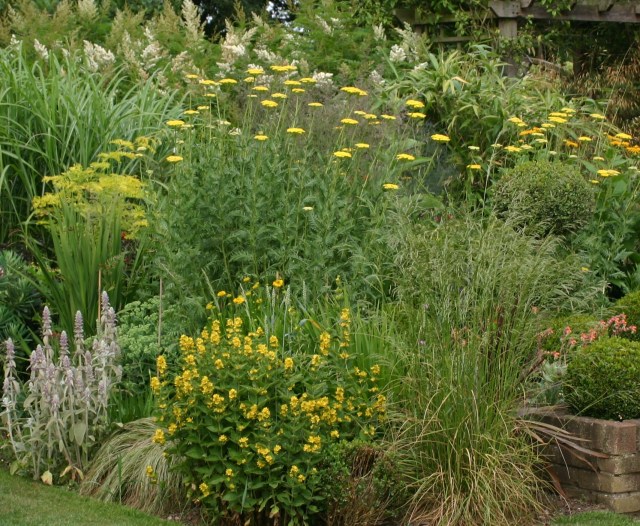
Achilleas are traditional border flowers valued for their feathery foliage and striking flat, circular heads of flowers throughout the main summer season. They team well with other perennial flowers and are a vital ingredient of a traditional herbaceous border. They are also at home in island beds, cottage gardens and other perennial planting schemes.They look good with Leucanthemum and Kniphofia.

Sources and further information:

Wikipedia

How to grow Achillea

Achillea filipendulina

Article by Chris Beardshaw

Quizzicals: answers to the two clues given in Plantax 12…

  • Place in Oxfordshire painted a gaudy colour – ‘Blenheim Orange’
  • Tie up skinny coward – Bindweed

..and 2 more cryptic clues to the names of plants, fruit or veg…

  • Bovine stumble
  • Simpler tombola

Special thanks to Les Palmer, whose new book ‘How to Win your Pub Quiz’ was published recently. A great celebration of the British Pub Quiz!

Old School Gardener

If you’ve enjoyed reading this post and others on this blog, why not comment and join others by signing up for automatic updates via email (see side bar, above right ) or through an RSS feed (see top of page)?

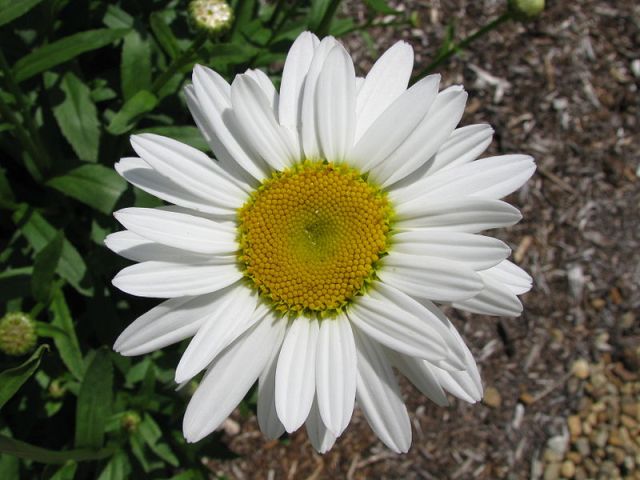
Leucanthemum x superbum 'Becky'

Leucanthemum x superbum ‘Becky’

Other wise known as ‘Shasta Daisies’ Leucanthemum is a genus of around 70 flowering plants (annuals and perennials) from the sunflower family (Asteraceae).

It occurs naturally in Europe, Northern Africa and the temperate regions of Asia. Many species have been introduced into America, Australia and New Zealand. It was previously classified as a chrysanthemum and the most important group of perennial Leucanthemum- the group x superbum is still known by some as Chrysanthemum maximum. They were split from the genus Chrysanthemum, because they are not aromatic and their leaves lack grayish-white hairs. L. vulgare is the ‘Ox Eye Daisy’.

The superbum group (the Shasta Daisy proper) consists of robust, easy going plants which grow well in sun or half shade in any good soil – but in heavy clay they have a reputation for not surviving. Growing to a height of between 0.5 and 1 metre tall, they are lax plants and so some form of support is usually required. Gardener Richard Barrett says,

‘If you find they grow too tall in your border and require too much staking, then dig them up each winter and replant them insitu. This has the side effect of keeping the foliage and flowers to a compact size, this method works well for other robust herbaceous plants.’

They reappear every spring with fresh dark green leaves before flowering with the typical daisy configuration of long elegant petals around a yellow eye. Their foliage is handsome, but can be attacked by slugs as the planst break ground kin spring – this tends to result in no regrowth, so protection is important.

Making a great display in your borders from June to September during which time it is good at attracting butterflies and bees, flowers are solitary and can be either single or double, and with simple petals or frilly, feather-like structures. Flowers of Leucanthemum are excellent for cutting and are favoured by flower arrangers.

L. 'Sonnenschein'

L. ‘Sonnenschein’

L. 'Goldrush'

L. ‘Goldrush’

Although other species in the genus have yellow flowers, the flowers of these hybrids had been exclusively white with yellow discs (tending to be paler in double-flowered types). However, the cultivar ‘Sonnenschein’ has yellow buds that open to cream flowers and there are other yellow cultivars available. New varieties include several with more petals to give a ruffled effect and a striking golden yellow version. Most will re-bloom happily if cut back after flowering. Leucanthemum combine well with Phlox in August. White flowered varieties make an excellent contrast to the blue of Salvia nemorosa ‘Ostfriesland’ whilst the strong yellows are great to accompany Gaillardia aristata ‘Goblin’.

Leucanthemum x superbum 'Snowcap'

Leucanthemum x superbum ‘Snowcap’

Old School Gardener

If you’ve enjoyed reading this post and others on this blog, why not comment and join others by signing up for automatic updates via email (see side bar, above right ) or through an RSS feed (see top of page)?

gwenniesworld's avatargwenniesgarden

WORDLESS WEDNESDAY


2009_0506aug09vrijbroekpark0024


View original post

Finding Nature

Nature Connectedness Research Blog by Prof. Miles Richardson

Norfolk Green Care Network

Connecting People with Nature

Discover WordPress

A daily selection of the best content published on WordPress, collected for you by humans who love to read.

Susan Rushton

Celebrating gardens, photography and a creative life

Unlocking Landscapes

Writing, photography and more by Daniel Greenwood

Alphabet Ravine

Lydia Rae Bush Poetry

TIME GENTS

Australian Pub Project, Established 2013

Vanha Talo Suomi

The Journey from Finnish Rintamamiestalo to Arboretum & Gardens

Marigolds and Gin

Because even in chaos, there’s always gin and a good story …

Bits & Tidbits

RANDOM BITS & MORE TIDBITS

Rambling in the Garden

.....and nurturing my soul

The Interpretation Game

Cultural Heritage and the Digital Economy

pbmGarden

Sense of place, purpose, rejuvenation and joy

SISSINGHURST GARDEN

Notes from the Gardeners...

Deep Green Permaculture

Connecting People to Nature, Empowering People to Live Sustainably

BloominBootiful

A girl and her garden :)