Category: Design


Picpost: High Life

via Growveg

PicPost: Varmint Free

http://ww38.tucsongardener.com/Year09/varmintraisedbeds.htm

PicPost: Potty

My previous articles on using pallets and other recycled materials (mainly wood) in the garden have proved to be very popular. I couldn’t resist throwing the net a bit wider and so have put together a mix of different, ingenious ideas using a range of recycled materials.

Tell me what you think! And please let me have pictures of your own recycling projects for future features!

Other articles you might be interested in:

PicPost: Pallet to Strawberry planter

PicPost: Pallet Summer House

PicPost: Pallet Artwork

Pallet sizes

Even more Pallet Power

Pallet Projects – more creative ideas

Polished Primary Pallet Planters

Pallets Plus –  more examples of recycled wood in the garden

Pallet Power- the sequel

Pallet Power

Raised beds on the cheap

Old School Gardener

If you’ve enjoyed reading this post and others on this blog, why not comment and join others by signing up for automatic updates via email (see side bar, above right ) or through an RSS feed (see top of page)?

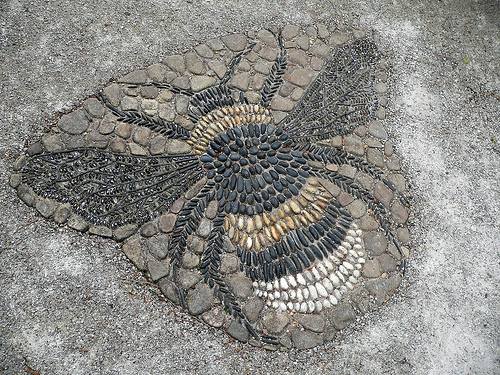
PicPost: Bee mosaic

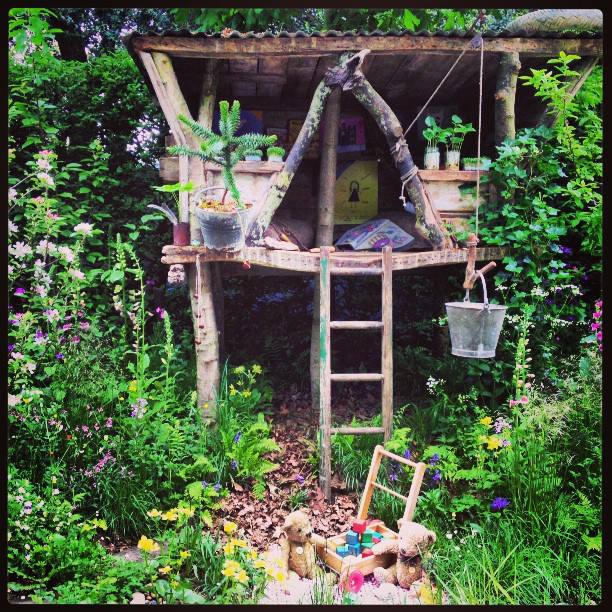
PicPost: Tree trunk

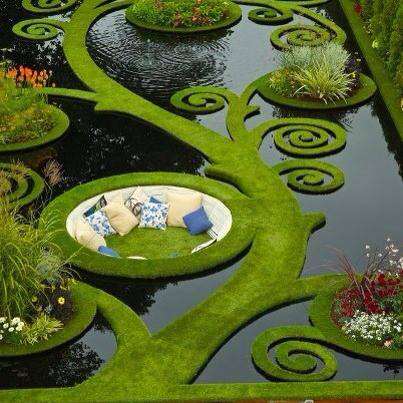
PicPost: Nature's embrace

Where’s that lawnmower…

picture from ilandscape

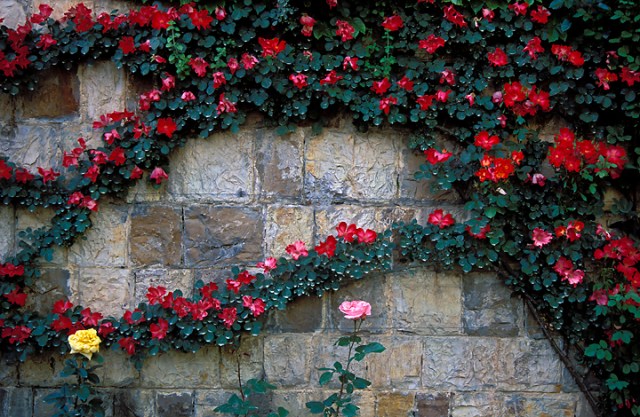
RoseWallAs I write today we have some rain in Norfolk (nothing dramatic, just a steady drip) – after three weeks of virtually nothing! I can almost hear the plants saying aahhhh….

Looking through my inbox I’ve come across another interesting question which I’ll use for this week’s GQT:

‘I would like to train some climbers on the wall of my house but do not want to use too many nails. What is the best way to go about it?’

So writes Salome St. John from Headon Platter in Cumbria. Well Salome, there are probably two good ways of tackling this. For small areas and plants which are not too heavy once fully grown, you can put up trellis. For larger areas and for supporting plants which can become very heavy over time (e.g. Wisteria) it might be best to put up a permanent wire – support system. Trellis can be attached to the wall with screws and plastic plugs after you have drilled holes with a masonry drill. To support wires, plug the wall in the same way and screw large ‘vine eyes’ into them – these should be about 1 – 1.2metres apart and at vertical intervals of about 450 – 600mm. Plastic covered or galvanised wires can then be threaded through the vine eyes and tensioned by means of tensioning bolts at one end.

Have you ever thought about using climbers in your borders?

You can train clematis or roses to add height to your borders by using rustic poles about 3m tall- these provide the least obtrusive supports. Dig a hole and/or ram in the posts so that they are at least 450mm, and preferably 600mm in the ground. Paint them before you put them in with a good wood preservative or one of the brightly coloured outdoor paints if you want them to stand out a bit more or tone in with other structures/furniture. A few cross – pieces will help support the plants that can be trained along them. Alternatively you can go for the ‘cottage garden’ look of  swags – these are basically thick ropes or other material (e.g chains) slung between the posts and along which roses can be trained. These make a great not – too – intrusive divider in the garden as well as being a good way of adding height to a border. Other options for adding height to a border are obelisks, which we use here in the Old School Garden to support runner beans and sweet peas.

Add height to your borders with a simple post, plus mesh for Clematis to clamber up

Add height to your borders with a simple post, plus mesh for Clematis to clamber up

Clematis can also be supported on tubes of special clematis netting: 2 metre lengths of netting are nailed to 2.4 metre stakes, which are hammered 600mm into the ground. This support is really only suitable for those late summer -flowering varieties which can be cut back in spring to keep them to a reasonable size.

Here at Old School Garden I’ve used panels of heavy-duty trellis to provide a screen for an oil tank and other things I want to hide and then trained clematis up this tying it in as it produces new growth. You can use all sorts of other climbers in the same way, but be careful you don’t go for those that are very vigorous and which will give you maintenance problems in the future; e.g. Clematis montana, the climbing rose ‘Kiftsgate’ or Boston Ivy (which is a fast wall coverer but which unless kept in check will get under roofs etc.).

A rose trained along a rope 'swag' between posts provides a permeable divider in the garden

A rose trained along a rope ‘swag’ between posts provides a permeable divider in the garden

Home made obelisks in Old School Garden used for Runner Beans and Sweet Peas

Home made obelisks in Old School Garden used for Runner Beans and Sweet Peas and heavy duty trells in the background screening a garage and oil tank

You might also be interested in related articles on this blog:

Arbours and Pergolas in the garden- 7 top tips

Lock down- pros and cons of garden ties

Build yourself an obelisk

Old School Gardener

If you’ve enjoyed reading this post and others on this blog, why not comment and join others by signing up for automatic updates via email (see side bar, above right ) or through an RSS feed (see top of page)?


What if all new houses had to be built with living roofs? Imagine if your apartment rent also included free fruit and vegetables from the roof garden…
http://ecosalon.com/high-tech-green-roof-technology-in-architecture/

living wall

Image by: Laura Manning

A guest article by Gavin Harvey

As urban spaces are growing, the desire to have a little bit of nature return to the living and working space is greater than ever. Living green walls help to escape the wasteland of concrete we find ourselves in, and counteract pollution to restore a natural balance to the local atmosphere.

Invented by Stanley Hart White in 1938, living green walls (also called vertical gardens or eco-walls) are more than just climbing plants. It is sustainable architecture at its finest!

 Benefits of Living Green Walls

With the expansion of cities everywhere, air pollution has increased; unknown to many people, toxins are not only outdoors on the streets filled with car fumes, but can build up indoors too thanks to air fresheners, cooking fumes and myriad other things. Plants filter these pollutants and improve air quality, whether that’s indoors or outdoors.

Living green walls on the outside of buildings also help to reduce energy costs by cooling the building in summer and insulating it in winter. Damages to walls are minimised by regulating the temperature fluctuations and diverting rainwater from the wall. Plants have long been used to block high frequency sounds on roadsides, and living green walls are a new way of diminishing noise pollution in busy urban areas.

Green walls also increase the property’s value by gaining LEED credits! This is an internationally recognised green building certification system, which rewards commercial buildings and home owners alike for developing certain green criteria.

 How Does it Work?

According to the climate of the location, carefully selected plants are put on structures that are either free-standing or attached to walls. These are irrigated by a drip-irrigation method, using recirculation systems to reduce water wastage.

Each wall is individually designed for the specific project. Plants for the exterior differ from those you would use indoors. They are chosen according to climate zones, usually for a higher zone than the location’s climate to ensure survival. Plants that have a wide range of tolerances and are able to adapt to a new environment quickly are perfect for the green walls.

If required, the wall can even feature a custom design, such as a logo crafted from carefully planted blooms in different colours.

 Cost and Maintenance

Plants grown on the wall are the cheaper option, but they will need a year before they are fully grown so if you want a stunning display immediately this isn’t your best option. Plants grown off-site and later inserted into the wall have their cost, as the nursery has to be paid plus fertilisers and day-to-day care.

Maintenance is crucial for a long-lasting living green wall. As the technology is still relatively young, it is hard to tell how long the plants will survive. The hardware can last up to 25 years whereas the plants will only grow until their roots run out of space within the panels, so it’s wise to choose species that don’t grow very rapidly! Plants in a tray system have to be replaced every year.

For more information about living green walls, check out The Ultimate Guide to Living Green Walls.

 Thanks to Gavin Harvey and Johann Heb for supplying this article.

You might also be interested in – Style Counsel: Gardens in the Sky

Old School Gardener


Finding Nature

Nature Connectedness Research Blog by Prof. Miles Richardson

Norfolk Green Care Network

Connecting People with Nature

Discover WordPress

A daily selection of the best content published on WordPress, collected for you by humans who love to read.

Susan Rushton

Celebrating gardens, photography and a creative life

Unlocking Landscapes

Writing, photography and more by Daniel Greenwood

Alphabet Ravine

Lydia Rae Bush Poetry

TIME GENTS

Australian Pub Project, Established 2013

Vanha Talo Suomi

The Journey from Finnish Rintamamiestalo to Arboretum & Gardens

Marigolds and Gin

Because even in chaos, there’s always gin and a good story …

Bits & Tidbits

RANDOM BITS & MORE TIDBITS

Rambling in the Garden

.....and nurturing my soul

The Interpretation Game

Cultural Heritage and the Digital Economy

pbmGarden

Sense of place, purpose, rejuvenation and joy

SISSINGHURST GARDEN

Notes from the Gardeners...

Deep Green Permaculture

Connecting People to Nature, Empowering People to Live Sustainably

BloominBootiful

A girl and her garden :)