Category: Community Gardening


harvest home

Some of the volunteers who helped to t idy up the Church Yard on Saturday

Some of the volunteers who helped to tidy up the Church Yard on Saturday

I’ve written before about our local church, St. Peter’s, Haveringland, or ‘The Church in the Fields’. On Saturday I helped tidy up the church yard, which doesn’t have any regular care or attention, particularly since services here now occur only once a month. 

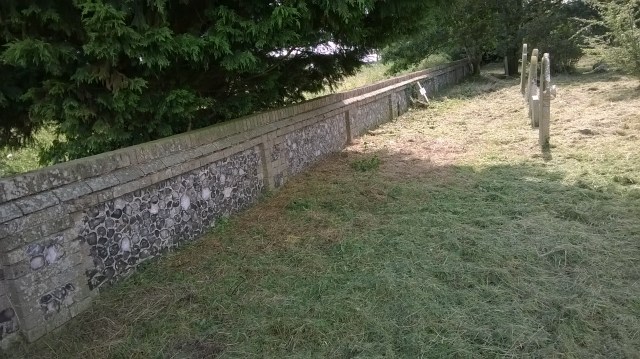
About twenty willing volunteers strimmed (or ‘Whipper – snipped‘ as I believe it’s called in Australia!), raked, weeded and (my own contribution) removed ivy from the church yard walls. In about two hours I managed to clear one wall (see picture below); fortunately there’s only one more that needs the same attention – I will return to finish it soon.

The wall cleaned of its Ivy- and, inadvertently a mouse nest too...

The wall cleaned of its Ivy- and, inadvertently a mouse nest too…

Some years ago an enthusiastic parishioner planted a number of Yews and other conifers around the church yard, and I remember at the time this caused a bit of controversy, as some people (my wife and I included) thought a ‘softer’, more naturalistic  approach to the planting (with wild flowers etc.) might be more appropriate. Well, I must say, 10 plus years on and these trees do add some interest to the church yard and were probably a realistic planting option, giving some shelter to the space and taking into account the limited community/church interest in looking after the area since.

On Saturday I was approached by the (relatively new) local priest who asked if I’d be interested in producing a Management Plan for the church yard. He suggested mown paths through wild flower areas and access to some of the more recent graves, based on a mix of twice yearly maintenance input from contractors, along with periodic voluntary effort like the session on Saturday. I was pleased to hear of his ideas and obvious commitment to keeping the place in good shape and so I agreed to help.

So, watch this space as this new project unfolds and I get to research and develop planting ideas around wild flower meadows (and maybe a couple of areas of self -reliant shrubs and perennials?).

I’d be pleased to hear from anyone with experience or knowledge on this subject – especially with regards to church yards!

Old School Gardener

Win a greenhouse for your School!

What is GYGG?
We’ve teamed up with TV gardener, David Domoney to launch Get Your Grown-ups Growing (GYGG) 2014. We are encouraging schools across the UK to host a GYGG event this October where they invite adults from the local community to help out in the school garden….’

Old School Gardener

Picture via 1001 Gardens

Old School Gardener

gillians's avatarPlant Heritage

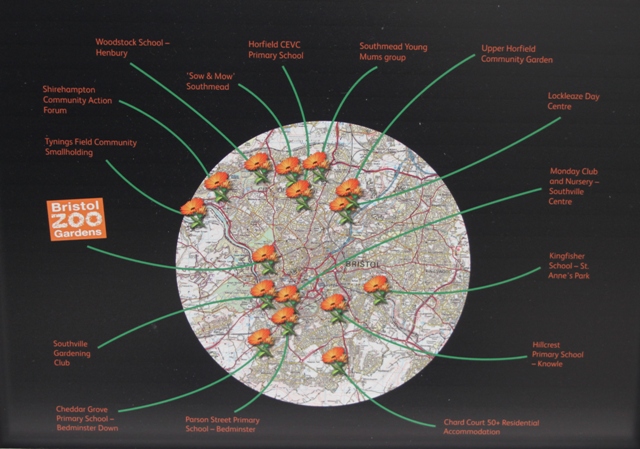
Bristol Zoo hold our first dispersed National Plant Collection which they brought this year to Hampton Court Palace Flower Show.

Bristol Zoo Calendula Collection

Each flower on the map represents a community group or school which has contributed to the Collection of Calendula. 
IMG_4291

There is a display of all the plants at Bristol Zoo as well as seed and herbarium specimens which can be viewed on request.  The Zoo is focusing on the species and the community groups are concentrating on the cultivars.

From the Zoo, Emma Moore and Eddie Mole who swears the flowers on his shirt are all his own work.
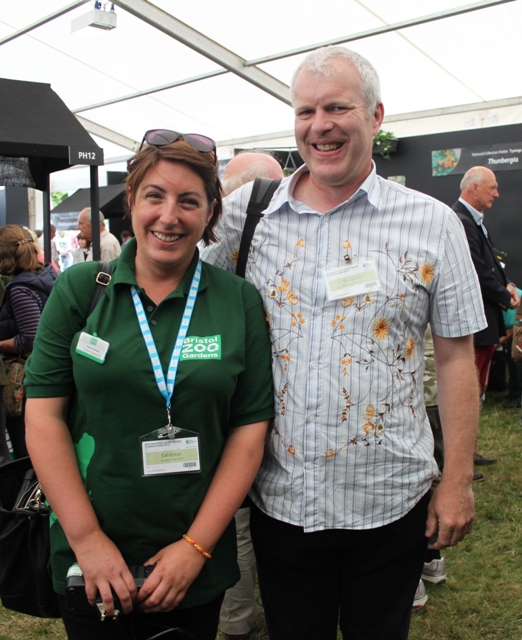
Emma Moore, Edie Mole

As well as Zoo staff members of the various communities involved visited the show to talk about the Collection – Barbara Franco, Shirehampton Community Action Forum; Matthew Bufton, Bristol Zoo; Fiona Deas, Horfield Primary School.
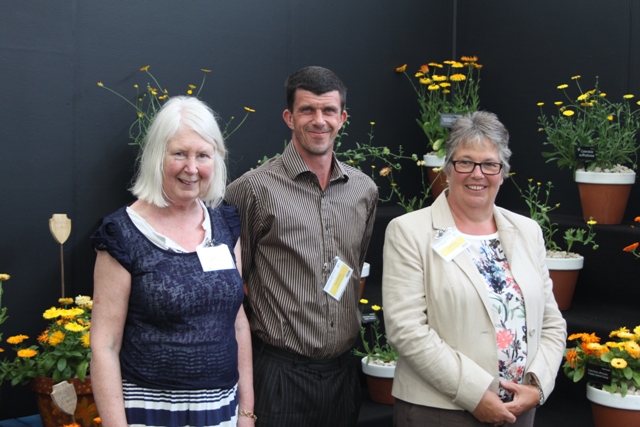
Barbara Franco, Matthew Bufton, Fiona Deas

Some of the species are threatened with extinction in their natural habitat due to development and change…

View original post 28 more words

canwefeedtheworld's avatarOne Billion Hungry: Can We Feed the World?

ID-100136355In the wake of the 2008 food price crisis, which exacerbated food insecurity and increased smallholder farmers’ vulnerability to shocks and stresses, recognition of the barriers smallholders face in becoming more productive and developing their farms as commercial businesses has been growing. In 2010, the UN Food and Agriculture Organisation implemented the Multidisciplinary Fund (MDF) project to help develop policies supportive of smallholder commercialisation in Africa, in particular identifying the heterogeneity amongst smallholders in terms of their attitudes to commercialisation.

A new report, Understanding smallholder farmer attitudes to commercialisation – the case of maize in Kenya, by the FAO, focuses on maize producers and rural youth in Kenya by investigating “attitudes, strategies and opportunities related to maize commercialisation” in Meru and Bungoma regions in the country. The report is based on key informant interview, focus group, farmer survey and stakeholder workshop data.

At present farm management is not undertaken…

View original post 500 more words

PicPost: Organic Dreamscape

Old School Gardener

IMG_8801You may have read previously that one of my latest projects involves designing, and then helping to install a new border alongside a 200-year-old ‘Crinkle Crankle’ Wall, near Fakenham town centre, Norfolk. I’m not sure about the history of the wall, but it seems to have enclosed a substantial garden for an important house next to the Church (possibly the old Vicarage or Rectory?). There’s certainly evidence of lean-to glasshouses on some (straight) parts of the wall, which are all ‘listed’ as being of historic or architectural interest.

Crinkle Crankle walls have an interesting history, as Wikipedia says:

‘A crinkle crankle wall, also known as a crinkum crankum, serpentine, ribbon or wavy wall, is an unusual type of garden wall.

The crinkle crankle wall economizes on bricks, despite its sinuous configuration, because it can be made just one brick thin. If a wall this thin were to be made in a straight line, without buttresses, it would easily topple over. The alternate convex and concave curves in the wall provide stability and help it to resist lateral forces.

Both crinkle and crankle are defined as something with bends and turns (Webster’s), but the term is also thought to come from Old English meaning zig-zag. The earliest reference to this meaning has been cited in 1598, but it was not until the 18th century that the term began to be applied to wavy walls. At that time these garden walls were usually aligned east-west, so that one side faced south (Dictionary of Architecture and Landscape Architecture by James Stevens Curl) to catch the warming sun and were historically used for growing fruit.

Many crinkle crankle walls are found in the East Anglia area of England where the marshes of the fen country were drained by Dutch engineers starting in the mid-1600s. The walls’ construction is attributed to these engineers who called them slange muur, meaning snaking wall……’

The Fakenham wall (which must be one of the oldest surviving examples in the U.K.), now encloses the Town’s Community Centre, Registry Office and other community buildings and the surrounding site is mainly laid to grass, with some areas of mature trees and more formal borders. Next to the wall is an old asphalt tennis court (no longer in use) and the border immediately in front was covered in weeds (mainly Alkanet- it has a pretty blue flower, but also has tough tap roots and is a real ‘spreader’), as well as a large area of Hemerocallis (Day Lily). Perhaps a legacy from the wall’s days as a backdrop for fruit growing, each ‘bay’ created by the wavy wall has a fruit tree- apple, cherry or fig. These old trees are all looking rather uncared for and one of my first jobs was to cut back the fig which was covering one of the old brick and slate seats that once must have been used to watch the tennis. Here’s what the area looked like at the start of the project….

The clients (the Community Centre and the Gardening in Fakenham Town – GiFT project) have ideas for improving this wider area and perhaps encouraging it as a space for wedding photos, outdoor events etc. The brief was to come up with a planting plan for the border in front of the south -facing wall to better show off its features, use plants that require limited maintenance and which can cope with the poor soil and aspect.

My design involved limited pruning of the other fruit trees, thinning out the large area of Day Lilies and using the thinnings to create a continuous ribbon of these around the base of the wall, and introducing a few shrubs and sub shrubs (Buddleja and Lavender) at key points. These, and a range of herbaceous perennials and grasses were positioned to provide contrasting textures and forms within a broadly colour-themed series of ‘waves’ to pick up the shape of the wall, and taking account of the other strong structural features of the seats and fruit trees.

These waves are alternating combinations of mainly blue and red; blue and yellow and with purple (including purple foliage) to tie these together as a more continuous ribbon through the whole scheme. In addition a selection of different grasses (including Stipa gigantea and Miscanthus sinensis) have been used around each seat to provide a taller, contrasting, soft veil effect with both flowers and foliage to catch the sunlight. I also suggested that old bricks, to harmonise with the wall, could be laid as flooring in front of each seat, softened with ad hoc planting of varieties of Thyme. The first of these seating areas has been used to pilot this and it is hoped that further work will be done to complete the other areas as voluntary help and materials become available.

Children from the local Junior School were involved alongside a handful of volunteers to help me clear the border, prepare the soil and then to plant it up. Here’s how it looked after clearing and planting up…

The final scheme involved planting over 200 plants supplied in the main by Howard Nursery of Wortham, Suffolk and Taverham Nursery Centre, Norfolk. The planting has deliberately been placed closer together than would ultimately be necessary, so as to speed up the ground coverage and so reduce the need for weeding. However, not surprisingly, some roots of the Alkanet remain and have started to sprout once more, so the border will need to be carefully managed to ensure the plants survive and the weeds are removed in its early days.

This week, the children from the Junior School returned to carry out the ‘first weed’ since planting and to draw the wall and look out for insects etc. This marked the formal completion of the project. Here are some pictures of that event…

This slideshow requires JavaScript.

And here’s one of me together with representatives of the main partners: from left to right Rhoda Hincks (Junior School), Janet Holdom (Community Centre) and Pauline Chamberlain (GiFT).

IMG_8926

This has been an interesting and enjoyable project and I look forward to seeing the border in a few months once it has become better established and to seeing progress on the improvements to the wider area. If you’d like to look at pictures and a brief account of the Junior School’s involvement take a look at their blog. 

Old School Gardener

greenbenchramblings's avatargreenbenchramblings

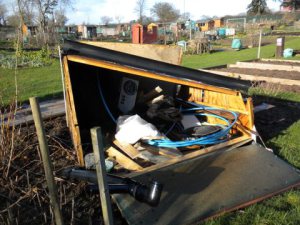
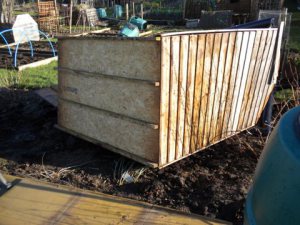
Last week a wild wind phenomenon hit our allotments and left a trail of destruction in its wake. A “funnel” tore its way across the plots and it flattened sheds in its path. It moved sheds from their bases. It took the roofs off others. Anything light was scattered about, compost bins, water butts and cold-frames.

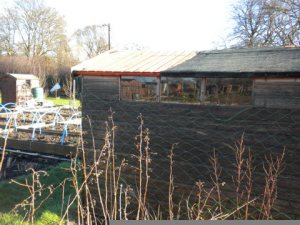
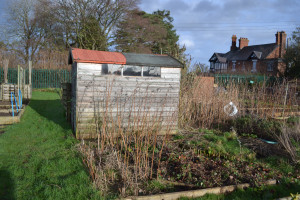
In the first pair of pictures half of the felt from the shed roofs had been torn off typical of the minor damage to many sheds. Others like the one in the third photo had been blown from off its base and it collapsed in a heap, with the contents crushed inside. See if you can see which bit is which.

2014 02 20_6595 2014 02 20_6605

2014 02 20_6596

Others fell off their bases and landed on their sides remaining almost intact while others lost their roofs which took off like kites.

2014 02 20_65972014 02 20_6598

On our own plot there was little damage. We…

View original post 475 more words

canwefeedtheworld's avatarOne Billion Hungry: Can We Feed the World?

Rosegrant_book_cover_crop240 Solutions to the world’s food insecurity and environmental problems are numerous. Some suggest it is the not the lack of a solution that hampers progress in addressing hunger, climate change and natural resource scarcity but rather the difficulty in choosing the most appropriate solution.

The International Food Policy Research Institute recently launched the results of a new research project (Food Security in a World of Growing Natural Resource Scarcity: The Role of Agricultral Technologies), which assesses the likely impacts of agricultural technologies on global crop productivity, hunger and economic development. Showcasing the project, is an infographic, produced by IFPRI, which outlines:

The eleven agricultural innovations investigated

  • No-till farming
  • Water harvesting
  • Organic agriculture
  • Precision agriculture
  • Drought tolerance
  • Heat tolerance
  • Integrated soil fertility management
  • Drip irrigation
  • Sprinkler irrigation
  • Nitrogen use efficiency
  • Crop protection

The data used

Global crop land was divided into cells, and data on physical characteristics such…

View original post 317 more words

Finding Nature

Nature Connectedness Research Blog by Prof. Miles Richardson

Norfolk Green Care Network

Connecting People with Nature

Discover WordPress

A daily selection of the best content published on WordPress, collected for you by humans who love to read.

Susan Rushton

Celebrating gardens, photography and a creative life

Unlocking Landscapes

Writing, photography and more by Daniel Greenwood

Alphabet Ravine

Lydia Rae Bush Poetry

TIME GENTS

Australian Pub Project, Established 2013

Vanha Talo Suomi

The Journey from Finnish Rintamamiestalo to Arboretum & Gardens

Marigolds and Gin

Because even in chaos, there’s always gin and a good story …

Bits & Tidbits

RANDOM BITS & MORE TIDBITS

Rambling in the Garden

.....and nurturing my soul

The Interpretation Game

Cultural Heritage and the Digital Economy

pbmGarden

Sense of place, purpose, rejuvenation and joy

SISSINGHURST GARDEN

Notes from the Gardeners...

Deep Green Permaculture

Connecting People to Nature, Empowering People to Live Sustainably

BloominBootiful

A girl and her garden :)