Tag Archive: wire


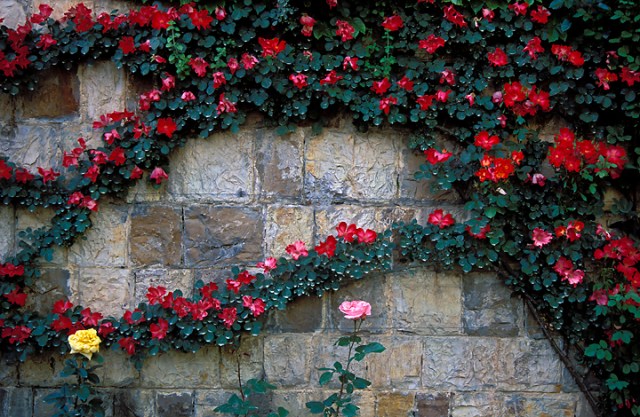
RoseWallAs I write today we have some rain in Norfolk (nothing dramatic, just a steady drip) – after three weeks of virtually nothing! I can almost hear the plants saying aahhhh….

Looking through my inbox I’ve come across another interesting question which I’ll use for this week’s GQT:

‘I would like to train some climbers on the wall of my house but do not want to use too many nails. What is the best way to go about it?’

So writes Salome St. John from Headon Platter in Cumbria. Well Salome, there are probably two good ways of tackling this. For small areas and plants which are not too heavy once fully grown, you can put up trellis. For larger areas and for supporting plants which can become very heavy over time (e.g. Wisteria) it might be best to put up a permanent wire – support system. Trellis can be attached to the wall with screws and plastic plugs after you have drilled holes with a masonry drill. To support wires, plug the wall in the same way and screw large ‘vine eyes’ into them – these should be about 1 – 1.2metres apart and at vertical intervals of about 450 – 600mm. Plastic covered or galvanised wires can then be threaded through the vine eyes and tensioned by means of tensioning bolts at one end.

Have you ever thought about using climbers in your borders?

You can train clematis or roses to add height to your borders by using rustic poles about 3m tall- these provide the least obtrusive supports. Dig a hole and/or ram in the posts so that they are at least 450mm, and preferably 600mm in the ground. Paint them before you put them in with a good wood preservative or one of the brightly coloured outdoor paints if you want them to stand out a bit more or tone in with other structures/furniture. A few cross – pieces will help support the plants that can be trained along them. Alternatively you can go for the ‘cottage garden’ look of  swags – these are basically thick ropes or other material (e.g chains) slung between the posts and along which roses can be trained. These make a great not – too – intrusive divider in the garden as well as being a good way of adding height to a border. Other options for adding height to a border are obelisks, which we use here in the Old School Garden to support runner beans and sweet peas.

Add height to your borders with a simple post, plus mesh for Clematis to clamber up

Add height to your borders with a simple post, plus mesh for Clematis to clamber up

Clematis can also be supported on tubes of special clematis netting: 2 metre lengths of netting are nailed to 2.4 metre stakes, which are hammered 600mm into the ground. This support is really only suitable for those late summer -flowering varieties which can be cut back in spring to keep them to a reasonable size.

Here at Old School Garden I’ve used panels of heavy-duty trellis to provide a screen for an oil tank and other things I want to hide and then trained clematis up this tying it in as it produces new growth. You can use all sorts of other climbers in the same way, but be careful you don’t go for those that are very vigorous and which will give you maintenance problems in the future; e.g. Clematis montana, the climbing rose ‘Kiftsgate’ or Boston Ivy (which is a fast wall coverer but which unless kept in check will get under roofs etc.).

A rose trained along a rope 'swag' between posts provides a permeable divider in the garden

A rose trained along a rope ‘swag’ between posts provides a permeable divider in the garden

Home made obelisks in Old School Garden used for Runner Beans and Sweet Peas

Home made obelisks in Old School Garden used for Runner Beans and Sweet Peas and heavy duty trells in the background screening a garage and oil tank

You might also be interested in related articles on this blog:

Arbours and Pergolas in the garden- 7 top tips

Lock down- pros and cons of garden ties

Build yourself an obelisk

Old School Gardener

If you’ve enjoyed reading this post and others on this blog, why not comment and join others by signing up for automatic updates via email (see side bar, above right ) or through an RSS feed (see top of page)?
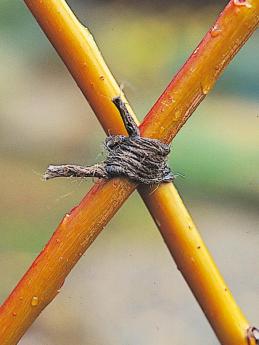
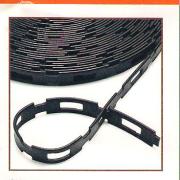
 

string over canes So what do you use to keep your plants supported and under control? Do you favour ‘old school ties’ (!) or prefer the wide range of modern products now on offer? Here’s a gallery of different types of tie with a few comments based on my experiences- I’d love to hear your views!

Chain lock - can cut the length you require and can be adjusted. Plastic- degrade after a season? Packs of pre cut lengths also available.

Chain lock – can cut the length you require and can be adjusted. Plastic- degrade after a season? Packs of pre cut lengths also available.

Tree belts- sturdy, diferent lengths/ thicknesses, for for use with posts/stakes.

Tree belts- sturdy, diferent lengths/ thicknesses, for for use with posts/stakes.

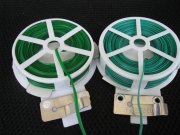
Plastic/wire twist on reel- can cut to length required and easy to use , but once fixed doesn't have much give, so not good where stems growth expected as it will effectively cut the stem unless loosened in time.

Plastic/wire twist on reel- can cut to length required and easy to use , but once fixed doesn’t have much give, so not good where stems growth expected as it will effectively cut the stem unless loosened in time.

Jute tree ties- softer than plastic/rubber belts, so good where stems are tender/thin. Biodegradeable.

Jute tree ties- softer than plastic/rubber belts, so good where stems are tender/thin. Biodegradeable.

Old nylons/ tights used to secure tomatoes- goos strechability and also soft, so won't damage stems. The recycler's option!

Old nylons/ tights used to secure tomatoes- good ‘stretchability’ and also soft, so won’t damage stems. The recycler’s option!

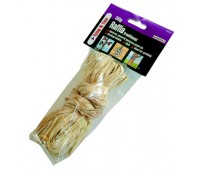
Raffia- natural product useful for slender stems and a 'natural' look- found it a bit fiddly to use myself.

Raffia- natural product useful for slender stems and a ‘natural’ look- found it a bit fiddly to use myself.

Plastic rings (wire versions also) for linking plant stems to a cane- good room for stem growth & movement, but can chafe the stems? Plastic- will eventually degrade/snap?

Plastic rings (wire versions also) for linking plant stems to a cane- good room for stem growth & movement, but can chafe the stems? Plastic- will eventually degrade/snap?

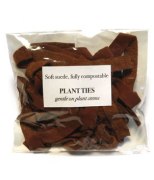
Suede plant ties- stronger and more durable than jute/cotton, and as soft. Only one length though?

Suede plant ties- stronger and more durable than jute/cotton, and as soft. Only one length though?

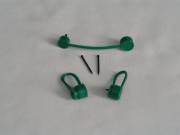
Plastic stem supports- fix stems to trellises, fences etc..No experience of these..

Plastic stem supports- fix stems to trellises, fences etc..No experience of these..

Good old fashioned jute twine- different thicknesses and easy to cut and tie stems in- but will only last a season- biodegradeable.

Good old fashioned jute twine- different thicknesses and easy to cut and tie stems in- but will only last a season- biodegradeable.

Individual stems held to wall/fence with nail- I've found these difficult to fix into my walls and also degrade/crack after cold weather.

Individual stems held to wall/fence with nail- I’ve found these difficult to fix into my walls and also degrade/crack after cold weather.

Velcro - easy to cut off the length you need and you can expand the space as the plant stem grows. How well do they last? Some come with a reel cutter that can be fixed to your waist belt, and also come in packs of pre cut lengths.

Velcro – easy to cut off the length you need and you can expand the space as the plant stem grows. How well do they last? Some come with a reel cutter that can be fixed to your waist belt, and also come in packs of pre cut lengths.

Biodegradeable cotton- needs a knot, and will rot fairly quickly? At least no plastics into landfill..

Biodegradeable cotton- needs a knot, and will rot fairly quickly? At least no plastics into landfill..

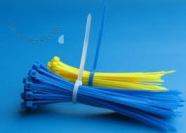
Strong plastic, of varying lengths/thicknesses - good for tying canes or other structures together- not good for securing plant stems -can't be adjusted

Cable ties- strong plastic, of varying lengths/thicknesses – good for tying canes or other structures together- not good for securing plant stems -can’t be adjusted

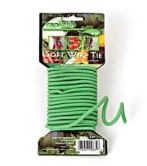
Soft tie- rubber/plastic covered wire which can be cut and bent to shape. Soft covering good for cushioning stem, but probably best used on harder stems where a more permanent fix is required- eg roses against trellis.

Soft tie- rubber/plastic covered wire which can be cut and bent to shape. Soft covering good for cushioning stem, but probably best used on harder stems where a more permanent fix is required- eg roses against trellis.

Quizzicals- two more cryptic clues for you:

  • Hello Miss Black
  • A punch up in the water

Old School Gardener

If you’ve enjoyed reading this post and others on this blog, why not comment and also join some other people and sign up for automatic updates via email (see side bar, above right ) or through an RSS feed (see top of page)?
Finding Nature

Nature Connectedness Research Blog by Prof. Miles Richardson

Norfolk Green Care Network

Connecting People with Nature

Discover WordPress

A daily selection of the best content published on WordPress, collected for you by humans who love to read.

Susan Rushton

Celebrating gardens, photography and a creative life

Unlocking Landscapes

Writing, photography and more by Daniel Greenwood

Alphabet Ravine

Lydia Rae Bush Poetry

TIME GENTS

Australian Pub Project, Established 2013

Vanha Talo Suomi

The Journey from Finnish Rintamamiestalo to Arboretum & Gardens

Marigolds and Gin

Because even in chaos, there’s always gin and a good story …

Bits & Tidbits

RANDOM BITS & MORE TIDBITS

Rambling in the Garden

.....and nurturing my soul

The Interpretation Game

Cultural Heritage and the Digital Economy

pbmGarden

Sense of place, purpose, rejuvenation and joy

SISSINGHURST GARDEN

Notes from the Gardeners...

Deep Green Permaculture

Connecting People to Nature, Empowering People to Live Sustainably

BloominBootiful

A girl and her garden :)