
Tag Archive: wildlife
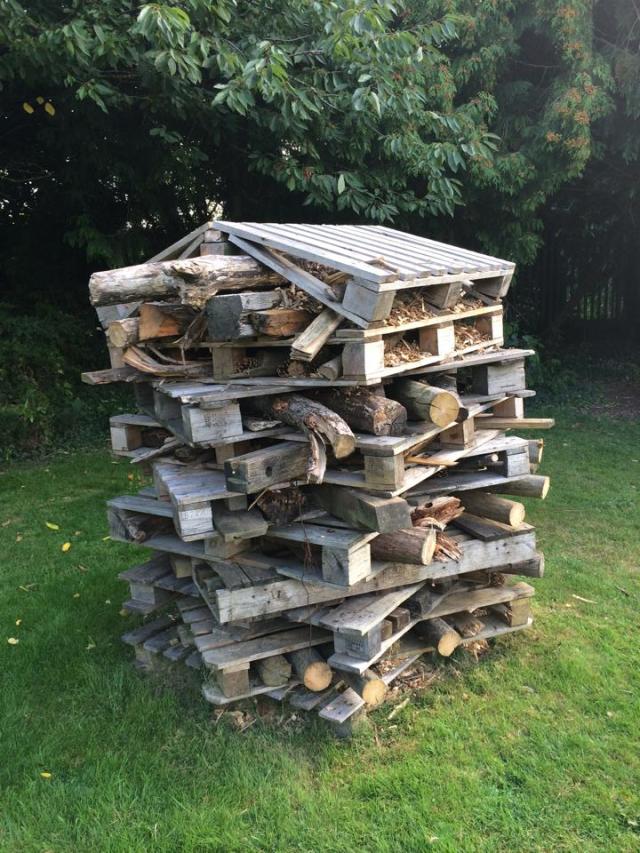 Bug hotel in Cutteslow and Sunnymead Park, Oxford
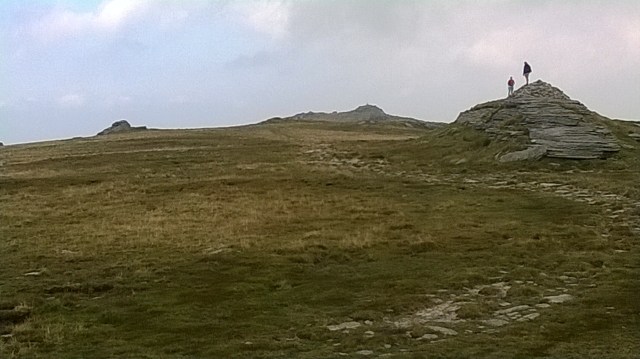 We’re just back from a week in Dartmoor, Devon, walking between some of the well-known, usually prominent rocky features of this beautiful landscape, known as tors.
The Challenge
The tors (there are over 160 of them) are the focus of an annual event known as the Ten Tors Challenge, when around 2400 people aged between 14 and 19 (in over four hundred teams of six), face hikes of 35, 45 or 55 miles (56, 72 or 88km) visiting ten nominated tors over two days. The teams must be self-sufficient, carrying all that they need to complete their route safely despite the terrain and the weather. The latter can be very changeable and at times quite extreme, and success or failure can depend very much on the extent to which a team has been trained for all eventualities.
Not having completed this in her youth, my partner ( a local lass), was keen to do her own ‘Ten Tors Challenge’, but at a more leisurely pace. In the event, extremely good weather meant that we were able to visit double the target number of tors spread over six days, and including excellent overnight accommodation at my mother – in – law’s house in Tavistock! Over a series of posts in the next few days, I hope to give an interesting account of our adventures along with a few pictures. For starters here’s a ‘primer’ on Dartmoor and the tors in question….
 The Moor
Covering an area of 954 sq km (368 sq miles), Dartmoor contains the largest and wildest area of open country in the south of England. By virtue of its outstanding natural beauty it is one of the National Parks of England and Wales. Unlike many National Parks in other countries, for example the USA, the National Parks in England, Wales and Scotland are not owned by the state. The term ‘National’ means that they have been identified as being of importance to our national heritage and as such are worthy of special protection and attention. Within each National Park there are many landowners, including public bodies and private individuals. National Parks are places where people live and work.
Geology
A large part of Dartmoor (65%) is made up of granite, an igneous rock which was intruded some 295 million years ago. This great granite core is surrounded by sedimentary rocks including limestones, shales and sandstones belonging to the Carboniferous and Devonian periods. Those nearest the granite intrusion were altered (metamorphosed) by intense heat and pressure and chemical reactions.
Tors
Dartmoor is known for its tors – hills topped with outcrops of bedrock, which in granite country such as this are usually rounded boulder-like formations. More than 160 of the hills of Dartmoor have the word tor in their name but quite a number do not. However this does not appear to relate to whether or not there is an outcrop of rock on their summit.
The processes resulting in the formation of the Dartmoor tors started about 280 million years ago as the granite forming Dartmoor cooled and solidified from molten rock at a temperature of 900 – 1000˚C. The minerals which make up granite crystallised as closely interlocking grains forming the hard rock. Granite is formed of three main minerals: Quartz – appearing in the granite as translucent slightly greyish looking grains; Feldspar – white grains, sometimes stained yellowish or pink (in parts of the granite feldspar forms large white crystals); and Biotite – dark brown glistening flakes.
 Varying climatic conditions occurring over millions of years, along with the cooling of the molten and other materials were the first, mainly chemical factors in the formation of the tors. Most recently, cold conditions in the Ice Age (between 2 million to 10,000 years ago), have caused major mechanical forces to shape the landscape we see today. Of these the most important is the expansion of freezing water. The deeply weathered granite was forced apart and broken up into blocks by being subjected to frequent freezing and thawing during the cold periods of the Ice Age, and gravity was also important, moving the loose material downhill.
The principal tors are:
| Tor | Height above sea level | |
| High Willhays | 621m (2,039ft) | |
| Yes Tor | 619m (2,030ft) | |
| Great Links Tor | 586m (1,924ft) | |
| Fur Tor | 572m (1,876ft) | |
| Great Mis Tor | 539m (1,768ft) | |
| Great Staple Tor | 455m (1,493ft) | |
| Haytor | 454m (1,490ft) | |
| Hound Tor | 448m (1,469ft) | |
| Sharpitor | 402m (1,320ft) | |
| Sheeps Tor | 320m (1,050ft) | |
| Vixen Tor | 320m (1,050ft) |
Well that’s the basics….except you might be interested in a TV programme that is showing this evening (Tuesday 9th September) on ITV 1 (7.30pm). The first in a new series of ‘Wilderness Walks’ by bushcraft expert Ray Mears focuses on Dartmoor. I’ll certainly be watching….
…so now for an article on the first stage of our trip – and it’s a mysterious beginning to our adventure that awaits…..(I’ll explain more about the nudist along the way too).
Further Information: Dartmoor National Park
Old School Gardener

Orfordness Lighthouse- Felicity, Deborah and Nick
Here’s the first article of two covering two very enjoyable days out whilst on holiday with some good friends recently.
Orford Ness is a huge shingle spit, linked to the mainland at Aldeburgh and stretching along the coast to Orford and down to North Wier Point, opposite Shingle Street. It is divided from the mainland by the river alde (Ore off Orford), and was formed by longshore drift along the coast. The material of the spit comes from places further north. Near the middle point of its length, at the foreland point or ‘Ness’, lies the Orfordness Lighhouse.
Orford Ness is an internationally important site for nature conservation. It contains a significant portion of the European reserve of vegetated shingle habitat, which is internationally scarce, highly fragile and very easily damaged.
The peninsula was formerly administered by the Ministry of Defence, which conducted secret military tests during both world wars and during the ‘Cold War’. These included bomb testing, the development of Radar and Atomic weapons testing.
We had a wonderfully sunny day for our ferry crossing and walk around the site, which shows a curious mix of natural beauty and interest with man -made stuctures and debris, much of which has been left in situ. The volunteer guides were very friendly and informative. After returning to the mainland and following a super pub lunch, we explored the river by boat and saw several groups of sea birds, including Avocet, Oyster Catcher, Tern and Sea gulls.
Further information:
National Trust website
Wikipedia
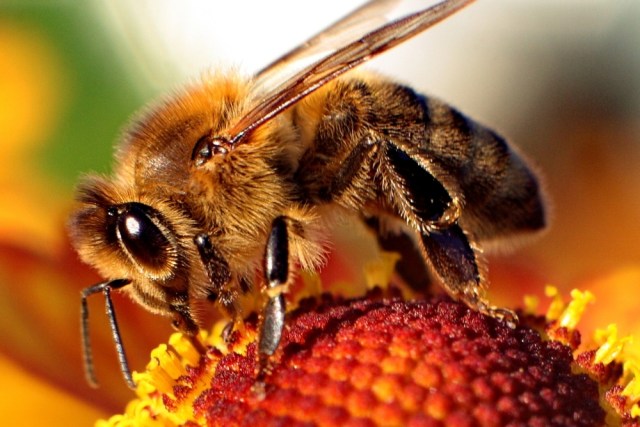
Keeping the bees happy is one aspect of planting a wildlife garden
The latest round of RHS Garden Shows winds it’s way around the country – Hampton Court is next up and opens 0n 8th July. I’ve been to this show twice before and I reckon that most if not all of the show gardens (and this is probably true of the other shows too), tend towards what you might call the ‘middle ground’ of design (perhaps considered a ‘safe bet’?) What I mean is that they usually combine that tried and tested formula of ‘formal structure, informal planting’ – what you might call the classic Arts and Crafts/ English Country House style.
Don’t get me wrong, this is a style I love myself and is what I’m trying to create here at the Old School Garden. But every now and then its refreshing to see something at one of the ‘design extremes’- the sort of creation that pushes you into thinking again about structural features or particular planting choices and combinations in your own garden, or even more fundamentally, what you expect your garden to do.
At this year’s Hampton Court Show one garden looks set to do this and at the same time get across some important messages about the potential food value of gardens- and in particular the wide range of good quality food that nature puts on the menu. ‘The Jordans Wildlife Garden’ has been created to reflect a long-term commitment from Jordans to the British countryside. With a colourful variety of features from edible wild flowers, trees and hedges to oats, fruit and nuts – all of which can be foraged from the countryside – the garden provides a natural ‘larder’ to share as a shelter for birds, bees and butterflies. Its unveiling celebrates the belief that great tasting food comes from working closely with nature, as well as aiming to inspire gardeners everywhere to support British wildlife.
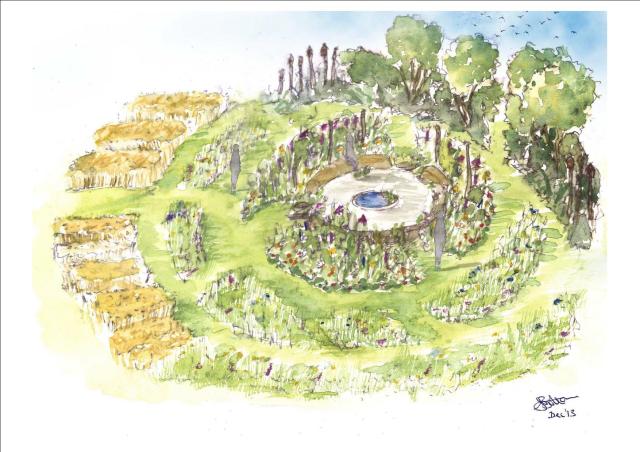
The Jordans Wildlife Garden Design
This Garden is set to showcase the importance of sustainability and protecting the British countryside to RHS visitors from across the country. Oat fields, inspired by Jordans’ farms, outline the sides of the garden, moving through to mown paths of species rich meadow, which curve through the space. Swathes of meadow alongside the paths give a close connection to nature. The garden is surrounded by a cut log wall and grassy banks, which form a wildlife friendly edge to the garden and a habitat for wildlife. A nut terrace that provides an edible treat for both people and wildlife surrounds the elegant, reflective pool in the centre of the garden. There are also sculpted straw benches, created by willow sculptor Spencer Jenkins, that provide a place to rest and enjoy the relaxing atmosphere. Mixed native hedgerow and fruit and nut trees will surround one side of the garden, providing more edible treats for people and animals.
The Garden features have been designed to support local wildlife, including thatched insect hotels, birdhouses and feeding stations. These were all custom crafted for the Garden and add a unique beauty to the space. Design elements such as cut wood stepping-stones, created by chainsaw artist Ella Fielding, will provide further material for animals to make their homes in, whilst the meadow flowers themselves house a beehive – a core feature of any wildlife garden.
All the sustainable elements of the Garden also represent a commitment by Jordans to The Prince’s Countryside Fund, which works to support the people that take care of our countryside and ensures a sustainable future for British farmers and rural communities. And it just shows the ease with which these elements can be brought into compact garden spaces, whilst still supporting local wildlife.
Selina Botham, a passionate wildlife and garden enthusiast, designed the Garden. She has won numerous awards for her beautiful and considered approach to gardening, from Gold Medal to Best In Show for her first ever garden at the RHS Hampton Court Palace Flower Show. And as part of its British countryside celebrations this July, Jordans has enlisted the taste expertise of Great British Bake Off winner, Edd Kimber, to create a series of foraged food recipes inspired by The Jordans Wildlife Garden.

- Selina Botham
Long-term supporters of wildlife habitats and increased biodiversity, Jordans’ cereal farmers devote at least 10% of their farmed areas to supporting wildlife. These sustainable practices are at the centre of the company’s ethos and their pioneering work in this area helps to create a more diverse countryside by encouraging up to five times more wildlife in agricultural spaces.
As a daily consumer of their fruity Muesli, it’s nice to know that they promote sustainable farming practices!
Links for further information:
Jordans Cereals and the Wildlife Garden
Up to date coverage of the Jordan’s Wildlife Garden at the RHS Hampton Court Flower Show – on Facebook and Twitter
Old School Gardener

Picture by Elaine Lawson
Old School Gardener
Install Your Own Green Roof

Maddy Harland describes how to convert a pitch and tar flat roof into a green roof: a beautiful and enduring paradise for birds and bees -click the title for the full article.
Old School Gardener
Nurture the Nature in your Garden

A link to information about the latest ‘citizen survey’ of wildlife in our gardens, which begins today.
‘Britain’s biggest public-led investigation into the health of native wildlife has begun, with the launch of the national Garden Wildlife Health project
A partnership between the Zoological Society of London (ZSL), the British Trust for Ornithology (BTO), Froglife and the Royal Society for the Protection of Birds (RSPB), Garden Wildlife Health is the first collaborative citizen science project of its kind, relying on data provided from garden-owners across the nation….’
Old School Gardener
nWh
-
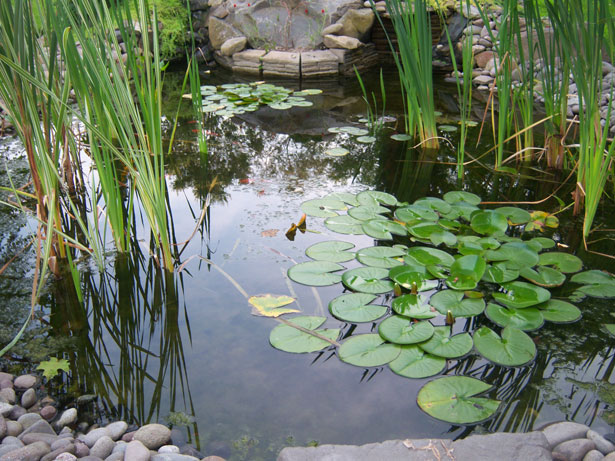
A pond is a fantastic resource for wildlife
Most gardens play an important part in promoting biodiversity and maintaining ecosystems – vital if we are to have a sustainable planet. You might want to further enhance your garden’s ecological value, or perhaps promote wildlife to help pollinate plants (important if you want to gather your own seed and/or are growing your own food) and to help control unwanted pests.
Promoting wildlife is also a way or enriching the garden experience – just think about birdsong, the buzzing and gentle flitting of bees from flower to flower, the colourful displays of butterflies and the fascinating movements of the myriad insects and other ‘critters’ out there! So how can you ‘design’ wildlife into your garden and gardening activities?

-
Plant nectar- rich flowers to attract pollinators
First it’s important to recognise that you and your friends and family are also going to use the garden, so there’s no need to ‘go completely wild’ and make it unpleasant or difficult for humans to use the garden. In fact the best designed and managed gardens (and often the most beautiful) can also be the best for wildlife. These are the places where nature has not been allowed to take over.
You can ‘tip the balance in favour of wildlife’ in a number of ways. If you have a large garden you can adopt a ‘conservation’ approach and set out separate areas to attract and support different types of wildlife. If your garden is smaller, you can provide a range of features for the wildlife species you want to encourage. This approach is especially important if you want to actively harness nature to control pests.

-
Bird feeders need to be out of the reach of cats!
So what can you do?
Create habitats that mimic those in nature and complement the local range outside the garden
Provide natural shelter, nesting, food and drink – important as ‘stopping off’ points for temporary visitors to your garden as well as for longer term residents
Aim to increase diversity- and recognise that this is going to be a gradual process
Build in some key features, such as…..
-
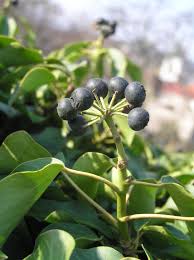
Climbing plants like Ivy provide a valuable food source for wildlife
-
Native plants- these act as a host to many more species than non native plants
-
Wildflowers, grasses, weeds- these attract butterflies and many other insects. Nettles are important hosts for species that aid a healthy garden; butterflies and ladybirds. Maybe you can grow these in a container if you don’t have the space to leave patch in the garden?
-
Nectar and pollen rich flowering plants- these feed butterflies, bees, hoverflies etc.- which in turn attract birds
-
Trees, flowering and fruiting shrubs- these provide food and shelter for birds
-
Climbing plants- they provide food and cover for birds and food for insects and butterflies. Examples include Ivy, honeysuckle, quince, wisteria, clematis..
-
Hedges- these give food and shelter for wildlife (e.g hedgehogs, voles and shrews), food and nesting for birds- where it’s practical choose to install a hedge rather than a fence
-
Water- a pond brings masses of creatures to drink as well as attracting resident pond life
-
Wood piles – insects colonise the decaying wood, attracting spiders and birds; beetles lay grubs; toads and hedgehogs hibernate underneath; slow worms use it as home (and these prey on slugs)
-
Compost heap – provides both food for the soil and home for minute insects and other ‘mini beasts’ which feed birds, hedgehogs, toads. It also acts as a possible nesting place for hedgehogs, toads and slow worms.
-
Bird and Bat boxes, tables, feeders and baths- put these up in secluded and sheltered spots out of full sun – and out of the reach of cats! Birds need extra food in winter. provide a range of foods according to the species you want to attract. Birds need to drink and bathe to keep their plumage in good order- even in winter, so keep birdbaths unfrozen
-
Stones and walls- toads, newts and female frogs usually spend winter on land, under rockery stones (or in a log pile). Beetles, spiders, insects live in nooks and crannies
-
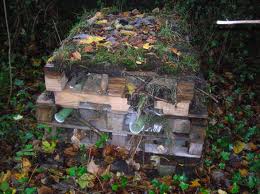
‘Bug hotels’ can provide a ‘man made’ substitute for the above, and are good fun to make with children.
-
‘Bug Hotels’ can provide a ‘Des Res’ for many insects and other critters
Further information: A range of useful wildlife gardening guides
Old School Gardener

Picture via Camsaw

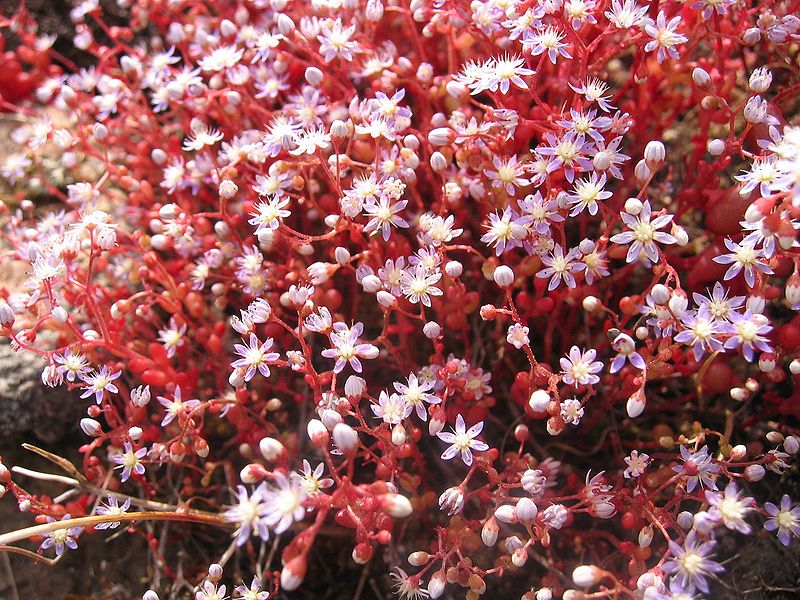
- Sedum caeruleum
So, I’m getting close to the end of the alphabet and thinking about if and how I should follow up my current ‘A-Z’ series with another- what do you think? Any ideas? Maybe trees or shrubs? Or perhaps bulbs? Let me have your ideas!
S caused me a moment of uncertainty. I thought, it has to be Salvia, then I thought, Sedum is obvious as many are at (or close to) their best at this time of year, and I do love the larger forms which add so much to the garden with their chunky, glaucous foliage and shields of flowers, especially in autumn and on into winter as the flowers fade and their strong shapes give structure to the ‘close season’ border.
Sedum (common name ‘Stonecrop’) is a wide genus of some 400 species, encompassing annuals, biennials, deciduous, semi evergreen and evergreen perennials, subshrubs and shrubs- from both hemispheres! What you might call a botanical success story!
Their habitats in the wild vary from mountainous areas (where most come from), to arid regions of South America. As a result, they vary widely from dwarf, rock garden plants (the predominant type) to fairly tall plants, very suitable for beds and borders. Some of the smaller species can be quite invasive. Sedums prefer sun, but some will tolerate light shade. They are drought tolerant, and prefer light, well-drained soils. The border types will grow in almost all soil types, but do become rather lush and need to be staked if grown in over fertile conditions.
 Sedum spectabile ‘Matrona’
  Sedum anglicum
  Sedum lanceolatum
  Sedum stenopetalum
  Sedum spathulifolium
Sedum spectabile ‘Matrona’
Sedum anglicum
Sedum lanceolatum
Sedum stenopetalum
Sedum spathulifolium
The foliage of ‘stonecrops’ is usually thick, fleshy and succulent, although the arrangement of the leaves varies. Individual flowers appear in summer and autumn, are mostly 5 – petalled and star shaped, and are borne in a range of different forms: corymbs, panicles or cymes.
Butterflies love the flowers- especially Sedum spectabile. The green buds on this species look good from midsummer, then colour pink into autumn. Stems are succulent and frosted, hence the common name “ice plant”. Unfortunately slugs and snails are fond of the leaves . All parts of the plant are poisonous, and contact with the sap may cause skin irritation.
 Sedum acre- ‘Biting Stonecrop’
  Sedum dendroideum
  Sedum glaucophyllum
  Sedum ochroleucum
  Sedum reflexum
Sedum acre- ‘Biting Stonecrop’
Sedum dendroideum
Sedum glaucophyllum
Sedum ochroleucum
Sedum reflexum
Smaller, rock garden types are used extensively in ‘green roofs’. The ever popular Sedum spectabile ‘Herbstfreude’ (also know as ‘Autumn Joy’) goes well with many other autumn flowering herbaceous plants such as Michaelmas Daisies (Asters) and some of the shorter grasses such as Stipa tennuissima (‘Pony Tail’ grass). Carefully chosen cultivars of Japanese anemones, penstemons and phlox will also look good with them. They can also be used to good effect massed below a sun baked wall or hedge where other things might struggle, perhaps intermingled with spring bulbs and backed by early – mid summer ‘floppers’ like Perovskia (‘Russian Sage’). Leave the faded flower heads on over winter for some interesting garden shapes, especially after a ‘hoar’ frost.
 Sedum spectabile ‘Herbstfreude’ -foliage
  Sedum spectabile
Sedum spectabile ‘Herbstfreude’ -foliage
Sedum spectabile




 Old School Garden