Tag Archive: walled garden


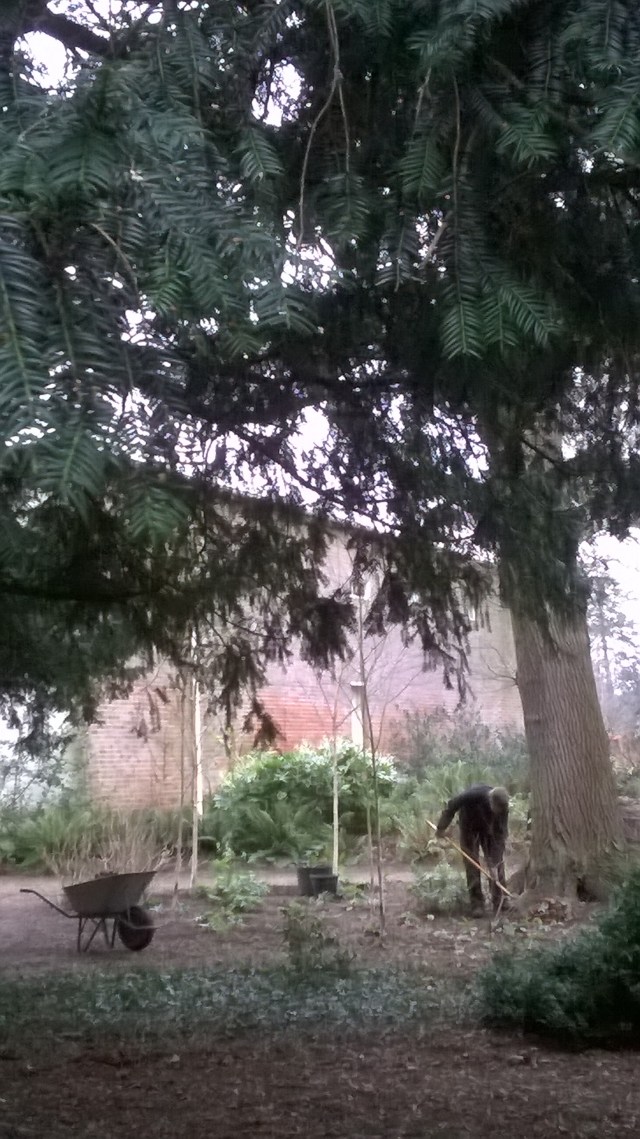
'Tickling' the soil in the 'Black Garden'

‘Tickling’ the soil in the ‘Black Garden’

After two weeks away from Blickling, I was eager to see what progress had been made in the gardens. I wasn’t disappointed. Though some of the volunteer sessions had been rained off, they still seemed to have made a visual impact on the borders. And I gathered from Project Manager Mike, that there had also been major progress in the Walled Garden.

My first job was to prune some Buddleja in the borders established a few years ago which echo designs by the 1930’s Garden Designer Norah Lindsay, who made such an impact at Blickling. Then it was on to join my fellow volunteers in the ‘Black Garden’ where a lovely mix of dark flowering plants and dark foliage (including Black Mongo grass) combine to create a sombre mood.

Here the ladies were ‘tickling’ over the soil around the plants and especially in a border of tulips (‘Queen of Night’) and Iris, both just beginning their spring wake up. I pruned some Black Elders here to encourage a good show of foliage at head height. It was good to catch up on the news of the last couple of weeks and over lunch I was treated to a delicious piece of birthday cake (Almond and Apricot) brought in by one of the team. I must say I like this little ritual of bringing in cakes on your birthday, especially as I will hopefully be the beneficiary rather than the donor until next January!

Further afield in the gardens there are clear signs of the arrival of spring; beautiful patches of Crocus and Narcissus are just into their show times. And the major news in the walled garden is the arrival of the newly refurbished glasshouse. However, the former heating system- the massive hot water pipes are still in evidence- is not going to be restored. In future, I understand from Head Gardener Paul, the necessary heat will be supplied by a couple of fan heaters. He also tells me there’s hope of replacing the other glasshouse at some point too, funding permitting. I can’t wait to get into the newly restored structure and use its full potential.

Work was also underway to widen a major entrance path to the front lawns of the House and this was being used as a trial session using a new supply of metal path edging, a large quantity of which had been delivered for use in laying out the paths in the walled garden. Perhaps this is something I’ll be helping with in coming weeks.

For most of the day our gardening proceeded to a back drop of a buzzing in the air. No, not an early swarm of bees, but a ‘drone’ hanging in the sky like a bird of prey; filming the gardens for a new video that’s to go on the Blickling website.

'Under attack'- can you spot the drone?

‘Under attack’- can you spot the drone?

I also bumped into a paving contractor who was finishing off some repairs to a York Stone path at the entrance to the Gardens. He’d done a beautiful job, the new stone blending in perfectly with the older material. The contractor told me that the stone costs £120 per m2 plus VAT!

Further Information:

Blickling Hall website

Blickling Hall Facebook page

A 360 degree tour of Blickling Hall

Old School Gardener


WP_20150122_12_03_53_ProMy latest session as a volunteer gardener with the National Trust at Blickling Hall involved working in another area of the gardens- the Winter Garden, which I think was planted up a few years ago as an area to feature colourful stems, fragrance and flowers at this quiet time of the year in the garden.

Work in the Walled Garden has been continuing, however, and with a few frosty nights it has been possible to move and spread the rest of the farmyard manure over the beds. As you can see below, this has helped to give definition to these planting areas…

Muck spreading in the Walled Garden- get to work worms! Picture: Michael Owers

Muck spreading in the Walled Garden- get to work worms! Picture: Michael Owers

For gardener Rebecca, me and the other ‘Thursday volunteers’, this week involved raking off a thick quilt of Sweet Chestnut and other leaves, tidying up spent stems and foliage and sprucing up the Hellebores…. as well as uncovering the first snowdrops. When I say ‘quilt’ I’m not joking – I just hope the plants underneath haven’t been as shocked as I have been, recently, emerging from under my own quilt in the frosty mornings!

So, for me the day that was spent almost entirely raking and loading leaves into trailers to be carried away for turning into leaf mould. Definitely one that required a ‘Radox Bath’ on my return home!

Even though it was repetitive work, it was also very satisfying, showing off this lovely garden with its over-arching trees and understory of shrubs and winter perennials- and hopefully giving some of the plants a good chance to ‘pick up’ as the seasons move on.

Further information:

Blickling Hall website

Blickling Hall Facebook page

A 360 degree tour of Blickling Hall

Old School Gardener


Volunteers tidying the kitchen garden beds at Blickling Hall

Volunteers tidying the kitchen garden beds at Blickling Hall

My second day as a volunteer gardener with the National Trust at Blickling Hall involved cleaning up the recently used kitchen garden, and along the way meeting some of the other garden volunteers… oh, and uncovering some plant mysteries…

You may recall that last week I helped Project Manager Mike and gardener Rebecca to make a start in preparing the ground in the main walled garden. With lots of rain since then there had been little chance of doing much more- in fact there were sections that were reminiscent of a World War I trench system, complete with mud and puddles!

‘Ooh, there’s a row of something…’

So, today we turned our attention to the long bed along the south-facing wall, an area that in recent years had been cultivated as a kitchen garden and nursery bed. There were clearly areas of bare soil, some  a bit weedy, whilst other areas still had the remains of last season’s plantings, including Chard, Penstemons, Dahlias and some less obvious herbaceous perennials.

At the start it looked like I might need to weed and then use a spade to dig over the soil, but it turned out that the soil is quite workable and so a border fork proved up to the job. I was soon joined by a platoon of other garden volunteers who turned their attention to other sections of the bed; uncovering rows of planting here and there (and trying to identify and label these as we went), tidying away spent stems and foliage and generally giving the soil its first ‘breath’ of the new year.

I think the plan is to use this bed in due course as a place for demonstrating different approaches to vegetable growing, but for this year Mike is focusing on a holding operation, working around existing groups of plants that can be left and no doubt seeing what other surprises might appear along the way; for example I think I uncovered an area of Rhubarb crowns towards the end of my stint.

Part of the team, proud of the day's work

Part of the team, proud of the day’s work

It was a satisfying day. There’s something ‘optimistic’ about seeing a newly dug border, the dark, rich soil contrasting with the brighter colours of surrounding plants, and looking forward to creating a progressively finer tilth as the days lengthen and temperatures.

My reward at the end of the day- sunset over mid Norfolk

My reward at the end of the day- sunset over mid Norfolk

Further information:

Blickling Hall website

Blickling Hall Facebook page

A 360 degree tour of Blickling Hall

Old School Gardener


SONY DSCI’ve mentioned recently that I’m commencing a stint as a volunteer gardener with the National Trust at Blickling Hall, a wonderful Jacobean House and estate just outside Aylsham, about 8 miles from home.

I’m particularly interested in helping with a project to regenerate a two acre walled garden that once supplied the household with an array of vegetables and fruit. Like many walled gardens of its time this was domestic food growing on a huge scale- almost like operating a mini farm.

I was reminded of this near agricultural scale of operation on my first day as the whole space has been deep ploughed (using an implement called a ‘sub soiler’ pulled behind a conventional tractor) to try to break up the compacted soil.

One of my first jobs involved marking out the main pathway structure using canes, so that plentiful supplies of farmyard manure can be tipped and spread on the growing areas and not wasted on areas which will soon be hard-surfaced. Fortunately the Project Manager, Mike Owers, had already set out some marker pegs around  the periphery of the garden from which we could run lines and so get our bearings over the rough terrain. Other members of the gardening team then trailered in what seemed like a never-ending stream of manure  (it was still being delivered as I left at dusk). Mike, Rebecca (one of the gardeners) and I then started the task of spreading this lovely stuff over the ground so that the worms can get to work incorporating it into the newly turned soil- a Rotatator may be used in due course to fully integrate this material.

My other main job on my first day was to work out the materials needed to restore the walled fruit support system around three walls (the fourth side of the garden is hedged). Many old espalier trained fruit bushes remain, though over the years, as the garden was not in commission, these have not been regularly pruned, so some careful renovation is called for. In some cases, the bushes may be beyond recovery, but a good basic structure exists on two out of three walls. Mike had been researching different ways of supporting these bushes and come up with a system used at another of the Trust’s properties, Scotney Castle in Kent. Here oak battens provide vertical supports for stretched wires which run along a series of vine eyes (and incorporate straining bolts at the ends of each run to ensure the wires are kept taut).

This avoids screwing the vine eyes themselves into the ancient walls, which I must say, as you’d expect, look a little fragile in places. The battens will be placed at roughly 4 metre intervals, which more or less corresponds to the spaces between the existing bushes. I did a quick sketch diagram of each wall showing the rough placement of the battens, straining bolts etc. and finished off with some basic calculations of the materials required- interestingly my estimate on the wire (which will be in 7 rows spaced around each 5 brick courses) at 1324 metres was close to Mike’s early estimate, so hopefully the figure is more or less on target!

I’m due back at the Gardens this week and will post a brief update as this work unfolds. The next few months are promising to be especially interesting as the basic structure of the garden- paths, irrigation, greenhouses etc – are put in place and the garden is readied for its first season of growth for many years.

Further information:

Blickling Hall website

Blickling Hall Facebook page

Old School Gardener


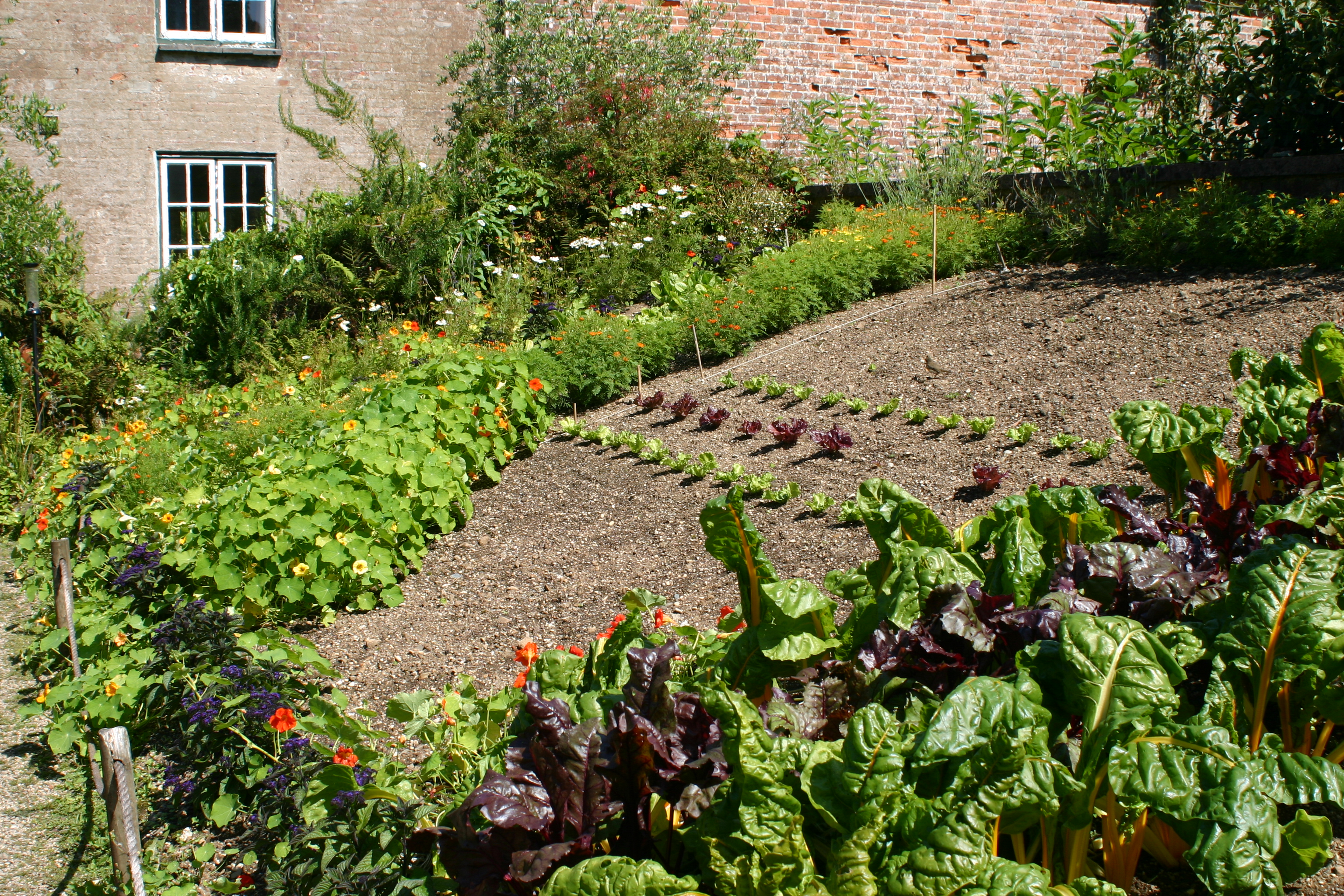
One of the sloping beds

One of the sloping beds

My previous article on Trengwainton covered the wider gardens and grounds as well as some historical background. Today I want to focus on the extensive walled gardens, built by previous owner, Rose Price. This is said to follow the dimensions of Noah’s Ark- though why, I’m not sure.

It also seems to have been created as a response to the period of persistently cooler weather known as the ‘Maunder Minimum’ (or otherwise known as the ‘prolonged sunspot minimum’). This period- starting in about 1645 and continuing to about 1715 – was when  sunspots became exceedingly rare. The term was named after the 19th Century solar astronomer Edward D. Maunder who studied how sunspot latitudes changed with time. The Maunder Minimum coincided with the middle—and coldest part—of the ‘Little Ice Age’, during which Europe and North America were subjected to bitterly cold winters. recent research has established a causal link between low sunspot activity and cold winters.

The surrounding garden wall prevented warm air from escaping from the garden on cool nights, thereby allowing frost-sensitive fruit trees to survive, despite the cooling climate. The walled garden is also interesting for its use of sloping beds – orientated to take advantage of the sunny aspect and so aiding the warming of the soil and creating beneficial growing conditions. 

The gardens – there are separate walled enclosures rather than one large expanse – are both a fascinating horticultural legacy and also a modern-day guide to good food and flower growing. There are demonstration plots and little corners showing different sorts of container growing, raised beds, nectar – rich flowers, a DIY device for creating liquid plant food etc. A wide range of food is still grown here as well as beautiful ‘cottage garden’ style flower borders, orchards and a demonstration plot conjuring up the ‘Dig for Victory’ campaign of the second World War. And while we were there the Gardens sported a delightful display of home-made ‘fairytale’ characters which amused and enchanted the young children who were eager to discover the next character on their way round!

This slideshow requires JavaScript.

Related article: West Country Gardens: Hydrangea Heaven at Trengwainton

Another one of the ‘Tre’s’  or ‘place’ in Cornish. Trengwainton was one of those west country gardens I visited during my summer holiday in West Cornwall and Devon. The estate and gardens are huge and richly varied, so I’ll devote this article and pictures to the wider estate and gardens along with some general background. A following post will focus on the fascinating walled garden.

Trengwainton, located  in Madron, near Penzance, has been in the ownership of the National Trust since 1961. The garden is noted for its collection of exotic trees and shrubs as well as great views over Mount’s Bay and The Lizard peninsular. A house has stood here since at least the 16th century and was altered and extended in the 18th and 19th centuries (it’s now a listed building).

In 1814 the estate was bought by Rose Price, the son of a Jamaican sugar plantation owner. Trengwainton was sold following the loss of income resulting from the 1833 Emancipation Act (which freed slaves on the family’s Worthy Estate in Jamaica). In 1867 the property was bought by T S Bolitho whose family still live in Trengwainton House. Rose Price planted trees and built the walled gardens and in 1925 Sir Edward Bolitho and his head gardener Alfred Creek continued the development of the gardens. They were opened to the public, for the first time, in 1931. The Victoria Medal of Honour for Horticulture was awarded by the Royal Horticultural Society to Sir Edward in 1961 and in the same year he donated 98 acres to the National Trust.

The day of our visit was sunny and warm. The walk around the gardens was a delight. Exotic plantations (many created during the 1920’s craze for exotic, new plants), give way to a long, winding, uphill approach to the House, which is lined with meandering footpaths and dells with running water, masses of different hydrangeas in bloom, all under the dappled shade cast by many and varied trees. This opens out to a large lawn in front of the House and beyond this to a pretty elevated walk lined with Agapanthus and twin focal – point pavilions. This area affords spectacular views of the coastline – and is obviously also a good spot to learn kite flying!

The estate is famous for its spring show of Camellias and Azaleas. The late summer show from the Hydrangeas, Agapanthus, Fuchsias, ferns and exotics, was very impressive – I must return in the spring to compare! As part of its campaign to get children to do ’50 things before you’re 11 3/4′ there was an invitation to create some ‘Wild Art’ (I couldn’t resist) as well as the kite flying and other adventures – a great idea.

This slideshow requires JavaScript.

Sources and further information:

National Trust website

Wikipedia

Old School Gardener

If you’ve enjoyed reading this post and others on this blog, why not comment and join others by signing up for automatic updates via email (see side bar, above right ) or through an RSS feed (see top of page)?

IMG_7367

Whilst visiting our son (who’s studying at Loughborough University) we took advantage of the ‘Heritage Open Days’ event at nearby Calke Abbey, Derbyshire. Billed by owners, the National Trust as ‘The un-stately home and country estate’ because of its peeling paintwork and overgrown courtyards, Calke Abbey is witness to the wider decline of country house estates all over Britain, especially after the First World War (avid viewers of the latest TV series of ‘Downton Abbey’ can get a taste of some of the issues – death duties, lack of staff, economic downturn).

Whilst some of the House and stables have been restored, there are still many other areas where old furniture, toys and a myriad other ‘heirlooms’ have been left to speak volumes of how the British landed gentry went through a major ‘downsizing’. Admittedly the family who owned Calke did amass a vast collection of curiosities and ‘hidden treasures’- there are fascinating collections of sea shells, rocks and pebbles for example.

The house was delightful and had some very friendly ‘in character’ guides to help tell the story. But the garden was the gem in my eyes. Extensive parkland with a number of beautiful mature trees, deer roaming and typical Victorian curiosities like the fernery give way to a massive walled garden, much of which is now just turned over to grass, but a significant portion of which houses a wonderful kitchen garden (with an access tunnel to ensure the gardeners weren’t seen from the house!). There is also an impressive array of original glasshouses and an orangery in which peaches and other tender fruit and veg are still grown. I particularly liked the Squash Tunnel made of rustic poles and featuring a range of different squashes. Approached by a colourful Dahlia border, there’s also a fascinating ‘Gardeners’ Bothy’, complete with old tools and equipment, seed trays and prize certificates from yesteryear! I was puzzled by one seed drawer, labelled ‘Borecole’. I hadn’t come across this name before and guessed it migth be some local corruption of ‘broccoli’. I now know it’s another term for Kale or a particular variety of Kale!

Walking through the pretty featureless,  grassed over walled garden you suddenly turn a corner and enter a more intimate, warm, walled garden with blocks of bright colours and interesting foliage. An amazing contrast, this formally laid out garden with a range of exotic plants as well as classic bedding, made me draw breath and smile like a Cheshire Cat!

This area has been superbly laid out and the colour, foliage and flower combinations are very impressive. There’s an ‘Auricula Theatre’ currently housing Pelargoniums (see the picture I posted of this earlier in the year) and a pool, all contributing to a peaceful spot where you can (and we did) sit and gaze at the wonder of nature – as coaxed and displayed by man of course! This was a truly inspiring afternoon, so if you get the chance, get along to Calke Abbey (by the way there was never an abbey here).

Further information:

National Trust Website

History- Wikipedia

Old School Gardener

If you’ve enjoyed reading this post and others on this blog, why not comment and join others by signing up for automatic updates via email (see side bar, above right ) or through an RSS feed (see top of page)?

IMG_7215

I recently responded to a challenge from fellow blogger, ‘The Anxious Gardener’, to name my favourite garden. This was a light-hearted way of getting people to enter a competition to win a copy of the recent publication ‘The New English Garden’.

The competition was a ‘name out of the hat’ affair so I stood as much chance as winning as the other 30-odd entrants (and I didn’t win, so there’s another item for the Christmas list). Notwithstanding that, I thought I’d try to do the request justice and thought long and hard about where, if any one ‘where’ stood out in front of the many gardens I’ve visited, read about, seen films and pictures of.

It took some time…

In the end I came up with my nomination and set it out here and the reasons why it came out top. Oh, and I thought I’d share some pics with you too. I hope that you enjoy them.

I’ve visited and seen a few gardens over the years and it’s tricky finding one that I’d call a favourite – some have great borders or other spaces, configurations of plants, superb features and so on. Maybe its because it’s relatively fresh in my mind, but the one that does stand out is Felbrigg walled garden in Norfolk (also a local one to me and so visited quite often).

Why? Well I guess it’s the way the garden team (including volunteers and community gardeners), have managed to create a space that meets so many different needs and in a way that seems to hang together naturally:

* a warm, contained, red brick walled space, with a fountain and dovecote as strong structural elements
* glasshouses with old favourite, traditional exotics and other ‘interesting’ plants
* community food growing in plots that are obviously lovingly cared for
* a children’s gardening area complete with digging pits, tools, washing facilities and novelties such as chickens running free, willow teepees and tunnels
* newer areas set out with mediterranean – style planting, meadows and feature shrubs
* plenty of comfortable seats to entice you to stop, look and soak up the atmosphere
* lots of attractive information about the plants themselves (all the significant ones carefully and attractively labelled) as well as some of the current tasks in the garden and information/quiz sheets for the kids.

All in all a visit to Felbrigg is a tremendously rich experience where the general public, serious gardener and trained horticuluralist (and their children) can come together and have their curiosity tickled, be enthused, amazed and go away feeling regenerated.

Do you have a favourite Garden? I’d love to hear from you!! (no prizes I’m afraid)

Further information: National Trust website

Old School Gardener

If you’ve enjoyed reading this post and others on this blog, why not comment and join others by signing up for automatic updates via email (see side bar, above right ) or through an RSS feed (see top of page)?

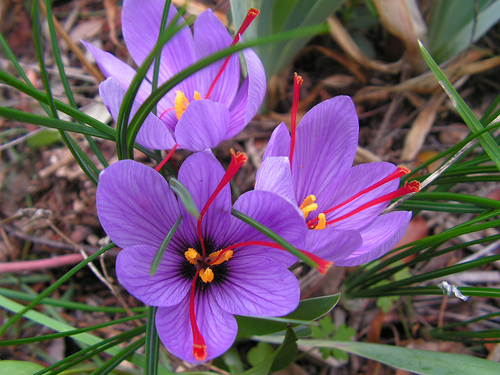
The Saffron Crocus (Crocus sativus)

The Saffron Crocus (Crocus sativus)

You will recall that our day out had begun promisingly at Anglesey Abbey in Cambridgeshire. After lunch we drove off (car roof remaining closed in view of the low cloud and short journey) to the town of Saffron Walden in north Essex. More specifically it is the chief town of the District of Uttlesford– I always think this sounds like somewhere you might find in ‘The Shire’ of Hobbit fame!

We’d been here a long time ago and then only driving through so didn’t really have a chance to explore it thoroughly. Here’s a link to Wikipedia’s entry on the town if you’re interested in its history. In brief it’s of ancient standing, there having been a settlement here long before the Roman occupation of Britain 2 thousand years ago. Of particular interest is the derivation of the town’s name. In the medieval period the primary trade in Saffron Walden was in wool, but in the 16th and 17th centuries the Saffron Crocus (Crocus sativa) was grown in the area. Each saffron crocus grows to 20–30 cm and bears up to four flowers, each with three vivid crimson stigma. Together with the styles, or stalks that connect the stigmas to their host plant, the dried stigmas were used originally in medicines, as a condiment, a perfume, an aphrodisiac, and as an expensive yellow dye. This industry gave its name to the town and what used to be Chipping Walden became Saffron Walden. The town itself retains many old buildings, interesting spaces and features, as you’ll see in the gallery at the end of this article.

We began our visit in a fascinating garden – Bridge End Garden. This is actually a series of seven interlinked gardens laid out by the Gibson family (eminent bankers and brewers) in the nineteenth century. They are Grade II* listed (so protected), close to the town centre and church and are open to the public each day free of charge. Careful restoration has replicated gardening techniques and designs typical of the Victorian era and has brought the garden back to its full splendour.

Though there are signs around stating that it is ‘not a playground’ and ‘ball games are not allowed’, I can see it can be difficult to prevent its use for play by the town’s children, some of which might get a bit over exuberant at times…. While we were there I was delighted to see a group of teenage boys playing ‘It’ around the different spaces and the hedge maze was also an obvious draw for local kids. These features in an original 17th or 18th century setting must surely have been used in a similar, playful way – if not by children then by adults! The Dutch Garden with its complex parterre of box bushes also looks so like a ‘mini maze’ (in fact hedge mazes developed out of the complex parterres in France, Holland and elsewhere across Europe), so it wasn’t suprising to see another sign, perhaps rather desperately, announcing that it isn’t a maze!

The gardens are maintained by a team of paid staff (of the Town Council, which also maintains a number of other public gardens) and volunteers, and are in a very good condition. A long winding path flanked by well – kept mixed borders leads you past the formal Rose Garden with views to the parish church beyond (apparently the tallest church in Essex) to the walled garden with its fence and wall – trained fruit trees and two glasshouses with miniature orchard and citrus fruit trees, respectively, in pots that look as though they are brought outside in warmer weather.

All around are little curiosities to intrigue –  statues of mock-snarling (or is it smiling) beasts, other classical statuary, some fine, mature trees such as a Cedar of Lebanon, a small summer house with a display of some curiosities from the garden (such as old gardener’s notes) and another gazebo called ‘Poets’ Corner’. The ‘Wilderness’, as it’s name suggests, was an area of more naturalistic planting (now with a developing Yew tunnel) and from the viewing platform at one end you can get a wonderful view of the Dutch Garden, with its swirling pattern of box hedging laid out to a design by Gertrude Jekyll, who visited the garden in the early 20th century.

Having seen a hedge maze, we went in search of one that is much older – and made of turf. At one edge of the town’s Common sits this wonderful example of a classical labyrinth (see my post on mazes and labyrinths for more information), of uncertain age, but several centuries at least as it was recut in the 17th century. This splendid feature is certainly a challenge to concentration and determination, being 1 kilometer long if you walk the full length of the winding brick path between the shallow turf mounding! Labyrinths are ancient features, adopted by Christianity as a way of encouraging meditation along the symbolic ‘journey of life’.

From here we passed by some of the medieval charm of central Saffron Walden, with their ‘pargetted’ walls (a technique that creates geometric patterns and pictures on the external render) and Market Square, and found a nice little Tea shop for our afternoon break. Unfortunately the west country ‘Saffron Cake’ appears not to be a local delicacy here, despite the town’s association with the spice! Instead portions of Strawberry Cheesecake and Millionaire’s Shortbread had to suffice! We finished our visit by looking round an old – estabslished Antique shop and the parish church of St. Mary- a superb example of a grand parish church built on wool – wealth (and latterly saffron – wealth). It has glorious glass, high painted wooden roof and stonework. Just as we were leaving this delightful town,  the rain began to fall – great timing!

Further information:

Plantax 5: Crocus- spicy herald of Spring

Saffron Walden Town Council website

Bridge End Garden- Uttlesford District Council website

Visit Saffron Walden website

Old School Gardener

If you’ve enjoyed reading this post and others on this blog, why not comment and join others by signing up for automatic updates via email (see side bar, above right ) or through an RSS feed (see top of page)?

Finding Nature

Nature Connectedness Research Blog by Prof. Miles Richardson

Norfolk Green Care Network

Connecting People with Nature

Discover WordPress

A daily selection of the best content published on WordPress, collected for you by humans who love to read.

Susan Rushton

Celebrating gardens, photography and a creative life

Unlocking Landscapes

Writing, photography and more by Daniel Greenwood

Alphabet Ravine

Lydia Rae Bush Poetry

TIME GENTS

Australian Pub Project, Established 2013

Vanha Talo Suomi

The Journey from Finnish Rintamamiestalo to Arboretum & Gardens

Marigolds and Gin

Because even in chaos, there’s always gin and a good story …

Bits & Tidbits

RANDOM BITS & MORE TIDBITS

Rambling in the Garden

.....and nurturing my soul

The Interpretation Game

Cultural Heritage and the Digital Economy

pbmGarden

Sense of place, purpose, rejuvenation and joy

SISSINGHURST GARDEN

Notes from the Gardeners...

Deep Green Permaculture

Connecting People to Nature, Empowering People to Live Sustainably

BloominBootiful

A girl and her garden :)