Tag Archive: victorian
Our second visit whilst travelling to the Lake District last week, was to Biddulph Grange, in Staffordshire.
Restored over the last 30 years by the National Trust, this is a delightful series of gardens designed to house James Bateman’s (the original owner) extensive plant collection from around the world. This is achieved in a series of gardens within a strong overall design structure, featuring some amusing and beautiful touches typical of the Victorian age.
The gardens are a delight and I was fortunate to see the highlight (‘China’) last; a fitting climax as you wander round this fascinating window on one man’s passion for plants, superbly restored by the Trust. Wikipedia describes the devopment of the gardens:
‘Biddulph Grange was developed by James Bateman (1811–1897), the accomplished horticulturist and landowner; he inherited money from his father, who had become rich from coal and steel businesses. He moved to Biddulph Grange around 1840, from nearby Knypersley Hall. He created the gardens with the aid of his friend and painter of seascapes Edward William Cooke. The gardens were meant to display specimens from Bateman’s extensive and wide-ranging collection of plants….
Bateman was president of the North Staffordshire Field Society, and served on the Royal Horticultural Society‘s Plant Exploration Committee….“ He especially loved Rhododendrons and Azaleas. Bateman was “a collector and scholar on orchids,” …
His gardens are a rare survival of the interim period between the Capability Brown landscape garden and the High Victorian style. The gardens are compartmentalised and divided into themes: Egypt, China, etc.
In 1861 Bateman and his sons, who had used up their savings, gave up the house and gardens, and Bateman moved to Kensington in London. Robert Heath bought Biddulph Grange in 1871. After the house burnt down in 1896, architect Thomas Bower rebuilt it.
The post-1896 house served as a children’s hospital from 1923 until the 1960s; known first as the “North Staffordshire Cripples’ Hospital” and later as the “Biddulph Grange Orthopaedic Hospital” (though it took patients with non-orthopaedic conditions as well…. The 15 acre (61,000 m²) garden became badly run-down and neglected during this period, and the deeply dug-out terraced area near the house around Dahlia Walk was filled in level to make a big lawn for patients to be wheeled out on in summertime. The Bateman property was (and still is) divided: the hospital got the house and its gardens, and the uncultivated remainder of Biddulph Grange’s land became the Biddulph Grange Country Park…’

Further information: National Trust website
Old School Gardener

On our recent trip to Devon we visited a few National Trust houses and gardens. We’d been to Saltram, near Plymouth, before, but not in the spring. It was a beautiful sunny day and the photos below show the house and gardens at their best, with deep, sharp shadows adding to the atmosphere.
‘Saltram overlooks the River Plym and is set in a rolling landscape park that provides precious green space on the outskirts of Plymouth. Strolling along the riverside or through the woodland, you can almost forget that the city lies so close. Saltram was home to the Parker family from 1743, when an earlier mansion was remodelled to reflect the family’s increasingly prominent position. It’s magnificently decorated, with original contents including Chinese wallpapers and an exceptional collection of paintings (several by Sir Joshua Reynolds). It also has a superb country house library and Robert Adam’s Neo-classical Saloon…The garden is mostly 19th century, with a working 18th-century orangery and follies, beautiful shrubberies and imposing specimen trees providing year-round interest.’
Further information: National Trust website
Old School Gardener
You may remember my recent visit to Canterbury and the wealth of architectural detailing I found ‘over my head’. Well, visiting Chester at the weekend gave another opportunity to crane my neck and seek out some wonderful ornamentation and other building features in this largely late Victorian/ Edwardian ‘Mock Tudor’ set piece City Centre. Here are a few pictures to capture the spirit of the place. I’ll do a separate post with those I took in and around the cathedral.
Old School Gardener
There’s been a brewery and garden here since 1795. Perched on the north bank (or ‘brink’) of the River Nene in Wisbech, Cambridgeshire, Elgood’s Brewery remained virtually unaltered until the Second World War.
The established Victorian garden was ripped up and as much land as possible devoted to growing food for the war effort. After being turned over to grass for many years, 1993 saw the discovery of some old photographs of the original garden and it was decided to both restore some of the old spaces and features and to create new areas.
The structure of the garden today owes much to the framework of superb specimen trees which survived over the centuries; Ginkgo, Cedrus, Liriodendron and Salix to name but a few. These were mainly provided by members of Wisbech’s famous banking family, the Peckovers, who themselves established a grand Victorian garden a few paces down river at what is now called Peckover House.
Some important features such as the maze (of Thuja and Laurel and featuring old brewery and garden objects as focal points), walled garden, Japanese garden, rockery, water features, glasshouses and herb garden have been recreated. These are complemented by a modern grass and bamboo garden with contemporary water features. And there are typical Victorian ‘swags’ (ropes) over which climbing roses clamber as well as arbours featuring two varieties of hop (‘Fuggles’ and ‘Challenger’) – both of which feature in Elgood’s beers.
The modern additions have added to what is a typically eclectic mix of curiosities and attractive garden features. Well worth a visit, and can be combined for a full day’s outing with nearby Peckover House and the Georgian town of Wisbech.

- Hops- ornamental and useful for brewing too!
Further information:
‘Banker’s Bonus- secret garden gem
Oranges in the Fens
Elgood’s website
Old School Gardener


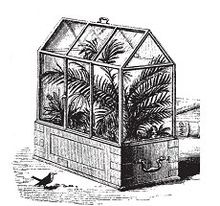
I guess people in common do have at least slight inclination towards collecting different artefacts. Then I am among the ones who have stronger tendency for collecting. Which makes me happy is not the possession of different items, but the ways they can be arranged in logical categories. From that point of view I could find ferns interesting items.But I was still surprised to hear about pteridomania, a fern collecting craze in Victorian England. People got crazy collecting different ferns to that extent that some of the ferns got almost extinct! Honestly, I can’t blame them, arranging those photos I’ve almost started collecting ferns!
![]()
Pteridomania, meaning Fern Madness or Fern Craze, a compound of Pteridophytes andmania, was coined in 1855 by Charles Kingsley in his book Glaucus, or the Wonders of the Shore: Your daughters, perhaps, have been seized with the prevailing ‘Pteridomania’…and wrangling over unpronounceable…
View original post 66 more words
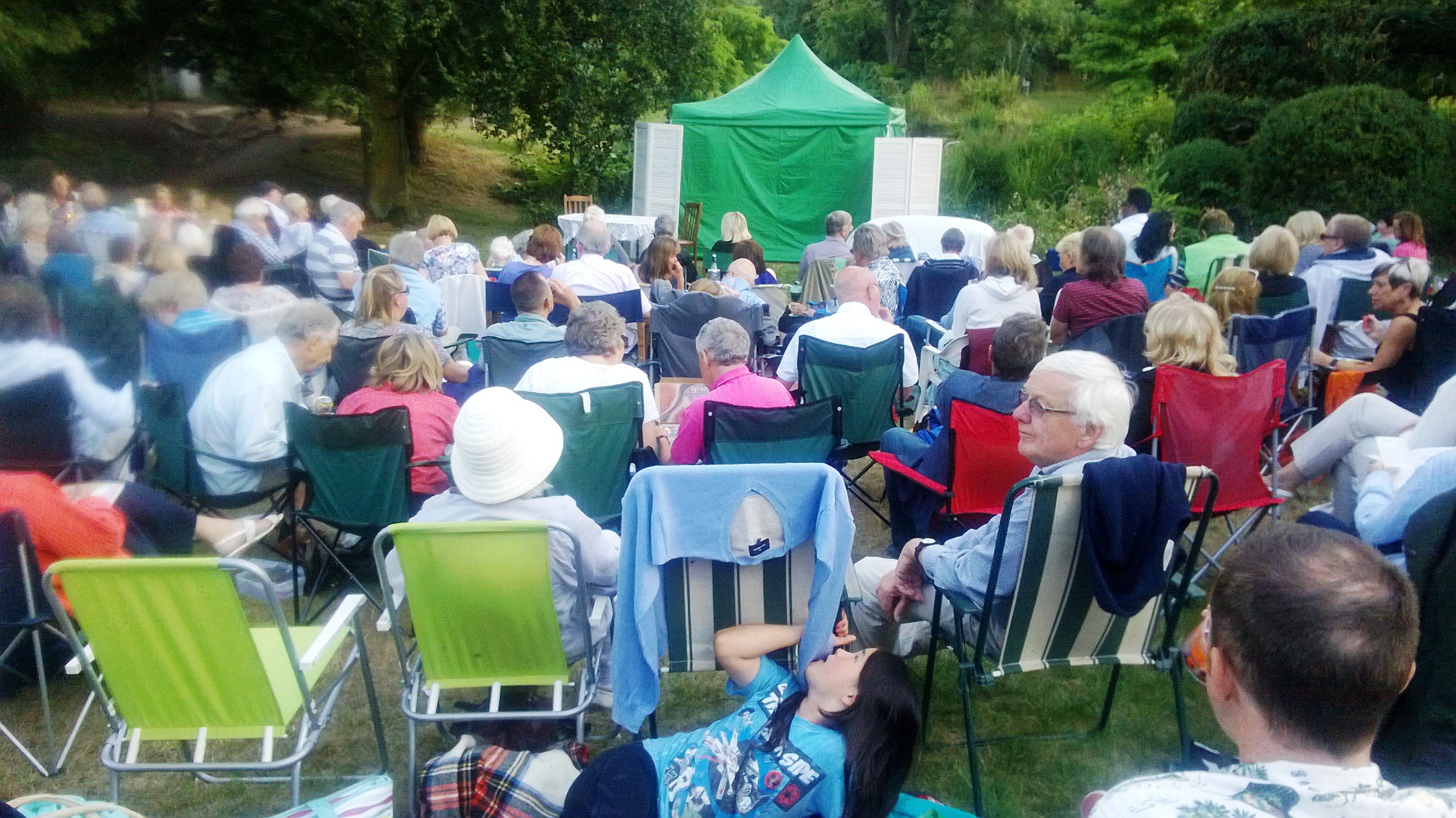
A visit to the open air theatre is always a treat, and last weekend proved no exception. We joined our good friends Dave and Jenny for a performance of ‘Lady Windermere’s Fan’, Oscar Wilde’s comic drama ‘with a message’. The symmetry of the plot coupled with showy 19th century language and costume were well echoed in the gardens of the venue, Myddelton House, in Enfield, Middlesex. Before the performance started I had a chance to look around this recently restored Victorian plot whose most famous former resident was the renowned self – taught gardener, artist and expert botanist, E.A. Bowles. In the late evening summer sun it was a joy. More of its key features later, but first, here’s a little background on the place.
Covering eight acres Myddelton House Gardens were occupied by Edward Augustus Bowles from 1865 to 1954. He dedicated himself to transforming the gardens with unusual and exotic plants. Originally built circa 1812, and completed in 1818, the House was built by Henry Carrington Bowles, one of five generations of London print and map makers. Bowles built the new house in the then fashionable white brick from Suffolk and named it Myddelton House in honour of Sir Hugh Myddelton, an engineering ‘genius’ who created the New River, a section of which had bisected the garden from 1613 until 1968.
The youngest son of five children to Henry Carrington Bowles and his wife Cornelia was Edward Augustus “Gussie” Bowles, who became one of the great gardeners of the 20th century. He originally trained for the church, but family tragedies caused him to change course and he remained at Myddelton House and developed the remarkable garden as a self-taught horticulturist. For many years people came from all over the country to visit. He became an expert on many plants, particularly the Crocus and was dubbed “The Crocus King”.
Today’s gardens have an impressive range of flora with something to stimulate the senses each season, from colourful spring crocuses to dazzling summer irises. In spring 2011 a newly restored Myddelton House Gardens were unveiled, following a two year Heritage Lottery Fund enabled project.
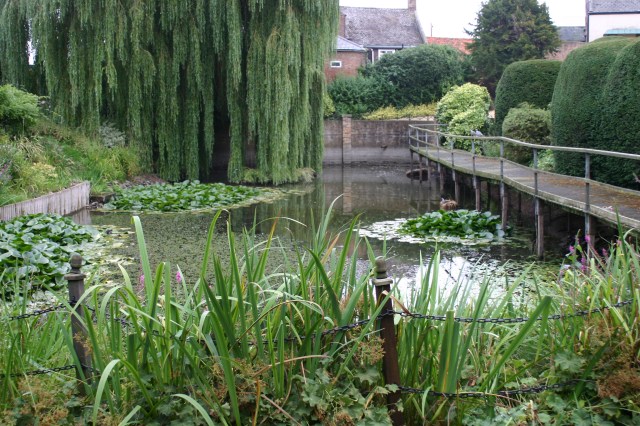
The gardens are home to a beautiful carp lake, a Victorian conservatory and a number of historical artefacts collected and treasured by E A Bowles, including pieces from the original St Paul’s Cathedral and the Enfield Market Cross. There’s a 111 year old Wisteria which turns a brilliant blue when it flowers during May. A beautiful newly created Victorian Glasshouse Range retains unique details, such as four climatic zones, a vine house and a sunken glasshouse that would have been used to grow fruit such as melons and cucumbers.
The gardens have been well restored and further work is obviously in hand. It is a typical Victorian pot pourri of different gardens and areas of historical or other interest. I was particularly impressed with the glasshouse area with its clean – cut display of irises in a gravel – covered bed, cutting flower beds in lovely colour combinations and areas of wildflower planting which look like a soft, frothy sea which I was tempted to dive into! The House is the headquarters of the Lea valley Regional Park Authority and apart from the gardens there is a museum about E.A.Bowles. All are open to the public and there’s free entry.
The whole evening, including good company, fun drama and good food and drink was delightful. So, thanks once more, Dave and Jenny!
Further information:
Old School Gardener
If you’ve enjoyed reading this post and others on this blog, why not comment and join others by signing up for automatic updates via email (see side bar, above right ) or through an RSS feed (see top of page)?
My mother – in – law is currently on a two week visit to us. A keen gardener (she was until a year ago Chair of the Tavistock Ladies Gardening club), she is not as mobile as she once was (she celebrated her 83rd birthday last week). However, she still enjoys looking at gardens so this is a great excuse (as if I needed one) to get out and about to see some interesting local gardens. The weather has also been kind so we’ve been to a few places that I haven’t been before, or haven’t seen for a good number of years. Two of them are in Norwich, our local cathedral city, and they are fine examples of gardens developed for very different reasons; the one out of the passion of a Victorian entrepreneur, the other based on a medieval religious garden.
The Plantation Garden

The Garden in 1897
In 1856, a prosperous upholsterer and cabinet maker living in Norwich, took a long lease on an industrial site just outside the old City walls. His name was Henry Trevor, and for the next forty years, he spent considerable sums of money and much effort transforming a chalk quarry into a magical garden.

Henry Trevor
In many ways, Henry Trevor’s garden was typical of Victorian taste and technology. He built a fountain, terraces with balustrades, rockworks, a Palm House, and a rustic bridge. He planted elaborate carpet beds, woodlands and shrubberies. He designed serpentine paths to conduct the visitor along circular routes, and he built and heated several greenhouses with boilers and hot water pipes.
Henry Trevor, however, was also a man of strong personal tastes. His “Gothic” fountain is unique, and he displayed great enterprise in using the fancy bricks from a local manufacturer to create medieval style walls, ruins and follies. Within less than 3 acres, he established a gentleman’s residence and garden that reflected in miniature the grand country houses of the Victorian period. Visitors were frequently welcomed in the garden by Henry Trevor, for he was always ready to allow his garden to be used for charitable causes.

The Garden in Victorian times- the Palm House no longer exists.
After the 1939-45 war, the garden was virtually abandoned. Fortunately, much of the structure has survived, and is gradually being restored by the The Plantation Garden Preservation Trust. The first task of its members was to clear a forest of sycamores and a blanket of ivy to reveal what had become hidden during the past 40 years. Since then, they have restored the flowerbeds, fountain, balustrading, Italian terrace, rustic bridge and in 2007, the Gothic alcove.
Trevor’s original passion has been matched by this band of volunteers and our visit, on a beautifully sunny afternoon, showed considerable progress in the restoration programme since my last visit some years ago. I was particularly impressed with the enormous amount of work done to stabilise, weed – proof and replant the steeply sloping sides of the garden, which remain topped off with a range of majestic Beech and other trees.
The Bishop’s Garden
Our second visit, on one of it’s open days in aid of local charities, was to the Bishop’s Garden, a four acre green oasis in the centre of Norwich, sitting in the shadow of the Gothic cathedral.
There has been a garden of sorts since around 1100 AD when Bishop de Losinga began to build the cathedral and palace. From the existing garden one can still marvel at the original detailing of Norman stonework on the North Transept of the cathedral which is only visible from the Bishop’s Garden.
In the early 14th century, Bishop John Salmon greatly increased the size of the garden by compulsory purchase of additional land. The general form of the garden was laid down at least 300 years ago. The lower end was cultivated and separated by a wall running straight across the garden. The colossal Old Bishops Palace which still stands was completed in around 1860. In 1959 a major change took place when a new Bishops House built and the Old Palace came to be used by Norwich School. The garden was reduced from 6 and half acres down to the present 4 acres. Records show that in the 1940s up to 15 gardeners were employed reducing to 9 in the 1950’s and today the garden is looked after by 1 fulltime and 1 part time gardener, plus a team of volunteers.
The garden has a range of features typical of many grand gardens developed over the last hundred plus years – large herbaceous borders (which have a persistent ground elder problem and are to be successively dug up and weeds systematically removed in the coming couple of years), a small woodland walk and box – edged rose beds. There is a long shade border with Hostas, Meconopsis and tree ferns, all but the latter looking splendid on our visit. There is also a large wild grass labyrinth, very popular with children (I walked it and contemplated my life as I went…). This is of a size where it can be easily mown using a ride on mower, the gardener told me that he cuts it all down in the autumn and then the path edges are left for the various wild flowers and other species to grow up over the growing season.
There are also extensive shrubberies containing many rare and unusual plants, among these being a Hebe planted from a sprig taken from Queen Victoria’s wedding bouquet in 1840. There is an organic kitchen garden and ‘bambooserie’. The garden continues to evolve with new plants and features being introduced year by year. The Bishop’s Garden has developed links with Easton College, helping horticulture students gain valuable experience.
Though busy on our visit, including delightful music from a local Youth Orchestra and Choir, one can imagine the garden creating a peaceful mood – one where a succession of Norwich Bishops, stretching back 1000 years, paused to reflect, pray and secure spiritual renewal.
Sources and Links:
Old School Gardener
If you’ve enjoyed reading this post and others on this blog, why not comment and join others by signing up for automatic updates via email (see side bar, above right ) or through an RSS feed (see top of page)?
I love the North Norfolk coast and as it’s only 20 miles away I visit frequently. If you’re a visitor from further afield, you might find a mix of holiday hotels, caravans, mobile homes and retirement bungalows. You might see only the faded charms of Cromer’s Victorian heydays coupled with its ‘kiss me quick’ seaside amusements. Look beyond these modern, man-made novelties to the natural world and the landscape retains it’s exhilarating sweep and historic romance that once drew poets and millionaires.
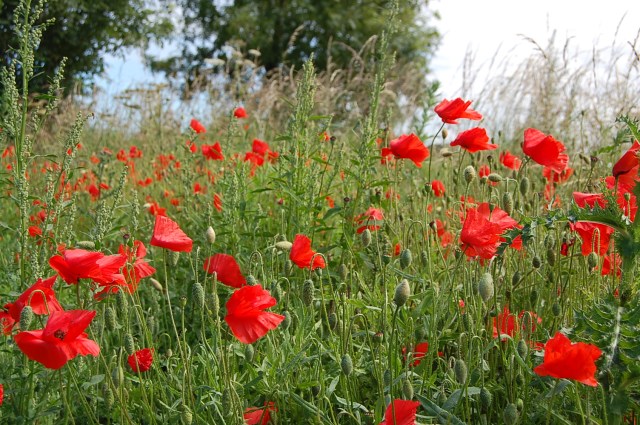
‘Poppyland’ stretches around the north-east arc of the Norfolk coast and takes in Sheringham, Cromer, Overstrand, Sidestrand and Mundesley. The romantic creation of late 19th century theatre critic, travel writer and minor poet, Clement Scott, ‘Poppyland’ came to embody an area of quiet, rural, fishing backwaters which were soon to change, not least because of Scott’s popularising of the place through his writings as well as the arrival of the railway. This came a few years before his first visit, and the area soon became the ‘must see’ place for the Victorian well (and not so well) to do.
Scott’s arrival in Cromer in 1883 was not a promising one. Affronted at the locals lack of recognition of the “dramatic critic of the Daily Telegraph and it’s leading travel writer” he quickly moved on to nearby Overstrand and Sidestrand. Here, he not only found accommodation, but also fell in love with his host’s 19 year old daughter, Louie Jermy. This romantic entanglement seems never to have been fully acknowledged, due to Victorian propriety – Scott was already married. This romantic attraction, coupled with his appreciation of the area’s beauty led him to create ‘’Poppyland’’. He went on to write about Sidestrand’s lonely church tower, teetering on the cliff edge and its churchyard “Garden of Sleep”. The tower eventually toppled over the edge of the cliff in 1916. The main body of the 14th century church (St Michael’s), had been removed (brick by brick), from its previous site to somewhere safer about three years before Scott’s discovery. The tower seems to have been abandoned as a more recent, less important addition to the ancient church.
Staying at the local Mill House with miller Alfred Jermy, his daughter Louie became Scott’s “Maid of the Mill”. Scott had discovered a rural idyll and was to capture its essence in his poem ‘The Garden of Sleep’…
The Garden of Sleep
On the grass of the cliff, at the edge of the steep,
God planted a garden – a garden of sleep!
‘Neath the blue of sky, in the green of the corn,
It is there that the regal red poppies are born!
Brief days of desire, and long dreams of delight,
They are mine when Poppy-Land cometh in sight.
In music of distance, with eyes that are wet,
It is there I remember, and there I forget!
O! heart of my heart! where the poppies are born,
I am waiting for thee, in the hush of the corn.
Sleep! Sleep!
From the Cliff to the Deep!
Sleep, my Poppy-Land,
Sleep!In my garden of sleep, where red poppies are spread, I wait for the living, alone with the dead!
For a tower in ruins stands guard o’er the deep,
At whose feet are green graves of dear women asleep!
Did they love as I love, when they lived by the sea?
Did they wait as I wait, for the days that may be?
Was it hope or fulfilling that entered each breast,
Ere death gave release, and the poppies gave rest?
O! life of my life! on the cliffs by the sea,
By the graves in the grass, I am waiting for thee! Sleep! Sleep!
In the Dews of the Deep!
Sleep, my Poppy-Land, Sleep!
Scott returned time and again to the forsaken “Garden”, which became the focal point of the ‘Poppyland’ legend. Scott had many London contacts in the theatrical world, and these and his writings led a number of them and others from London society to come to the area. Some had houses built in Overstrand – for a while the village was the place to visit. The Edwardian architect Sir Edwin Lutyens (he of partnership with Gertude Jekyll fame), designed some of these houses, including Overstrand Hall and The Pleasaunce as well as the more modest Methodist Church. A large hotel was also built on the cliff edge, though this slid into the sea in the 1950s! Land slips still affect the cliffs today (and make for an exciting cliff top walk).
A memorial water trough in Cromer bears the inscription: ‘To Clement Scott- who by his pen immortalised PoppyLand’. Though Scott wasn’t a particularly inspired poet, his writing helped to kick-start the Norfolk tourist industry. Today, however, fields of poppies are a rare sight due to modern farming techniques. The railway line which brought the early tourists to Poppyland is still operated as part of the national network as far as Sheringham. Here, an old station has become one end of a heritage line (the North Norfolk Railway) which runs to Holt, and is often referred to as the ‘Poppy Line’.
‘Poppyland’ still attracts holidaymakers. Resorts like Cromer still show the faded hallmarks of their Victorian splendour and more recent investment in the Pier, its surrounding promenades and the wider area has reinvigorated the place. Despite this, Scott would probably still recognise the landscape with its wonderful cliff – top and beach – side walks as well as the interesting villages and towns which retain a low – key attractiveness (including a beach top cafe in Overstrand that does a nice line in afternoon tea and cakes).
This is an historic landscape with loads of natural and man-made interest – if you’ve been please let me know your experiences, if not, I hope that you’ll get to visit soon.
Link:
Poppyland and the Jermy Family
Old School Gardener
If you’ve enjoyed reading this post and others on this blog, why not comment and also join some other people and sign up for automatic updates via email (see side bar, above right ) or through an RSS feed (see top of page)?
‘Enter the world of Lord Armstrong – Victorian inventor, innovator and landscape genius. Cragside house was truly a wonder of its age.Discover the first house in the world to be lit by hydroelectricity. It is crammed full of ingenious gadgets – most of them still working. The gardens are incredible. One of the largest rock gardens in Europe leads down to the Iron Bridge, which in turn leads to the formal garden. Children will love our adventure play area and exploring Nelly’s Labyrinth, a network of paths and tunnels cut out of a vast area of rhododendron forest.’ (National Trust website)
Old School Gardener

Our final garden visit whilst travelling home from the Lake District last week, was to Southwell workhouse, Nottinghamshire.
Sources and further information: