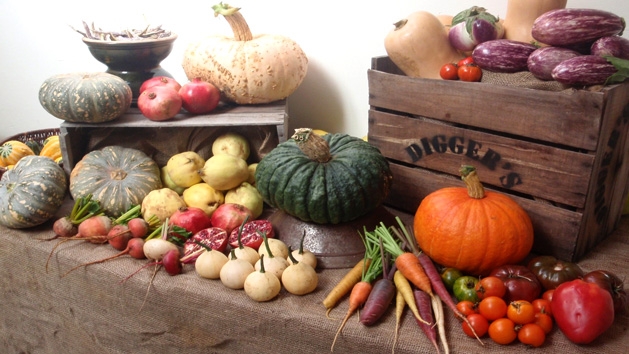
Heritage Veg- keeping the old varieties going
I had an interesting delivery in the post yesterday. It was from Garden Organic, the UK charity that promotes organic gardening. Some of you may recall that I’m a volunteer with the ‘Master Gardener’ programme they jointly run in Norfolk and a few other places, providing advice, information and support to people starting to grow their own food. More recently I became a ‘Master Composter’ doing the same thing but focused on recycling green waste into a useful gardening product. Well, it seems that this has enabled me to have free membership of the ‘Heritage Seed Library’ (HSL) run by Garden Organic at their base near Coventry.
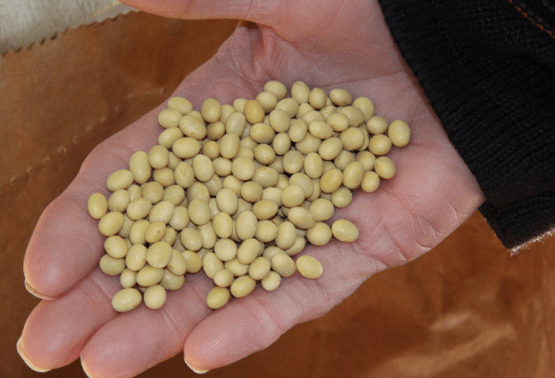 The HSL aims to conserve and make available vegetable varieties that are not widely accessible. It does this by maintaining a collection of vegetables from the UK and Northern Europe that are not readily available in seed catalogues. Some of these varieties were commercially available once but have now disappeared from catalogues and seed lists. Others have never been offered in catalogues but have been developed by gardeners and passed on through the generations until they were donated to the HSL. There are also some varieties that have a special local significance. Many have a story to tell, and HSL collects not only the seed, but also information on their characteristics, methods of use, origins, and what this can tell us about our gardening and culinary heritage. Just flipping through their current catalogue is a journey into the past with varieties carrying evocative names like:
Navy Bean Edmund – a variety of bean first cultivated to sustain Australian forces during WWII and which is the kind used to create ‘baked beans’.
Long Blood Red– an American Beetroot described by Vilmorin in ‘The Vegetable Garden’ (1885) as an ‘American variety with a long, slender, deeply buried root..good, productive, and well-coloured kind’ – a member of HSL describes it as having ‘the best flavour, wonderful for picking’.
Maltese plum – a variety of tomato donated by someone whose friend acquired the seeds on holiday in Malta! Trusses are borne on leaf spurs, so unlike many other varieties you don’t grow it as a cordon or remove the side shoots. This is a late variety that produces a heavy crop of firm, red plum type tomatoes ideal for stuffing.

Which varieties of Veg do you grow?
The HSL is not a gene bank, so does not preserve the seeds in cold storage, but grow them and make them available to other gardeners so that they remain alive and able to adapt to new conditions. Any new characteristics then have a good chance of being spotted and made use of. The HSL was created in response to the loss of old vegetable varieties that occurred following European legislation designed to counteract the activities of some unscrupulous seed companies. After the commercialisation of seeds in the 19th century the traditional practice of farmers and gardeners exchanging seeds declined. European law says that only seed that is listed on a National List (and ultimately the EU Common Catalogue) can be marketed. To be on the list a variety must go through a series of tests, part of which is about ensuring consistency between generations. The tests both cost money and were impractical for many smaller seed companies, so many varieties started to disappear, especially those that are inherently highly variable.
With the costs incurred in breeding and maintaining a variety, a large, profitable market is needed by commercial seed companies. This means that they often decide against maintaining varieties suitable for ‘niche markets’, e.g. gardeners, in favour of those more acceptable to large-scale growers. The varieties available are therefore more likely to ripen at the same time to make harvesting with machinery easier, tough enough to withstand travel and handling in supermarkets, and familiar in visual characteristics so that they are acceptable to the average shopper. Flavour often takes a back seat.
The HSL runs a membership scheme to help to distribute seeds and counteract the costs of the EU legislation. Members pay an annual fee which goes towards the costs of collecting, growing, storing and distributing the seed. HSL produce articles on seed saving, research and the latest developments on the international seed scene in ‘ The Organic Way’, the Garden Organic members’ magazine. Every winter they also send out a Catalogue covering a portion of the collection- members can choose up to six packets containing a few seeds of different varieties to try out for themselves. HSL is also active in promoting seed exchanges around the country.

The HSL currently looks after 800 varieties of Heritage Veg seeds
Currently HSL looks after over 800 types of seed from open-pollinated varieties (not F1 hybrids), of which around 200 are detailed in their Seed Catalogue. As well as research on the varieties and testing of previously untried varieties that come in from time to time, HSL grow some of the seed used at Garden Organic’s HQ. More seed is grown by Seed Guardians – special members who volunteer their resources to look after and bulk up selected varieties. These are then available for distribution to HSL members.
The collection is still expanding. Every year HSL receive samples of vegetable seed that gardeners have been looking after and keeping alive. They ask a lot of questions about each one to determine its place in our culture and then conduct our trials on it, taking notes and making assessments throughout its growing life to find out as much as possible about it. This gives HSL the opportunity to ensure that it is different to anything else they are looking after, not obviously diseased, has not crossed (and is not a hybrid) and is something gardeners would be interested in growing. If HSL decide it is something they should be keeping they add it to the collection, so there’s always something new coming in. You can find out more about the HSL and download a seed saving guide at their website- see link below.
This is my first exploration of ‘Heritage Veg’ and the inclusion of a small sample of Greek Squash seed will give me a chance to sample an unusual variety for myself – if I can find the room for it in the kitchen garden, that is!
 Co-incidentally, last week I was also involved in another aspect of ‘Heritage Seeds’, the opening of a special exhibition at Gressenhall Farm and Workhouse museum, Norfolk. Next to the Museum’s Cherry Tree Cottage Garden (which is designed to be a re-creation of a typical Norfolk cottage garden of the 1930’s), a new space is devoted to displaying various interesting objects from one of Norfolk’s historic seed merchants. R. & A. Taylor, whose Seed Shop in King’s Lynn once provided a wide range of seeds and other ‘horticultural sundries’ to the County’s gardeners.
Over two years of research culminated in the official opening of the new display last week. This captures something of the seed shop as it would have been in the 1930’s and is also home to a significant collection of objects and other material donated to the Museum by the Taylor family in 1982. The present curator, Megan Dennis, and founder curator, Bridget Yates, also wanted the new display to provide a new focus for the museum’s gardening collections. The display was officially opened by James and Bob Taylor, who worked with their father in the family business in Norfolk Street, Kings Lynn. It was a happy day and the new display provides a fascinating range of objects and information for all ages.
I particularly like the material about School Gardening as it used to be carried out in the 1920’s – a solid part of the curriculum, but with a strict gender bias that is true in some households today: the boys grow the vegetables and the girls tend the flowers!

The original Taylor’s Seed Shop in King’s Lynn. Picture: Breckland View

Chair of Norfolk County Council, Hilary Cox, with the Tatylor Brothers outside the new Seed Shop display . Picture: Breckland View

Hilary Cox with founder Curator Bridget Yates inside the Seed Shop display. Picture: Breckland View
Sources and further information:
Garden Organic Heritage Seed Library and link to pdf on Seed Saving
The Breckland View– article on the Seed Shop display and background
Gressenhall Farm & Workhouse Museum
Master Gardener
Home composting
Old School Gardener
If you’ve enjoyed reading this post and others on this blog, why not comment and join others by signing up for automatic updates via email (see side bar, above right ) or through an RSS feed (see top of page)?




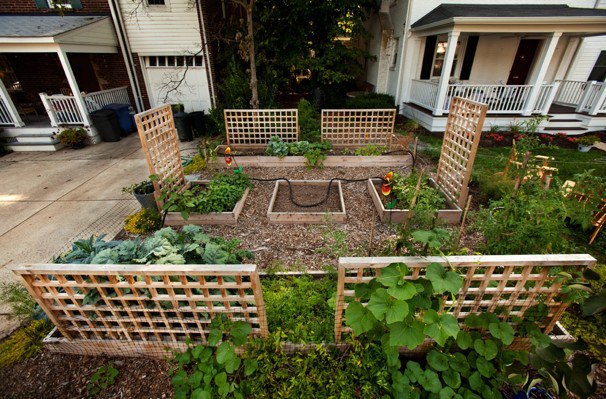


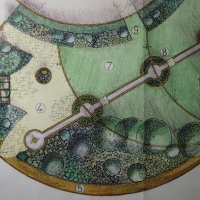


 Old School Garden