Tag Archive: trees


carpinus betulus autumn colourThis is the third in my new series on garden trees. I’ve also done an article about trees and garden design.

Common name: Hornbeam

Native areas: The 30–40 species occur across much of the north temperate regions, including the U.K., with the greatest number of species in east Asia, particularly China. Only two species occur in Europe, and only one in eastern North America. 

Historical notes: Traditionally, the timber of hornbeams has been used to produce mallets, skittles and even the moving parts of pianos! The common English name of “hornbeam” derives from the hardness of the wood (likened to ‘horn’) and the Old English ‘beam’, a tree (similar to the German for tree, “Baum”).

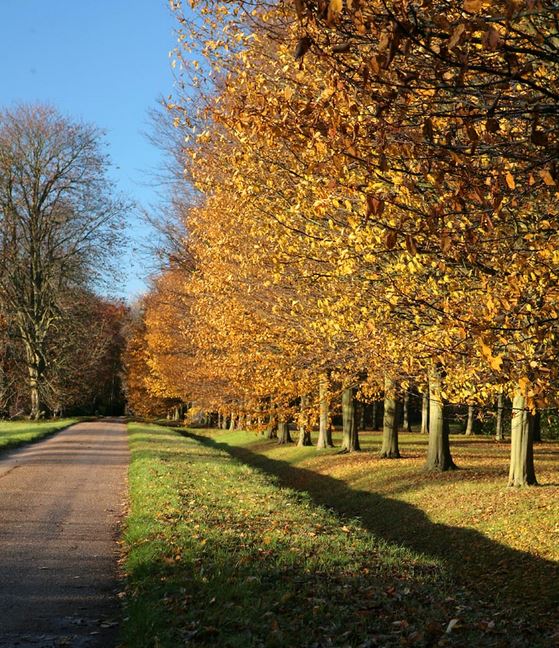
Pleached trees- picture RHS

Features: A large, deciduous tree (growing to 20 metres plus), with a grey-fluted trunk and spreading canopy. It has ovate, ribbed and serrated edge leaves that turn a beautiful clear yellow in autumn. The flowers are wind-pollinated pendulous catkins, produced in spring. The male and female flowers are on separate catkins, but on the same tree (i.e it is monoecious). The fruit is a small nut about 3–6 mm long, held in a leafy bract; the bract may be either trilobed or a simple oval, and is slightly asymmetrical.

Uses:  Wonderful in a parkland setting, grown in groups, it also ideal for pleaching (i.e. training into a ‘hedge on stilts’) and for use along the edges of smaller gardens – just like here at Old School Garden. Received the Award of Garden Merit from the RHS in 2002.  Some of the cultivars are suitable for smaller gardens as their growth habit is more columnar.

Some of the cultivars available include:

‘Fastigiata’– a tree of medium size (10-15 metres in height) and with a pyramidal habit, slender in its youth. Suitable for smaller areas despite developing ‘middle age spread’ (it can grow out to  1o metres wide). Very effective if left feathered at the base to encourage gold and orange autumn leaf colour. Stiffly ascending branches give it a columnar shape, resembling Lombardy Poplar.

‘Fastigiata Frans Fontaine’- selected from a street in the Netherlands in the 1980’s this retains its columnar habit better than the ordinary ‘Fastigiata’ variety (3 metres wide after 25 years) so is even better suited to restricted areas.

‘Purpurea’-  medium height (10-15 metres), introduced in the 1870’s , this is well suited to arboretums and plant collections. Young leaves flush with a purple tinge and then gradually turn deep green and them a similar yellow to the species hornbeam in  autumn. Slower growing and ultimately smaller than the species tree. Well suited to heavier soils.

”Japonica’-  (Japanese hornbeam), introduced from Japan in 1895, a small (5-10 metres tall), rounded tree, very effective if pleached. Darker than the species tree, with heavily corrugated leaves, darker than the species tree. Attractive, prolific hop-like fruit. AGM in 2002

Growing conditions: hornbeams grow well in most soils, including clay and chalk and is useful for planting where there are poor planting conditions.

 Further information:

Wikipedia

RHS- Carpinus betulus

RHS- pleaching

Barcham trees directory

Old School Gardener

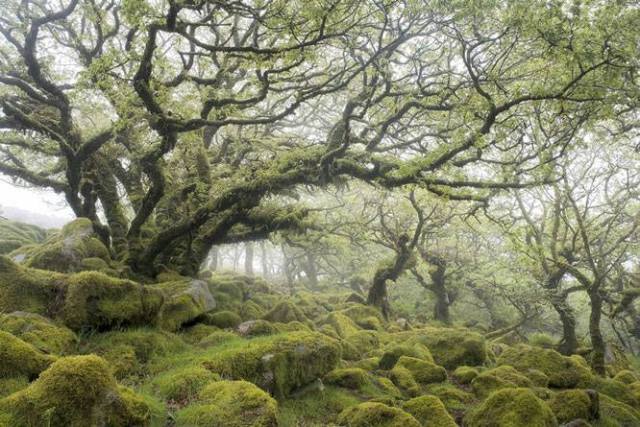
Ancient Woodland

Wistman’s Wood – Dartmoor, Devon, England; via Nature is Awesome

Old School Gardener

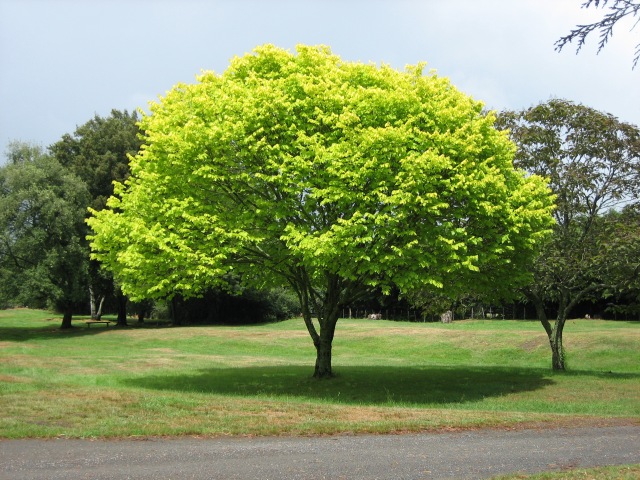
Bright_green_tree_-_WaikatoAs trees tend to be the largest and longest lived plants in the garden, they should be one of, if not THE first item to consider when designing or redesigning your garden.They rank alongside some of the hard landscaping elements (seats, arches, pergolas, arbours etc.) in helping to provide the ‘bones’ or structural framework of a garden i.e. the structure by which we navigate ourselves around the plot both visually and in terms of guiding our movement. Shrubs (especially evergreens), provide a similar service and should be thought about in conjunction with whether, where and what sorts of trees to include in a design or redesign.

Trees also offer a range of other potential sources of interest in a garden apart from their overall shape or form; leaf size shape and colour (which may vary from season to season), bark (colour, texture or special effects such as peeling or patterned), flowers and fruit (catkins, conkers, apples and so on).

In visual terms the planting of a tree or trees can have a dramatic effect on the layout (or form) and perspectives around the garden. They can be used as a focal point to draw the eye. This includes those planted as a ‘specimen’. Those planted in the foreground or middle distance help to increase the sense of depth or perspective in a garden, while those planted further away help to give a sense of scale to the overall space. So, in a small garden a large tree in the foreground and a small tree at the end will make the garden seem longer.

Leaf size and texture is another important consideration. If you want a strong shape to provide a key structural element all year round in the garden, then go for small leaved, evergreen varieties with distinctive shapes or which can be pruned (topiarised) into these- e.g. Box.

Horse Chestnut flower about to burst

Why not take a look at your garden and ask if you have one or more trees that aren’t in the right place- are they are too tall, too broad, drying out the soil or causing shade where you don’t want it? Perhaps removal or pruning is the answer. Could you introduce a tree or two and help to strengthen what your garden has to offer- providing food or a home for birds, for example or adding a brilliant show of flowers or autumn leaf colour?

Traditionally we seem to have used trees in gardens as stand alone ‘specimens’, often in an island in the middle of a lawn for example. Today, with the wide range of trees available and with characteristics that suit almost any situation, its possible to be a bit freer with how we use them- in groups or among other planting in borders.

If you are using a tree as a specimen think about its positioning carefully- if it’s planted by itself without any surrounding planting to soften its impact, it will be a focal point from the start, and as it grows bigger this impact will become even more pronounced.

If planting several trees together, including adding one or two to an existing group, think about their ultimate height and spread. As in nature, some trees grow well together; eg. Betula pendula, or ‘Silver Birch’- see my recent article in the A-Z of Trees series. The wild cherry (Prunus avium), is another example. So as with any other tree planting think carefully about their ultimate height and spread and allow room for them to grow. If you want to give a denser appearance in the time it takes the trees to mature, try growing them closer together, but expect to remove some as they mature to allow the remaining ones to grow to full size.

When planting more than one tree together in an area of grass, the relationship of one to another will determine the effect and this can change depending on where you are in the garden. A good idea is to use large posts or bamboo canes to mark their positions. Try out different positions to see what effect you like the best. Look at the positioning from different places, including from inside the house. and remember to think about their ultimate height and width and what they might obscure or hide.

Chracterisitcs of the White Fir

We tend to think short term when it comes to gardens- we want immediate impact or effect.

The danger here is that you’ll end up with something that outgrows its space and gives you problems- a classic example is the Monkey Puzzle tree (Araucaria araucana) that was planted in the front garden of a Victorian terrace house or villa and is now way too large and tottering precariously above and perhaps towards the house! So the speed of growth is also a consideration; very slow growing trees may take  30 years to have a significant impact, so if you want an impact over a shorter period than this, then that’s perhaps a good choice.

If you have a relatively small garden, don’t think that you can’t have any trees. Smaller varieities of many different types are often available, and by choosing trees that have a more conical or upward habit you can achieve an impact without having a major loss of garden space .

Planting trees too near to buildings is another common problem. Some have relatively compact root systems ; e.g. Birch (Betula), Sorbus, Hornbeam and Magnolia are good examples and rarely cause problems. However trees like Willow will seek out water and their roots are liable to invade drains if planted close by.

If an existing tree is of concern seek the advice of a qualified tree surgeon. and if you think a tree may be subject to a Tree Preservation Order, make sure you consult your local authority before doing anything to affect it. And always consider your neighbours- trees planted close to boundaries may look good from your side of the fence, but think about what impact the tree is going to have on your neighbour’s garden and house. The inconsiderate planting of hedges of Leylandii conifers is the most familiar example of the wrong species being chosen to achieve rapid but usually unattractive results. Left to its own device this tree will grow to well over 100′ high and it looks superb, so don’t expect it to enjoy continually being hacked back!

Old School Gardener

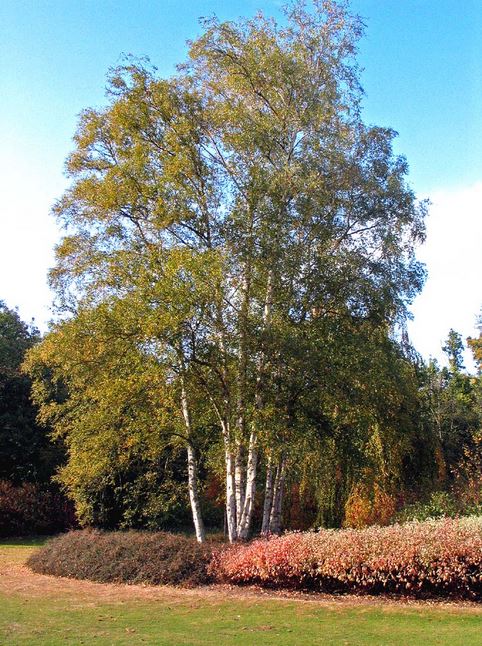
mature betula pendula bartram treesThis is the second in my new series on garden trees. I’ll shortly be doing one or two articles about trees and garden design, in my series ‘Design my garden’, so keep an eye out.

Common name: Silver Birch

Native areas: Europe, though in southern Europe it is only found at higher altitudes

Historical notes: Also known as the ‘Lady of the woods’ because of its slender and graceful appearance. Especially popular in the UK. Grown as an ornamental plant and also for its timber. It is used for a range of purposes, from broom-making and steeple-chase fencing to medicines.

Features: A medium tree (15- 20 metres tall), with a conical, semi weeping habit, with white bark and horizontal lines and large diamond -shaped cracks which form as the tree matures. Leaves ovate, yellow in autumn. Flowers in catkins. Can be grown either as a single or multi-stemmed tree.

This slideshow requires JavaScript.

Uses: Very good as a multi-stemmed tree for exposed or elevated positions as they have a low centre of gravity. These look good in small groups in informal settings. I have a few that contribute to a mixed ‘woodland edge’  here at Old School Garden, providing a natural boundary to the garden. It can also be used as a specimen, though some of the cultivars available perhaps provide more interesting features than the species plant:

‘Dalecarlica’ (Swedish Birch, syn. ‘Laciniata’ or ‘Crispa’)- deeply cut leaves which weep gracefully, white peeling bark

‘Fastigiata’- stiffly ascending branches give it a columnar shape, resembling Lombardy Poplar

‘Purpurea’ slow growing and rare, with new, dark purple leaves,softening t o dark green/purple by summer.

‘Tristis’- tall (15-20 metres), weeping birch, with beautiful winter structure.

‘Youngii’- similar habit to ‘Tristis’ but shorter (5-10 metres) and so more suitable for smaller gardens, especially good as a specimen  in lawns.

‘Zwisters Glory’- from Switzerland, this new variety has gleaming white bark, so makes a good avenue tree and a good choice for urban areas and is quick growing.

Two other species of birch are also worth mentioning:

Betula pubescens- ‘Common White Birch’, prefers damper conditions than B. pendula, also it’s more hardy. It’s ascending branches give it a more solid appearance than B. pendula.

Betula utilis ‘Jacquemontii’/ ‘Doorenbos’-a medium tree with ascending branches, most admired for its almost pure white bark, looking very effective against a dark background.

Growing conditions: grows well in most soils and is good for parks and woodland, but is not suitable for areas which have soil that becomes compacted. Difficult to transfer as a bare rooted specimen, but containerised plants are more successful.

Further information:

Wikipedia

RHS

Barcham trees directory

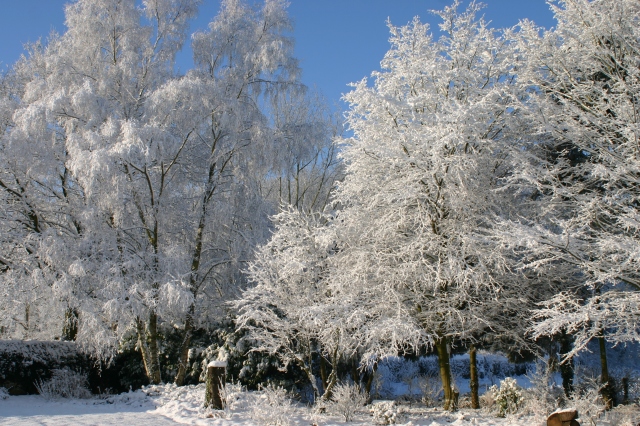
Silver Birch among others in the snow at Old School Garden, January 2013

Old School Gardener

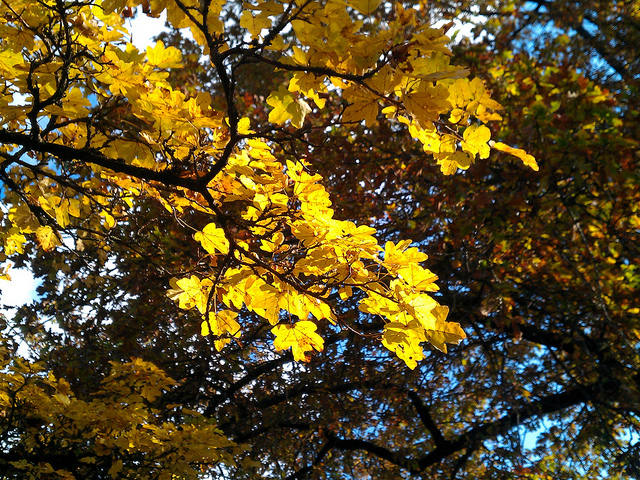
acer campestre by wendy cutler

Acer campestre Autumn colour by Wendy Cutler

Welcome to my new ‘A-Z’ series on Garden Trees. My recently concluded series on perennials proved to be very popular so I hope that this will be equally appealing to my blog readers and followers. I plan to give a few brief facts on 26 trees that are suitable for gardens, together with a picture or two and how they might be used in the garden. My companion collection of articles called ‘Design my Garden’ will feature a few articles about the different design uses of trees in parallel with this new series.

I will be using various sources for the articles, but much will come from the very useful catalogues of Barcham Trees,a specialist tree nursery in Cambridgeshire I had the pleasure of visiting a couple of years go. So, here we go…..

Common name: Field Maple

Native areas: England

Historical notes: used for making musical instruments in the Middle Ages.

Features: small to medium height tree (10-15 metres) with rounded for. Leaves with 5 blunt lobes, turning varied tints of yellow, golden brown and red in the autumn.  Flowers small, green, forming typical winged maple fruitsCan be grown as a single or multi-stem tree.

Uses: a tree for woodland settings or used in small groups in large open gardens and landscapes especially valuable for its autumn colour; also useful in hedgerows (it is very wildlife friendly and will tolerate rough pruning in winter to keep its shape). Various clones of Acer campestre are well suited to streetscapes and urban settings as they have a more regular shaped crown than the parent.

Growing conditions: grows best in rich, well-drained soils, but will do well in most soil types and is tolerant of drought, soil compaction and air pollution.

Further information:

Wikipedia

RHS

Barcham trees directory

Old School Gardener

Tree Grants for Schools and Community Groupsschool trees

‘Grant applications for the 2014 planting season are now open.

The Tree Council’s Tree Futures offers help for tree planting through two grants programmes, the ‘Trees for Schools‘ and ‘Community Trees‘ funds.  Any school or community group within the UK that is planning a project that actively involves children under 16 is encouraged to draw on the fund to plant trees and make a greener future.

The Tree Council’s National Tree Week (from 29 November to 7 December in 2014) is the focus for these projects and successful applicants organise their planting events in conjunction with our annual celebration of the new tree planting season.

In addition, we are offering funds for fruit tree planting by schools and community groups through our Orchard Windfalls fund, first launched for the 2013 planting season. We are able to fund projects between £100 and £700 and successful applicants will receive up to 75% towards their planting costs. For example, if your project totals £700, The Tree Council would offer up to £525. The remaining 25% will need to be secured by your school or organisation.

With the generous support of an anonymous donor we have been able to produce a Key Stage 1 & 2 teaching and learning resource which will be sent out free of charge to all successful grant applicants. To see taster pages and information about how to purchase the CD ROM please click on this Tree Ties link.’

Old School Gardener

Using focal points- including the more unusual- is an effective way of drawing the eye away from the edges of a space

Sometimes, especially with awkwardly shaped or smaller gardens, it makes sense to try and draw the eye from the outer boundaries and create a more pleasing and, apparently larger space. Here are seven ‘top tips’ for achieving this:

1. Put square and rectangular patios and lawns at 45/30/60 degrees to the side boundaries or use shapes for these and other flat areas which contrast with the outer shape of the garden.

2. Set paths to run at an angle to the garden boundaries in zig zags or dog leg style.

3. Make paths curved, meandering from side to side.

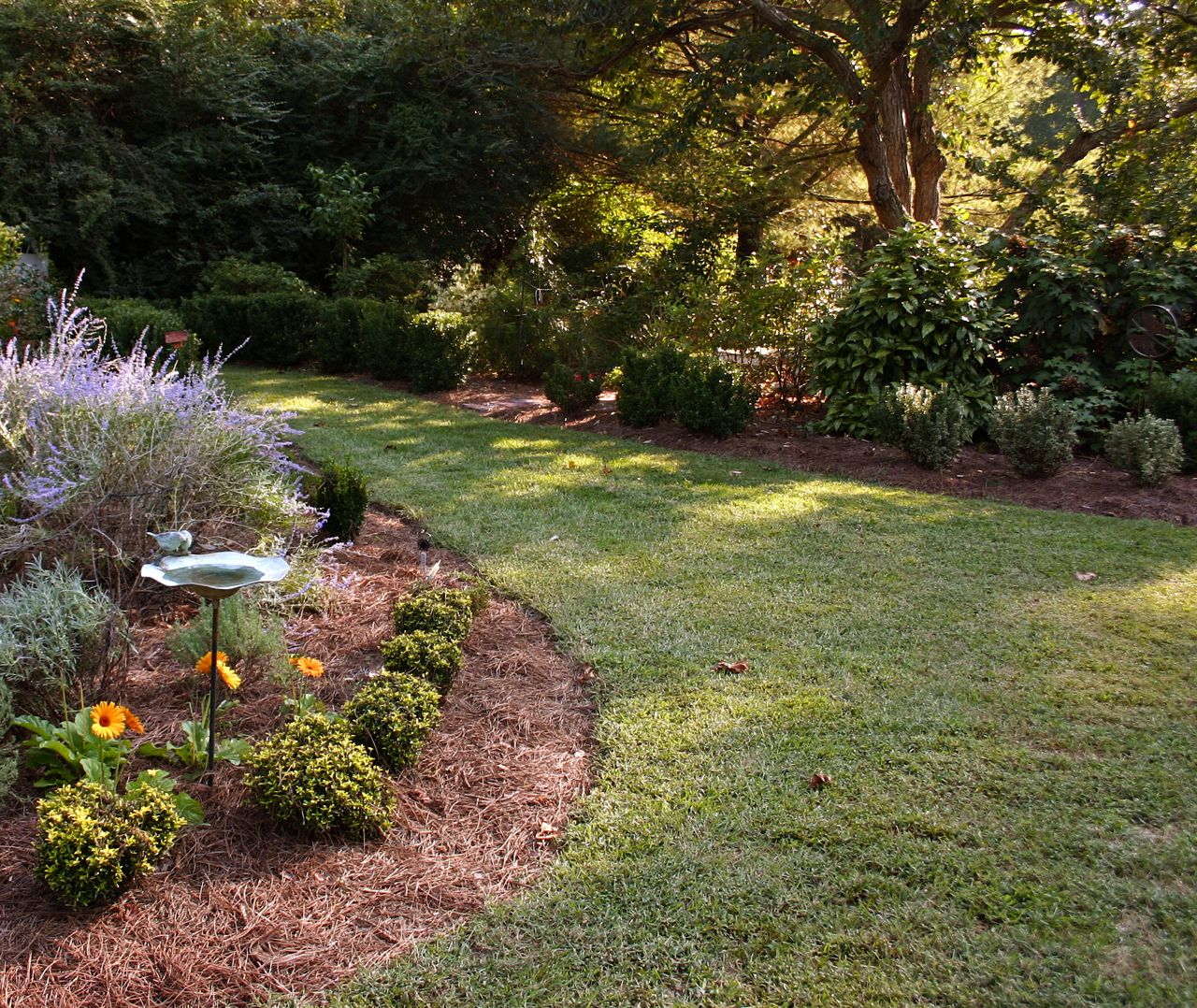
Paths- including grass- and the border edges they create can be meandering to take the eye on a journey..

4. Fix structures such as trellis, pergolas and arches or plant hedges across the garden to interrupt the view and to create separate compartments.

5. Place groups of tall shrubs or trees at intervals in the line of sight to block views across or down the garden.

6. Use climbers and large shrubs, especially evergreens, to disguise solid formal boundary fences and to break up the straight lines, particularly the horizontal ones of fence/ wall tops.

7. Carefully place focal points to draw the eye in various chosen directions, positioning them so that they can be seen from different places in the garden.

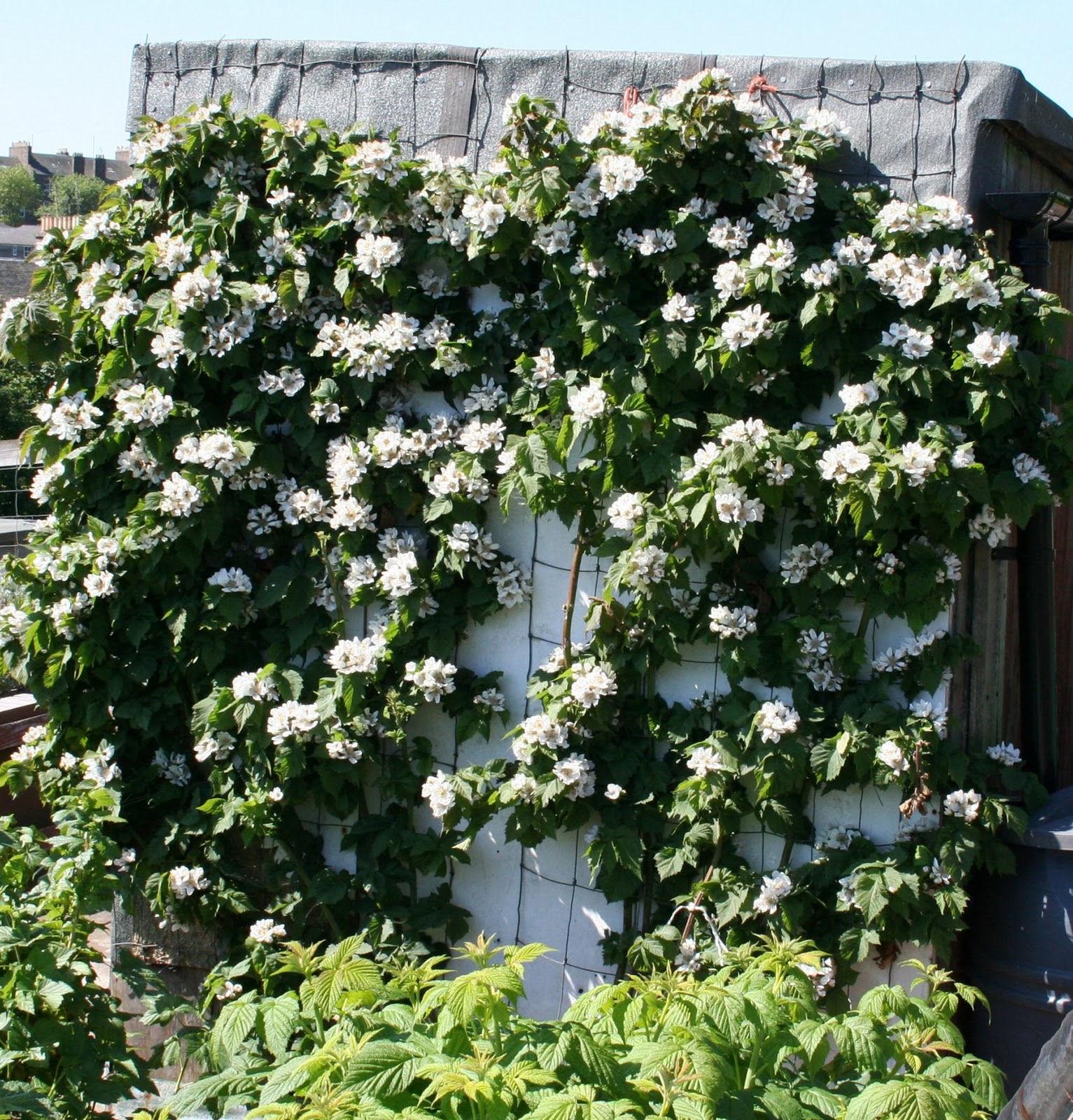
Use climbing plants to cover up and soften hard boundaries

Use climbing plants to cover up and soften hard boundaries

Related article: Arbours and Pergolas in the Garden- 7 Top Tips

Old School Gardener

PicPost: Step This Way

bare_root_bundlesAs we roll on towards Christmas, you might be lucky to receive a present of some bare rooted shrubs like George Wellbeloved from the Scottish highlands:

‘I’ve been given a birthday present of some shrubs but the ground is frozen in the garden and I’m not sure what to do with them. Can you advise me?’

A belated Happy Birthday George, what a great idea for a present! Most shrubs and climbers, and especially deciduous ones sent out by mail order, are despatched with bare roots, not in containers. If they dry out they will die, so when they arrive, and there is not soil at all on the roots, stand them in a bucket fo water for a day or two in a cool, frost-free place until the soil is in a fit sate to plant them. Alternatively, store them for longer periods with their roots in damp compost – this can be ‘spent’ (old) rather than new if you have some (from emptying out summer flowering hanging baskets or other containers, for example).

If the plants arrive with some soil, on the roots, probably wrapped in netting, these are best watered carefully with a can fitted with a fine rose and then stored in moist compost. As soon as possible after arrival, dig  a trench in a vacant bed of soil, lay in their roots, and replace the earth. ‘Healed in’ like this the shrubs will stay in good condition for many weeks until the planting site is frost-free, fully prepared and in good condition.

When planting shrubs there are two schools of thought. The traditional method is to mix a good supply of well-rotted manure with loosened soil from the bottom of the planting hole, but if you can’t get hold of this, try using your own compost, or spent growing bags (you might be able to get hold of these from commercial tomato growers). Spent mushroom compost is also a possibility, as it usually contains some manure, but as it also contains chalk it should not be used for lime hating plants. Lastly, you can use shop-bought composts or bulky organic materials, though the latter can be pricey. Add a few handfuls of bone meal to the material you use to encourage root development.

The alternative method is to raise the fertility level of the soil around the planting site so that the plant’s roots are encouraged to spread out and so lead to more vigourous growth as the roots are encouraged to seek out nutrients more than if all the goodness is concentrated in the planting hole. Of course for ‘belt and braces’ job you can do both, or use your judgement about whether and how much  fertility needs to be added to the site of the planting. Increasing fertility in the space surrounding the planting hole may be impractical where there are already plants in this area or where you’re planting into a lawn. Here’s a useful guide to planting bare rooted trees.

http://www.youtube.com/watch?v=XU-9nsDLC-Q

You can also consider adding Mycorrhizal fungi in the planting hole. These are now widely available in Garden Centres and online. As the RHS says:

‘Mycorrhizas are beneficial fungi growing in association with plant roots, and exist by taking sugars from plants ‘in exchange’ for moisture and nutrients gathered from the soil by the fungal strands. The mycorrhizas greatly increase the absorptive area of a plant, acting as extensions to the root system.

Phosphorus is often in very short supply in natural soils. When phosphorus is present in insoluble forms it would require a vast root system for a plant to meet its phosphorus requirements unaided. It is therefore thought that mycorrhizas are crucial in gathering this element in uncultivated soils. Phosphorus-rich fertilisers are widely used in cultivated ground and not only reduce the need for this activity but are thought to actually suppress the mycorrhizas. For this reason it is best not to use phosphorous rich fertilisers in conjunction with mycorrhizal fungi.

Neither fungi nor plants could survive in many uncultivated situations without this mutually beneficial arrangement. Mycorrhizas also seem to confer protection against root diseases.’

Root tips showing mycorrhizal fungi (the white coating)

Further information:

A Guide to planting bare root trees, shrubs and perennials- Toby Buckland

Mycorrhiza- Wikipedia

Old School Gardener

Chinese Carvery

It all started out with a simple tree trunk...

‘One tree, four years of work and an indescribable amount of talent: that’s what it took to create this incredible masterpiece. A famous Chinese wood carver chopped down a single tree and tirelessly worked on it for over four years to make this piece. Your jaw will hit the floor when you see what he created.’

Click on the picture for the full story…

Old School Gardener

Finding Nature

Nature Connectedness Research Blog by Prof. Miles Richardson

Norfolk Green Care Network

Connecting People with Nature

Discover WordPress

A daily selection of the best content published on WordPress, collected for you by humans who love to read.

Susan Rushton

Celebrating gardens, photography and a creative life

Unlocking Landscapes

Writing, photography and more by Daniel Greenwood

Alphabet Ravine

Lydia Rae Bush Poetry

TIME GENTS

Australian Pub Project, Established 2013

Vanha Talo Suomi

The Journey from Finnish Rintamamiestalo to Arboretum & Gardens

Marigolds and Gin

Because even in chaos, there’s always gin and a good story …

Bits & Tidbits

RANDOM BITS & MORE TIDBITS

Rambling in the Garden

.....and nurturing my soul

The Interpretation Game

Cultural Heritage and the Digital Economy

pbmGarden

Sense of place, purpose, rejuvenation and joy

SISSINGHURST GARDEN

Notes from the Gardeners...

Deep Green Permaculture

Connecting People to Nature, Empowering People to Live Sustainably

BloominBootiful

A girl and her garden :)