Tag Archive: trees


1280px-Rowan_tree_20081002b by Eeno11This wonderful tree, native to the U.K., is often associated with Scotland. It certainly suits bird life as the profuse red autumn berries provide a lot of autumnal sustenance. As they are not regular in shape,  the parent Rowan can be grown as a multi-stemmed specimen to achieve more uniformity of shape, or alternatively one of it’s clones, such as Sorbus aucuparia ‘Rossica Major’ can be used.

Common name: Rowan , Mountain Ash (due to the fact that it grows well at high altitudes and its leaves are similar to those of the ash, Fraxinus excelsior – however, the two species are not related). It’s latin name is composed of Sorbus for ‘service tree’ and aucuparia, which derives from the words ‘avis’ for “bird” and ‘capere’ for “catching” and describes the use of the fruit of S. aucuparia as bait for fowling. 

Native areas: The Rowan can be found in almost all of Europe and the Caucasus up to Northern Russia and Siberia, but it is not native to Southern Spain, Southern Greece, Sardinia, the Balearic Islands, the Azores, and the Faroe Islands. The species was introduced as an ornamental species in North America.

Historical notes: Fruit of S. aucuparia were used in the past to lure and catch birds. To humans, the fruit are bitter but they can be debittered and made into compote, jelly, jam, a tangy syrup, a tart chutney, or juice, as well as wine and liqueur, or used for tea or to make flour. The robust qualities of S. aucuparia make it a source for fruit in harsh mountain climate and Maria Theresa of the Austrian Habsburg Monarchy recommended the planting of the species in 1779.

The colour red was considered to be the best colour for fighting evil, and so the rowan, with its bright red berries, has long been associated with magic and witches. Its old Celtic name is ‘fid na ndruad’, which means wizards’ tree. In Ireland it was planted near houses to protect them against spirits, and in Wales rowan trees were planted in churchyards. Cutting down a rowan was considered taboo in Scotland. The wood was used for stirring milk to prevent it curdling, and as a pocket charm against rheumatism. It was also used to make divining rods.

The tallest S. aucuparia in the United Kingdom stands in the Chiltern Hills in South East England. This exceptional specimen is 28 m tall and has a trunk diameter of 56 cm.

Features: Sorbus aucuparia occurs as a tree or shrub that grows up to between 5 and 15 m in height. The crown is loose and roundish or irregularly shaped but wide and the plant often grows multiple trunks. The trunk is slender and cylindrical and reaches up to 40 cm in diameter, and the branches stick out and are slanted upwards. The bark of a young S. aucuparia is yellowish grey and gleaming and becomes grey-black with lengthwise cracks in advanced age; it descales in small flakes. Lenticels in the bark are elongated and coloured a bright ochre. The plant does not often grow older than 80 years and is one of the shortest-lived trees in a temperate climate.

6092500778_965c21d14d_bUses:   Rowans are planted in mountain ranges to fortify landslides and avalanche zones. It is also used as an ornamental plant in parks, gardens, or as an avenue tree. It is well suited to wildlife gardens. Cultivars are vegetatively propagated via cuttings, grafting, or shield budding. Ornamental cultivars include:

‘Asplenifolia’, which has divided and sharply serrated leaflets

‘Blackhawk’, with large fruit and dark green foliage

‘Fastigiata’, an upright columnar form

‘Fructu Luteo’, orange yellow fruit

‘Michred’, brilliant red fruit

‘Pendula’, which is a weeping tree

‘Sheerwater Seedling’, upright and slender, has vigorous growth, good-sized leaves and reliable and plentiful berries. It has been used as a street tree and is ideal for sites with little sideways space 

‘Xanthocarpa’ has orange yellow fruit

Growing conditions:  S. aucuparia is an undemanding species and can withstand shade It is frost hardy and can tolerate winter dryness and a brief growing season.  The plant is also resistant to air pollution, wind, and snow pressure. S. aucuparia mostly grows on soil that is moderately dry to moderately damp, acidic, low on nutrients, sandy, and loose. It often grows in stony soil or clay soil, but also sandy soil or wet peat. The plant grows best on fresh, loose, and fertile soil, prefers average humidity, and does not tolerate saline soil or waterlogging. It can be found in light woodland of all kinds and as a pioneer species over fallen dead trees or in clear cuttings, and at the edge of forests or at the sides of roads.

Mature S. aucuparia autumn colour
Mature S. aucuparia autumn colour

Further information:

Wikipedia

RHS- Sorbus aucuparia

Sorbus aucuparia- the Woodland Trust

Growing S. aucuparia ‘Sheerwater Seedling’- Daily Telegraph

Barcham trees directory- Sorbus aucuparia

Old School Gardener

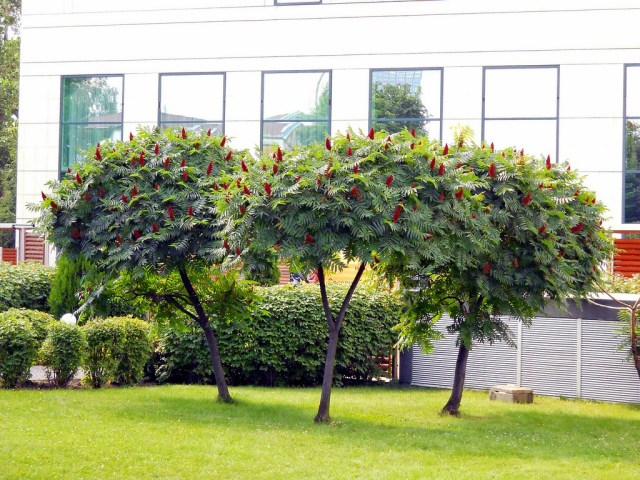
rhus typhina trio


This is a small tree (which can also be grown as a shrub) that can be a bit of a thug, as it spreads freely by root extension, but it’s lower growth is thin enough to allow other plants to live alongside it. I have a few here at Old School Garden and it is a great tree for adding an oriental feel, has interesting foliage (especially in the autumn) and some unusual flowers.

Common name: Stag’s Horn Sumac

Native areas: It is primarily found in Southeastern Canada, the Northeastern and Midwestern United States and the Appalachian Mountains, but is widely cultivated as an ornamental throughout the temperate world.

Historical notes: Introduced to the U.K. in 1620’s it won the R.H.S. Award of Garden Merit in 2002. Some beekeepers use dried sumac bobs as a source of fuel for their smokers. The fruit of sumacs can be collected, soaked and washed in cold water, strained, sweetened and made into a pink lemonade. The leaves and berries have been mixed with tobacco and other herbs and smoked by Native American tribes. All parts of the Stag’s horn Sumac, except the roots, can be used as both a natural dye and as a mordant. The plant is also rich in tannins and can be added to other dye baths to improve light fastness. In both French and German, the common name of the species (Sumac vinaigrier, Essigbaum) means “vinegar tree”.

Features: Rhus typhina is a deciduous shrub or small tree growing to 5 m (16 ft) tall by 6 m (20 ft) broad. It has alternate, pinnately compound leaves 25–55 cm (10–22 in) long, each with 9–31 serrate leaflets 6–11 cm long. The leaf petioles and the stems are densely covered in rust-colored hairs. The velvety texture and the forking pattern of the branches, reminiscent of antlers, have led to it’s common name. The Sumach is dioecious (male and female flowers produced on separate plants), with yellow-green flower clusters, followed on female plants by dense crimson fruiting heads. 

Rhus typhina 'Tiger Eyes'

Rhus typhina ‘Tiger Eyes’

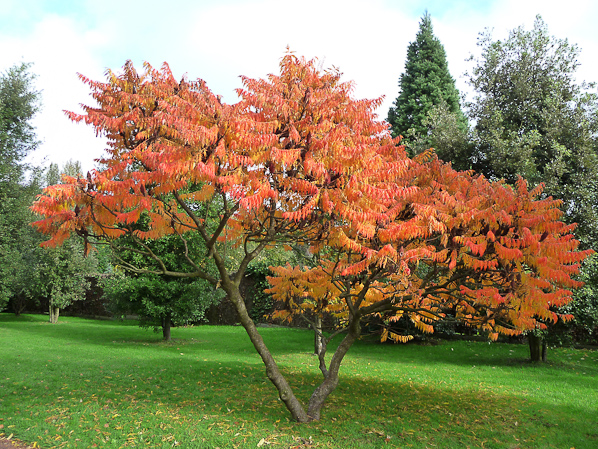
Uses:  Rhus typhina provides interest throughout the year and is spectacular in autumn when its foliage turns fiery orange, gold, scarlet or purple. The effect is greater when set against the dense cones of red fruit borne by female plants. To get the best from this autumn colour plant it in a sheltered position away from strong winds; otherwise, as here in Old School Garden, you won’t see the leaves for very long! It’s vigorous, suckering habit makes it unsuitable for smaller gardens. Some landscapers remove all but the top branches to create a “crown” effect in order to resemble a small palm tree. There are about 200 species of Rhus and numerous cultivars have been developed for garden use, of which ‘Dissecta’ (syn.’Laciniata’ or Cutleaf Stag’s Horn Sumac) has deeply cut leaves. ‘Dissecta’ will survive winters as low as minus -12°C and then regain new growth the following season. 

Growing conditions:  It can grow under a wide array of conditions, but is most often found in dry and poor soil on which other plants cannot survive. Some species can be pruned hard to the ground every other year in early spring to produce handsome foliage plants. The inner sections of the trees are woody and pithy . It is advisable to wear gloves because the sap is potentially harmful.

Picture by Alain Delavie

Picture by Alain Delavie

Further information:

Wikipedia

RHS- Rhus typhina

RHS- Rhus typhina ‘Dissecta’

Horticulture Week- ~Rhus typhina

‘Thorny Problems: How can I get rid of Sumach suckers?’- Daily Telegraph

Barcham trees directory- Rhus typhina

Old School Gardener

So, here are the final four wonderful pictures taken by my friend Jen over in Vietnam.

First, a plant with a common name of ‘Canonball Tree’ due to its large rounded fruits (and its flower buds also rather resemble Brussel Sprouts!). Couroupita guianensis, as its name suggests, was originally native to South America.

Couroupita guianensis

Couroupita guianensis

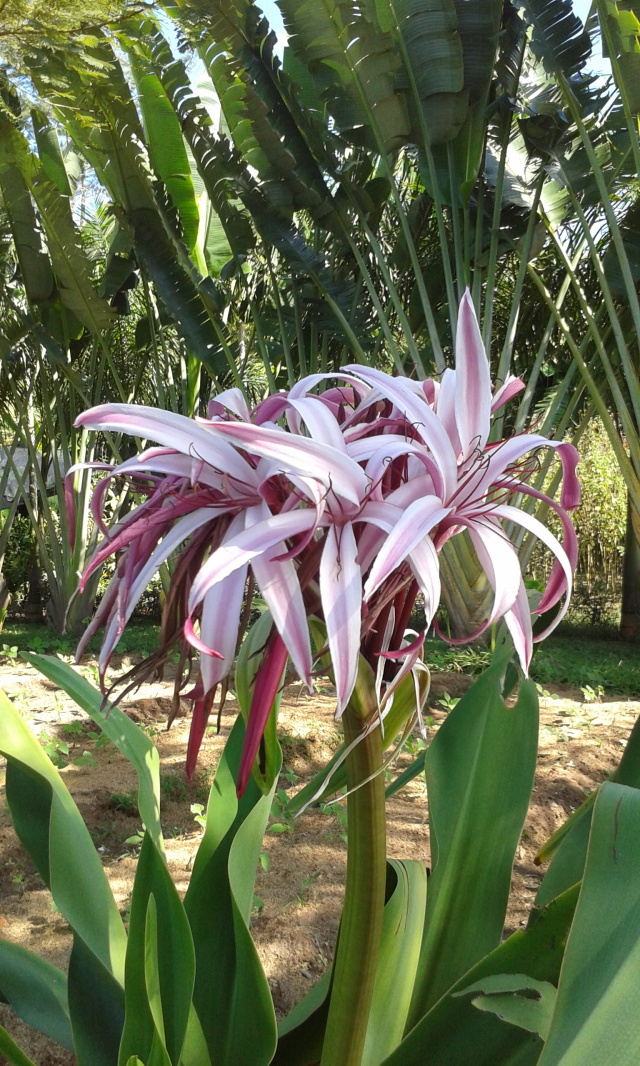
Second, one of the range of River Lilies  Crinum. I think this one might be the ‘giant Spider Lily’ Crinum x amabile, which can grow to 6 feet tall in the right conditions.

Crinum x amabile

Crinum x amabile

‘Folded and floating’ is how Jen describes these amazing Lotus flowers…

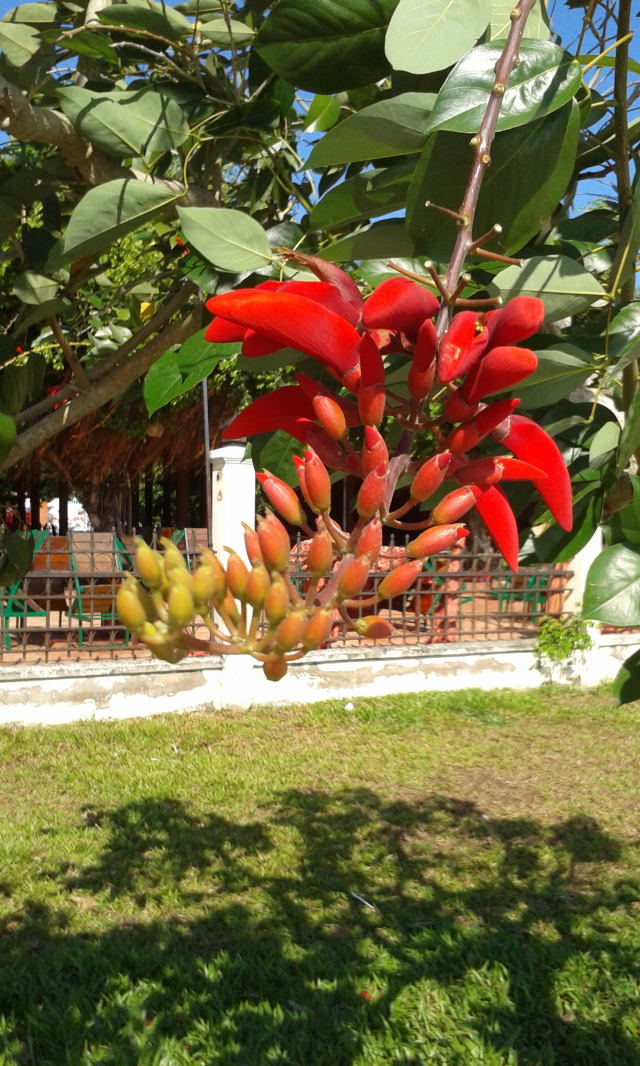
lotusFinally, this one caused me a lot of searching (including via our postman’s Vietnamese friend!), but I’m pretty sure its the ‘Cockspur Coral Tree’ or Erythrina crista-galli (the latter means ‘cock’s comb’). A native of South America it is also the national tree and flower of Argentina. The picture shows the dramatic terminal raceme of flowers, in this case not yet open.
viet5

Erythrina crista-galli

I hope that you’ve enjoyed this mini series; I have certainly found it fascinating trying to track the plants down! Thanks once more to my friend Jen.

Old School Gardener

Appalachian Red Oaks-picture Jason Hollinger

Appalachian Red Oaks-picture Jason Hollinger

There can’t be many trees with a botanical name beginning with Q, but the Oaks provide plenty of variety and what for the U.K. (or maybe just England?) is probably the ‘people’s choice’ as our national tree (Quercus robur).

I’ve chosen a rather large variety, which will not fit easily into smaller gardens, but I just love it, especially for its autumn foliage…

Common name: Red Oak, American Red Oak, Northern Red Oak or Champion Oak

Native areas: North America, in the eastern and central U.S. and southeast and south-central Canada.

Red Oak early in the year

Red Oak early in the year

Historical notes: The Red Oak is one of the most important oaks for timber production in North America. Quality red oak is of high value as lumber and veneer, while defective logs are used as firewood. It’s bark is also rich in tannin, making it valuable in tanning leather. It was introduced to the U.K. in 1724 and has won the R.H.S. Award of Garden Merit in 2002 (and before this in 1971). There are 3 well known, very old specimens in the U.S.:

  • Ashford Oak – A very large Northern Red Oak in Ashford, Connecticut. The tree has suffered falling limbs because of its great age. However, this tree is still a sight to behold; the trunk is 8 m (26 ft) in circumference and the root-knees are also particularly impressive.

  • Chase Creek Red Oak – This forest tree is located on a very rich steep slope in Anne Arundel County, Maryland. The circumference at breast height is 6.7 m (22 ft), the height 41.5 m (136 ft) and the spread 29.9 m (98 ft)

  • Shera-Blair Red Oak – This majestic red oak tree is located in the South Frankfort neighbourhood of Frankling County, Kentucky. The circumference at breast height is 6.4 m (21 ft), with the trunk reaching higher than 40 feet before the branches begin and an estimated height of 130 feet.

Red Oak specimen Tortorth Arboretum. Picture by Velela

Red Oak specimen Tortorth Arboretum. Picture by Velela

Features: A large, broadly oval tree which does best in deep fertile soils, but tolerates most others. Under optimal conditions, Red Oak is fast growing and a 10-year-old tree can be 5–6 m (16–20 ft) tall. Trees may live up to 500 years and a living example of 326 years was noted in 2001. Red oak is easy to recognize by its bark, which features bark ridges that appear to have shiny stripes down the centre.  Young growth emerges almost yellow in the spring befoe expanding into large, broad green and lobed leaves by May. It’s autumn foliage is a rich red, turning dark reddish grey brown before falling. The acorns mature in about 18 months after pollination. Its kernel is white and very bitter. Despite this bitterness, they are eaten by deer, squirrels and birds. It appears to tolerate polluted air well.

Uses:  As a large tree the Red Oak is best used in parks and large gardens as specimen tree.

Growing conditions:  Red Oak is not planted as often as the closely related Pin Oak as it develops a taproot and quickly becomes difficult to transplant. Acorns should either be sown in the location where the tree is intended to be planted or else moved to their permanent location within the seedling’s first year. As the tree gets older, the taproot gradually shrinks and the lateral root network expands. Red Oak is easy to start from seed, however the acorns must be protected from animal predation over the winter months. As with other oaks, germination takes place in late spring when all frost danger has passed. The seedling grows rapidly for its first month, then pauses for another month, and sends out more new shoots until September when growth stops for the year. If the weather stays favorable, a third burst of growth may occur.

Mature Red Oak, autumn foliage

Mature Red Oak, autumn foliage

Further information:

Wikipedia

RHS- Quercus rubra

Barcham trees directory- Quercus rubra

Old School Gardener

paulownia-500x500So many trees beginning with ‘P’- which to choose? My choice is a tree that poses a dilemma- to prune or not to prune? If you do, you will encourage massive foliage which is a fabulously exotic addition to any garden. Alternatively, don’t and you get some wonderful flowers…the choice is yours.

Common name: Foxglove Tree, Empress Tree, Princess Tree

Native areas: Pawlonia tomentosa (syn. P. imperialis) is native to Japan and central and western China, where it has become virtually extinct due to a pathogen. It has become very common in North America, where it is considered an exotic invasive species. It was introduced to the UK in 1834.

Historical notes: The tree was named after Anna Pavlovna, daughter of Tsar Paul I and wife of Prince Willem of the Netherlands. In China, the tree is planted at the birth of a girl. The fast-growing tree matures when she does. When she is eligible for marriage the tree is cut down and carved into wooden articles for her dowry. Carving the wood of Paulownia is an art form in Japan and China. In legend, it is said that the phoenix will only land on the Empress Tree and only when a good ruler is in power. Several Asian string instruments are made from P. tomentosa.

The soft, lightweight seeds were commonly used as a packing material by Chinese porcelain exporters in the 19th century, before the development of polystyrene packaging. Packing cases would often leak or burst open in transit and scatter the seeds along rail tracks and near to ports. The magnitude of the numbers of seeds used for packaging, together with seeds deliberately planted for ornament, has allowed the species to be viewed as an invasive species in areas where the climate is suitable for its growth, notably Japan and the eastern United States.

Features: Paulownia tomentosa is an extremely fast-growing tree; its growth rings have been measured at three every inch. However the UK’s climate slows this down, and any growth under a pencil thickness generally succumbs to winter frosts, and which in turn contribute to its overall broadness. It will ultimately grow to 10–25 m (33–82 ft) tall, with large heart-shaped to five-lobed leaves 15–40 cm (6–16 in) across, arranged in opposite pairs on the stem. On young growth, the leaves may be in whorls of three and be much bigger than the leaves on more mature growth. The leaves can be mistaken for those of the Catalpa.

The very fragrant flowers are formed in autumn and then open in spring before the leaves in early spring (May), on panicles 10–30 cm long, with a tubular purple corolla 4–6 cm long resembling a foxglove flower. However, if there is a prolonged period where winter temperatures fall below minus 5 degrees celsius, no flowers will develop the following spring.The fruit is a dry egg-shaped capsule 3–4 cm long, containing numerous tiny seeds. The seeds are winged and disperse by wind and water. Pollarded trees do not produce flowers, as these only form on mature wood. A mature tree in its native environment can produce up to 20 million seeds a year!

Uses: P. tomentosa is cultivated as an ornamental tree in parks and gardens. It has gained the RHS Award of garden Merit (AGM). The characteristic large size of the young growth is exploited by gardeners: by pollarding the tree and ensuring there is vigorous new growth every year, massive leaves are produced (up to 60 cm across). These are popular in the modern style of gardening which uses large-foliaged and “architectural” plants. Alternatively it can be grown for its attractive, fragrant flowers.

Growing conditions: a fast growing, medium to large tree, it does best in a sunny, reasonably sheltered site, preferably in moist, humus-rich, fertile soils. Protect young trees from frost. Can be pollarded. Very tolerant of atmospheric pollution.

Paulowni_imperialis_SZ10Further information:

Wikipedia

RHS- Pawlonia tomentosa

Barcham trees directory- Pawlonia tomentosa

Old School Gardener

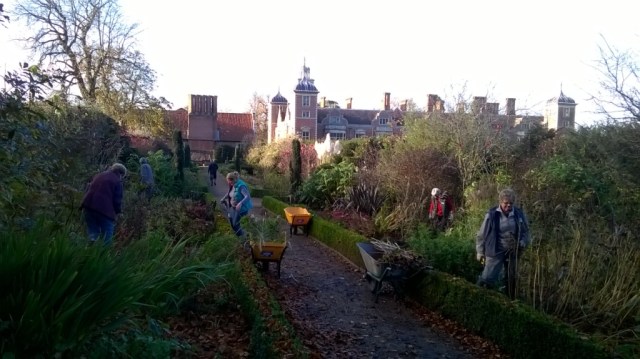
WP_20151112_14_20_33_ProThe ‘dynamic duo’ of Peter and I continued with strimming the avenues and connecting paths in the outer gardens at Blickling this week.
I arrived to find the gardeners and Peter gathered around a large, new trailer which had just been delivered. I later looked this over and had an interesting discussion about its features and how useful an addition it was going to be to the gardeners’ armoury….

Hmm...big, shiny, but how useful?

Hmm…big, shiny….

The ladies, meanwhile were finishing off cutting back and clearing the double borders, which only a few weeks ago had been resplendent in their late summer colours.

Cutting back the double borders on a beautiful autumn day

Cutting back the double borders on a beautiful autumn day

Having adjusted the belt on the strimmer I found I was really getting into my stride (or should I say ‘swing’?) with this useful machine- it was rather like old-time scything but without the muscle power needed for that. However, it was sweaty work clearing around trees and the edges of shrubs  where the mowers can’t reach.

After lunch I had an interesting chat with gardener Ed and Peter about the way the avenues of Beech, Oak and other trees have to be regularly cleared of fast-growing understorey trees and shrubs such as holly, yew and rhododendrons. The impact of letting these plants over grow the trees was evident in the bent over trunks of some examples (or ‘on the huh’ as we say in Norfolk!).

The maintenance plan involves every year or so stooling (or coppicing) these vigourous plants and so maintaining  space around the avenue trees. As Ed pointed out, there are some clear examples of where action is going to be required in the near future, so perhaps Peter and I will be moved on to chain saws soon!

Blickling has a new website, why not take a look at the link below?

A virtually deserted garden at a sun-scanned Blickling..

A virtually deserted garden at a sun-scanned Blickling..

Further Information:

Blickling Hall website

Blickling Hall Facebook page

A 360 degree tour of Blickling Hall

Old School Gardener


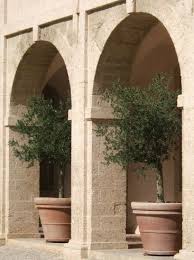
olive potsThe ‘O’ in my A-Z of garden trees is a tree that has grown in popularity in the UK in recent years, though is a little tender. I have an olive tree growing in a pot in the courtyard here at Old School Garden. It’s a couple of years old and though producing fruit, these have not yet developed into anything edible….

Common name: Olive

Native areas:  found in much of  Africa and the Mediterranean basin, the arabian peninsula, southern asia and has been naturalised in many other places.

Olive characteristics from the Kohler Medicinal Pflanzen

Olive characteristics from the Kohler Medicinal Pflanzen

Historical notes: The olive tree as we know it today had its origin approximately 6,000 -7,000 years ago in the region corresponding to ancient Persia and Mesopotamia. It later spread from these countries to nearby territories corresponding to present-day Syria and Israel.

Olive oil has long been considered sacred. The olive branch was often a symbol of abundance, glory and peace. The leafy branches of the olive tree were ritually offered to deities and powerful figures as emblems of benediction and purification, and they were used to crown the victors of friendly games and bloody wars. Today, olive oil is still used in many religious ceremonies.

 Features: Olives grow very slowly, and over many years the trunk can attain a considerable diameter. One was recorded as exceeding 10 m (33 ft) in girth. Olive is an evergreen tree or shrub. It is short and squat, and rarely exceeds 8–15 m (26–49 ft) in height, and are generally confined to much more limited dimensions by frequent pruning. The yellow or light greenish-brown wood is often finely veined with a darker tint; being very hard and close-grained, it is valued by woodworkers. 

Uses:  As a small tree with a rounded form, the olive can take on an attractively gnarled appearance as it develops and is a good choice for small gardens. It has small, but attractive leathery grey-green leaves and small,  fragrant white flowers. They can be grown as half standards pruned to the classical Tuscan shape, or as full standards as well as more natural forms. They can benefit from a severe biannual prune in April, but as the fruit develops at the tips of the previous year’s growth you’ll sacrifice one year’s crop. These look especially good in teracotta pots and in Mediterranean style gardens.

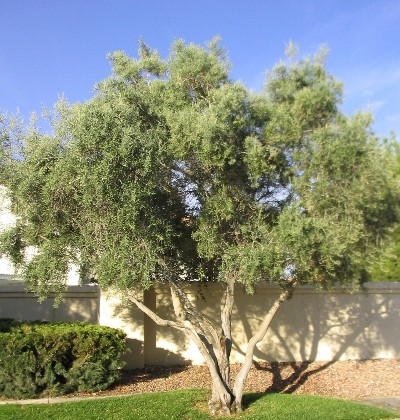
An Olive Tree in a garden setting

An Olive Tree in a garden setting

Growing conditions:  If you have a protected city garden or live in a mild area, olives can be grown outdoors as long as you give them a sunny position and plant them in well-drained soil, for example, against a warm wall would be ideal.  In cold or northern regions winter protection in a conservatory for example, will be required.

Once established they are extremely drought-tolerant, but plants will do better if watered regularly in dry spells during the growing seasons. To encourage strong growth, it’s a good idea to feed each spring with a general fertiliser, such as Vitax Q4. Olives naturally shed their older leaves in spring (April in the UK) as new growth begins.

Olives are not entirely hardy in the UK, and will be damaged by temperatures below -10°C (14°F). So, in colder areas of the country, you can grow olives in large (60cm, 24ins) diameter and depth) containers. Plant in a well-drained mix of compost, such as loam-based John Innes No 3 with 20 percent by volume added horticultural grit. You can place containers outdoors in summer and then move into a cold conservatory, porch or greenhouse over winter.

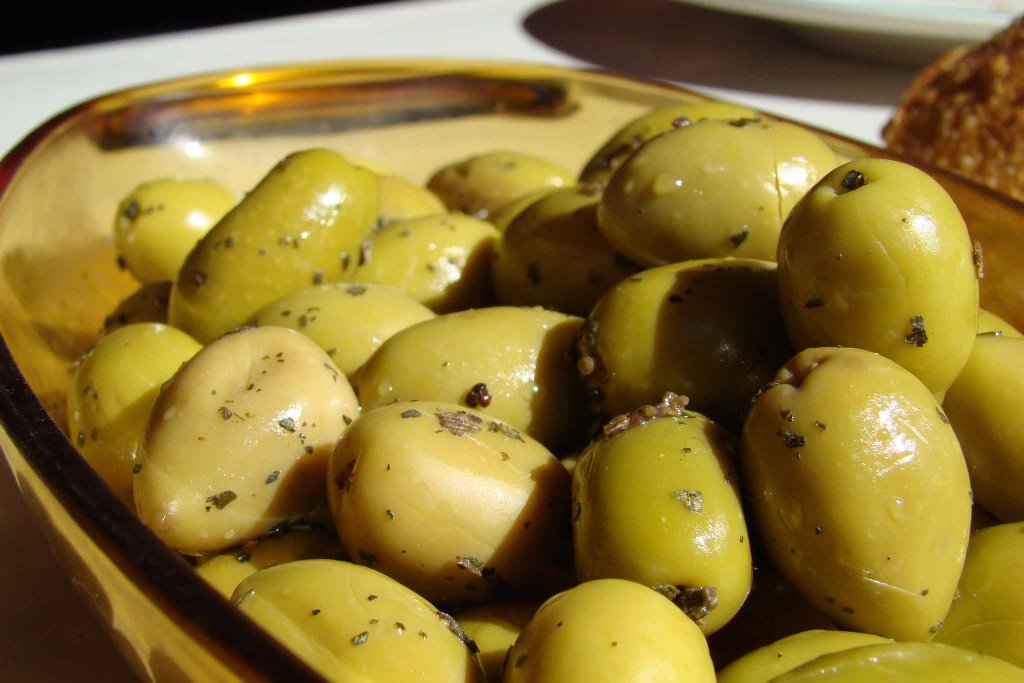
Olives ready to eat- Picture by K'm

Olives ready to eat- Picture by K’m

Although they can cope with dry periods, olives in containers need regular watering and feeding to produce fruit. During the growing season keep the compost moist and feed with a balanced liquid fertiliser such as Phostrogen or seaweed, every month. In winter, you can reduce watering, but don’t let the compost dry out completely.

Olive trees can live for several centuries and can remain productive for as long if they are pruned correctly and regularly. 

The Olive Tree of Jerusalem mural

The Olive Tree of Jerusalem mural

Further information:

Wikipedia

RHS- Olea europaea

Barcham trees directory- Olea europaea

‘The Olive Branches Out’- Daily Telegraph

Old School Gardener

Picture by Famartin

Picture by Famartin

 I see its been some months since my last post in this series, so it’s about time I got going and finished the alphabet! The ‘N’ in my garden trees series is Nyssa sylvatica, introduced to the UK 250 years from the U.S. and considered by many to be the finest of that country’s native trees.

Common name: Tupelo, black gum tree, common tupelo tree, cotton gum, pepperidge, sour gum tree

Native areas: Nyssa sylvatica grows in various uplands and in alluvial stream bottoms in eastern north America, as far south as florida and locally in central and southern Mexico Optimum development is made on lower slopes and terraces in the South eastern U.S.

Historical notes: Introduced from America in 1750, Nyssa sylvatica’s genus name (Nyssa) refers to a Greek water nymph; the species epithet sylvatica refers to its woodland habitat. On Martha’s Vineyard in Massachusetts it is called “beetlebung”, perhaps for its use in making the mallet known as a beetle, used for hammering bungs (stoppers) into barrels.

Features: Nyssa are deciduous trees with ovate leaves colouring brilliantly in autumn; inconspicuous flowers are followed by small, dull purple fruits. N. sylvatica is small (generally 15-25 metres tall), slow-growing and with an elegant, broadly conical habit with a maximum spread of 6-10 metres. Ovate leaves to 15cm in length turn brilliant red and yellow in autumn. It has a trunk diameter of around 50–100 centimetres. These trees typically have a straight trunk with the branches extending outward at right angles. The bark is dark grey and flaky when young, but it becomes furrowed with age, resembling alligator hide on very old stems. Though insignificant to look at, its flowers are an important source of honey and its fruits are important to many bird species. Hollow trunks provide nesting or denning opportunities for bees and various mammals. It is the longest living non-clonal flowering plant in Eastern North America, capable of reaching ages of over 650 years.

Uses:  Nyssa sylvatica gained the Royal Horticultural Society’s Award of Garden Merit (AGM) in 2002. It is an architectural tree requiring little or no maintenance. Useful in parks and large gardens, it is often used as a specimen or shade tree. The tree is best when grown in sheltered but not crowded positions, developing a pyramidal shape in youth, and spreading with age. The stem rises to the summit of the tree in one tapering unbroken shaft, the branches come out at right angles to the trunk and either extend horizontally or droop a little, making a long-narrow, cone-like head. The leaves are short-petioled and so have little individual motion, but the branches sway as a whole. The spray is fine and abundant and lies horizontally so that the foliage arrangement is not unlike that of the beech (Fagus). Its often spectacular autumnal colouring, with intense reds to purples, is highly valued in landscape settings.

Growing conditions: Grow in moist, humus-rich, fertile soils with shelter from cold, dry winds. Resents transplanting so grow from small containerised plants. They do not tolerate lime soils.

Autumn colour- picture by Jean pol Grandmont

Autumn colour- picture by Jean pol Grandmont

Further information:

Wikipedia

RHS- Nyssa sylvatica

Barcham trees directory- Nyssa sylvatica

Old School Gardener

Trees, trees, trees…

WP_20150609_13_44_59_ProI had an interesting trip to a Tree Nursery on Tuesday.

Barcham Trees, near Ely, Cambridgeshire, grow trees on an ‘industrial’ scale. They also have in depth knowledge about development and after care. I was impressed with the scale of trees on offer, and which- because they are container grown- can be big enough to provide instant impact in landscape and garden design schemes.

Big trees require big carriers...

Big trees require big carriers…

I was attending a seminar on ‘Garden Design as Landscape Painting’ (I’ll do a further report on this shortly), and as part of the day we had an informative tour of the nursery with a lively guide, Ellen.

The day was cool, with a brisk north-easterly wind sweeping across this massive site, but we made good progress and were told lots of interesting stuff about the different varieties of tree on offer, saw some fascinating examples of pleaching and surveyed some 120,000 trees (we didn’t get to see a further 100,000 younger examples in the fields down the road).

The visit reminded me of my series of articles on Garden Trees, making use of Barcham’s very useful catalogue and online resources- I must get on with this ‘A-Z’ which has a way to go before It’s finished. So, expect ‘N is for…’ in a week or two…

Further information: Barcham Trees Website

Old School Gardener


WP_20150322_15_40_14_Pro

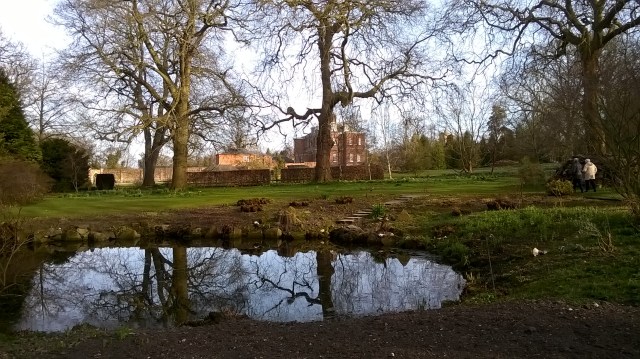
 I recently visited my first open garden of the season, the Georgian West Lodge in the nearby town of Aylsham. Recent cold weather had resulted in many bulbs not yet being open, but the overall layout and different features of this 9 acre garden were a delight to walk around.

Lawns, splendid mature trees, a rose garden, well-stocked herbaceous borders, an ornamental pond, magnificent 2.5 acre C19 walled kitchen garden (maintained as such) meant that there was plenty to look at. I hope to return in high summer to see more of these features at their best.


This slideshow requires JavaScript.

Old School Gardener

Finding Nature

Nature Connectedness Research Blog by Prof. Miles Richardson

Norfolk Green Care Network

Connecting People with Nature

Discover WordPress

A daily selection of the best content published on WordPress, collected for you by humans who love to read.

Susan Rushton

Celebrating gardens, photography and a creative life

Unlocking Landscapes

Writing, photography and more by Daniel Greenwood

Alphabet Ravine

Lydia Rae Bush Poetry

TIME GENTS

Australian Pub Project, Established 2013

Vanha Talo Suomi

The Journey from Finnish Rintamamiestalo to Arboretum & Gardens

Marigolds and Gin

Because even in chaos, there’s always gin and a good story …

Bits & Tidbits

RANDOM BITS & MORE TIDBITS

Rambling in the Garden

.....and nurturing my soul

The Interpretation Game

Cultural Heritage and the Digital Economy

pbmGarden

Sense of place, purpose, rejuvenation and joy

SISSINGHURST GARDEN

Notes from the Gardeners...

Deep Green Permaculture

Connecting People to Nature, Empowering People to Live Sustainably

BloominBootiful

A girl and her garden :)