Tag Archive: soil


Get rid of the rubble....

Get rid of the rubble….

If the soil beneath your walls is especially dry, dig it out, along with any rubble, making a trench at least 60cm wide. Lay a seep hose along the length of the trench in order to make watering easier.

Fill the trench with well rotted organic matter, such as compost or horse manure, to create suitbale conditions for growing climbers or wall shrubs. Alternatively, use topsoil, available from garden centres or commercial suppliers, but you will neeed to check the quality.

Finish off with a 5cm layer of loose organic mulch in order to help retin moisture and cut down on weeding.

Source: ‘Short Cuts to Great Gardens’ – Reader’s Digest

Old School Gardener

perennial borderPlanting-

Grow trouble-free and long lived shrubs and perennials instead of annual spring and summer bedding that needs replacing every year. All new plants must be planted carefully into well- prepared soil, so that they establish quickly and are able to resist attacks from pests and diseases.

Further information:

Top 10 all weather perennial plants

Tips for designing perennial beds and borders

Source: ‘Short Cuts to Great Gardens’ (Reader’s Digest 1999)

Old School Gardener


soil fungusToday is ‘Anti Biotics Awareness Day’ in the UK (I think this extends to the whole week in north America). Last night I attended a fascinating series of talks about work being done in the Norwich Research Park (this includes the University of East Anglia, John Innes Centre, Institute of Food Research and Norfolk and Norwich Hospital) to search for ways to expand the options for combatting infectious diseases. 

The Problem

‘Antibiotics are used to treat bacterial infections in humans. Even though these antibiotics are very powerful, some pathogenic bacteria have evolved resistance to all antibiotics currently available. There is an urgent need to find new ways to combat these drug resistant bacteria.’

268044-medicinesSolutions?

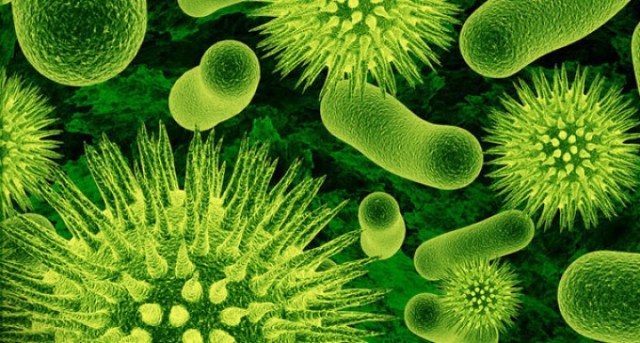
Most of the antibiotics we currently use are made by a group of benign soil bacteria called actinomycetes. Scientists are now searching environments not previously investigated to find new actinomycetes which might produce new antibiotics; for example deep oceans, desert, rainforests and insects. They are also manipulating actinomycetes bacteria to produce new antibiotics.

This is the first strand of work I heard about last night. It also featured a fascinating look at leaf cutter ants. You’ve probably seen these minute creatures on nature documentaries. They cut pieces of leaf from nearby plants and take these back to their nest. But they don’t eat the leaves, well not directly anyway. Instead they feed them to a fungus which produces the food they use. A sort of ‘agriculture’ that has been going on for 50 million years! It’s this fungus that scientists are studying, and specifically the antibiotics it produces, to see if they could be useful against human diseases.

The second strand of work concerns improving the diagnosis and use of antibiotics. Up to now we’ve been rather profligate with our use of antibiotics, including in animal husbandry (where they encourage weight gain) and agriculture.

This widespread use of antibiotics has led to the crisis we now face- many bacteria developing resistance to ‘broad spectrum’ (a cocktail) of antibiotics and a lack of will to develop new antibiotics as the investment and risk are judged to be too high in relation to the potential returns by pharmaceutical companies. The technology available for analysing bacterial infections is advancing – the speed is increasing and the costs reducing-  so that it is increasingly likely that a more precise diagnosis of infections can be made and a more targeted approach to using antibiotics can follow. This will both increase the effectiveness of their use and reduce the side effects- of killing off a lot of other (beneficial) bacteria and inducing the development of resistant pathogens.

penicillium_coloniesFinally,  I heard about work being done to harness the inherent bacteriological power of the human body.

Not only are humans walking factories of millions of bacteria, but it turns out that different parts of the body carry different bacteriological ‘eco systems’ of their own. The work to date has revealed the benefit of human breast milk in child development (as well as containing nutrients it transfers a range of bacteria from the mother which help to develop the child’s own bacterial systems). This has included giving ‘pro biotic’ supplements to babies born prematurely to help them make up the deficit they have on full term babies and so helping to reduce infections and premature mortality.

Work is also being done on the human gut and experiments with some very sick patients have shown how powerful an infusion of new bacteria can be in combatting diseases; this infusion takes the form of a ‘faecal transplant’- literally transfusing a healthy person’s gut bacteria to a sick person via their faeces (of course converted into a suitable form!).

On this special day, it’s encouraging to see the work in hand by a wide range of brilliant people (who happen to be on my doorstep) to try to extend our ability to fight infectious diseases. Part of the answer lies in discovering and teasing out new anti biotics from a wider range of soils and other sites, but it seems that better targetting of antibiotics and harnessing the body’s own ‘bacteria factory’ have an important part to play.

To finish, here’s a little quiz about leaf cutter ants…

Further information:

Antibiotic Hunters

BBC News Report

John Innes Ant Cam- live

Old School Gardener


compost bin‘Of composts shall the Muse descend to sing,

Nor soil her heavenly plumes? The sacred Muse

Nought sordid deems, but what is base; nought fair

Unless true Virtue stamp it with her seal.

Then, planter, wouldst thou double thine estate;

Never, ah never, be asham’d to tread

Thy dung heaps, where the refuse of thy mills,

With all the ashes, all thy coppers yield,

With weeds, mould, dung, and stale, a compost form,

Of force to fertilise the poorest soil.’

James Grainger 1721-66

Bob Flowerdew- Compost King

Bob Flowerdew- Compost King

Think of compost as a must have rather than a waste product. This was the key message in organic grower and gardening celebrity, Bob Flowerdew’s talk to Norfolk Master Composters last night.

In a lively session peppered with amusing anecdotes and startling ‘factoids’, Bob enthused the audience with his knowledge of how plants respond to home-made compost and all the other DIY concoctions he uses in his own garden in South Norfolk. Including improving the flavour of home grown food, he said.

He isn’t one for feeding his open ground plants with anything much more than his home made compost, but swears by a combination of ‘teas’ to keep his container grown specimens in top condition – diluted liquid feeds of Comfrey, Borage, Stinging Nettles and compost all feature in a cycle of feeding during the growing season. And he reckons that apart from benefitting the overall strength and productivity of his pot plantings, they help to prevent diseases and pests by coating the leaves.

How compost tea as a plant feed makes a difference - Basil seedlings
How compost tea as a plant feed makes a difference – Basil seedlings

Bob’s basic thesis is that all plants expect compost- left to nature animal droppings and decaying organic material would provide them with all that they need to survive (along with sun, water and CO2 of course). By making our own compost and adding this to the ‘designed’ planting that is a garden, we are mimicking nature. And apart from the nutrients this rich mix can give, it also contains millions of micro organisms that are constantly in search of food and will themselves help to keep bacterial and fungal infections down- naturally.

Lovely stuff- and it makes such a difference to plant strength, health and productivity

And encouraging wildlife into our gardens not only for the role many can play in removing harmful pests, but in the droppings they leave on the ground (and maybe less usefully, our cars) is also a way of boosting the natural ingredients that plants need to thrive as well as survive. He is also a big fan of snails (but not slugs). Grazing in the main on algae, these critters get an overly negative press, he reckons. Their droppings are another fantastic addition to soils (like worm casts), and maybe we should even ‘farm’ them in a mini ‘Snailcatraz’ just to provide this material!

Bob also estimates that a Blue Tit can deposit 6lbs of droppings in a season- just one of his mind-boggling figures.
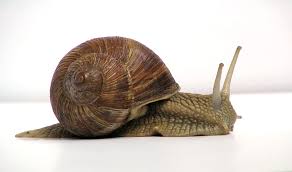
Snail Farming?
Snail Farming?

He is a great advocate of putting pretty much anything organic into his own compost heap (which he visits and cossets every day)- old clothing (cotton,wool and other natural fibres only of course), citrus peel (despite recommendations from some authorities to keep this out), wood and even ferrous metals- all will rot down in time he says, and add a wealth of nutrients back to your soil.

His zeal for the home-made stuff is matched by his dislike of pretty much any commercially manufactured composts. Most seed composts are not much good he says and likewise potting composts lack the oomph that can be had from your own material. And some commercial composts that use municipal – processed organic waste should be carefully inspected, he says, as he’s worried about what can get through the filtering processes. He cites an example of a lump of concrete in a bag he’d bought and is worried about small batteries that might leak mercury. Based on trials of his own versus the commercial compost rivals, his own seems to win every time.

I was particularly struck by his tip about how he sows and grows in pots using a layering of his own compost in the bottom 75% of a pot, topping off with a seed compost, in which he sows his seed- the plant, once germinated, is then able to seek out the richer mix of nutrients lower down. Commercial seed composts are generally low in nutrients as if they were richer this might prevent the germination of smaller seeds. Home-made (but sieved) compost can be used to sow and grow the larger, more robust seeds like melons, cucumbers and so on.

Bob is a self-confessed ‘compostaholic’, seeking out anything that can be added to his heap.

Along with human and animal hair and fur- and the contents of the vacuum cleaner bag – he sings the praises of bird feathers as a powerful source of nitrogen and therefore a wonderful activator in a compost heap (along with his own urine of course). And after several experiments he’s found that it’s OK to add bones to the heap as these too will rot down- but only if they’re ‘green’ and not cooked. The latter tend to splinter and will not easily rot down.

He also now looks on weeding as an exercise in gathering compost material – certainly a positive spin to what many see as an onerous task!

Pretty much any food scraps can be added to a compost heap

Again, perhaps controversially, he says putting food scraps, including meat and fish, on the heap is OK. These are often advised against because of the risk of attracting rats.

‘It’s likely that there is a rat somewhere within 15 feet of where we are sitting now’
he said last night, indicating that they are already around in the nooks and crannies of buildings as well as in the open. So, we don’t need to attract them , he says, as they are already there! But he does urge putting out poisoned bait alongside compost heaps that contain such material as a precaution.

The meeting also heard from David Hawkyard, County Coordinator of Master Composter, about the continued funding of the Norfolk Master Composter scheme for at least another year and plans to raise its profile to encourage more Norfolk households to compost at home. A wonderful ‘Compost Bin’ Cake – complete with very realistic apple cores and smiling worms – rounded off an enjoyable and thought- provoking evening.

NOTE TO SELF- get out and turn the compost heap!

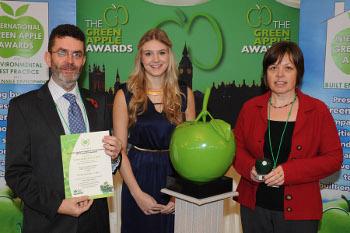
Norfolk Master Composters won a Green Apple Award

Useful links:

Norfolk Master Composter Facebook Page

Garden Organic composting advice

Old School Gardener

fred streeter

‘The soil,is a wonderful thing….treat it like a good old friend…give it the sort of nourishment it really appreciates…keep it in good heart – and it will reward you by growing almost anything your heart desires.’

Fred Streeter, the ‘Radio Gardener’

Old School Gardener

7 Ways to Save Our Soil

‘It takes as much as 500 years for topsoil to grow by 2cm so we need to grow our soils through innovative management techniques….’

Interesting article focused on agriculture, but with useful ideas for the home grower. By Louise Payton, Policy Officer at the Soil Association.

Old School Gardener

Winter Tares- good at protecting the soil, smothering weeds and maintaining nitrogen in the soil, once dug in. Picture from Garden Organic

At one of my recent ‘Grow Your Own’ classes, one of the participants raised an interesting question about Green Manures (GM’s).

He wondered if it was actually worth growing green manures as additional sources of nutrients. He reasoned that as they use up nutrients from the ground there isn’t any real gain in the nutrients avialable to follow on crops. Like me, he had also heard that legumes, (peas and beans) do fix nitrogen from the air and therefore their roots are a source of additional supplies of this if dug into the soil. And he also mentioned that deeper rooting plants like Comfrey tap into nutrients that wouldn’t otherwise be available to plants with shallower roots, so making these available via their leaves once composted, and also from a  ‘tea’ made from these and applied as a liquid feed. So is this all correct?

I decided to contact my colleagues at Garden Organic and ask for their advice on all  this and got a very interesting reply from Francis, their Horticultural Research Manager:

Green manures and nitrogen

Legumes, when the temperature is warm enough and they have the right bacteria, will fix the nitrogen they need from the atmosphere. It is very true, and seldom appreciated, that if a legume crop (eg beans) is harvested then most of this nitrogen is taken away and not left in the soil. However, if the legume is grown as a green manure and dug in whole (usually in an immature state) rather than being harvested then there will certainly be a net benefit; nitrogen fixation (directly or indirectly via animal manures) is the main source of nitrogen for agriculture and horticulture in the absence of artificial fertilisers.

Non leguminous plants can only take up nitrogen from the soil as inorganic ions (ammonium but mainly nitrate). The latter is very soluble in water and so easily washed out by the rain and so lost from the soil, contaminating drinking water and rivers etc. A lot of work was done (some by Garden Organic) to demonstrate that one of the best ways of preventing this was by growing winter green manures such as rye. When this is dug in the nitrogen they have taken up is mineralised to be made use of by following vegetable crops.

Green manures and other nutrients

Other nutrients (especially the metals such as K, Mg etc) are more tightly held on the surface of the soil particles and so are not easily leached so it is true that green manures are less important for keeping them in the soil. However, some do have specific effects (eg buckwheat can help mobilise phosphorus and chicory is deep rooting and so is a source of trace elements from the subsoil that may have been depleted nearer the surface). All green manures will add organic matter to the soil which helps with structure and also stimulates microbial activity, important for general nutrient cycling.”

So, the net result is that there are several good reasons for using GM’s over the winter, including maintaining nitrogen where this would leach away from unprotected soil, weed reduction, protecting soil structure, and the addition of organic matter to help moisture retention and soil structure. However, the legume contribution to soil fertility (assuming you grow these to produce food), is of questionable value if left in the soil and dug in. Better to add animal manure or your own compost to boost nitrogen levels.

Comfrey- reaches the nutrients other plants cannot reach...and you can out them into your soil via a (smelly) tea made from their leaves
Comfrey- reaches the nutrients other plants cannot reach…and you can out them into your soil via a (smelly) tea made from their leaves

Further information:

Garden Organic and Cotswold Seeds have produced a useful advice booklet on soil improvement. It’s available as a pdf to download for free at  ‘Sort out your Soil’

Linked articles:

Green Gold – 7 reasons for using green manures

Green Gold: Where and when to use Green Manures

Green Gold: Making the most of green manures

Green Gold: 12 plants for soil improvement

Old School Gardener

How to make leafmould

Leafmould bin and wheelbarrow

A downloadable factsheet from the good folk at Garden Organic- just click on the link above.

Old School Gardener

Soil that you can make pots from is a challenge...

Soil that you can make pots from is a challenge…

Having ‘good’ soil is one of the most important elements in successful gardening, though some plants are well adapted to and actually prefer ‘poor’ soils. A good soil is especially important for growing food crops. The terminology and approaches to creating and keeping good soil can be confusing, as this week’s questioner illustrates:

‘My garden seems to have a very heavy clay soil. i want to know what to do to make it easier to work with and I’ve heard the terms like structure, texture and tilth – can you explain what these terms mean and advise me on what to do to improve my soil?’

So writes Lise B. Lowe from Hereford. Well Lise, a good way of summarising the different terms is:

Texture = the mix of different types of soil particle

Structure = the spaces between these particles

Tilth = the quality of the structure

The basic types of soil texture

The basic types of soil texture

Texture

Garden soils contain particles of varying size. Clay particles are minute and tend to clog together (which is why your clay soil is so heavy and difficult to work). At the other end of the scale, gravel consists of very large particles; this type of soil drains very easily and so is known as a ‘hungry’ soil. Between these two extremes will be found comparatively small soil particles, known as silt, and larger particles of sand. The majority of soils consist of mixtures of the different sizded particles. The proportions of large, medium and small particles in a given soil determine its texture.

The components of soil structure

The components of soil structure

Structure

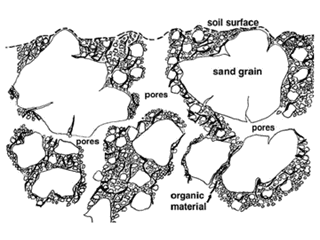
A soil has good structure if it contains a balanced range of particle sizes that provide air pockets of a size to accommodate the right amount of air and moisture for healthy plant growth; it drains well; and contains adequate humus (decayed organic material like leaves and stems which will not decay any further) and other organic material.

Tilth

When soil has been forked and raked and its clods have been broken down to a fine, workable structure it is said to have a good tilth. This quality is particularly important when small seeds are being sown, because it enables them to make good contact with the available soil moisture. Too fine a texture does not make a good tilth because such a soil’s surface will ‘cake’ (develop a hard surface or ‘pan’) in the first shower of rain. So working the soil (and adding different materials to it like organic matter, gravel , sand) produces different tilths, some suitable for seed sowing, others for establishing and growing on different plants etc.

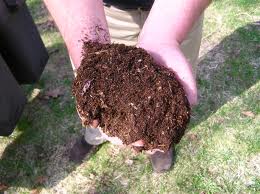
With your heavy clay soil the best approach is to add lots  (and lots) of organic material such as compost, humus, manure so as open up the structure of the soil, making cultivation much easier. Autumn is an ideal time to do this, as once you’ve dug over the soil and incorporated organic matter, the winter weather should help to further break down the larger clumps of soil, making it easier to cultivate in the spring. Regularly adding organic matter before you sow/plant and as a a mulch during the growing season will continue to help improve the structure of the soil and add nutrients too.

Adding compost or other organic material to the soil by digging in or as a mulch is a must...

Adding compost or other organic material to the soil by digging in or as a mulch is a must…

If, on the other hand, your soil, like mine, is on the sandy side, adding organic matter can help with moisture retention and add much-needed nutrients to an otherwise poor soil. I tend to add lower nutrient material such as leaf mould in the Autumn and richer material like compost and manure in the Spring so that the nutrients these contain have less time to wash away and are readily available when plants need them most, as they burst into life. However, if your soil is really in need of improvement then add any organic matter in the Autumn and give it time to break down and blend with the soil. Of course the alternative approach, where possible, is to plant things that are suited to your soil, even if it’s on the ‘poor’ side!

However, you’re probably on to a winner by adding organic material, whatever your soil!

Different soil types

Different soil types

Further information:

Checking your soil condition

Soil structure and formation

The genesis of soil structure

Feed your soil not your plants

Old School Gardener

If you’ve enjoyed reading this post and others on this blog, why not comment and join others by signing up for automatic updates via email (see side bar, above right ) or through an RSS feed (see top of page)?

Finding Nature

Nature Connectedness Research Blog by Prof. Miles Richardson

Norfolk Green Care Network

Connecting People with Nature

Discover WordPress

A daily selection of the best content published on WordPress, collected for you by humans who love to read.

Susan Rushton

Celebrating gardens, photography and a creative life

Unlocking Landscapes

Writing, photography and more by Daniel Greenwood

Alphabet Ravine

Lydia Rae Bush Poetry

TIME GENTS

Australian Pub Project, Established 2013

Vanha Talo Suomi

The Journey from Finnish Rintamamiestalo to Arboretum & Gardens

Marigolds and Gin

Because even in chaos, there’s always gin and a good story …

Bits & Tidbits

RANDOM BITS & MORE TIDBITS

Rambling in the Garden

.....and nurturing my soul

The Interpretation Game

Cultural Heritage and the Digital Economy

pbmGarden

Sense of place, purpose, rejuvenation and joy

SISSINGHURST GARDEN

Notes from the Gardeners...

Deep Green Permaculture

Connecting People to Nature, Empowering People to Live Sustainably

BloominBootiful

A girl and her garden :)