Tag Archive: pruning


'Tickling' the soil in the 'Black Garden'

‘Tickling’ the soil in the ‘Black Garden’

After two weeks away from Blickling, I was eager to see what progress had been made in the gardens. I wasn’t disappointed. Though some of the volunteer sessions had been rained off, they still seemed to have made a visual impact on the borders. And I gathered from Project Manager Mike, that there had also been major progress in the Walled Garden.

My first job was to prune some Buddleja in the borders established a few years ago which echo designs by the 1930’s Garden Designer Norah Lindsay, who made such an impact at Blickling. Then it was on to join my fellow volunteers in the ‘Black Garden’ where a lovely mix of dark flowering plants and dark foliage (including Black Mongo grass) combine to create a sombre mood.

Here the ladies were ‘tickling’ over the soil around the plants and especially in a border of tulips (‘Queen of Night’) and Iris, both just beginning their spring wake up. I pruned some Black Elders here to encourage a good show of foliage at head height. It was good to catch up on the news of the last couple of weeks and over lunch I was treated to a delicious piece of birthday cake (Almond and Apricot) brought in by one of the team. I must say I like this little ritual of bringing in cakes on your birthday, especially as I will hopefully be the beneficiary rather than the donor until next January!

Further afield in the gardens there are clear signs of the arrival of spring; beautiful patches of Crocus and Narcissus are just into their show times. And the major news in the walled garden is the arrival of the newly refurbished glasshouse. However, the former heating system- the massive hot water pipes are still in evidence- is not going to be restored. In future, I understand from Head Gardener Paul, the necessary heat will be supplied by a couple of fan heaters. He also tells me there’s hope of replacing the other glasshouse at some point too, funding permitting. I can’t wait to get into the newly restored structure and use its full potential.

Work was also underway to widen a major entrance path to the front lawns of the House and this was being used as a trial session using a new supply of metal path edging, a large quantity of which had been delivered for use in laying out the paths in the walled garden. Perhaps this is something I’ll be helping with in coming weeks.

For most of the day our gardening proceeded to a back drop of a buzzing in the air. No, not an early swarm of bees, but a ‘drone’ hanging in the sky like a bird of prey; filming the gardens for a new video that’s to go on the Blickling website.

'Under attack'- can you spot the drone?

‘Under attack’- can you spot the drone?

I also bumped into a paving contractor who was finishing off some repairs to a York Stone path at the entrance to the Gardens. He’d done a beautiful job, the new stone blending in perfectly with the older material. The contractor told me that the stone costs £120 per m2 plus VAT!

Further Information:

Blickling Hall website

Blickling Hall Facebook page

A 360 degree tour of Blickling Hall

Old School Gardener
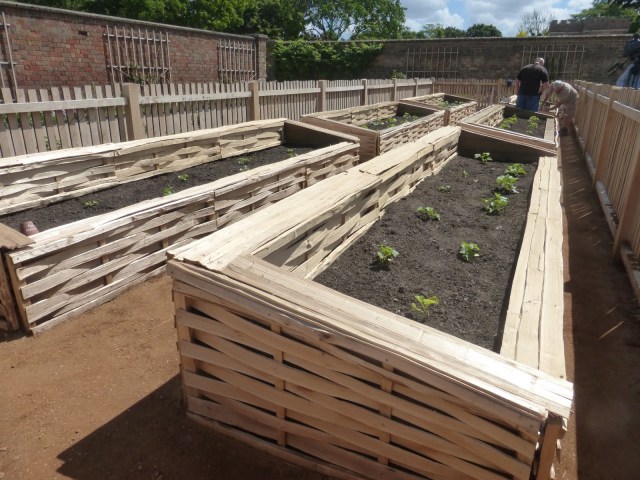
 

hot beds‘Naile yet and prune: sow all sorts of Kernels, towards ye later end Melons and rare seedes on the Hot-bed.’

John Evelyn 1686 (published 1932)

choisya-shrub-white-flowerHedging-

Instead of a formal hedge that needs trimming twice a year, use an informal border of compact evergreen shrubs which don’t need pruning. If you want a hedge , choose one that is not too vigourous for the chosen position and that is trouble free.

Further information:

RHS- Evergreen shrubs

RHS- Planting hedges

Shrub profiles

Hedging plants

Source: ‘Short Cuts to Great Gardens’ (Reader’s Digest 1999)

Old School Gardener


castello-sforzesco03Climbers-

Select climbers that need no tying to their supports. Avoid trained forms of plants that require pruning and tying in every year. also avoid climbers that need regular pruning to keep them healthy, productive and under control.

Further information:

RHS- Climbers and Wall shrubs for shade

Considering Climbers

How to choose the correct climbing plant

Source: ‘Short Cuts to Great Gardens’ (Reader’s Digest 1999)

Old School Gardener


TwoBudPruning‘In this moneth Graff (graft) in the cleft, decrease of the Moone; and towards the end thereof prune wall fruit, ’til the sap rises briskly, especially finish cutting your vines.’
John Evelyn 1686 (published 1932)

Further Information: Advice on growing vines

hobbit bonsai via green renaissance

Hobbit Bonsai via Green Renaissance

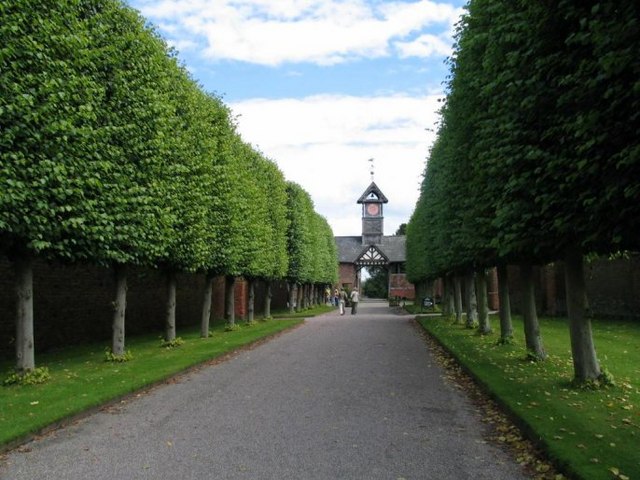
The Lime Walk at Arley Hall, Cheshire, an example of pleaching

It’s that time of year when the summer growth of hedges – at least those that need to be kept in trim- is being cut back. Joe Sloley from Hintlesham has an interesting opportunity with one of his hedges:

‘I have a row of overgrown lime trees which originally formed a screen and which I want to cut back and pleach. Are limes suitable for this kind of training and what are the details of the method?’

Pleaching or plashing (an early synonym) was common in gardens from late medieval times to the early eighteenth century. It means the interweaving of growing branches of trees and shrubs to form a hedge, living fence or arbour which provides a strong barrier, shaded paths or garden features.  The word ‘plexus’ derives from the same Latin root word ‘plecto’, meaning to weave or twist together. This craft had originally been developed by European farmers who used it to make their hedgerows more secure.

 "Walking in a thick pleached alley in mine orchard" - William Shakespeare, 'Much Ado About Nothing'

Pleached Trees and an underlying Yew hedge ay Dipley Mill, Hampshire, via  Angus Kirk

Pleached Trees and an underlying Yew hedge ay Dipley Mill, Hampshire, via
Angus Kirk

Today the term tends to be used to refer to what might be called the process of creating a ‘hedge on stilts’ where (usually smooth-barked) trees have their lower side growth removed and the higher growth is pruned and trained to form a continuous, elevated hedge.

Limes can certainly be pleached: they have pliable growth, and the shoots rapidly grow long enough to be woven in and out. Once the trees have been cut back to the height you require, the lower part of the trunks should be cleared of side growths. Then attach horizontal canes or wires to the trunks and across the gaps between the trees. Allow new shoots to grow out sideways; any which grow forwards or backwards should be pruned out completely. The side shoots are tied to the canes/ wires and when plentiful enough are interwoven with one another. As the shoots mature into branches, the canes or wires can be dispensed with and new growth trained amongst the old.

Pleaching in process

Pleaching in process

Tilia (lime) is the most commonly used tree for pleached walks; usually the red-twigged lime (Tilia platyphyllos ‘Rubra’).  Ash, beech, chestnut, hornbeam and plane can also be pleached, as can apples and pears. These can often be obtained ready trained.

Laburnum and Wisteria are favoured for pleached arbours and covered walks, especially tunnels, which show off the attractive flowers perfectly.  Use Wisteria grown from cuttings or raised by grafting, as it will flower more reliably and uniformly than seed-raised plants, and Laburnum x watereri ‘Vossii’ is a better choice than seed-raised L. anagyroides.

If you want to start a pleached hedge, select young, whippy plants that are more easily trained. Plant these out in winter and during the early years also prune in the winter when the plants are leafless and dormant. Train and tie new shoots in over the summer. Once pleached trees have reached their full extent, prune in the summer, pruning to shape the new growth and reduce the tree’s vigour.

Here’s a fascinating example of how pleaching could be used to ‘grow homes’!

fab-tree-hab

Further information:

Wikipedia

RHS guide to pleaching

Pleaching- the art of taming nature by Jardin Design

See through boundaries

Healthy Hedges with Crisp Edges

Old School Gardener

raspberriesSummer fruiting raspberries are just about coming to the end here at Old School Garden, but Lee Mason of Whetstone has had a disappointing harvest:

‘I planted some ‘Malling Promise’ raspberry canes back in February. They’ve grown pretty well, but the harvest has been disappointing and the new growth looks to be weak. Would a fertiliser feed help?’

Malling Promise canes (and any other summer fruiting raspberries for that matter), planted in February would have benefitted from cutting down in their first season to 100 mm (4 inches) high canes back in March to encourage strong new root development, as well as new canes for fruiting in the following season. In short, Lee, you’ve ‘got a bit ahead of yourself’!  I suggest that you cut down all growth next March. You will lose a season’s cropping, but the sacrifice will be worth it in the long run. Giving the canes a good mulch of organic matter or a general fertiliser like fish, blood and bone should also help, if applied next spring.

Raspberry flavour

Have you been disappointed with the flavour of your raspberries? Sulphate of potash is a good fertiliser to use  to enhance raspberry flavour, but only if the raspberry variety you grow has some natural flavour of it’s own. Varieties like Malling Admiral have little natural flavour, whereas Malling Jewel or Malling Promise are better.

Shrivelled fruit

Are your raspberries shrivelled up? This might be because you’ve been a little too enthusiastic in digging around the canes! Avoid digging over the ground near the roots, as raspberries are surface rooters and don’t like any cultivation anywhere near the canes. This breaks the roots- which can spread out quite a way- and as a result the plants will be unable to cope with the extra stress at fruiting time. If you restrict your cultivation to the use of a Dutch hoe and follow this up with a good deep mulch of organic matter in the spring this will do wonders for the quality of your fruit.

Cut down the canes of autumn fruiting raspberries in early March

Pruning Autumn (and Summer) raspberries

The first autumn raspberries are starting to appear here at Old School Garden (earlier than normal probably due to the mild winter and spring). It looks like we’ll have a good harvest. With these, the fruit comes on canes produced in the current season, so after fruiting (which can last into October) the old canes need to be cut back, but when is the best time to do this? Well not immediately after harvesting, apart from damaged or broken canes. It’s best to leave the rest until the following spring (early March), when all the remaining canes can be cut down almost to ground level. This ensures that some protection for the newly emerging canes is provided over winter. In July weak growth can be removed so that only the strongest canes are left for fruiting.

With summer fruiting varieties it’s best to cut down the canes that have fruited immediately after harvesting has finished and to select the strongest new canes and tie these into wire supports to protect them over winter. In spring the tops can be cut back by about 6 inches or alternatively these can be looped over and tied into the top wires.

Old School Gardener

If you’ve enjoyed reading this post and others on this blog, why not comment and join others by signing up for automatic updates via email (see side bar, above right ) or through an RSS feed (see top of page)?

The glorious Passion Flower

The glorious Passion Flower

Today’s question concern climbers that won’t flower, specifically Passion flowers and Wisteria. Jimmy Jones of Brighton asks:

‘I’ve a problem with two of my climbers. I have a Passion Flower growing over my front door which grows very vigourously, but produces no flowers or fruit. Likewise I bought a Wisteria a good few years ago and it did not grow for a long time. I fed it and recently it has begun to grow, but still has not flowered. Can you help please?’

The Passion Flower (Passiflora) needs one thing above all else- sunshine. So a south facing wall is really the only place where it will succeed in most parts of the U.K.- it must be open to the sun all day. If your location is right the other issue might be an over rich soil- this can produce a mass of foliage and stems at the expense of flowers, so if you’ve been feeding it perhaps lay off for a while and then make sure you use a feed rich in potassium (e.g.dilute tomato feed), which will encourage flowering.

As for the Wisteria, this is one of those plants that takes a fair while to come into flower. to make the wait even more agonising, it often grows very little in its first year or two. Help to induce flowering by shortening any unwanted long stems in July or August, cutting them back to about 30 cms or to 5 or 6 buds, and prune again in January, shortening all side shoots back to two or three buds, so concentrating the plant’s energy into a limited number of flowering buds. Again, an occasional feed with diluted tomato feed (or another feed rich in potassium) can also coax flowers from reluctant plants.

My own experience from transplanting a Wisteria seedling to my arbour in my Kitchen Garden, is that it’s taken a good five years for it to flower in any profusion, but I think the mild winter and warmish spring have also played a part- below are some pictures of how it looks today. I’m gradually training it over the top and sides of the arbour. You might also find  this article about using climbers in the garden useful.

Coincidentally my younger daughter (who lives in a basement apartment in the outskirts of Lisbon,Portugal), has just bought a Wisteria to go alongside a very successful Trachelospermum jasminoides she and her husband planted about 3 years ago (I’m told the fragrance just now is wonderful). I’ve suggested they train it along wires fixed to the walls of their patio garden and as it’s in a container to give it a fortnightly feed of tomato food to encourage flowering. Fingers crossed!

If you have any questions you’d liked answered then email me and I’ll do my best to feature your question and hopefully provide an answer!

My email address: nbold@btinternet.com, and put ‘GQT question’ in the subject line, please.

Old School Gardener

If you’ve enjoyed reading this post and others on this blog, why not comment and also join some other people and sign up for automatic updates via email (see side bar, above right ) or through an RSS feed (see top of page)?

A 'sub shrub'- Hypericum calycinum

A ‘sub shrub’- Hypericum calycinum

As spring approaches it’s around now that some shrubs should be pruned. This week’s question, from Celia MacKnyff of Cutaway in Yorkshire, asks:

‘What is a sub shrub and should I treat it differently to an ordinary shrub?’

Celia, a sub shrub is a plant that is woody at the base but has annual stems like those of a herbaceous plant. These stems die back most years to the older woody growth. The ‘Rose of Sharon’ (‘Great  St. John’s Wort’ or Hypericum calycinum) is a good example. The stems should be cut back every spring, not to ground level, but to the new shoots on the woodier stems at the bottom. I’ve been out in Old School Garden doing some pruning of these and other shrubs in the last few days and, not surprisingly as we’ve had such a mild winter to date, many of these stems look pretty healthy and are still carrying lots of green leaves. Nevertheless, if you want to benefit from fresh new growth, now’s the time to prune them.

Lavenders are also treated like sub shrubs

Lavenders are also treated like sub shrubs

Small, low shrubs such as Lavender, Periwinkle and Thyme, and many members of the family Ericaceae, such as Cranberries and small species of Erica, are often classed as sub shrubs. As far as pruning Lavender is concerned there are perhaps two schools of thought on this – either prune back the flowered shoots in autumn or spring. Doing this in the autumn is good in that there’s till time for new growth to be put on before winter, which helps maintain a nice compact shape to the plants over the colder months. However, if the weather is really cold you may suffer from some die back, so some people leave pruning until the spring. Nevertheless, small amounts of frosted growth can be tackled by further light pruning in the spring so that new vibrant growth is stimulated. Take your pick! In both cases pruning should be limited to the sappy top growth and should avoid cutting into the older woody stems.

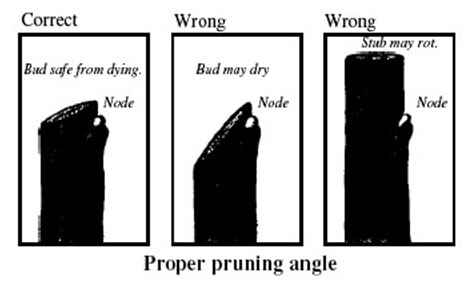
It's important to get the right pruning cut to avoid damaging shrubs and/or letting in disiease

It’s important to get the right pruning cut to avoid damaging shrubs and/or letting in disease

Whilst we’re talking about pruning sub shrubs it’s also worth remembering when to prune different flowering shrubs. There are two basic groups, one which flowers in summer and autumn (‘late flowerers’) on the tips of shoots that grew earlier the same season. This group includes Buddlejas, large flowered and cluster flowered Roses, Caryopteris and some later flowering Clematis hybrids (as well as sub shrubs like Hypericum). These should be pruned back hard to new buds in spring as they appear, so as to encourage development of these into strong new flowering shoots. I’ve tended to prune my Buddlejas a little later than the Hypericum, as late frosts may do damage to the new buds and therefore it’s a good insurance policy to wait until you can see healthy, strong buds to cut back to and the risk of really cold weather has passed. I’ll probaly prune mine later this month or in early March at the same time as I prune back my Dogwoods to encourage new stems that create great winter colour.

Buddlejas are 'Late flowerers' and need hard pruning in the spring

Buddlejas are ‘Late flowerers’ and need hard pruning in the spring

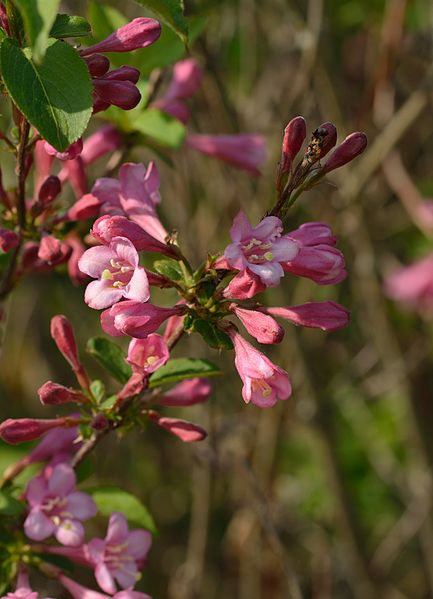
The second group (‘Early flowerers’), includes plants that flower in spring on shoots which grew the previous season and includes Philadelphus (‘Mock Orange’), Forsythias, flowering Currants (Ribes), Weigelas and the ‘Beauty Bush’ (Kolkwitzia). Though its is perhaps less important to prune these, it can be done to tidy up the shrub  immediately after flowering, by removing the branches that carried the flowers. This also encourages new growth to be put on alongside other shoots that have already grown but not flowered – these shoots must be left unpruned and will carry the flowers next season.

'Early flowerers' like Weigela, should be pruned after flowering

‘Early flowerers’ like Weigela, should be pruned after flowering

Old School Gardener

Finding Nature

Nature Connectedness Research Blog by Prof. Miles Richardson

Norfolk Green Care Network

Connecting People with Nature

Discover WordPress

A daily selection of the best content published on WordPress, collected for you by humans who love to read.

Susan Rushton

Celebrating gardens, photography and a creative life

Unlocking Landscapes

Writing, photography and more by Daniel Greenwood

Alphabet Ravine

Lydia Rae Bush Poetry

TIME GENTS

Australian Pub Project, Established 2013

Vanha Talo Suomi

The Journey from Finnish Rintamamiestalo to Arboretum & Gardens

Marigolds and Gin

Because even in chaos, there’s always gin and a good story …

Bits & Tidbits

RANDOM BITS & MORE TIDBITS

Rambling in the Garden

.....and nurturing my soul

The Interpretation Game

Cultural Heritage and the Digital Economy

pbmGarden

Sense of place, purpose, rejuvenation and joy

SISSINGHURST GARDEN

Notes from the Gardeners...

Deep Green Permaculture

Connecting People to Nature, Empowering People to Live Sustainably

BloominBootiful

A girl and her garden :)