
The Kitchen Garden in Old School Garden- my attempt to create something productive and also pleasant to look at.
This week’s ‘snippet on style’ looks at Productive Gardens- those where the emphasis is on growing food.
The layout of productive gardens tends to be orderly, with geometric beds separated by paths for ease of maintenance and access. Beds are often a maximum of 1.5 metres wide along two parallel sides to prevent the need for walking on the soil. Materials can vary but are often utilitarian rather than ornamental (unless the garden is intended as an ornamental kitchen garden or French ‘potager’). Concrete slabs, brick paths or even compacted earth are common surfaces. Planting varies seasonally and may rotate to reduce the risks of pests and diseases and to avoid sapping the soil by growing the same crops each year. Other features of productive gardens include:
-
raised beds
-
wide paths
-
rustic obelisks
-
planting in rows or blocks
-
simple if any decoration and with a practical angle- e.g. ornamental bird scarers

An attractive inter planting of different lettuce with chives along the edge of the bed

Raised beds enable a style of gardening which minimises the need for digging the plot, esepcially if large amounts of organic matter are added to the surface in the autumn and/or spring. They can be different heights too, so that for those with difficulty bending or in a wheelchair, the growing surface can be at a convenient level.

Vertical planting- such as fan or espalier trained fruit bushes – can be an efficient way of maximising growing space in productive gardens, and they add visual interest too.

Orderly food growing areas can be attractive in their own right

Productive gardens can also look good, if vegetables with different leaf shape and/or colour and companion plants are interplantedProductive gardens can also look good, if vegetables with different leaf shape and/or colour and companion plants are interplanted
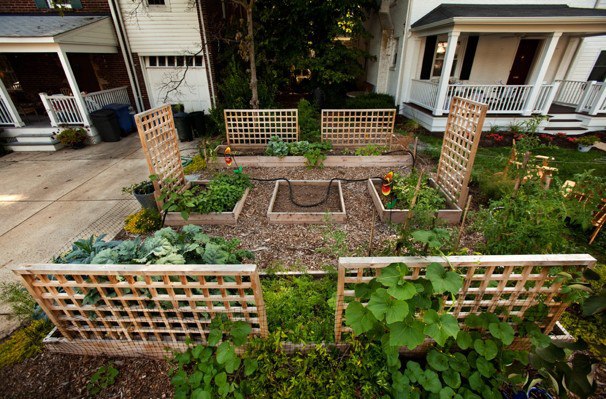
Here’s an example of a productive garden shared between two neighbours.Communal food growing also takes place at larger scales, for whole neighbourhoods in shared beds or in long established ‘allotments’ where each tenant gardens their own plot.
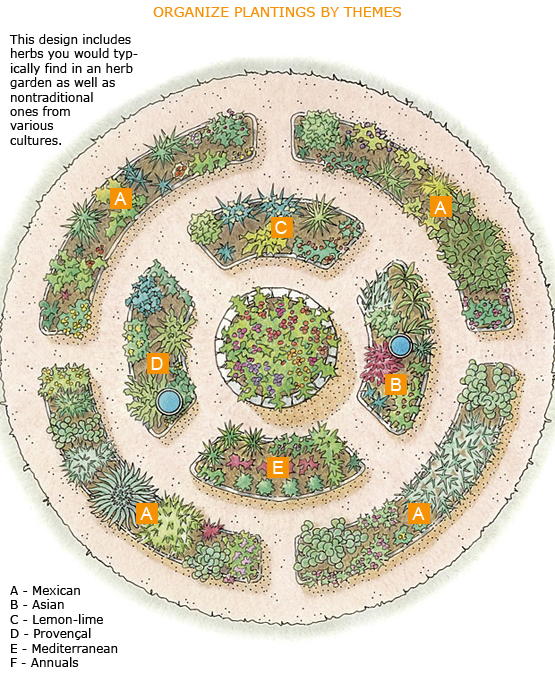
If you’re a keen cook and you have the space, you may want to create a special herb garden like this – or if not just find a sunny spot for a few fragrant favourites!
Let me know what you think makes a Productive style garden, and if you have some pictures I’d love to see them!
Links/ further information:
Garden Organic
RHS Campaign for School Gardening
Food for Life- school gardening
Growing communities
Space for food growing- free guide
Vertical veg
RHS- grow your own food
Food growing case studies – pdf
Other posts in the series:
Japanese Gardens
Country Gardens
Modernist Gardens
Formal Gardens
Mediterranean Gardens
Cottage gardens
Old School Gardener
If you’ve enjoyed reading this post and others on this blog, why not comment and join others by signing up for automatic updates via email (see side bar, above right ) or through an RSS feed (see top of page)?




 Old School Garden