Tag Archive: plants


What's Wrong with my Plant?- nutrient deficiencies at a glance

I came across a few pictures of unusual, but stylish planters most of which involve recycling – hope you enjoy them!

Old School Gardener

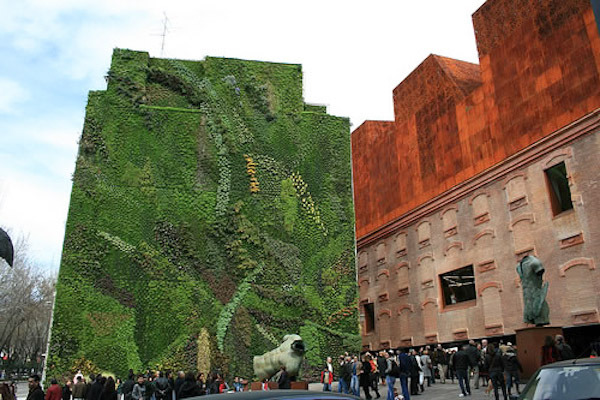
Deck the Walls

patrick-blanc-the-caixaforum-museum-madrid-spain

Click on the link for more examples of green walls.

Old School Gardener

nWh
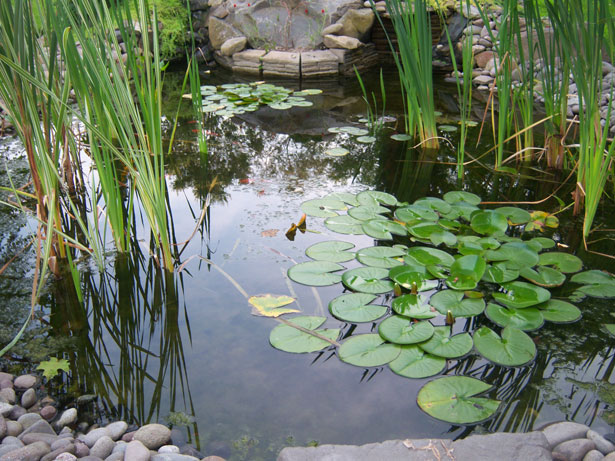
A pond is a fantastic resource for wildlife

A pond is a fantastic resource for wildlife

Most gardens play an important part in promoting biodiversity and maintaining ecosystems – vital if we are to have a sustainable planet. You might want to further enhance your garden’s ecological value, or perhaps promote wildlife to help pollinate plants (important if you want to gather your own seed and/or are growing your own food) and to help control unwanted pests.

Promoting wildlife is also a way or enriching the garden experience – just think about birdsong, the buzzing and gentle flitting of bees from flower to flower, the colourful displays of butterflies and the fascinating movements of the myriad insects and other ‘critters’ out there! So how can you ‘design’ wildlife into your garden and gardening activities?

Plant nectar- rich flowers to attract pollinators

Plant nectar- rich flowers to attract pollinators

First it’s important to recognise that you and your friends and family are also going to use the garden, so there’s no need to ‘go completely wild’ and make it unpleasant or difficult for humans to use the garden. In fact the best designed and managed gardens (and often the most beautiful) can also be the best for wildlife. These are the places where nature has not been allowed to take over.

You can ‘tip the balance in favour of wildlife’ in a number of ways. If you have a large garden you can adopt a ‘conservation’ approach and set out separate areas to attract and support different types of wildlife. If your garden is smaller, you can provide a range of features for the wildlife species you want to encourage. This approach is especially important if you want to actively harness nature to control pests.

Bird feeders need to be out of the reach of cats!

Bird feeders need to be out of the reach of cats!

So what can you do?

  • Create habitats that mimic those in nature and complement the local range outside the garden

  • Provide natural shelter, nesting, food and drink –  important as ‘stopping off’ points for temporary visitors to your garden as well as for longer term residents

  • Aim to increase diversity- and recognise that this is going to be a gradual process

  • Build in some key features, such as…..

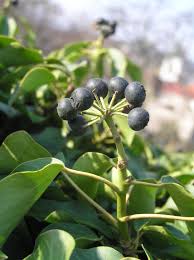
Climbign planst like Ivy provide a valuable food source for wildlife

Climbing plants like Ivy provide a valuable food source for wildlife

  1. Native plants- these act as a host to many more species than non native plants

  2. Wildflowers, grasses, weeds- these attract butterflies and many other insects. Nettles are important hosts for species that aid a healthy garden; butterflies and ladybirds. Maybe you can grow these in a container if you don’t have the space to leave patch in the garden?

  3. Nectar and pollen rich flowering plants- these  feed butterflies, bees, hoverflies etc.- which in turn attract birds

  4. Trees, flowering and fruiting shrubs- these provide food and shelter for birds

  5. Climbing plants- they provide food and cover for birds and food for insects and butterflies. Examples include Ivy, honeysuckle, quince, wisteria, clematis..

  6. Hedges- these give food and shelter for wildlife (e.g hedgehogs, voles and shrews), food and nesting for birds- where it’s practical choose to install a hedge rather than a fence

  7. Water- a pond brings masses of creatures to drink as well as attracting resident pond life

  8. Wood piles – insects colonise the decaying wood, attracting spiders and birds; beetles lay grubs; toads and hedgehogs hibernate underneath; slow worms use it as home (and these prey on slugs)

  9. Compost heap – provides both food for the soil and home for minute insects and other ‘mini beasts’ which feed birds, hedgehogs, toads. It also acts as a possible nesting place for hedgehogs, toads and slow worms.

  10. Bird and Bat boxes, tables, feeders and baths- put these up in secluded and sheltered spots out of full sun – and out of the reach of cats! Birds need extra food in winter. provide a range of foods according to the species you want to attract. Birds need to drink and bathe to keep their plumage in good order- even in winter, so keep birdbaths unfrozen

  11. Stones and walls- toads, newts and female frogs usually spend winter on land, under rockery stones (or in a log pile). Beetles, spiders, insects live in nooks and crannies

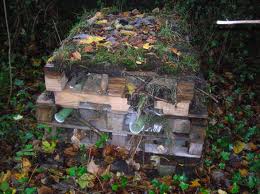
  12. Bug hotels’ can provide a ‘man made’ substitute for the above, and are good fun to make with children.

'Bug Hotels' can provide a 'Des Res' for many insects and other critters

‘Bug Hotels’ can provide a ‘Des Res’ for many insects and other critters

Further information: A range of useful wildlife gardening guides

Old School Gardener

Depending on the shade amd soil conditions many plants can be grown under trees

This week’s question is one that affects many gardens- the impact of trees on other planting. Jenny Bough from Gateshead asks;

‘Part of my garden is in shade for most of the day because of trees in a neighbour’s garden. Since I cannot remove the trees, what can I do to improve the conditions for my plants? And what plants will grow well?’

If the trees grow close to your garden the shade will probably be dense, and the soil may well be permanently moist from overhead drip. If so, you can improve the drainage by adding coarse grit to the soil under the tree and plant moisture- and shade- loving plants such as hardy Ferns, Primula species, Violets and Periwinkles. If you have lighter or more dappled shade then there are plants which like these conditions: Lilies, hostas, Azaleas, Rhododendrons and Blue Poppy (Mecanopsis) for example.

Epimedium- a good choice for dry shade

If the tree is close to your boundary, or indeed within your garden, and its roots make the immediate area very dry and shady, then plants such as dwarf Cyclamen (C. hederifolium), small-leaved Ivies and Epimedium should do well. You could also try to dig out a few pockets where bulbs can be planted. If you can mix plenty of compost or other organic matter  into the soil then many more options are open to you as the soil will be relatively nutritious and will retain moisture better. The London Orchard Project have added a helpful piece of advice:

‘Wait until the tree has established before any underplanting is carried out. Then be sure to plant perennials,  as (these), including trees, prefer a fungally dominated soil, whereas annuals prefer bacterial domination. Also, disturbing the shallow feeder roots of the tree can be minimised by not having to replant/remove annuals.’

Some trees produce roots close to or above the soil surface, which then send up new shoots or ‘suckers’; e.g Poplars. If you want to grow grass over these root runs, once again the best approach is to ensure a good depth of topsoil above the roots and so give the grass a good layer of soil to grow on and reduce the chances of suckers appearing. Another approach- and one I’ve used in Old School Garden under a large Black Poplar tree- is to cover the immediate surrounds of the tree with landscaping fabric and then use a decorative aggregate or other material as a covering (I’ve used purple slate). This has reduced, but not entirely removed the problem of suckers appearing. Alternatively, there’s nothing else for it but to keep pruning/mowing off the shoots as they come up. This is best done in early summer after the tree has put on its initial growth spurt- doing it in the dormant season will only encourage more suckers to appear in the new season.

Some trees (in this case a Maple) will send out shallow or surface level roots from which new shoots or 'suckers' will grow
Some trees (in this case a Maple) will send out shallow or surface level roots from which new shoots or ‘suckers’ will grow

Further information: a useful guide to tree care

Old School Gardener

PicPost: Doing Cartwheels

Photo from Grow Veg

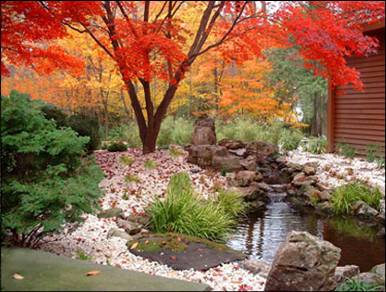
Maples (Acers) provide glorious autumn colour in this Japanese style garden

Maples (Acers) provide glorious autumn colour in this Japanese style garden

Today’s ‘snippet’ on different garden styles focuses on a very distinctive form, ‘Japanese Gardens’.

Japanese gardens have a balance which is achieved through the careful placing of objects and plants of various sizes, forms and textures. These are placed asymmetrically around the garden and are often used in contrast – rough and smooth, vertical and horizontal, hard and soft. These gardens often create miniature idealized landscapes, frequently in a highly abstract and stylised way. Pruning and garden layout are usually considered to be more important than the plants themselves which are used sparingly and with restricted use of both different species and colours.

Historically, there are four distinctive types of Japanese garden:

  1. Rock Gardens (karesansui) or Zen Gardens, which are meditation gardens where white sand replaces water

  2. Simple, rustic gardens (roji)  with tea houses where the Japanese Tea ceremony is conducted

  3. Promenade or Stroll Gardens (kaiyū-shiki-teien), where the visitor follows a path around the garden to see carefully composed landscapes

  4. Courtyard Gardens (tsubo-niwa)

Other key features of Japanese Gardens include:

  • Typical Japanese plants – e.g. Azalea, Camellia, Bamboo, Cherry (blossom), Chrysanthemum, Fatsia japonica, Irises, Japanese Quince and Plum, Maples, Lotus, Peony, Wisteria and moss, used as ground/stone cover

  • Water features and pools

  • Symbolic ornaments

  • Gravel and rocks

  • Bamboo fencing

  • Stepping stones


Bonsai- literally meaning ‘plantings in tray’ – is a Japanese art form using miniature trees grown in containers. The purposes of bonsai are primarily contemplation (for the viewer) and the pleasant exercise of effort and ingenuity (for the grower). Bonsai is not intended for food production, medicine, or for creating domestic or park-size gardens or landscapes, though some people display their bonsai specimens in garden settings, as this video shows.

Let me know what you think makes a Japanese style garden, and if you have some pictures I’d love to see them!

Further information:

Wikipedia – Japanese Gardens

Pictures of popular Japanese plants

Japanese plants

Japanese Garden Database

Japanese Garden history etc.

Wikipedia- Bonsai

Other posts in the series:

Country Gardens

Modernist Gardens

Formal Gardens

Mediterranean Gardens

Cottage gardens

Old School Gardener

If you’ve enjoyed reading this post and others on this blog, why not comment and join others by signing up for automatic updates via email (see side bar, above right ) or through an RSS feed (see top of page)?

PicPost: OTT

This beautiful tropical garden is  located next to the Palace of Belém (the Portuguese Presidential residence).  The 15 acre garden is a charming, yet often overlooked spot that has maintained a number of ponds, towering palm trees, and many hundreds of species of tropical plants that it had when it was created in the early 1900’s.  The Tropical Botanical Gardens (Jardim-Museu Agrícola Tropical) are also known as ‘Jardim do Ultramar’ (‘Garden of the Colonies beyond the Sea’) or ‘Jardim das Colónias’ (‘Garden of the Colonies’) as most of the plants come from old Portuguese colonies.

The entrance is an avenue created by huge California Fan palms and Mexican Fan palms, and on each side you can see several ‘living fossils’ – species that have not suffered any mutations for millions of years. On the left, Ginkgos, Dawn Redwood and Monkey-puzzle trees go back to the age of the dinosaurs. Close to the lake you can see Sago palms, native from Japan, and sacred figs from south east Asia, also known as the Buda tree. There is an oriental garden that shows off the Chinese Hibiscus.

Created in 1906 by royal decree (King D. Carlos I), and located in the grounds of a former zoo, it was opened in 1912, the presence of natural water influencing the choice of location. It sits on the slopes overlooking the River Tagus in Belem, one of the most interesting of Lisbon’s districts. It is one of three botanical gardens in the Lisbon area, the others being the Ajuda Botanical Gardens (also in Belem) and the Botanical Gardens near the Science Museum in central Lisbon.

The garden has rare tropical and subtropical trees and plants (many of them endangered species) from all over the world, such as Dragon Trees from the Canary and Madeira Islands and Brazilian Coral Trees. Most of them are labeled, so a visit here can also be a learning experience. It is a tranquil place regularly visited by leading international scientists and botanists. Its scientific work continues today and in its grounds you will find a seed bank, greenhouses, in-vitro culture laboratory and a xylarium (wood collection).

A highlight is the Macau Garden complete with mini pagoda, where bamboo rustles and a cool stream trickles. Young children love to clamber over the gnarled roots of a Banyan tree and spot the waddling ducks and geese.

It is a joy to amble along its palm – lined avenues and discover the grottos and ponds, the oriental garden and the topiary accompanied by the friendly birds. A welcome, peaceful, shady retreat on a sweltering summer’s day!

Other articles about Portuguese gardens:

Portuguese Gardens: Estrela Gardens, Lisbon

Oranges and Azulejos: Portuguese Heritage Gardens

Sources and further information:

Go Lisbon

aportugalattraction

Old School Gardener

If you’ve enjoyed reading this post and others on this blog, why not comment and join others by signing up for automatic updates via email (see side bar, above right ) or through an RSS feed (see top of page)?

This is the first of a series trying to capture the essence of different garden styles. ‘Style Counsel’ will be a series of snippets – just a few words and images. I’d love to hear your comments on these and please add your own thoughts on what makes up these different styles – and if you have some pictures to add that’s even better. So, what is a Cottage Garden?

Cottage gardens have layouts that are simple and often geometric, though many have a more sinuous layout with twists and turns, especially as the garden moves further away from the cottage /house, where more natural, wilder planting can prevail.

Key characteristics include:

  • Profuse planting featuring many herbaceous perennials such as Delphinium, Stocks, Hollyhock, Lupin, ‘signature’ annuals such as Sweet Peas and Marigolds and a few evergreen shrubs for winter interest and structure
  • Rustic furniture made out of rough timber
  • ‘Roses round the door’, and on arbours or other structures
  • Weathered paths often made from old bricks or rammed earth with simple, if any, edging tiles or boards
  • Vegetables, fruit and herbs often mixed in with the flowers

cottage garden 1 cottage garden 2 cottage garden 3

Old School Gardener

If you’ve enjoyed reading this post and others on this blog, why not comment and join others by signing up for automatic updates via email (see side bar, above right ) or through an RSS feed (see top of page)?

Finding Nature

Nature Connectedness Research Blog by Prof. Miles Richardson

Norfolk Green Care Network

Connecting People with Nature

Discover WordPress

A daily selection of the best content published on WordPress, collected for you by humans who love to read.

Susan Rushton

Celebrating gardens, photography and a creative life

Unlocking Landscapes

Writing, photography and more by Daniel Greenwood

Alphabet Ravine

Lydia Rae Bush Poetry

TIME GENTS

Australian Pub Project, Established 2013

Vanha Talo Suomi

The Journey from Finnish Rintamamiestalo to Arboretum & Gardens

Marigolds and Gin

Because even in chaos, there’s always gin and a good story …

Bits & Tidbits

RANDOM BITS & MORE TIDBITS

Rambling in the Garden

.....and nurturing my soul

The Interpretation Game

Cultural Heritage and the Digital Economy

pbmGarden

Sense of place, purpose, rejuvenation and joy

SISSINGHURST GARDEN

Notes from the Gardeners...

Deep Green Permaculture

Connecting People to Nature, Empowering People to Live Sustainably

BloominBootiful

A girl and her garden :)