Tag Archive: plants


‘At the heart of this serene rural estate is Mottisfont Abbey, set in glorious grounds alongside the fast-flowing River Test.

There are many layers of history for visitors to explore, including the Gothic remains of the original 13th-century Augustinian priory.

In the mid-20th century the final private owner, society hostess and patron of the arts, Maud Russell, used the Abbey as a base for her racy and intriguing life.

The River Test is one of the finest chalk streams in the world and the walled gardens house the National Collection of old-fashioned roses.’

On a recent trip to southern England I visited Mottisfont Abbey, Hampshire. Now run by the National Trust this house and gardens is famous for its roses – alas I will need to return in the summer to appreciate them! It also has a rather good Winter Garden and because of the bright sunshine I was able to capture some attractive images of the gardens and grounds. I hope you enjoy them.

Old School Gardener

birch

‘Anglesey Abbey is a country house, formerly a priory, in the village of Lode, 512 miles (8.9 km) northeast of Cambridge, England. The house and its grounds are owned by the National Trust and are open to the public as part of the Anglesey Abbey, Garden & Lode Mill property, although some parts remain the private home of the Fairhaven family.

The 98 acres (400,000 m²) of landscaped grounds are divided into a number of walks and gardens, with classical statuary, topiary and flowerbeds. The grounds were laid out in an 18th-century style by the estate’s last private owner, the 1st Baron Fairhaven, in the 1930s. A large pool, the Quarry Pool, is believed to be the site of a 19th-century coprolite mine. Lode Water Mill, dating from the 18th century was restored to working condition in 1982 and now sells flour to visitors.’

Source and further information:

Wikipedia

National Trust website

wisley cacti

‘The flagship garden of the Royal Horticultural Society, Wisley, in Surrey, England captures the imagination with richly planted borders, luscious rose gardens and the state-of-the-art Glasshouse.Gifted to the Society in 1903, Wisley has evolved over time into a world-class garden.In the trials fields, the finest flowers and vegetables are identified from the countless new introductions. Elsewhere in the garden, cultivation techniques are tried and tested, and a series of model gardens answers the needs of a variety of conditions and circumstances.’

Source: RHS website

Old School Gardener

A metal arbour with a rambling rose

A metal arbour with a rambling rose

Arbours and pergolas can be important elements in a garden, adding visual interest, especially height, and functional value as shading or seating.

Arbour used to refer to an orchard, garden or lawn, but today its use tends to be limited to  a leafy glade or bower shaded by trees, vines, shrubs, etc. – especially when trained about a trellis. More precisely ‘a shady garden alcove with the sides and roof formed by trees or climbing plants trained over a framework’ (Oxford English Dictionary).This alcove may often contain a seat.

Pergola  is the term given to a horizontal trellis or framework, supported on posts, that carries climbing plants and may form a covered walk, though sometimes it is also used to describe the same sort of structure as an arbour. Today pergolas are also used to provide an overhanging structure for an entertaining/ dining area such as a patio or terrace.

So why have these structures? 

  • Provide privacy and shade

  • Divide up areas of the garden or/and provide an interesting route along a pathway or focal point

  • Provide support for plants

  • Provide a decorative structure 

A flower-covered pergola in the Canary Islands

A flower-covered pergola in the Canary Islands

A painted wooden arbour

A painted wooden arbour

Here are seven tips to make the best use of these structures in your garden:

1. Right design the design of the structure needs to complement the overall style of the garden, whether ‘cottage’, contemporary or classical etc. The use of curves or straight lines in the design can be especially important here, with curves flowing more easily in a romantic, informal style and straight lines often better in more formal settings.

2. Right materials whether wood, metal, brick or stone or a combination of these, it is again important to complement other materials in the garden/house and reinforce and harmonise with the overall style.

3. Right construction – a solid installation as well as overall design is important to ensure the structure is stable in winds etc. Once the structure becomes laden with foliage it can act as a significant wind barrier so needs to withstand the forces this will bring.

4. Right plants – again the choice of plants to climb over your arbour or pergola is important both as a way of reinforcing the garden’s style and because of the implications for ongoing maintenance – a vigorous rambling rose like ‘Kiftsgate’ could become a night mare unless you are prepared to prune and tie it in at the right time of the year. Choose plants with the ultimate height/length that is suitable for the structure or you could find that the structure looks under planted or alternatively is overwhelmed with foliage.

A modern metal pergola

A modern metal pergola

5. Right position these structures need to be placed within the garden – possibly to provide a focal point and informal seating area away from the house (arbour), an interesting tunnel through which to walk within the garden, so ‘framing the journey’ or alternatively close to the house over a patio (pergola). They also need to be positioned to gain the right level of light and shelter for the plants you envisage growing up them. And if you have an arbour with a seat think about what view you want to be looking at from it.

Pergola- the Old Vicarage, East Ruston

Pergola- the Old Vicarage, East Ruston

6. Right flooring–  again think about the material you use underneath the structure. It should be durable and harmonise with the path/terrace/patio materials in the wider garden, though it can contrast with these to help define the space covered by the arbour or pergola.

7. Right maintenance – keep an eye on your garden structures and look after them – re-coat painted wood regularly, check screws,nuts and bolts for rust, loosening or weakening joints.

Further information:

Great Designs for a garden party

Better Homes & Gardens examples of pergolas

Pergola plans for Free

58,779 garden pergola Home Design Photos

Old School Gardener

If you’ve enjoyed reading this post and others on this blog, why not comment and join others by signing up for automatic updates via email (see side bar, above right ) or through an RSS feed (see top of page)?

Image040

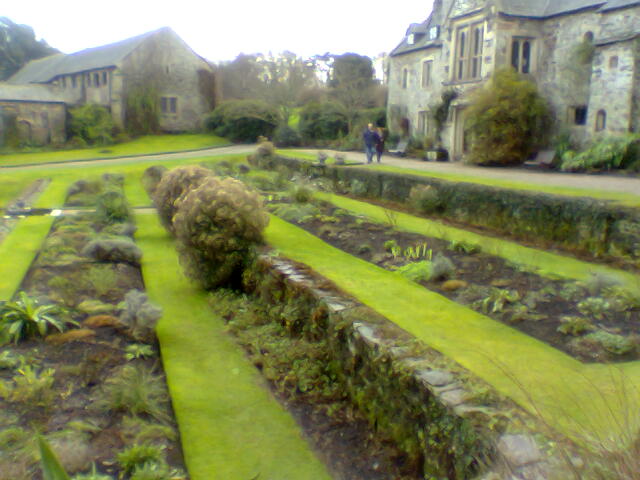
Cotehele House in Cornwall, England, is a ‘ Tudor house with many stories and legends, festooned with tapestries and adorned with textiles, arms and armour, pewter, brass and old oak furniture; a magical experience as little has changed over the years.Outside, explore the formally planted terraces, or lose yourself in the Valley Garden, which includes a medieval stewpond and dovecote. Seek tranquillity in the Upper Garden or visit the two orchards planted with local apples and cherries.Cotehele Quay is the home of the restored Tamar sailing barge ‘Shamrock’ and gateway to a wider estate. The Discovery Centre tells the story of the Tamar Valley.’

Source and further information:

National Trust Website

Wikipedia

Old School Gardener


The entrance to the workhouse as it looked in the early 1900's - the well house stands next to the person to the rear

The entrance to the workhouse as it looked in the early 1900’s – the well house stands next to the person (gardener?) to the rear

The former grand entrance of the Gressenhall Workhouse now performs a very different function. The once ornamental gardens and driveway have given way to a busy hub for this Norfolk Museum’s outdoor events.

As can be seen from the old photograph the main approach to the Workhouse was once a rather grand affair – a heart-shaped island of formal lawns and borders surrounded by a circular drive.  To the front, huge iron gates and a much smaller wooden door provided the entrances from the forbidding outer wall of the complex. The smaller door was the main pedestrian entrance to the workhouse being next to the porter’s lodge, the man who controlled the arrival and departure of Workhouse inmates. This door today still carries the solid metal knocker shaped into a clasped hand around a metal bar – a hint of the prison-like existence to come for the new inmates! They must have entered here with very mixed emotions – relief at having somewhere to get a square(ish) meal and a warm (ish) bed, mixed with guilt at not being able to fend for their families and anxiety about the harsh regime they were entering.

The 'Yew Tree border' in front of the chapel- before the Yews were reduced

The ‘Yew Tree border’ in front of the chapel- before the Yews were reduced

Towards the main building, but long since demolished, once stood a small building enclosing the Workhouse well (still visible in the old photograph) and the front of the 18th century main building once carried a magnificent Wisteria clambering up and along the warm red brickwork. This was, apparently, cut down to the ground by an over – enthusiastic work placement trainee about thirty years ago! A small rooted area remains and is being carefully trained up the walls once more, in the hope of restoring this once glorious feature. To the side the workhouse chapel is fronted by a small border which is dominated by two Yews and a cherry tree with spring bulbs and other under – planting. Recently these Yews were reduced in width in an attempt to provide a more open, sunny site for the other planting (and increase the width of the adjacent paths). The hard cut – back has improved the shape and balance of the border whilst not harming the Yews, where new growth has begun.
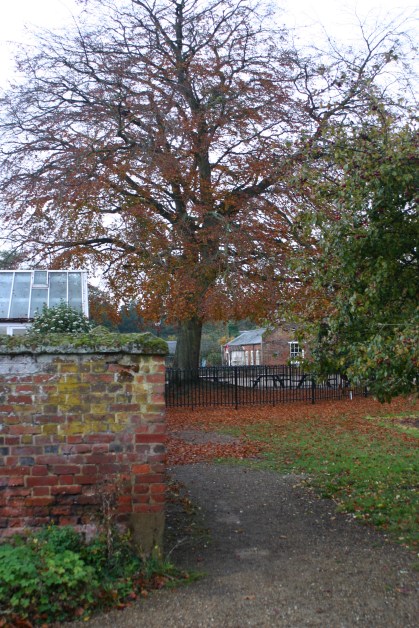
The magnificent Copper Beech Tree in autumn

The magnificent Copper Beech Tree in autumn

To the right of the main approach sits a majestic old Copper Beech tree (which gave its name to the Old People’s Home that succeeded the workhouse after the 2nd World war – ‘Beech House’). This area was originally sub divided by walls into exercise yards and a playground for the adjoining boys school, and in later years for those in the nearby infirmary (and featuring two revolving wooden tuberculosis pavilions). There is also an avenue of beech trees on the approach to the Workhouse believed to be 150 years old.

There is some evidence that the southern section of this area, adjoining the modern café was laid out as a formal ‘garden’ but the historical accuracy of this is uncertain. Today this area houses a semi – permanent marquee used for the many events now taking place at the Museum.  A large expanse of grass (useful for picnicking for the Museum’s many summer visitors) is surrounded by areas of planting including an isolated Crab Apple tree, planted in more recent years as a memorial to a former member of the Norfolk Archaeology Department (also housed on the site).

There is also a long south – facing border of mixed shrubs adjoining the walls of the former workhouse, some of which are now rather large for their position adjacent to the building. Others – such as several clumps of Boston Ivy – clamber up the walls and are vigorous enough to get under the eaves and into the roof! Recently these shrubs have been pruned to try to restore their scale and shape as well as encouraging new growth, with some success. And spring bulbs also provide splashes of colour underneath the mainly evergreen shrubs. But a perennial problem is the rabbit population which have burrows in this border and which also occasionally escape into some of the adjoining gardens to wreak havoc!
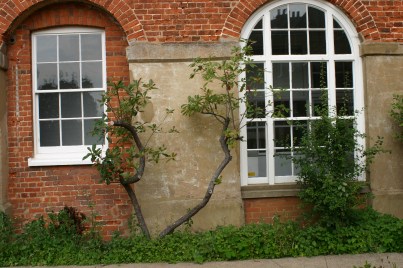
Shrubs in front of the southern wall of the old Workhouse- showing the arcading that was once open

Shrubs in front of the southern wall of the old Workhouse- showing the arcading that was once open

The walls here still show the evidence of the (once open) arcading that sheltered individual ‘cottages’ for families living in the workhouse. This was before its daily routine became harsher in the mid 19th century, when inmates were divided by sex and age and so families were split up.
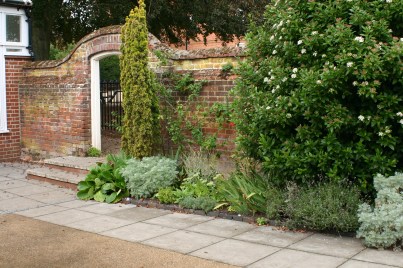
One of the borders in the Cafe Garden

One of the borders in the Cafe Garden

Today’s cafe building was once a  fever or isolation ward commonly known as the ‘itch ward’. More recently this was the Museum’s Education Centre, for which a garden was laid out by volunteers in the 1980’s. This was further remodelled into the current space, presumably upon creation of the café and now houses a  delightful, smaller courtyard garden of mixed borders with picnic tables.

Today's courtyard on an event day at the Museum

Today’s courtyard on an event day at the Museum

Today, the large entrance courtyard and its adjoining spaces provide a great setting for the main workhouse buildings and perform an important role as a thoroughfare for the Museum’s visitors as they explore the surrounding gardens and on event days when tents, stalls and other temporary exhibits spring up into a hub of activity.

Other posts in this series:

Gypsies, tramps and thieves: garden where once poor trod at Norfolk Museum

Cottage garden recreates 1930’s at Norfolk Museum

Old Workhouse Garden a wildlife oasis at Norfolk Museum

Unique heritage gardens at Norfolk museum

Old School Gardener

If you’ve enjoyed reading this post and others on this blog, why not comment and join others by signing up for automatic updates via email (see side bar, above right ) or through an RSS feed (see top of page)?

ivy

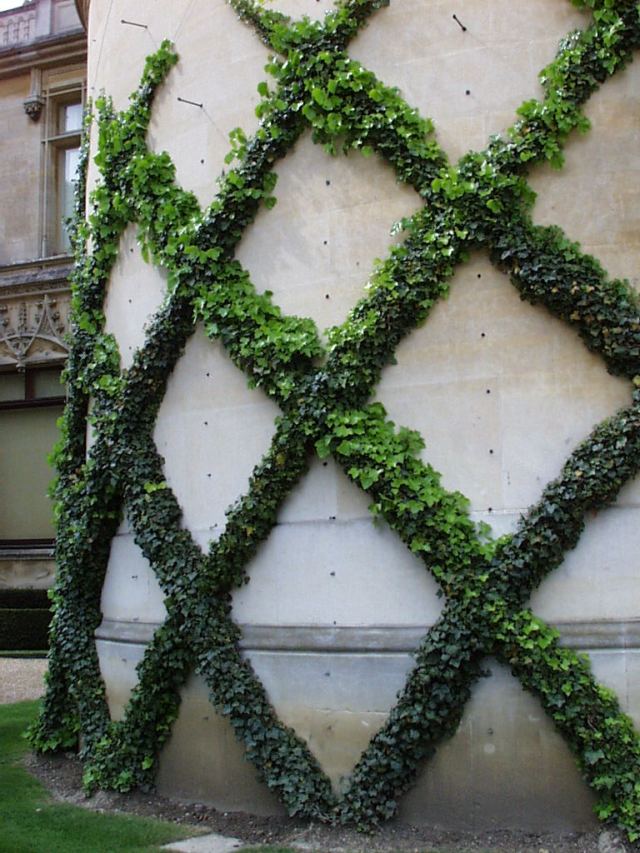
Waddesdon Manor was built by Baron Ferdinand de Rothschild in 1874 to display his outstanding collection of art treasures and to entertain the fashionable world.The 45 rooms on view combine the highest quality French furniture and decorative arts from the 18th century with superb English portraits and Dutch Old Masters. The Victorian garden is considered one of the finest in Britain with its parterre, seasonal displays, fountains and statuary. At its heart lies the aviary, stocked with species once part of Baron Ferdinand’s collection.’

Source and further information:

National Trust Website

Wikipedia

Waddesdon Manor Website

Old School Gardener

PIC00019

‘The Royal Botanic Gardens, Kew, usually referred to as Kew Gardens, comprises 121 hectares of gardens and botanical glasshouses between Richmond and Kew in southwest London, England. “The Royal Botanic Gardens, Kew” and the brand name “Kew” are also used as umbrella terms for the institution that runs both the gardens at Kew and Wakehurst Place gardens in Sussex.

The Royal Botanic Gardens, Kew… is an internationally important botanical research and education institution with 700 staff and an income of £56 million for the year ended 31 March 2008, as well as a visitor attraction receiving almost two million visits in that year. Created in 1759, the gardens celebrated their 250th anniversary in 2009.

The Gardens.. contain the world’s largest collection of living plants… The living collections inlcude more than 30,000 different kinds of plants, while the herbarium, which is one of the largest in the world, has over seven million preserved plant specimens. The library contains more than 750,000 volumes, and the illustrations collection contains more than 175,000 prints and drawings of plants. The Kew site includes four Grade I listd buildings and 36 Grade II listed structures in an internationally significant landscape.’

Source : Wikipedia

Old School Gardener

Winter Grasses

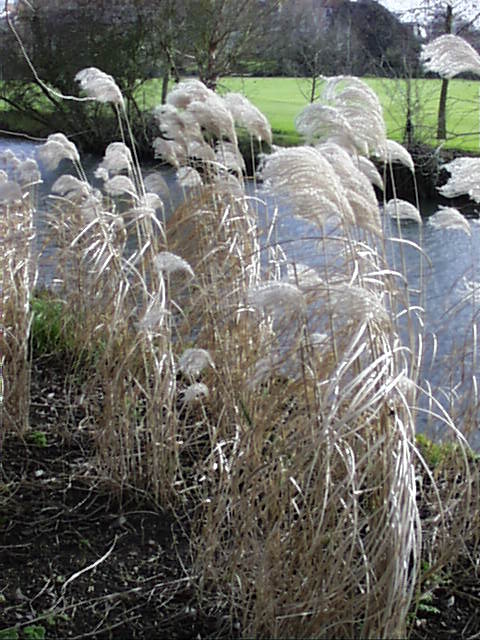
Oxford Botanic Garden  ‘was founded in 1621 with a mission “To promote the furtherance of learning and to glorify nature”. In the almost 400 years since then, although many people and plants have been involved in the history of the Garden we continue to educate as many people as possible about the importance of plants, to help conserve plants around the world and to support teaching and research at the University and beyond.

Visit inspiring herbaceous borders, glasshouses that take you around the World or simply relax in the oldest Botanic Garden in Britain. The Botanic Garden is the most compact, yet diverse collection of plants in the World right in the heart of the city centre and is open throughout the year for you to visit and enjoy.’

Source: Oxford Botanic Garden Website

Old School Gardener

PIC00056

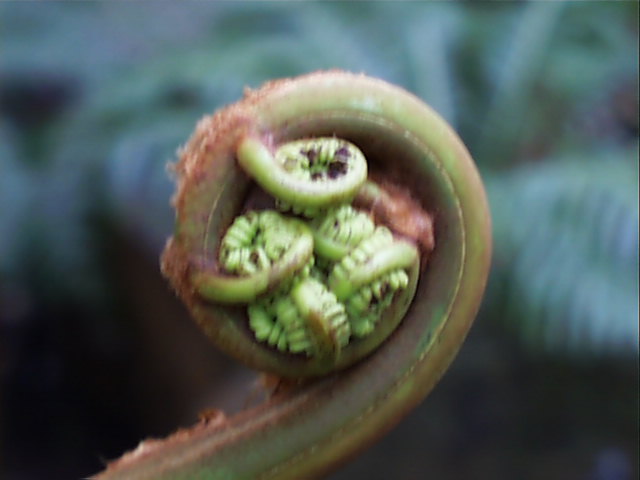
The Lost Gardens of Heligan  (meaning ‘willow tree garden’ in cornish), near Mevagissey, Cornwall  are one of the most popular botanical gardens in the UK. The garden is typical of the nineteenth century Gardanesque style, with areas of different character and in different design styles.

The gardens were created by members of the Cornish Tremayne family, over a period from the mid-18th century up to the beginning of the 20th century, and still form part of the family’s estate. The gardens were neglected after the 1st World War, and restored only in the 1990s, a restoration that was the subject of several popular television programmes and books.

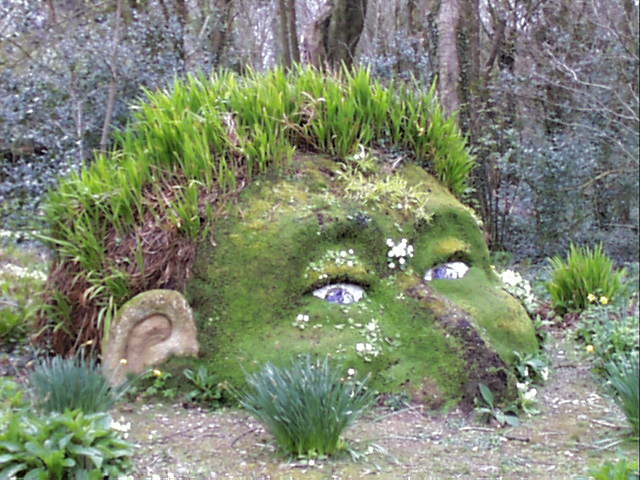
The gardens now boast a fabulous collection of aged and colossal rhododendrons and camellias, a series of lakes fed by a ram pump over a hundred years old, highly productive flower and vegetable gardens, an Italian garden, and a stunning wild area filled with primaeval-looking sub-tropical tree ferns called “The Jungle”. The gardens also have Europe’s only remaining pineapple pit, warmed by rotting manure, and two figures made from rocks and plants known as the Mud Maid and the Giant’s Head (see pic).

Source: Wikipedia

Old School Gardener

Finding Nature

Nature Connectedness Research Blog by Prof. Miles Richardson

Norfolk Green Care Network

Connecting People with Nature

Discover WordPress

A daily selection of the best content published on WordPress, collected for you by humans who love to read.

Susan Rushton

Celebrating gardens, photography and a creative life

Unlocking Landscapes

Writing, photography and more by Daniel Greenwood

Alphabet Ravine

Lydia Rae Bush Poetry

TIME GENTS

Australian Pub Project, Established 2013

Vanha Talo Suomi

The Journey from Finnish Rintamamiestalo to Arboretum & Gardens

Marigolds and Gin

Because even in chaos, there’s always gin and a good story …

Bits & Tidbits

RANDOM BITS & MORE TIDBITS

Rambling in the Garden

.....and nurturing my soul

The Interpretation Game

Cultural Heritage and the Digital Economy

pbmGarden

Sense of place, purpose, rejuvenation and joy

SISSINGHURST GARDEN

Notes from the Gardeners...

Deep Green Permaculture

Connecting People to Nature, Empowering People to Live Sustainably

BloominBootiful

A girl and her garden :)