Tag Archive: planting


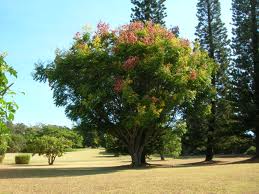
koelreutia pan fastig fruit Koelreuteria is a genus of three species of flowering trees; K. paniculata, K. bipinnata and K. elegans

Common name:  Common names include Golden Rain Tree, Pride of India, China tree, or varnish tree

Native areas: The tree is Native to China and southern and eastern Asia.

Koelreutia elegans subsp. formosa

Koelreutia elegans subsp. formosa

Historical notes: It’s discovery is credited to Pierre d’Incarville, a Jesuit missionary; who sent first seed from China to Russia in 1747. It was classified by Russian botanist Erich Laxmann who named it after Joseph Gottlieb Kolreuter,  from Karlsruhe, Germany, a contemporary and professor of natural history. It was later grown in Europe (by 1753) and reached America in 1811. The variety K. paniculata ‘Fastigiata’ was raised by Kew Gardens from seeds received in 1888 from Shanghai.

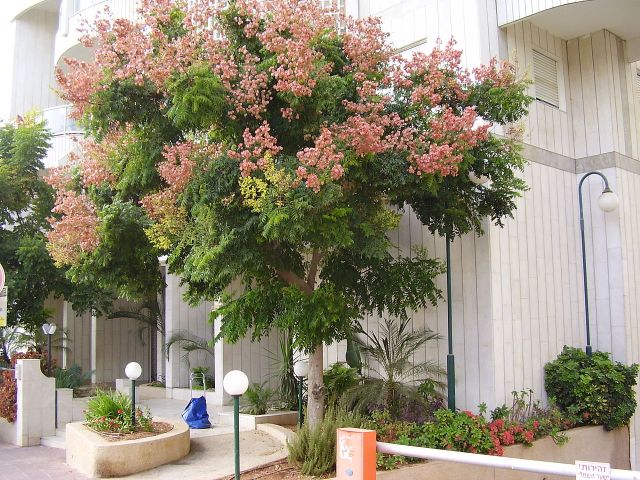
Koelreutia bipinnata

Koelreutia bipinnata

Features: Koelreuteria are medium-sized deciduous trees growing to 10–20 m (33–66 ft) tall, with spirally arranged pinnate or bipinnate leaves. Leaves are pinkish in spring, turning yellow in autumn. The flowers are small and yellow, produced in large branched panicles 20–50 cm (8–20 in) long. The fruit is a three-lobed inflated papery capsule or ‘bladder’ 3–6 cm long, containing several hard nut-like seeds 5–10 mm diameter. In some areas, notably parts of eastern North America, they have become invasive. the variety K. paniculata ‘Fastigiata’ tends to be shorter than the species (5-10 metres tall) and has a narrow columnar shape.

This slideshow requires JavaScript.

Uses: Koelreuteria are popularly grown as ornamental trees in temperate regions all across the world because of the aesthetic appeal of their flowers, leaves and seed pods. Koelreuteria are commonly used as focal points in landscape design.  Several cultivars have been selected for garden planting, including ‘Fastigiata’ with a narrow crown, and ‘September Gold’,  flowering in late summer. The seeds are edible when roasted, but are not commonly consumed. The variety K. paniculata ‘Fastigiata’ is a good choice for restricted spaces and excellent as a specimen tree in a park. The clusters of small yellow flowers which it produces in July and August are popular with bees and are followed by lantern-shaped fruits in the autumn.

Koelreutia paniculata 'Fastigiata' growing at Barcham Trees

Koelreutia paniculata ‘Fastigiata’ growing at Barcham Trees

 Growing conditions:  Koelreuteria grow in nutritionally poor soil including: clay, sand, well drained, alkaline, loam; they require full sun but not a lot of watering, with a moderate aerosol salt tolerance. They tolerate wind, air pollution, salt, heat, and drought and grow at a moderate rate, but are sometimes fast growers. Koelreuteria produce seeds that are blown away and get germinated and this might result in the growing of more trees next to the original one.’Fastigiata’ does best in dry, calcareous soils and in a reasonably sheltered position, such as an urban courtyard garden.

Fruit and flowers of K. paniculata

Fruit and flowers of K. paniculata

Further information:

Wikipedia- Koelreuteria

Wikipedia- Koelreuteria paniculata

Wikipedia- Kolreuteria bipinnata

RHS- Koelreuteria paniculata

Barcham Trees Directory- Koelreuteria paniculata

Barcham trees directory-  Koelreuteria paniculata ‘Fastigiata’

Old School Gardener

walnut tree in gardenThe Walnut tree genus (juglans) has 21 species, but there are two main species in common garden or landscape use; the Black Walnut (Juglans nigra) and English (or Common or Persian)Walnut (Juglans regia). I’ve recently written about the poison they both contain and what this means for growing other plants underneath or nearby.

Common name: ‘Walnut’  or Black/English/Common/Persian Walnut. The word walnut derives from the Germanic wal– and Old English wealhhnutu, literally “foreign nut”, wealh meaning “foreign”. The genus name “Juglans” comes from Latin jūglans, meaning ‘walnut, walnut tree’; jūglans in turn is a contraction of Jōvis glans, ‘nut of [the god] Jupiter’

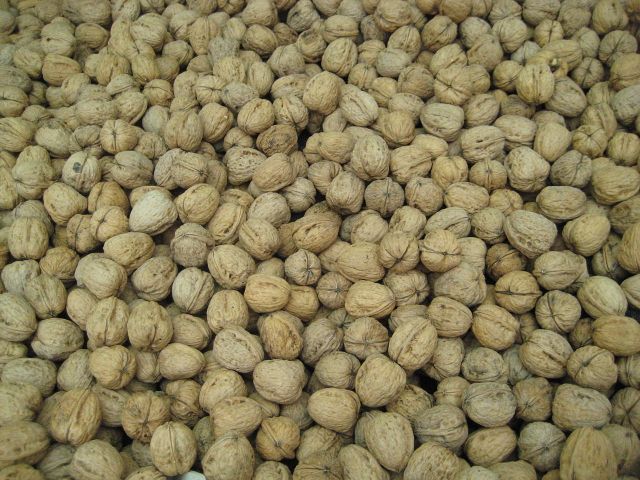
1280px-WalnutsNative areas: The English Walnut (J. regia) originated in Persia, and the Black Walnut (J. nigra) is native to eastern North America.

Historical notes: The Black Walnut was introduced to Europe in 1629 from north America, whereas the English Walnut is thought to have been grown in Britian since Roman times. The worldwide production of walnuts has been increasing rapidly in recent years, with the largest increase coming from Asia. The husks of the black walnut Juglans nigra are used to make an ink for writing and drawing. Walnut ink has good archival properties, and was used by several great artists including Leonardo da Vinci and Rembrandt. Walnut husks are used as a brown dye for fabric. Walnut dyes were used in classical Rome and in medieval  Europe for dyeing hair. The U.S. Army used ground walnut shells for the cleaning of aviation parts because it was inexpensive and non-abrasive. However, an investigation of a fatal helicopter crash in 1982 (in Mannheim, Germany) revealed that walnut grit clogged an oil port, leading to the accident and to the discontinuation of walnut shells as a cleaning agent.

This slideshow requires JavaScript.

Features: The Black Walnut is of high flavour, but due to its hard shell and poor hulling characteristics it is not grown commercially for nut production. The commercially produced walnut varieties are nearly all hybrids of the English Walnut.  Walnuts are late to grow leaves, typically not until more than halfway through the spring. The blossoms also normally appear in spring. The male cylindrical catkins are developed from leafless shoots from the past year; they are about 10 cm (3.9 in) in length and have a large number of little flowers. Female flowers appear in a cluster at the peak of the current year’s leafy shoots. Both main species contain a chemical called “juglone” which can be poisonous (or allelopathic) to other plants. This can be a particular issue for growing other plants underneath a Black Walnut.

Juglans_regia_-_Köhler–s_Medizinal-Pflanzen-081Uses: As garden trees, Walnuts have some drawbacks, in particular the falling nuts and the release of Juglone.However, they are grown and both species make a stately subject for parkland and avenue plantings, or as specimen trees where space allows. The English Walnut develops a broad crown at maturity (and a height of 15- 20 metres). It also has delightfully aromatic young foliage, from which a wine can be made, followed by a crop of delicious nuts. It is smooth barked when young. Both species are also grown for their timber. The Black Walnut is fast growing and was awarded the RHS Award of Garden Merit in 2002. It can  reach 20 metres or more in height and makes a large tree with a pyramidal crown. It produces an abundance of nuts over a long period, but they are rather difficult to extract from their very hard shells. It is rough barked from a young age.

 Growing conditions: Walnuts are light-demanding species that benefit from protection from wind. Walnuts are also very hardy against drought. Walnuts grow on most soils but the English Walnut does not favour water logged conditions. The Black Walnut favours deep loam. Walnut trees are easily propagated from the nuts. Seedlings grow rapidly on good soils.

Further information:

Wikipedia- Walnut

Wikipedia – Juglans

GQT: Underneath the Walnut Tree- what to plant.

Barcham trees directory-  Juglans regia

Old School Gardener

ilex aquifoliumIlex, or the holly genus, is a genus of 400 to 600 species of flowering plants in the family Aquifoliaceae, and the only living genus in that family. The species are evergreen and deciduous trees, shrubs, and climbers from tropics to temperate zones worldwide. In Europe the genus is represented by a single species, the classically named holly, Ilex aquifolium.

ilex aquifolium botanicalCommon name: ‘Holly’  or ‘Common Holly’- the name “holly” in common speech refers to Ilex aquifolium, specifically stems with berries used in Christmas decoration. By extension, “holly” is also applied to the whole genus. The origin of the word “holly” is considered a reduced form of Old English hole(ġ)n, Middle English Holin, later Hollen.

Native areas: Ilex aquifolium is native to western and southern Europe, northwest Africa, and southwest Asia.

Historical notes: Ilex in Latin means the holm-oak or evergreen oak (Quercus ilex). Despite the Linnaean classification of Ilex as holly, as late as the 19th century in Britain, the term Ilex was still being applied to the oak as well as the holly – possibly due to the superficial similarity of the leaves.

Ilex aquifolium

Ilex aquifolium

Features: Holly is an evergreen, conical tree growing to 5-10 metres tall. The leaves are 5–12 cm long and 2–6 cm broad; they are evergreen, lasting about five years, and are dark green on the upper surface and lighter on the underside, oval, leathery, shiny, and about 5 to 9 cm long. In the young and in the lower limbs of mature trees, the leaves have three to five sharp spines on each side, pointing alternately upward and downward, while leaves of the upper branches in mature trees lack spines.

The flowers are white, four-lobed, and pollinated by bees. Holly is dioecious, meaning that there are male plants and female plants. The sex cannot be determined until the plants begin flowering, usually between 4 and 12 years of age. In male specimens, the flowers are yellowish and appear in axillary groups. In the female, flowers are isolated or in groups of three and are small and white or slightly pink, and consist of four petals and four sepals partially fused at the base. The ‘berry’ fruit is a red drupe, about 6–10 mm in diameter, a bright red or bright yellow, which matures around October or November.

Several varieties and clones are available with different features such as variegated foliage with creamy or pink tinged edges and different leaf shapes. Some of these are:

Ilex aquifolium ‘Alaska’– dark green foliage and bright red berries, can be grown as a standard/ specimen or screening.

Ilex aquifolium ‘Argentea Marginata’– with an Award of Garden Merit, this variety has spiny leaves edged with white and plenty of berries, young leaves tinged with pink.

Ilex aquifolium ‘J.C. Van Tol’– a self pollinating holly and possibly the best green-leaved holly available. Dark green almost sineless leaves witha good show of autumn berries. Also awarded an AGM, it is tolerant of shade.

Ilex aquifolium ‘Pyramidalis’– fast growing, self pollinating. Another AGM winner, it retains its pyramidal shape if pruned to retain it’s leader.

Ilex aquifolium ‘Silver Queen’– this is a dense small evergreen tree or shrub with purple young shoots and pink-tinged young leaves. Mature leaves spiny, dark green with a broad cream margin. Flowers small, white – this variety is, despite it’s name, a male!

Other Ilex varieties that are not part of the aquifolium species include:

Ilex castaneifolia– the ‘sweet chestnut leaved’ holly this is a fast grower, AGM awarded and produces a large tree of conical habit and has red berries in abundance.

Ilex x ‘Dragon Lady’– one of the Meserve Hybrid hollies this one has vivid green leaves and attractive spines that contrast well with the large red berries in the autumn.

Ilex x ‘Nellie Stevens’– this hybrid (of Ilex aquifolium and Ilex cornata) has smooth glossy leaves which contrast well with the orange-red berries.

Ilex x altaclarensis ‘Golden King’ – one of the best variegated hollies, this AGM winner is tolerant of coastal conditions, and is slow-growing. The opposite to the variety ‘Silver Queen’, this time, despite its name it is a female!

Uses:  One of the most evocative and best-loved of all trees; the Common holly is beautiful in its simplicity and brings cheer at the darkest time of the year. It provides year-round interest, but is particularly attractive in autumn and winter. great for gardens, it only retains its spiky leaves within the first ten – fifteen feet of height in the tree, as after this it suffers no predation so has no need of a thorny defence system! use as an under storey or edge fo woodland tree  (as here at Old School Garden), as a specimen (especially those with interesting foliage), for hedging/ screening or as a structural element in mixed borders to provide all-year round interest. Can also be topiarised to provide simple but effective shapes in formal settings.

 Growing conditions: Holly is very tolerant of shade and prefers well-drained soils.

Clipped hollies at Hatfield House, Hertfordshire

Clipped hollies at Hatfield House, Hertfordshire

Further information:

Wikipedia- Ilex

Wikipedia- Ilex aquifolium

RHS- Ilex aquifolium

RHS- Ilex aquifolium ‘Silver Queen’

Barcham trees directory- Ilex genus

7 plants for Winter Wonder

Old School Gardener

The English Walnut- creating a planting poser...

The English Walnut- creating a planting poser…

Whilst on holiday in Suffolk, recently, one of my friends, Richard (who lives in Bristol), posed an interesting question:

‘I have a Walnut Tree in the garden and have been trying to grow some plants in a raised area underneath it, against a wall. This area only gets early morning sun during the middle of the year. I believe that Walnuts deposit some sort of poison in the ground which affects the plants? Over 20 years I’ve managed to establish a small selection of plants through trial and error (mainly the latter); geraniums give some cover and with a ‘Chelsea Chop’ may give a second flowering, but only towards the lighter edge of the bed; Ivy seems to do well; I can squeeze out some summer colour by planting some annual begonias but these need a lot of watering. I’ve also tried several different ferns, but none have been a success to date. Any thoughts about planting the area, especially towards the back, would be welcome.’

Not having come across this issue before I did a bit of research and also sought some advice from the RHS Member’s Advice Service. There are two main species of Walnut tree; Black Walnut (Juglans nigra) – most common in North America (and native to eastern areas), and the English Walnut (Juglans regia), the type most often found in the U.K. Walnuts -especially Juglans nigra– contain a chemical called “juglone” which can be poisonous (or allelopathic) to other plants. Juglone appears to act as a respiration inhibitor which deprives sensitive plants of needed energy for metabolic activity.  For gardeners this means that many plants growing in the vicinity of a black walnut tree will either be killed or will struggle to live, with yellowing, wilting leaves.

Leaves and nuts on the Black Walnut

Leaves and nuts on the Black Walnut

Juglone is found in all parts of the black walnut tree, but it is most concentrated in the flower buds, nut hulls and roots. Unfortunately the roots of a black walnut can extend 3-4 times the diameter of the tree’s canopy, so the area affected is quite wide. Toxicity is further dependent on the soil’s texture and drainage. All walnuts – including the English Walnut- produce some juglone, as do the walnut relatives bitternut hickory, hickory, pecan and shagbark. However the amount of juglone produced is insignificant, compared to the black walnut, and the effect on other plants is minimal, if any.

Tomatoes seem to be the most sensitive to growing under black walnuts. However juglone sensitivity is also dependent on other growing conditions and what will or won’t grow under one black walnut tree may be fine under another. However, here is a compiled list of flowers and vegetables that are considered extremely sensitive to juglone.

Turning back to Richard’s question, Guy Barter, Chief Horticultural Adviser at the RHS, says:

‘In theory English walnuts secret Juglone and we would advise that it is not underplanted – in any case they cast such a heavy shade that few plants will thrive underneath a walnut. Of course roots spread out beyond the canopy but interestingly we seldom encounter difficulties in the UK. All the same it may be well to avoid apples and tomatoes near a walnut tree, or at least make some experimental plantings in the first instance. In the USA the light levels are very much higher and underplanting options greater and it is not surprising that problems arise.’

Not very encouraging, eh, Richard? You seem to have had some success with plants nearer the lighter edge of his planting area, and if you want to persist with trying to plant up this and the darker inner area, you might want to start by improving the growing conditions; maybe you can prune the tree a little to raise the crown and let in more light? Having a raised bed underneath is good because you can deepen the soil above the tree roots; and maybe you can also try to replace the topsoil which could over time become affected by juglone? It might also be a good idea to add organic matter each year and at the same time remove all the walnut tree leaves and litter and dispose of these – it’s probably best to avoid composting it.

As to planting, for the inner area (assuming that you can find planting pockets large enough around any tree roots), I’d try out a few small to medium – sized shrubs and other plants that tolerate heavy shade and dryish soil – in effect trying to create an ‘understorey’ with plants of varying heights and in a combination to provide something of interest all-year round. If you go down this route then try to get healthy, well-established plants (2-3 years old and/or in 3 litre pots). As Guy suggests, you’ll have to ‘trial’ these to see if they’re up to the task! My recommended ‘planting scheme’ would include, for the darkest area (and maybe including some Ivy as ground cover):

  • Lonicera pileata– spreading evergreen shrub with small creamy flowers in spring followed by purple berries; height 60cm (2ft), spread 2.5m (8ft)
  • Hypericum calycinum (‘Rose of Sharon’) – spreading shrubs with yellow flowers from mid summer. Height 60cm (2ft), spread indefinite
  • Vinca minor (lesser periwinkle) – mat-forming shrub with trailing shoots and violet-blue flowers from mid-spring to autumn. Height 10-20cm (4-8in), spread indefinite
Lonicera pileata

Lonicera pileata

If you’d like to increase the variety of your planting around the edge (and lighter) area, you could try in addition to your geraniums:

  • Cotoneatser simonsii– deciduous or semi-evergreen with good autumn leaf colour; small pink flowers in summer followed by bright orange-red fruit. Height 2.5m (8ft), spread 2m (6½ft)
  • Mahonia aquifolium– evergreen with yellow blooms in spring. Height 90cm (3ft); spread indefinite.
  • Sarcococca hookeriana var. humilis (Christmas box)- evergreen with scented flowers in winter. Height 60cm (2ft); spread 1.2m (4ft)

…and a couple of herbaceous perennials:

  • Bergenia– evergreen leaves may colour in winter; white, pink or red flowers in spring. Height 20-45cm (8-18in), spread 45-63cm (18-25in)
  • Tellima grandiflora – semi-evergreen, with greenish white flowers from spring to mid-summer. Self-seeds freely. Height 40cm (16in), spread 25cm (10in)

Tellima grandiflora

Tellima grandiflora

…and maybe one or two patches of bulbs/tubers?

  • Anemone nemorosa– white flowers from spring to early summer. Height 7.5-15cm (3-6in), spread more than 30cm (1ft)
  • Cyclamen hederifolium– attractively marked foliage and pink to maroon flowers in autumn, seeds freely. Height 10-13cm (4-5in), spread 15cm (6in)
  • Galanthus nivalis (snowdrop) – white flowers in late winter. Height and spread 10cm (4in)
  • Iris foetidissima (stinking iris) – blue flowers in late spring and orange berries in autumn/winter. Height and spread 40cm (16in)

If this all seems rather too much hassle, then you could always cover the bed with a landscape fabric and then put a layer of aggregate or other mulch- wood bark, slate chippings etc. This covering could be punctured at intervals for clumps of bulbs (see above) to give you some (simpler) interest throughout the year- and maybe end the years of heart ache trying to get things to work that just don’t stand much of a chance!

Sources and further information:

Black walnuts at About.com

RHS guide to planting under trees

Old School Gardener

If you’ve enjoyed reading this post and others on this blog, why not comment and join others by signing up for automatic updates via email (see side bar, above right ) or through an RSS feed (see top of page)?

Some of the volunteers who helped to t idy up the Church Yard on Saturday

Some of the volunteers who helped to tidy up the Church Yard on Saturday

I’ve written before about our local church, St. Peter’s, Haveringland, or ‘The Church in the Fields’. On Saturday I helped tidy up the church yard, which doesn’t have any regular care or attention, particularly since services here now occur only once a month. 

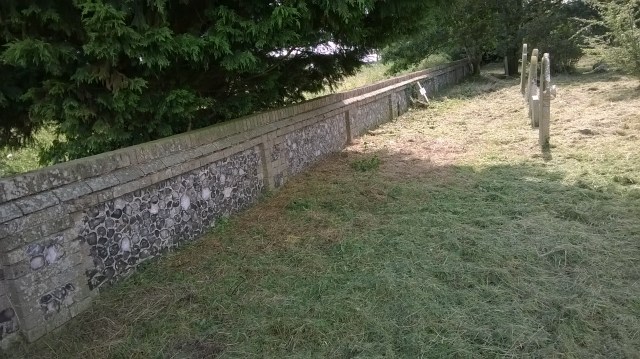
About twenty willing volunteers strimmed (or ‘Whipper – snipped‘ as I believe it’s called in Australia!), raked, weeded and (my own contribution) removed ivy from the church yard walls. In about two hours I managed to clear one wall (see picture below); fortunately there’s only one more that needs the same attention – I will return to finish it soon.

The wall cleaned of its Ivy- and, inadvertently a mouse nest too...

The wall cleaned of its Ivy- and, inadvertently a mouse nest too…

Some years ago an enthusiastic parishioner planted a number of Yews and other conifers around the church yard, and I remember at the time this caused a bit of controversy, as some people (my wife and I included) thought a ‘softer’, more naturalistic  approach to the planting (with wild flowers etc.) might be more appropriate. Well, I must say, 10 plus years on and these trees do add some interest to the church yard and were probably a realistic planting option, giving some shelter to the space and taking into account the limited community/church interest in looking after the area since.

On Saturday I was approached by the (relatively new) local priest who asked if I’d be interested in producing a Management Plan for the church yard. He suggested mown paths through wild flower areas and access to some of the more recent graves, based on a mix of twice yearly maintenance input from contractors, along with periodic voluntary effort like the session on Saturday. I was pleased to hear of his ideas and obvious commitment to keeping the place in good shape and so I agreed to help.

So, watch this space as this new project unfolds and I get to research and develop planting ideas around wild flower meadows (and maybe a couple of areas of self -reliant shrubs and perennials?).

I’d be pleased to hear from anyone with experience or knowledge on this subject – especially with regards to church yards!

Old School Gardener

living wall

Hamamelis_flowersOK, a bit of a stretch with this entrant, as Hamamelis is more often a shrub rather than a tree, but there don’t seem to be any garden trees with a botanical name beginning with ‘H’ (go on, prove me wrong)!

Common name: ‘Witch – Hazel’ and occasionally for the North American species, ‘Winterbloom’

Native areas: A native of North America (3 species- ovalis, virginiana and vernalis) Japan (japonica) and China (mollis).

Historical notes: The name ‘Witch’ in witch-hazel has its origins in the middle english word ‘wiche’, from the Old English ‘wice’, meaning “pliant” or “bendable”. “Witch hazel” was used in England as a synonym for Wych Elm (Ulmus glabra) American colonists seem to have simply extended the familiar name to the new shrub they found in their new home. The use of the twigs as divining rods, just as hazel twigs were used in England, may also have influenced the “witch” part of the name. The plant-hunter Charles Maries collected Hamamelis mollis for Veitch Nurseries from China  in 1879. It languished in nursery rows for years until it was noticed, propagated and put on the market in 1902.

Hamamelis in Colonial Park Arboretum and Gardens

Features: The witch-hazels are deciduous shrubs or (rarely) small trees growing to 3–8 metres tall, rarely to 12 metres tall. The leaves are alternately arranged, oval, with a smooth or wavy margin. The genus name, Hamamelis, means “together with fruit”, referring to the simultaneous occurrence of flowers with the maturing fruit from the previous year. H. virginiana blooms in September-November while the other species bloom from January-March. Each flower has four slender strap-shaped petals 1–2 centimetres long, pale to dark yellow, orange, or red. The fruit is a two-part capsule 1 centimetre long.

Uses:  Witch Hazels are popular ornamental shrubs, grown for their clusters of rich yellow to orange-red flowers which begin to expand in the autumn as or slightly before the leaves fall, and continue throughout the winter. Hamamelis virginiana is rarely seen in the nursery trade except for woodland/wildlife restoration projects and native plant enthusiasts. Much more common is H. mollis, which has bright red flowers that bloom in late winter instead of the yellow blossoms of H. virginiana which tend to be lost among the plant’s autumnal foliage. Numerous cultivars have been selected for use as garden shrubs, many of them derived from the hybrid H. x intermedia ‘Rehder’ (H. japonica × H. mollis). Jelena and Robert de Belder of Arboretum Kalmthout, selecting for red cultivars, found three: the first, with bronze flowers, was named ‘Jelena’; the next, with red flowers, was named ‘Diane’ (the name of their daughter); the last, with deep red flowers, was called ‘Livia’ (the name of their granddaughter). The cultivar ‘Arnold Promise’ (mature height 3- 5 metres) is recognised as one of the best yellow-flowering Witch – Hazels, with magnificent yellow flowers that contrast with the red inners, which sometimes last as long as two months without fading.

This slideshow requires JavaScript.

Growing conditions: An open, sunny position is best, as plants become straggly in shade, although they do tolerate partial shade. Avoid exposed and windy positions. Young witch hazels can be damaged by hard frosts, so avoid frost pockets, or be prepared to protect plants with a couple of layers of horticultural fleece in their first few years if there is a hard winter or late spring frost. Witch hazels need free-draining soil conditions with an adequate supply of moisture. A light soil with plenty of added organic matter, such as well-rotted manure or compost, is best. They will tolerate heavy or clay soils if they are improved by digging in organic matter and by ensuring good drainage. Acid to neutral soil pH is preferred (pH 4.5-6.5). Witch hazels may tolerate deep soils over chalk, with plenty of added organic matter. If they become chlorotic (yellow) because of the high pH, then treatment with a chelated (sequestrated) iron fertiliser, ideally one that also contains manganese, can help. They are unlikely to tolerate shallow chalky soils.

Hamamelis virginiana

Further information:

Wikipedia- Witch – Hazel

RHS- Hamamelis

Barcham trees directory- Hamamelis x intermedia ‘Arnold Promise’

7 plants for Winter Wonder

Old School Gardener

gleditsia triacanthos matureI bought a Gleditsia triacanthos ‘Sunburst’ some years ago as a young plant through the post. It’s now about 2 metres tall and beginning to find its feet in Old School Garden. I love its bright yellow foliage which is a great contrast to the maroon foliage of plants like Lysimachia ciliata ‘Firecracker’.

Common name: ‘Honey Locust’ or ‘Thorny Locust’

Native areas: A deciduous tree native to central North America,  it is mostly found in the moist soil of river valleys ranging from southeastern South Dakota to New Orleans and central Texas, and as far east as eastern Massachusetts. It was introduced into Britain in 1700, with the cultivar ‘Sunburst’ introduced in the 1950’s.

Historical notes: The Honey Locust, despite its name, is not a significant honey plant. The name derives from the sweet taste of the legume pulp, which was used for food by Native American people, and can also be fermented to make beer. The long pods, which eventually dry and ripen to brown or maroon, are surrounded in a tough, leathery skin that adheres very strongly to the pulp within. The pulp—bright green in unripe pods—is strongly sweet, crisp and succulent in unripe pods. Dark brown tannin-rich beans are found in slots within the pulp. Honey locusts produce a high quality, durable wood that polishes well, but the tree does not grow in sufficient numbers to support a bulk industry; however, a niche market exists for honey locust furniture. It is also used for posts and rails since it takes a long time to rot. In the past, the hard thorns of the younger trees have been used as nails! The tree has been used in traditional Native American medicine.

Gleditsia triacanthos 'sunburst' in Old School Garden- with Lysimachia ciliata 'Firecracker' in front and Monarda 'Cambridge Scarlet' and Crocosmia 'Lucifer'
Gleditsia triacanthos ‘Sunburst’ in Old School Garden– with Lysimachia ciliata ‘Firecracker’ in front and Monarda ‘Cambridge Scarlet’ and Crocosmia ‘Lucifer’

Features: A large, oval and elegant tree growing to 20 metres plus and quick growing. It’s leaves resemble fronds and when mature, it looks most striking with its shiny, long seed pods. Leaves are bright green turning to golden yellow in autumn. The variety ‘Sunburst’ has bright yellow foliage in early summer and this turns greener as the season progresses.

Uses:  A wonderful choice for heavily polluted environments prone to vandalism and a good choice for parks and industrial areas, it is also a great garden tree, doing well on most types of soil. It’s fast growth rate and ease of transplanting make it a good choice for new gardens where shade or a feature is wanted relatively quickly. The tree needs careful handling though, because of its thorns (however, most cultivars are thornless). The cultivar ‘Sunburst” has gained the RHS Award of Garden Merit (AGM). This cultivar grows to 15-20 metres and has a rounded, rather spreading form, a good substitute for the rather more damage-prone Robinia pseudoacacia ‘Frisia’.

Gleditsia triacanthos - autumn colour
Gleditsia triacanthos – autumn colour

Growing conditions: The cultivars (e.g. ‘Sunburst’, ‘Skyline’, ‘Inermis’) are popular ornamental plants. It tolerates urban conditions, compacted soil, road salt, alkaline soil, heat and drought. The popularity is in part due to the fact that it transplants so easily, its fast growth rate and tolerance of poor site conditions. It is also great where shade is wanted quickly, such as new parks or housing developments, and in disturbed and reclaimed environments, such as mine tailings. It is resistant to gypsy moths but is defoliated by another pest, the Mimosa Webworm. Spider mites, cankers and galls are also a problem with some trees.

Gleditsia triacanthos 'Sunburst'
Gleditsia triacanthos ‘Sunburst’

Further information:

Wikipedia- Gleditsia triacanthos

RHS- Gleditsia triacanthos ‘Sunburst’

Barcham trees directory

Old School Gardener

figs fruit

A Fig fruit

I have a fig in the courtyard here at Old School Garden, growing in a pot and ‘liberated’ as a young transplant when pruning a rather older and very vigourous example at our local primary school a few years ago. I remember gathering it when I helped to plant up the ‘Nectar Bar’ and ‘Eco Park’ there in 2007. Today our tree, along with a Grapevine, Olive and Peach, contributes a mediterranean touch to the space, and with last winter and spring’s mild and wet conditions it has put on some wonderful growth, including a crop of handsome and promising looking fruit. I can’t recall ever really tasting a ripe fig, but my recent experience of fig-flavoured yoghurt is tempting me to try to harvest some this year!

Common name: ‘Common Fig’

Native areas: A native of the Middle East and Western Asia.

Historical notes: The edible fig is one of the first plants that was cultivated by humans, predating the domestication of Wheat, Barley and Legumes, and may thus be the first known instance of agriculture. Figs were also a common food source for the Romans. The fruits were used, among other things, to fatten geese for the production of a precursor of foie gras. In the 16th century, Cardinal Reginald Pole introduced fig trees to Lambeth Palace in London.

An old Fig tree, grown under cover

An old Fig Tree

Features: A round-headed tree, if properly located and pruned, otherwise it can develop a mass of straggly growth (e.g if grown up against a wall and left untrained and its roots unrestricted). Mature height of 3 – 5 metres, it is grown for both its attractive, deeply lobed foliage, and fruits. Two crops of figs are potentially produced each year; the first or breba crop, develops in the spring on last year’s shoot growth. In contrast, the main fig crop develops on the current year’s shoot growth and ripens in the late summer or autumn. The main crop is generally superior in both quantity and quality to the breba crop.

Uses:  It makes a small and elegant tree that is perfect for gardens where space is limited. Grow in a container or open ground. The cultivar ‘Brown Turkey’ has gained the RHS Award of Garden Merit (AGM).

58571_Ficus_carica_LGrowing conditions: The fig likes dry, sunny, warm, sheltered sites, where the soil is dry or very well-drained. It thrives in both sandy and rocky soil. As the sun is really important it is better to avoid shade. Excessive growth has to be limited to promote the fruiting. This can be achieved by pruning to achieve the desired shape and encouraging fruiting branches and also by restricting root development; by growing in a container or in an enclosed bay in open ground where brick walls or other barriers keep the roots in check. It is also often grown up against a south-facing wall to maximise fruiting potential. I’ve had experience of pruning back hard a few old unkempt examples successfully in spring; alternatively, phase your pruning over a number of years to lessen the visual impact and reduce stress on the plant.  Some varieties are more adapted to harsh and wet climates. It is remarkably pest and disease resistant. 

Further information:

Wikipedia- Ficus

RHS- Figs

RHS- Ficus carica ‘Brown Turkey’

How to grow Figs- Daily Telegraph

Barcham trees directory

Old School Gardener

Picture by Bob Osborn

Picture by Bob Osborn

The ‘E’ in my A-Z of garden trees is a star autumn performer and can also be grown as a deciduous shrub. As I write this, my own (shrub) example of Euonymus (the alatus or ‘winged spindle’ species) here in Old School Garden has just lost all of it’s new leaves – possibly a virus or scale attack? Still, I have gathered some seeds from hedgerow examples of europaeus and the small seedlings seem to be doing well, so maybe I shall- in a few years- have a replacement or two!

Common name: ‘Spindle’, ‘European Spindle’, ‘Common Spindle’

Native areas: native to much of Europe, where it inhabits the edges of forest, hedges and gentle slopes, tending to thrive on nutrient-rich, chalky and salt-poor soils. It is a decduous shrub or small tree.

Historical notes: European spindle wood is very hard, and can be cut to a sharp point- it was used in the past for making wool spindles (used to spin the wool into thread).

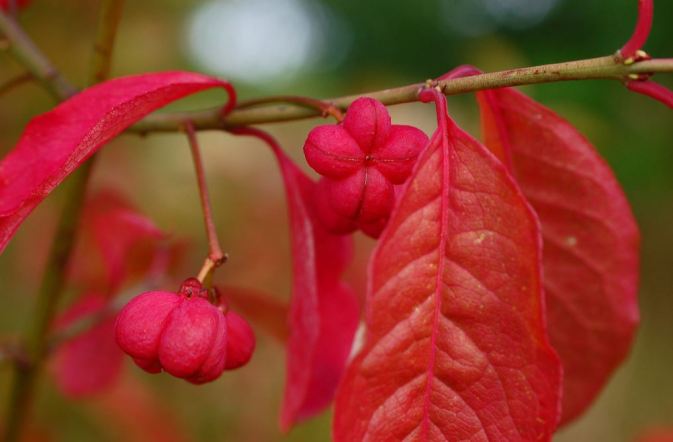
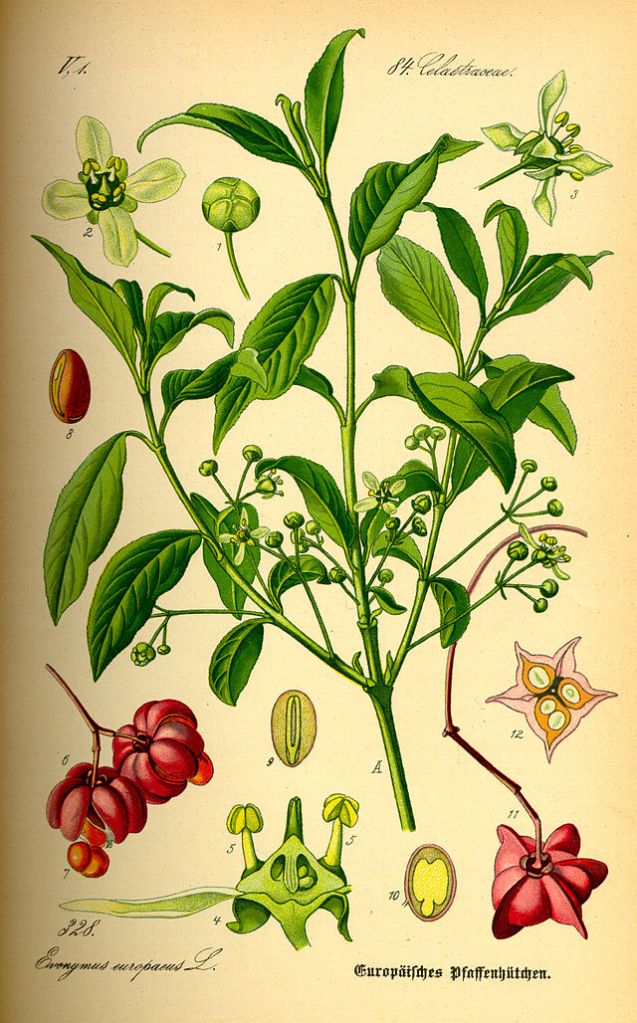
Features: Euonymus europaeus grows to 3–6 m (10–20 ft) tall, rarely 10 m (33 ft), with a stem up to 20 cm (8 in) in diameter. The leaves are opposite, lanceolate to elliptical, 3-8 cm long and 1-3 cm broad, with a finely serrated edge. Leaves are dark green in summer. Autumn colour ranges from yellow-green to reddish-purple, depending on environmental conditions. Flowers are produced in late spring and are insect-pollinated; they are rather inconspicuous, small, yellowish green and grow in cymes of of 3-8 together. The capsular fruit ripens in autumn, and is red to purple or pink in colour and approximately 1-1.5 cm wide (opening, when ripe, to reveal orange seed cases).

Uses:  Spindle is a popular ornamental in gardens and parks due to its bright pink or purple fruits and attractive autumn colouring, in addition to its resistance to frost and wind. It has been introduced to North America where it has become an invasive species in some areas. Grown as a shrub it is useful for hedging and screens, is relatively low maintenhance and as a tree looks good in ‘Cottage’, informal and wildlife gardens.

The cultivar ‘Red Cascade’ has gained the Royal Horticultural Society’s Award of Garden Merit (AGM).This is a small arching tree (mature height 3-5 metres), and produces an abundance of rosy red fruits which open to reveal vivid orange seed cases. The foliage display in autumn is fantastic with green leaves turning to rich red by November. This variety is one of the best forms for gardens, parks and resticted spaces.

Growing conditions: Grow in well-drained soil in sun or partial shade. propagate by sed or semi-hardwood cuttings. A good choice for even chalky soils, it will thrive in most soils, but avoid waterlogged ground. Prone to caterpillars and vine weevils and may suffer from powdery mildew.

640px-Illustration_Euonymus_europaea0Further information:

Wikipedia

RHS- Euonymus europaeus

Barcham trees directory- ‘Red Cascade’

How to grow Euonymus europaeus ‘Red Cascade’

Old School Gardener

Finding Nature

Nature Connectedness Research Blog by Prof. Miles Richardson

Norfolk Green Care Network

Connecting People with Nature

Discover WordPress

A daily selection of the best content published on WordPress, collected for you by humans who love to read.

Susan Rushton

Celebrating gardens, photography and a creative life

Unlocking Landscapes

Writing, photography and more by Daniel Greenwood

Alphabet Ravine

Lydia Rae Bush Poetry

TIME GENTS

Australian Pub Project, Established 2013

Vanha Talo Suomi

The Journey from Finnish Rintamamiestalo to Arboretum & Gardens

Marigolds and Gin

Because even in chaos, there’s always gin and a good story …

Bits & Tidbits

RANDOM BITS & MORE TIDBITS

Rambling in the Garden

.....and nurturing my soul

The Interpretation Game

Cultural Heritage and the Digital Economy

pbmGarden

Sense of place, purpose, rejuvenation and joy

SISSINGHURST GARDEN

Notes from the Gardeners...

Deep Green Permaculture

Connecting People to Nature, Empowering People to Live Sustainably

BloominBootiful

A girl and her garden :)