Tag Archive: perennial


delphiniumsDelphinium is a genus of around 300 species of flowering perennial, biennial and annual plants that are native throughout the Northern Hemisphere and also on the high mountains of tropical Africa.

The name “delphinium” derives from the Latin for “dolphin”, referring to the shape of the nectary, though there is also a story that in ancient Rome men were pursuing a dolphin for commercial exploitation so Neptune turned it into the Delphinium!

The common name “larkspur” (referring to the bird’s claw shape of the flower), is shared between perennial Delphinium species and annual species of the genus Consolida. The famous 16th century herbalist, John Gerard gives ‘delphinium’ as an alternative name for Consolida, says that there is little written about any medicinal uses other than as an antidote to scorpion stings. He mentions the idea of laying delphiniums in the path of a scorpion tol render it totally incapable of movement until the plant is removed but says this is just one of many ‘trifling toyes’ that are not worth reading! The town of Larkspur in Colorado was given its name by Elizabeth Hunt, wife of the governor, in 1871 because of the abundance of delphiniums growing in the area

Delphinium nuttallianum

Delphinium nuttallianum

Species names of Delphinium include:

D. ajacis = possibly based on the marks at the base of the united petals which were compared to the letters AIAI

D. cardinale = scarlet

D. consolida = joined in one

D. elatum = tall

D.formosum = beautiful

D. grandiflorum = large flowered

D. nudicaule = naked stemmed

D. sulphureum = sulphur – yellow

D. tatsiense = of Tatsien, China

D. triste = sad, the dull blue of the flowers

D. zalil = native Afghanistan name.

D. 'Blue Nile'

D. ‘Blue Nile’

Delphinium_cv2

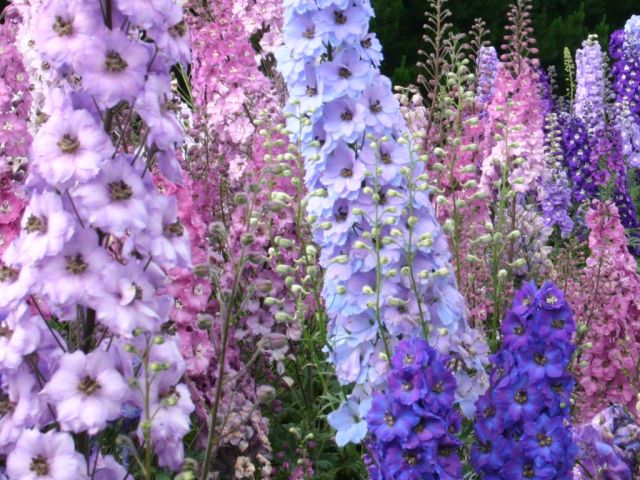
The delphinium is much admired, particularly in the cottage garden setting. Delphiniums are tall, majestic plants with showy open flowers on branching spikes. Each flower has 5 petal-like sepals with 2 or 4 true petals in the centre called a bee. Delphinium species include all three primary colours, blue, red, and yellow. Hybridisation of delphiniums has resulted in many new colours and attractive flower forms and growing heights. Most garden Delphiniums are of the hybirds raised from species such as elatum, formosum, grandiflorum and sulphureum. Flower colours range in shades of blue from palest sky, through to gentian and indigo; rich purple, lavender, pink to purest white.  In England Blackmore and Langdon, nurserymen and leading breeders of Delphiniums, were producing hybrids from early in the 20th century, producing named varieties of large well-formed delphiniums. Others have also added their skills and developed the most dramatic and eye-catching plants to grace our gardens.

This slideshow requires JavaScript.


Sources and further information:

The Delphinium Society

RHS- Delphiniums

How to grow Delphiniums- Sarah Raven

Gallery of Delphiniums

The Poison Garden – Delphiniums

Quizzicals: answers to the two clues given in Plantax 13…

  • Bovine stumble – cowslip
  • Simpler tombola – rafflesia

..and 2 more cryptic clues to the names of plants, fruit or veg…

  • Cold yearning
  • How Jack Charlton refers to brother Bobby

Special thanks to Les Palmer, whose new book ‘How to Win your Pub Quiz’ was published recently. A great celebration of the British Pub Quiz!

Old School Gardener

If you’ve enjoyed reading this post and others on this blog, why not comment and join others by signing up for automatic updates via email (see side bar, above right ) or through an RSS feed (see top of page)?

monarda 'Cambridge Scarlet' in one of the borders at Old School Garden,sittign well alongside a young Gleditsia triacanthos

Monarda ‘Cambridge Scarlet’ in one of the borders at Old School Garden, sitting well alongside a young Gleditsia triacanthos and Lysimachia ciliata ‘Firecracker’

With around 20 species of annuals and rhizomatous,clump-forming, herbaceous perennials, Monarda – or ‘Bee Balm’ because of it’s value in treating bee stings- would be a relatively small genus, though it also has many garden-worthy, hardy hybrids.

Hailing from North America, and otherwise known as ‘Bergamot’, Monarda like sun, but will grow in dappled shade too, but plants established in partial shade or filtered sun have higher incidences of rapid horizontal spread and flower less. Their natural habitats are the dry prairie and also woodlands, so they vary in their soil requirements from those that like a dry soil to those liking moisture – all need moisture retentive soil though and if the soil is too dry they are prone to mildew, as they are here in Old School Garden. It can also tolerate clay soil. The incidence of powdery mildew can be reduced by allowing good air movement between plants, ensuring the soil does not dry out, removing diseased leaves and stems to destroy the overwintering stage of the fungus and choosing mildew-resistant cultivars. Fungicides or horticultural oils can also be used to control powdery mildew.

Generally, propagation occurs by hardwood and softwood cuttings, root cuttings, layering, and division. The latter, quite frequently, is the most popular method out of necessity:  on soil that stays moist, plants can spread fairly quickly so the plant should be divided every 3 to 5 years to reduce spread, keep the central core of the plant healthy, preclude root rot, and improve air circulation about the foliage.

The flowers are a delight, arranged in whorls, rather like sage. They are tubular, with 2 lips, an upper one that is hooded and a lower one that spreads and they often come with coloured bracts. The plant is long flowering, from mid to late summer, and blooms almost continuously if deadheaded periodically. The blooms make excellent cut flowers, both fresh and dried.

Wasp on a Monarda punctata

Wasp on a Monarda punctata

Being attractive to bees and butterflies it is a good plant for wildlife gardens, though only Bumble Bees can gain direct access, honey bees and other insects getting in only after something larger has made holes!  Because of oils present in its roots it is sometimes used as a companion plant around small vegetable crops susceptible to subterranean pests. Bee balm is considered a good plant to grow with tomatoes, ostensibly improving both plant health and tomato flavour.

Ranging in height from 20–90 cm (8–35 in), Monarda have an equal spread. The stems are distinctive, in that they are square in profile, and taller varieties often require staking. The slender and long-tapering (lanceolate) leaves are not particularly striking to look at but are aromatic and are a definite reminder of ‘Earl Grey’ Tea, which is flavoured with Bergamot and the leaves are sometimes picked for pot pourri. Slugs can attack new growth in the spring but the genus is low in allergens.

Most hybrids are derived from Monarda didyma or M. fistulosa.There are over 50 commercial cultivars and hybrids, ranging in colour from post – box red to pure white to deep blue, but these plants tend to be smaller than wild species, and have often been developed to combat climatic or pest conditions. Other hybrids have been developed to produce essential oils for food, flavouring, or medicine. The following cultivars have gained the Royal Horticultural Society’s Award of Garden Merit (AGM):

  • ‘Beauty of Cobham’(pink)
  • ‘Gardenview Scarlet’
  • ‘Marshall’s Delight’ (pink)
  • ‘Squaw’ (red)
  • ‘Talud’ (pink)
  • ‘Violet Queen’
Monarda citriodora ('Horse Mint')

Monarda citriodora (‘Horse Mint’)

Monarda are great perennials for meadows and wild gardens, along streams and ponds, in woodlands and also in the garden border. The boldness of bee balm makes it equally good for massing or as an accent, and it mixes well with other summer perennials such as phlox, iris, day lilies and yarrows. The long season of colour attracts bees, butterflies (and in North America, hummingbirds) and these will capture your attention as well.

Monarda also looks good with:

  • Veronica ‘Blue Charm’ which bears spikes of light blue flowers at the same time as bee balm. The habit and flower shape contrast well.
  • Aster – masses of small, pale blue flowers appear in summer on heart-leaf aster and provide an airy contrast to bee balm.
  • Coneflower (Echinacea) – the large daisy flowers of purple coneflower mix well with those of bee balm, especially in sunny wildflower gardens.
  • Evening Primrose (Oenothera) – blooming in summer, the clusters of yellow goblet flowers of common sundrops mix well with bee balm, especially the mahogany-colour varieties.
  • Astrantia major ‘Ruby Wedding’
  • Persicaria ”Red Dragon’

Sources and further information:

Wikipedia

‘The Monarda Speaks’- blog article

Monarda citriodora (Horse Mint)- video from Texas

Monarda and powdery mildew resistance- University of Chicago study

Old School Gardener

If you’ve enjoyed reading this post and others on this blog, why not comment and join others by signing up for automatic updates via email (see side bar, above right ) or through an RSS feed (see top of page)?

Achilleas coming into flower at the back of one of Old School Garden's borders

Achilleas coming into flower at the back of one of Old School Garden’s borders

The bright golden plates of Achillea are coming into bloom in Old School Garden and they look splendid, too. Achillea millefolium is commonly known as Yarrow – a name often applied to other species in the genus which is made up of about 85 flowering plants.

Achillea is native to Europe and temperate parts of Asia and a few grow in North America. Achillea can be mat-forming or upright perennials, mostly herbaceous, with sometimes aromatic, pinnately divided or simple and toothed leaves and flattened clusters of small, daisy-like flower-heads.  These heads of small flowers sit like mini helicopter pads at  the top of the stem, the flowers being white, yellow, orange, pink or red. The Achillea is a useful source of food for the larvae of some moths.

The genus was named after the Greek mythological hero Achilles. According to the Iliad, Achilles’ soldiers used yarrow to treat their wounds, hence some of its common names such as allheal and bloodwort. I somehow have the idea that the flower plates are also  reminiscent of Achilles’ ‘burnished shield’ (assuming he had one) and it’s this connection that I’m reminded of whenever I see them.

Some of the species names are:

A. alpina = of the alps or alpine

A. argentea = silvery white, referring to the foliage

A. compacta = compact

A. millefolium = thousand – leaved, the Yarrow or Milfoil

A. mongolica = Mongolian

A. montana = of mountains

A. ptarmica = from the greek ptarmos, meaning sneezing – the dried flowers were once used as snuff, otherwise knownas the ‘Sneezewort’

A. rupestris = growing on rocks

A. santolina = resembles the plant Santolina

A. serbica = of Serbia

A. tomentosa = downy foliage

Achilleas are traditional border flowers valued for their feathery foliage and striking flat, circular heads of flowers throughout the main summer season. They team well with other perennial flowers and are a vital ingredient of a traditional herbaceous border. They are also at home in island beds, cottage gardens and other perennial planting schemes.They look good with Leucanthemum and Kniphofia.

Sources and further information:

Wikipedia

How to grow Achillea

Achillea filipendulina

Article by Chris Beardshaw

Quizzicals: answers to the two clues given in Plantax 12…

  • Place in Oxfordshire painted a gaudy colour – ‘Blenheim Orange’
  • Tie up skinny coward – Bindweed

..and 2 more cryptic clues to the names of plants, fruit or veg…

  • Bovine stumble
  • Simpler tombola

Special thanks to Les Palmer, whose new book ‘How to Win your Pub Quiz’ was published recently. A great celebration of the British Pub Quiz!

Old School Gardener

If you’ve enjoyed reading this post and others on this blog, why not comment and join others by signing up for automatic updates via email (see side bar, above right ) or through an RSS feed (see top of page)?

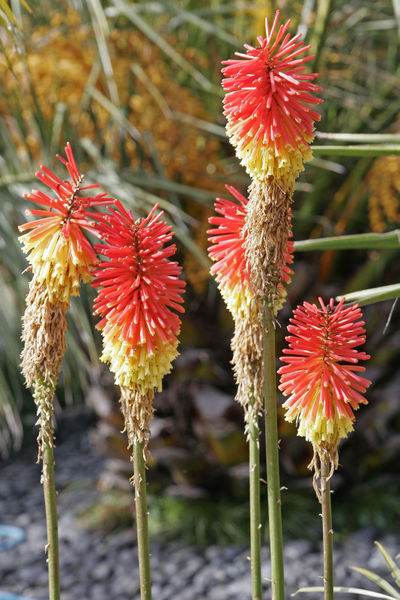
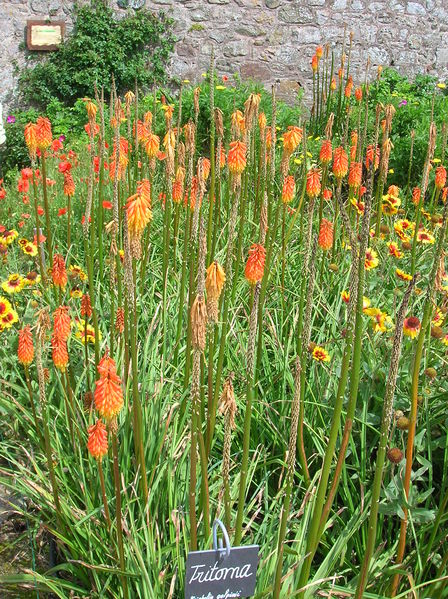
KniphofiaA genus of 70 or so rhizomatous perennials from central and southern Africa, Kniphofia – or ‘red hot pokers’ – can often be found in moist places; alongside river banks, in grasslands or mountainsides. They are also called tritoma, torch lily, knofflers or poker plant. The Kniphofia genus is named after Johann Kniphof, an 18th-century German physician and botanist.

Kniphofia form clumps, with arching, strap-like leaves. They can be evergreen or deciduous, the leaves of the deciduous varieties tending to be narrower and shorter than the evergreens. They thrive in any soil as long as it is moisture retentive, prefer sun but will tolerate light shade and can vary from tender to fully hardy. Many tolerate coastal conditions. Coming from South Africa, they are not completely hardy, particularly in the far north. For safety grow the more hardy evergreen varieties, where you should tie up the leaves over the winter, so protecting each other from frost.  They are also susceptible to ‘wet feet’ – this is particularly bad in clay soils when they are also cold.

The flowers are cylindrical or tubular and usually hang down (‘pendent’), though in some varieties are upright. Flowers are borne well above the leaves in dense spike – like racemes. The flowers come in various colours, including green and toffee, but most of the commonly seen types open red and turn to yellow, giving  the characteristic, bicoloured flower spikes.

Red Hot Pokers make good cut flowers. The flowers produce copious nectar while blooming and are attractive to bees and butterflies. In the New World they may attract sap-suckers such as hummingbirds and New World orioles. They are low in allergens.

Tritoma group

A group of Kniphofia or ‘Tritoma’

Red hot pokers seem to have suffered a bad press over the years, stemming from Victorian times when one influential garden writer (Shirley Hibberd) thought they were vulgar and that their use required “a little extra care to avoid a violation of good taste”.

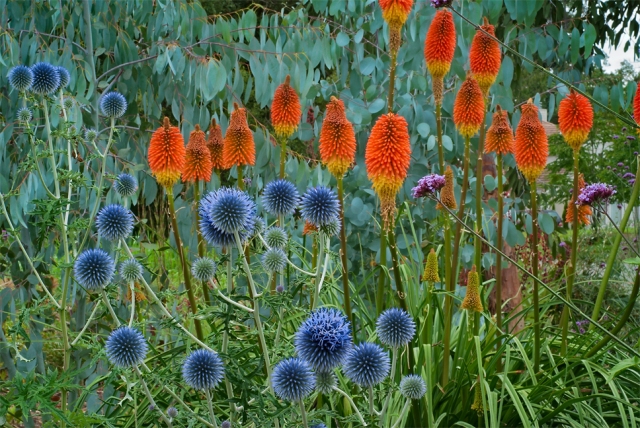
Cultivars range from 50cm to 2 metres in height, and the taller ones may need staking. Late-summer flowers such as Crocosmias look good with them, as do different sorts of marigolds; e.g. ‘Touch of Red’ and ‘Art Shades’ which are ideal for a showy look. Salvia uliginosa combined with yellow or coral-coloured pokers gives a more subtle effect. They mix well in the border with other tall plants such as Alliums and Echinops.  Sometimes a mixture of gaudy colours – Delphiniums, Alliums, Lilies and Knifophia – is quite attractive.

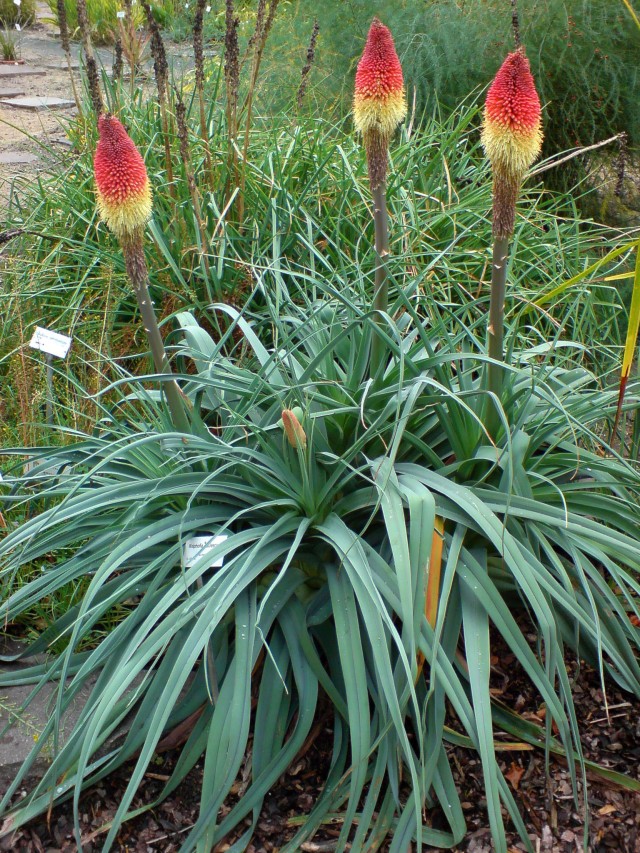
Kniphofia caulescens

Kniphofia caulescens

You can grow them from seed quite easily using ordinary seed compost – just push the seeds partially into the compost in April, water and they will be transplantable by summertime. Once mature, after a year of growth, the plant is dividable to increase stock. Do this in late September, into pots of 50% compost 50% grit. Dividing is easy enough, they pull apart quite easily and you can simply pot them up. Leave the divided plants in pots in a cool but frost-free greenhouse, and replant in May the next year. When transplanting your Kniphofia, dig a hole that is about 20cm deep by 10cm wide, and half fill with 50% compost, 50% grit mixture and then top up with compost and plant in this. Each spring give them a mulch with good rich compost. You can also give them a liquid feed in June when they start to show signs of flowering. I have some in my long borders at Old School Garden and they are just coming into flower.

Kniphofia and Echinops. Photo- Jenny Cochran's garden

Kniphofia and Echinops. Photo- Jenny Cochran’s garden

Further information:

How to grow Kniphofias- Telegraph article

How to grow Kniphofias-Mirror article

RHS- Kniphofia ‘Bees Sunset’ and other links

RHS 2007/9 Kniphofia trials

Old School Gardener

If you’ve enjoyed reading this post and others on this blog, why not comment and join others by signing up for automatic updates via email (see side bar, above right ) or through an RSS feed (see top of page)?

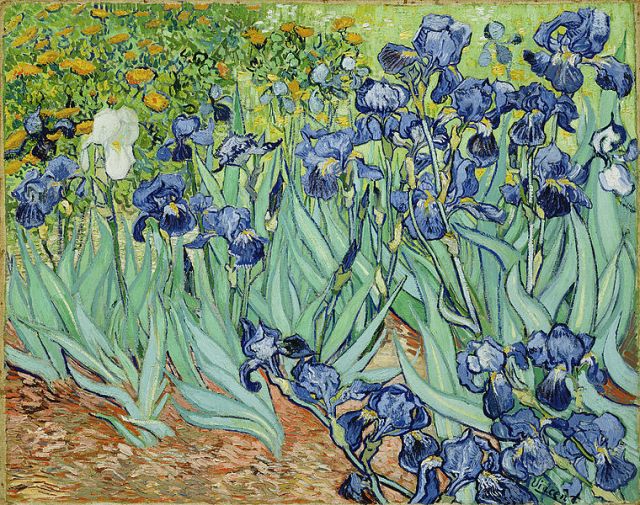
Irises by Van Gogh

Irises by Van Gogh

I’ve thought for some time that I must grow more Irises in my garden, but somehow the massive choice and being not quite sure about how to grow them successfully tends to make me wary.
I have grown some bearded irises in pots (and they’ve done quite well, despite a bout of Iris Rust last summer), and also some bulbous varieties in the border – they always please, as much for their strappy green foliage as for their flowers. I must be a bit more adventurous and devote a largish area to a bold display of one or two varieties – when I can afford it!

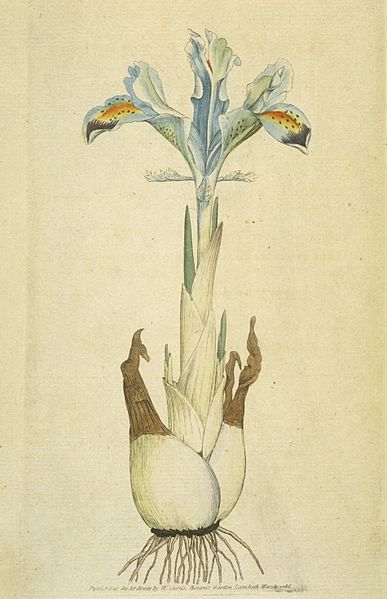
Iris persica - a bulbous Iris as drawn by Sowerby in 1792

Iris persica – a bulbous Iris as drawn by Sowerby in 1792

Irises – otherwise known as Flags, Sword Lilies or Fleur de Lis – is a genus of some 300 species from very varied habitats from around the northern hemisphere. They vary between those that are bulbs, those with rhizomatous (expanding, tuberous) roots, and some that are fleshy – rooted. They can be evergreen or deciduous and have very varied growth requirements. Irises are classified by the Royal Horticultural Society into these sub sections or ‘subgenera’:

  • Bearded species and cultivars– various sizes from miniature dwarf to tall. These are the most widely grown group of Irises, are rhizomatous and prefer well drained soil.
  • Aril irises are a group of bearded irises that become dormant in the summer after flowering and need to be kept dry whilst in this state.
  • Beardless irises generally have more flowers per stem, than  bearded types. They are also rhizomatous and prefer well drained conditions, apart from the Laevigate group which needs damp soil.
  • Crested irises are rhizomatous, spread freely, and prefer moist soil.
  • Bulbous irises are beardless and summer dormant. They prefer well-drained soil.
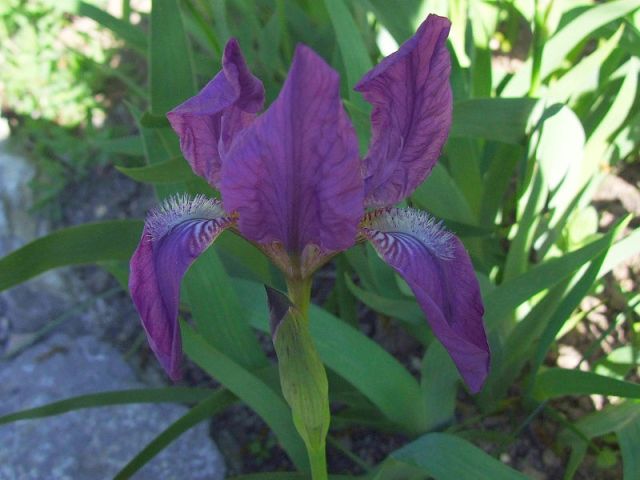
Iris aphylla -with prominent 'beard'

Iris aphylla -with prominent ‘beard’

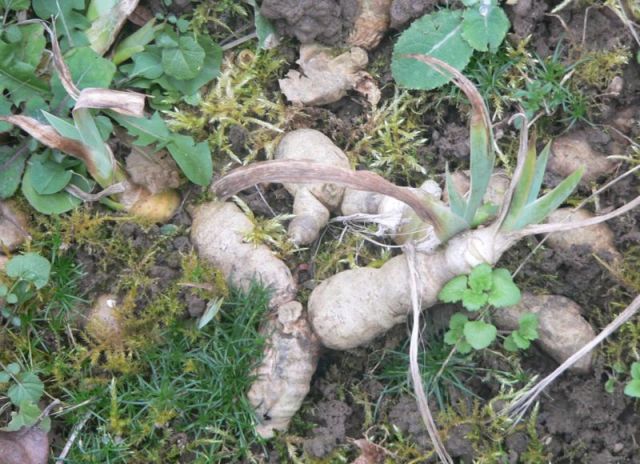
Iris orientalis showing rhizome roots

Iris orientalis showing rhizome roots

The Iris has connections with ancient Greece, where Iris was the messenger of the Gods, communicating between heaven and earth through a rainbow (so a reference to the wide range of Iris colours available). Irises have been valued plants for a long time and the flowers have had a long association with heraldry and royalty.

The iris flower has three outer and three inner tepals (a uniform type of petal on the outer part of the flower). The outer three bend back and may also hang down, so are referred to as ‘falls’ – they are usually the most colourful part of the flower and are especially large and colourful in the bearded irises, which have white or coloured hairs, like a beard, in the centre of each fall. Crested irises have a ridge (or crest) on each fall.

The three inner tepals are called ‘standards’, as they generally stand upright in the middle of the flower (like a flag), but may also lie horizontally as in I. tectorum; droop as in I. bucharicha; or be much reduced as in I. danfordiae.

Three modified styles called stigma flaps reach out over the falls from the middle of the flower and can be an important feature. The iris flower is of interest as an example of the relation between flowering plants and pollinating insects, the shape of the flower and the position of the pollen-receiving and stigmatic surfaces on the outer petals forming a convenient landing-stage for flying insects. All parts of the Iris plant are poisonous and contact with the sap may cause skin irritation. However, Irises are low in allergens.

Iris orientalis

Iris orientalis

Iris 'Samurai Warrior'- the closest breeders have come to a red Iris

Iris ‘Samurai Warrior’- the closest breeders have come to a red Iris

Irises are extensively grown as ornamental plants in home and botanical gardens. They grow in any good free garden soil, the smaller and more delicate species needing only the aid of turf ingredients, either peat or loam, to keep it light and open in texture. The earliest to bloom are species like I. junonia and I.reichenbachii, which flower as early as February and March (Northern Hemisphere). These are followed by the dwarf forms of I. pumila which blossom in Spring, and these are followed in early Summer by most of the tall bearded varieties, such as the German Iris and its variety florentina, Sweet Iris, Hungarian Iris, Lemon-yellow Iris and their natural and horticultural hybrids such as those described under names like I. neglecta or I. squalens.


The Iris is hardy, reliable, and easy to grow. Irises also attract butterflies and make lovely cut flowers. The Old Farmers’ Almanac suggests the following tips for growing Irises:

  • ‘Irises need at least half a day of sun and well-drained soil. Without enough sun, they won’t bloom.
  • They prefer fertile, neutral to slightly acidic soil. If your soil is very acidic, sweeten it with a bit of lime, and forbear summer watering, which can lead to rot.
  • Bearded irises must not be shaded by other plants; many do best in a special bed on their own.
  • Soil drainage is very important. Loosen the soil with a tiller or garden fork to a depth of 12 to 15 inches, then mix in a 2 to 4-inch layer of compost.
  • Plant iris in mid to late summer.
  • Bearded irises have rhizomes (fleshy roots) that should be partially exposed, or thinly covered with soil in hot climates.
  • Plant rhizomes singly or in groups of three with the fans outermost, 1 to 2 feet apart, depending on the size.
  • Dig a shallow hole 10 inches in diameter and 4 inches deep. Make a ridge of soil down the middle and place the rhizome on the ridge, spreading roots down both sides. Fill the hole with soil and firm it gently.
  • Water thoroughly.
  • When planting, top-dress with a low-nitrogen fertilizer, and again in early spring.’

As I conclude this article, I’m already thinking of an open, sunny spot where a bold display of summer flowering bearded Irises (one of the brown ones like ‘Kent Pride’) would look great in Old School Garden. Perhaps mixed in with some purple Heuchera to mask their rhizomes and some later seasonal interest ….watch this space.


PicPost: Bearded Beauty

Bearded Iris drawn by Sue Walker White

Further information:

Pictures of Iris varieties

About Iris

British Iris Society

National collection of water irises event

Iris weekend 6-7 July, Rosemoor, Devon

Places to see Bearded Irises in May- June:

Godlington House, Kent

Marks Hall Garden & Arboretum, Essex

Doddington Hall, Lincolnshire

Old School Gardener

If you’ve enjoyed reading this post and others on this blog, why not comment and also join some other people and sign up for automatic updates via email (see side bar, above right ) or through an RSS feed (see top of page)?

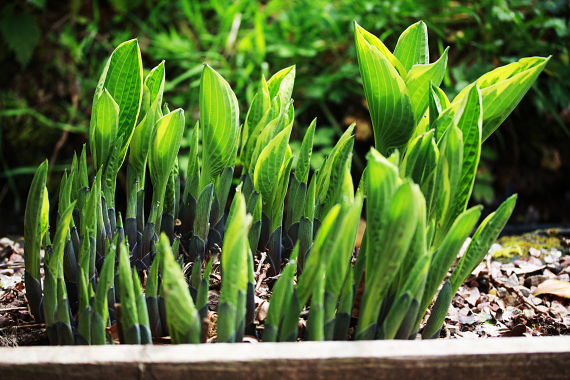
Hosta shoots

Hosta shoots -courtesy Marcus Bawdon http://www.countrywoodsmoke.com

‘Everyone has Hostas’… OK so you may think them unfashionable, but I love them… the whole growth process –  new shoots spearing up above the soil surface (right now in Old School Garden), the unfurling leaves, the full blousy foliage and the delicate flowers of pinks, lavenders and whites.

Otherwise known as the ‘Plantain lily’, Hostas come originally from eastern Russia, China, Japan and Korea. They are very hardy. Most of the 40 – 70 or so species (there is disagreement over the exact number) and over 7000 cultivars are grown for their foliage, though for many the flowers are also noteable. True perennials, their foliage dies back and they descend underground over winter, to send up new growth spears in spring and achieve their full glory in summer with some varieties flowering into early autumn. Some species also give a second, albeit brief, display in autumn.


The leaves vary between round, ovate, lance or heart – shaped and are between 12cm and 50cm in length. They come in all shades of green, some solid in colour others with margins or centres variegated in shades from white to golden yellow. Flowers range from bell to trumpet shaped, and are held in one-sided racemes or ‘scapes’.


Hostas will grow in full sun to full shade – they flower better if in the sun and the yellow-leaved varieties also do better in full sun. Overall, however, they tend to do best in dappled shade and where they are away from the hot noon-day sun (the blue – green leaved varieties have more intense colouring in the shade). They need moisture at their roots and this is even more the case in full sun – so they need watering in dry spells and generally do best in moist ground which is rich in organic matter and neutral to slightly alkaline . Foliage will start to wilt if they are too dry. They can be easily propagated by division at almost any time of year – a sharp spade or knife thrust down to split the roots is all that’s required.

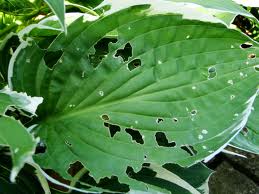
Slug and snail damage

Slug and snail damage

Pest problems focus on slugs and snails which can nibble the emerging shoots – such damage can scar the leaves for the rest of the season, so preventative and quick action to remove slugs and nails is crucial, especially in early spring. Sometimes, especially in water – logged ground, the plants can be susceptible to ‘crown rot’ and if this is the case they should be moved to a more suitable site. Hostas have low levels of allergens. Some Hostas are edible, their young shoots being forced and harvested in the far east, eaten sauted or rolled in proscuitto!


Hostas look good in groups around ponds and damp areas, and are particularly useful in areas of medium to light shade.   Their foliage makes for a bold texture so they are good as focal points, contrasting well with grassy – like leaves and stems. They are also good in containers where the leaves and flowers can be seen close up. I grow most of mine this way, in black planters in our Courtyard Garden – the black provides wonderful contrast to the rich greens and yellows of the foliage. But it’s important to keep them well watered once growth starts. Other ideas for using Hostas include:

  • ‘Plant different varieties in large masses or drifts for reliable color and texture in the garden.

  • Brighten shady garden areas with gold or variegated hostas.

  • Use hostas to bridge gaps in seasonal perennial bloom.

  • Variegated hostas with white or cream margins paired with other white flowering plants glow in “moonlight gardens” when homeowners arrive in the evening from work.

  • Hosta leaves emerge just as spring bulb foliage starts to fade, hiding it from view.

  • A single hosta in a container is dramatic and sculptural. Hostas look great in containers paired with other foliage plants or annuals. Remember to provide adequate water.

  • Plant fragrant hostas close to paths and walkways for best appreciation.

  • Use small hostas for edging along walkways and flower borders.

  • Hosta leaves and flowers are attractive in floral arrangements.’

Source: University of Minnesota Extension

Images from:  Newtonairds Lodge Hostas and Garden (the national collection), Wikipedia and other sites as shown on picture titles.

Further information:

RHS- Growing Hostas

British Hosta and Hemerocallis Society

Slug resistant Hostas

How to lift and divide Hostas (video)

Hosta varieties and where to buy etc.

The National Hosta collection

Winsford Walled Garden, Devon- success with Hostas

Hosta shoots wrapped in prosciutto

Hostas and their flowers


Old School Gardener

If you’ve enjoyed reading this post and others on this blog, why not comment and join others by signing up for automatic updates via email (see side bar, above right ) or through an RSS feed (see top of page)?

Geranium 'Johnson's Blue'

Geranium ‘Johnson’s Blue’

Geraniums comprise over 400 species of annual, biennial and perennial plants commonly known as ‘Cranesbills’. They originate from around the globe.The perennials are very useful as border plants, with beautiful flowers. They are easy to grow, long lasting and are useful ground cover. Underplanted with spring bulbs, their leaves are good at hiding untidy bulb foliage after flowering. They also give new life to a border otherwise left bare when the spring bulbs are over.

They don’t like waterlogged soil and so in the wild you find them all habitats except boggy ones. They are a diverse group, varying in both hardiness and their growing needs. G. malviflorum is unusual in that it makes top -growth through the winter, flowers in spring and disappears until winter!

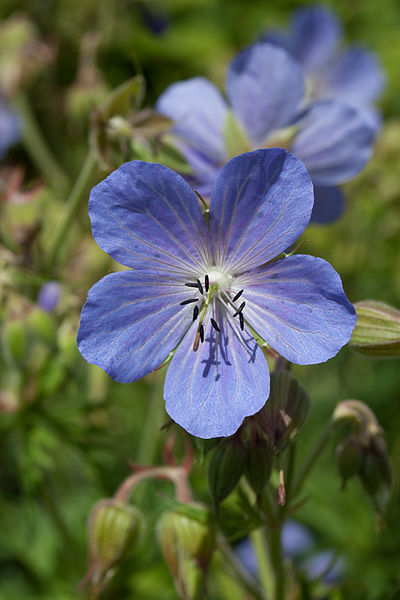
Geranium pratense (Meadow Cranesbill)

Geranium pratense (Meadow Cranesbill)

Geranium platypetalum

Geranium platypetalum

Geranium dissectum

Geranium dissectum

Most Geranium flowers are saucer-shaped, but can be flat or star like. They can come in umbels, panicles or cymes. They range in colour from white to dark plum through an array of pinks, blues and purples. Leaves are grouped around the base and the stem and are often deeply divided and toothed, and some are evergreen.

Many species are floppy or scramble and most need some sort of support to make them look reasonable. They all need shearing over the autumn/winter to encourage new basal growth, and some species, if sheared immediately after flowering will put on a second flush of leaves and flowers. Propagate by taking semi-ripe cuttings in summer, by seed, or by division in autumn or spring.

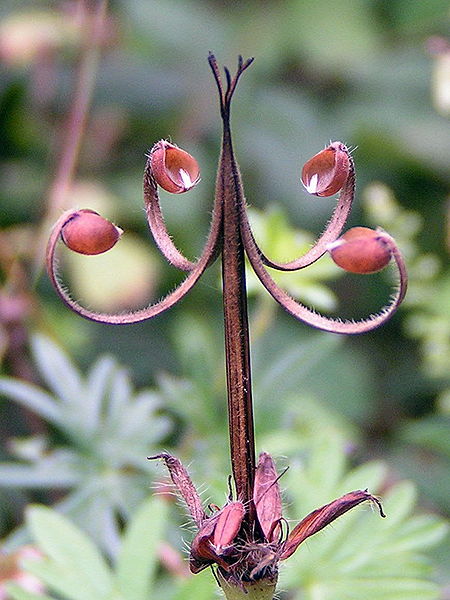
Geranium sanguineum showing 'bill' which aids seed dispersal

Geranium sanguineum showing ‘bill’ which aids seed dispersal

Most are drought tolerant and all are low in allergens. Some, such as G. nodosum and G. procurrens root when their stems touch the soil and G. thunbergii self seeds to a considerable extent, so should be deadheaded before the seeds form, if you want to restrict its spread.

Pelargoniums are often given the common name ‘Geranium’- both genuses are members of the Geraniaceae family. both were originally part of one family as defined by the botanist Linnaeus.

Geranium maculatum

Geranium maculatum

Geranium maderense

Geranium maderense

Further information:

10 AGM Hardy Geraniums for the garden- RHS

‘Geraniums- my hardy heroes’ – article by Bunny Guinness

Geraniums for shady places

National Collection of Geraniums- Cambridge Botanic Garden

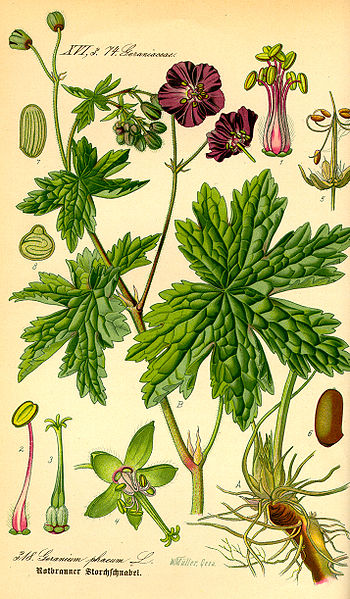
Geranium phaeum - from Thomé Flora von Deutschland, Österreich und der Schweiz 1885

Geranium phaeum – from Thomé ‘Flora von Deutschland, Österreich und der Schweiz’ 1885

Old School Gardener

If you’ve enjoyed reading this post and others on this blog, why not comment and join others by signing up for automatic updates via email (see side bar, above right ) or through an RSS feed (see top of page)?

Fuchsia-flowerFuchsia (named after the 16th century German botanist Leonhart Fuchs) are a genus of sub shrubs native to Central and South America and New Zealand. Whilst there are only around 100 species (organised into 12 sections) there are over 8,000 hybrids in cultivation!

Leonhart Fuchs

Leonhart Fuchs

Most are tender and deciduous but some are evergreen, especially in warmer areas. They like any reasonably moist soil and flower from midsummer to autumn.

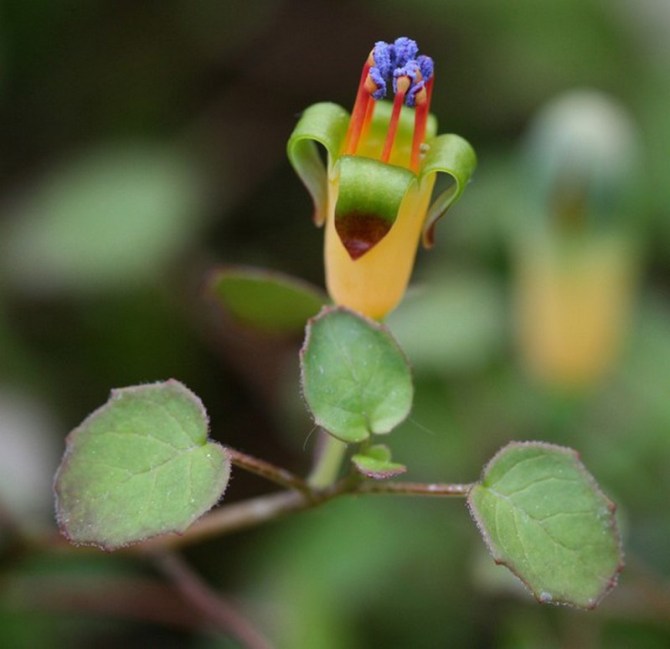
The flowers are unique in form and handsome. They form in clusters of pendent tubes or are bell-shaped  with widely spread sepals, with a surrounding ‘skirt’ of petals – some varieties with the same colour as the tube, others different. The number of petals varies between 4 (in the single flower varieties) and 8 (in double-flowered). The Fuchsia Tryphylla group have very long, single flower tubes.

Fcuhsia 'Thalia'

Fuchsia ‘Thalia’

Fuchsia 'Black Beauty'

Fuchsia ‘Black Beauty’

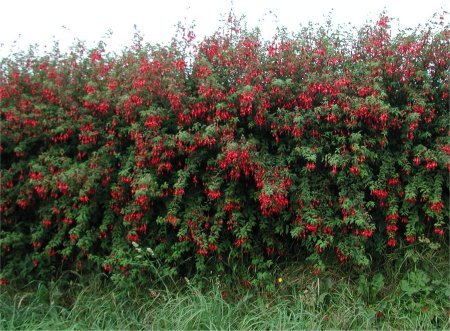
In colder areas fuchsia need to be in the warmest part of the garden and even then frost may kill off a lot of their top growth during winter.  Fuchsias do not grow well under trees.  A few are grown for their attractive foliage and all carry berries after flowering. Fuchsias are popular garden plants and can live for years with minimal care. The British Fuchsia Society maintains a list of “hardy” fuchsias that can survive through British winters. In the United States, the Northwest Fuchsia Society maintains an extensive list of fuchsias that have proven hardy in the Pacific Northwest over at least three winters.  Some more vigorous varieties can be trained as hedges (F magellanica, F. magellanica ‘Riccartonii’) and do particularly well in coastal areas. There are three main types :

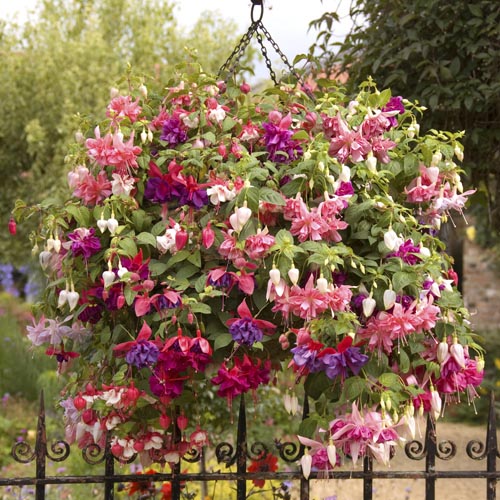
  • Half-hardy fuchsia: These need to be overwintered in frost-free conditions. Trailing types are ideal for hanging baskets (they need daily watering). Upright Fuchsias are a good choice for containers. In both cases, plants benefit from a balanced, liquid fertiliser in late summer
  • Hardy fuchsia: Plant the base of the stem 5cm below the soil surface and protect the crown in autumn with a mulch of compost, bark or straw. Cuttings can be taken in early autumn as an insurance against frost damage. Apply a dressing of general fertiliser in spring and again in summer
  • Standard fuchsia: These tend to be of the faster growing varieties and should always be brought under cover for winter as the main stem is prone to frost damage even if the variety is considered hardy. A balanced, liquid fertiliser used in summer encourages better blooms over a long flowering period
Fuchsia Hanging Basket

Fuchsia Hanging Basket

Fuchsia magellanica hedge

Fuchsia magellanica hedge

Fuchsias from these ‘sections’ have been shown to be especially hardy in the UK, Ireland and many other countries, including New Zealand and the Pacific N.W. of the United States:

  • Quelusia (F. magellanica and its variants, F. regia, etc.)

  • Encliandra (some encliandra hybrids flower continuously)

  • Skinnera (F. excorticata, F. perscandens)

  • Procumbentes (F. procumbens is suitable as a groundcover)

Fuchsia boliviana

Fuchsia boliviana

Fuchsia magellanica var. molinae

Fuchsia magellanica var. ‘Molinae’

Fuchsia procumbens

Fuchsia procumbens

Fuchsia michoacanensis

Fuchsia michoacanensis

Fuchsia 'Wendy's Beauty'

Fuchsia ‘Wendy’s Beauty’

A number of species survive outdoors in agreeable mild temperate areas, though some may not always flower in the average British summer. Due to the mild, temperate climate created by the North Atlantic Current, Fuchsias grow abundantly in the West Cork region of Ireland. They are associated with the area and a local branding initiative uses the fuchsia flower as its logo. For similar reasons fuchsias grow abundantly in the Isles of Scilly, where they have even colonised wild areas. While F. magellanica is not wide spread in Scotland it has been found growing wild in sheltered areas, and can been seen growing from self set seedlings along the banks of a stream that runs through Cambo gardens in Fife. Even in somewhat colder regions, a number of the hardier species will often survive as herbaceous perennials, dying back and re – shooting from below ground in the spring.

Fuchsias may suffer from infestations of aphids such as Whitefly. Fuchsia Gall Mite is a new pest threatening to cause more problems, and it can also be difficult to gain good control of Fuchsia Rust and Red Spider Mite once they get hold.

Sources and further information:

RHS- growing Fuchsias

Find that Fuchsia

The British Fuchsia Society

Wikipedia

Hmm... not sure about this Fuchsia.....

Hmm… not sure about this Fuchsia…..

Old School Gardener

If you’ve enjoyed reading this post and others on this blog, why not comment and join others by signing up for automatic updates via email (see side bar, above right ) or through an RSS feed (see top of page)?
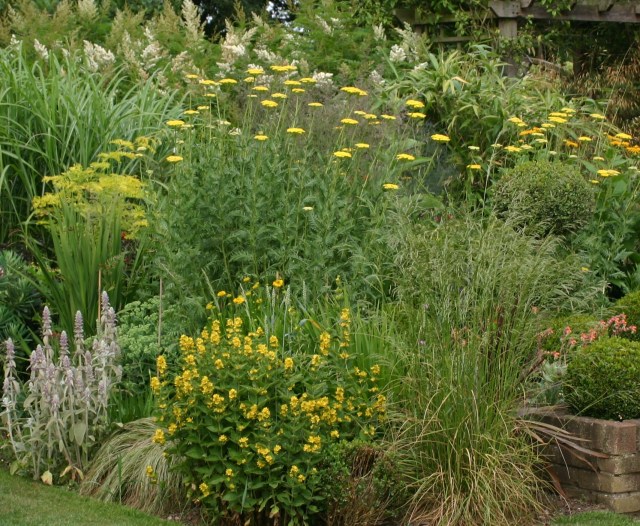
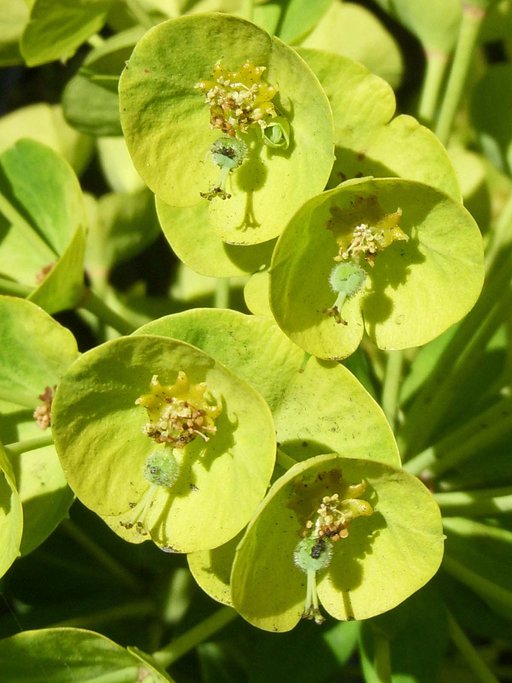
Euphorbia characias sub species 'Wulfenii'

Euphorbia characias sub species wulfenii

A bit like Marmite, gardeners  seem to either love or hate Euphorbia (Spurge) – I love them!

This is a large genus of over 2,000 species, including annuals,perennials as well as shrubs and succulents. They originate from many different parts of the world and as a result their growing requirements differ widely. They include the red-leaved species commonly seen at Christmas, Euphorbia pulcherrima (Poinsettia)

Euphorbia pulcherrima (Poinsettia)

Euphorbia pulcherrima (Poinsettia)

Some are evergreen and hardy, others are semi evergreen or deciduous. Nearly all species have distinctive ‘cyathia‘- small cups of long – lasting bracts that can be green, yellow, red, brown or purple. These are ‘cupping nectaries’ containing insignificant flowers with much reduced parts. In the perennials and shrubs these cyathia are carried in dense clusters. The leaves are very varied  and often are shed quite quickly.

Some species are very invasive and are not really suitable for the garden (e.g. E. cyparissias and E. pseudovirgata) others will self seed prolifically so need to be used with care (e.g. E. lathyris, E. hybernia,E.coralloides and E.wallichii). Some species can be invasive in some climates (e.g. E. myrsinites in parts of the USA) but are less problematic in milder, wetter places.

Euphorbia cyparissias (Cypress Spurge)

Euphorbia cyparissias (Cypress Spurge)

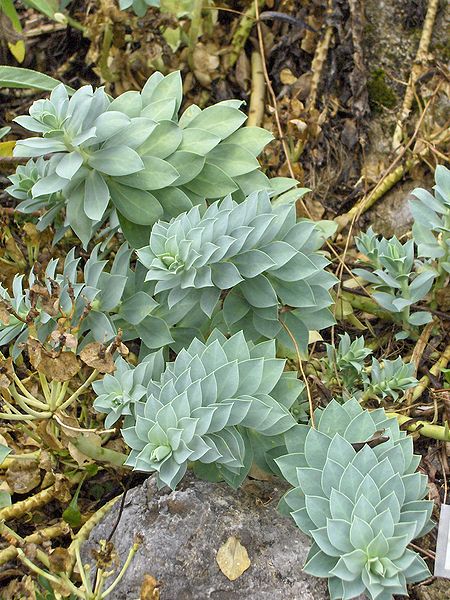
Euphorbia myrsinites

Euphorbia myrsinites

All Euphorbias resent disturbance, so siting them carefully from the start is important for long lasting plants. Euphorbia suit every situation from desert to bog, formal courtyard to wild woodland. With a couple of  exceptions Euphorbia are easy to grow. They are also look great in the garden, the colourful bracts lasting many weeks.

Euphorbia look best if allowed to sprawl at will, but if space is limited, you may need to support the floppier ones.

The evergreens require no routine pruning – simply tidy them up when they start to look untidy. Deciduous ones should be cut down to ground level in autumn. New shoots will emerge from the crown in spring. The biennial forms such as E. characias produce new shoots from the base each year. Cut out dead stems in winter. They are not fussy as to soil, but most prefer good drainage.

The bigger, more sculptural forms look good with architecture – against steps or walls, or in corners of courtyards. E. mellifera is a superb statement plant. E. myrsinites can be used in raised planters to sprawl over the sides. E. griffithii ‘Fireglow’ looks great beside water, with bronzy Rodgersias and red-flushed Astilbes, but will also look good in a hot border, while E. ‘Whistleberry Garnet’ associates well with ferns, Hostas and the dark-patterned leaves of Geranium phaeum.

All parts of Euphorbia are useful in flower arranging either in the fresh or dried state.

However all Euphorbia are poisonous and bleed a skin irritant milky sap, whereas the flowers are highly allergenic, so be careful when cutting or handling these wonderful plants.

Euphorbia polychroma

Euphorbia polychroma

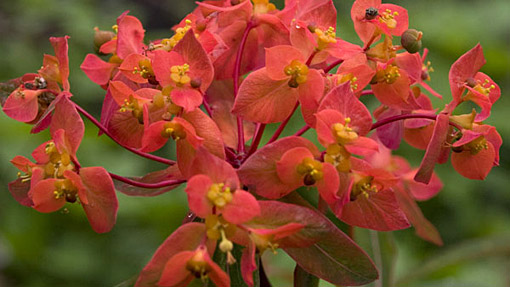
Euphorbia griffithii 'Fireglow'

Euphorbia griffithii ‘Fireglow’

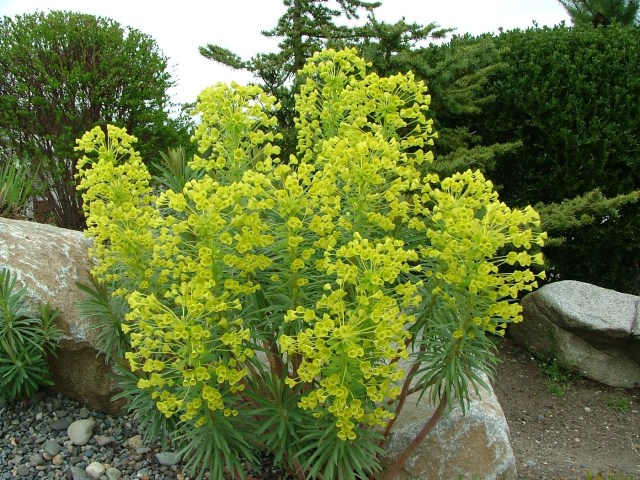
Euphorbia characias sub species 'Wulfenii'

Euphorbia characias sub species wulfenii

Further information:

National Collection of hardy Euphorbias

Growing Euphorbias

Euphorbia pulcherrima (Poinsettia)

Common varieties

Wikipedia

Old School Gardener

If you’ve enjoyed reading this post and others on this blog, why not comment and join others by signing up for automatic updates via email (see side bar, above right ) or through an RSS feed (see top of page)?

Campanula persicifolia

Campanula persicifolia

A very large genus, with some 300 species, including annuals and biennials as well as perennials. Campanulas are native to southern Europe, Turkey and Asia, and are found in wide range of habitats. Therefore the different species can have very different cultivation requirements. On the whole, they are undemanding and like dappled shade or sun in a well drained, fertile soil.

Campanulas vary in habit from dwarf arctic and alpine species under 5 cm high, to large temperate grassland and woodland species growing to 2 m tall. So there is a Campanula to fit most garden situations, from wall plants to borders, with different habits of trailing, spreading or clump – forming. Taller varieties may need staking.

The flowers have a wide variety of shapes, between star-shaped to bell-shaped (The ‘Bellflower’ is the common name for the genus) and variations in between.

Campanula poscharskyana (Serbian Bellflower)

Campanula poscharskyana (Serbian Bellflower)

Campanula takesimana 'Alba' with Cotinus

Campanula takesimana ‘Alba’ with Cotinus

Campanula lactiflora - seed heads

Campanula lactiflora – seed heads

Campanula glomerata  'Superba'

Campanula glomerata ‘Superba’

Campanulas have a long flowering season – late spring through summer. Some are rather invasive, so think about where you place these and keep an eye on them – or alternatively grow them in pots or other containers; examples are C. persicifolia (which also self seeds around the garden), C. pulla and C. takesimana.

They can be subject to attack by slugs and snails. Propagate by seed or division, cutting back old flowers and foliage in the autumn. Good for alpine beds, rockeries, ground cover and in borders and also good cut flowers. Campanulas partner well with Lamb’s Ear (Stachys), Lady’s Mantle (Alchemilla), Columbine, and Roses. Their delicate form and cool colors complement many other perennials.

Further information:

Campanula ‘Bernice’

Pictures of Campanula and other info

Rare Campanulas

Growing Campanulas

Quizzicals: answers to those on the last A-Z post- 

  • Helen drives a French car – Citronella
  • The era of the taxi – Cabbage

Old School Gardener

If you’ve enjoyed reading this post and others on this blog, why not comment and join others by signing up for automatic updates via email (see side bar, above right ) or through an RSS feed (see top of page)?

Finding Nature

Nature Connectedness Research Blog by Prof. Miles Richardson

Norfolk Green Care Network

Connecting People with Nature

Discover WordPress

A daily selection of the best content published on WordPress, collected for you by humans who love to read.

Susan Rushton

Celebrating gardens, photography and a creative life

Unlocking Landscapes

Writing, photography and more by Daniel Greenwood

Alphabet Ravine

Lydia Rae Bush Poetry

TIME GENTS

Australian Pub Project, Established 2013

Vanha Talo Suomi

The Journey from Finnish Rintamamiestalo to Arboretum & Gardens

Marigolds and Gin

Because even in chaos, there’s always gin and a good story …

Bits & Tidbits

RANDOM BITS & MORE TIDBITS

Rambling in the Garden

.....and nurturing my soul

The Interpretation Game

Cultural Heritage and the Digital Economy

pbmGarden

Sense of place, purpose, rejuvenation and joy

SISSINGHURST GARDEN

Notes from the Gardeners...

Deep Green Permaculture

Connecting People to Nature, Empowering People to Live Sustainably

BloominBootiful

A girl and her garden :)