Tag Archive: national trust


wp_20161028_16_20_47_rich

On a recent trip to see our friends Dave and Jen in Sussex we stopped off to visit Standen House and Gardens, near to East Grinstead.

This ‘Arts and Crafts’ family home has a lovely range of interiors, dressed for a weekend stay in 1925, so you can imagine you are a guest of the Beale family. There is excellent attention to detail in the furnishing of the rooms. James and Margaret Beale chose an idyllic location with views across the Sussex countryside for their rural retreat. Designed by Philip Webb, the house is one of the finest examples of Arts and Crafts workmanship, with Morris & Co. interiors creating a warm and welcoming atmosphere.

This slideshow requires JavaScript.

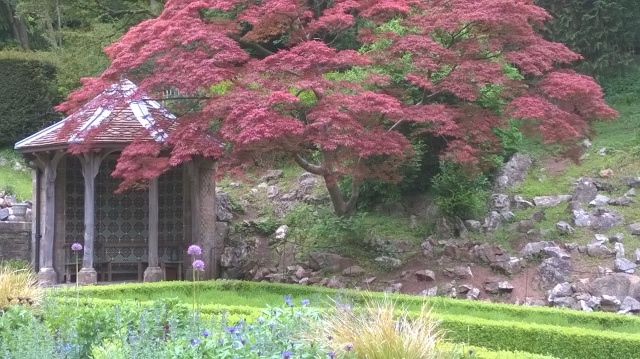
After a stimulating tour of the house we enjoyed a light lunch before venturing out into the gardens. A major restoration of the 5-hectare (12-acre) hillside garden showcases year-round seasonal highlights and an award-winning plant collection. On our visit the autumnal colours of the many Acers was a highlight. On the wider estate, footpaths lead out into the woodlands, Ashdown Forest and wider High Weald Area of Outstanding Natural Beauty.

Further information: National Trust website

Old School Gardener

WP_20160714_15_36_50_ProJuly in the Garden- by volunteer Sue Prutton

‘Yesterday was an oh so special day for me in that while I was wandering round the garden without a tour (the school summer holidays have begun and the customer-base has changed) I was overwhelmed with a wave of nostalgia. That perfume, redolent of romantic holidays in France, really took me back some 25 years …. and all because the lime trees were in blossom. I just stood still and invited anyone and everyone who passed me on their way to the Walled Garden to pause and enjoy it. One or two could not appreciate the perfume as for some scientific reason they were unable take it on board – similar to my late husband who could never smell my favourite freesias – but by and large the universal enjoyment provided by these small flowers really made my day.

The Walled Garden continues to be a source of amazement to our visitors – some have never seen it before but increasingly we have those who are returning to see the progress being made. A few weeks ago I noticed a “Walled Garden Salad” on offer in The Stables and now outside the restaurant door there is a list of the varied produce items which have made the rapid journey from the garden to the plate and are available each day. Surplus produce is regularly on sale from a table just inside the garden doorway and last weekend I was able to enjoy broad beans the way I like them – young and tender, rather than the larger, coarser version the supermarkets offer. I see that runner beans are coming on too, so I hope to be able to indulge in some of those soon.

On the far side of the garden, beyond the second greenhouse, the whole bed alongside the wall is devoted to dahlias. An excellent show is getting underway and is well worth investigating as it is not immediately visible from the entrance. So much has been achieved in less than two years but there is a great deal more still to come in the shape of the apple and pear trees now in place and which are destined to line the paths. It is lovely to see the visitors as they enjoy wandering up and down, their attention drawn to several varieties of lettuce, the chard and beetroot area, the courgettes and squash plants, the soft fruits and the many flowering plants. The new bothy is well used as it is quite a walk to and from the old one beside the double borders. As well as secure lockers for valuables there is a microwave and a dishwasher (no more excuses for grimy mugs, mercifully) and also a substantial set of tables and chairs so that the room could double up for meetings and similar. Back in the main garden a great deal of hard work is under way to re-take control of the boundary hedges in the ha-ha.

Elsewhere everything is at full peak blossom-wise. Five Tuesday evenings were set aside at the end of June and the start of July for “late night opening” when it was hoped that, weather permitting, families would bring picnics and enjoy a peaceful end to the working day. The weather did not always cooperate but on the evenings that it did, particularly on the final one which came at the end of an extremely hot day, it was lovely to see friends and families kick off their shoes, lounge in our deckchairs (we could do with a few more) and sip something cool and bubbly.

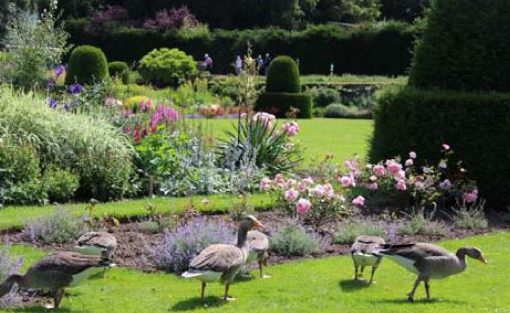
I had to smile a few weeks ago: in spite of the huge lake at their disposal I came across a pair of ducks giving their five well-grown offspring a swimming lesson in the Shell Fountain. I stood and watched as they calmly climbed out and waddled off back to the far larger “pool” which is always available for them. They had come on quite a stroll for their swimming lesson!’
ducks

WP_20160525_12_17_11_ProOn a recent trip to Devon, we stopped off en route to visit this Neo Gothic ‘pile’ in Somerset, former home of the Gibbs family, who made a ‘pile’ of their own, trading in a rather large ‘pile’ of Guano, or South American bird excrement, favoured for its value as a fertiliser in 19th century Britain.
This slideshow requires JavaScript.

Making our way from the impressively equipped visitor reception and restaurant we passed by a delightful formal parterre garden set some way away from the house, and then toured this amazing mansion, with its glorious colourful decor and richly carved woodwork. Much of the house is in need of renovation, but the National Trust has made great progress in restoring some of the most important rooms.

This slideshow requires JavaScript.

‘… An ordinary man with an extraordinary fortune, a man of vast riches but simple pleasures. Antony was the second generation of the Gibbs family to live at Tyntesfield. He epitomised the Victorian age, fascinated by art, technology and travel….After buying Tyntes Place for his growing family in 1843, William Gibbs went about making it his own. He remodelled the exterior of the simple regency house into the Gothic extravaganza we see today….Four generations of family life, a love of beautiful things and the accumulation of useful bits and bobs made Tyntesfield a treasure trove of objects. Almost  60,000 objects have been catalogued including everything from priceless paintings and ornate furnishings to ice skates and picnic sets. It is the largest recorded collection owned by the National Trust and tells the story of a wealthy family’s life over four generations….’

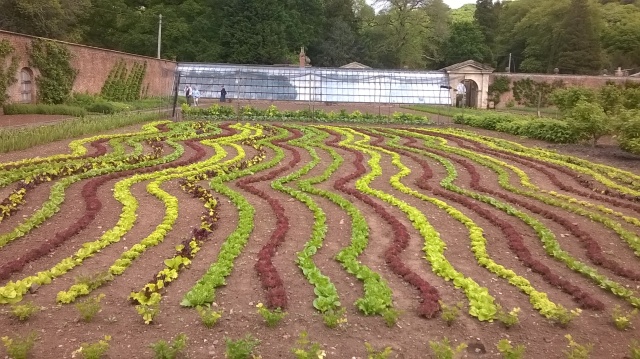
From here we made our way through some lovely formal gardens near to the house and then to the Walled Garden, where some gardener must have been a little the worst for wear when he/she planted the lettuces…

WP_20160525_13_32_54_ProSeriously, this series of wobbly lines was done as a bit of light relief in what might otherwise be the normal regimented lines of fruit and veg; I loved it.

And the rest of the garden was interesting, too, though I thought it lacked some variations in height to give it structure.nearby was a rather nice play area with lots of carved and country-themed play features; I especially liked the large slug (which doubles as a nice seat).

There was also a stall selling fresh veg and bulbs so I spent a little on buying some orange Tulips for next year…now where have I put them?

Further information: National Trust website

Old School Gardener


Our friends Jen and Dave visited us at the weekend and on the way they stopped off at the wonderful Anglesey Abbey in Cambridgeshire. This National Trust property has a spectacular display of Snowdrops (finished by the time of their visit), formal gardens, summer borders and also a winding Winter Garden which features a fantastic mixture of flower, leaf and stem colour. Here are Jen’s pictures from that Winter Garden; I expect it will soon be pruned- thanks Jen!

Further information: National Trust Website

Old School Gardener


WP_20160224_15_46_02_Pro

En route to West Devon recently we had time for a brief afternoon stop at this wonderful National Trust property just outside Tiverton.

The house was built by Sir John Heathcoat Amory, the grandson of John Heathcoat, creator of the mechanised bobbin lace making machine and owner of a lace factory in Tiverton.

This slideshow requires JavaScript.

The foundation stone was laid in 1869, but it was not until 1873 that the elaborate interior designs were completed. William Burges, designer of Knightshayes, had a rocky relationship with the family and was fired half way through the project, leaving his imaginative vision incomplete.

Burges was replaced by another reputable designer, John Dibblee Crace, who turned out to be another ill-fated choice. Much of Crace’s work was covered up by the family, but later restored by the Trust.

We only had time to see the ‘Gothic Revival’ house and its colourful interiors (the Trust has imaginatively opened up some of the unrestored rooms too)  and quick tour of the formal gardens. These were originally designed by Edward Kemp (1817-1891), a reputable landscape gardener, but it fell into decline by the 1920s. Rescued by Sir John and Lady Heathcoat Amory, after the Second World War, the garden became one of the finest in England, winning the highest horticultural awards, with more than 1,200 species unique to Knightshayes. This garden has a very strong structure created by extensive Yew hedging and some amusing topiary animals scampering along the tops!

The restored Walled Garden was also an interesting spot, with its steeply sloping site being used to grow vines the ‘French Way’.

This slideshow requires JavaScript.

Knightshayes is certainly worth another, longer visit, when we can also explore the woodland garden… on the way out we stopped at a new ‘natural play’ site which cleverly uses three huge toppled oak trees to create a series of walkways, swing points, tunnels and other features.

Further information: Knightshayes National Trust website

Old School Gardener

image1My friends Jen and Dave paid a visit to the wonderful gardens at Nymans in Sussex, recently. Jen says:

‘On a cold (4 degrees),damp and very grey day we went to Nymans, a National Trust property, for a long muddy walk in their woods.
The gardens are well known for several different types of snowdrops but it was the variety of winter colour which shone through. The C
amellias have been coming out early and there were even a couple of Rhododendrons in flower.’

Thanks for the pictures, Jen!

Old School Gardener


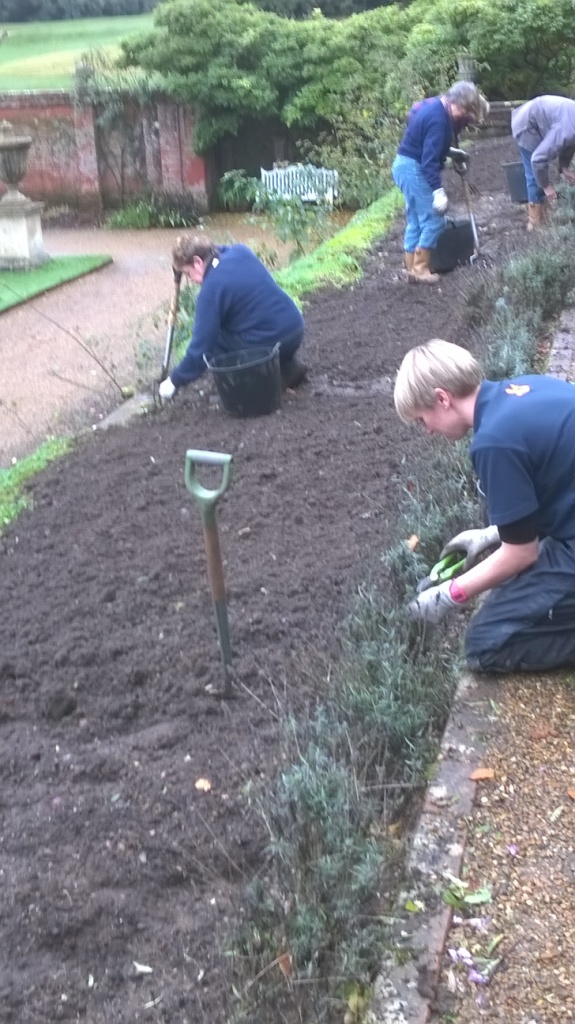
WP_20151112_14_20_33_ProThe ‘dynamic duo’ of Peter and I continued with strimming the avenues and connecting paths in the outer gardens at Blickling this week.
I arrived to find the gardeners and Peter gathered around a large, new trailer which had just been delivered. I later looked this over and had an interesting discussion about its features and how useful an addition it was going to be to the gardeners’ armoury….

Hmm...big, shiny, but how useful?

Hmm…big, shiny….

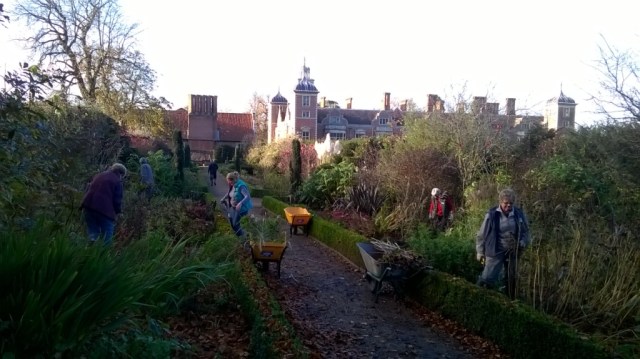
The ladies, meanwhile were finishing off cutting back and clearing the double borders, which only a few weeks ago had been resplendent in their late summer colours.

Cutting back the double borders on a beautiful autumn day

Cutting back the double borders on a beautiful autumn day

Having adjusted the belt on the strimmer I found I was really getting into my stride (or should I say ‘swing’?) with this useful machine- it was rather like old-time scything but without the muscle power needed for that. However, it was sweaty work clearing around trees and the edges of shrubs  where the mowers can’t reach.

After lunch I had an interesting chat with gardener Ed and Peter about the way the avenues of Beech, Oak and other trees have to be regularly cleared of fast-growing understorey trees and shrubs such as holly, yew and rhododendrons. The impact of letting these plants over grow the trees was evident in the bent over trunks of some examples (or ‘on the huh’ as we say in Norfolk!).

The maintenance plan involves every year or so stooling (or coppicing) these vigourous plants and so maintaining  space around the avenue trees. As Ed pointed out, there are some clear examples of where action is going to be required in the near future, so perhaps Peter and I will be moved on to chain saws soon!

Blickling has a new website, why not take a look at the link below?

A virtually deserted garden at a sun-scanned Blickling..

A virtually deserted garden at a sun-scanned Blickling..

Further Information:

Blickling Hall website

Blickling Hall Facebook page

A 360 degree tour of Blickling Hall

Old School Gardener


WP_20151105_12_20_46_ProMore strimming this week in my short session at Blickling.

The ladies were whisked away to pull up the Penstemons for over wintering and to make way for next spring’s display of Hyacinths.

WP_20151105_12_29_36_ProFellow volunteer Peter and I were sent to the wider gardens where the grass had been mown a few days before, but where the mower couldn’t go, we were to strim away the long grass around tree trunks and edges etc. There are several avenues of beech and other trees radiating away form the more formal gardens area and we worked our way along and around these.

As I’ve reported before, these strimmers are pretty strong and use a plastic-sheathed metal cord which is quite capable of cutting through pretty thick stems as well as grass. We were mindful of this and were careful not to go too near the trunks of the trees for fear of ‘ring-barking’ them, which causes wounds that are open to disease and rot.

WP_20151105_12_21_22_ProThe Hall has now closed for the winter (apart from special events and group visits) and the gardens are on shorter opening hours. The last colour of flower has now pretty much disappeared and the focus in the gardens is on cutting down, pulling out, dividing and mulching in preparation for winter.

Further Information:

Blickling Hall website

Blickling Hall Facebook page

A 360 degree tour of Blickling Hall

Old School Gardener


Sizergh Castle, Cumbria- picture via National Trust

Sizergh Castle, Cumbria- picture via National Trust

WP_20150911_14_11_48_ProSo, we were on our way home from Northumberland and stopped off for a lunchtime visit to Goddards, a National Trust property on the outskirts of York.

This one time home of Noel Goddard Terry, owner of the famous chocolate-making firm Terry’s of York was designed by architect Walter Brierley in the Arts and Crafts style and is complemented by four acres of gardens, designed by George Dillistone.

The house has selected rooms displayed to give glimpses into the family home and workings of a chocolate factory. You’ve probably heard of (if not eaten) a Terry’s Chocolate Orange (traditional for a British Christmas!), but did you know there was also once a Chocolate Apple?!

This slideshow requires JavaScript.

The garden includes yew-hedged garden rooms, a bowling green, wilderness gardens and plants for every season; it is also an oasis for wildlife.

On our visit we met an enthusiastic Garden Volunteer, whose role was to engage visitors among other things. The gardens were delightful, and obviously a lot of work is going into bringing them back to their Arts and Crafts roots. I particularly loved the classic terrace overlooking the garden, with its wicker chairs ready for a Sunday afternoon doze in the sun. Oh, and we had a lovely lunch in a traditonal style restaurant in the house too.

Further Information: National Trust website

Old School Gardener


Finding Nature

Nature Connectedness Research Blog by Prof. Miles Richardson

Norfolk Green Care Network

Connecting People with Nature

Discover WordPress

A daily selection of the best content published on WordPress, collected for you by humans who love to read.

Susan Rushton

Celebrating gardens, photography and a creative life

Unlocking Landscapes

Writing, photography and more by Daniel Greenwood

Alphabet Ravine

Lydia Rae Bush Poetry

TIME GENTS

Australian Pub Project, Established 2013

Vanha Talo Suomi

The Journey from Finnish Rintamamiestalo to Arboretum & Gardens

Marigolds and Gin

Because even in chaos, there’s always gin and a good story …

Bits & Tidbits

RANDOM BITS & MORE TIDBITS

Rambling in the Garden

.....and nurturing my soul

The Interpretation Game

Cultural Heritage and the Digital Economy

pbmGarden

Sense of place, purpose, rejuvenation and joy

SISSINGHURST GARDEN

Notes from the Gardeners...

Deep Green Permaculture

Connecting People to Nature, Empowering People to Live Sustainably

BloominBootiful

A girl and her garden :)