

Campanula

Scabious

Pulsatilla

Anemone

Gypsophila

Iris

Verbascum
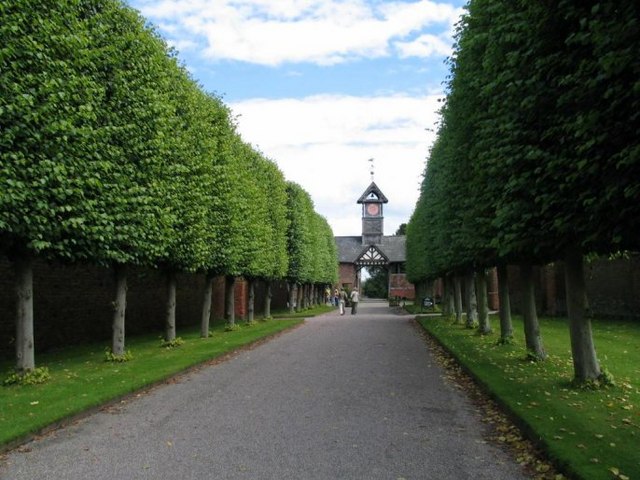
‘I have a row of overgrown lime trees which originally formed a screen and which I want to cut back and pleach. Are limes suitable for this kind of training and what are the details of the method?’
"Walking in a thick pleached alley in mine orchard" - William Shakespeare, 'Much Ado About Nothing'
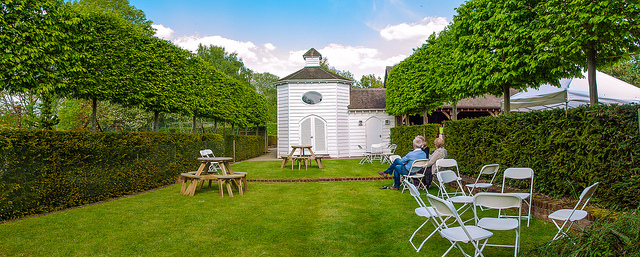
Pleached Trees and an underlying Yew hedge ay Dipley Mill, Hampshire, via
Angus Kirk

Pleaching in process


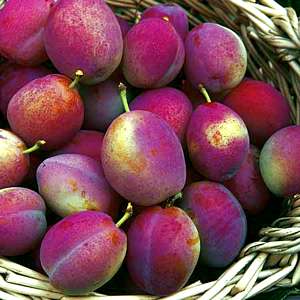
‘We have two plum trees that both blossom, but a lot of the fruit drop before they are fully formed – why is this?’
So ask a Mr. and Mrs. Howard Hughes from Surbiton, Surrey.
Well, the likely reason is a lack of calcium, as this is vital when the stones are being formed. Many sandy soils are low in Calcium, so if you have this sort of soil, this might explain the problem. If there is insufficient Calcium to go round, some fruit will drop off before they have fully formed. To remedy this try a dressing of Lime over the whole area during the winter and then in the spring a mulch around the trees with well-rotted manure or compost should also help.
Whilst we’re dealing with plums another problem you might come across is the leaves developing a silvery sheen and the tree looking sick. This is most probably a sign of ‘silver leaf’ – a disease which requires all of the infected and dead wood to be burned before the middle of July. If you accidentally cut into healthy wood, cover the cut with a wound sealant. To improve the general health of the tree apply a general fertiliser such as Fish, Blood and Bone in February /March.
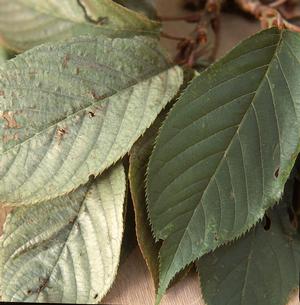
Silver Leaf- infected leaves (left) compared to healthy
If you’ve enjoyed reading this post and others on this blog, why not comment and also join some other people and sign up for automatic updates via email (see side bar, above right ) or through an RSS feed (see top of page)?
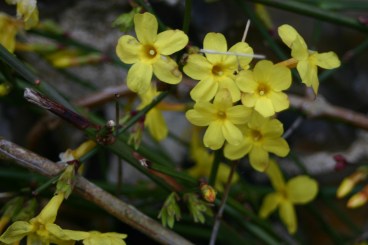
Looking good in Old School Garden at present – Winter Jasmine (Jasminum nudiflorum)
Well, I guess that I’m sold on the benefits from rotation. Basically, you reduce the chances of persistent pests and diseases building up (which affect a particular plant or group of plants) and you manage the demands placed on the soil from different crops (and in the case of peas and beans actually stand to replenish, or if not that, then at least not deplete the store of Nitrogen).
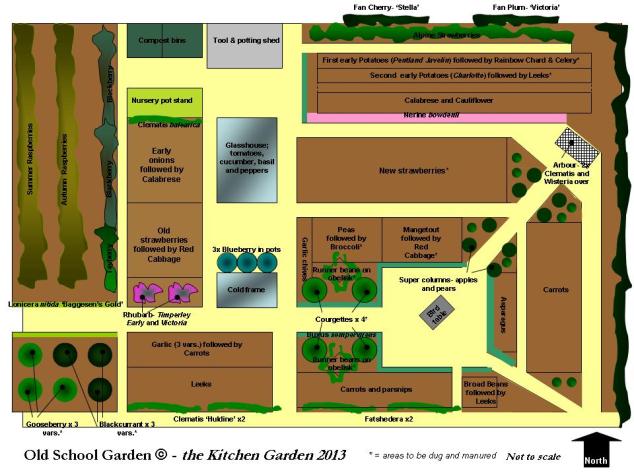
Fine in theory, but it’s posed a real challenge to me in planning my crops in the kitchen garden. I’ve survived to date (just) with hasty diagrams on odd scraps of paper and scribbled ideas about what to grow where. To be quite honest, I’ve become muddled about what was previously grown in the different beds, what needs to follow what and whether I should manure, fertilise and/or add lime….sound familiar? With just the two of us at home to cater for it’s also been a bit difficult avoiding growing either too much or too little of the right things (generally the former).
Part of the problem is that my Kitchen Garden is divided up into a number of raised beds of different sizes and aspects, so it’s a challenge fitting things into the spaces available. I also feel that it’s important to max the growing potential by putting in follow-on crops once early harvests of things like Broad Beans, onions and early potatoes have been ‘garnered in’.
Then there’s the issue of focusing on what we like to eat (sounds simple, eh?). Over recent years we’ve had mixed results:
So we’ve started to focus on the crops we like (with a bit of experimenting), things that can be expensive to buy, freezables for the winter months (Courgettes come to mind) and some particular varieties that ‘float our boat’- Mangetout for instance in preference to those whopper peas that pigeons seem to rather enjoy!
So yesterday (after pruning the apple trees), I spent a couple of hours drawing up a proper diagram of the plot, tried to think through what could go where (once I’ve taken permanent crops like fruit, Rhubarb and Asparagus out of the equation)- and also whether there’s potential for second crops in some areas, too.
I’ve tried to follow the rules on rotation (brassicas following legumes, potatoes following brassicas and onions and roots following potatoes), but I must admit it’s a bit hit and miss, taking all of the other variables into account! What’s your experience and do you have any sure- fire tips to help me?
and just for fun two more ‘gardening ditties’:
‘Pepper’s got a brand new bag’
‘Spice Oddity’ (topical huh?- thanks Les)
Nigel Boldero aka 'Old School Gardener'
 | Nigel Boldero on Fighting to Reduce Climate Cha… |
 | Anonymous on Fighting to Reduce Climate Cha… |
| Anonymous on PicPost: Carrot, my foot! |
| 18 Surprising Hydran… on Plantax 16: Hydrangea the wate… | |
| Nigel Boldero on Poppyland: A Victorian romance… |
| Anonymous on Poppyland: A Victorian romance… |
| Anonymous on Plants to die for… |
 | Isabella Childress on PicPost: Forest, but not as we… |
 | Happiness Factor on Is child-friendly planning a l… |
 | zidane on Top Tip: On a Pedestal- make m… |





Nature Connectedness Research Blog by Prof. Miles Richardson
Connecting People with Nature
A daily selection of the best content published on WordPress, collected for you by humans who love to read.
Celebrating gardens, photography and a creative life
Writing, photography and more by Daniel Greenwood
Lydia Rae Bush Poetry
Australian Pub Project, Established 2013
The Journey from Finnish Rintamamiestalo to Arboretum & Gardens
Because even in chaos, there’s always gin and a good story …
RANDOM BITS & MORE TIDBITS
.....and nurturing my soul
Cultural Heritage and the Digital Economy
Sense of place, purpose, rejuvenation and joy
Notes from the Gardeners...
Connecting People to Nature, Empowering People to Live Sustainably
A girl and her garden :)

 Old School Garden