Tag Archive: kitchen garden


IMG_7367

Whilst visiting our son (who’s studying at Loughborough University) we took advantage of the ‘Heritage Open Days’ event at nearby Calke Abbey, Derbyshire. Billed by owners, the National Trust as ‘The un-stately home and country estate’ because of its peeling paintwork and overgrown courtyards, Calke Abbey is witness to the wider decline of country house estates all over Britain, especially after the First World War (avid viewers of the latest TV series of ‘Downton Abbey’ can get a taste of some of the issues – death duties, lack of staff, economic downturn).

Whilst some of the House and stables have been restored, there are still many other areas where old furniture, toys and a myriad other ‘heirlooms’ have been left to speak volumes of how the British landed gentry went through a major ‘downsizing’. Admittedly the family who owned Calke did amass a vast collection of curiosities and ‘hidden treasures’- there are fascinating collections of sea shells, rocks and pebbles for example.

The house was delightful and had some very friendly ‘in character’ guides to help tell the story. But the garden was the gem in my eyes. Extensive parkland with a number of beautiful mature trees, deer roaming and typical Victorian curiosities like the fernery give way to a massive walled garden, much of which is now just turned over to grass, but a significant portion of which houses a wonderful kitchen garden (with an access tunnel to ensure the gardeners weren’t seen from the house!). There is also an impressive array of original glasshouses and an orangery in which peaches and other tender fruit and veg are still grown. I particularly liked the Squash Tunnel made of rustic poles and featuring a range of different squashes. Approached by a colourful Dahlia border, there’s also a fascinating ‘Gardeners’ Bothy’, complete with old tools and equipment, seed trays and prize certificates from yesteryear! I was puzzled by one seed drawer, labelled ‘Borecole’. I hadn’t come across this name before and guessed it migth be some local corruption of ‘broccoli’. I now know it’s another term for Kale or a particular variety of Kale!

Walking through the pretty featureless,  grassed over walled garden you suddenly turn a corner and enter a more intimate, warm, walled garden with blocks of bright colours and interesting foliage. An amazing contrast, this formally laid out garden with a range of exotic plants as well as classic bedding, made me draw breath and smile like a Cheshire Cat!

This area has been superbly laid out and the colour, foliage and flower combinations are very impressive. There’s an ‘Auricula Theatre’ currently housing Pelargoniums (see the picture I posted of this earlier in the year) and a pool, all contributing to a peaceful spot where you can (and we did) sit and gaze at the wonder of nature – as coaxed and displayed by man of course! This was a truly inspiring afternoon, so if you get the chance, get along to Calke Abbey (by the way there was never an abbey here).

Further information:

National Trust Website

History- Wikipedia

Old School Gardener

If you’ve enjoyed reading this post and others on this blog, why not comment and join others by signing up for automatic updates via email (see side bar, above right ) or through an RSS feed (see top of page)?

IMG_6457

The ‘Cornwall Gardens Guide’ mentions 9 gardens beginning with ‘Tre’ (Cornish for ‘homestead’ or ‘town’). Having just returned from two weeks there and in Devon, I visited three of these (Trengwainton and Trelissick as well as Trerice) as well as Godolphin, Glendurgan and St. Michael’s Mount. They all share Cornwall’s mild climate and several have river valley settings and their associated semi – tropical microclimates. Despite these similarities, I found these wonderful gardens to have a range of distinctive styles or features, largely reflecting the historic interests of their owners and gardeners.

Over the coming weeks I’ll do a photo feature on each of these as well as Killerton Gardens (near Exeter, Devon) and will throw in a couple of very special places – the Barbara Hepworth Sculpture Garden in St. Ives and Chysauster Ancient Village, both in Cornwall. I begin where we began our tour, at Trerice near Newquay, a place we visited en route to our destination of St. Ives. This Elisabethan house and gardens is described by the National Trust as:

‘An intimate Elizabethan manor and a Cornish gem, Trerice remains little changed by the advances in building fashions over the centuries, thanks to long periods under absentee owners.’

The house is certainly delightful to look at, with its rust coloured granite stone, ‘dutch’ gables and ancient leaded windows – many of which are cracked from the test flights of ‘Concorde’ 50 years ago! These ‘sonic booms’ must have been especially noticeable in  what is otherwise a very quiet, peaceful place, far away from busy roads or settlements (we managed to get very lost in some frighteningly narrow country lanes trying to find our way to our next destination).

A formal approach to the house sets it off beautifully and the other garden areas include a grass labyrinth, ancient bowling alley, a woven – fenced kitchen garden and some more recent sloping borders containing a mix of food and ornamental plants – I imagine this might be something of a challenge at harvest time! Of particular interest is an Elisabethan garden in the making, based on a ceiling design in the house as a nod to the sort of layout the original might have been based on, records of what actually existed not being available. This was in the course of setting out when we visited, but a very good artist’s impression shows how this will look – a formal pattern of Box hedging enclosing lavender and roses, which will be a great addition to these lovely gardens.

And the house is of great interest too, with some very friendly and helpful guides to show you around and help you (and any younger members of your party) try on suits of chain mail and pose with a longbow!

Further information:

National Trust web site

Old School Gardener

If you’ve enjoyed reading this post and others on this blog, why not comment and join others by signing up for automatic updates via email (see side bar, above right ) or through an RSS feed (see top of page)?

 Close up of strong wind break netting

Close up of strong wind break netting

No, not a reference to too many sprouts, but a serious question from L. Onerf in Somerset:

‘Vegetables are not growing well in my windy garden, but I am reluctant to plant windbreaks of trees or hedges, as they will create shade and take moisture from the soil. What alternatives are there?’

If you want to avoid the costs of installing a fence/trellis with openings to allow the wind to percolate through at an acceptable speed, I think the answer lies in putting in a screen of synthetic wind break material, obtainable from most garden centres or online. The strength and quality of this varies and some is fairly costly, but a 1.5- 1.8 metre high wind break around your plot would give dramatic results. I found a 50 metre x 2 metre roll of knitted net on offer online for around £170 or much the same on Ebay for about £40, and £13 for a 10 metre length. Make sure the posts are anchored firmly in the ground (corner posts may need to be reinforced and they should ideally be bedded in concrete), as the netting takes a tremendous strain in high winds.

On the subject of vegetable or kitchen gardens, is yours laid out for maximum efficiency and growing space?

Traditionally vegetables were grown in large plots, often 6-9 metres wide and as long as the garden allowed. The vegetables were arranged with a lot of wasted space between rows. Today we know that vegetables can be grown far closer together without any adverse effects; indeed, there is a a trend towards abandoning rows and growing vegetables with equal spacing between the plants in each direction, in blocks or patches.

Narrow beds in the Kitchen Garden at Old school Garden

Narrow beds in the Kitchen Garden at Old School Garden

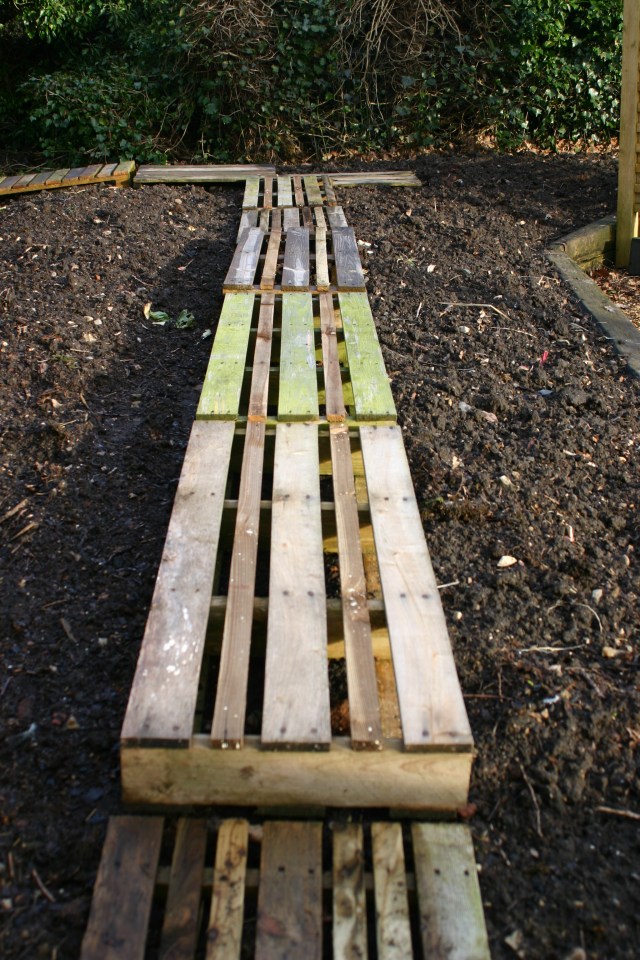
This compactness lends itself to smaller, narrower beds, say 0.9 – 1.5m wide, which can be any length you like. These narrower beds are easier to manage from either side (so avoiding walking on the bed itself and opening up the possibility and benefits of ‘no dig’ cultivation) and the denser planting also helps to crowd out weeds. here at Old School Garden, my kitchen garden ahs been laid out along these lines, though I still have a one large bed which I’ve effectively split into two by creating a ‘boardwalk’ path out of old pallets.

New boardwalk made of old wooden pallets

Boardwalk made of old wooden pallets, used to split a large veg bed into two

Do you have any gardening questions I might help you with? If so, please email me: nbold@btinternet.com

Old School Gardener

If you’ve enjoyed reading this post and others on this blog, why not comment and join others by signing up for automatic updates via email (see side bar, above right ) or through an RSS feed (see top of page)?

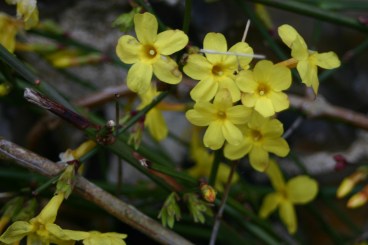
Looking good- Winter Jasmine (Jasminum nudiflorum)

Looking good in Old School Garden at present – Winter Jasmine (Jasminum nudiflorum)

 Planning your crops- to rotate or not to rotate…

Well, I guess that I’m sold on the benefits from rotation. Basically, you reduce the chances of persistent pests and diseases building up (which affect a particular plant or group of plants) and you manage the demands placed on the soil from different crops (and in the case of peas and beans actually stand to replenish, or if not that, then at least not deplete the store of Nitrogen).

Fine in theory, but it’s posed a real challenge to me in planning my crops in the kitchen garden. I’ve survived to date (just) with hasty diagrams on odd scraps of paper and scribbled ideas about what to grow where. To be quite honest, I’ve become muddled about what was previously grown in the different beds, what needs to follow what and whether I should manure, fertilise and/or add lime….sound familiar?  With just the two of us at home to cater for it’s also been a bit difficult avoiding growing either too much or too little of the right things (generally the former).
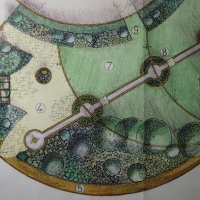
Part of the problem is that my Kitchen Garden is divided up into a number of raised beds of different sizes and aspects, so it’s a challenge fitting things into the spaces available. I also feel that it’s important to max the growing potential by putting in follow-on crops once early harvests of things like Broad Beans, onions and early potatoes have been ‘garnered in’.

Then there’s the issue of focusing on what we like to eat (sounds simple, eh?). Over recent years we’ve had mixed results:

  • some rather exotic looking French Beans which turned out a pretty yellow on the plant and then went a sort of beige when cooked- not inviting,
  • peas -they seem to involve an awful lot of trouble for not much reward
  • main crop potatoes– they take up a lot of ground and don’t taste that different from a large bag bought for a fiver…

So we’ve started to focus on the crops we like (with a bit of experimenting), things that can be expensive to buy, freezables for the winter months (Courgettes come to mind) and some particular varieties that ‘float our boat’- Mangetout for instance in preference to those whopper peas that pigeons seem to rather enjoy!

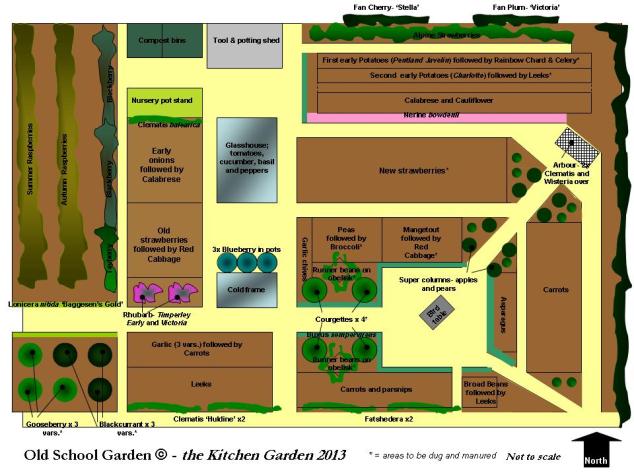
So yesterday (after pruning the apple trees), I spent a couple of hours drawing up a proper diagram of the plot, tried to think through what could go where (once I’ve taken permanent crops like fruit, Rhubarb and Asparagus out of the equation)- and also whether there’s potential for second crops in some areas, too.

I’ve tried to follow the rules on rotation (brassicas following legumes, potatoes following brassicas and onions and roots following potatoes), but I must admit it’s a bit hit and miss, taking all of the other variables into account! What’s your experience and do you have any sure- fire tips to help me?

At last, a cunning plan for food growing in 2013! (I hope)

(click on the image to enlarge and see a panorama video of the garden as it looks today at http://www.youtube.com/watch?v=rZ20lLrTLIc&feature=youtube_gdata_player)

kitchen gdn layout

P.S.  A note on manure:  if you can get some well rotted animal manure it could be good to either dig it into your beds or just lay some on top for the worms to incorporate into the soil. I’d be careful about putting it down everywhere though, as root crops like carrots and parsnips don’t like freshly manured ground (they tend to fork and not grow well in the heavier conditions that are created). However, ‘hungry’ cops like potatoes, brassicas (cabbages, calabrese, cauliflower, broccoli), courgettes, squashes and legumes (peas, beans) would all benefit from some, as would a greenhouse if you’re planning to grow tomatoes. Ideally it needs to be obtained and placed or dug in in the next few weeks in order for the weather to break it down and help to incorporate it into the soil.

Further information: Vegetable Gardening for Beginners: The Complete Guide

Quizzicals: answers to the last two…

  • Private part of a old crooner Periwinkle
  • The organ that enables you to say ‘2 plus 2 = 4’Adder’s Tongue

and just for fun two more ‘gardening ditties’:

‘Pepper’s got a brand new bag’

‘Spice Oddity’ (topical huh?- thanks Les)

Old School Gardener

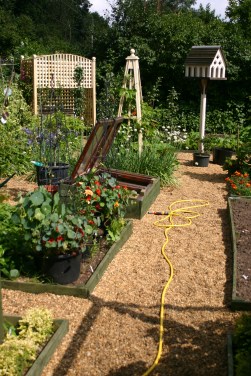
A view of the Kitchen Garden looking west- east (left to right on the diagram)

Finding Nature

Nature Connectedness Research Blog by Prof. Miles Richardson

Norfolk Green Care Network

Connecting People with Nature

Discover WordPress

A daily selection of the best content published on WordPress, collected for you by humans who love to read.

Susan Rushton

Celebrating gardens, photography and a creative life

Unlocking Landscapes

Writing, photography and more by Daniel Greenwood

Alphabet Ravine

Lydia Rae Bush Poetry

TIME GENTS

Australian Pub Project, Established 2013

Vanha Talo Suomi

The Journey from Finnish Rintamamiestalo to Arboretum & Gardens

Marigolds and Gin

Because even in chaos, there’s always gin and a good story …

Bits & Tidbits

RANDOM BITS & MORE TIDBITS

Rambling in the Garden

.....and nurturing my soul

The Interpretation Game

Cultural Heritage and the Digital Economy

pbmGarden

Sense of place, purpose, rejuvenation and joy

SISSINGHURST GARDEN

Notes from the Gardeners...

Deep Green Permaculture

Connecting People to Nature, Empowering People to Live Sustainably

BloominBootiful

A girl and her garden :)