Tag Archive: herbaceous


Tulips in planter May 2013I’m quite pleased with the way some planters I made are currently looking  in Old School Garden. I made two of these planters for our Courtyard Garden and last autumn replanted them.

Made from a combination of decking planks screwed to corner posts  and topped off with cheap trellis frames, I painted them black and half- filled them with broken up polystyrene and then soil/compost on top.

They are currently sporting two varieties of Tulip (one a sort of ‘raspberry blush’ colour the other more ‘strawberries and cream’!), which I think look good against the black paintwork and especially in early morning sun.

Last year I had a surfeit of Nepeta which had grown like topsy and was sprawling over large parts of our main mixed borders. Don’t get me wrong, I quite like the way plants like Nepeta (and Geraniums) sprawl over the edges of borders, softening up the straight lines of the lawn or the mowing strip of a path we have alongside the borders. But these Nepeta were seriously taking over large parts of the border, so I divided (and hopefully now rule) them, replanting several pieces of root in the black planters.

This was after I’d seen a wonderful example of how you can use such plants in a Devon garden near my mother in law’s house. Here, the neighbour had used them as a wall topper alongside a path. This had the effect of raising the flowers (and all the insects they attract) closer to eye level and also allowed their sprawling habit to cascade down the side of the wall and provide a wonderful minty, fragrant burst as you brushed up against them.

So, I’m hoping that my replanting in the black planters will bring me some summer colour, fragrance and insect interest to follow on from the Tulips – the plants seem to have taken successfully and are looking promising. I’ll plant some climbing Nasturtiums behind them to add a yellow-orange backdrop on the trellis, which should complement the purply- lavender flowers of the Nepeta well. I’ll post some more pictures of the summer show later in the year.

Old School Gardener

If you’ve enjoyed reading this post and others on this blog, why not comment and also join some other people and sign up for automatic updates via email (see side bar, above right ) or through an RSS feed (see top of page)?

Bergenia cordifolia

Bergenia cordifolia

This is a genus of only half a dozen species, but many hybrids. Originally from the moorlands,woodlands and meadows of central and eastern Asia, these evergreen perennials – otherwise known as ‘Elephant’s Ears’ because of their large rounded leaves – are extremely useful as they grow in shade or sun and wet or dry soil.

The leaves are glossy and leathery and colour well in the winter, especially in poor soil. They are excellent ground cover plants, especially in or on the edge of a woodland garden.

The flowers are handsome and are especially welcome in winter and early spring. They also last well in water, and the leaves are also long lasting, making them good flowers for arranging.

Bergenia leaves

Bergenia leaves

They benefit from regular lifting and dividing and this is the best way to propagate them, as gardens with more than one variety can hybridise and produce seed that is not true to the original types. Slugs can be a problem.

Bergenia 'Simply Sweet' in mass planting

Bergenia ‘Simply Sweet’ in mass planting

The Royal Horticultural Society has given its Award of Garden Merit (AGM) to some of the cultivars, including ‘Bressingham White’ and Bergenia cordifolia ‘Purpurea’.

Early spring bulbs (Snowdrops, Crocus, Scilla, Wood Anemones) are perfect partners for Bergenia- it’s best to plant both at the same time, ideally in autumn. Alternatively, using a narrow trowel, bulbs can be slipped in between established plants.

Further information:

How to grow Bergenias

BBC Plant finder

Cambridge Botanic Garden (national collection)

Quizzicals: two more cryptic clues to the names of plants, veg or fruit –

  • Helen drives a French car
  • The era of the taxi

Old School Gardener

If you’ve enjoyed reading this post and others on this blog, why not comment and join others by signing up for automatic updates via email (see side bar, above right ) or through an RSS feed (see top of page)?

Anthemis tinctoria 'E.C.Buxton'

Anthemis tinctoria ‘E.C.Buxton’

There are around 100 mat or clump-forming species in the genus Anthemis.

They make very useful border plants, with a long flowering season from late spring – end of summer.

Most grow between 30 -60 cms high and have a similar spread.

Beautiful filigree, aromatic evergreen foliage when not in flower.

Smaller types suitable for rock gardens.

Flower heads are daisy-like; with white or yellow ray florets or yellow disc florets- some make good cut flowers.

Though many species are not long lived (A. tinctoria especially so), they are all easily propagated from seed or cuttings.

The plant’s life can be extended by shearing over in autumn just after flowering – this encourages new basal growth which takes the plant through the winter. Shearing also helps to prevent mildew.

They need sunny, well-drained sites and wet winters are generally not favourable.

They do not transplant well, but should anyway be divided regularly in spring.

Anthemis maritima

Anthemis maritima

The orangey- yellow varieties look well woven in and out of mixed borders, and complement warmer coloured flowers; e.g. Crocosmia ‘Lucifer’, Dahlias, Hemerocallis etc. The yellow varieties look well with blue flowers such as Nepeta or Agapanthus. The pale lemon variety ‘E.C. Buxton’ (or ‘Golden Marguerite’- one of my favourites)  works well with wispy grasses such as Stipa tenuissima and the darker Lavenders (e.g. ‘Hidcote’).

Further information:

Wikipedia

How to grow Anthemis- Telegraph article

Anthemis marschalliana– silver foliage

Quizzicals: answers to the two in the post ‘Gypsies, tramps and thieves…’

  • The scourge of female chickens – Henbane
  • Cheap goods in a pile of dung – Potato

Old School Gardener

If you’ve enjoyed reading this post and others on this blog, why not comment and join others by signing up for automatic updates via email (see side bar, above right ) or through an RSS feed (see top of page)?
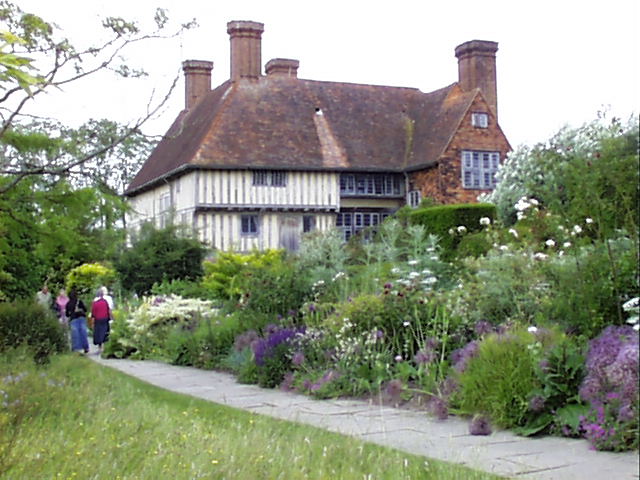
PicPost: Great Garden @ Great Dixter

Great Dixter, East Sussex was the family home of gardener and gardening writer Christopher Lloyd – it was the focus of his energy and enthusiasm and fuelled over 40 years of books and articles. Now under the stewardship of Fergus Garrett and the Great Dixter Charitable Trust, Great Dixter is a historic house, a garden, a centre of education, and a place of pilgrimage for horticulturists from across the world.

Finding Nature

Nature Connectedness Research Blog by Prof. Miles Richardson

Norfolk Green Care Network

Connecting People with Nature

Discover WordPress

A daily selection of the best content published on WordPress, collected for you by humans who love to read.

Susan Rushton

Celebrating gardens, photography and a creative life

Unlocking Landscapes

Writing, photography and more by Daniel Greenwood

Alphabet Ravine

Lydia Rae Bush Poetry

TIME GENTS

Australian Pub Project, Established 2013

Vanha Talo Suomi

The Journey from Finnish Rintamamiestalo to Arboretum & Gardens

Marigolds and Gin

Because even in chaos, there’s always gin and a good story …

Bits & Tidbits

RANDOM BITS & MORE TIDBITS

Rambling in the Garden

.....and nurturing my soul

The Interpretation Game

Cultural Heritage and the Digital Economy

pbmGarden

Sense of place, purpose, rejuvenation and joy

SISSINGHURST GARDEN

Notes from the Gardeners...

Deep Green Permaculture

Connecting People to Nature, Empowering People to Live Sustainably

BloominBootiful

A girl and her garden :)