Tag Archive: grow your own


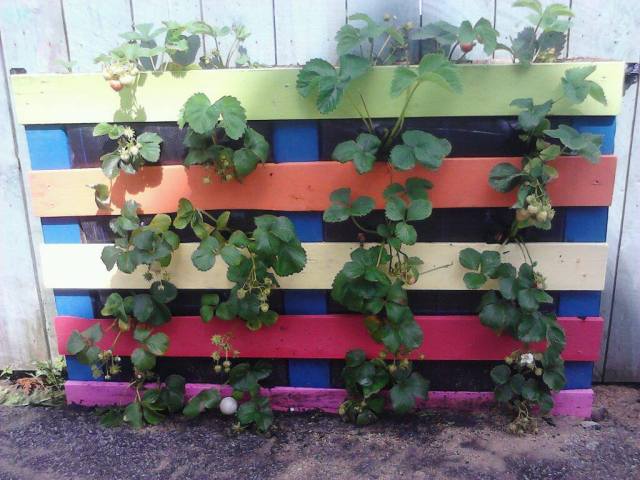
PicPost:Pallet to Strawberry planter

cover cropMy previous articles on green manure have covered the why, what, where and when –  this final article deals with how to use them to best effect.

Processing your green manure so that the ground can be used again begins around 3 – 4 weeks before you want to make use of the plot for another crop or plant, or alternatively when the green manure approaches maturity – whichever comes first.

There are various ways in which to process the green manure:

  • Dig it in – simply turn the plants back into the soil, using a sharp spade, chopping up clumps as you go. Aim to bury the plants no more than 15cms deep on heavy soils, or 18cms on lighter ground. grazing Rye and perennial green manures can be tough to dig in if they have grown well – to make it easier cut down the foliage first and leave it to wilt and possibly dig the plot twice with a gap of a week or two between each dig.
  • Leave it to the frost – if you sow a frost tender green manure in late summer you can leave this to be killed by the first frost, and the remains can be left on the soil as a cover over winter.
  • Hoeing – annual green manures, like mustard and buckwheat, can be hoed off, leaving the top growth in place or added to a compost heap. You can plant through the green mature foliage or cultivate it further to create a seed bed.
  • Mulching – a light excluding mulch can be used to kill off the green manure – black plastic or large sheets of cardboard held down by straw or bricks etc. Annual green manures will die off in a few weeks whilst perennials and grazing rye will take a bit longer – but you can always plant through the mulch.

No Dig = no green manure?

You may garden using the ‘no dig’ method. If so, you migth feel that grazing rye, even though it is an excellent soil improver, should be avoided. However, you can cut down the rye, spread it with well-rotted manure if required and then plant a crop of ‘no dig’ potatoes on the surface. these can then be covered with a mulch of hay or straw (around 10cm deep) adding more of this as they grow, and topping off with layer of grass mowings before the potato foliage meets across the rows.

Too tough to dig in?

If you forget to deal with your green manure in time and it becomes tough and woody, don’t worry. Just cut off the tops and put them on the compost heap, then dig in the roots or cover with a thick mulch.

Timing is everything…

If you dig in young annual green manures during the summer they will decompose rapidly, leaving you able to plant up the area within a few days of digging in. Tougher plants, like grazing rye, need to be dug in a few weeks in advance of when you need the ground again, especially in spring when decomposition is slower. If you’re aiming to create a fine seed bed after your green manure remember to leave the ground for a longer period than if you are simply planting into the ground. And avoid using green manures where you plan to sow small seeds such as carrots, parsnips and spinach as some green manures have a chemical which inhibits germination.

I hope that these articles on ‘Green Gold’ have been useful, and that you’ll be using green manures in your garden. I’m certainly planning to build on my early experiences last year with sowing more green manures over the coming winter.

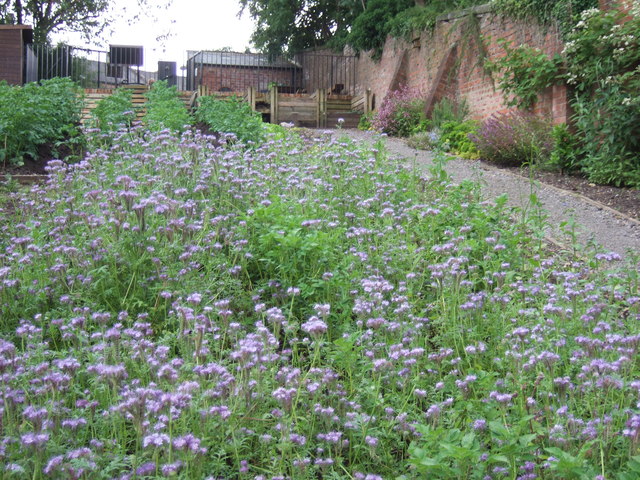
Phacelia in flower

Phacelia in flower

Source: ‘Green Manures’- Garden Organic Guide. September 2010

Other articles in this series:

Green Gold: 12 plants for soil improvement

Green Gold- 7 reasons to use green manures

Green Gold: Where and when to use Green Manures

Old School Gardener

If you’ve enjoyed reading this post and others on this blog, why not comment and join others by signing up for automatic updates via email (see side bar, above right ) or through an RSS feed (see top of page)?

Learning Gateway

I’m involved in this exciting new learning opportunity in a local Norfolk village, offering courses in growing food and garden design.

If you’re around come along and see me:)

A Roof Garden by Hugo Nicolle Design

A Roof Garden by Hugo Nicolle Design

This ‘snippet on style’ focuses on gardening above ground – roof gardens (including ‘green roofs’), balconies and vertical gardens. Growing plants above ground has been going on for centuries: e.g. the ziggurats of ancient Mesopotamia and the Villa of the Mysteries in Roman Pompeii.

Roof gardens

A roof garden is any garden on the roof of a building. Roof gardens can be of ornamental value – especially in urban locations where no ground level garden is available. They can also play a part in:

  • providing food – Trent University has a rooftop garden which provides food to the student café and local citizens
  • temperature control – plants can help to reduce heat absorption on buildings (so reducing the need for artificial air conditioning), achieving a cooling of the environment by between 3.6 and 11.3 degrees Celsius
  • controlling and harvesting rain water run off – where urban areas are increasingly hard – surfaced, roof gardens can delay peak run off and so help to prevent flooding, as well as retaining moisture for later use by the plants.
  • adding to the appearance of a building
  • providing habitats or corridors for wildlife
  • recreational opportunities
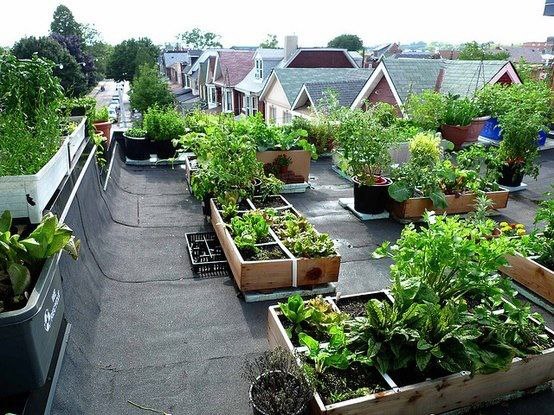
PicPost: Up on the roof

A great place to grow vegetables

Cultivating food on the rooftops of buildings is sometimes referred to as rooftop farming, and is usually done using special systems such as hydroponics, aeroponics/air-dynaponics or in containers. These systems can also help to reduce the stress on the roof that would otherwise have to carry a depth of soil over its whole surface. Sometimes as well as using the space on a roof, additional growing areas are added as ‘air bridges’ between buildings.

In creating a roof garden there are several important factors to consider:

  • primarily the bearing capacity of the roof structure – this can be designed to be minimal, so really creating a ‘green roof’ (bearing about 100-300kgs per square metre) or ‘stepable’ (bearing over 300kgs per square metre)

  • prevention of roots and water penetrating the roof structure

  • the inclination of the roof (this should not exceed 30°)

  • the altitude of any attic, etc.

Roof gardens are likely to feature more and more in major cities – 80% of Singapore residents voted for more roof gardens in the City’s future plans. The containers/planters on a roof garden may be designed for a variety of functions and vary greatly in depth to satisfy aesthetic and recreational purposes. These planters can hold a range of ornamental plants: anything from trees, shrubs, vines, or an assortment of flowers. Where aesthetics and recreation are the priority roof gardens may not provide the environmental and energy benefits of a green roof.

A 'green roof' made up of various succulent plants

A ‘green roof’ made up of various succulent plants

Balconies

Once again you need to be aware of how much weight your balcony can take, so seek structural engineer or architect advice if you’re unsure. Balconies can be used for both ornamental or food plants, but it’s worth thinking about your layout before you start. To maximise growing space,  suspend window boxes along the balcony edges, place soil-warming terracotta planters in the sunniest patches, and put lean-to shelves against the wall to accommodate extra pots. Here’s a video about setting up a balcony garden using permaculture principles.

Vertical Gardens

For those who live in small apartments with little space, ‘square foot gardening’, or (when even less space is available) vertical gardens or ‘living walls’ can be a solution. These use much less space than traditional gardening – square foot gardening is said to use 20% of the space of conventional rows and ten times more produce can be generated from vertical gardens. These also encourage environmentally responsible practices – eliminating tilling, reducing or eliminating pesticides, and weeding, and encouraging the recycling of wastes through composting. Some of the most familiar vertical gardens are called ‘living walls’ – a concept where low growing and small plants are placed into a matrix which is then fixed to a wall. Such designs can be immense in size, covering the entire sides of buildings. They are also increasingly being used inside building spaces, such as foyers and receptions, to create a contemporary and eco-friendly ambiance. There is a trend towards more living walls in people’s homes. This has led to many companies now providing products which create a vertical garden to liven up the side of a house or patio, and platforms of pots which can be planted with herbs and vegetables on a balcony. Some of my own articles feature the use of old pallets for vertical planters and these too can be considered as ‘living walls’ and are a useful addition to conventional ground level gardens as well as homes which lack much outside space.

There are clear advantages to vertical gardens:

  • creating growing space where normal ground level space is restricted

  • offering a green outlook to those who want to avoid views of concrete and bricks

  • creating spaces which are beneficial to both mental and physical health

  • making it easy to grow food plants such as herbs and salads

Sources and links:

Wikipedia – roof gardens

Wikipedia – green roofs

RHS- roof gardens and balconies

The Roof Gardens- Kensington

6 green roofs you can relate to

How to design a roof garden

Vertical gardens

A garden on your balcony

Balcony Garden and rooftop garden ideas

10 Inspiring Balcony Gardens

Green Roof and Green Wall ona Sydney high rise building – David Eugene

Other articles in the ‘Style Counsel’ series:

Foliage Gardens

Family Gardens

Productive Gardens

Japanese Gardens

Country Gardens

Modernist Gardens

Formal Gardens

Mediterranean Gardens

Cottage gardens

Old School Gardener

If you’ve enjoyed reading this post and others on this blog, why not comment and join others by signing up for automatic updates via email (see side bar, above right ) or through an RSS feed (see top of page)?

PicPost: Veggy Heaven

from Gardenphotos.com, via Growveg

 Close up of strong wind break netting

Close up of strong wind break netting

No, not a reference to too many sprouts, but a serious question from L. Onerf in Somerset:

‘Vegetables are not growing well in my windy garden, but I am reluctant to plant windbreaks of trees or hedges, as they will create shade and take moisture from the soil. What alternatives are there?’

If you want to avoid the costs of installing a fence/trellis with openings to allow the wind to percolate through at an acceptable speed, I think the answer lies in putting in a screen of synthetic wind break material, obtainable from most garden centres or online. The strength and quality of this varies and some is fairly costly, but a 1.5- 1.8 metre high wind break around your plot would give dramatic results. I found a 50 metre x 2 metre roll of knitted net on offer online for around £170 or much the same on Ebay for about £40, and £13 for a 10 metre length. Make sure the posts are anchored firmly in the ground (corner posts may need to be reinforced and they should ideally be bedded in concrete), as the netting takes a tremendous strain in high winds.

On the subject of vegetable or kitchen gardens, is yours laid out for maximum efficiency and growing space?

Traditionally vegetables were grown in large plots, often 6-9 metres wide and as long as the garden allowed. The vegetables were arranged with a lot of wasted space between rows. Today we know that vegetables can be grown far closer together without any adverse effects; indeed, there is a a trend towards abandoning rows and growing vegetables with equal spacing between the plants in each direction, in blocks or patches.

Narrow beds in the Kitchen Garden at Old school Garden

Narrow beds in the Kitchen Garden at Old School Garden

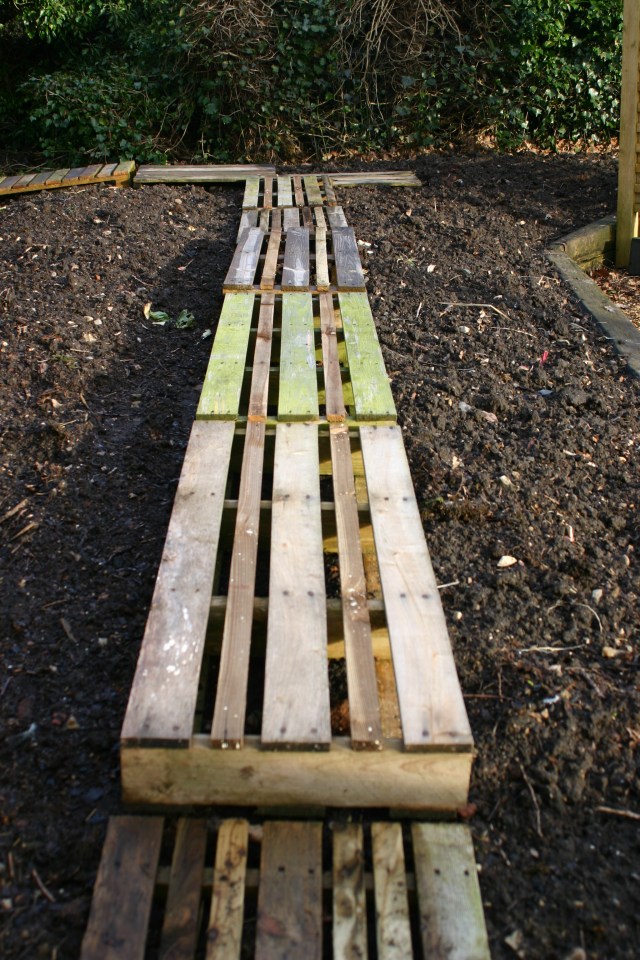
This compactness lends itself to smaller, narrower beds, say 0.9 – 1.5m wide, which can be any length you like. These narrower beds are easier to manage from either side (so avoiding walking on the bed itself and opening up the possibility and benefits of ‘no dig’ cultivation) and the denser planting also helps to crowd out weeds. here at Old School Garden, my kitchen garden ahs been laid out along these lines, though I still have a one large bed which I’ve effectively split into two by creating a ‘boardwalk’ path out of old pallets.

New boardwalk made of old wooden pallets

Boardwalk made of old wooden pallets, used to split a large veg bed into two

Do you have any gardening questions I might help you with? If so, please email me: nbold@btinternet.com

Old School Gardener

If you’ve enjoyed reading this post and others on this blog, why not comment and join others by signing up for automatic updates via email (see side bar, above right ) or through an RSS feed (see top of page)?

Heritage Veg- keeping the old varieties going

Heritage Veg- keeping the old varieties going

I had an interesting delivery in the post yesterday. It was from Garden Organic, the UK charity that promotes organic gardening. Some of you may recall that I’m a volunteer with the ‘Master Gardener’ programme they jointly run in Norfolk and a few other places, providing advice, information and support to people starting to grow their own food. More recently I became a ‘Master Composter’ doing the same thing but focused on recycling green waste into a useful gardening product. Well, it seems that this has enabled me to have free membership of the ‘Heritage Seed Library’ (HSL) run by Garden Organic at their base near Coventry.

seeds in handThe HSL aims to conserve and make available vegetable varieties that are not widely accessible. It does this by maintaining a collection of vegetables from the UK and Northern Europe that are not readily available in seed catalogues. Some of these varieties were commercially available once but have now disappeared from catalogues and seed lists. Others have never been offered in catalogues but have been developed by gardeners and passed on through the generations until they were donated to the HSL. There are also some varieties that have a special local significance. Many have a story to tell, and HSL collects not only the seed, but also information on their characteristics, methods of use, origins, and what this can tell us about our gardening and culinary heritage. Just flipping through their current catalogue is a journey into the past with varieties carrying evocative names like:

Navy Bean Edmund – a variety of bean first cultivated to sustain Australian forces during WWII and which is the kind used to create ‘baked beans’.

Long Blood Red– an American Beetroot described by Vilmorin in ‘The Vegetable Garden’ (1885) as an ‘American variety with a long, slender, deeply buried root..good, productive, and well-coloured kind’ – a member of HSL describes it as having ‘the best flavour, wonderful for picking’.

Maltese plum – a variety of tomato donated by someone whose friend acquired the seeds on holiday in Malta! Trusses are borne on leaf spurs, so unlike many other varieties you don’t grow it as a cordon or remove the side shoots. This is a late variety that produces a heavy crop of firm, red plum type tomatoes ideal for stuffing.

What varieties of Veg do you grow?

Which varieties of Veg do you grow?

The HSL is not a gene bank, so does not preserve the seeds in cold storage, but grow them and make them available to other gardeners so that they remain alive and able to adapt to new conditions. Any new characteristics then have a good chance of being spotted and made use of. The HSL was created in response to the loss of old vegetable varieties that occurred following European legislation designed to counteract the activities of some unscrupulous seed companies. After the commercialisation  of seeds in the 19th century the traditional practice of farmers and gardeners exchanging seeds declined. European law says that only seed that is listed on a National List (and ultimately the EU Common Catalogue) can be marketed. To be on the list a variety must go through a series of tests, part of which is about ensuring consistency between generations. The tests both cost money and were impractical for many smaller seed companies, so many varieties started to disappear, especially those that are inherently highly variable.

With the costs incurred in breeding and maintaining a variety, a large, profitable market is needed by commercial seed companies. This means that they often decide against maintaining varieties suitable for ‘niche markets’, e.g. gardeners, in favour of those more acceptable to large-scale growers. The varieties available are therefore more likely to ripen at the same time to make harvesting with machinery easier, tough enough to withstand travel and handling in supermarkets, and familiar in visual characteristics so that they are acceptable to the average shopper. Flavour often takes a back seat.

The HSL runs a membership scheme to help to distribute seeds and counteract the costs of the EU legislation. Members pay an annual fee which goes towards the costs of collecting, growing, storing and distributing the seed. HSL produce articles on seed saving, research and the latest developments on the international seed scene in ‘ The Organic Way’, the Garden Organic members’ magazine. Every winter they also send out a Catalogue covering a portion of the collection- members can choose up to six packets  containing a few seeds of different varieties to try out for themselves. HSL is also active in promoting seed exchanges around the country.

The HSL currently looks after 800 varieties of Heritage Veg seeds

The HSL currently looks after 800 varieties of Heritage Veg seeds

Currently HSL looks after over 800 types of seed from open-pollinated varieties (not F1 hybrids), of which around 200 are detailed in their Seed Catalogue. As well as research on the varieties and testing of previously untried varieties that come in from time to time, HSL grow some of the seed used at Garden Organic’s HQ. More seed is grown by Seed Guardians – special members who volunteer their resources to look after and bulk up selected varieties. These are then available for distribution to HSL members.

The collection is still expanding. Every year HSL receive samples of vegetable seed that gardeners have been looking after and keeping alive. They ask a lot of questions about each one to determine its place in our culture and then conduct our trials on it, taking notes and making assessments throughout its growing life to find out as much as possible about it. This gives HSL the opportunity to ensure that it is different to anything else they are looking after, not obviously diseased, has not crossed (and is not a hybrid) and is something gardeners would be interested in growing. If HSL decide it is something they should be keeping they add it to the collection, so there’s always something new coming in. You can find out more about the HSL and download a seed saving guide at their website- see link below.

This is my first exploration of ‘Heritage Veg’ and the inclusion of a small sample of Greek Squash seed will give me a chance to sample an unusual variety for myself – if I can find the room for it in the kitchen garden, that is!

Taylor's SeedsCo-incidentally, last week I was also involved in another aspect of ‘Heritage Seeds’, the opening of a special exhibition at Gressenhall Farm and Workhouse museum, Norfolk. Next to the Museum’s Cherry Tree Cottage Garden (which is designed to be a re-creation of a typical Norfolk cottage garden of the 1930’s), a new space is devoted to displaying various interesting objects from one of Norfolk’s historic seed merchants. R. & A. Taylor, whose Seed Shop in King’s Lynn once provided a wide range of seeds and other ‘horticultural sundries’ to the County’s gardeners.

Over two years of research culminated in the official opening of the new display last week. This captures something of the seed shop as it would have been in the 1930’s and is also home to a significant collection of objects and other material donated to the Museum by the Taylor family in 1982. The present curator, Megan Dennis, and founder curator, Bridget Yates, also wanted the new display to provide a new focus for the museum’s gardening collections. The display was officially opened by James and Bob Taylor, who worked with their father in the family business in Norfolk Street, Kings Lynn. It was a happy day and the new display provides a fascinating range of objects and information for all ages.

I particularly like the material about School Gardening as it used to be carried out in the 1920’s – a solid part of the curriculum, but with a strict gender bias that is true in some households today: the boys grow the vegetables and the girls tend the flowers!

Sources and further information:

Garden Organic Heritage Seed Library and link to pdf on Seed Saving

The Breckland View– article on the Seed Shop display and background

Gressenhall Farm & Workhouse Museum

Master Gardener

Home composting

Old School Gardener

If you’ve enjoyed reading this post and others on this blog, why not comment and join others by signing up for automatic updates via email (see side bar, above right ) or through an RSS feed (see top of page)?

The Kitchen Garden in Old School Garden- my attempt to create something productive and also pleasant to look at.

The Kitchen Garden in Old School Garden- my attempt to create something productive and also pleasant to look at.

This week’s ‘snippet on style’ looks at Productive Gardens- those where the emphasis is on growing food.

The layout of productive gardens tends to be orderly, with geometric beds separated by paths for ease of maintenance and access. Beds are often a maximum of 1.5 metres wide along two parallel sides to prevent the need for walking on the soil. Materials can vary but are often utilitarian rather than ornamental (unless the garden is intended as an ornamental kitchen garden or French ‘potager’). Concrete slabs, brick paths or even compacted earth are common  surfaces. Planting varies seasonally and may rotate to reduce the risks of pests and diseases and to avoid sapping the soil by growing the same crops each year. Other features of productive gardens include:

  • raised beds

  • wide paths

  • rustic obelisks

  • planting in rows or blocks

  • simple if any decoration and with a practical angle- e.g. ornamental bird scarers

71977_10151553299256970_1641852360_n

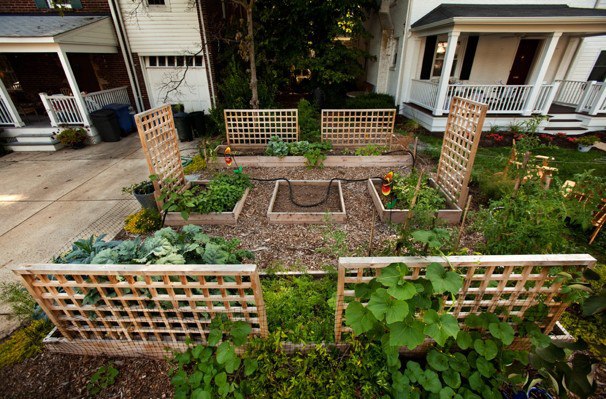
Here’s an example of a productive garden shared between two neighbours.Communal food growing also takes place at larger scales, for whole neighbourhoods in shared beds or in long established ‘allotments’ where each tenant gardens their own plot.

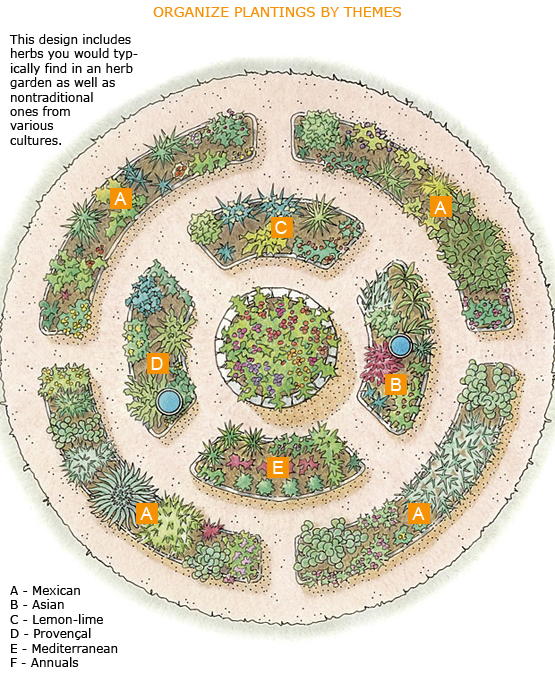
If you're a keen cook and you have the space, you may want to create a special herb garden like this- or if not just find a sunny spot for a few fragrant favourites!

If you’re a keen cook and you have the space, you may want to create a special herb garden like this – or if not just find a sunny spot for a few fragrant favourites!

Let me know what you think makes a Productive style garden, and if you have some pictures I’d love to see them!

Links/ further information:

Garden Organic

RHS Campaign for School Gardening

Food for Life- school gardening

Growing communities

Space for food growing- free guide

Vertical veg

RHS- grow your own food

Food growing case studies – pdf

Other posts in the series:

Japanese Gardens

Country Gardens

Modernist Gardens

Formal Gardens

Mediterranean Gardens

Cottage gardens

Old School Gardener

If you’ve enjoyed reading this post and others on this blog, why not comment and join others by signing up for automatic updates via email (see side bar, above right ) or through an RSS feed (see top of page)?

PicPost: Doing Cartwheels

Photo from Grow Veg

PicPost: Caged Veg

Finding Nature

Nature Connectedness Research Blog by Prof. Miles Richardson

Norfolk Green Care Network

Connecting People with Nature

Discover WordPress

A daily selection of the best content published on WordPress, collected for you by humans who love to read.

Susan Rushton

Celebrating gardens, photography and a creative life

Unlocking Landscapes

Writing, photography and more by Daniel Greenwood

Alphabet Ravine

Lydia Rae Bush Poetry

TIME GENTS

Australian Pub Project, Established 2013

Vanha Talo Suomi

The Journey from Finnish Rintamamiestalo to Arboretum & Gardens

Marigolds and Gin

Because even in chaos, there’s always gin and a good story …

Bits & Tidbits

RANDOM BITS & MORE TIDBITS

Rambling in the Garden

.....and nurturing my soul

The Interpretation Game

Cultural Heritage and the Digital Economy

pbmGarden

Sense of place, purpose, rejuvenation and joy

SISSINGHURST GARDEN

Notes from the Gardeners...

Deep Green Permaculture

Connecting People to Nature, Empowering People to Live Sustainably

BloominBootiful

A girl and her garden :)