
- The Garden- man made artifice?
‘Let us, then, begin by defining what a garden is, and what it ought to be. It is a piece of ground fenced off from cattle, and appropriated to the use and pleasure of man: it is or ought to be, cultivated and enriched by art, with such products as are not natural to this country, and consequently, it must be artificial in its treatment, and may, without impropriety, be so in its appearance; yet, there is so much of littleness in art, when compared with nature, that they cannot be well blended; it were, therefore, to be wished, that the exterior of a garden should be made to assimilate with park scenery, of the landscape of nature; the interior may then be laid out with all the variety, contrast, and even whim, that can produce pleasing objects to the eye.’
Tag Archive: gardens


The second garden visit on our last day in Portugal took us a little further towards the mouth of the River Tagus, but still within the town of Oeiras. The Gardens of the Palace of the Marquis of Pombal convey an even more prosperous feel and are altogether larger – almost a ‘landscape’ scale. It is easy to imagine these high baroque walks, lawns, borders and water features as the scene of some serious 18th century showing off, flirting and general fun.

- The 1st Marquis of Pombal
The Town Council now occupies the former palace. The Marquis of Pombal, one of Portugal’s most famous leaders, was rewarded with the palace, the title (and the title Count of Oeiras) for his service as first minister to the Portuguese King Dom Jose I in the mid- late 18th century. The surrounding gardens are typical of Portuguese landscape art, inspired by eighteenth century European designs but holding to the tradition of the Portuguese stately house. They are richly decorated with marble busts and statues, low walls and marble staircases along with many murals composed from azulejos (glazed tiles).


Here too is the Poets’ Waterfall, with excellent busts of the four epic poets (Tasso, Homer, Virgil and Camoes) looking out over the gardens and carved in marble by Machado de Castro. At the fountain’s centre lounges the figure of a ‘river god’ modelled on the one that existed at the Belvedere Gardens, in the Vatican, Rome. As in the garden we visited earlier at Caxias, the fountain is a fantastic structure made out of pitted stone which conveys a truly antique feel. There are also splendid views of the surrounding gardens from the stairs that wrap around the sides of the construction.


The gardens form one part of a wider estate which is planned to a rigourous geometry and divides recreation spaces, great gardens and surrounding farms, all reflecting the style of the well-to-do families of the age. The gardens saw cultural events such as theatre, ballet and musical performances, a tradition kept up to the modern day (Roxy Music performed here in 2010!). Here are some pictures of the formal gardens lying to the side of the Poets’ Fountain, with empty pools resting near to the remains of a ‘bousquet’ (a sort of woodland in miniature) and the wonderful (empty) pools and fountains of a large water garden with some beautiful glazed tiles that must look really vibrant when wet.


Related article:
Portuguese Gardens: Baroque Splendour at Caxias, Portugal
Old School Gardener
nWh
-
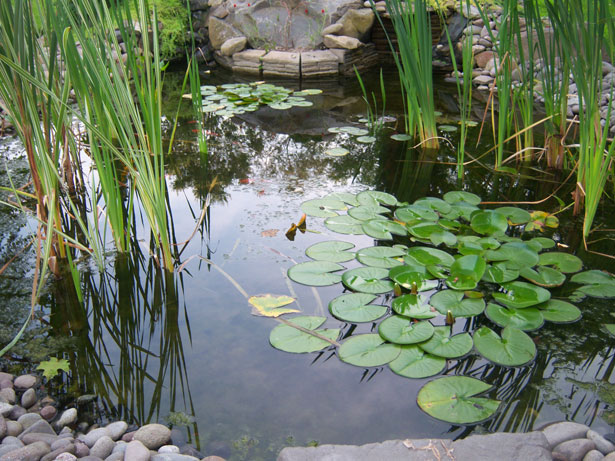
A pond is a fantastic resource for wildlife
Most gardens play an important part in promoting biodiversity and maintaining ecosystems – vital if we are to have a sustainable planet. You might want to further enhance your garden’s ecological value, or perhaps promote wildlife to help pollinate plants (important if you want to gather your own seed and/or are growing your own food) and to help control unwanted pests.
Promoting wildlife is also a way or enriching the garden experience – just think about birdsong, the buzzing and gentle flitting of bees from flower to flower, the colourful displays of butterflies and the fascinating movements of the myriad insects and other ‘critters’ out there! So how can you ‘design’ wildlife into your garden and gardening activities?

-
Plant nectar- rich flowers to attract pollinators
First it’s important to recognise that you and your friends and family are also going to use the garden, so there’s no need to ‘go completely wild’ and make it unpleasant or difficult for humans to use the garden. In fact the best designed and managed gardens (and often the most beautiful) can also be the best for wildlife. These are the places where nature has not been allowed to take over.
You can ‘tip the balance in favour of wildlife’ in a number of ways. If you have a large garden you can adopt a ‘conservation’ approach and set out separate areas to attract and support different types of wildlife. If your garden is smaller, you can provide a range of features for the wildlife species you want to encourage. This approach is especially important if you want to actively harness nature to control pests.

-
Bird feeders need to be out of the reach of cats!
So what can you do?
Create habitats that mimic those in nature and complement the local range outside the garden
Provide natural shelter, nesting, food and drink – important as ‘stopping off’ points for temporary visitors to your garden as well as for longer term residents
Aim to increase diversity- and recognise that this is going to be a gradual process
Build in some key features, such as…..
-
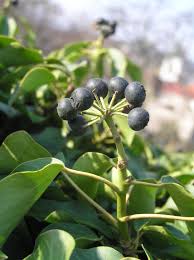
Climbing plants like Ivy provide a valuable food source for wildlife
-
Native plants- these act as a host to many more species than non native plants
-
Wildflowers, grasses, weeds- these attract butterflies and many other insects. Nettles are important hosts for species that aid a healthy garden; butterflies and ladybirds. Maybe you can grow these in a container if you don’t have the space to leave patch in the garden?
-
Nectar and pollen rich flowering plants- these feed butterflies, bees, hoverflies etc.- which in turn attract birds
-
Trees, flowering and fruiting shrubs- these provide food and shelter for birds
-
Climbing plants- they provide food and cover for birds and food for insects and butterflies. Examples include Ivy, honeysuckle, quince, wisteria, clematis..
-
Hedges- these give food and shelter for wildlife (e.g hedgehogs, voles and shrews), food and nesting for birds- where it’s practical choose to install a hedge rather than a fence
-
Water- a pond brings masses of creatures to drink as well as attracting resident pond life
-
Wood piles – insects colonise the decaying wood, attracting spiders and birds; beetles lay grubs; toads and hedgehogs hibernate underneath; slow worms use it as home (and these prey on slugs)
-
Compost heap – provides both food for the soil and home for minute insects and other ‘mini beasts’ which feed birds, hedgehogs, toads. It also acts as a possible nesting place for hedgehogs, toads and slow worms.
-
Bird and Bat boxes, tables, feeders and baths- put these up in secluded and sheltered spots out of full sun – and out of the reach of cats! Birds need extra food in winter. provide a range of foods according to the species you want to attract. Birds need to drink and bathe to keep their plumage in good order- even in winter, so keep birdbaths unfrozen
-
Stones and walls- toads, newts and female frogs usually spend winter on land, under rockery stones (or in a log pile). Beetles, spiders, insects live in nooks and crannies
-
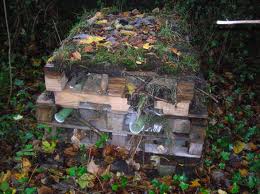
‘Bug hotels’ can provide a ‘man made’ substitute for the above, and are good fun to make with children.
-
‘Bug Hotels’ can provide a ‘Des Res’ for many insects and other critters
Further information: A range of useful wildlife gardening guides
Old School Gardener
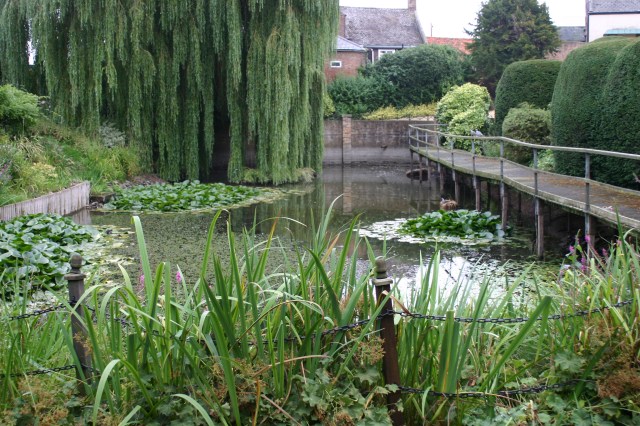 There’s been a brewery and garden here since 1795. Perched on the north bank (or ‘brink’) of the River Nene in Wisbech, Cambridgeshire, Elgood’s Brewery remained virtually unaltered until the Second World War.
The established Victorian garden was ripped up and as much land as possible devoted to growing food for the war effort. After being turned over to grass for many years, 1993 saw the discovery of some old photographs of the original garden and it was decided to both restore some of the old spaces and features and to create new areas.
The structure of the garden today owes much to the framework of superb specimen trees which survived over the centuries; Ginkgo, Cedrus, Liriodendron and Salix to name but a few. These were mainly provided by members of Wisbech’s famous banking family, the Peckovers, who themselves established a grand Victorian garden a few paces down river at what is now called Peckover House.


Some important features such as the maze (of Thuja and Laurel and featuring old brewery and garden objects as focal points), walled garden, Japanese garden, rockery, water features, glasshouses and herb garden have been recreated. These are complemented by a modern grass and bamboo garden with contemporary water features. And there are typical Victorian ‘swags’ (ropes) over which climbing roses clamber as well as arbours featuring two varieties of hop (‘Fuggles’ and ‘Challenger’) – both of which feature in Elgood’s beers.


The modern additions have added to what is a typically eclectic mix of curiosities and attractive garden features. Well worth a visit, and can be combined for a full day’s outing with nearby Peckover House and the Georgian town of Wisbech.

- Hops- ornamental and useful for brewing too!
Further information:
‘Banker’s Bonus- secret garden gem
Oranges in the Fens
Elgood’s website
Old School Gardener
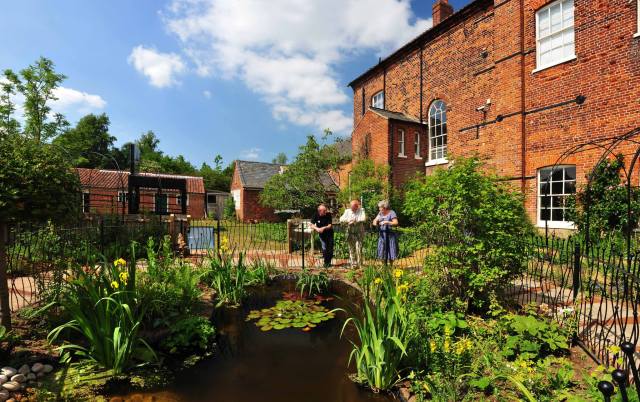 Here’s a video featuring some of the gardening volunteers (including yours truly) and the gardens at Gressenhall Farm and Workhouse Museum, Norfolk. The next couple of months will be quiet in the gardens, but we’re recruiting now for anyone who can spare some time and expertise (basic gardening skills plus) to help maintain and evelop this wonderful resource!
Leave a comment or contact me on nbold@btinternet.com
Old School Gardener
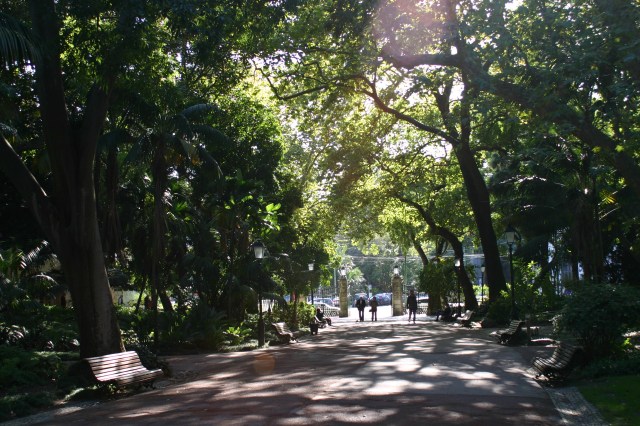
I wrote an earlier article about the ‘Star Garden’ (Jardim da Estrela) in Lisbon, singing its praises as a wonderful example of a classic public park/ gardens and how it has maintained an important role in the life of the capital. On a recent trip I managed to weave in an early Autumn visit, something I haven’t done before.
It was even better than in the Spring – luxuriant foliage was everywhere, people were out and about enjoying the space and the low autumn sunshine provided some wonderful lighting effects. I was particularly taken this time with the little ‘public library’ housed in a picturesque kiosk in the centre of the gardens. Obviously popular with a set of older men, who here, as in other parts of the gardens, were reading or playing cards- one suspects that they are regulars.
This seems to be a wonderful amenity and an idea that’s worth a try in UK parks and gardens! (or are there some examples already out there that I’m not aware of?)

Library in the Garden- brilliant!

Cafes too

Books and Mags to loan on the spot
I also mentioned in my previous article the various statues in the gardens and how these were placed here after the formation of the Portuguese Republic in the early 20th century. I made a point in this visit to seek some more of them out, as I had not noticed them before, hiding, as they seem to be, under trees or in mature shrubbery.


My visit felt rather like meeting up with an old friend, someone I hadn’t seen for some time. I was able to easily recollect their more important physical features and personaility traits, but was also drawn to some new features or angles on them. My ‘new look’ at Estrela was repaid not only with the uncovering of more statues, but also with some superb scenes of dappled sunlight (including the dramatic back lighting of large exotic leaves), superb ‘Dragon’ and other trees, a fantastic decorative ceiling on the bandstand roof, lively play area, late summer blooms of Hibiscus and unusual tree conservation measures (filling in a hole in a trunk with brickwork!)
I wonder what the place must be like high summer when various events inlcuding live Jazz add yet another dimension to this magical place? Another visit beckons…..


The splendid ceiling of the bandstand in Estrela Gardens, Lisbon- a highlight of a recent visit
Related article: Portuguese Gardens: Estrela Garden, Lisbon
Old School Gardener

The view to the River Tagus from the front of the Necessidades Palace in Lisbon
On our recent 15 mile trek across western Lisbon, we took in a park that is not often mentioned in tourist trails- that of the Necessidades Palace. The palace itself is a grand looking affair, now the country’s Foreign Office, so not open to the public. The view from outside is good in all directions- one way you look out across the River and the ‘Golden Gate- look alike’ bridge; turn round and you have the splendid pink and cream stone facade of the palace and ornamental fountains. The park is tucked round the back and has the air of somewhere that’s been a little forgotten of late.
Here’s what Wikipedia has to say about the Palace, a very important site in portuguese history:
‘Formerly a convent… it was built in the 18th century, by order of King John V, in gratitude for prayers answered by Our Lady of Needs, whose first devotional chapel stood on this site…The palace became the residence of the kings of the Braganza dynasty… Ferdinand of Saxe Coburg and Gotha, husband of Maria II, lived in this palace until his death, amassing a large collection of art, which would be dispersed after his death. The palace then underwent several renovations to accommodate the taste of the various monarchs who lived there, the most recent of which was carried out at the beginning of the twentieth century by Carlos I….
…The palace was the scene of memorable events in Portuguese history, some momentous, some tragic, some slightly ridiculous. One famous example: the king Pedro V had installed in the front door of the palace a slot through which his subjects could, if they wished to, leave messages and complaints for the attention of the sovereign. The last significant event at the palace, which would also be the epilogue of the monarchy, was the joint funeral of King Carlos and his son, Prince Luis Filipe, on 8 February 1908, after their assassination by radical republicans…’
The palace was shelled during the republican revolution in 1910 and subsequently most of its art and other treasures were moved to the Ajuda Palace (which we had visited a day or two before).
Today’s park (or ‘tapada’), evolved from a private hunting ground for the Kings of Portugal and it retains the feel of a semi wild place, but with areas of more defined botanical or garden interest. As you progress up the hill from the entrance next to the Palace you alternate between enclosed, wooded areas and open grassy plains. About half way up the scene turns into a more formal park setting with a a terrace sitting alongside a grand, glass-domed estufa (greenhouse) currently undergoing renovation. Looking rather like an enclosed amphitheatre, this space must have once been the setting for a theatrical display of a different kind- tiered ranks of exotic plants. How grand it must have looked. I hope that it will be fully restored and will no doubt be a gem of a place that will raise the profile of the park more generally.
Paths weave upward above the terrace, the otherwise peaceful setting being regularly interrupted by the sound of aircraft coming in to land at the City’s airport. Another grand building sits atop the park, set off by a fine fountain. This gives way to a wilder area with a round building that looks as though it may have been a windmill at one time. There are some superb areas of Agaves and other dramatic plants. The overall impression, though, is one of a parkland that must be great for a summer picnic, rather than a space where growing and showing interesting plants is the dominant activity. Apart from the domed glass house that is.
A place where once glorious scenes are slowly being reclaimed from the passage of time and nature’s path.

The front of the Palalce…


Entering the park…

Great place for a picnic…

The domed Glasshouse…

under renovation..

Imagine this crammed full of exotic plants….

open grass areas…

wooded glades..

Terrace…


True love…


Agaves…

Faded splendour…

?Windmill…
Old School Gardener

Maze Gardens at Ruspoli Castle Northern Lazio, Italy

Sorry to disappoint if you think this is going to be about the famous ‘red light district’ of Amsterdam. It’s not. I’m just back from a weekend celebration with my wife, Deborah who had an ‘important birthday’ on Saturday.
It was a great visit, the highlight meeting up with 10 friends and relations in a cosy but wonderful restaurant complete with birthday cake and fireworks! I wasn’t expecting either the time or opportunity to take some serious photographs while there, but I was pleasantly surprised, so I’ll share a few of the better ones (taken on my phone camera) over the next week or two.
Saturday morning in the city was sunny so we managed a delightful wander through the canal – ringed old city and came across a wonderful little oasis called the ‘Begijnhof’. ‘Beguines’ were pious single catholic women who wanted to do good works, like nuns, but did not want to live in a convent and therefore had not taken all of the nun’s vows. Here’s what Wikipedia has to say:
‘The Begijnhof is the only inner court in Amsterdam which was founded during the Middle Ages, and therefore lies within the Singel — the innermost canal of Amsterdam’s circular canal system. The Begijnhof is at medieval street level, which means a meter below the rest of the old city center.
It is unclear when exactly the Begijnhof (Beguines’ court) was founded. In 1346, the beguines still lived in a house (a document of that time mentioned one beghynhuys). A courtyard was only first mentioned in 1389, probably after the religious status of the city rose due to the Amsterdam Eucharistic Miracle of 1345.
Originally the Begijnhof was entirely encircled by water …. The back facades were therefore water-locked….The Begijnhof differs from the usual Amsterdam patricians’ court in that this old people’s home was not founded by private persons. It bore closer resemblance to a convent, although the beguines enjoyed greater freedom than nuns in a convent. While beguines took a vow of chastity, and while they considered themselves obliged to attend Holy Mass every day and pray various official prayers, they were free to leave the court at any time in order to get married….
The most famous beguine in the Begijnhof’s history is sister Cornelia Arens, who died on 14 October 1654…. Rather than be laid to rest in the Chapel, which she considered “desecrated” by Presbyterians, she chose to be buried in the gutter of the court. Legend has it that contrary to her wish, she was in fact buried in the Chapel, but her coffin was found in the adjoining gutter the following day. This happened two more times, until she was at last laid to rest in the gutter. Another version of the legend is that her soul found no peace and roamed the court at night until she was buried in the gutter…..
On 23 May 1971, the last beguine died at the age of 84. “Sister Antonia” ……………… She was buried in the Sisters’ Grave in the St. Barbara’s Roman Catholic Cemetery in Amsterdam on 26 May of the same year…
Until its renovation in 1979, the court had 140 dwellings — some 110 of them consisting of a single room, and about 25 comprising two. The occupants likewise numbered 140. The renovations enlarged the houses to two or three rooms. Since that time, the number of female inhabitants has been an unvaried 105.’
Here is my take on the Begijnhof, where a combination of small domestic gardens, splendid architecture and a unifying lozenge – shaped green created a real Autumn Jewel on our visit to this beautiful city.

Plan

Sunlit houses

A worthy

Tall and thin

Autumn colour

Another worthy

Gardens

Tablets in the walls

Green – left

Green- right

gardens

And another worthy

Window statement

Translation: ‘The most high God hath wrought signs and wonders toward me.’

The ‘Wooden House’- one of the oldest

English Church

Gardens
Old School Gardener
” ‘T was a hot afternoon, the last day of June and the sun was a demon….”
Remember the tune? I’ll give you the title and artist at the end of this article….
Well Sunday afternoon was certainly hot (the hottest day of the year so far) and whilst some may have headed for the beach, hundreds found their way to Gressenhall Farm & Workhouse Museum, Norfolk.
One of the Museum’s ‘Days with a difference’, the event saw a range of stalls selling, advising and demonstrating garden – related topics. I was there for the afternoon as a Master Gardener, offering advice on growing your own food, composting and just enjoying a chat or two with some seasoned garden folk. I particularly liked the ornamental ironwork display with some large pieces that would look good as eye catchers in the garden. And there was a very interesting vegetable stall selling plug plants of some unusual varieties – if I had more space in my kitchen garden I’d have bought some! Here’s a gallery of some of the stalls and their offerings.

Master composter Mary offering some advice

Some impressive home grown veg

Bean seeds of all kinds for free at the Master Gardener stall

And other free seeds…

My over – wintered Rainbow chard was a talking point- I’m fascinated by the architectural buttressing of the stems which support plants well over 6 foot tall!

Home made chutneys..

Some of the ingredients used by a specialist soap stall

Jelly Cottage Plants did brisk business- see them at Old School Garden open day on 14th July!

Cute knitted fruit and veg…

Anglian Water were advising about water saving

Anglian Water water saving display

Some very interesting veg…

Another successful sale..

Beautifully painted cushions

Garden volunteers sold lots of plants..
And the gardens at the museum (you may recall that I’m a volunteer gardener here), also drew many positive comments and questions about the plans looking good at present – especially the ranks of Salvia sylvestris ‘Mainacht’ fronted by a low hedge of Lavandula angustifolia ‘Little Lady’ just coming into flower. The other gardens also looked good – the ‘Rambling Rector’ rose a colleague and I carefully pruned and tied in earlier in the year is particularly floriferous , tumbling over the metal arbour in the Wildlife Garden as well as draping one of the museum’s walls. Anmd the veg in cherry tree Cottage is starting to fill up the beds well. The Cafe Garden, looked after by volunteer Sue, is superb this year with a varied display of shrubs and perennials witha good mixtures of height, form and colour. Here are some pictures of some of the gardens and the newly reopenend ‘Seed Merchant’s Shop’ on the day.

Norfolk Beefing (or Biffen) apples

Veg coming along nicely in Cherry Tree Cottage Garden

Old seed packets in the newly created ‘Seed Merchant’s Shop’

Old Garden tools in the Seed Merchant shop

Aruncus doicius in the Wildlife Garden

‘Rambling Rector’ rose scrambling over the arbour in the Wildlife Garden

Newly refurbished ‘Curiosity Corner’ with Pallet screen and logs for child -sized seats/stepping stonespallte

Want to improve the attractiveness and functioning of your garden? Then read on…

Close up of Salvia and Macleaya ‘Flamingo’

The sunny border

Curiosity Corner

Climbing Rose in the Education Garden

Education Garden border

Flower trough
…and the song? ‘Summer (the first time)’ by Bobby Goldsboro (1973) – a classic summer song!
Relive it here:
Old School Gardener
If you’ve enjoyed reading this post and others on this blog, why not comment and join others by signing up for automatic updates via email (see side bar, above right ) or through an RSS feed (see top of page)?




 Old School Garden