Tag Archive: gardeners


I love land art. You can often see it in protected landscapes or the grounds of important buildings. Sometimes, more riskily, it can be found in the open landscape, where it can make a wonderful contribution to an overall scene, aid interpretation of a place or maybe even just define a space that would otherwise be unremarkable.

I feel this way about wind turbines- I know that having them placed up against your plot might be a pain. Their numbers, groupings and locations do need careful thought, but I think we should embrace them more as potentially positive additions to our landscape (as well as out at sea). Rather than try to ‘hide’ them by leaving them creamy white, why not make more of them as land art – a clever paint job or perhaps adding some whimsical ornamentation could actually make them something we look forward to seeing.

Coming back to earth, or rather back to the garden, what about land art in a more domestic setting?

In my opinion, a lot of ‘off the shelf’ garden sculptures and other ‘features’ are just plain dull and many others too sickly sweet or twee to be given house room- or should I say garden room. We also sometimes place small, insignificant items in our gardens which are out of proportion and are soon ‘lost’. We really ought to be thinking big(ger).

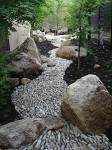
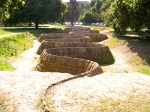
Well, enough of my Monday rant, here are a few examples of some superb pieces of land/garden art in stone. What do you think of them and what about more land art in gardens?

Old School Gardener

OK, here’s a little challenge for you to start the new week. I photographed these two old gardening tools at Erdigg House and Gardens last week. I wonder how efficient they were, as I can certainly see me using them both in Old School Garden.

What do you think they were used for? Have you used them, or do you have them in your garden? Please leave me a comment!

Old School Gardener

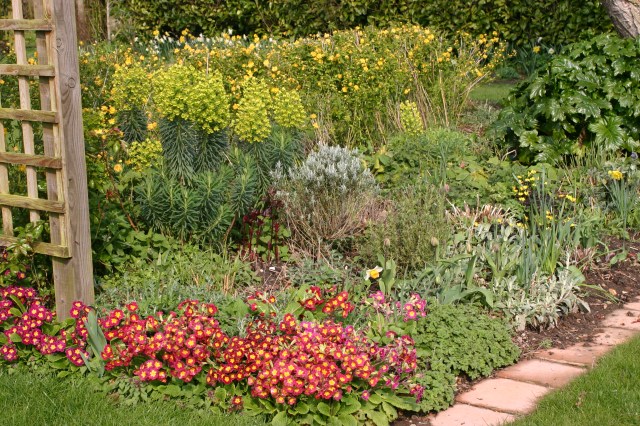
Spring has sprung at Old School Garden

Spring has sprung at Old School Garden

To Walter Degrasse

Dear Walter,

I’m a bit under the weather at present. A heavy cold was preceded earlier in the week with an infection in the nerves of one of my teeth- very painful, but thankfully the antibiotics are now dealing with it. However, I can ‘look forward’ to some root canal work and a crown in a few week’s time!

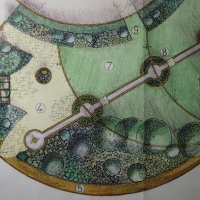
The illnesses have rather put back my gardening activities this week, but I’ve still managed to make some progress. You probably saw my articles about the new alpine planter in the Courtyard; I’m really pleased with how that’s turned out and look forward to a new horticultural experience with alpines, which I haven’t grown before. Another project I’m hoping to start today is to turn an old wooden bike rack into a ‘pot plant theatre’ – this should be a fairly simple challenge and will hopefully add another nice feature to the courtyard garden- more on this next week!

The rest of the garden is really starting to kick in too- bulbs appearing in all sorts of places (including some I’d forgotten about), and the early flowering shrubs and trees- Viburnum, Forsythia, Chaenomeles, Cherry, Clematis (armandii and balearica), Currants and magnolias are all looking great. The pink magnolia in the front garden is just about coming into flower- we need a few days of the warmth of a week or two ago. And the Amelanchier is just about to give us its spring shower of white blossom- I can’t wait.

I’ve begun weeding and tidying the various borders but had hoped to be further on by now (I always seem to be saying that). Still, a few days next week should see the bulk of this done. I’ve also spent a good couple of days pressure washing the terrace, paths and copurtyard floors- this seems to get harder each year, or maybe it’s because we’ve had the warm, wet conditions over the winter that help algae to grow! A weather presenter last week reported that one frosty night (when temperatures fell to about -5 degrees C) had been not only the coldest of the spring, but also of the entire winter too!

I’ve been sowing seeds- veg and flowers- and most of these have so far been successful, though a couple of packets of perennials I bought have been disappointing, yielding only one plant each from packets of 10 or so seeds- maybe I didn’t get the conditions quite right for these. I’m now getting to the stage when I need to clear the greenhouse of the remaining tender, over-wintered plants to create space for further racking for more seed trays.

That reminds me, last week there was a minor disaster in the greenhouse, which is already jam-packed with trays and modules. Our cat decided to ‘explore’ – he jumped up onto the staging and managed to tip three trays of seeds onto the floor! I think I’ve managed to salvage many of the seedlings in two of these, but the third one hadn’t yet germinated, so I may not see anything from that given the way the compost (and seed) was turned upside down!

I’ve finished turning over the soil in the kitchen garden and started to mulch the fruit with manure. The rhubarb is looking good and we had our first crop of ‘forced’ stems last week- very sweet too. The first crops of broad beans, carrots, red cabbage, spinach, onions and garlic are all in (some sown last autumn and over wintered), so we should be getting some tender new veg in a few months. I gave the lawn its first cut a week or two back and it looks like it now needs another, so that’s a further job for the next few days- and edging this will also take some time, especially as I want to straighten out one section that isn’t quite parallel with its opposite edge.

Further afield I’ve continued with my support to two schools (one primary, the other a secondary). Yesterday – despite some heavy rain (or maybe because of it), the younger primary school children had great fun making ‘mud creatures’ in the grounds- a creative use of the many mole hills in what’s called the ‘Eco Park’. We also set up a greenhouse (which was bought with some of the money raised st the opening of Old School Garden last year) and pallet planting spaces (using the vertical planters I made with some of the children last year, but this time using them horizontally). The two younger classes will use these to get growing close to their classrooms – they had great fun filling these with compost yesterday, a natural follow on from getting their hands muddy making ‘mud creatures’!

This area will focus on container growing and provide the children with an introduction to growing which they can then use to progress into the main school garden area. This is starting to look very neat and tidy and has a range of crops already underway. Yesterday the class whose responsibility is the potatoes, planted three varieties of ‘earlies’ out in the raised bed we’ve earmarked for this (covered with sheets of polycarbonate). We’ve told them about rotation too – this plot had peas and beans in it last year. Oh, and I’m pleased to say that the School has now been confirmed as achieving the highest award for ‘Learning Outside the Classroom’ -Gold, which will sit nicely alongside its top marks in the RHS Campaign for School Gardening (where it has achieved Level 5, again the highest possible).

At the secondary school, we’ve just about managed to get the three plots (of 12m x 6m each) ready for planting- last week saw a local chap come in with his rotivator to finish off tilling the soil- though we have had to limit this in one plot as we’ve discovered what looks like an old lead water pipe! Still, I hope next week to get temporary landscape fabric paths laid and potatoes planted with each year group. The process of weeding/taking off grass  has been a real challenge, not least for children with short attention spans! Still, we’re nearly there and so we can start to plan out next term’s activities to bring in a bit more variety to what they do.

It’s sad that the Master Gardener programme has been wound up in most of Norfolk, as the original funding has come to an end, but it is progressing in one or two community gardening projects and in the whole of the Breckland area, where the Council has kindly agreed to continue funding it. I’m going off to the induction day for the new Breckland Master Gardener volunteers on Sunday, hopefully to inspire rather than de-motivate!

A beauty from inside the house- Clivia

Well that’s about it for this month’s update, Walter. I was pleased to hear that you’ve taken on an allotment with Ferdy but sympathise with you on the tiring preparatory work, similar to what I’ve experienced at the secondary school! Still, it sounds like you’re nearly ready to sow and plant like us, so all the best for that. I’m sure you’ll really enjoy ‘growing your own’ alongside tending your fabulous ornamental garden at home.

Tomorrow, our young German guest, Lisa, is returning home. This will be a sad day as she’s been a delightful addition to our rather depleted household over the last few months. One can fall into stereotyping today’s youngsters as rather shallow, lacking interest in anyone but themselves and focused on ‘having fun’. Lisa has rebalanced my perspective, and we wish her every success in her university studies and chosen career in teaching.

Stay in touch old friend,

Old School Gardener

The Small Tortoiseshell- under threat

The Small Tortoiseshell- under threat

The latest ‘Wider Countryside Butterfly Survey’ reveals that some butterfly species- notably the Meadow Brown- seem to have benefitted from last year’s wet summer, whereas others- such as the Common Blue and Small Tortoiseshell– were around 50% down on the previous year.

The Small Tortoiseshell was once prolific in Britain’s gardens, but it seems to have been one of the big losers in 2012. Last year’s weather  is only partly to blame, as wider agricultural policies and practices are a key driver behind a longer term decline in butterfly species and numbers and parasitic flies may also be part of the story. Around three quarters of the 59 native British species are now in decline.

So what can gardeners do to arrest this trend?

1. Think about providing year- round sources of food for emerging and mature butterflies. Examples of plants which feed butterfly caterpillars are: Dill, Antirrhinum, Columbine, Berberis, Marigold, Ceanothus, Cercis, Cornus, Foxglove, Wallflower, Ivy, Hop, Holly, Jasmine, Honesty, Ragged Robin, Crab Apple, Oregano, Cowslip, Rudbeckia, Thyme, Nasturtium, Verbascum and Pansy.

Species which are food sources for mature butterflies are: Achillea, Anthemis tinctoria, Bergamot, Buddleja, Columbine, Coreopsis lanceolata, Red Valerian, Ceanothus, Marigold, Echinacea, Globe Thistle, Knautia, Lavender, Tobacco plant and Hop.

2. Try to plant butterfly-attracting plants in groups– butterflies prefer to visit stands of brightly coloured flowers.

3. If you have room, choose a quiet but sunny area of lawn where the grass can be left to grow long – some butterflies such as the Meadow Brown prefer to lay eggs in long grass.

4. Allow a small patch of nettles (Urtica dioica) to grow unfettered– these will provide food for some of the more common butterflies such as Red Admiral, Painted Lady and Milbert’s Tortoiseshell.

5. If you have fruit trees, don’t be too tidy about windfalls– leave some rotting fruit as a source of food for some butterflies.

6. Try to provide a shallow, muddy puddle in a sunny spot– many butterflies love to drink from these and they also provide essential minerals and salts.

7. Avoid using chemical sprays to deal with insect pests and weeds– many will harm beneficial insects and butterflies as well as the pests.

Groups of butterfly- friendly plants such as Bergamot are better than single specimens

Groups of butterfly- friendly plants such as Bergamot are better than single specimens

Sources and further information:

Guardian online

Butterfly Conservation

UK butterflies

‘Wildlife Friendly Plants’- Rosemary Cresser

Quizzicals- two more cryptic clues to plant, fruit or veg names:

  • Our monarch continues to work hard
  • Nasty spot causing urination problems

Old School Gardener

Finding Nature

Nature Connectedness Research Blog by Prof. Miles Richardson

Norfolk Green Care Network

Connecting People with Nature

Discover WordPress

A daily selection of the best content published on WordPress, collected for you by humans who love to read.

Susan Rushton

Celebrating gardens, photography and a creative life

Unlocking Landscapes

Writing, photography and more by Daniel Greenwood

Alphabet Ravine

Lydia Rae Bush Poetry

TIME GENTS

Australian Pub Project, Established 2013

Vanha Talo Suomi

The Journey from Finnish Rintamamiestalo to Arboretum & Gardens

Marigolds and Gin

Because even in chaos, there’s always gin and a good story …

Bits & Tidbits

RANDOM BITS & MORE TIDBITS

Rambling in the Garden

.....and nurturing my soul

The Interpretation Game

Cultural Heritage and the Digital Economy

pbmGarden

Sense of place, purpose, rejuvenation and joy

SISSINGHURST GARDEN

Notes from the Gardeners...

Deep Green Permaculture

Connecting People to Nature, Empowering People to Live Sustainably

BloominBootiful

A girl and her garden :)