Tag Archive: garden


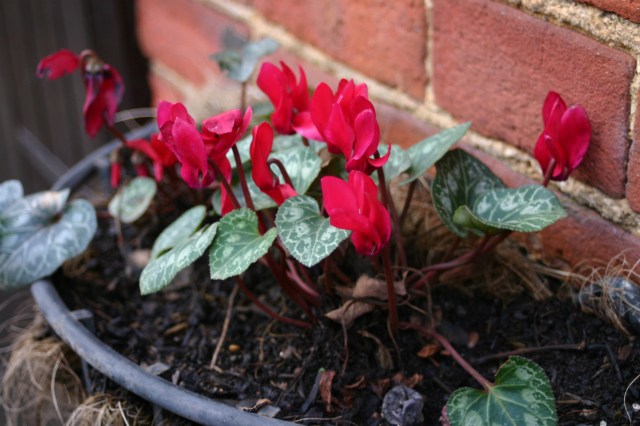
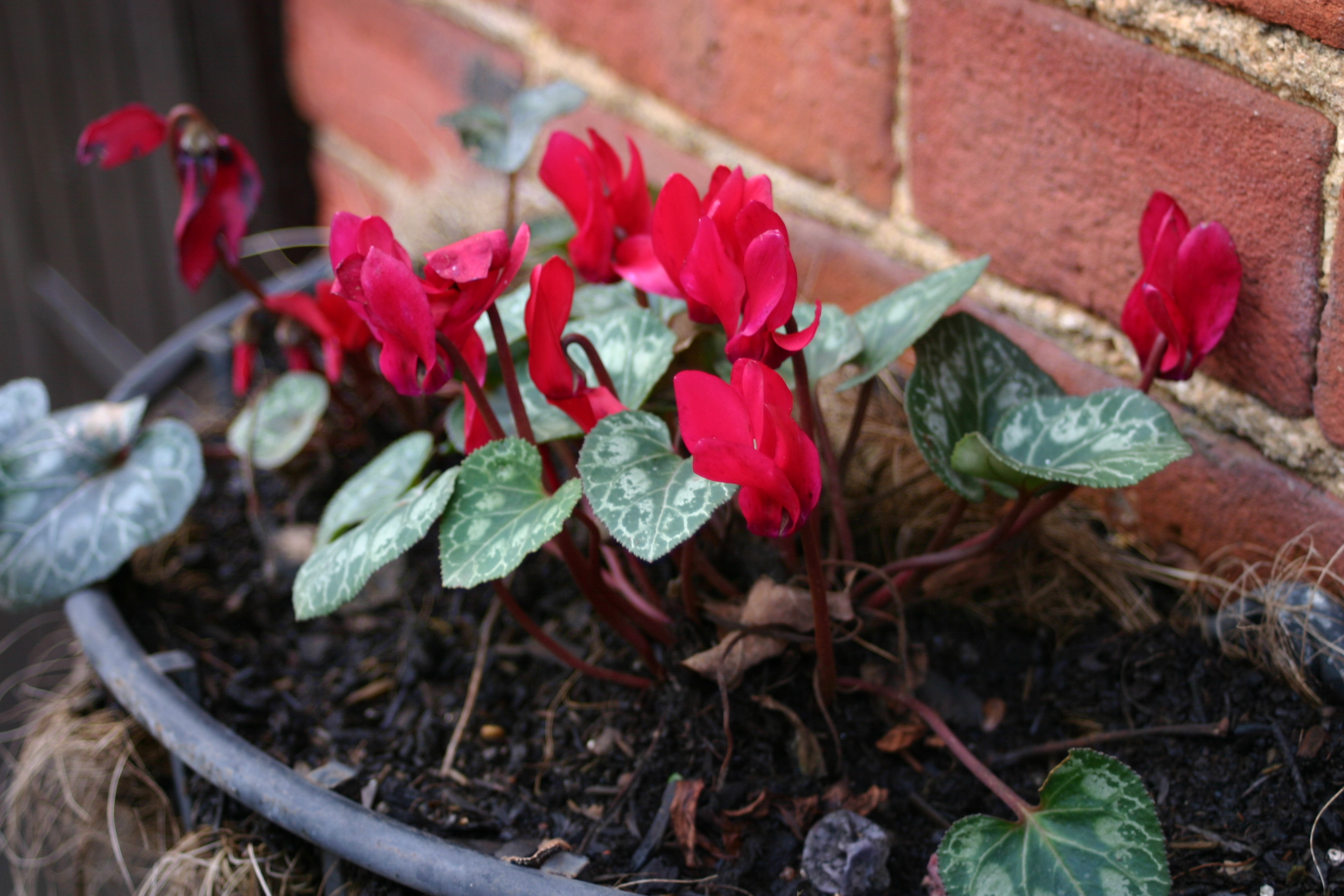
Cyclamen still looking good in the courtyard

To: Walter De Grasse – 30th January 2014

Dear Walter,

Is it too late to wish you Happy New Year?! I hope that you have a great year, especially in your wonderful garden. It seems ages since I last wrote to you, probably because we’ve had all the activity that comes with Christmas and New Year and then gradually getting back into the rhythm of something approaching a normal routine! It’s been an interesting couple of weeks here at Old School Garden, though I must admit that only in the last week have I begun (sometimes with muscles and bones screaming ‘don’t do it!’), to get back into the garden for an hour or two each day (well some days).

Seeds sorted- I'v e been through my supply and filed them in date order for sowing
Seeds sorted- I’ve been through my supply and filed them in date order for sowing

I’ve managed to finally collect the last of the leaves (mostly Oak, that seem to be the last to fall), pruned the Grapevine and Apple Trees and continued to tidy up dead and untidy foliage as new growth starts to emerge. I also sowed my first seeds the other day; a mixture of early veg (Calabrese and Leeks) with some annuals and perennials. It was quite pleasing to review my seed purchases alongside spare seed from earlier years and to start to place the packets in my seed box in date order for sowing. I’m fully expecting  my dining room to soon be full of seedlings in the process of growing on prior to putting outside in the cold frame or greenhouse (or even under cloches/fleece). I’ve purchased some rather more exotic annuals and perennials this year as well as ordering some ‘heritage’ varieties of vegetable from the Garden Organic Heritage Seed Library. Oh, and I mustn’t forget my Christmas gift of some carrot seeds called ‘Nigel’!

Greek Squashes grown last year- a 'heritage' variety, more of which I plan to grow this year
Greek Squashes grown last year- a ‘heritage’ variety, I’m planning to grow more ‘heritage veg’ this year

I’ll tell you more about these different plants as they get growing, but I’m excited about the greater diversity of food and flowers I’ll be growing this year. I should by now have done plan for the kitchen garden, but haven’t managed this, partly because I’m a little stumped as to how to do it now that I’m aiming to grow a wider range of smaller quantities in successional sowings and mixing in more ornamentals too. I must devote a few hours to thinking this one through – I’ll put the final version in a post soon – hopefully!

Though I know that you’ve been more affected by me by the wave of storms and flooding we’ve been having in the UK, but even with this, the lack of any really cold spell makes me wonder if we’re going to get a ‘real winter’ this year! As testimony to the mild weather I’m amazed at how the Melianthus is still putting on new foliage and plants like the Scabious and Fuchsia I have in the courtyard are still flowering!

I’ll be putting in a few more hours outside as the days continue to lengthen, including finishing off pruning the roses and moving and dividing some herbaceous plants I didn’t get round to in the Autumn. Well I say that, but I may have to curtail my own gardening time in the next few months as I’ve taken on some new teaching work at a local high school (working with Foundation skills students to develop their school garden and especially food growing). I’m off there later today to work with two groups, focusing on what they’d like to grow in their plots, which we can hopefully get into soon and begin the work of preparing the ground etc. The School Garden is a potentially wonderful resource, with two large greenhouses with electrically operated vents and water supplies, lots of tools and equipment and a south-facing aspect with what seems to be good soil- once the weeds have been cleared and its been turned over and fed of course!

I’m also hoping to repeat my Garden Design and Grow Your Own Food courses for adults (assuming we get the numbers required). These are due to kick off next week, and it looks hopeful that they’ll run.

I’m also carrying on with supporting the local Primary school in its ‘Learning Outside the Classroom’. In fact as I write this the School is being inspected for its latest accreditation on it’s outdoor work, hopefully an addition to its ‘level 5’ achievement in the RHS Campaign for School Gardening. I’ll be getting over to the School after half term to help them get seed sowing underway and hopefully getting the youngest children involved through use of the ‘pallet planters’ we built last year, plus a mini greenhouse for propagation, all of which can be placed near to their classrooms.

I guess that my support for individual households in food growing may also pick up soon, as I’ve promised help to  three of the students on the first ‘GYO’ course that ran in Foulsham last Autumn. Sadly the ‘Master Gardener’ programme in Norfolk is about to be reduced due to the ending of some grant funding, but I’m likely to continue to be involved in the Breckland area, where the local Council is supporting the work.

No doubt you’re well ahead in your plot? I’d love to hear what you’re up to and your plans for the year. I’m contemplating repeating our opening of Old School Garden to the public once more, as this was such an enjoyable day and one which raised funds to support worthy local projects – most of which involve gardening. Maybe you and Ferdy would like to join us – it’ll probably be in late June/early July? Well, I’ll sign off for now, wishing you and her well and looking forward to hearing from you.

all the best,

Old Schoool Gardener

Tree Grants for Schools and Community Groupsschool trees

‘Grant applications for the 2014 planting season are now open.

The Tree Council’s Tree Futures offers help for tree planting through two grants programmes, the ‘Trees for Schools‘ and ‘Community Trees‘ funds.  Any school or community group within the UK that is planning a project that actively involves children under 16 is encouraged to draw on the fund to plant trees and make a greener future.

The Tree Council’s National Tree Week (from 29 November to 7 December in 2014) is the focus for these projects and successful applicants organise their planting events in conjunction with our annual celebration of the new tree planting season.

In addition, we are offering funds for fruit tree planting by schools and community groups through our Orchard Windfalls fund, first launched for the 2013 planting season. We are able to fund projects between £100 and £700 and successful applicants will receive up to 75% towards their planting costs. For example, if your project totals £700, The Tree Council would offer up to £525. The remaining 25% will need to be secured by your school or organisation.

With the generous support of an anonymous donor we have been able to produce a Key Stage 1 & 2 teaching and learning resource which will be sent out free of charge to all successful grant applicants. To see taster pages and information about how to purchase the CD ROM please click on this Tree Ties link.’

Old School Gardener

PicPost: A Cut Above

Using focal points- including the more unusual- is an effective way of drawing the eye away from the edges of a space

Sometimes, especially with awkwardly shaped or smaller gardens, it makes sense to try and draw the eye from the outer boundaries and create a more pleasing and, apparently larger space. Here are seven ‘top tips’ for achieving this:

1. Put square and rectangular patios and lawns at 45/30/60 degrees to the side boundaries or use shapes for these and other flat areas which contrast with the outer shape of the garden.

2. Set paths to run at an angle to the garden boundaries in zig zags or dog leg style.

3. Make paths curved, meandering from side to side.

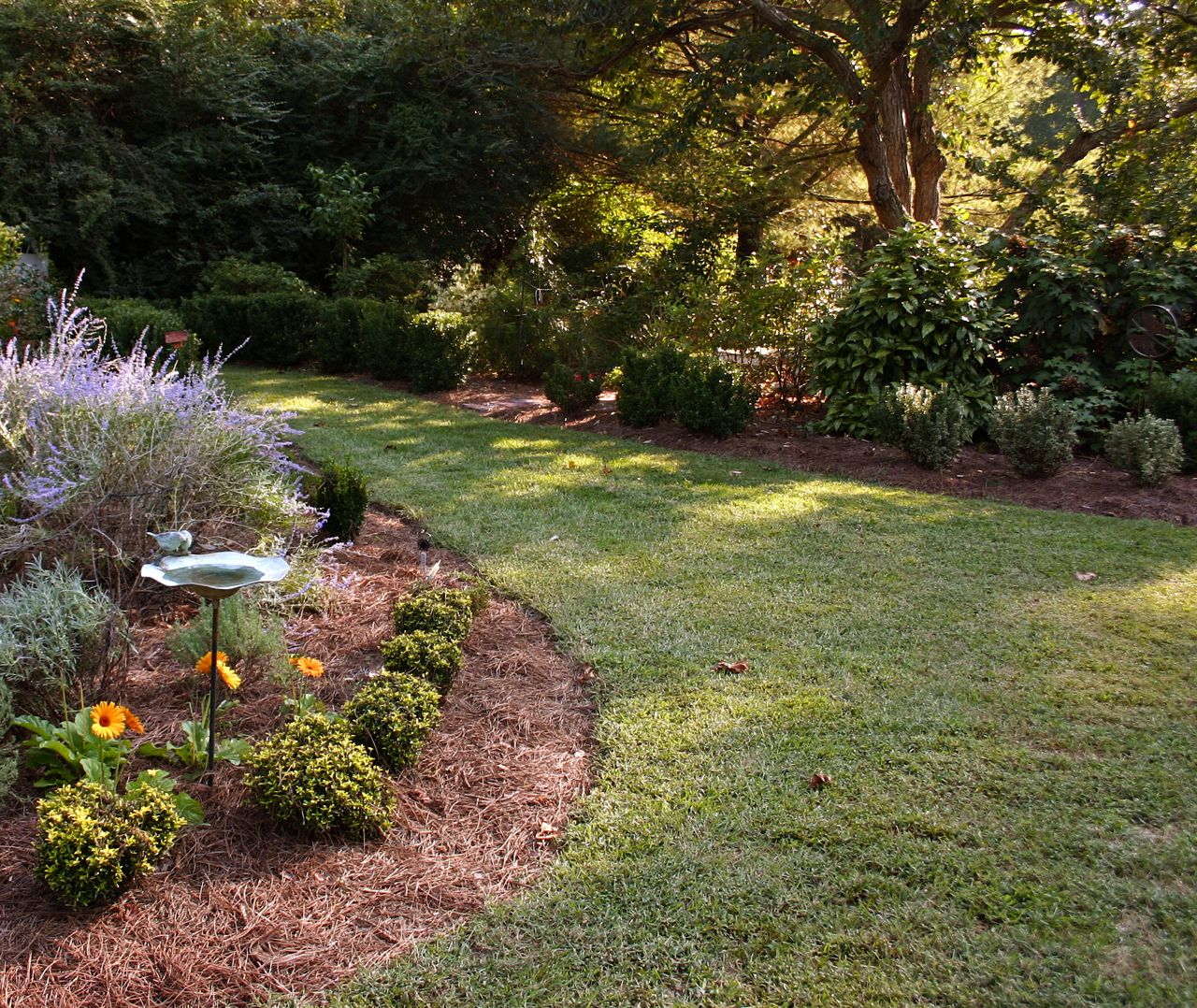
Paths- including grass- and the border edges they create can be meandering to take the eye on a journey..

4. Fix structures such as trellis, pergolas and arches or plant hedges across the garden to interrupt the view and to create separate compartments.

5. Place groups of tall shrubs or trees at intervals in the line of sight to block views across or down the garden.

6. Use climbers and large shrubs, especially evergreens, to disguise solid formal boundary fences and to break up the straight lines, particularly the horizontal ones of fence/ wall tops.

7. Carefully place focal points to draw the eye in various chosen directions, positioning them so that they can be seen from different places in the garden.

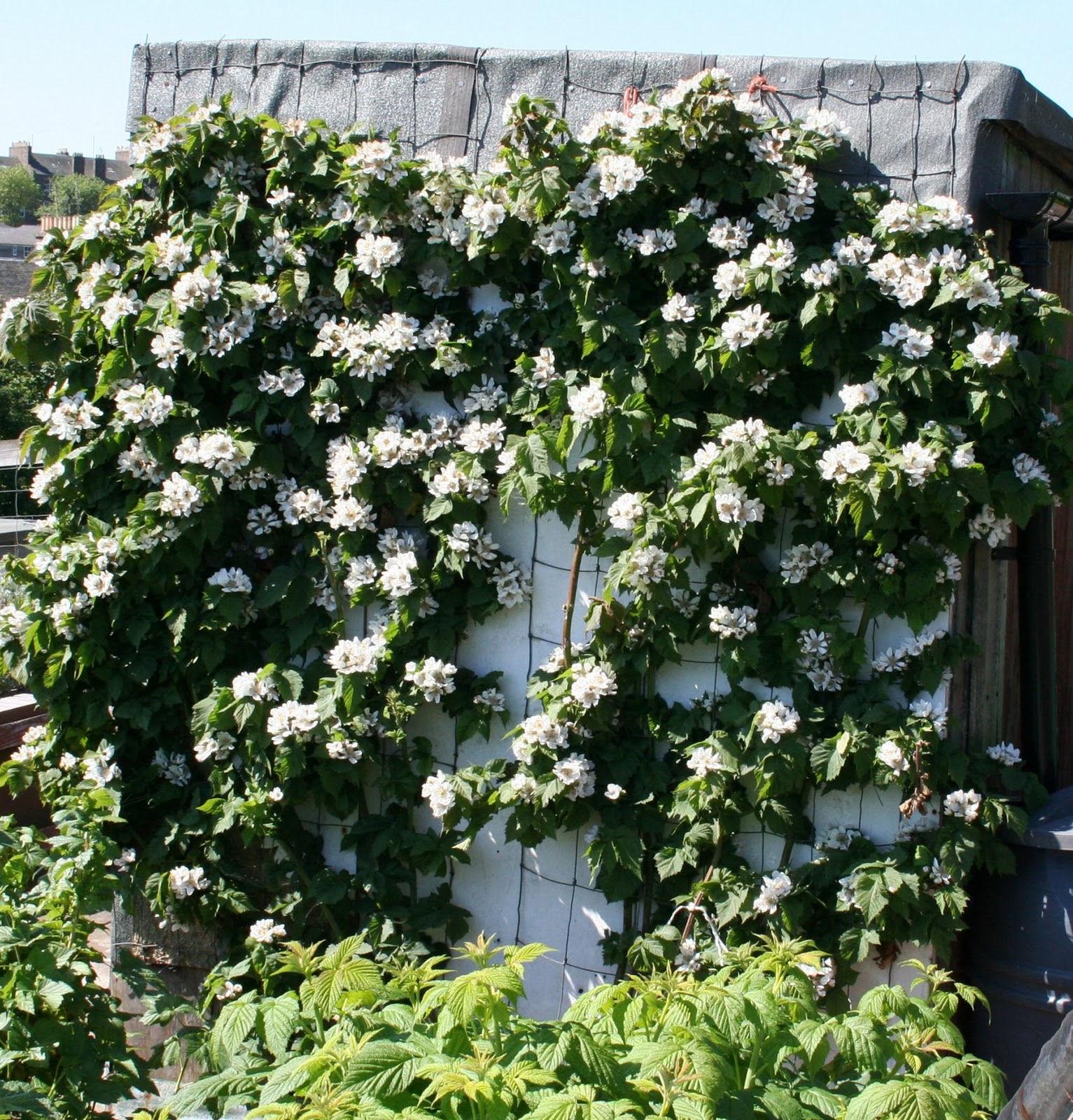
Use climbing plants to cover up and soften hard boundaries

Use climbing plants to cover up and soften hard boundaries

Related article: Arbours and Pergolas in the Garden- 7 Top Tips

Old School Gardener

gooseberry

‘Now I am in the garden at the back…- a very preserve of butterflies, as I remember it, with a high fence and a gate and padlock; where the fruit clusters on the trees, riper and richer than fruit has ever been since, in any other garden, and where my mother gathers some in a basket, while I stand by, bolting furtive gooseberries, and trying to look unmoved.’

Charles Dickens – David Copperfield 1850

Old School Gardener

Eremurus 'Shelford Hybrids'
Eremurus ‘Shelford Hybrids’

With Spring round the corner and thoughts of summer-flowering bulbs, this week’s timely question comes from George White of Walthamstow, London:

‘A friend has some magnificent border plants which he knows only by the name Foxtail Lilies. What are they, and are they easy to grow?’

George, these plants are a glorious addition to summer borders and belong to the genus Eremurus. They are also known as ‘Desert Candles’ and are hardy herbaceous perennials in which tall spikes of star-shaped flowers arise from a ring of narrow, pointed foliage. The best and tallest are the series known as  ‘Shelford Hybrids’, whose flowers vary in colour but are often a pleasing soft, pinky beige. They can reach 2.75 metres tall and bear hundreds of primrose-sized flowers.

Eremurus stenophyllus bungei  is the yellow-flowered parent of these hybrids and reaches 1 metre in height. The other parent E. olgae, is late flowering, bears pink blooms, and reaches a height of 1.5 metres.

Other fine examples are the very tall E. elwesii with soft pink flowers (and it’s white-flowered variety ‘Albus’), and the even taller (up to 3 metres) E. robustus with pinky yellow flowers on spikes up to 1.2 metres long. Eremurus are quite easy to grow as long as they have a free draining soil around their roots and have lots of warm sunshine. Here’s a video on how to plant Eremurus bulbs. It will probably be at least one season before you see any flowers.

If you can’t wait until next year then now’s the time to  think about some other unusual summer flowering bulbs for your borders.

Camassia (Quamash) are easy to grow and are attractive late spring performers that look good with late tulips (I have some whose lavender-purple flower spikes contrast well with the orange tulip ‘Ballerina’). C. cusickii is 200mm tall with lots of pale blue flowers, while C. quamash (syn. esculenta) has spikes of white to deep-blue flowers and grows to 250mm tall. C. leichtlinii, 900mm tall, has white or blue star-like flowers and C. semiplena has semi double creamy flowers on sturdy stems.

Other summer bulbs of interest are Fritillaria persica ‘Adiyaman’ which stands between 800mm – 1.2 metres tall and in May produces unusual, deep -hanging bells of rich plum-purple. Leucojum aestivum ‘Gravetye Giant’ is probably the best of the summer flowering ‘snowflakes’ standing 300-500mm tall and has wide- hanging white bells in April and May.

If you are in a frost free area or able to lift your bulbs to protect them from winter frost, then Watsonia is a colourful spike- flowered border plant. And why not go for a touch of the exotic with a Canna or two? (better make that 3 at least). Summer flowering bulbs are already available to buy online through various well-known nursery companies and should soon start appearing in your local Garden Centre or nursery. Plant them in the spring as the soil begins to warm up.

Further information:

BBC gardening guide – summer flowering bulbs

Foxtail Lilies

How to grow Eremurus robustus

How to grow Eremurus stenophyllus AGM

Old School Gardener

Watsonia-close-upA genus of around 60 species of perennials, Watsonia (‘Bugle Lilies’) are usually found on rocky or grassy slopes and plateux in South Africa and Madagascar.

Most are plants typical of the fynbos area in south Africa, adapted to a Mediteranean -type climate, but some occur along the eastern and inland areas of the country and have adapted to a wider range of conditions, mainly a continental climate with summer rainfall. Many species occur mainly in the mountains, though some occur in sandy flats and marshy areas.Watsonia species were introduced as garden ornamentals to Australia in the mid-19th century and were widely grown by the 1940s.

The genus is named after Sir William Watson, an 18th century Brtiish botanist. Growing from corms, they have erect, usually sword- shaped leaves at the base and are grown for their spikes of tubular flowers in shades of red, orange, pink or white. Stems grow to between 1.2 and 1.7 metres tall. Watsonia flowers for up to 4-5 weeks in spring, which makes it a really interesting plant for perennial borders.

They have an erect growing habit, do not need any staking or support and have blooms that add a ‘zing’ to a garden for weeks on end!

The plants are a little tender, so can only be grown successuflly in places with little or no frost, or alternatively in a greenhouse or conservatory. Spring and summer growing varieties can be grown outdoors in a border and then lifted in the autumn and brought under cover for the winter. They can also be grown in containers.

The most commonly cultivated species is the pink-flowered Watsonia borbonica and its white mutant ‘Arderne’s White’. These were crossed with Watsonia meriana and other species in the early 20th century by breeders in Australia and in California to produce a wide range of cultivars. Watsonia has been eclipsed in popularity by Gladiolus and other bulbs, and is now largely neglected by the nursery industry.

Under glass they should be grown in a loam-based compost with added sharp sand and leaf mould, in full sun. They should be watered freely when in growth and liquid fertiliser perhaps added every month. Outdoors they can be grown in light, well drained soil that does not dry out in summer. A dry mulch can help protect against frost during the winter.

Further information:

Plant profile- Watsonia

Growing Watsonia

Watsonia on Tresco, Isles of Scilly

RHS- Watsonia pillansii

Old School Gardener

Green Monday

From the RHS:

‘Blue Monday? Not for gardeners! A new survey has shown that Brits truly are a nation of gardeners with 77% saying they garden and 82% saying it makes them feel happier! A whopping 70% also said that given the choice, they would prefer to spend their working day in a garden. Inspired? See our films of horticulturists explaining their jobs make them happy, and join us on Twitter all day tweeting with ‪#‎GreenMonday‬: http://bit.ly/1b1PJcu’

I’ve just come in from some garden foliage clearing – crisp, sunny afternoon, wonderful sunset….happy.

Old School Gardener

Nurture the Nature in your Garden

A link to information about the latest ‘citizen survey’ of wildlife in our gardens, which begins today.

‘Britain’s biggest public-led investigation into the health of native wildlife has begun, with the launch of the national Garden Wildlife Health project

A partnership between the Zoological Society of London (ZSL), the British Trust for Ornithology (BTO), Froglife and the Royal Society for the Protection of Birds (RSPB), Garden Wildlife Health is the first collaborative citizen science project of its kind, relying on data provided from garden-owners across the nation….’

Old School Gardener

Here’s my latest trawl of interesting projects to enhance your garden. Most are from 1001 Pallets and a few from The Container Gardening Alliance.

Furniture…

Planting spaces…

and a few more unusual items….

Old School Gardener

Finding Nature

Nature Connectedness Research Blog by Prof. Miles Richardson

Norfolk Green Care Network

Connecting People with Nature

Discover WordPress

A daily selection of the best content published on WordPress, collected for you by humans who love to read.

Susan Rushton

Celebrating gardens, photography and a creative life

Unlocking Landscapes

Writing, photography and more by Daniel Greenwood

Alphabet Ravine

Lydia Rae Bush Poetry

TIME GENTS

Australian Pub Project, Established 2013

Vanha Talo Suomi

The Journey from Finnish Rintamamiestalo to Arboretum & Gardens

Marigolds and Gin

Because even in chaos, there’s always gin and a good story …

Bits & Tidbits

RANDOM BITS & MORE TIDBITS

Rambling in the Garden

.....and nurturing my soul

The Interpretation Game

Cultural Heritage and the Digital Economy

pbmGarden

Sense of place, purpose, rejuvenation and joy

SISSINGHURST GARDEN

Notes from the Gardeners...

Deep Green Permaculture

Connecting People to Nature, Empowering People to Live Sustainably

BloominBootiful

A girl and her garden :)