Tag Archive: garden


Stepped and repeating curves

Old School Gardener

dramm-garden-hose‘To a gardener there is nothing more exasperating than a hose that isn’t long enough.’

Cecil Roberts

Do you agree? What is the biggest pain in YOUR garden?

Old School Gardener

Planting Patterns #17

Peace in Agave- via Guerilla Gardening

Old School Gardener

Picture: digging done at the Lost Gardens of Heligan

Picture: digging done at the Lost Gardens of Heligan

‘Come my spade. There is no ancient gentlemen but gardeners, ditchers and grave-makers; they hold up Adam’s profession.’

William Shakespeare – Hamlet

Planting Patterns #14

Amish Quilt gardens

Old School Gardener

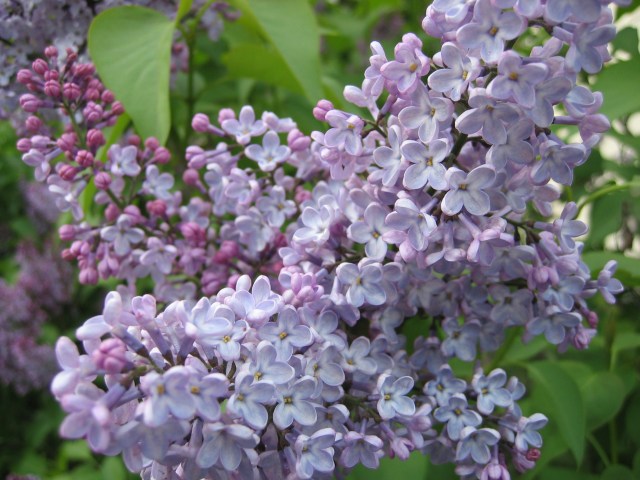
Stockholm-lilac‘The bright and busy days of May are here;

The countryside’s ablaze with colours rare

In sun and shower. There’s cricket on the green,

And lilies in the wood, and now are seen

Laburnums pouring gold, tall chestnuts decked

With spires of pink and white, where bees collect

A precious harvest, then away go winging

Past lovely lilacs where a blackbird’s singing.

Old gardeners now their long experience bring

To battle with the weeds; the lawns are neat.

A worried thrush scolds by the garden seat

Her wandering, gaping brood. House-martins cling,

Pied master-builders, on the weathered walls,

And from the woods all day the cuckoo calls.’

John (Jack) Kett

from ‘A Late Lark Singing’ (Minerva press 1997)

Planting Patterns #13

Growing food in style- picking veg at the Eden Project, Cornwall

Old School Gardener

carpinus betulus autumn colourThis is the third in my new series on garden trees. I’ve also done an article about trees and garden design.

Common name: Hornbeam

Native areas: The 30–40 species occur across much of the north temperate regions, including the U.K., with the greatest number of species in east Asia, particularly China. Only two species occur in Europe, and only one in eastern North America. 

Historical notes: Traditionally, the timber of hornbeams has been used to produce mallets, skittles and even the moving parts of pianos! The common English name of “hornbeam” derives from the hardness of the wood (likened to ‘horn’) and the Old English ‘beam’, a tree (similar to the German for tree, “Baum”).

Pleached trees- picture RHS

Features: A large, deciduous tree (growing to 20 metres plus), with a grey-fluted trunk and spreading canopy. It has ovate, ribbed and serrated edge leaves that turn a beautiful clear yellow in autumn. The flowers are wind-pollinated pendulous catkins, produced in spring. The male and female flowers are on separate catkins, but on the same tree (i.e it is monoecious). The fruit is a small nut about 3–6 mm long, held in a leafy bract; the bract may be either trilobed or a simple oval, and is slightly asymmetrical.

Uses:  Wonderful in a parkland setting, grown in groups, it also ideal for pleaching (i.e. training into a ‘hedge on stilts’) and for use along the edges of smaller gardens – just like here at Old School Garden. Received the Award of Garden Merit from the RHS in 2002.  Some of the cultivars are suitable for smaller gardens as their growth habit is more columnar.

Some of the cultivars available include:

‘Fastigiata’– a tree of medium size (10-15 metres in height) and with a pyramidal habit, slender in its youth. Suitable for smaller areas despite developing ‘middle age spread’ (it can grow out to  1o metres wide). Very effective if left feathered at the base to encourage gold and orange autumn leaf colour. Stiffly ascending branches give it a columnar shape, resembling Lombardy Poplar.

‘Fastigiata Frans Fontaine’- selected from a street in the Netherlands in the 1980’s this retains its columnar habit better than the ordinary ‘Fastigiata’ variety (3 metres wide after 25 years) so is even better suited to restricted areas.

‘Purpurea’-  medium height (10-15 metres), introduced in the 1870’s , this is well suited to arboretums and plant collections. Young leaves flush with a purple tinge and then gradually turn deep green and them a similar yellow to the species hornbeam in  autumn. Slower growing and ultimately smaller than the species tree. Well suited to heavier soils.

”Japonica’-  (Japanese hornbeam), introduced from Japan in 1895, a small (5-10 metres tall), rounded tree, very effective if pleached. Darker than the species tree, with heavily corrugated leaves, darker than the species tree. Attractive, prolific hop-like fruit. AGM in 2002

Growing conditions: hornbeams grow well in most soils, including clay and chalk and is useful for planting where there are poor planting conditions.

 Further information:

Wikipedia

RHS- Carpinus betulus

RHS- pleaching

Barcham trees directory

Old School Gardener

Planting Patterns #12

Wisteria tunnel at Kawachi fuji Gardens, Japan

Old School Gardener

IMG_8624The second and final stop on our trip home from Devon recently, was Montacute House, Somerset. Surrounded by beautiful, formally laid out gardens, the warm, honey-coloured stone of the house glowed in the spring sunshine. There was a splendid display of tulips and wallflowers and a magnificent ‘cloud’ yew hedge reminiscent of those at Blickling House, near our home in Norfolk. We were fortunate to meet  a gardener in the ”orangery’, which, she explained, was not really in the best spot for this and had in the past been more of a shady water feature, with its tufa – clad grotto. This and it’s surrounds are gradually being replanted with ferns and other suitable species. Pots of standard Bay trees line the terrace outside where once orange and lemon trees would have been placed in summer.

‘Montacute is a masterpiece of Elizabethan Renaissance architecture and design. With its towering walls of glass, glow of ham stone, and its surrounding gardens it is a place of beauty and wonder.

Sir Edward Phelips, was the visionary force and money behind the creation of this masterpiece, which was completed in 1601. Built by skilled craftsman using local ham stone under the instruction of William Arnold, master mason, the house was a statement of wealth, ambition and showmanship.

Come face to face with the past in the Long Gallery, which is the longest of its kind in England. The gallery houses over 60 Tudor and Elizabethan portraits on loan from the National Portrait Gallery.

Beautiful gardens surround Montacute, constantly changing, filling the house with scent in summer and providing an atmospheric backdrop for a winter walk…’

This slideshow requires JavaScript.

Further information: National Trust website

Old School Gardener

Finding Nature

Nature Connectedness Research Blog by Prof. Miles Richardson

Norfolk Green Care Network

Connecting People with Nature

Discover WordPress

A daily selection of the best content published on WordPress, collected for you by humans who love to read.

Susan Rushton

Celebrating gardens, photography and a creative life

Unlocking Landscapes

Writing, photography and more by Daniel Greenwood

Alphabet Ravine

Lydia Rae Bush Poetry

TIME GENTS

Australian Pub Project, Established 2013

Vanha Talo Suomi

The Journey from Finnish Rintamamiestalo to Arboretum & Gardens

Marigolds and Gin

Because even in chaos, there’s always gin and a good story …

Bits & Tidbits

RANDOM BITS & MORE TIDBITS

Rambling in the Garden

.....and nurturing my soul

The Interpretation Game

Cultural Heritage and the Digital Economy

pbmGarden

Sense of place, purpose, rejuvenation and joy

SISSINGHURST GARDEN

Notes from the Gardeners...

Deep Green Permaculture

Connecting People to Nature, Empowering People to Live Sustainably

BloominBootiful

A girl and her garden :)