Tag Archive: formal


PicPost: Amazing

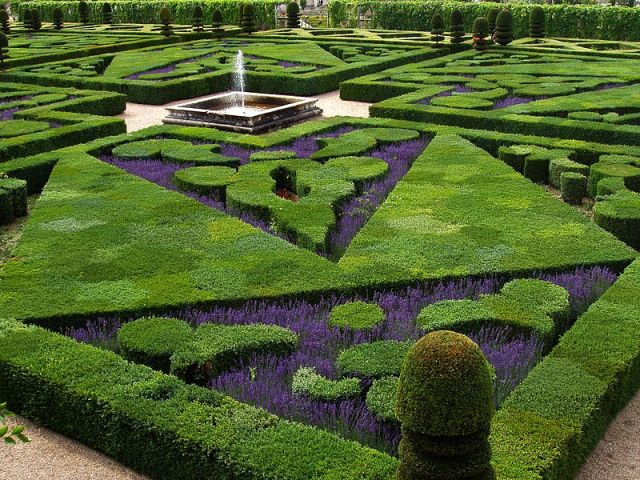
Maze Gardens at Ruspoli Castle Northern Lazio, Italy

Tiered Box hedging in the lower garden

My recent trip to Lisbon, Portugal, was very much a ‘Garden Fest’ (even though it was really about seeing our Daughter and Son-in-law who live there). I seem to have found several more superb gardens and parks to add to those old favourites covered in earlier articles in the category ‘Portuguese Gardens’. The Jardim Botânico d’Ajuda (Ajuda Botanical Garden) was the first we visited, after an interesting tour of the nearby Royal Palace of Ajuda – richly decorated and with some ‘garden’ interest of its own- (more on that in a later article!).

History

The Ajuda Botanical Garden was a real find. The first and oldest botanical garden in Portugal, it is also without doubt one of the most beautiful I’ve visited in Lisbon. It was created in the 18th century for the Portuguese royal family.When the earthquake of 1755 hit Lisbon, the royal family was living in the palace of Belém (just down the hill next to the River Tagus), and which sustained relatively little damage. However, fearing more tremors, they camped in tents outside the palace for some time, and later, as the king refused to live in a brick building, the Marquis of Pombal (a powerful statesman who led the reconstruction efforts after the earthquake), had a wooden residence built for the royal family furtehr up the valley side. However (and how unlucky must the King have felt), a fire destroyed this building in 1791. So it was later replaced with the Palace of Ajuda.

In 1765, the King ordered naturalist Domingos Vandelli to create a botanical garden near the, then wooden, residence of the royal family. The king wanted to create a garden for his grandchildren, where they could play and learn about horticulture. Vandelli constructed the garden over the course of the following three years with the help of Júlio Mattiazi, who was master gardener of Europe’s oldest botanical garden in Padua, Italy.

About 25 years later Domingos Vandelli was appointed director of the Royal Botanic Gardens and in this position he collected some 5.000 different plant seeds from all over the world. During the 18th until the late 20th century, the garden was maintained by a number of different institutions, and more often than not it was neglected. In 1993, with the support of funds from the EU and the Lisbon Tourist Association, a reconstruction effort started, and the garden regained its earlier glory in 1997.


The Design

The garden is designed in Baroque style with a strict geometric layout and decorated with monuments. Occupying some 3.5 hectares on the side of the river valley, the garden is divided into two terraces connected with each other by a monumental Baroque staircase, the Escadaria Central.

The lower, bottom terrace, has an Italianesque layout with a geometric pattern of paths and long hedges of boxwood arranged around flower beds. Plenty of tall trees provide some welcome shade. At the center of the lower level stands a monumental fountain, the Fonte das Quarenta Bicas (Fountain of the Forty Spouts). The 18th century fountain actually has 41 water spouts, disguised as serpents, fish, sea horses. Other statues of frogs, shells and ducks decorate the fountain that is placed at the center of a large basin with water plants.

At the western end of the lower level there are some exotic plants as well as a small rock garden, but the most interesting exotic plants are housed on the upper level where there are some remarkable specimens, most notably a 400 year old dragon tree and an equally large Schotia Afra. There is also a fair number of smaller plants such as the colorful Tecoma Capensis and the Japanese Camellia.

As a bonus, there are not just plants in the botanical gardens; plenty of peacocks strut around the gardens, doing their best to ignore the visitors!

I also had a pleasant time chatting to one of the gardeners, who was setting out leaf cuttings in one of the large glasshouses, this one devoted to a wide ranging collection of succulents, many beautifully arranged in naturalistic table top settings. This gardener was hugely complimentary of Kew Gardens, where she had worked and  was, she said, trying to recreate something of that wonderful exotic collection here. She was doing a grand job, and I told her so.


Look out for the next instalment in this latest ‘Gardens Tour of Lisbon’!

Source: A View on Cities

Related articles:

Oranges and Azulejos: Portuguese Heritage Gardens

PicPost: Great Garden @ Pena Palace Park

PicPost: Great Garden @ Praça do Império Garden, Belem, Portugal

PicPost: Great Garden @ Buddha Eden, Portugal

Portuguese Gardens: Tropical Botanical Gardens, Belem

Portuguese Gardens: Braga

Portuguese Gardens: Estrela Garden, Lisbon

Old School Gardener

IMG_7367

Whilst visiting our son (who’s studying at Loughborough University) we took advantage of the ‘Heritage Open Days’ event at nearby Calke Abbey, Derbyshire. Billed by owners, the National Trust as ‘The un-stately home and country estate’ because of its peeling paintwork and overgrown courtyards, Calke Abbey is witness to the wider decline of country house estates all over Britain, especially after the First World War (avid viewers of the latest TV series of ‘Downton Abbey’ can get a taste of some of the issues – death duties, lack of staff, economic downturn).

Whilst some of the House and stables have been restored, there are still many other areas where old furniture, toys and a myriad other ‘heirlooms’ have been left to speak volumes of how the British landed gentry went through a major ‘downsizing’. Admittedly the family who owned Calke did amass a vast collection of curiosities and ‘hidden treasures’- there are fascinating collections of sea shells, rocks and pebbles for example.

The house was delightful and had some very friendly ‘in character’ guides to help tell the story. But the garden was the gem in my eyes. Extensive parkland with a number of beautiful mature trees, deer roaming and typical Victorian curiosities like the fernery give way to a massive walled garden, much of which is now just turned over to grass, but a significant portion of which houses a wonderful kitchen garden (with an access tunnel to ensure the gardeners weren’t seen from the house!). There is also an impressive array of original glasshouses and an orangery in which peaches and other tender fruit and veg are still grown. I particularly liked the Squash Tunnel made of rustic poles and featuring a range of different squashes. Approached by a colourful Dahlia border, there’s also a fascinating ‘Gardeners’ Bothy’, complete with old tools and equipment, seed trays and prize certificates from yesteryear! I was puzzled by one seed drawer, labelled ‘Borecole’. I hadn’t come across this name before and guessed it migth be some local corruption of ‘broccoli’. I now know it’s another term for Kale or a particular variety of Kale!

Walking through the pretty featureless,  grassed over walled garden you suddenly turn a corner and enter a more intimate, warm, walled garden with blocks of bright colours and interesting foliage. An amazing contrast, this formally laid out garden with a range of exotic plants as well as classic bedding, made me draw breath and smile like a Cheshire Cat!

This area has been superbly laid out and the colour, foliage and flower combinations are very impressive. There’s an ‘Auricula Theatre’ currently housing Pelargoniums (see the picture I posted of this earlier in the year) and a pool, all contributing to a peaceful spot where you can (and we did) sit and gaze at the wonder of nature – as coaxed and displayed by man of course! This was a truly inspiring afternoon, so if you get the chance, get along to Calke Abbey (by the way there was never an abbey here).

Further information:

National Trust Website

History- Wikipedia

Old School Gardener

If you’ve enjoyed reading this post and others on this blog, why not comment and join others by signing up for automatic updates via email (see side bar, above right ) or through an RSS feed (see top of page)?

IMG_7215

I recently responded to a challenge from fellow blogger, ‘The Anxious Gardener’, to name my favourite garden. This was a light-hearted way of getting people to enter a competition to win a copy of the recent publication ‘The New English Garden’.

The competition was a ‘name out of the hat’ affair so I stood as much chance as winning as the other 30-odd entrants (and I didn’t win, so there’s another item for the Christmas list). Notwithstanding that, I thought I’d try to do the request justice and thought long and hard about where, if any one ‘where’ stood out in front of the many gardens I’ve visited, read about, seen films and pictures of.

It took some time…

In the end I came up with my nomination and set it out here and the reasons why it came out top. Oh, and I thought I’d share some pics with you too. I hope that you enjoy them.

I’ve visited and seen a few gardens over the years and it’s tricky finding one that I’d call a favourite – some have great borders or other spaces, configurations of plants, superb features and so on. Maybe its because it’s relatively fresh in my mind, but the one that does stand out is Felbrigg walled garden in Norfolk (also a local one to me and so visited quite often).

Why? Well I guess it’s the way the garden team (including volunteers and community gardeners), have managed to create a space that meets so many different needs and in a way that seems to hang together naturally:

* a warm, contained, red brick walled space, with a fountain and dovecote as strong structural elements
* glasshouses with old favourite, traditional exotics and other ‘interesting’ plants
* community food growing in plots that are obviously lovingly cared for
* a children’s gardening area complete with digging pits, tools, washing facilities and novelties such as chickens running free, willow teepees and tunnels
* newer areas set out with mediterranean – style planting, meadows and feature shrubs
* plenty of comfortable seats to entice you to stop, look and soak up the atmosphere
* lots of attractive information about the plants themselves (all the significant ones carefully and attractively labelled) as well as some of the current tasks in the garden and information/quiz sheets for the kids.

All in all a visit to Felbrigg is a tremendously rich experience where the general public, serious gardener and trained horticuluralist (and their children) can come together and have their curiosity tickled, be enthused, amazed and go away feeling regenerated.

Do you have a favourite Garden? I’d love to hear from you!! (no prizes I’m afraid)

Further information: National Trust website

Old School Gardener

If you’ve enjoyed reading this post and others on this blog, why not comment and join others by signing up for automatic updates via email (see side bar, above right ) or through an RSS feed (see top of page)?

PicPost: Geometric Progression

Villandry, France via Jean Aernoudts

The Oregon Garden, Silverton via Gardening Fans

The Oregon Garden, Silverton via Gardening Fans


PicPost: Designer Stubble

Chateau de Hautefort, Dordogne, France – via Richard Wright

IMG_6457

The ‘Cornwall Gardens Guide’ mentions 9 gardens beginning with ‘Tre’ (Cornish for ‘homestead’ or ‘town’). Having just returned from two weeks there and in Devon, I visited three of these (Trengwainton and Trelissick as well as Trerice) as well as Godolphin, Glendurgan and St. Michael’s Mount. They all share Cornwall’s mild climate and several have river valley settings and their associated semi – tropical microclimates. Despite these similarities, I found these wonderful gardens to have a range of distinctive styles or features, largely reflecting the historic interests of their owners and gardeners.

Over the coming weeks I’ll do a photo feature on each of these as well as Killerton Gardens (near Exeter, Devon) and will throw in a couple of very special places – the Barbara Hepworth Sculpture Garden in St. Ives and Chysauster Ancient Village, both in Cornwall. I begin where we began our tour, at Trerice near Newquay, a place we visited en route to our destination of St. Ives. This Elisabethan house and gardens is described by the National Trust as:

‘An intimate Elizabethan manor and a Cornish gem, Trerice remains little changed by the advances in building fashions over the centuries, thanks to long periods under absentee owners.’

The house is certainly delightful to look at, with its rust coloured granite stone, ‘dutch’ gables and ancient leaded windows – many of which are cracked from the test flights of ‘Concorde’ 50 years ago! These ‘sonic booms’ must have been especially noticeable in  what is otherwise a very quiet, peaceful place, far away from busy roads or settlements (we managed to get very lost in some frighteningly narrow country lanes trying to find our way to our next destination).

A formal approach to the house sets it off beautifully and the other garden areas include a grass labyrinth, ancient bowling alley, a woven – fenced kitchen garden and some more recent sloping borders containing a mix of food and ornamental plants – I imagine this might be something of a challenge at harvest time! Of particular interest is an Elisabethan garden in the making, based on a ceiling design in the house as a nod to the sort of layout the original might have been based on, records of what actually existed not being available. This was in the course of setting out when we visited, but a very good artist’s impression shows how this will look – a formal pattern of Box hedging enclosing lavender and roses, which will be a great addition to these lovely gardens.

And the house is of great interest too, with some very friendly and helpful guides to show you around and help you (and any younger members of your party) try on suits of chain mail and pose with a longbow!

Further information:

National Trust web site

Old School Gardener

If you’ve enjoyed reading this post and others on this blog, why not comment and join others by signing up for automatic updates via email (see side bar, above right ) or through an RSS feed (see top of page)?

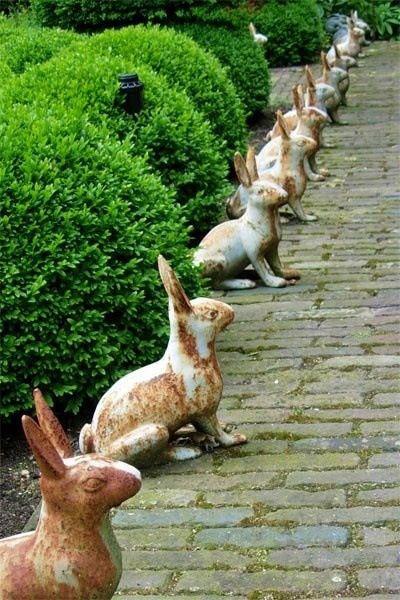
PicPost: Hare Raising

PicPost: Globe Theatre

Finding Nature

Nature Connectedness Research Blog by Prof. Miles Richardson

Norfolk Green Care Network

Connecting People with Nature

Discover WordPress

A daily selection of the best content published on WordPress, collected for you by humans who love to read.

Susan Rushton

Celebrating gardens, photography and a creative life

Unlocking Landscapes

Writing, photography and more by Daniel Greenwood

Alphabet Ravine

Lydia Rae Bush Poetry

TIME GENTS

Australian Pub Project, Established 2013

Vanha Talo Suomi

The Journey from Finnish Rintamamiestalo to Arboretum & Gardens

Marigolds and Gin

Because even in chaos, there’s always gin and a good story …

Bits & Tidbits

RANDOM BITS & MORE TIDBITS

Rambling in the Garden

.....and nurturing my soul

The Interpretation Game

Cultural Heritage and the Digital Economy

pbmGarden

Sense of place, purpose, rejuvenation and joy

SISSINGHURST GARDEN

Notes from the Gardeners...

Deep Green Permaculture

Connecting People to Nature, Empowering People to Live Sustainably

BloominBootiful

A girl and her garden :)