Tag Archive: flowers


Song by Johnny Flynn from the soundtrack he made for the 2011 film “Bag of Hammers”. Paintings by Beverly A. Mitchell. The soundtrack was only released for one day on LP in a few stores!
Here’s the lyrics as deciphered by plenixfyre. (any better lyrics anyone?)

‘Flowers in my garden
birds in all the trees
this is where I’m rooted
still I’ve got to leave
yes I must be cut now
and yes I’ve got to go far

for bread and wine
nautic stover mead(?)
and sainted wing
in every key

jumping and changing
roman girl
lopping, laughing
cockney proud

I’m in the small things with the loom
and you can’t give me any new
except the small things you give me
to beat around you when you listen

and it could be with Juliet
but we’re on this long troddener
and we might be familiar
were it not for them that day last time

and were it not a separation
brought in by an in-congregation

the eyes were given, give a sigh
of one another in the lye
and in the doorway of a dark cafe
and just before I fall asleep
and dream of you
and wake to find you in another day’

Old School Gardener

Hosta shoots

Hosta shoots -courtesy Marcus Bawdon http://www.countrywoodsmoke.com

‘Everyone has Hostas’… OK so you may think them unfashionable, but I love them… the whole growth process –  new shoots spearing up above the soil surface (right now in Old School Garden), the unfurling leaves, the full blousy foliage and the delicate flowers of pinks, lavenders and whites.

Otherwise known as the ‘Plantain lily’, Hostas come originally from eastern Russia, China, Japan and Korea. They are very hardy. Most of the 40 – 70 or so species (there is disagreement over the exact number) and over 7000 cultivars are grown for their foliage, though for many the flowers are also noteable. True perennials, their foliage dies back and they descend underground over winter, to send up new growth spears in spring and achieve their full glory in summer with some varieties flowering into early autumn. Some species also give a second, albeit brief, display in autumn.


The leaves vary between round, ovate, lance or heart – shaped and are between 12cm and 50cm in length. They come in all shades of green, some solid in colour others with margins or centres variegated in shades from white to golden yellow. Flowers range from bell to trumpet shaped, and are held in one-sided racemes or ‘scapes’.


Hostas will grow in full sun to full shade – they flower better if in the sun and the yellow-leaved varieties also do better in full sun. Overall, however, they tend to do best in dappled shade and where they are away from the hot noon-day sun (the blue – green leaved varieties have more intense colouring in the shade). They need moisture at their roots and this is even more the case in full sun – so they need watering in dry spells and generally do best in moist ground which is rich in organic matter and neutral to slightly alkaline . Foliage will start to wilt if they are too dry. They can be easily propagated by division at almost any time of year – a sharp spade or knife thrust down to split the roots is all that’s required.

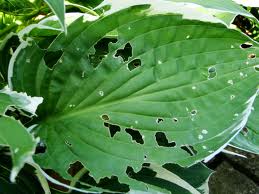
Slug and snail damage

Slug and snail damage

Pest problems focus on slugs and snails which can nibble the emerging shoots – such damage can scar the leaves for the rest of the season, so preventative and quick action to remove slugs and nails is crucial, especially in early spring. Sometimes, especially in water – logged ground, the plants can be susceptible to ‘crown rot’ and if this is the case they should be moved to a more suitable site. Hostas have low levels of allergens. Some Hostas are edible, their young shoots being forced and harvested in the far east, eaten sauted or rolled in proscuitto!


Hostas look good in groups around ponds and damp areas, and are particularly useful in areas of medium to light shade.   Their foliage makes for a bold texture so they are good as focal points, contrasting well with grassy – like leaves and stems. They are also good in containers where the leaves and flowers can be seen close up. I grow most of mine this way, in black planters in our Courtyard Garden – the black provides wonderful contrast to the rich greens and yellows of the foliage. But it’s important to keep them well watered once growth starts. Other ideas for using Hostas include:

  • ‘Plant different varieties in large masses or drifts for reliable color and texture in the garden.

  • Brighten shady garden areas with gold or variegated hostas.

  • Use hostas to bridge gaps in seasonal perennial bloom.

  • Variegated hostas with white or cream margins paired with other white flowering plants glow in “moonlight gardens” when homeowners arrive in the evening from work.

  • Hosta leaves emerge just as spring bulb foliage starts to fade, hiding it from view.

  • A single hosta in a container is dramatic and sculptural. Hostas look great in containers paired with other foliage plants or annuals. Remember to provide adequate water.

  • Plant fragrant hostas close to paths and walkways for best appreciation.

  • Use small hostas for edging along walkways and flower borders.

  • Hosta leaves and flowers are attractive in floral arrangements.’

Source: University of Minnesota Extension

Images from:  Newtonairds Lodge Hostas and Garden (the national collection), Wikipedia and other sites as shown on picture titles.

Further information:

RHS- Growing Hostas

British Hosta and Hemerocallis Society

Slug resistant Hostas

How to lift and divide Hostas (video)

Hosta varieties and where to buy etc.

The National Hosta collection

Winsford Walled Garden, Devon- success with Hostas

Hosta shoots wrapped in prosciutto

Hostas and their flowers


Old School Gardener

If you’ve enjoyed reading this post and others on this blog, why not comment and join others by signing up for automatic updates via email (see side bar, above right ) or through an RSS feed (see top of page)?

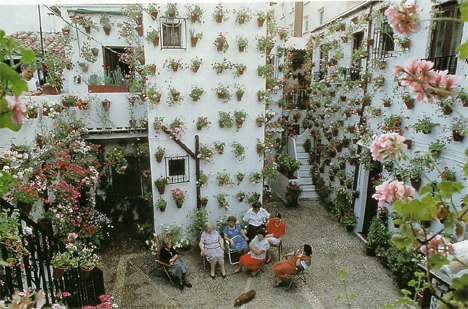
PicPost: VertiVeg

‘Vertical gardening is very popular now, but in Greece and other parts of the Mediterranean it’s been around in courtyard gardens for generations.’ from GrowVeg

Geranium 'Johnson's Blue'

Geranium ‘Johnson’s Blue’

Geraniums comprise over 400 species of annual, biennial and perennial plants commonly known as ‘Cranesbills’. They originate from around the globe.The perennials are very useful as border plants, with beautiful flowers. They are easy to grow, long lasting and are useful ground cover. Underplanted with spring bulbs, their leaves are good at hiding untidy bulb foliage after flowering. They also give new life to a border otherwise left bare when the spring bulbs are over.

They don’t like waterlogged soil and so in the wild you find them all habitats except boggy ones. They are a diverse group, varying in both hardiness and their growing needs. G. malviflorum is unusual in that it makes top -growth through the winter, flowers in spring and disappears until winter!

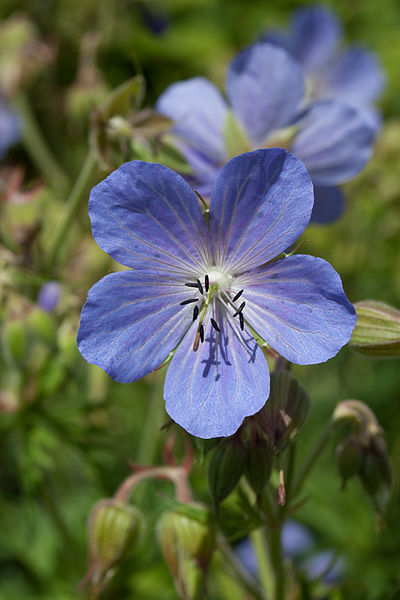
Geranium pratense (Meadow Cranesbill)

Geranium pratense (Meadow Cranesbill)

Geranium platypetalum

Geranium platypetalum

Geranium dissectum

Geranium dissectum

Most Geranium flowers are saucer-shaped, but can be flat or star like. They can come in umbels, panicles or cymes. They range in colour from white to dark plum through an array of pinks, blues and purples. Leaves are grouped around the base and the stem and are often deeply divided and toothed, and some are evergreen.

Many species are floppy or scramble and most need some sort of support to make them look reasonable. They all need shearing over the autumn/winter to encourage new basal growth, and some species, if sheared immediately after flowering will put on a second flush of leaves and flowers. Propagate by taking semi-ripe cuttings in summer, by seed, or by division in autumn or spring.

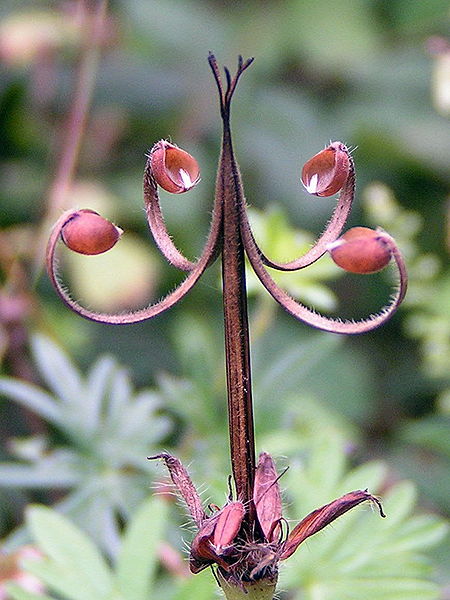
Geranium sanguineum showing 'bill' which aids seed dispersal

Geranium sanguineum showing ‘bill’ which aids seed dispersal

Most are drought tolerant and all are low in allergens. Some, such as G. nodosum and G. procurrens root when their stems touch the soil and G. thunbergii self seeds to a considerable extent, so should be deadheaded before the seeds form, if you want to restrict its spread.

Pelargoniums are often given the common name ‘Geranium’- both genuses are members of the Geraniaceae family. both were originally part of one family as defined by the botanist Linnaeus.

Geranium maculatum

Geranium maculatum

Geranium maderense

Geranium maderense

Further information:

10 AGM Hardy Geraniums for the garden- RHS

‘Geraniums- my hardy heroes’ – article by Bunny Guinness

Geraniums for shady places

National Collection of Geraniums- Cambridge Botanic Garden

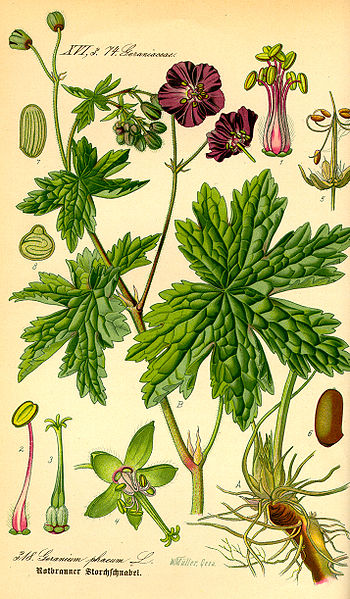
Geranium phaeum - from Thomé Flora von Deutschland, Österreich und der Schweiz 1885

Geranium phaeum – from Thomé ‘Flora von Deutschland, Österreich und der Schweiz’ 1885

Old School Gardener

If you’ve enjoyed reading this post and others on this blog, why not comment and join others by signing up for automatic updates via email (see side bar, above right ) or through an RSS feed (see top of page)?

Fuchsia-flowerFuchsia (named after the 16th century German botanist Leonhart Fuchs) are a genus of sub shrubs native to Central and South America and New Zealand. Whilst there are only around 100 species (organised into 12 sections) there are over 8,000 hybrids in cultivation!

Leonhart Fuchs

Leonhart Fuchs

Most are tender and deciduous but some are evergreen, especially in warmer areas. They like any reasonably moist soil and flower from midsummer to autumn.

The flowers are unique in form and handsome. They form in clusters of pendent tubes or are bell-shaped  with widely spread sepals, with a surrounding ‘skirt’ of petals – some varieties with the same colour as the tube, others different. The number of petals varies between 4 (in the single flower varieties) and 8 (in double-flowered). The Fuchsia Tryphylla group have very long, single flower tubes.

Fcuhsia 'Thalia'

Fuchsia ‘Thalia’

Fuchsia 'Black Beauty'

Fuchsia ‘Black Beauty’

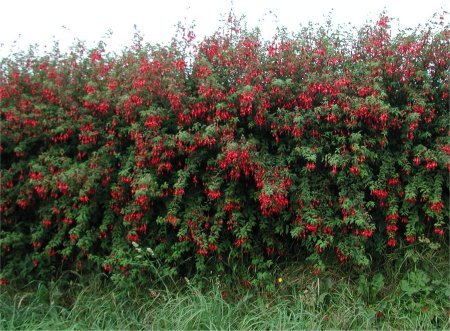
In colder areas fuchsia need to be in the warmest part of the garden and even then frost may kill off a lot of their top growth during winter.  Fuchsias do not grow well under trees.  A few are grown for their attractive foliage and all carry berries after flowering. Fuchsias are popular garden plants and can live for years with minimal care. The British Fuchsia Society maintains a list of “hardy” fuchsias that can survive through British winters. In the United States, the Northwest Fuchsia Society maintains an extensive list of fuchsias that have proven hardy in the Pacific Northwest over at least three winters.  Some more vigorous varieties can be trained as hedges (F magellanica, F. magellanica ‘Riccartonii’) and do particularly well in coastal areas. There are three main types :

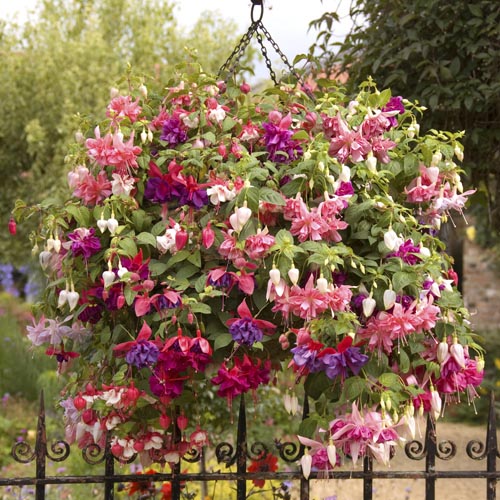
  • Half-hardy fuchsia: These need to be overwintered in frost-free conditions. Trailing types are ideal for hanging baskets (they need daily watering). Upright Fuchsias are a good choice for containers. In both cases, plants benefit from a balanced, liquid fertiliser in late summer
  • Hardy fuchsia: Plant the base of the stem 5cm below the soil surface and protect the crown in autumn with a mulch of compost, bark or straw. Cuttings can be taken in early autumn as an insurance against frost damage. Apply a dressing of general fertiliser in spring and again in summer
  • Standard fuchsia: These tend to be of the faster growing varieties and should always be brought under cover for winter as the main stem is prone to frost damage even if the variety is considered hardy. A balanced, liquid fertiliser used in summer encourages better blooms over a long flowering period
Fuchsia Hanging Basket

Fuchsia Hanging Basket

Fuchsia magellanica hedge

Fuchsia magellanica hedge

Fuchsias from these ‘sections’ have been shown to be especially hardy in the UK, Ireland and many other countries, including New Zealand and the Pacific N.W. of the United States:

  • Quelusia (F. magellanica and its variants, F. regia, etc.)

  • Encliandra (some encliandra hybrids flower continuously)

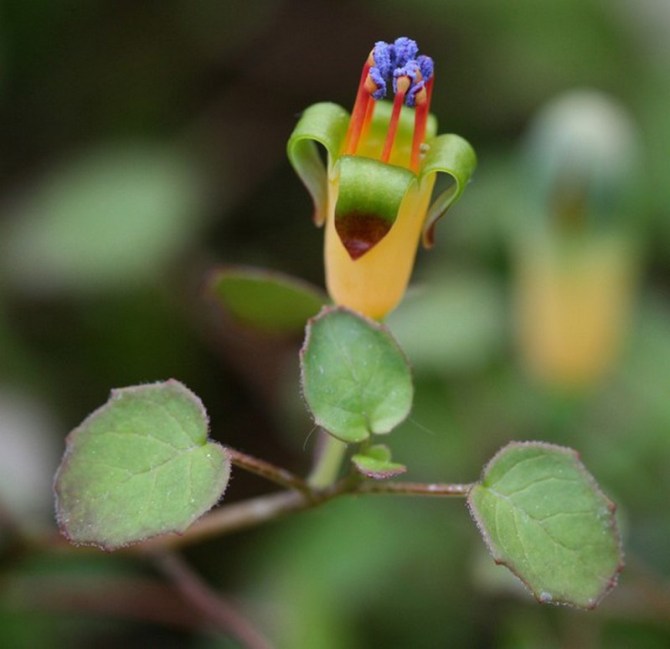
  • Skinnera (F. excorticata, F. perscandens)

  • Procumbentes (F. procumbens is suitable as a groundcover)

Fuchsia boliviana

Fuchsia boliviana

Fuchsia magellanica var. molinae

Fuchsia magellanica var. ‘Molinae’

Fuchsia procumbens

Fuchsia procumbens

Fuchsia michoacanensis

Fuchsia michoacanensis

Fuchsia 'Wendy's Beauty'

Fuchsia ‘Wendy’s Beauty’

A number of species survive outdoors in agreeable mild temperate areas, though some may not always flower in the average British summer. Due to the mild, temperate climate created by the North Atlantic Current, Fuchsias grow abundantly in the West Cork region of Ireland. They are associated with the area and a local branding initiative uses the fuchsia flower as its logo. For similar reasons fuchsias grow abundantly in the Isles of Scilly, where they have even colonised wild areas. While F. magellanica is not wide spread in Scotland it has been found growing wild in sheltered areas, and can been seen growing from self set seedlings along the banks of a stream that runs through Cambo gardens in Fife. Even in somewhat colder regions, a number of the hardier species will often survive as herbaceous perennials, dying back and re – shooting from below ground in the spring.

Fuchsias may suffer from infestations of aphids such as Whitefly. Fuchsia Gall Mite is a new pest threatening to cause more problems, and it can also be difficult to gain good control of Fuchsia Rust and Red Spider Mite once they get hold.

Sources and further information:

RHS- growing Fuchsias

Find that Fuchsia

The British Fuchsia Society

Wikipedia

Hmm... not sure about this Fuchsia.....

Hmm… not sure about this Fuchsia…..

Old School Gardener

If you’ve enjoyed reading this post and others on this blog, why not comment and join others by signing up for automatic updates via email (see side bar, above right ) or through an RSS feed (see top of page)?

PicPost: Stairway to Heaven

PicPost: Arc de Triomphe

PicPost: Hover craft

PicPost: Scaled up

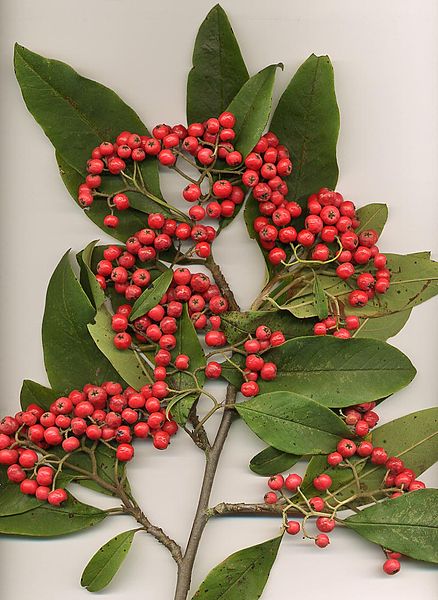
Cotoneaster frigidus leaves and fruit

Cotoneaster frigidus – leaves and fruit

Cotoneaster  is a genus of flowering plants in the rose family, native to temperate Asia, Europe and north Africa. It has  a strong concentration of different species in the mountains of southwestern China and the Himalayas. They are related to Hawthorns, Firethorns, Photinias and Rowans. Depending on the definition used, there are between 70 and 300 different species.

The majority of Cotoneaster species are shrubs from 0.5–5 metres tall, varying from ground-hugging prostrate plants to erect shrubs. A few, notably C. frigidus, are small trees up to 15 metres tall and 75 centimetres trunk diameter. The prostrate species are mostly alpine plants growing at high altitude (e.g. C. integrifolius, which grows at 3,000–4,000 metres in the Himalayas), while the larger species occur in scrub and woodland gaps at lower altitudes. Cotoneasters are very popular garden shrubs, grown for their attractive habit and decorative fruit. Many are cultivars, some of  hybrid origin; of these, some are of known parentage.

Cotoneaster franchetii

Cotoneaster franchetii

Cotoneaster horizontalis

Cotoneaster horizontalis

The name Cotoneaster derives from the old Latin cotoneus meaning Quince and aster probably a corruption of ad instar meaning ‘a likeness’ – so ‘Quince like’.

Other species names are:

C. adpressa = close, pressed-down growth or fruits closely pressed against the branch

C. applanata = the branches lie flat or in a plane

C. bullata = wrinkled, referring to the leaves

C. buxifolia = box (buxus) -leaved

C. congesta = crowded, the plant’s habit

C. divaricata =spread-out, forking , referring to the branches

C. franchettii = after Franchet, a French botanist

C.  frigida = cold,frosty, probably referring to its native habitat

C. harroviana = after G. Harrow, a nurseryman once of Coombe Wood Nursery

C. henryana = after Dr. Augustine Henry, a 19th century Chinese customs official and ‘plant hunter’

C. horiziontalis = horizontal, its growth habit

C. humifusa = spread on the ground

C. lacteus =  milky, probably referring to the milky white flowers (the ‘Late Cotoneaster’)

C. lucida = shining, referring to the leaves

C. microphylla = small – leaved

C. multiflora = many flowered

C. pannosa = woolly, the foliage

C. rotundifoilia = round leaved

C. salicifolia = willow (salix) leaved

C. simonsii = after Simons, (The ‘Himalayan Cotoneaster’ or ‘Simon’s Cotoneaster’)

Cotoneaster adpressus
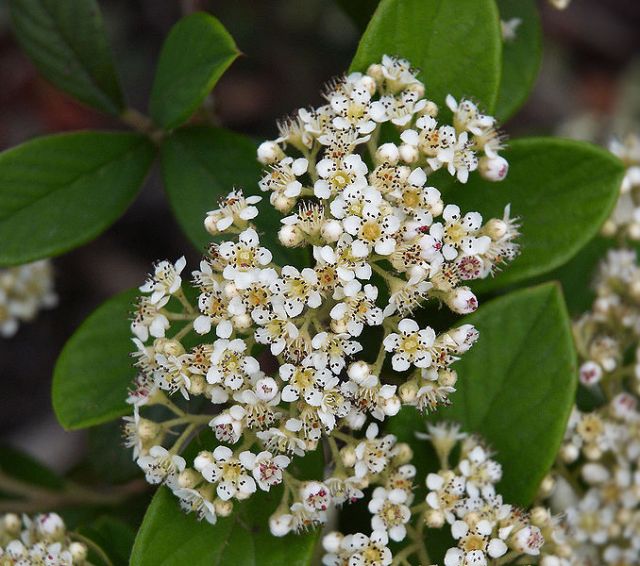
Cotoneaster adpressus

Cotoneaster lacteus - flowers

Cotoneaster lacteus – flowers

Cotoneaster simonsii

Cotoneaster simonsii

Sources and further information:

Wikipedia

Encyclopedia Britannica

Growing Cotoneasters

Cotoneaster horizontalis

Cotoneaster lacteus

Cotoneaster simonsii

Quizzicals: answers to the two in Plantax 7…

  • Bird swearing – Crocus
  • Vasectomy for Dad – Parsnip

..and 2 more cryptic clues to the names of plants, fruit or veg…

  • Irish singer is growing worse
  • Tease Mr Disney

(thanks to Les Palmer, answers in the next Plantax!)

Old School Gardener

If you’ve enjoyed reading this post and others on this blog, why not comment and join others by signing up for automatic updates via email (see side bar, above right ) or through an RSS feed (see top of page)?

Finding Nature

Nature Connectedness Research Blog by Prof. Miles Richardson

Norfolk Green Care Network

Connecting People with Nature

Discover WordPress

A daily selection of the best content published on WordPress, collected for you by humans who love to read.

Susan Rushton

Celebrating gardens, photography and a creative life

Unlocking Landscapes

Writing, photography and more by Daniel Greenwood

Alphabet Ravine

Lydia Rae Bush Poetry

TIME GENTS

Australian Pub Project, Established 2013

Vanha Talo Suomi

The Journey from Finnish Rintamamiestalo to Arboretum & Gardens

Marigolds and Gin

Because even in chaos, there’s always gin and a good story …

Bits & Tidbits

RANDOM BITS & MORE TIDBITS

Rambling in the Garden

.....and nurturing my soul

The Interpretation Game

Cultural Heritage and the Digital Economy

pbmGarden

Sense of place, purpose, rejuvenation and joy

SISSINGHURST GARDEN

Notes from the Gardeners...

Deep Green Permaculture

Connecting People to Nature, Empowering People to Live Sustainably

BloominBootiful

A girl and her garden :)