Tag Archive: flowers


PicPost: Memories of Christmas

PicPost: Flower Fan

450px-Tulip_-_floriade_canberraTulipa (Tulips) is a genus of some 100 species of hardy, bulbous perennials from Europe, asia and the middle east- especially Central Asia. They prefer sun but will take light shade, and must have a well-drained soil, though seem to prefer heavier soils than lighter ones. Tulips are grown for their showy flowers, which are usually at the end of a stem and upright, with six tepals. They vary from cup- or bowl-shaped to goblet-shaped, some with long, very narrow tepals, or lily-like or star-shaped- some are fringed.

There is a wide range of colours and bi colours. Depending on the species, tulip plants can grow as short as 4 inches (10 cm) or as high as 28 inches (71 cm). The leaves are usually grown from the base of the main stems, are broadly ovate in shape and sometimes are wavy-edged or channelled.

Tulips can be planted in groups among other plants in a border, in pots or ‘naturalised’ in grass. They tend to be later flowering than Narcissus and crocus so growing these together can produce a flowering display lasting up to three or four months.

The bulbs should be planted 15cm deep in the autumn. Cultivars benefit from being lifted and ripened every year once the leaves have died down. Most of the Darwin hybrids (such as ‘Apeldoorn’), the Greigii and Kaufmanniana groups  and the species tulips can be left in the ground for a number of years; mark the position to avoid damaging the bulbs with other planting. The size of flowers will diminish over time and they will also benefit from being lifted and divided every few years – this should be done as soon as the foliage dies down.

Mice love tulip bulbs, so store lifted bulbs out of reach and protect newly planted bulbs from disturbance. Some people have an allergic reaction  to any part of the plant which may cause skin irritation, and all parts can be mildly poisonous if eaten (though the flower petals can apparently be eaten – see link below).

Although tulips are often associated with the Netherlands, commercial cultivation of the flower began in early Persia probably somewhere in the 10th century. Early cultivars must have emerged from hybridisation in gardens from wild collected plants, which were then favoured, possibly due to flower size or growth vigour. During the Ottoman Empire, numerous tulips were cultivated and bred. 

Bulbs fields in Holland

The word tulip, which earlier appeared in English in forms such as tulipa or tulipant, entered the language by way of the French tulipe and its obsolete form tulipan or by way of Modern Latin. The word derives from the Persian word for ‘turban’ chosen because of a perceived resemblance of the shape of a tulip flower to that of a turban This may have been due to a translation error in early times, when it was fashion in the Ottoman Empire to wear tulips on their turbans. The translator possibly confused the flower for the turban.

Between 1634 and 1637, the early enthusiasm for the new flowers in the Netherlands triggered a speculative frenzy now known as Tulip Mania. Tulips became so expensive that they were treated as a form of currency.  To this day, tulips are associated with the Netherlands, and the cultivated forms of the tulip are often called “Dutch tulips.” In addition to the tulip industry and tulip festivals, the Netherlands has the world’s largest permanent display of tulips at Keukenhof, although the display is only open to the public seasonally.

In horticulture, tulips are divided up into fifteen groups (Divisions) mostly based on flower characteristics and plant size.

  • Div. 1: Single early with cup-shaped single flowers, no larger than 8 cm across (3 inches). They bloom early to mid season. Growing 15 to 45 cm tall.

  • Div. 2: Double early with fully double flowers, bowl-shaped to 8 cm across. Plants typically grow from 30–40 cm tall.

  • Div. 3: Triumph single, cup-shaped flowers up to 6 cm wide. Plants grow 35–60 cm tall and bloom mid to late season.

  • Div. 4: Darwin hybrid single flowers are ovoid in shape and up to 8 cm wide. Plants grow 50–70 cm tall and bloom mid to late season. This group should not be confused with older Darwin tulips, which belong in the Single Late Group below.

  • Div. 5: Single late cup or goblet-shaded flowers up to 8 cm wide, some plants produce multi-flowering stems. Plants grow 45–75 cm tall and bloom late season.

  • Div. 6: Lily-flowered the flowers possess a distinct narrow ‘waist’ with pointed and reflexed petals. Previously included with the old Darwins, only becoming a group in their own right in 1958.

  • Div. 7: Fringed (Crispa)

  • Div. 8: Viridiflora

  • Div. 9: Rembrandt

  • Div. 10: Parrot

  • Div. 11: Double late Large, heavy blooms. They range from 18 to 22 in. tall

  • Div. 12: Kaufmanniana Waterlily tulip. Medium-large creamy yellow flowers marked red on the outside and yellow at the center. Stems 6 in. tall.

  • Div. 13: Fosteriana (Emperor)

  • Div. 14: Greigii Scarlet flowers 6 in. across, on 10 in. stems. Foliage mottled with brown.

  • Div. 15: Species (Botanical)

  • Div. 16: Multiflowering not an official division, these tulips belong in the first 15 divisions but are often listed separately because they have multiple blooms per bulb.

They may also be classified by their flowering season:

  • Early flowering: Single Early Tulips, Double Early Tulips, Greigii Tulips, Kaufmanniana Tulips, Fosteriana Tulips, Species Tulips

  • Mid-season flowering: Darwin Hybrid Tulips, Triumph Tulips, Parrot Tulips

  • Late season flowering: Single Late Tulips, Double Late Tulips, Viridiflora Tulips, Lily-flowering Tulips, Fringed Tulips, Rembrandt Tulips

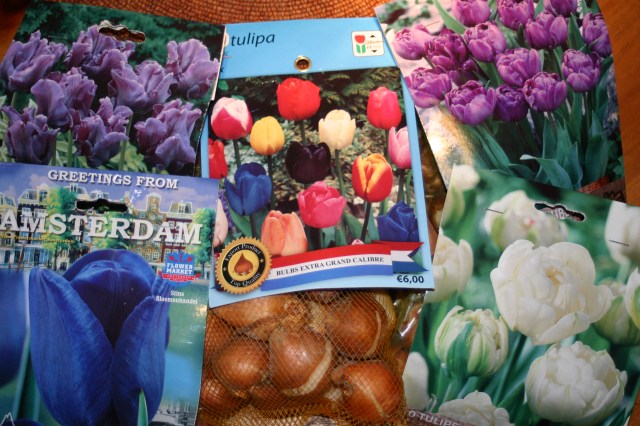
I mentioned my visit to the Amsterdam Flower Market recenrtly and here’s the 70 tulips I have for adding to the many groups that I already have in borders and pots at Old School Garden.

Tulips from Amsterdam...
Tulips from Amsterdam…

Sources and further information:

Wikipedia

Growing Tulips- RHS

How to grow Tulips- Bunny Guinness

Tulips and Holland

Tulip Mania

Eating Tulip flowers

Related articles:

It’s Time to Talk Tulipsage

PicPost: Tulip Mania

Tip Toe Through the Tulips

Tulip mania and Bitcoin

Bloemen Marvellous

November in the Garden: 10 Top Tips

A-Z of Perennials: Q is for Quamash

GQT: Grow-bag Bulbs

Pleasing Planters

May in the Garden- Top 10 Tips

Plants to die for…

Old School Gardener

bike flowersOne of many, many bicycles in Amsterdam, The Netherlands

Old School Gardener

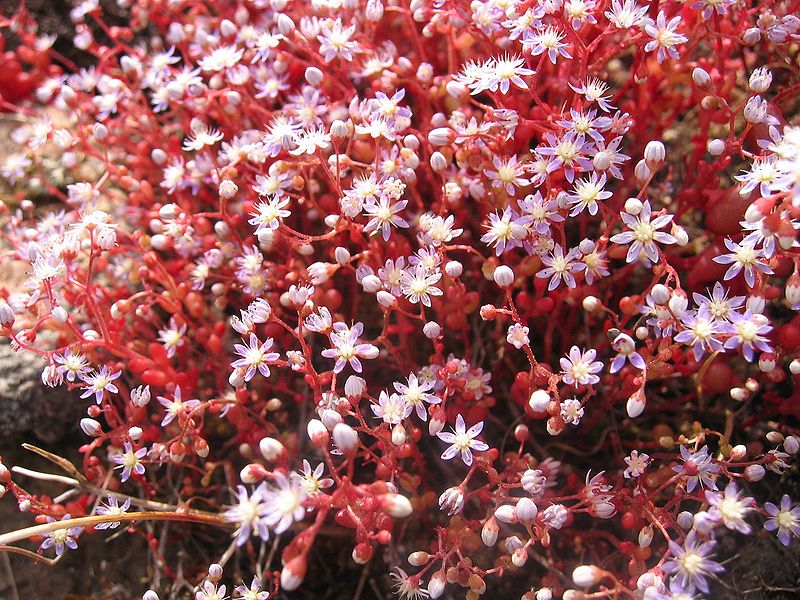
Sedum caeruleum
Sedum caeruleum

So, I’m getting close to the end of the alphabet and thinking about if and how I should follow up my current ‘A-Z’ series with another- what do you think? Any ideas? Maybe trees or shrubs? Or perhaps bulbs? Let me have your ideas!

S caused me a moment of uncertainty. I thought, it has to be Salvia, then I thought, Sedum is obvious as many are at (or close to) their best at this time of year, and I do love the larger forms which add so much to the garden with their chunky, glaucous foliage and shields of flowers, especially in autumn and on into winter as the flowers fade and their strong shapes give structure to the ‘close season’ border.

Sedum (common name ‘Stonecrop’) is a wide genus of some 400 species, encompassing annuals, biennials, deciduous, semi evergreen and evergreen perennials, subshrubs and shrubs- from both hemispheres! What you might call a botanical success story!

Their habitats in the wild vary from mountainous areas (where most come from), to arid regions of South America. As a result, they vary widely from dwarf, rock garden plants (the predominant type) to fairly  tall plants, very suitable for beds and borders. Some of the smaller species can be quite invasive. Sedums prefer sun, but some will tolerate light shade. They are drought tolerant, and prefer light, well-drained soils. The border types  will grow in almost all soil types, but do become rather lush and need to be staked if grown in over fertile conditions.

The foliage of ‘stonecrops’ is usually thick, fleshy and succulent, although the arrangement of the leaves varies. Individual flowers appear in summer and autumn, are mostly 5 – petalled and star shaped, and are borne in a range of different forms: corymbs, panicles or cymes.

Butterflies love the flowers- especially Sedum spectabile. The green buds on this species look good from midsummer, then colour pink into autumn. Stems are succulent and frosted, hence the common name “ice plant”. Unfortunately slugs and snails are fond of the leaves . All parts of the plant are poisonous, and contact with the sap may cause skin irritation.

Smaller, rock garden types are used extensively in ‘green roofs’. The ever popular Sedum spectabile ‘Herbstfreude’ (also know as ‘Autumn Joy’) goes well with many other autumn flowering herbaceous plants such as Michaelmas Daisies (Asters) and some of the shorter grasses such as Stipa tennuissima (‘Pony Tail’ grass). Carefully chosen cultivars of Japanese anemones, penstemons and phlox will also look good with them. They can also be used to good effect massed below a sun baked wall or hedge where other things might struggle, perhaps intermingled with spring bulbs and backed by early – mid summer ‘floppers’ like Perovskia (‘Russian Sage’). Leave the faded flower heads on over winter for some interesting garden shapes, especially after a ‘hoar’ frost.

Further information:

Sedum spectabile

Sedum spectabile ‘Brilliant’- BBC

Sedum ‘Purple Emperor’

Herbaceous Sedums- trials and awards by RHS (pdf)

Living sedum roofs

Sedum photos

Sedum Society

Old Schoool Gardener

Afloat and flowered - tribute to a live wire

A former colleague of mine, Howard Dickenson, died recently. I hadn’t seen ‘Howie’ for many years, but another former colleague attended his funeral and paid a wonderful tribute to him which awoke some warm memories. I particularly like this picture of Howie aboard his canal boat with the beautiful flowery roof garden. Here’s to a life well spent and one that brought pleasure and amusement to many. All the best Howie.

PicPost: Florida Trunk Call

Florida, USA – The first European contact was made in 1513 by Spanish explorer Juan Ponce de León – who named it La Florida (“Flowery Land”) upon landing there during the Easter season, Pascua Florida. (Wikipedia)

Old School Gardener

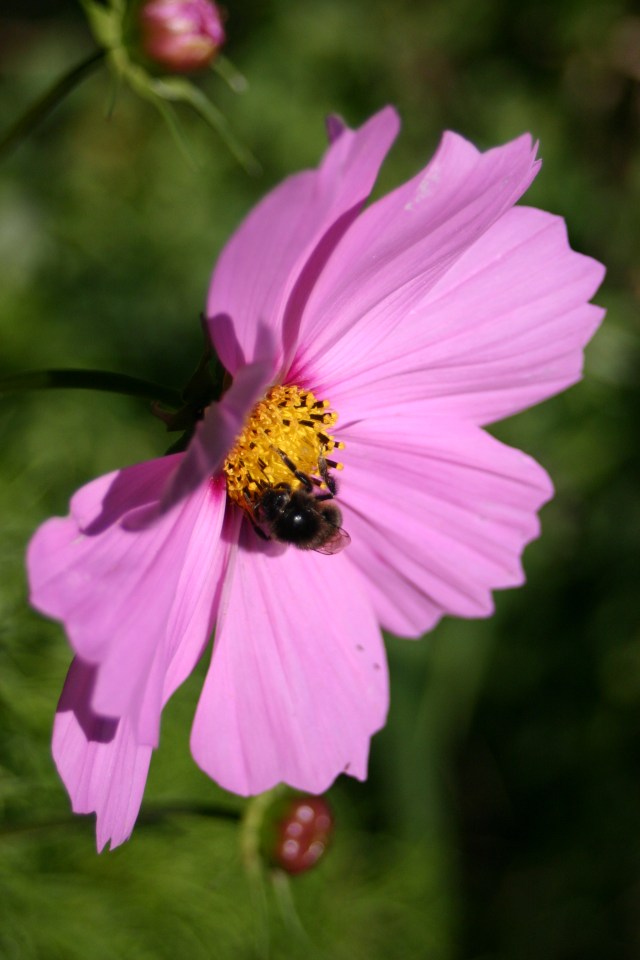
Cosmos looking good at Old School Garden

Cosmos looking good at Old School Garden


To Walter Degrasse

Dear Walter,

Sorry for the delay in this month’s letter. Having been away for a couple of weeks, I find myself playing ‘catch up’ in the garden and in many other respects too! The past month in the garden has been a relatively quiet one. The continued dry, hot weather has had a marked impact on the state of the plants, and not having been here for a fortnight has also left its mark, though I’m blessed with some very kind, helpful neighbours who have at least kept most of the vulnerable things watered – more on that later.

It was a joy seeing you and Lise at the beginning of the month, and I’m glad you enjoyed your visit and what you saw in the garden. That new crop protection netting I was telling you about arrived just before I went on holiday and this meant I was able to get it set up over a wooden and twine  frame to cover my recently – planted Purple Sprouting Broccoli and Calabrese. You remember this has a smaller mesh than the previous one I’d been using and is supposed to prevent Cabbage White butterflies getting at the brassicas? Well, it came just in time (or so I thought), as the beginning of August saw an explosion in these pretty but annoying pests that lay their eggs on the undersides of Brassica leaves leaving a legacy of a host of hungry caterpillars that destroy your best Brassica efforts!

As we departed on holiday (I’ll be doing a few posts about the various gardens we visited whilst in Devon and Cornwall), the Agapanthus was coming into flower and I had hopes that my Tithonia (‘Mexican Hat flower’) and Cleome (‘Violet Queen’) were finally putting on flower buds. The late Spring seems to have delayed their development somewhat.

What it is to have good neighbours!  Our next door neighbours Rob and Wendy were happy to water the containers and greenhouse etc. whilst we were away, though they were themselves due to go on holiday a couple of days before our return, so I was a little concerned that things might just wilt before I could get to them. I had no need to worry, for on my return – in fact the very evening I went round and started watering things – I stumbled across our next to next door neighbour, Norman, who had just finished watering the containers in the Courtyard! He had apparently been tasked by Wendy to carry on with the watering in their absence! I thanked him for this kindness and remarked on my pleasant surprise at the healthy look of most of the plants.

On closer inspection, and looking beyond the containers, greenhouse, cold frame etc., I discovered that the pests had been at play while we had been away! Moles had decided the time was right to dig up various spots in the lawn (their activity might have been prompted by one day of heavy rain) and when I inspected the brassicas I found not very much left of the Cauliflowers, Calabrese and Broccoll previously mentioned! In fact the caterpillars had been busy and stripped every last leaf! The Red Cabbages looked reasonably OK, though even here there was clear evidence of caterpillars starting to munch their way through the tightly drawn heads. So a quick harvest of those was in order (and the 4 heads i salvaged are being cut up and cooked for storage as I write). So, i can only guess that the little varmints (in egg form) had somehow been deposited on the plants before my new ‘butterfly proof’ netting was in place! Oh well, it’ll be different next year… I might just try one last sowing of Sprouting Broccoli and Calabrese, to get us some home-grown greenery in the winter months. We’ve also been harvesting courgettes (some interesting ‘patty pan’ ones  included), and the tomatoes and cucumbers as well as autumn raspberries and blackberries are looking great. The apple and plum harvest to come is also looking very promising and I’ve even found a first pear on one of the ‘super column’ fruit trees I planted a year or two ago. This year looks like a good one for fruit, as everyone is saying.

The flower garden is hanging in there. The Tithonia and Cleome have fulfilled their promise and are adding some bright colour (along with cosmos, Achillea, Phlox, Helianthus, etc.) to the late summer borders, once again complemented by the burnished stems and seed heads of the various grasses that intermingle in the main borders. I’m especially pleased with the mix of Verbena bonariensis and Nicotiana that underscores the view to St. Peter’s church. The Nicotiana’s perfume of vanilla is wonderful too.

This slideshow requires JavaScript.

Having had the late ‘bank holiday’ my mind definitely turns to autumn and so the coming month will be very much about managing a mix of harvesting (especially fruit), dead – heading and coaxing the last flowers as well as gradually clearing up those plants that have finsihed flowering and whose foliage won’t add anything to the winter garden in terms of structure or wildlife value.

Further afield I popped into Gressenhall Farm and Workhouse Museum (where you know I’m a garden volunteer). The gardens here seem to be surviving the hot dry weather pretty well. However, the sweet peas and container plants are obviously struggling with lack of water (though I was told that the Museum had had some pretty heavy showers at the weekend). I spent a couple of hours watering, dead heading and weeding and also helped contribute to a new film being produced for the museum website . This is going to ‘cameo’ some of the many volunteers here in order to provide some information for anyone thinking of joining the volunteer team. I had to say a few words about my time as a volunteer, how I’d helped to redesign and renovate some of the gardens and my time as a Heritage Gardening trainee last year. This all seemed to go well, but a few hours afterwards I received an email from one of the film crew saying that because the sun had glinted on my glasses, that this had somehow affected the focus of the whole sequence – hence the need for a rerun next week- at least I’ll have had practice at my lines!

Its back to school here next week, and so Deborah is gearing herself for the return to our local primary school. I will no doubt also be having some discussions with the Outdoor Learning Coordinator about the year ahead in the School Garden, Hopefully we can build on the progress we’ve made this year and ensure the children all get a chance to work, learn and enjoy the garden through the different seasons.

That’s about all the news from here at present. Hopefully you and Lise are enjoying  the late summer sun, as we are. It somehow seems easier to sit and view (and snooze) in the garden at this time of year, occasionally harvesting some produce, pulling up the odd weed or cutting the lawn, rather than the more frantic, continuous activity needed to cope with the surge in growth that is spring and early summer – an altogether more relaxing time!

Old School Gardener

Other posts in this series:

Dear Walter…. letter from Old School Garden 22nd July 2013

Dear Walter…. letter from Old School Garden 21st June 2013

Dear Walter….letter from Old School Garden, 20th May 2013

Dear Walter….letter from Old School Garden, 18th April May 2013

Dear Walter….letter from Old School Garden, 11th March 2013

Dear Walter… letter from Old School Garden: 15th February 2013

If you’ve enjoyed reading this post and others on this blog, why not comment and join others by signing up for automatic updates via email (see side bar, above right ) or through an RSS feed (see top of page)?

IMG_6926

I’m back from two weeks away in Devon and Cornwall and I definitely visited more gardens in that time than ever before! I’ll do articles with photos on each of these over the coming weeks, but I thought I’d ease my way back into the blogosphere with a little feature on the town of Moretonhampstead, Devon.

Located in the middle of Dartmoor, this lovely little town is a convenient stopping off point for those negotiating the narrow, winding lanes and open vistas of the Moor, and that’s just what we did on our way to visit Killerton Gardens, near Exeter.

It was a glorious sunny day and the drive over the moor from Tavistock was breathtaking. As we approached Moretonhampstead I was struck by the beautiful display of hanging baskets outside one of the pubs and then realised there were a lot more colourful floral displays around the town, so took out a few minutes to capture them. I must say the town residents, shopkeepers, local council, hoteliers etc. all seem to put an effort into beautifying the place, so congratulations to them for what was a very enjoyable mooch around, snapping as I went.

This is definitely the place to ‘hang out’ if you’re travelling the Moor and there were plenty of cyclists, motorcyclists and other tourers taking a breather here when we visited.

This slideshow requires JavaScript.

Old School Gardener

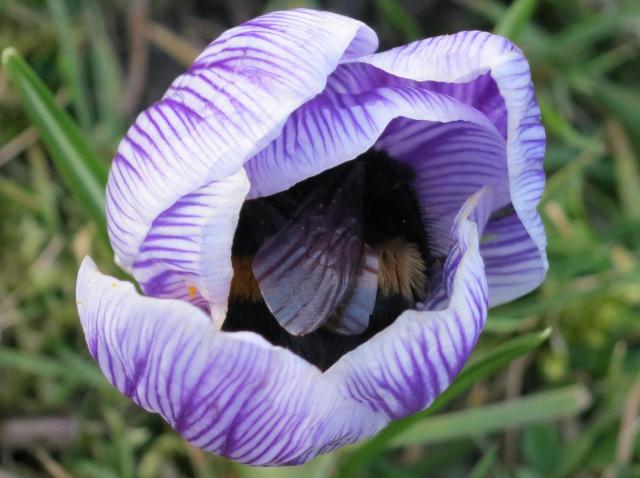
PicPost: Bee friendly

Finding Nature

Nature Connectedness Research Blog by Prof. Miles Richardson

Norfolk Green Care Network

Connecting People with Nature

Discover WordPress

A daily selection of the best content published on WordPress, collected for you by humans who love to read.

Susan Rushton

Celebrating gardens, photography and a creative life

Unlocking Landscapes

Writing, photography and more by Daniel Greenwood

Alphabet Ravine

Lydia Rae Bush Poetry

TIME GENTS

Australian Pub Project, Established 2013

Vanha Talo Suomi

The Journey from Finnish Rintamamiestalo to Arboretum & Gardens

Marigolds and Gin

Because even in chaos, there’s always gin and a good story …

Bits & Tidbits

RANDOM BITS & MORE TIDBITS

Rambling in the Garden

.....and nurturing my soul

The Interpretation Game

Cultural Heritage and the Digital Economy

pbmGarden

Sense of place, purpose, rejuvenation and joy

SISSINGHURST GARDEN

Notes from the Gardeners...
Deep Green Permaculture

Connecting People to Nature, Empowering People to Live Sustainably

BloominBootiful

A girl and her garden :)