Tag Archive: flowers


This slideshow requires JavaScript.

Old School Gardener

PicPost: Beer Garden

Pub in london via Love Britain

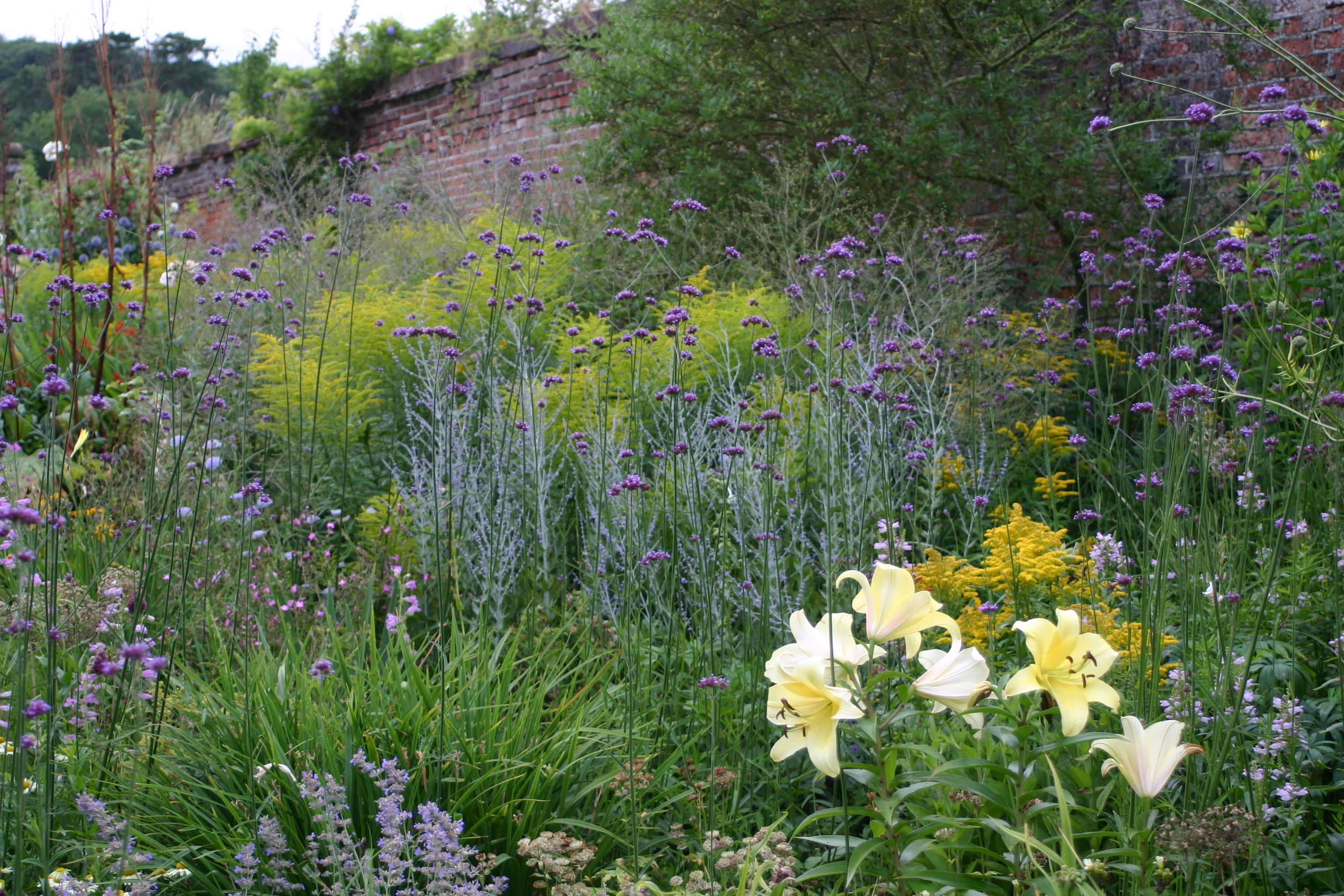
Herbaceous borders at Peckover House, Wisbech

Now’s the time to set about creating new borders in your garden and I’m grateful to Hyde N. Seik from Plymouth who asks:

‘I’ve seen some wonderful borders at a National Trust property near me. I enquired about these and was told that they are ‘herbaceous borders’. Can you tell me what this means and how to go about creating one, please?’

Hyde, there’s perhaps nothing as quintessentially English as an Herbaceous border (it became especially popular in the late 19th and early 20th century garden), and many of those associated with our great historic houses are some of the best examples around. This is usually a rectangular border (or twin borders with a lawn or other path running between them), traditionally at least 3 metres wide and about 12 metres long, usually backed by an evergreen hedge. The lengths and widths do vary, but the usual dimensions maintain a ratio of 4:1 (length to depth). The border is planted entirely with herbaceous perennials (plants that grow for more than one year and die back above ground after flowering). The border is designed to be of interest when viewed from the front or along its length and looks its best from late spring to late summer.

These days the amount of work needed to maintain such borders – staking of taller plants to provide support, pruning back dead stems and foliage, feeding and dividing the plants every few years- might be too much for many gardeners and so herbaceous borders can be rather smaller and more irregular in shape, or alternatively have a mixture of planting (including evergreen shrubs, grasses, and annuals) to reduce the workload and provide more structural interest during the winter.

Herbaceous borders are usually planted with clusters of each type of plant, in odd numbered groups of 3, 5 or 7 plants- the tallest are usually at the back of the border and the shortest at the front. However, in recent times this approach has been challenged as borders can look more interesting if some taller plants are placed nearer the front of the border; especially if they add height but are not too dominant, such as Verbena bonariensis and many grasses.

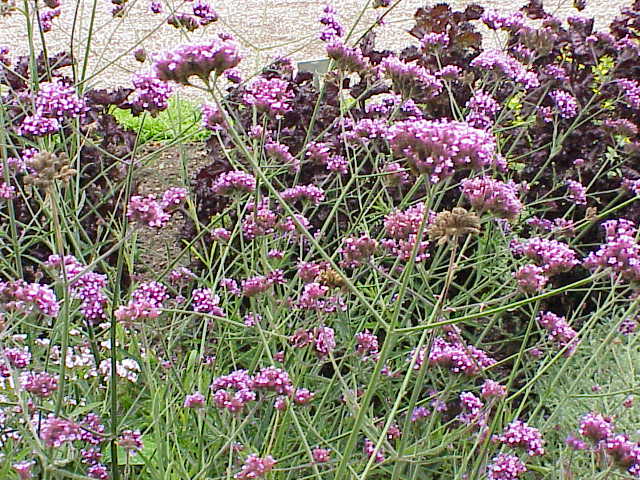
The airy stems of Verbena bonariensis

As your plants are likely to be in the same place for some time, it pays to prepare the soil thoroughly. Remove all weeds, especially the perennial types with deep roots, by digging, hoeing (or you could use a suitable weedkiller such as Glyphosate in the growing season). Then fork the soil to a depth of at least 150mm adding organic matter such as compost or manure, rotted bark, or other manures such as those from hops or mushroom growing. Lime might also be needed if the soil is very acid (peaty) or in generally very poor condition.

This should be applied in autumn or spring, one month before planting or adding organic material, and at least 2-3 months before adding manure (lime and manure should never be applied at the same time). Incidentally, nearly all herbaceous perennials grow well in most soil types, provided they are neither very acidic or alkaline- by manuring and liming regularly, the soil can be kept at a fairly neutral pH, and regular mulching with organic matter will keep the soil nutrient levels up, avoiding the need for artificial fertilisers or feeds.

If possible, leave the freshly dug soil for a couple of months to allow it to settle, then rake over the surface to produce a reasonably fine, crumbly surface.

Whilst you’re waiting for the soil to be readied it’s worth planning the border planting in some detail. Using a sheet of graph paper, draw on it (to scale) the shape of the border (you could of course have begun with an outline plan on paper for this and then scaled this up to create the new border). Then select your plants from a catalogue, book or online information resource which not only describes the plants but gives their height and ultimate spread/width. Think about the different flower shapes, leaf textures as well as colours in composing your border planting plan and also when the plants flower or have other interest (e.g. leaf colour, berries or other fruit) – to ensure a balanced spread of flowering or other interest throughout the seasons.

Allow for the plants to be grouped in clumps of 3’s or 5’s (odd numbers tend to create informal looking groups whereas even numbers tend to lead to a more formal, regimented layout). These groups can be drawn on your plan with a circle guide or compasses and then a line enclosing the group drawn around them. If you use a set of colour pencils or crayons to draw these groups according to their flower/leaf colour it will help give you an idea of the colour scheme you are creating. Other information – height, flowering time etc.- can be written on your plan and help to check the overall design and ensure that there is no period in the year without interest of some sort (this can extend to winter interest created from strong shapes such as evergreens and grasses as well as some herbaceous plants that hold on to their dead flower heads or foliage).

The best time to plant your herbaceous border is in the autumn or spring, although plants grown in containers can be planted at any time, provided they are kept well watered and the ground is not frozen or flooded. If you buy by mail order, the nursery will send you plants at the right time for planting, although the roots will probably have little or no soil on them (‘bare rooted’). If you can’t get them planted on arrival, store them in a cool place in damp, sandy soil or put them in a trench in the garden (so called ‘heeling in’). However, do try to plant them out as quickly as possible provided the ground is workable.

If the plants seem dry on arrival, soak the roots in water for 24 hours; if any are damaged in transit, let the nursery know as soon as possible, so that they can be replaced.

Herbaceous border at Copped Hall, Essex

Planting is best done with a trowel. Set the plants out in the planting positions on the soil surface and then move them around to make sure they are in line with your plan which should suit their final growing widths. Dig holes under each plants big enough to accommodate the roots of the plant without cramping them. Work from the back of the border (or centre if it is an island bed). Always plant to the same depth as the soil mark on the stems of the plants.

Hoe carefully to remove footmarks, and water in the plants with a thorough but gentle sprinkling. Don’t forget to label each group of plants, as once they die down you may forget where they were – though your reference plan should help with this. Most herbaceous perennials will spread outwards, gradually dying off from the original centre, so every few years these plants will need dividing, repositioning and mulching. And some of the taller ones will need staking to support them, at least in the early years before those around them provide some mutual support.

Old School Gardener

PicPost: Unfurling

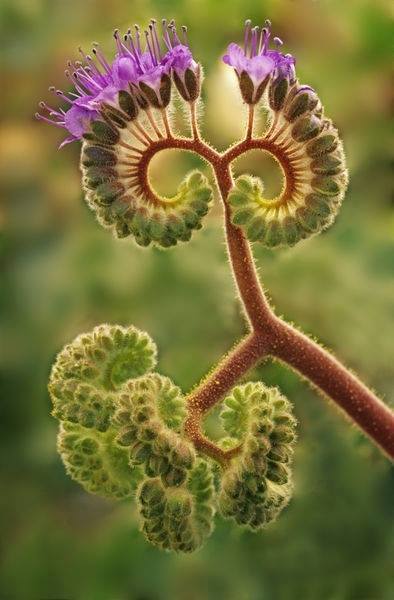
Phacelia via Gardening Naturally

PicPost: Stumped

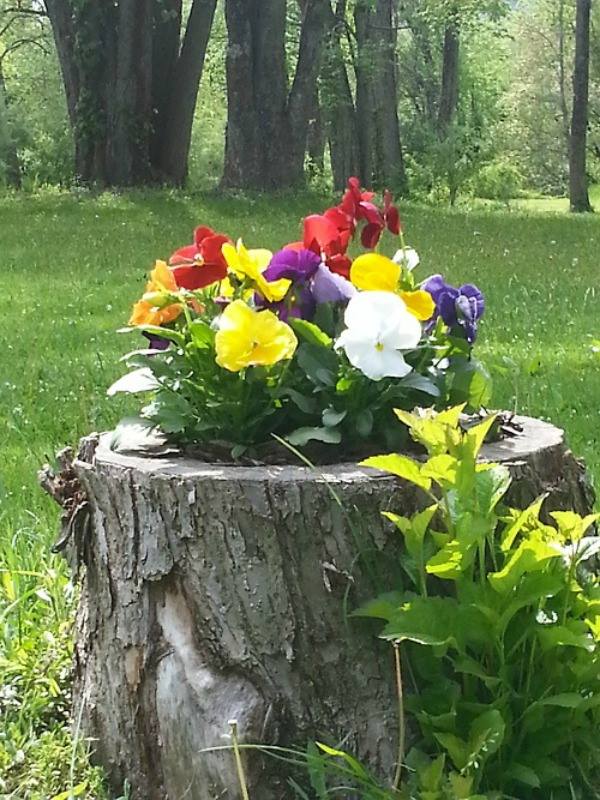
A lovely idea for using old tree stumps- I tried hollowing out a couple of Oaks that were felled next to our boundary wall last year, but had to give up through lack of drilling/cutting power- oak is VERY hard stuff! Still, I’ll have another go this season- hopefully the various holes I left will have encouraged the wood to rot down. Watch this space….
Old School Gardener

close up of Xerochrysum bracteatumAs you might guess there aren’t that many plants beginning with ‘X’, but Xerochrysum is an interesting genus of around 6 or 7 species of short- lived perennials and annuals which are native to open grassland and scrub in Australia.

The stemless lance – like leaves are hairy. The flowers are dasiy like with papery white, yellow or pink bracts and a central disc of, often, yellow florets. The perennials can be used to fill in gaps in herbaceous borders and low – growing cultivars are suitable as edging or for containers.

The name Xerochrysum comes from Greek xeros meaning “dry” and chrysos meaning “gold” (this refers to the common yellow papery bracts that occur within the genus).

X. bracteatum is often grown for its cut and dried flowers and it self seeds freely. Also known as the “Golden Everlasting”, this is one of the best known of the “paper daisies” as it is a very widespread species occurring in both annual and perennial forms. It varies in habit from prostrate to a shrubby plant of about 1m in height. The leaves are usually large (up to 100mm long) and green to grey-green in colour. The individual flowers are very small but are formed into a large cluster surrounded by large papery bracts. The overall appearance is that of a large, single “flower” with the bracts as the “petals”. However, well over a hundred true flowers occur inside the ring of bracts.

The ‘golden everlasting’ has been cultivated for many years and a number of forms have been selected for cultivation. These include several which have resulted from both chance and deliberate hybridisation. Some examples are:

  • “Diamond Head” – perennial; green foliage, 0.2m x 0.5m. Yellow flowers

  • “Dargan Hill Monarch” – perennial; grey leaves, 0.8m x 1m. Yellow flowers

  • “Cockatoo” – perennial; similar to “Dargan Hill Monarch”, pale yellow bracts around a head of small orange flowers

  • “Princess of Wales” – perennial; similar to “Dargan Hill Monarch” but more compact (0.6m x 0.6m). Yellow flowers

  • “Kimberley Sunset” – perennial; grey leaves, 0.8m x 1m. Pink flowers

In addition, breeding work in Europe and Australia has produced annual forms with an outstanding range of colours – yellow, red, purple, orange. These are excellent for a massed, colourful display. Most forms are suited to cultivation in many areas. The annual forms can be purchased in packets from a number of commercial suppliers and established as instructed on the packs.

Perennial forms are usually quick growing in a sunny, well drained position. They benefit from a regular light pruning annually to encourage branching and a greater number of flowers. Severe pruning to overcome “legginess” may be successful but only as a last resort.

Golden everlasting responds well to annual fertilising, usually with a slow-release type and appreciates an assured water supply. The plants vary in their ability to withstand frost but most are at least moderately frost resistant.

Propagation of X.bracteatum from seed is easy; no pretreatment is required. Propagation from cuttings is also fairly easy and is the only way that named cultivars should be propagated.

Xerochrysum is half hardy to frost hardy and should be grown in moderately fertile, moist but well-drained soil in full sun. Those cultivars which reach 90 cms or more need staking. They can be propagated from seed in the spring. they might susceptible to downy mildew.

These very popular plants bring long-lasting colour and warmth into the garden. There are many cultivars available in nurseries with flowers varying from white through cream, lemon, canary yellow, gold and bronze. Many of the pink varieties are the result of plant breeding, most probably using South African species as this colour is very uncommon in Australian plants.

They will keep producing flowers particularly if spent flowers are continually removed. Butterflies and other insects love them and will flock to your garden adding another layer of interest. They are also excellent as dried flowers keeping their shape and colour well for years – just hang a bunch up-side-down in a dark airy place and let them dry for a few weeks.

Sources and further information:

Australian Native Plants Society

Wikipedia

Growing Xerochrysum bracteatum-RHS

Old School Gardener

Eremurus 'Shelford Hybrids'
Eremurus ‘Shelford Hybrids’

With Spring round the corner and thoughts of summer-flowering bulbs, this week’s timely question comes from George White of Walthamstow, London:

‘A friend has some magnificent border plants which he knows only by the name Foxtail Lilies. What are they, and are they easy to grow?’

George, these plants are a glorious addition to summer borders and belong to the genus Eremurus. They are also known as ‘Desert Candles’ and are hardy herbaceous perennials in which tall spikes of star-shaped flowers arise from a ring of narrow, pointed foliage. The best and tallest are the series known as  ‘Shelford Hybrids’, whose flowers vary in colour but are often a pleasing soft, pinky beige. They can reach 2.75 metres tall and bear hundreds of primrose-sized flowers.

Eremurus stenophyllus bungei  is the yellow-flowered parent of these hybrids and reaches 1 metre in height. The other parent E. olgae, is late flowering, bears pink blooms, and reaches a height of 1.5 metres.

Other fine examples are the very tall E. elwesii with soft pink flowers (and it’s white-flowered variety ‘Albus’), and the even taller (up to 3 metres) E. robustus with pinky yellow flowers on spikes up to 1.2 metres long. Eremurus are quite easy to grow as long as they have a free draining soil around their roots and have lots of warm sunshine. Here’s a video on how to plant Eremurus bulbs. It will probably be at least one season before you see any flowers.

If you can’t wait until next year then now’s the time to  think about some other unusual summer flowering bulbs for your borders.

Camassia (Quamash) are easy to grow and are attractive late spring performers that look good with late tulips (I have some whose lavender-purple flower spikes contrast well with the orange tulip ‘Ballerina’). C. cusickii is 200mm tall with lots of pale blue flowers, while C. quamash (syn. esculenta) has spikes of white to deep-blue flowers and grows to 250mm tall. C. leichtlinii, 900mm tall, has white or blue star-like flowers and C. semiplena has semi double creamy flowers on sturdy stems.

Other summer bulbs of interest are Fritillaria persica ‘Adiyaman’ which stands between 800mm – 1.2 metres tall and in May produces unusual, deep -hanging bells of rich plum-purple. Leucojum aestivum ‘Gravetye Giant’ is probably the best of the summer flowering ‘snowflakes’ standing 300-500mm tall and has wide- hanging white bells in April and May.

If you are in a frost free area or able to lift your bulbs to protect them from winter frost, then Watsonia is a colourful spike- flowered border plant. And why not go for a touch of the exotic with a Canna or two? (better make that 3 at least). Summer flowering bulbs are already available to buy online through various well-known nursery companies and should soon start appearing in your local Garden Centre or nursery. Plant them in the spring as the soil begins to warm up.

Further information:

BBC gardening guide – summer flowering bulbs

Foxtail Lilies

How to grow Eremurus robustus

How to grow Eremurus stenophyllus AGM

Old School Gardener

Watsonia-close-upA genus of around 60 species of perennials, Watsonia (‘Bugle Lilies’) are usually found on rocky or grassy slopes and plateux in South Africa and Madagascar.

Most are plants typical of the fynbos area in south Africa, adapted to a Mediteranean -type climate, but some occur along the eastern and inland areas of the country and have adapted to a wider range of conditions, mainly a continental climate with summer rainfall. Many species occur mainly in the mountains, though some occur in sandy flats and marshy areas.Watsonia species were introduced as garden ornamentals to Australia in the mid-19th century and were widely grown by the 1940s.

The genus is named after Sir William Watson, an 18th century Brtiish botanist. Growing from corms, they have erect, usually sword- shaped leaves at the base and are grown for their spikes of tubular flowers in shades of red, orange, pink or white. Stems grow to between 1.2 and 1.7 metres tall. Watsonia flowers for up to 4-5 weeks in spring, which makes it a really interesting plant for perennial borders.

They have an erect growing habit, do not need any staking or support and have blooms that add a ‘zing’ to a garden for weeks on end!

The plants are a little tender, so can only be grown successuflly in places with little or no frost, or alternatively in a greenhouse or conservatory. Spring and summer growing varieties can be grown outdoors in a border and then lifted in the autumn and brought under cover for the winter. They can also be grown in containers.

The most commonly cultivated species is the pink-flowered Watsonia borbonica and its white mutant ‘Arderne’s White’. These were crossed with Watsonia meriana and other species in the early 20th century by breeders in Australia and in California to produce a wide range of cultivars. Watsonia has been eclipsed in popularity by Gladiolus and other bulbs, and is now largely neglected by the nursery industry.

Under glass they should be grown in a loam-based compost with added sharp sand and leaf mould, in full sun. They should be watered freely when in growth and liquid fertiliser perhaps added every month. Outdoors they can be grown in light, well drained soil that does not dry out in summer. A dry mulch can help protect against frost during the winter.

Further information:

Plant profile- Watsonia

Growing Watsonia

Watsonia on Tresco, Isles of Scilly

RHS- Watsonia pillansii

Old School Gardener

Color on the Mountain

Visit Ariston Organic’s site (click on the title) to learn more about this South African scene…

Old School Gardener

PicPost: Yorchiding again!

The Flying Duck Orchid (Caleana major) from Australia. From https://www.facebook.com/Original.Everything

Finding Nature

Nature Connectedness Research Blog by Prof. Miles Richardson

Norfolk Green Care Network

Connecting People with Nature

Discover WordPress

A daily selection of the best content published on WordPress, collected for you by humans who love to read.

Susan Rushton

Celebrating gardens, photography and a creative life

Unlocking Landscapes

Writing, photography and more by Daniel Greenwood

Alphabet Ravine

Lydia Rae Bush Poetry

TIME GENTS

Australian Pub Project, Established 2013

Vanha Talo Suomi

The Journey from Finnish Rintamamiestalo to Arboretum & Gardens

Marigolds and Gin

Because even in chaos, there’s always gin and a good story …

Bits & Tidbits

RANDOM BITS & MORE TIDBITS

Rambling in the Garden

.....and nurturing my soul

The Interpretation Game

Cultural Heritage and the Digital Economy

pbmGarden

Sense of place, purpose, rejuvenation and joy

SISSINGHURST GARDEN

Notes from the Gardeners...

Deep Green Permaculture

Connecting People to Nature, Empowering People to Live Sustainably

BloominBootiful

A girl and her garden :)