Tag Archive: flower


PicPost: Spring loaded

PicPost: For you, Mum, with love...

Happy Mothering Sunday!

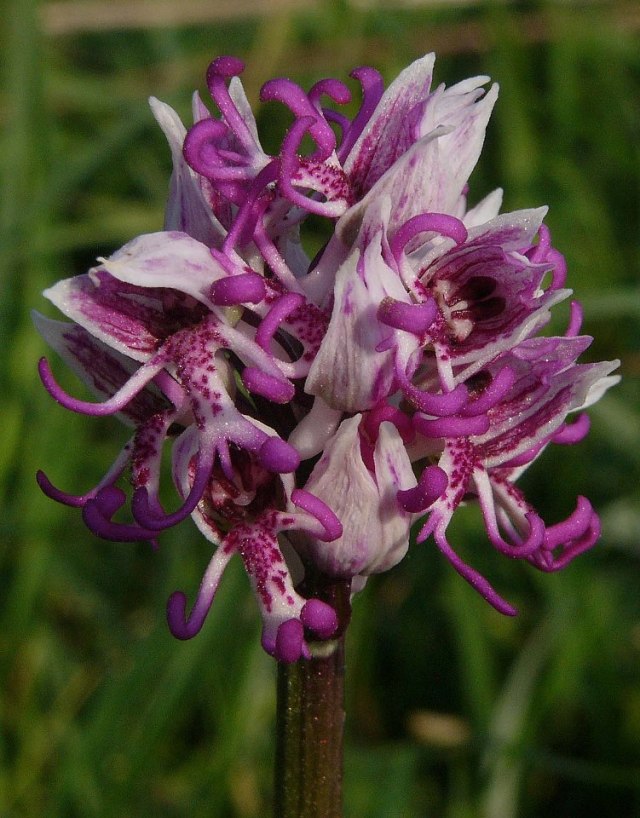
PicPost: YOrchiding

Monkey Orchid – spot the likeness….

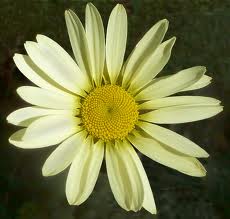
Anthemis tinctoria 'E.C.Buxton'

Anthemis tinctoria ‘E.C.Buxton’

There are around 100 mat or clump-forming species in the genus Anthemis.

They make very useful border plants, with a long flowering season from late spring – end of summer.

Most grow between 30 -60 cms high and have a similar spread.

Beautiful filigree, aromatic evergreen foliage when not in flower.

Smaller types suitable for rock gardens.

Flower heads are daisy-like; with white or yellow ray florets or yellow disc florets- some make good cut flowers.

Though many species are not long lived (A. tinctoria especially so), they are all easily propagated from seed or cuttings.

The plant’s life can be extended by shearing over in autumn just after flowering – this encourages new basal growth which takes the plant through the winter. Shearing also helps to prevent mildew.

They need sunny, well-drained sites and wet winters are generally not favourable.

They do not transplant well, but should anyway be divided regularly in spring.

Anthemis maritima

Anthemis maritima

The orangey- yellow varieties look well woven in and out of mixed borders, and complement warmer coloured flowers; e.g. Crocosmia ‘Lucifer’, Dahlias, Hemerocallis etc. The yellow varieties look well with blue flowers such as Nepeta or Agapanthus. The pale lemon variety ‘E.C. Buxton’ (or ‘Golden Marguerite’- one of my favourites)  works well with wispy grasses such as Stipa tenuissima and the darker Lavenders (e.g. ‘Hidcote’).

Further information:

Wikipedia

How to grow Anthemis- Telegraph article

Anthemis marschalliana– silver foliage

Quizzicals: answers to the two in the post ‘Gypsies, tramps and thieves…’

  • The scourge of female chickens – Henbane
  • Cheap goods in a pile of dung – Potato

Old School Gardener

If you’ve enjoyed reading this post and others on this blog, why not comment and join others by signing up for automatic updates via email (see side bar, above right ) or through an RSS feed (see top of page)?

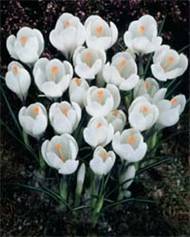
Crocus 'Jeanne d'Arc'

Crocus ‘Jeanne d’Arc’

In the wild, Crocus vernus begins to flower as the snow melts in the mountains of Europe. It is native to the Mediterranean from the Pyrenees in the west to the Ukraine in the east, and south as far as Sicily and the Balkans. This spicy herald of spring has a history dating back thousands of years.

Crocus (plural: crocuses, croci) is part of the Iris family and consists of around 90 species. They are perennials, growing from corms. Cultivated mainly for their flowers which appear in autumn, winter, or spring, Crocuses are also cultivated and harvested for Saffron– the spice obtained from the flower’s anthers. This practice was first documented in the Mediterranean, notably on the island of Crete.  Saffron’s bitter taste and hay-like fragrance is complimented by its rich golden-yellow hue, used to colour food and textiles.It has been  traded and used for over four thousand years. Iran now accounts for approximately 90 percent of the world production of Saffron. Because each flower’s anthers need to be collected by hand and there are only a few per flower, Saffron is the most expensive spice in the world.

The name Crocus is derived from the Greek (krokos), which in turn is probably derived from a Semitic or Sanskrit word, which mean saffron or saffron yellow. Over the years the classification of Crocus species has been revised several times, the division of the many species challenging botanists because of the range of characteristics that are available for scrutiny. Some of the species are:

C. aureus = goldencrocus

C. biflorus = two – flowered – the ‘Scotch Crocus’

C. chrysanthus = golden – flowered

C. minimus = smallest

C. nudiflorus = naked flowered

C. ochroleucus = yellowish – white

C. sativus = The Saffron Crocus

C. sieberi = after Sieber, a botanist

C. susianus = from Susa, Persia

C. vernus = spring flowering- the Dutch or Spring Crocuses are derived from this species

C. versicolour = changing or varied colour

The first crocus seen in the Netherlands, where crocus species are not native, were from corms brought back in the 1560s from Constantinople by the Holy Roman Emperor’s ambassador who sent a few corms to the botanical garden in Leiden. By 1620, new garden varieties had been developed. Some species, known as “autumn crocus”, flower in late summer and autumn, often before their leaves appear. They should not be confused with Colchicum, a different genus of autumn – flowering plants.
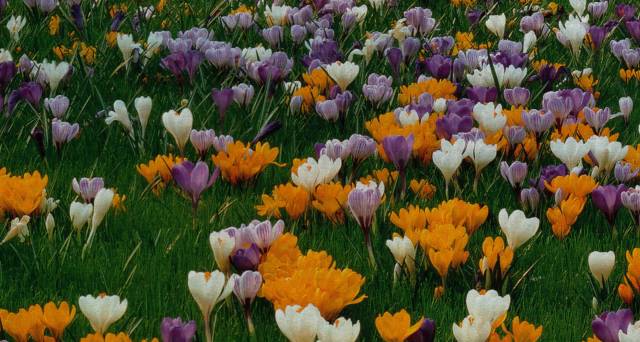
crocus carpetAt the Royal Botanical Gardens, Kew, in 1987, Reader’s Digest sponsored the planting of 1.6 million corms of cultivated Dutch crocus for their 50th anniversary. A further 750,000 corms of C. vernus ‘Jeanne d’Arc’ and C. vernus ‘Purpureus grandiflorus’ have been planted since – a visit to Kew to see this ‘Crocus Carpet’ is a must.

Sources and further information:

Wikipedia

The Alpine House – information

National Crocus collection – Wisley

A crocus planter

Crocus carpet at Kew

Saffron

Pacific Bulb Society

Old School Gardener

If you’ve enjoyed reading this post and others on this blog, why not comment and join others by signing up for automatic updates via email (see side bar, above right ) or through an RSS feed (see top of page)?


cyclamenCyclamen is a genus of plants containing around 20 species, part of the Primrose family.

They originate from areas surrounding the mediterranean, have tuberous roots and aren’t an obvious relation of the primrose. Growing in Beech woodland, scrub and rocky areas, and even alpine meadows, they’ll flower in snow meltwater. Although there are relatively few species in the genus there is at least one that will be in flower at all times of the year. In the UK, there are some species which can withstand frost, others which are more tender and some which are not at all frost hardy. Some cultivars of C. persicum are indoor or florists’ plants, flower in the winter or spring and come in a wide range of colours.

The medieval gardens of Constantinople featured Cyclamen as they looked so different from wild flowers in the surrounding fields.

The name Cyclamen is Latin in origin (cyclamīnos) which in turn comes from the Ancient Greek (kyklos) meaning “circle” . This seems to refer either to the round tubers that sit just below ground level or to the way, after flowering, the slender flower-stalk twists into a spiral curl, and, bending over, ripens the seed vessel on the surface of the ground.

Rather like truffles, these tubers are said to be a favourite of pigs. Hence, in many languages the different species have common names reflecting this – Sowbread in English, Pain de pourceau in French, Pan porcino in Italian and Varkensbrood in Dutch.

Cyclamen cilicicum leaves

Cyclamen cilicicum leaves

Some of the species names are:

C. cilicicum = cicilian

C. coum = of cous or cos, an island off Turkey

C. europaeum = European

C. hederifolium = Ivy – leaved

C. ibericum = of Iberia

C. latifiolium = broad-leaved

C. neapolitanum = of Naples

C. persicum = of Persia

C. repandum = scalloped- refering to the leaf margins

C. hederifolium, which is hardy in the UK, retains it’s attractive marbled leaves for at least nine months of the year, and has a graceful display of pale – to deep-pink, delicate blooms on slender stalks through autumn. This is one of the most popular woodland shade plants and is swift to colonise areas beneath trees. The Royal Horticultural Society has given it the Award of Garden Merit (AGM).

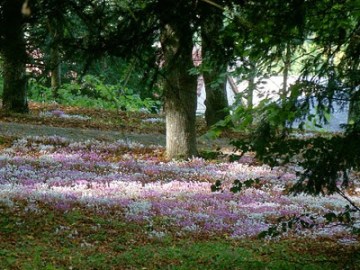
Cyclamen in a woodland setting

Cyclamen in a woodland setting

Further information:

Growing Cyclamen from seed

The Cyclamen Society

Wikipedia

Cyclamen hederifolium

Cyclamen coum

‘Pretty in Pink’ – article by Sarah Raven

Medicinal uses of Cyclamen

Old School Gardener

If you’ve enjoyed reading this post and others on this blog, why not comment and also join some other people and sign up for automatic updates via email (see side bar, above right ) or through an RSS feed (see top of page)?

sweet-pea-flowerThe ‘Queen of Annuals’ is being billed as the cottage garden favourite for 2013′.

It’s botanical name- Lathyrus odoratus- comes from an ancient greek word (Lathyrus) meaning  pea or vetchling and odoratus meaning ‘fragrant’. The genus Lathyrus contains about 160 species and of the many cultivars of the Sweet Pea, some 52 varieties have been awarded the RHS Award of Garden Merit.  The many varieties of Sweet pea available today come in a wide range of colours, but not yellow!


“The Sweet Pea has a keel that was meant to seek all shores; it has wings that were meant to fly across all continents; it has a standard which is friendly to all nations; and it has a fragrance like the universal gospel, yea, a sweet prophecy of welcome everywhere that has been abundantly fulfilled” – Rev. W. T. Hutchins 1900

Sweet pea cultivation is thought to have begun in the 17th century. The originator of the modern plant naming system, the swedish botanist Linnaeus, carried on using the genus name Lathyrus, which was in common use in the 18th century, but gave the Sweet pea it’s species name odoratus to codify the various names used for it at the time.

sweet-pea-flowers-7Victorian times saw a craze for the plant and a host of new cultivars were created as a result, many beginning their lives as mutations or ‘sports’ of known varieties. The original dwarf sweet pea was found growing in a row of a popular grandiflora variety in California  in the late 19th century. It had similar flowers to its parent but was much shorter and with a spreading habit. Given the name ‘Cupid’, this later became the general name used for dwarf sweet peas. Later crossings of these and other grandifloras produced a wide range of ‘cupids’ and later still these were crossed with the newer ‘Spencer’ sweet peas which resulted in a range of ‘cupids’ with larger flowers.

The large-flowered Spencer sweet pea appears to have arisen in two or three places at around the same time, but perhaps the most famous source was the home of the Spencer family (of Lady Diana fame) in Northamptonshire. The head gardener of Althorp HouseSilas Cole – named this ‘Countess Spencer’, though he seems at the time to have claimed it arose from deliberate cross breeding rather than as an accident of nature!

Sweet peas can be grown in different ways, but perhaps the most common technique is the cordon, introduced in 1911 by Tom Jones of Ruabon. This is used to produce flowers of the highest quality and in effect is a form of pruning and training which channels the plant’s energies into a smaller number of larger blooms. This process involves:

  • The top of a young seedling being pinched out once it has produced several true leaves, which encourages branching
  • One of the resulting side shoots (a strong one emerging near the base of the plant) is retained, and the others removed before they develop
  • The remaining stem is allowed to grow and is tied in, but all of its side shoots are removed as they form, as are any tendrils to prevent them fastening onto the flower stems
  • The fewer flower stems produce larger blooms and once finished these flowers are removed to encourage new ones to form.

Several plants can be grown in this way along a row to produce a sweet pea screen.

Fresh sweet pea flowers in the house have been shown to improve general wellbeing, boost both male and female libido, and lessen the effects of a hangover! However, the seeds of some species of Lathyrus contain a toxic amino acid which if eaten in large quantities can cause the serious disease Lathyrism.

sweet-pea-flowers

Sources and further information:

Lathyrus.info.org

Lathyrus.com

Sweet Pea Flower pictures

Quizzicals: two more cryptic clues to plants, fruit or veg:

  • Has had too much already
  • A country full of automobiles

Old School Gardener

Finding Nature

Nature Connectedness Research Blog by Prof. Miles Richardson

Norfolk Green Care Network

Connecting People with Nature

Discover WordPress

A daily selection of the best content published on WordPress, collected for you by humans who love to read.

Susan Rushton

Celebrating gardens, photography and a creative life

Unlocking Landscapes

Writing, photography and more by Daniel Greenwood

Alphabet Ravine

Lydia Rae Bush Poetry

TIME GENTS

Australian Pub Project, Established 2013

Vanha Talo Suomi

The Journey from Finnish Rintamamiestalo to Arboretum & Gardens

Marigolds and Gin

Because even in chaos, there’s always gin and a good story …

Bits & Tidbits

RANDOM BITS & MORE TIDBITS

Rambling in the Garden

.....and nurturing my soul

The Interpretation Game

Cultural Heritage and the Digital Economy

pbmGarden

Sense of place, purpose, rejuvenation and joy

SISSINGHURST GARDEN

Notes from the Gardeners...

Deep Green Permaculture

Connecting People to Nature, Empowering People to Live Sustainably

BloominBootiful

A girl and her garden :)