Tag Archive: flower


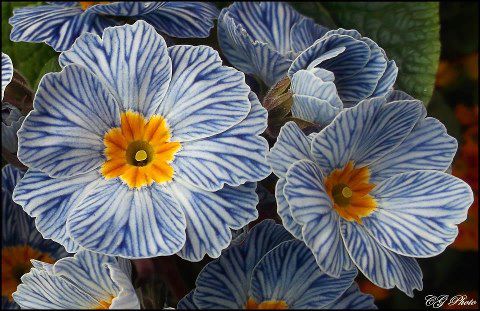
Picpost: Shock of the new

delphiniumsDelphinium is a genus of around 300 species of flowering perennial, biennial and annual plants that are native throughout the Northern Hemisphere and also on the high mountains of tropical Africa.

The name “delphinium” derives from the Latin for “dolphin”, referring to the shape of the nectary, though there is also a story that in ancient Rome men were pursuing a dolphin for commercial exploitation so Neptune turned it into the Delphinium!

The common name “larkspur” (referring to the bird’s claw shape of the flower), is shared between perennial Delphinium species and annual species of the genus Consolida. The famous 16th century herbalist, John Gerard gives ‘delphinium’ as an alternative name for Consolida, says that there is little written about any medicinal uses other than as an antidote to scorpion stings. He mentions the idea of laying delphiniums in the path of a scorpion tol render it totally incapable of movement until the plant is removed but says this is just one of many ‘trifling toyes’ that are not worth reading! The town of Larkspur in Colorado was given its name by Elizabeth Hunt, wife of the governor, in 1871 because of the abundance of delphiniums growing in the area

Delphinium nuttallianum

Delphinium nuttallianum

Species names of Delphinium include:

D. ajacis = possibly based on the marks at the base of the united petals which were compared to the letters AIAI

D. cardinale = scarlet

D. consolida = joined in one

D. elatum = tall

D.formosum = beautiful

D. grandiflorum = large flowered

D. nudicaule = naked stemmed

D. sulphureum = sulphur – yellow

D. tatsiense = of Tatsien, China

D. triste = sad, the dull blue of the flowers

D. zalil = native Afghanistan name.

D. 'Blue Nile'

D. ‘Blue Nile’

Delphinium_cv2

The delphinium is much admired, particularly in the cottage garden setting. Delphiniums are tall, majestic plants with showy open flowers on branching spikes. Each flower has 5 petal-like sepals with 2 or 4 true petals in the centre called a bee. Delphinium species include all three primary colours, blue, red, and yellow. Hybridisation of delphiniums has resulted in many new colours and attractive flower forms and growing heights. Most garden Delphiniums are of the hybirds raised from species such as elatum, formosum, grandiflorum and sulphureum. Flower colours range in shades of blue from palest sky, through to gentian and indigo; rich purple, lavender, pink to purest white.  In England Blackmore and Langdon, nurserymen and leading breeders of Delphiniums, were producing hybrids from early in the 20th century, producing named varieties of large well-formed delphiniums. Others have also added their skills and developed the most dramatic and eye-catching plants to grace our gardens.

This slideshow requires JavaScript.


Sources and further information:

The Delphinium Society

RHS- Delphiniums

How to grow Delphiniums- Sarah Raven

Gallery of Delphiniums

The Poison Garden – Delphiniums

Quizzicals: answers to the two clues given in Plantax 13…

  • Bovine stumble – cowslip
  • Simpler tombola – rafflesia

..and 2 more cryptic clues to the names of plants, fruit or veg…

  • Cold yearning
  • How Jack Charlton refers to brother Bobby

Special thanks to Les Palmer, whose new book ‘How to Win your Pub Quiz’ was published recently. A great celebration of the British Pub Quiz!

Old School Gardener

If you’ve enjoyed reading this post and others on this blog, why not comment and join others by signing up for automatic updates via email (see side bar, above right ) or through an RSS feed (see top of page)?

PicPost: Veinglorious

Picpost: Pincushion

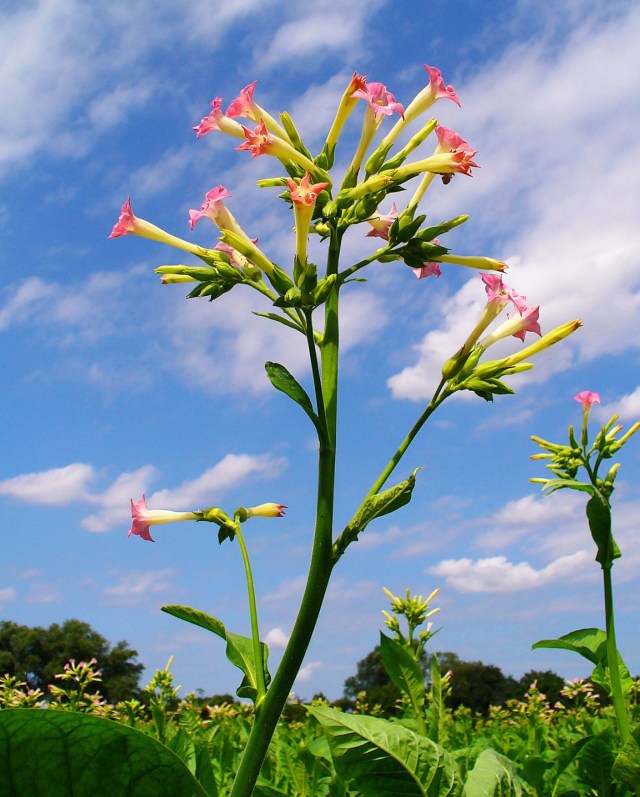
The tobacco plant - Nicotiana tabacum

The tobacco plant – Nicotiana tabacum

Nicotiana is a wonderful garden plant, its highly scented flowers providing a heady scent on warm summer evenings. I grew a large group of N. sylvestris one year which provided both an eye – catching feature and intoxicating fragrance for my younger daughter’s wedding celebration – truly memorable.

I guess ‘intoxicating’ is the right term as the tobacco plant is one of the most important plant discoveries in history, albeit one whose chief product we have come to understand and increasingly reject as a major cause of disease.

Fortunately though, the ‘baby hasn’t been thrown out with the bath water’ and we can still appreciate it as a garden plant, and its one which I grow each year and place in groups around Old School Garden as well as along the main entrance path at Gressenhall Museum where I volunteer.

Indigenous to the Americas, Australia, south west Africa and the South Pacific, there are various Nicotiana species, all commonly referred to as ‘tobacco plants’, though it is N. tabacum that is still grown worldwide for production of tobacco leaf for cigarettes etc. Nicotiana can be annuals, biennials, perennials or shrubs – some 70 species are grown as ornamentals.

Nicotiana sylvestris

Nicotiana sylvestris

N. sylvestris is a stately plant which looks well at the back of a lightly shaded or sunny border, or grown in bold groups. It’s flower heads seem to explode like a graceful firework. The Royal Horticultural Society has given it its prestigious Award of Garden Merit (AGM). There are many variations in size, colour and fragrance between the species and hybrids. Older heirloom species are often identified by their genus and species name.

Nicotiana alata - photo Carl E. Lewis

Nicotiana alata – photo Carl E. Lewis

Its genus name, designated by Linnaeus in 1753, recognizes Frenchman Jean Nicot, ambassador to Portugal from 1559-1561 who brought powdered tobacco to France to cure the Queen’s son of migraine headaches. Leonhart Fuchs (1501-1566) coined the name ‘Nicotiana’. However, Nicot’s credit as the first to bring the plant to Europe is wrong as it was known in the Low Countries after being brought there by Spanish merchants in the 1540s.  Knowledge of the plant by Europeans dates from 1492 when Columbus’s sailors saw it being smoked in Cuba and Haiti.


Many of the species names refer to a characteristic of the plant. Nicotiana alata gets its species name from the Latin word meaning winged, referring to its winged petioles (the stalks attaching the leaf blades to the stem). N. sylvestris, from the Latin sylva, meaning of the forest or woodland, possibly refers to its native habitat. N. langsdorffii was named after G. I. Langsdorf, the Russian Consul in Rio de Janeiro who organized an expedition to explore the inner regions of Brazil in the 1820’s.

Other varieties include:

N. affinis = related to, probably N. alata (= ‘winged’), some use it as a synonym. The ‘Night Scented Tobacco Plant’

N. x sanderae = ‘Sander’s Tobacco’, a group to which most of the newer hybrids belong

N. suaveolens = sweet smelling

Nicotiana can be used as specimen or bedding plants, in borders, woodland gardens or containers. Heights range from less than 1 foot to over 10 feet. They are long-blooming, attractive plants with trumpet-shaped flowers in shades of green, white, red, and pastels. Some species have attractive foliage. They are fairly easy to grow from seed. Contact with the hairy foliage may irritate the skin.

This year I’m growing  N. sylvestris in a border along with Verbena bonariensis and Ammi majus – a new combination for me and I’ll show you the results later in the summer!

Nicotiana x sanderae hybrids

Nicotiana x sanderae hybrids

Sources and further information:

Wikipedia

Growing Nicotiana (USA)

RHS Plant finder

The Poison Garden

Fine Gardening- plant guide

Nicotiana alata ‘Grandiflora’ is the most highly scented tobacco plant you can grow. It has delicate creamy-white flowers which are delicate in bright sunlight, so best planted with a little shade.Nicotiana are a great family of very long-flowering half hardy annuals, many of them with lovely evening and night scent. Nicotiana are moth pollinated, so pour out the fragrance when the moths are around.- See more at: http://www.sarahraven.com/shop/nicotiana-alata-grandiflora.html#sthash.FvJ4Z0Kg.dpuf

Quizzicals: answers to the two clues given in Plantax 11…

  • Where policemen spend their holidays- Copper Beech
  • Feline relative – Catkin

..and 2 more cryptic clues to the names of plants, fruit or veg…

  • Place in Oxfordshire painted a gaudy colour
  • Tie up skinny coward

Special thanks to Les Palmer, whose new book ‘How to Win your Pub Quiz’ was published recently. A great celebration of the British Pub Quiz!

Old School Gardener

If you’ve enjoyed reading this post and others on this blog, why not comment and join others by signing up for automatic updates via email (see side bar, above right ) or through an RSS feed (see top of page)?

PicPost: Ready to pop

PicPost: Blousy

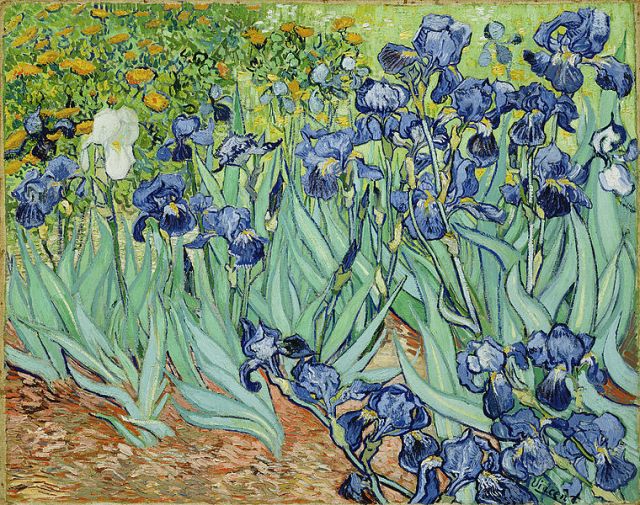
Irises by Van Gogh

Irises by Van Gogh

I’ve thought for some time that I must grow more Irises in my garden, but somehow the massive choice and being not quite sure about how to grow them successfully tends to make me wary.
I have grown some bearded irises in pots (and they’ve done quite well, despite a bout of Iris Rust last summer), and also some bulbous varieties in the border – they always please, as much for their strappy green foliage as for their flowers. I must be a bit more adventurous and devote a largish area to a bold display of one or two varieties – when I can afford it!

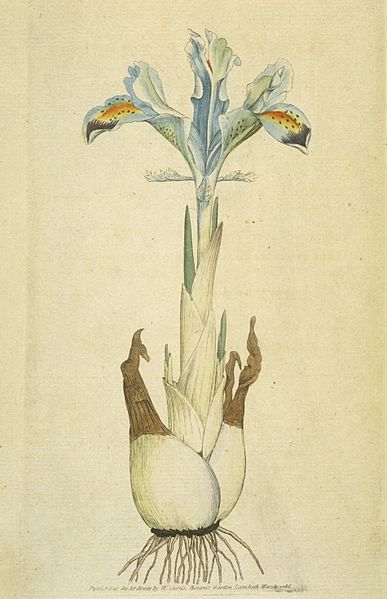
Iris persica - a bulbous Iris as drawn by Sowerby in 1792

Iris persica – a bulbous Iris as drawn by Sowerby in 1792

Irises – otherwise known as Flags, Sword Lilies or Fleur de Lis – is a genus of some 300 species from very varied habitats from around the northern hemisphere. They vary between those that are bulbs, those with rhizomatous (expanding, tuberous) roots, and some that are fleshy – rooted. They can be evergreen or deciduous and have very varied growth requirements. Irises are classified by the Royal Horticultural Society into these sub sections or ‘subgenera’:

  • Bearded species and cultivars– various sizes from miniature dwarf to tall. These are the most widely grown group of Irises, are rhizomatous and prefer well drained soil.
  • Aril irises are a group of bearded irises that become dormant in the summer after flowering and need to be kept dry whilst in this state.
  • Beardless irises generally have more flowers per stem, than  bearded types. They are also rhizomatous and prefer well drained conditions, apart from the Laevigate group which needs damp soil.
  • Crested irises are rhizomatous, spread freely, and prefer moist soil.
  • Bulbous irises are beardless and summer dormant. They prefer well-drained soil.
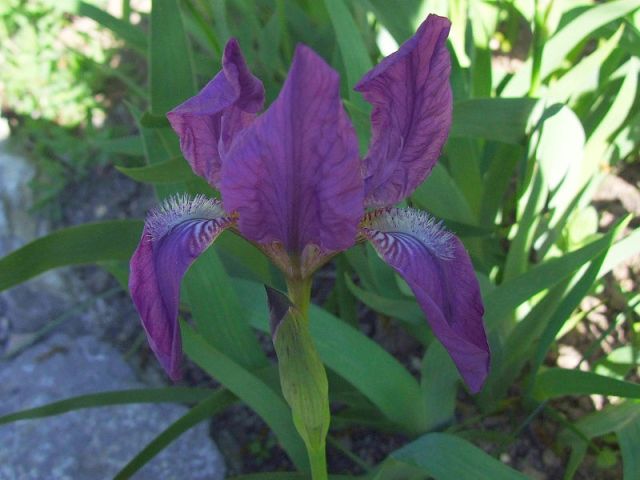
Iris aphylla -with prominent 'beard'

Iris aphylla -with prominent ‘beard’

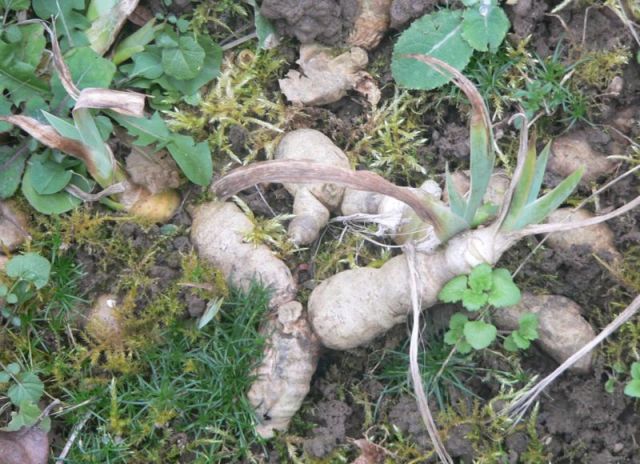
Iris orientalis showing rhizome roots

Iris orientalis showing rhizome roots

The Iris has connections with ancient Greece, where Iris was the messenger of the Gods, communicating between heaven and earth through a rainbow (so a reference to the wide range of Iris colours available). Irises have been valued plants for a long time and the flowers have had a long association with heraldry and royalty.

The iris flower has three outer and three inner tepals (a uniform type of petal on the outer part of the flower). The outer three bend back and may also hang down, so are referred to as ‘falls’ – they are usually the most colourful part of the flower and are especially large and colourful in the bearded irises, which have white or coloured hairs, like a beard, in the centre of each fall. Crested irises have a ridge (or crest) on each fall.

The three inner tepals are called ‘standards’, as they generally stand upright in the middle of the flower (like a flag), but may also lie horizontally as in I. tectorum; droop as in I. bucharicha; or be much reduced as in I. danfordiae.

Three modified styles called stigma flaps reach out over the falls from the middle of the flower and can be an important feature. The iris flower is of interest as an example of the relation between flowering plants and pollinating insects, the shape of the flower and the position of the pollen-receiving and stigmatic surfaces on the outer petals forming a convenient landing-stage for flying insects. All parts of the Iris plant are poisonous and contact with the sap may cause skin irritation. However, Irises are low in allergens.

Iris orientalis

Iris orientalis

Iris 'Samurai Warrior'- the closest breeders have come to a red Iris

Iris ‘Samurai Warrior’- the closest breeders have come to a red Iris

Irises are extensively grown as ornamental plants in home and botanical gardens. They grow in any good free garden soil, the smaller and more delicate species needing only the aid of turf ingredients, either peat or loam, to keep it light and open in texture. The earliest to bloom are species like I. junonia and I.reichenbachii, which flower as early as February and March (Northern Hemisphere). These are followed by the dwarf forms of I. pumila which blossom in Spring, and these are followed in early Summer by most of the tall bearded varieties, such as the German Iris and its variety florentina, Sweet Iris, Hungarian Iris, Lemon-yellow Iris and their natural and horticultural hybrids such as those described under names like I. neglecta or I. squalens.


The Iris is hardy, reliable, and easy to grow. Irises also attract butterflies and make lovely cut flowers. The Old Farmers’ Almanac suggests the following tips for growing Irises:

  • ‘Irises need at least half a day of sun and well-drained soil. Without enough sun, they won’t bloom.
  • They prefer fertile, neutral to slightly acidic soil. If your soil is very acidic, sweeten it with a bit of lime, and forbear summer watering, which can lead to rot.
  • Bearded irises must not be shaded by other plants; many do best in a special bed on their own.
  • Soil drainage is very important. Loosen the soil with a tiller or garden fork to a depth of 12 to 15 inches, then mix in a 2 to 4-inch layer of compost.
  • Plant iris in mid to late summer.
  • Bearded irises have rhizomes (fleshy roots) that should be partially exposed, or thinly covered with soil in hot climates.
  • Plant rhizomes singly or in groups of three with the fans outermost, 1 to 2 feet apart, depending on the size.
  • Dig a shallow hole 10 inches in diameter and 4 inches deep. Make a ridge of soil down the middle and place the rhizome on the ridge, spreading roots down both sides. Fill the hole with soil and firm it gently.
  • Water thoroughly.
  • When planting, top-dress with a low-nitrogen fertilizer, and again in early spring.’

As I conclude this article, I’m already thinking of an open, sunny spot where a bold display of summer flowering bearded Irises (one of the brown ones like ‘Kent Pride’) would look great in Old School Garden. Perhaps mixed in with some purple Heuchera to mask their rhizomes and some later seasonal interest ….watch this space.


PicPost: Bearded Beauty

Bearded Iris drawn by Sue Walker White

Further information:

Pictures of Iris varieties

About Iris

British Iris Society

National collection of water irises event

Iris weekend 6-7 July, Rosemoor, Devon

Places to see Bearded Irises in May- June:

Godlington House, Kent

Marks Hall Garden & Arboretum, Essex

Doddington Hall, Lincolnshire

Old School Gardener

If you’ve enjoyed reading this post and others on this blog, why not comment and also join some other people and sign up for automatic updates via email (see side bar, above right ) or through an RSS feed (see top of page)?
PicPost: Crying for attention

PicPost: Come and get me

Finding Nature

Nature Connectedness Research Blog by Prof. Miles Richardson

Norfolk Green Care Network

Connecting People with Nature

Discover WordPress

A daily selection of the best content published on WordPress, collected for you by humans who love to read.

Susan Rushton

Celebrating gardens, photography and a creative life

Unlocking Landscapes

Writing, photography and more by Daniel Greenwood

Alphabet Ravine

Lydia Rae Bush Poetry

TIME GENTS

Australian Pub Project, Established 2013

Vanha Talo Suomi

The Journey from Finnish Rintamamiestalo to Arboretum & Gardens

Marigolds and Gin

Because even in chaos, there’s always gin and a good story …

Bits & Tidbits

RANDOM BITS & MORE TIDBITS

Rambling in the Garden

.....and nurturing my soul

The Interpretation Game

Cultural Heritage and the Digital Economy

pbmGarden

Sense of place, purpose, rejuvenation and joy

SISSINGHURST GARDEN

Notes from the Gardeners...

Deep Green Permaculture

Connecting People to Nature, Empowering People to Live Sustainably

BloominBootiful

A girl and her garden :)