Tag Archive: flower


Passiflora caerulea

Passiflora caerulea

Cerinthe major

Cerinthe major

Picture by Mike Smith

Picture by Mike Smith

Correa via the Exotic Garden, Norwich

Correa via the Exotic Garden, Norwich

Old School Gardener

PicPost: Stop Monkeying Around!

The Monkey Orchid

‘A number of images depicting a flower with the face of a monkey are currently circulating via social media posts and the blogosphere. Many commentators have suggested that the images have been “photoshopped”.

However, the images are genuine and depict a real flower. The botanical name of (one of) the pictured orchids (top right) is Dracula gigas. Another orchid species, Dracula simia, also has flowers that resemble monkey faces. The name pays homage to the “monkey” resemblance (simia) as well as to a resemblance to the flowing cape and long fangs of the Dracula character in popular fiction.

These orchid species grow in their natural state in Colombian, Ecuadorian and Peruvian forests at high elevations are thus not often encountered by people in the wild. However, collectors have cultivated the plants elsewhere.’ (extract from hoaxslayer.com)

Old School Gardener

PicPost: Red Beard

Calochilus paludosus- the Red Beard Orchid

Old School Gardener

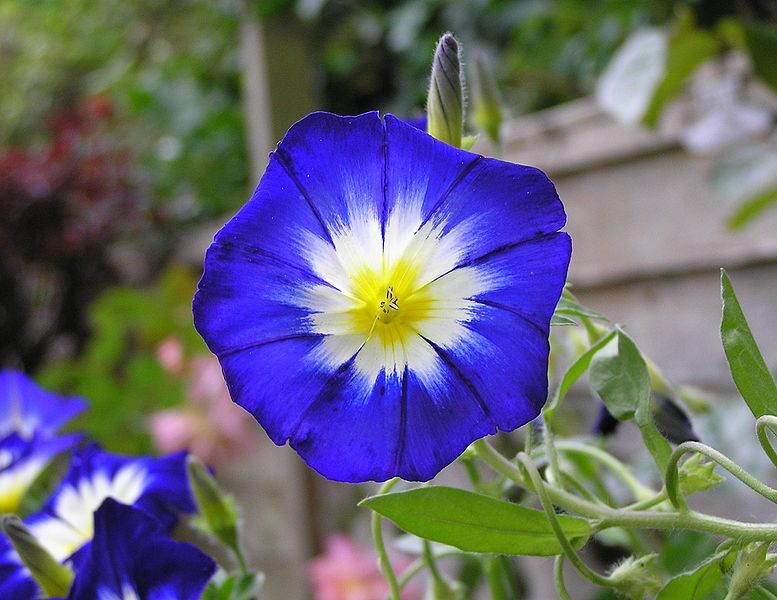
Convolvulus tricolor

A genus of about 200-250  shrubby annual, perennial herbaceous and rock plants, the name Convolvulus comes from  the latin convolvo, referring to the twining habit of some species. It is widely distributed around the world and is commonly known as Bindweed and Morning Glory, both names shared with other closely related genera.

Growing to 0.3–3 m tall, their leaves are spirally arranged, and the flowers trumpet-shaped, mostly white or pink, but blue, violet, purple or yellow in some species.

Many of the species are problematic weeds, which can swamp other more valuable plants by climbing over them, but some are also cultivated for their attractive flowers. Some species are globally threatened. Convolvulus species are used as food plants by the larvae of some Lepidoptera.

Other species names include:

C. althaeoides – like an Althaea (hollyhock)- referring to the flowers

C. cantabrica Cantabria, Spain

C. cneorum – meaning is obscure, from the greek Kneoron, a plant

C. lineatus – with lines

C. mauritanicus – of Mauretania (Morocco)

C. nitidus – somewhat glossy

C. soldanella – leaves like a Soldanella

C. tenuissimus – most slender

C. tricolor – three- coloured

C. althaeoides- from Flora Graeca

Sources and further information:

Wikipedia

RHS- growing C. sabatius

RHS- growing C. cneorum

Old School Gardener

Verbascum 'Kynaston'

Verbascum ‘Kynaston’

A genus of over 350 species, Verbascums are native to Europe, North Africa and Asia. Most of the species are biennial, though there are some annuals, perennials and sub shrubs and a few evergreens.

The perennials are often short-lived, dying after flowering, though they (like all species) are prolific self seeders. Verbascums mostly grow on open scrubland or dry hillsides, though some are found in open woodland. They like a sunny position with sharply drained soil.

Verbascums generally form a basal clump or rosette of leaves, these usually being large, soft and simple in shape, some with lobed or toothed edges. They produce one or a few spikes of flowers- these are densely packed and with saucer-shaped flowers. The flowers are individually short-lived, but are borne successively over along growing season. Flowers on hybrid cultivars are larger and showier.

Many Verbascums (or ‘mulleins’) grow quite tall (up to 3 metres) and need to be staked. Seedlings of named varieties will not grow true to their host, so these should be deadheaded before shedding their seed if you want to avoid a mixture of flower colours. The cultivars  ‘Gainsborough’, ‘Letitia and ‘Pink Domino’ have gained the Royal Horticultural Society’s ‘Award of Garden Merit’. Since the year 2000, a number of new hybrid cultivars have come out that have increased flower size, shorter heights, and a tendency to be longer-lived plants and a number have colour ranges not typical of the species.

Larger species can be left to naturalise in gravel or wild gardens, where they make impressive architectural plants, and will benefit from the support of adjacent plants. Smaller types are good in rock gardens, screes, or even walls. All Mulleins can be prone to mildew.

Vita Sackville-West wrote in 1936 that her Verbascums looked as though “a colony of tiny buff butterflies had settled all over them”. She described the colourings as “dusty, fusty, musty”. Verbascums have not changed much since then. The Cotswold Group about which she was writing are still grown, and there are others – for example ‘Megan’s Mauve’, and the new variety, ‘June Johnson’ – in which purple and apricot have become interwoven.

Verbascums make good partners for old roses (which they succeed in flower); in groups of plants with rounded or vase-shaped form to provide a contrast; or (where they are white-flowered) placed in front of softly coloured Hydrangeas.

Apart from propagation by seed, replacement plants can easily be grown from root cuttings. In March, scrape soil away from the roots area, take a knife and sever two or three fat, strong roots. Cut these into 4cm lengths and set them upright, individually, in small pots of potting soil with plenty of perlite mixed in. After three months in a frame and kept watered, each will have grown into a new plant.

Sources and further information:

Wikipedia

Verbascum.org

Growing Verbascums- Daily Telegraph

Plant guide- Fine Gardens

Rosy Hardy’s blogspot

Verbascum dumulosum- Kew Gardens

Old School Gardener

cornus alba sibirica and green yellow stems of C. flavirameaCornus is a genus of about 30- 60 species of woody trees and shrubs, commonly known as dogwoods. Most are deciduous, but a few are more like herbaceous perennials (subshrubs) and some are evergreen. Cornus is the latin word for ‘horn’ referring to the hardness of the wood.

The name “dog-tree” was recorded in 1548, and this had changed to “dogwood” by 1614. After this the plants soon became known as the Hound’s Tree, while the fruits came to be known as dogberries or houndberries (the latter is also the name given to the fruits of the black nightshade- alluding to Hecate’s hounds).

The plants may have become known as ‘dogwoods’ from the Old English word dagwood, which refers to the ways it’s slender stems of very hard wood were used to make “dags” (daggers, skewers, and arrows).

Another, earlier name of the dogwood in English is the whipple-tree. Chaucer refers to the “whippletree” in The Canterbury Tales (‘The Knight’s Tale- verse 2065). A whippletree is also a part of a horse – drawn cart; the link between the drawpole of the cart and the harnesses of the horses lined up behind one another, and commonly carved from the Whippletree or Dogwood.

Some of the Cornus species names are:

C. alba = white

C. canadensis = of Canada

C. candidissima = very white- the flowers

C. capitata = headed- the grouping of flowers

C. florida = flowering richly

C. fragifera = strawberry-like – the fruits

C. glabrata = glabrous

C. kousa = a japanese name

C. mas = male (mascula of Linnaeus)

C. nuttallii = after Nuttall

C. sanguinea = blood-red- the twigs

Cornus are either grown for their flowers, interesting leaves (some both of interest during summer and autumn) or for their colourful winter stems. These are just coming into their own in winter gardens around Britain – including Old School Garden. I have several groups of C. alba ‘Sibirica’, C. sanguinea ‘Midwinter Fire’ and C. sericea ‘Flaviramea’ (some grown easily from hardwood cuttings). I ‘stool’ these (i.e. cut the stems to the base) each spring to encourage new growth, which once the leaves have fallen (these are also very colourful in the autumn), reveals bright red, orange and yellow- green stems, which really glow in the winter sunshine..

Sources and further information:

Wikipedia

Seven Plants for Winter Wonder -article on Old School Garden

Cornus- RHS advice

Cornus- an essential winter shrub- Daily Telegraph

Old School Gardener

PicPost: Pendulum

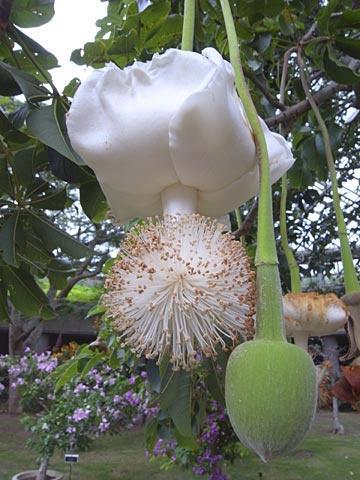
Baobab flower

Finding Nature

Nature Connectedness Research Blog by Prof. Miles Richardson

Norfolk Green Care Network

Connecting People with Nature

Discover WordPress

A daily selection of the best content published on WordPress, collected for you by humans who love to read.

Susan Rushton

Celebrating gardens, photography and a creative life

Unlocking Landscapes

Writing, photography and more by Daniel Greenwood

Alphabet Ravine

Lydia Rae Bush Poetry

TIME GENTS

Australian Pub Project, Established 2013

Vanha Talo Suomi

The Journey from Finnish Rintamamiestalo to Arboretum & Gardens

Marigolds and Gin

Because even in chaos, there’s always gin and a good story …

Bits & Tidbits

RANDOM BITS & MORE TIDBITS

Rambling in the Garden

.....and nurturing my soul

The Interpretation Game

Cultural Heritage and the Digital Economy

pbmGarden

Sense of place, purpose, rejuvenation and joy

SISSINGHURST GARDEN

Notes from the Gardeners...

Deep Green Permaculture

Connecting People to Nature, Empowering People to Live Sustainably

BloominBootiful

A girl and her garden :)