Tag Archive: favourite


IMG_7215

I recently responded to a challenge from fellow blogger, ‘The Anxious Gardener’, to name my favourite garden. This was a light-hearted way of getting people to enter a competition to win a copy of the recent publication ‘The New English Garden’.

The competition was a ‘name out of the hat’ affair so I stood as much chance as winning as the other 30-odd entrants (and I didn’t win, so there’s another item for the Christmas list). Notwithstanding that, I thought I’d try to do the request justice and thought long and hard about where, if any one ‘where’ stood out in front of the many gardens I’ve visited, read about, seen films and pictures of.

It took some time…

In the end I came up with my nomination and set it out here and the reasons why it came out top. Oh, and I thought I’d share some pics with you too. I hope that you enjoy them.

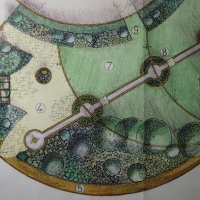
I’ve visited and seen a few gardens over the years and it’s tricky finding one that I’d call a favourite – some have great borders or other spaces, configurations of plants, superb features and so on. Maybe its because it’s relatively fresh in my mind, but the one that does stand out is Felbrigg walled garden in Norfolk (also a local one to me and so visited quite often).

Why? Well I guess it’s the way the garden team (including volunteers and community gardeners), have managed to create a space that meets so many different needs and in a way that seems to hang together naturally:

* a warm, contained, red brick walled space, with a fountain and dovecote as strong structural elements
* glasshouses with old favourite, traditional exotics and other ‘interesting’ plants
* community food growing in plots that are obviously lovingly cared for
* a children’s gardening area complete with digging pits, tools, washing facilities and novelties such as chickens running free, willow teepees and tunnels
* newer areas set out with mediterranean – style planting, meadows and feature shrubs
* plenty of comfortable seats to entice you to stop, look and soak up the atmosphere
* lots of attractive information about the plants themselves (all the significant ones carefully and attractively labelled) as well as some of the current tasks in the garden and information/quiz sheets for the kids.

All in all a visit to Felbrigg is a tremendously rich experience where the general public, serious gardener and trained horticuluralist (and their children) can come together and have their curiosity tickled, be enthused, amazed and go away feeling regenerated.

Do you have a favourite Garden? I’d love to hear from you!! (no prizes I’m afraid)

Further information: National Trust website

Old School Gardener

If you’ve enjoyed reading this post and others on this blog, why not comment and join others by signing up for automatic updates via email (see side bar, above right ) or through an RSS feed (see top of page)?

sweet-pea-flowerThe ‘Queen of Annuals’ is being billed as the cottage garden favourite for 2013′.

It’s botanical name- Lathyrus odoratus- comes from an ancient greek word (Lathyrus) meaning  pea or vetchling and odoratus meaning ‘fragrant’. The genus Lathyrus contains about 160 species and of the many cultivars of the Sweet Pea, some 52 varieties have been awarded the RHS Award of Garden Merit.  The many varieties of Sweet pea available today come in a wide range of colours, but not yellow!


“The Sweet Pea has a keel that was meant to seek all shores; it has wings that were meant to fly across all continents; it has a standard which is friendly to all nations; and it has a fragrance like the universal gospel, yea, a sweet prophecy of welcome everywhere that has been abundantly fulfilled” – Rev. W. T. Hutchins 1900

Sweet pea cultivation is thought to have begun in the 17th century. The originator of the modern plant naming system, the swedish botanist Linnaeus, carried on using the genus name Lathyrus, which was in common use in the 18th century, but gave the Sweet pea it’s species name odoratus to codify the various names used for it at the time.

sweet-pea-flowers-7Victorian times saw a craze for the plant and a host of new cultivars were created as a result, many beginning their lives as mutations or ‘sports’ of known varieties. The original dwarf sweet pea was found growing in a row of a popular grandiflora variety in California  in the late 19th century. It had similar flowers to its parent but was much shorter and with a spreading habit. Given the name ‘Cupid’, this later became the general name used for dwarf sweet peas. Later crossings of these and other grandifloras produced a wide range of ‘cupids’ and later still these were crossed with the newer ‘Spencer’ sweet peas which resulted in a range of ‘cupids’ with larger flowers.

The large-flowered Spencer sweet pea appears to have arisen in two or three places at around the same time, but perhaps the most famous source was the home of the Spencer family (of Lady Diana fame) in Northamptonshire. The head gardener of Althorp HouseSilas Cole – named this ‘Countess Spencer’, though he seems at the time to have claimed it arose from deliberate cross breeding rather than as an accident of nature!

Sweet peas can be grown in different ways, but perhaps the most common technique is the cordon, introduced in 1911 by Tom Jones of Ruabon. This is used to produce flowers of the highest quality and in effect is a form of pruning and training which channels the plant’s energies into a smaller number of larger blooms. This process involves:

  • The top of a young seedling being pinched out once it has produced several true leaves, which encourages branching
  • One of the resulting side shoots (a strong one emerging near the base of the plant) is retained, and the others removed before they develop
  • The remaining stem is allowed to grow and is tied in, but all of its side shoots are removed as they form, as are any tendrils to prevent them fastening onto the flower stems
  • The fewer flower stems produce larger blooms and once finished these flowers are removed to encourage new ones to form.

Several plants can be grown in this way along a row to produce a sweet pea screen.

Fresh sweet pea flowers in the house have been shown to improve general wellbeing, boost both male and female libido, and lessen the effects of a hangover! However, the seeds of some species of Lathyrus contain a toxic amino acid which if eaten in large quantities can cause the serious disease Lathyrism.

sweet-pea-flowers

Sources and further information:

Lathyrus.info.org

Lathyrus.com

Sweet Pea Flower pictures

Quizzicals: two more cryptic clues to plants, fruit or veg:

  • Has had too much already
  • A country full of automobiles

Old School Gardener

Finding Nature

Nature Connectedness Research Blog by Prof. Miles Richardson

Norfolk Green Care Network

Connecting People with Nature

Discover WordPress

A daily selection of the best content published on WordPress, collected for you by humans who love to read.

Susan Rushton

Celebrating gardens, photography and a creative life

Unlocking Landscapes

Writing, photography and more by Daniel Greenwood

Alphabet Ravine

Lydia Rae Bush Poetry

TIME GENTS

Australian Pub Project, Established 2013

Vanha Talo Suomi

The Journey from Finnish Rintamamiestalo to Arboretum & Gardens

Marigolds and Gin

Because even in chaos, there’s always gin and a good story …

Bits & Tidbits

RANDOM BITS & MORE TIDBITS

Rambling in the Garden

.....and nurturing my soul

The Interpretation Game

Cultural Heritage and the Digital Economy

pbmGarden

Sense of place, purpose, rejuvenation and joy

SISSINGHURST GARDEN

Notes from the Gardeners...

Deep Green Permaculture

Connecting People to Nature, Empowering People to Live Sustainably

BloominBootiful

A girl and her garden :)