Tag Archive: exotic


The view to the River Tagus from the front of the Neccessidades Palace in Lisbon

The view to the River Tagus from the front of the Necessidades Palace in Lisbon

On our recent 15 mile trek across western Lisbon, we took in a park that is not often mentioned in tourist trails- that of the Necessidades Palace. The palace itself is a grand looking affair, now the country’s Foreign Office, so not open to the public. The view from outside is good in all directions- one way you look out across the River and the ‘Golden Gate- look alike’ bridge; turn round and you have the splendid pink and cream stone facade of the palace and ornamental fountains. The park is tucked round the back and has the air of somewhere that’s been a little forgotten of late.

Here’s what Wikipedia has to say about the Palace, a very important site in portuguese history:

‘Formerly a convent… it was built in the 18th century, by order of King John V, in gratitude for prayers answered by Our Lady of Needs, whose first devotional chapel stood on this site…The palace became the residence of the kings of the Braganza dynasty… Ferdinand of Saxe Coburg and Gotha, husband of Maria II, lived in this palace until his death, amassing a large collection of art, which would be dispersed after his death. The palace then underwent several renovations to accommodate the taste of the various monarchs who lived there, the most recent of which was carried out at the beginning of the twentieth century by Carlos I….

…The palace was the scene of memorable events in Portuguese history, some momentous, some tragic, some slightly ridiculous. One famous example: the king Pedro V had installed in the front door of the palace a slot through which his subjects could, if they wished to, leave messages and complaints for the attention of the sovereign. The last significant event at the palace, which would also be the epilogue of the monarchy, was the joint funeral of King Carlos and his son, Prince Luis Filipe, on 8 February 1908, after their assassination by radical republicans…’

The palace was shelled during the republican revolution in 1910 and subsequently most of its art and other treasures were moved to the Ajuda Palace (which we had visited a day or two before).

Today’s park (or ‘tapada’), evolved from a private hunting ground for the Kings of Portugal and it retains the feel of a semi wild place, but with areas of more defined botanical or garden interest. As you progress up the hill from the entrance next to the Palace you alternate between enclosed, wooded areas and open grassy plains. About half way up the scene turns into a more formal park setting with a a terrace sitting alongside a grand, glass-domed estufa (greenhouse) currently undergoing renovation. Looking rather like an enclosed amphitheatre, this space must have once been the setting for a theatrical display of a different kind- tiered ranks of exotic plants. How grand it must have looked. I hope that it will be fully restored and will no doubt be a gem of a place that will raise the profile of the park more generally.

Paths weave upward above the terrace, the otherwise peaceful setting being regularly interrupted by the sound of aircraft coming in to land at the City’s airport. Another grand building sits atop the park, set off by a fine fountain. This gives way to a wilder area with a round building that looks as though it may have been a windmill at one time. There are some superb areas of Agaves and other dramatic plants. The overall impression, though, is one of a parkland that must be great for a summer picnic, rather than a space where growing and showing interesting plants is the dominant activity. Apart from the domed glass house that is.

A place where once glorious scenes are slowly being reclaimed from the passage of time and nature’s path.

Old School Gardener

IMG_6950

Our last, late summer visit to a west country garden, Killerton, did not disappoint. We enjoyed a very informative tour in a golf buggy and strolled around the grounds on a sunny afternoon. Lying just outside Exeter, Killerton is a massive estate and we had a little trouble actually finding the entrance (road signs and sat nav conspired against us!). Nevertheless we had a warm welcome.

Killerton is notable as the ‘home given away’. It’s last private owner,  Sir Richard Acland did just this with the whole estate of over 2,500 hectares (including 20 farms and 200-plus cottages), one of the largest acquired by the National Trust. Acland held a strong belief in the common ownership of land and was a founder member of the British Common Wealth Party, formed in 1942 to oppose the wartime coalition and to advocate a co-operative form of socialism, in contrast to the state-led approach of the Labour Party. However, the group never achieved an electoral break through and Acland joined the Labour Party in 1945. He was also one of the founders of the Campaign for Nuclear Disarmament (CND).

The original gardens at Killerton were designed in the late 18th century by John Veitch, one of the leading landscape designers of the time. It features rhododendrons, magnolias, herbaceous borders and rare trees surrounded by rolling Devon countryside. Many of the trees and the views of the surrounding countryside are very impressive – here are some pictures.

The grounds also house – typically for the 19th century – an Ice House and a curious Summer House which is of a rather gothic design and features a strange assortment of decorative materials – including animal bones, hides and fir cones! Here’s a second set of pictures.

However, the ‘parterres’ or mixed herbaceous borders, full of late summer colour when we visited, stand out as my most significant memory of Killerton. These were designed by the late 19th century gardener, garden writer and designer William Robinson. They have some classic plant combinations and bold drifts, typical of the mixed herbaceous borders coming into vogue around this time, and which have been influential in English garden design up to the present day. This area features a central path and secondary paths with Coade stone urns as focal points. The layout of the borders is perhaps curious given Robinson’s advocacy of  ‘wild gardens’ – a more naturalistic approach to garden design. But even these semi formal designs, with their ‘loose planting’, were seen as revolutionary.  Apparently, Killerton’s head gardener at the time said:

‘it of course spoilt the park, starting as it does and ending nowhere, I got into bad odour condemning it’.

Robinson’s ideas about ‘wild gardening’ spurred the movement that evolved into the English cottage garden, a parallel to the search for honest simplicity and vernacular style of the British Arts and Crafts movement. Robinson is credited as an early practitioner of the mixed herbaceous border of hardy perennial plants, a ‘naturalistic’ look in stark contrast to the high Victorian ‘pattern garden’ of planted-out bedding schemes. Here is a gallery that, hopefully captures the best of these glorious borders.

Further information:

National Trust website

William Robinson- Wikipedia

Old School Gardener

IMG_6879Quite a contrast with the previous Cornish garden visit to Glendurgan, Trelissick (yes another ‘tre’) was all about late summer colour. A mixture of woodland planting and smaller borders and walled gardens full of herbaceous perennials (including some beautiful exotics), this is another wonderful coastal garden in the damp and mild south west, between Falmouth and Truro.

This ‘Technicolour’ treat was a wonderful last garden visit on our summer trip to Cornwall, though we managed one more garden (Devonian this time) before heading back home. Here are some close-ups of the variety of blooms on show when we visited Trelissick towards the end of August.

I was most impressed with the overflowing border nestling towards the bottom of the grass – lined valley close to the entrance. A billowing display of colourful masses of flowers and foliage, the Cotinus coggygria (I think it might have been the variety ‘Grace’) looking especially vivid as a low sun caught its large leaves of reds – purples. Here is a gallery to show you what I mean.

The Fal valley with smaller creeks and inlets branching off on either side is reached via wooded slopes with oaks and beeches overhanging the mudflats of the tidal creeks. The King Harry Ferry below Trelissick is the only connection across the water to the Roseland peninsular on the other side of the estuary.

In about 1750 a modest two-storey villa was built at Trelissick on the foundations of an earlier building. This house was remodelled in 1825 by Peter Frederick Robinson who added the columned portico which rises to the height of the south front. Robinson’s patron was Thomas Daniell whose father had bought the estate in 1800 with the fortune he inherited from tin-mining interests. Thomas Daniell planted much of the woodland along the shores of the estuary and the carriage drives he laid out in the park are now shady woodland walks. Between 1844 and 1913 the estate was owned by the Gilbert family who made great improvements to the grounds. They planted ornamental woodlands and some of the huge holm oaks and conifers in the garden. The wonderful garden seen today was largely created by Mr and Mrs Ronald Copeland after Mrs Copeland inherited Trelissick in 1937.

This has been in the ownership of the National Trust since 1955 when it was donated by Ida Copeland  following the death of her son Geoffrey. Many of the species that flourish in the mild Cornish air, including the rhododendrons and azaleas (such a feature of the garden, but not in bloom when we visited), were planted by the Copelands including hydrangeas and camellias, flowering cherries, and exotics such as the Ginkgo and various species of palm. They also ensured that the blossoms they nurtured had a wider, if unknowing audience. Ronald Copeland was chairman and later managing director of his family’s business, the Spode china factory, and flowers grown at Trelissick were used as models for those painted on the pottery produced at the works.

The garden is noted for its rare shrubs (it holds the national collections of Photinias and Azaras) and features a large park, woodland walks, views over the Fal estuary and Falmouth – there are ‘peep hole’ glimpses of water punching through the sloping woodland canopy that surrounds the extensive park path system.  After a pleasant afternoon break in the courtyard restaurant (though we were joined by some cream tea loving wasps) we took a leisurely drive onward to re-enter Devon on our way back to East Anglia.

Here are some images of this wider, parkland setting, which,along with the rest of the place, is kept in tip-top condition, a credit to the garden team.

Sources: Wikipedia and Tour UK

Further information: National Trust website

Why not take a look at my other articles on West Country Gardens – click on the ‘category’ on the right

Old School Gardener

IMG_7367

Whilst visiting our son (who’s studying at Loughborough University) we took advantage of the ‘Heritage Open Days’ event at nearby Calke Abbey, Derbyshire. Billed by owners, the National Trust as ‘The un-stately home and country estate’ because of its peeling paintwork and overgrown courtyards, Calke Abbey is witness to the wider decline of country house estates all over Britain, especially after the First World War (avid viewers of the latest TV series of ‘Downton Abbey’ can get a taste of some of the issues – death duties, lack of staff, economic downturn).

Whilst some of the House and stables have been restored, there are still many other areas where old furniture, toys and a myriad other ‘heirlooms’ have been left to speak volumes of how the British landed gentry went through a major ‘downsizing’. Admittedly the family who owned Calke did amass a vast collection of curiosities and ‘hidden treasures’- there are fascinating collections of sea shells, rocks and pebbles for example.

The house was delightful and had some very friendly ‘in character’ guides to help tell the story. But the garden was the gem in my eyes. Extensive parkland with a number of beautiful mature trees, deer roaming and typical Victorian curiosities like the fernery give way to a massive walled garden, much of which is now just turned over to grass, but a significant portion of which houses a wonderful kitchen garden (with an access tunnel to ensure the gardeners weren’t seen from the house!). There is also an impressive array of original glasshouses and an orangery in which peaches and other tender fruit and veg are still grown. I particularly liked the Squash Tunnel made of rustic poles and featuring a range of different squashes. Approached by a colourful Dahlia border, there’s also a fascinating ‘Gardeners’ Bothy’, complete with old tools and equipment, seed trays and prize certificates from yesteryear! I was puzzled by one seed drawer, labelled ‘Borecole’. I hadn’t come across this name before and guessed it migth be some local corruption of ‘broccoli’. I now know it’s another term for Kale or a particular variety of Kale!

Walking through the pretty featureless,  grassed over walled garden you suddenly turn a corner and enter a more intimate, warm, walled garden with blocks of bright colours and interesting foliage. An amazing contrast, this formally laid out garden with a range of exotic plants as well as classic bedding, made me draw breath and smile like a Cheshire Cat!

This area has been superbly laid out and the colour, foliage and flower combinations are very impressive. There’s an ‘Auricula Theatre’ currently housing Pelargoniums (see the picture I posted of this earlier in the year) and a pool, all contributing to a peaceful spot where you can (and we did) sit and gaze at the wonder of nature – as coaxed and displayed by man of course! This was a truly inspiring afternoon, so if you get the chance, get along to Calke Abbey (by the way there was never an abbey here).

Further information:

National Trust Website

History- Wikipedia

Old School Gardener

If you’ve enjoyed reading this post and others on this blog, why not comment and join others by signing up for automatic updates via email (see side bar, above right ) or through an RSS feed (see top of page)?

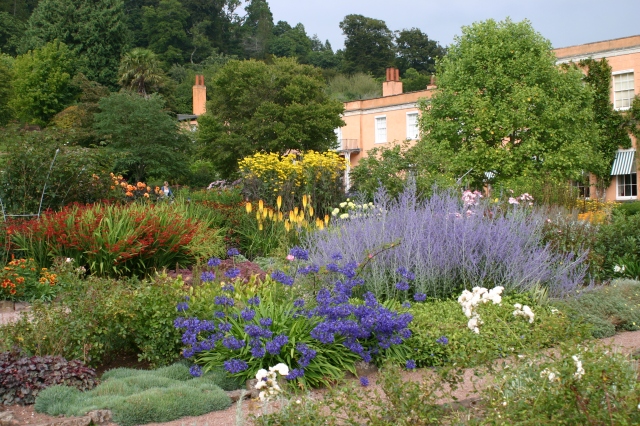
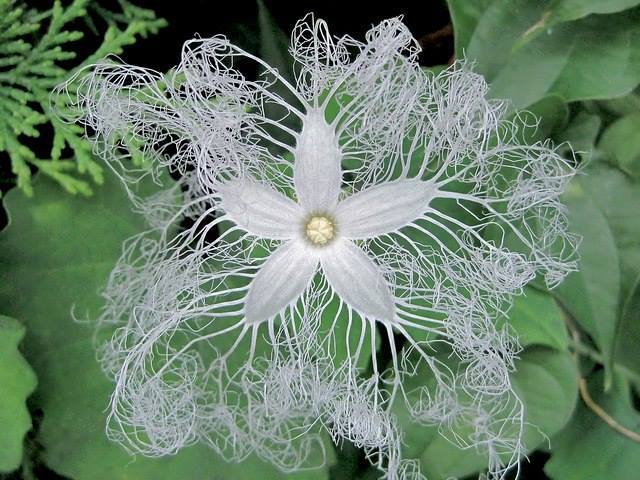
PicPost: In the Net

Trichosanthes cucumerina

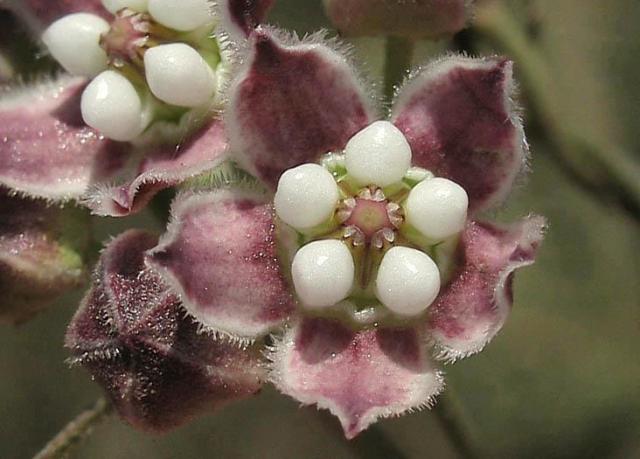
Picpost: Pincushion

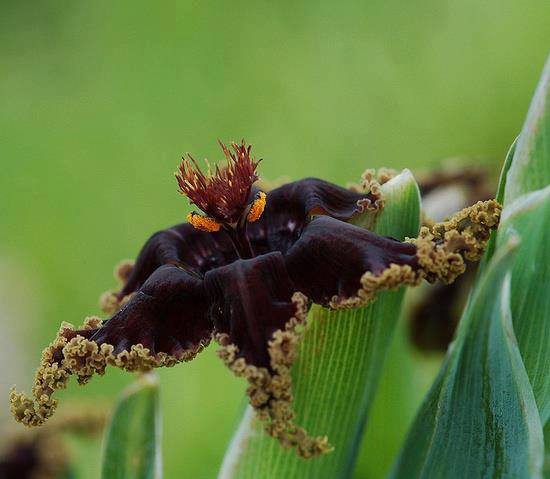
Picpost: Frilled to be here

Entrance to the Estrela gardenFollowing my article about Portuguese Heritage Gardens, I thought I’d turn my attention to a few of my favourite public gardens in that country. I’m beginning with one of my real favourites, one I love to return to when I’m in Lisbon (not that that’s very often!).

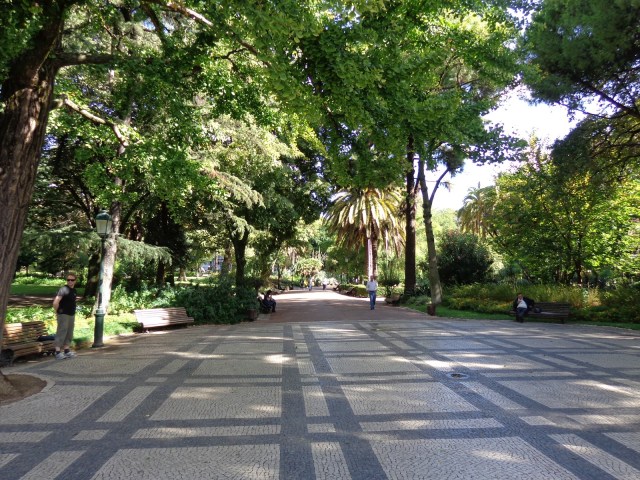
It’s the Estrela Garden (the Jardim da Estrela or Garden of the Star) which has a wonderful blend of exotic, artful, friendly charm with an atmosphere from the best of classic 19th century neighbourhood parks and gardens. It’s no surprise, then , that it remains as one of the most popular gardens in Lisbon. The orignal layout – 19th century romantic landscape style – features plenty of exotic plants and a central pond.
It is known officially as the Jardim Guerra Junqueiro (Junqueiro was a famous poet and politician who was a key figure in the downfall of the Portuguese monarchy and the establishment of the Portuguese Republic in 1910). In the 1840s the governor of Lisbon saw the need for a public garden in the densely populated city, and thanks to a donation by a wealthy baron, the governor was able to acquire the area  (5 acres) opposite the Estrela Basilica. Work on building the garden started in 1842 but due to the outbreak of war and financial difficulties, it didn’t open to the public for another ten years.

The gardens are laid out in a landscaped style with plenty of exotic trees, cacti, flower beds and a pond with fountains. The garden is especially popular with locals who come here during weekends to socialize, stroll along the paths, have a drink at the café, or play cards at one of the permanent tables among the trees.

The garden was designed by gardeners Bonard and João Francisco and it originally featured several romantic structures such as a gazebo and a Chinese pavilion. These structures are no longer there, but there are plenty of sculptures and a 19th century wrought iron bandstand, originally located at the site of the City’s main boulevard, Avenida da Liberdade. It was moved here in 1936.

After the creation of the Portuguese republic, several statues were installed in the park, the most expressive of which is of a farmer (sculptor Costa Mota,1913).  There is another of a female nude known as ‘O Despertar’ (sculptor Simões de Almeida).The most famous statue in the park is probably that of the Guardadora de Patos (keeper of the ducks) – a limestone replica of the marble original from 1914, it shows the protagonist of a popular fairy tale. Other statues include a dog spouting water from its mouth and 3 other busts depicting poets and an actor. More recent additions include a children’s playground and a pond-side cafe. The garden hosts the annual  Out Jazz festival – on Sunday afternoons during this time (usually May), Jardim Estrela will be alive with music and people enjoying the Sunday evening jazz in the open air auditorium.

Beyond the park is the English Cemetery, founded in 1717 and originally shared with the Dutch community. Novelist Henry Fielding, author of Tom Jones, died during a visit to Lisbon and is buried here.

Here are some images to let you get the feel of the place.

Source: A View on Cities

Old School Gardener

If you’ve enjoyed reading this post and others on this blog, why not comment and join others by signing up for automatic updates via email (see side bar, above right ) or through an RSS feed (see top of page)?

PicPost: Great Garden @ Abbotsbury

Early History
Established in 1765 by the first Countess of Ilchester as a kitchen garden for her nearby castle. Developed since then into a magnificent 20 acre garden filled with rare and exotic plants from all over the world. Many of these plants were first introductions to this country, discovered by the plant hunting descendants of the Countess.

The Garden Today
After the great storm of 1990, a major restoration project has been underway. many new exotic and unusual flowers have been introduced to this fabulous Dorset Garden.

The Garden is a mixture of formal and informal flowers, world famous for it’s Camellia groves and magnolias. Noted in Dorset for its Rhododendron and Hydrangea collections and the charming Victorian Garden’

Source : Abbotsbury website

Old School Gardener

Picpost: Ensete ventricosum 'Maurelii'

Photo – Will Giles- The Exotic Garden

Finding Nature

Nature Connectedness Research Blog by Prof. Miles Richardson

Norfolk Green Care Network

Connecting People with Nature

Discover WordPress

A daily selection of the best content published on WordPress, collected for you by humans who love to read.

Susan Rushton

Celebrating gardens, photography and a creative life

Unlocking Landscapes

Writing, photography and more by Daniel Greenwood

Alphabet Ravine

Lydia Rae Bush Poetry

TIME GENTS

Australian Pub Project, Established 2013

Vanha Talo Suomi

The Journey from Finnish Rintamamiestalo to Arboretum & Gardens

Marigolds and Gin

Because even in chaos, there’s always gin and a good story …

Bits & Tidbits

RANDOM BITS & MORE TIDBITS

Rambling in the Garden

.....and nurturing my soul

The Interpretation Game

Cultural Heritage and the Digital Economy

pbmGarden

Sense of place, purpose, rejuvenation and joy

SISSINGHURST GARDEN

Notes from the Gardeners...

Deep Green Permaculture

Connecting People to Nature, Empowering People to Live Sustainably

BloominBootiful

A girl and her garden :)