Tag Archive: cornwall


IMG_6543

This Rocky island crowned by a medieval church and castle was another of my West Country garden visits – or rather ir wasn’t. Access to the gardens was restricted to certain days during the summer (as a a conservation measure) and yes, we chose one of the closed days! So my visit was confined to aerial views from castle ramparts, glimpses through gates and over hedges. Still, I managed to get a good idea of what the gardens are like and I’ve tried to convey this in the photo montage below.

The island – a ‘twin’ with Mont St. Michel in Normandy on the other side of the English Channel – has some buildings dating from the 12th century. It’s sub-tropical Gardens feature exotic plants clinging to steep granite cliffs and terraces laid out with a mixture of formal and informal borders. These terraces are tiered close to the rocky water’s edge.

I witnessed an ‘abseiling gardener’ carrying out some ‘extreme strimming’ on the grassy slopes!

Plants that are natives of Mexico, the Canary Islands and South Africa thrive in the mild micro-climate created by the sun-warmed cliffs. As we found in many other parts of West Cornwall plants like Agapanthus, Fuchsia, Crocosmia ‘Montbretia’ and Hydrangea thrive here as well as along road – sides and more modest domestic gardens in the area.

I will revisit at some point to get the ‘up close and personal’ experience of actually being in the gardens, but from the views I managed they do seem mightily impressive.

Further information:

National Trust website

St. Michael’s Mount Garden Itinerary

Wikipedia- St. Michael’s Mount

Old School Gardener

If you’ve enjoyed reading this post and others on this blog, why not comment and join others by signing up for automatic updates via email (see side bar, above right ) or through an RSS feed (see top of page)?
IMG_6568

On my recent West Country holiday I had the pleasure or revisiting the Minack Open Air Theatre, perched on a clifftop on the Cornish coast. It must be thirty years since I was last here and it’s certainly been developed, with new visitor facilities and altogether a more organised feel to things.

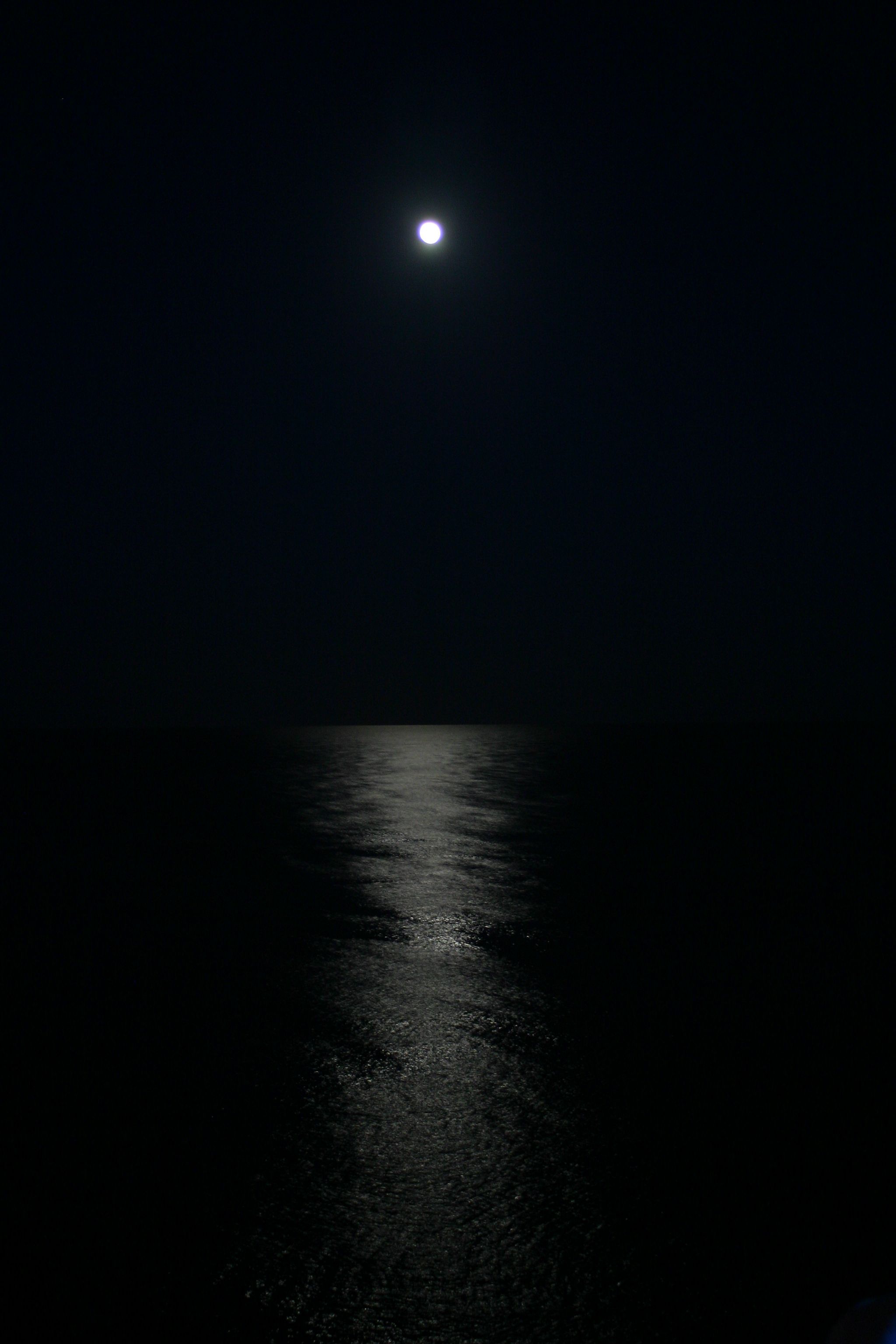
The play, which told the tale of 19th century Australian convicts acting out a play, was entertaining, but of greater impact were the sub tropical gardens that weave themselves in and out of the amphitheatre planned, financed and created between 1931 and 1983 by one determined woman – Rowena Cade. And of course, the setting. This overlooks the English Channel, and as we were there for an evening performance, one of the fullest moons ever came to dominate the scene as darkness fell.

Oh, and towards the end a large, speeding helicopter suddenly emerged from behind the bluff on which the theatre sits – congratulations to the actors who seemed unmoved by this sudden intrusion!

Here are a few shots of the evening to give you a sense of the gardens, setting and the occasion.

Further information:

Minack theatre website

Old School Gardener

If you’ve enjoyed reading this post and others on this blog, why not comment and join others by signing up for automatic updates via email (see side bar, above right ) or through an RSS feed (see top of page)?

IMG_6457

The ‘Cornwall Gardens Guide’ mentions 9 gardens beginning with ‘Tre’ (Cornish for ‘homestead’ or ‘town’). Having just returned from two weeks there and in Devon, I visited three of these (Trengwainton and Trelissick as well as Trerice) as well as Godolphin, Glendurgan and St. Michael’s Mount. They all share Cornwall’s mild climate and several have river valley settings and their associated semi – tropical microclimates. Despite these similarities, I found these wonderful gardens to have a range of distinctive styles or features, largely reflecting the historic interests of their owners and gardeners.

Over the coming weeks I’ll do a photo feature on each of these as well as Killerton Gardens (near Exeter, Devon) and will throw in a couple of very special places – the Barbara Hepworth Sculpture Garden in St. Ives and Chysauster Ancient Village, both in Cornwall. I begin where we began our tour, at Trerice near Newquay, a place we visited en route to our destination of St. Ives. This Elisabethan house and gardens is described by the National Trust as:

‘An intimate Elizabethan manor and a Cornish gem, Trerice remains little changed by the advances in building fashions over the centuries, thanks to long periods under absentee owners.’

The house is certainly delightful to look at, with its rust coloured granite stone, ‘dutch’ gables and ancient leaded windows – many of which are cracked from the test flights of ‘Concorde’ 50 years ago! These ‘sonic booms’ must have been especially noticeable in  what is otherwise a very quiet, peaceful place, far away from busy roads or settlements (we managed to get very lost in some frighteningly narrow country lanes trying to find our way to our next destination).

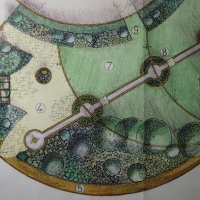
A formal approach to the house sets it off beautifully and the other garden areas include a grass labyrinth, ancient bowling alley, a woven – fenced kitchen garden and some more recent sloping borders containing a mix of food and ornamental plants – I imagine this might be something of a challenge at harvest time! Of particular interest is an Elisabethan garden in the making, based on a ceiling design in the house as a nod to the sort of layout the original might have been based on, records of what actually existed not being available. This was in the course of setting out when we visited, but a very good artist’s impression shows how this will look – a formal pattern of Box hedging enclosing lavender and roses, which will be a great addition to these lovely gardens.

And the house is of great interest too, with some very friendly and helpful guides to show you around and help you (and any younger members of your party) try on suits of chain mail and pose with a longbow!

Further information:

National Trust web site

Old School Gardener

If you’ve enjoyed reading this post and others on this blog, why not comment and join others by signing up for automatic updates via email (see side bar, above right ) or through an RSS feed (see top of page)?

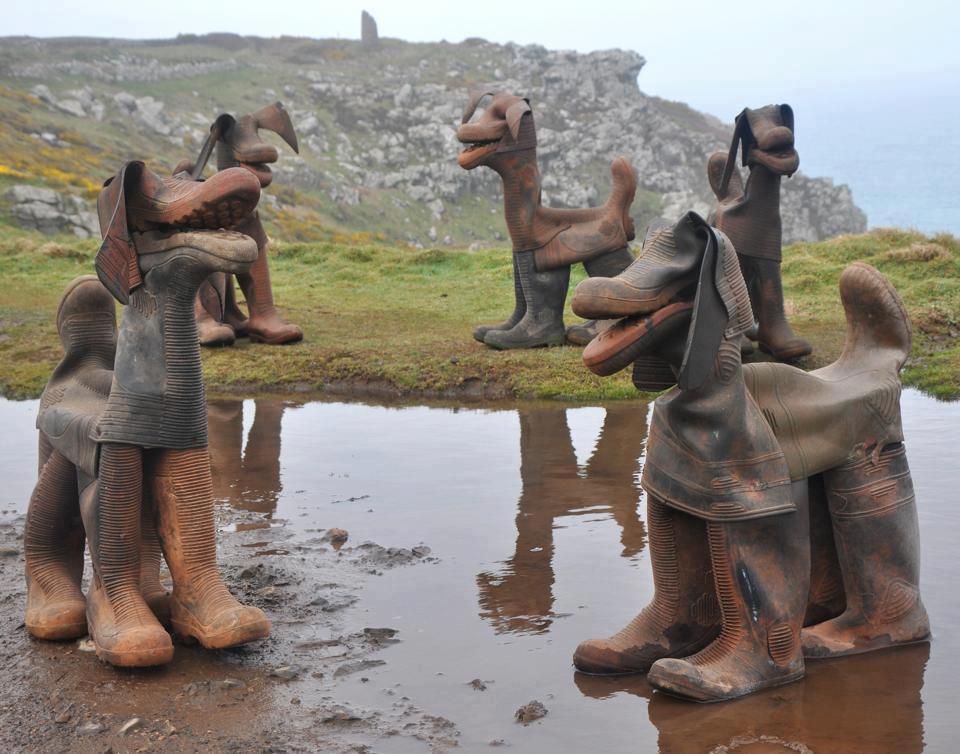
boots

David Kemp’s ‘Hounds of Geevor’ taking a stroll over Botallack clifftops…These hounds are made from tin miners boots that were left behind in the mines after they closed down. A pack of these hounds have been cast in bronze (mixture of Cornish tin and copper) and stand in Redruth town centre (used to be the mining centre of Cornwall, UK).

From Growveg

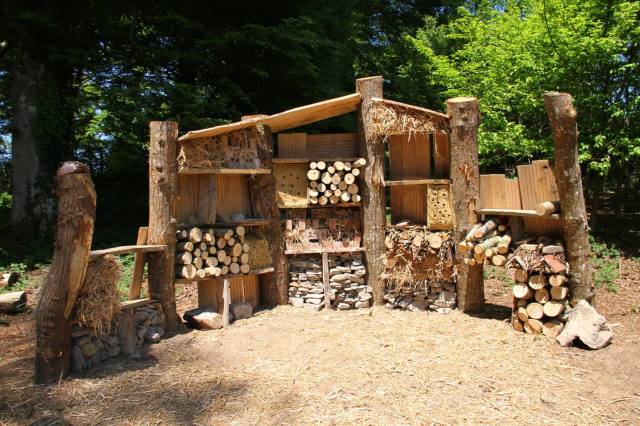
Picpost: Hotel Heligan

‘Work is nearing completion on our new insect hotel which is located on our Georgian Ride! This fantastic structure has been built using a variety of natural materials and will attract various Heligan insects such as solitary bees, earwigs, spiders, lady bird, maybe the odd toad and much much more!’  The Lost Gardens of Heligan

‘The SkyWire will reopen on Saturday 18 May! From this date you’ll be able to take an adrenaline-fuelled headfirst ride in the new ‘superman’ harness. It’s still the longest zip wire in England at 660m and now it’s definitely the fastest. We’ve clocked our test pilots going at 60mph!’

Source: The Eden Project

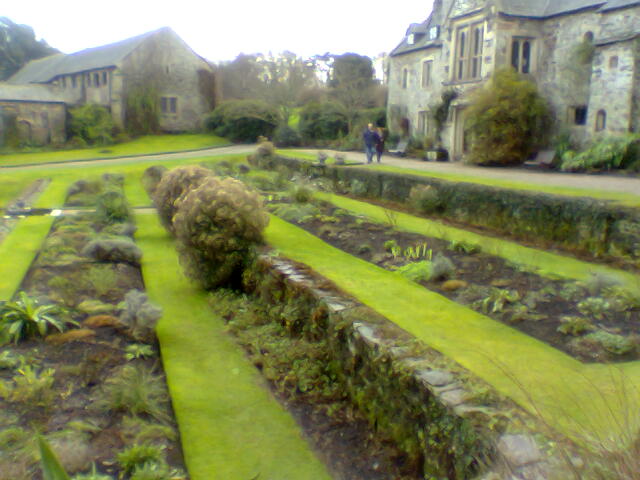
Image040

Cotehele House in Cornwall, England, is a ‘ Tudor house with many stories and legends, festooned with tapestries and adorned with textiles, arms and armour, pewter, brass and old oak furniture; a magical experience as little has changed over the years.Outside, explore the formally planted terraces, or lose yourself in the Valley Garden, which includes a medieval stewpond and dovecote. Seek tranquillity in the Upper Garden or visit the two orchards planted with local apples and cherries.Cotehele Quay is the home of the restored Tamar sailing barge ‘Shamrock’ and gateway to a wider estate. The Discovery Centre tells the story of the Tamar Valley.’

Source and further information:

National Trust Website

Wikipedia

Old School Gardener


PIC00056

The Lost Gardens of Heligan  (meaning ‘willow tree garden’ in cornish), near Mevagissey, Cornwall  are one of the most popular botanical gardens in the UK. The garden is typical of the nineteenth century Gardanesque style, with areas of different character and in different design styles.

The gardens were created by members of the Cornish Tremayne family, over a period from the mid-18th century up to the beginning of the 20th century, and still form part of the family’s estate. The gardens were neglected after the 1st World War, and restored only in the 1990s, a restoration that was the subject of several popular television programmes and books.

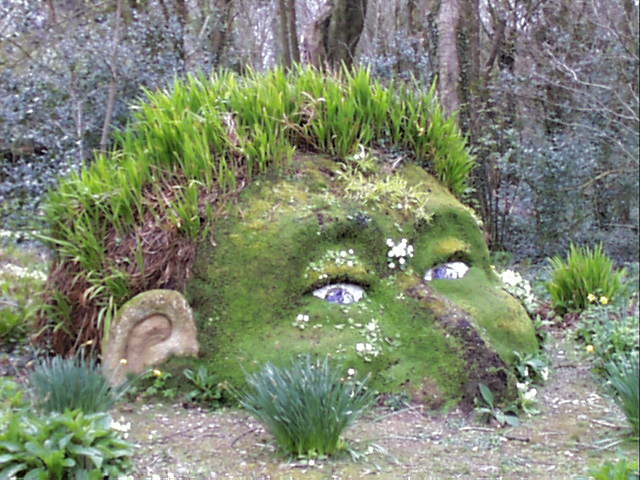
The gardens now boast a fabulous collection of aged and colossal rhododendrons and camellias, a series of lakes fed by a ram pump over a hundred years old, highly productive flower and vegetable gardens, an Italian garden, and a stunning wild area filled with primaeval-looking sub-tropical tree ferns called “The Jungle”. The gardens also have Europe’s only remaining pineapple pit, warmed by rotting manure, and two figures made from rocks and plants known as the Mud Maid and the Giant’s Head (see pic).

Source: Wikipedia

Old School Gardener

Finding Nature

Nature Connectedness Research Blog by Prof. Miles Richardson

Norfolk Green Care Network

Connecting People with Nature

Discover WordPress

A daily selection of the best content published on WordPress, collected for you by humans who love to read.

Susan Rushton

Celebrating gardens, photography and a creative life

Unlocking Landscapes

Writing, photography and more by Daniel Greenwood

Alphabet Ravine

Lydia Rae Bush Poetry

TIME GENTS

Australian Pub Project, Established 2013

Vanha Talo Suomi

The Journey from Finnish Rintamamiestalo to Arboretum & Gardens

Marigolds and Gin

Because even in chaos, there’s always gin and a good story …

Bits & Tidbits

RANDOM BITS & MORE TIDBITS

Rambling in the Garden

.....and nurturing my soul

The Interpretation Game

Cultural Heritage and the Digital Economy

pbmGarden

Sense of place, purpose, rejuvenation and joy

SISSINGHURST GARDEN

Notes from the Gardeners...

Deep Green Permaculture

Connecting People to Nature, Empowering People to Live Sustainably

BloominBootiful

A girl and her garden :)