
Tag Archive: bees


Old School Gardener
 Koelreuteria is a genus of three species of flowering trees; K. paniculata, K. bipinnata and K. elegans
Common name: Common names include Golden Rain Tree, Pride of India, China tree, or varnish tree.
Native areas: The tree is Native to China and southern and eastern Asia.
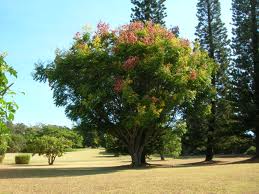
Koelreutia elegans subsp. formosa
Historical notes: It’s discovery is credited to Pierre d’Incarville, a Jesuit missionary; who sent first seed from China to Russia in 1747. It was classified by Russian botanist Erich Laxmann who named it after Joseph Gottlieb Kolreuter, from Karlsruhe, Germany, a contemporary and professor of natural history. It was later grown in Europe (by 1753) and reached America in 1811. The variety K. paniculata ‘Fastigiata’ was raised by Kew Gardens from seeds received in 1888 from Shanghai.
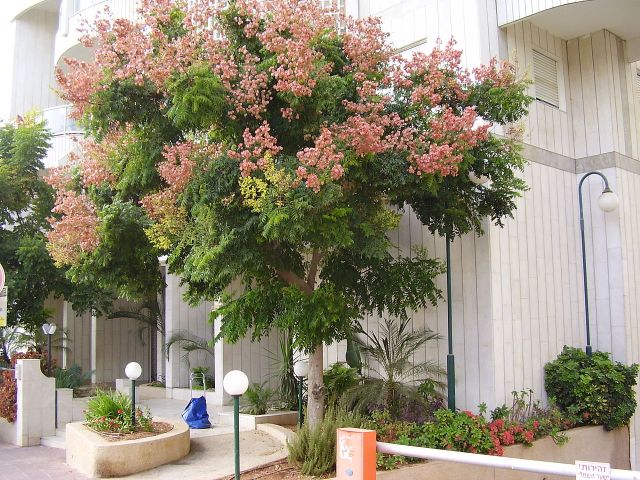
Koelreutia bipinnata
Features: Koelreuteria are medium-sized deciduous trees growing to 10–20 m (33–66 ft) tall, with spirally arranged pinnate or bipinnate leaves. Leaves are pinkish in spring, turning yellow in autumn. The flowers are small and yellow, produced in large branched panicles 20–50 cm (8–20 in) long. The fruit is a three-lobed inflated papery capsule or ‘bladder’ 3–6 cm long, containing several hard nut-like seeds 5–10 mm diameter. In some areas, notably parts of eastern North America, they have become invasive. the variety K. paniculata ‘Fastigiata’ tends to be shorter than the species (5-10 metres tall) and has a narrow columnar shape.
Uses: Koelreuteria are popularly grown as ornamental trees in temperate regions all across the world because of the aesthetic appeal of their flowers, leaves and seed pods. Koelreuteria are commonly used as focal points in landscape design. Several cultivars have been selected for garden planting, including ‘Fastigiata’ with a narrow crown, and ‘September Gold’, flowering in late summer. The seeds are edible when roasted, but are not commonly consumed. The variety K. paniculata ‘Fastigiata’ is a good choice for restricted spaces and excellent as a specimen tree in a park. The clusters of small yellow flowers which it produces in July and August are popular with bees and are followed by lantern-shaped fruits in the autumn.

Koelreutia paniculata ‘Fastigiata’ growing at Barcham Trees
Growing conditions: Koelreuteria grow in nutritionally poor soil including: clay, sand, well drained, alkaline, loam; they require full sun but not a lot of watering, with a moderate aerosol salt tolerance. They tolerate wind, air pollution, salt, heat, and drought and grow at a moderate rate, but are sometimes fast growers. Koelreuteria produce seeds that are blown away and get germinated and this might result in the growing of more trees next to the original one.’Fastigiata’ does best in dry, calcareous soils and in a reasonably sheltered position, such as an urban courtyard garden.

Fruit and flowers of K. paniculata
Further information:
Wikipedia- Koelreuteria
Wikipedia- Koelreuteria paniculata
Wikipedia- Kolreuteria bipinnata
RHS- Koelreuteria paniculata
Barcham Trees Directory- Koelreuteria paniculata
Barcham trees directory- Koelreuteria paniculata ‘Fastigiata’
Old School Gardener

Vines at Kenwood Winery, California, with an alley of pollinating plants
Old School Gardener

Topiarised Heather in a container
This week’s question is from Ivor Smallplot in Suffolk:
‘I have a small courtyard garden and wish to grow some shrubs in pots. What are the best varieties for this purpose, please?’
Heathers do well in pots, Ivor – even if your soil is rather limey (alkaline), you can provide an acid soil in the containers and so grow the summer flowering varieties. All the Hebes (shrubby Veronicas) are happy in pots, as are the less vigorous Berberis – but mind the thorns!
For winter colour plant the evergreen Euonymus, especially the delightfully variegated ones such as ‘Emerald Gaiety’, ‘Aureopictus’ and ‘Silver Queen’. New Zealand Flax (Phormium tenax) is also a good looker with its long, narrow leaves in many colours, as are Yuccas, with their rosettes of long needle-pointed leaves.

Phormium

Euonymus trained as a standard
Further afield in the garden, you might want to grow shrubs that are especially attractive to bees. If so try flowering currants (Ribes) and goat willow (Salix caprea) for early flowering. Later in the year there are many shrubs to choose from including the ever popular ‘Butterfly Bush’ (Buddleja davidii), Californian Lilac (Ceanothus), Firethorn (Pyracantha), Lilac (Syringa), Gorse (Ulex) and Daisy Bush (Olearia).

Ceanothus jepsonii
Old School Gardener
If you’ve enjoyed reading this post and others on this blog, why not comment and join others by signing up for automatic updates via email (see side bar, above right ) or through an RSS feed (see top of page)?

Grey mould on strawberries
Do you spray your strawberries against fungal infections?
An innovative development at the East Malling research centre in Kent may make this a thing of the past, At least if you keep bees that is. Scientists have designed a dispenser to fit into bee hives that the bees move through on their way out of the hive to forage for nectar. As they do so, they pick up a tiny amount of biofungicide, Gliocladium catenulatum ( a fungus which suppresses the growth of grey mould). The sunbstance sticks to their legs and bodies and as they move among the strawberry plants a small amount is deposited on each bloom, preventing grey mould being carried onto developing fruit. And tests have shown that the bees’ control was just as good as when the crops were sprayed – and there was the bonus that fungicide residue on the fruit was reduced. Sounds like a brilliant development that will probably benefit commercial strawberry production, but maybe a kit will also be produced for the serious home strawberry grower- bee keeper!
This ‘bioweapon’ isn’t the only one being reported at present. It seems that the invasive Harlequin Ladybird (Harmonia axyridis) is also armed with its own ‘bioweapon’ which is helping them to out compete native ladybirds.

Harmonia axyridis, the Harlequin Ladybird
German scientists have found that the Harlequins carry a fungal parasite in their blood that they can tolerate, but which is fatal to other types of ladybird. There’s some uncertainty about how the natives become infected,, but it seems likely that their habit of eating other ladybirds’ offspring may be to blame. Seven native types of ladybird in the UK have declined in numbers by up to 44 per cent since the arrival of the Harlequin in 2004. Originally introduced from China as a way to control aphids, the Harlequins do not so far seem to have affected the numbers of Seven Spot ladybirds.
Another, more positive finding from the research is that the fungal parasite carried by the Harlequins seems to kill the bacterium responsible for tuberculosis and the malaria parasite, so there may be the possibility of developing medicines that can help to cure these important human illnesses.
Source: ‘The Garden’- RHS Journal August 2013
Old School Gardener
If you’ve enjoyed reading this post and others on this blog, why not comment and join others by signing up for automatic updates via email (see side bar, above right ) or through an RSS feed (see top of page)?

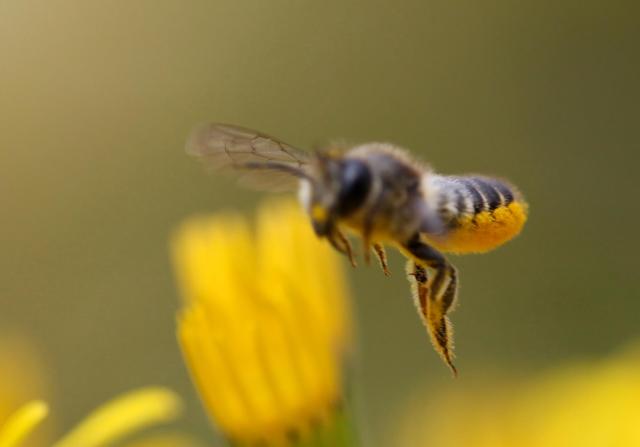
Nectar Quest: The ‘Bees and Flowers Mutual Admiration Society’ Under Threat




 Old School Garden