Category: Wildlife and Nature


PicPost: Beam me up

PicPost: Spring loaded

PicPost: Bearded Beauty

Bearded Iris drawn by Sue Walker White

Tamara Jare's avatarMy Botanical Garden

image

image

image

image

image

image

image

 Botany gets a bit more complicated when we meet  bryophytes and cryptogams Something to start with could be: bryophytes are all cryptogams, but not vice-versa, some cryptogams are  not bryophytes. Yet beware  not to mess them all with cryptograms, although it seems that science may find some cryptograms (secret code) in genetic material of mosses, giving promise to new drugs development. Anyway,I was astonished seeing all those water pearls on our concrete wall moss looking as simple plain green carpet from far, but turning into a fine needlepoint when one comes close enough.It attracted me enough to spend some time observing tiny green hair.I can totally understand those guys from  british bryological society !

“Muscinae” from Ernst Haeckel‘s Kunstformen der Natur, 1904

The spore-bearing sporophytes(i.e. the diploid multicellular generation) are short-lived and dependent on the gametophyte for water supply and nutrition. ,mosses and other bryophytes have only a single set of…

View original post 44 more words

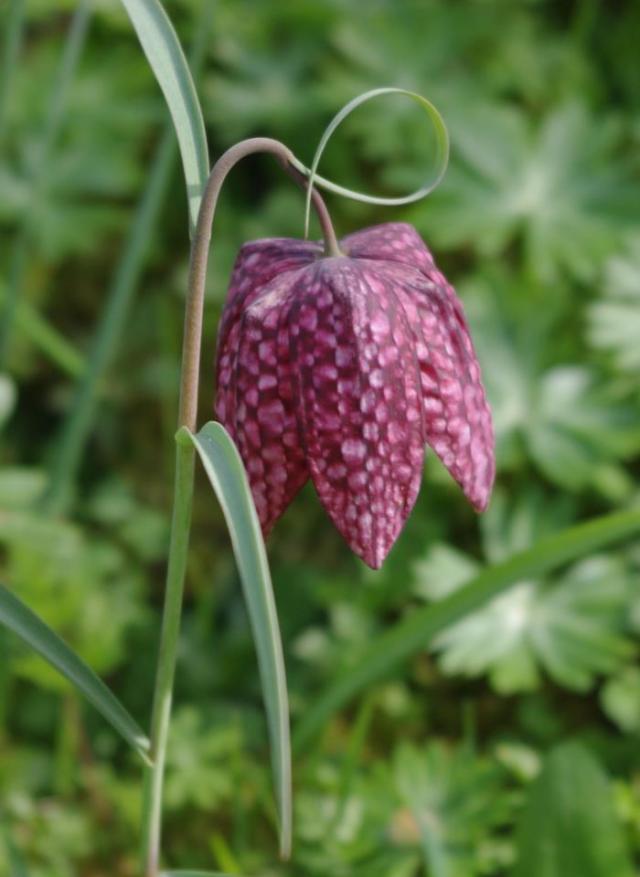
PicPost: Frittilary

‘Super talk last night by the Director of the Museum Christopher Woodward for the Friends of the Botanic Garden (Oxford). As with much trade, the railways enabled flowers to be sent to London and it was the wild Snakeshead Fritillary that grew on the wet Oxford meadows that yielded its flowers for admiration.’ from Richard Barrett, who was at the Garden Museum, London.

Brigid Jackson's avatararistonorganic

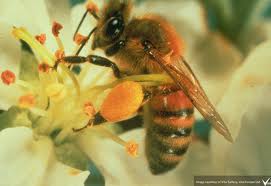
honeybee pollen

The bee’s knees,” a phrase which means “the height of excellence,” became popular in the USA in the 1920s and is still used today. The bee’s “corbiculae”, or pollen-baskets, are located on its tibiae (mid-segments of its legs – knee area). Also part of the tibia is the auricle, part of the “pollen press” which worker honey bees use to press pollen together before it is pushed up into the pollen basket (the corbicula). If you buy bee pollen and find it in little balls, the bee’s knees did that. The “bee’s knees” area is, while small, very crucial for the success of the foraging bee. Some people think that this phrase is so cool, they have gotten bees tattooed on their knees!

View original post

PicPost: Great Garden @ Mile End Park, London

Mile End Park

Mile End Park is unusual. It was created as a result of a plan for London in the 1940s which envisaged that there would be several green areas connecting different areas of London to the River Thames.

As a result the park has been created from land brought into park uses over 50 years – much of it formerly housing and industrial buildings. Some of this land is separated by roads, railways and waterways.’ (Tower Hamlets Council website)

Old School Gardener

Finding Nature

Nature Connectedness Research Blog by Prof. Miles Richardson

Norfolk Green Care Network

Connecting People with Nature

Discover WordPress

A daily selection of the best content published on WordPress, collected for you by humans who love to read.

Susan Rushton

Celebrating gardens, photography and a creative life

Unlocking Landscapes

Writing, photography and more by Daniel Greenwood

Alphabet Ravine

Lydia Rae Bush Poetry

TIME GENTS

Australian Pub Project, Established 2013

Vanha Talo Suomi

The Journey from Finnish Rintamamiestalo to Arboretum & Gardens

Marigolds and Gin

Because even in chaos, there’s always gin and a good story …

Bits & Tidbits

RANDOM BITS & MORE TIDBITS

Rambling in the Garden

.....and nurturing my soul

The Interpretation Game

Cultural Heritage and the Digital Economy

pbmGarden

Sense of place, purpose, rejuvenation and joy

SISSINGHURST GARDEN

Notes from the Gardeners...

Deep Green Permaculture

Connecting People to Nature, Empowering People to Live Sustainably

BloominBootiful

A girl and her garden :)